R80 Aircraft Program, Indonesian 80-90 seats Civilian turboprop plane Program

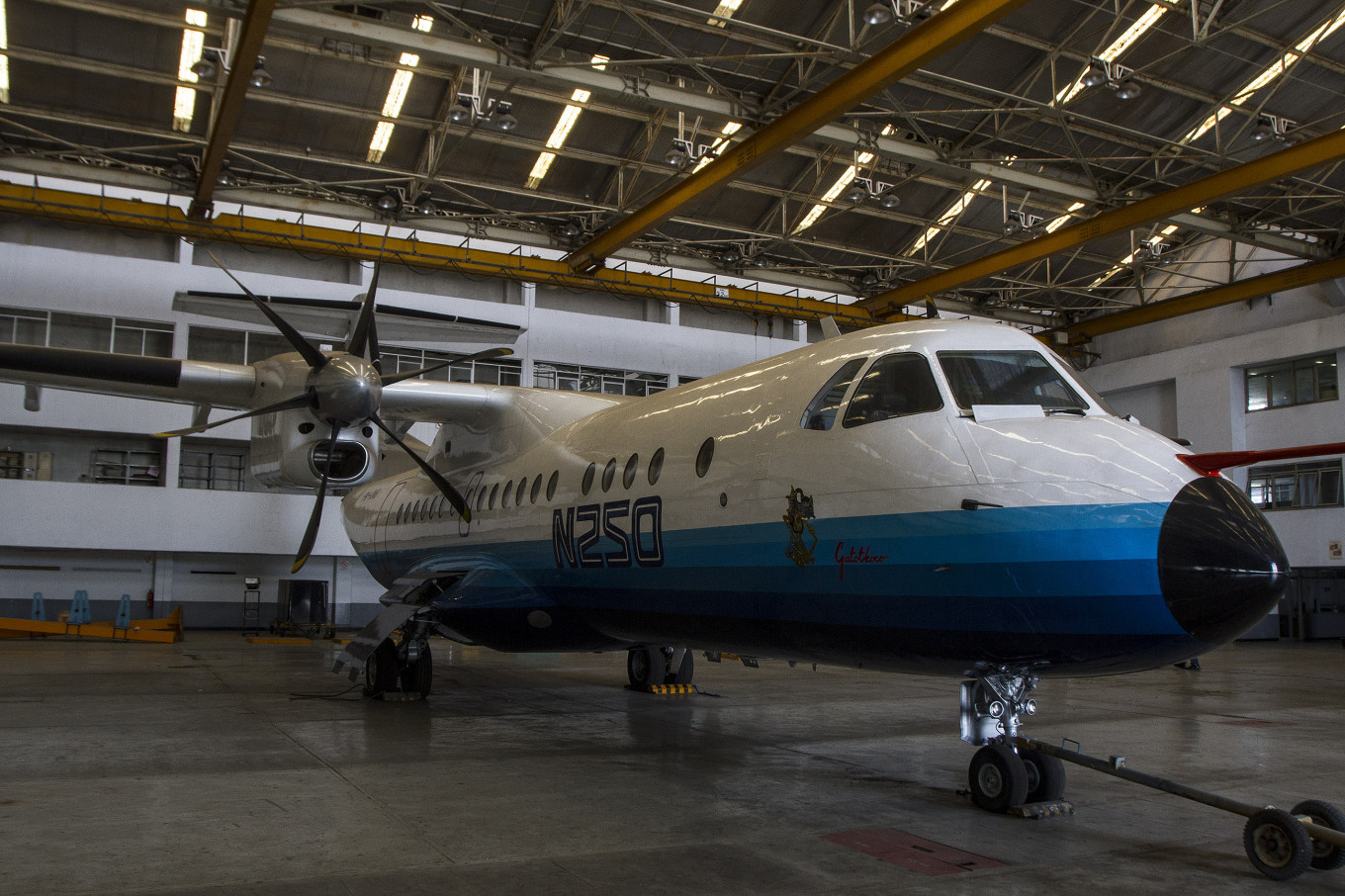
Habibie’s historic N250 prototype aircraft to be on display at Yogyakarta museum

The N250 was the first aircraft produced from the grand strategy of technology development launched by the late president BJ Habibie when he was research and technology minister.

To view this content we will need your consent to set third party cookies.
For more detailed information, see our cookies page.


Arya Dipa (The Jakarta Post)
BandungThu, August 20, 2020


State-owned aircraft manufacturer PT Dirgantara Indonesia (PTDI) in Bandung, West Java, is set to hand over the Gatotkaca N250 Prototype Aircraft 01 (PA01) to the Dirgantara Mandala Central Museum in Yogyakarta.

The N250 was the first aircraft produced from the grand strategy of technology development launched by the late president BJ Habibie when he was the research and technology minister.

PTDI corporate communications and promotion manager Adi Prastowo said the transfer of the aircraft was stipulated in Air Force Chief of Staff Decree (SKEP) No. 284/2020.“The handover of the N250 to safeguard state assets since the N250 has high historical value,” Adi said in a statement on Thursday.

The aircraft, he said, marked the establishment of the aerospace industry and thus it was expected to provide educational and motivational value for younger people visiting the museum. The PTDI had dismantled the aircraft’s access panels in the main parts, including the engine and propeller, as well as the main structure, consisting of the body, wings and vertical stabilizer, he said.

Dismantling the aircraft would reduce the risk of damaging the aircraft's parts, which would be transferred by land, before they were reinstalled in Yogyakarta, Adi added.A number of officials from the PTDI and the military, including Indonesian Military (TNI) commander Air Chief Marshal Hadi Tjahjanto, Air Force chief of staff Air Chief Marshal Fadjar Prasetyo and PTDI president director Elfien Goentoro, are scheduled to attend the reception on Aug. 25 at the museum.

In 1989, Habibie introduced the N250 turboprop aircraft at the Paris Airshow, Le Bourget, France. On Nov. 10, 1994 it left the hangar and was taken by 50 employees of the Nusantara Aircraft Industry (before becoming PTDI).

The name Gatotkaca was given by then-president Soeharto. He also named three other three prototypes, namely the Krincingwesi, Koconegoro and Putut Guritno.

On Aug. 10, 1995, the N250 under the PK-XNG registration successfully made its first flight, witnessed by Soeharto and then-first lady Tien Soeharto, as well as then-vice president Try Sutrisno and his wife Tuti Sutiawati.

Following the monetary 1998 crisis, the certification of the N250 was hampered as the International Monetary Fund, while lending funds to Indonesia, included the terms of the N250 project termination. National Technology Awakening Day is now celebrated every year on Aug. 10.
(syk)

 
To view this content we will need your consent to set third party cookies.
For more detailed information, see our cookies page.
 
With the creation of Danantara with 1 trillion USD asset and 20 billion USD in initial investment which will also control Indonesian Aerospace, R80 program is pretty much now reachable financially, but I suggest to first focusing in KF21/IFX, UCAV Male, N219 programs first before getting to R80 program

To view this content we will need your consent to set third party cookies.
For more detailed information, see our cookies page.

To view this content we will need your consent to set third party cookies.
For more detailed information, see our cookies page.
 
Post from Yudi Supriono in his Facebook (Indonesia defense related writer, mostly on aerospace, avionics matter), recently publish a book about Avionics Industry in Indonesia


1745126999317.jpeg


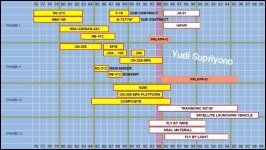
" Four Strategic Phase of Industrial Transformation of IPTN (Industri Pesawat Terbang Nusantara, Now PT. Dirgantara Indonesia)" / Indonesian Aerospace

The number shows the year, starting from 1976 until 2009.


1745127036434.jpeg
 

Transfer of PT Dirgantara Indonesia to Majalengka Approved by Jokowi​


To view this content we will need your consent to set third party cookies.
For more detailed information, see our cookies page.

New Kertajati Airport Complex

REPUBLIKA.CO.ID, BANDUNG - PT Dirgantara Indonesia (DI) will be moved to the West Java International Airport (BIJB) Kertajati, Majalengka. The transfer of the aircraft industry has received the blessing of President Joko Widodo.

"PT DI is planned to move from Bandung. But still in West Java. Because if in Bandung it is too full," said Director of PT DI Budi Santoso, after meeting West Java Governor Ahmad Heryawan at Gedung Sate, Bandung, Thursday (18/8).

According to Budi, the transfer of PT DI to Kertajati has been decided by President Joko Widodo (Jokowi). Because, currently PT DI based in the area of Husein Sastranegara Airport is considered not feasible with an area of only 50 hectares.

Budi said, when holding a meeting with the president, he was once asked about the area of PT DI which turned out to be only 50 hectares. "The production of such aircraft, not advanced. Finally Mr. President (choose) in Kertajati," Budi said.

PT DI, he said, in Kertajati is promised to occupy about 200-300 hectares of land in the international airport area. Because, based on the directives from President Jokowi, the new land that will be occupied by PT DI must be five times to six times the current land.

"The plan is that in the next 2-3 years we are likely to be able to move to prepare the facility. It's important, there's the land first," he said.

Possibly, he said, PT DI will move after West Java International Airport (BIJB) is finished standing. Later, PT DI land in Bandung will now be returned to the country because the one that has is the state.

"The possibility of PT DI which is here (City of Bandung) is still there for equipment (main tool of the resistance system, red) because we will also make fighter aircraft," he said.

The construction of Kertajati is currently continuing to be carried out considering 2017, the airport can operate. The construction of Kertajati Airport was also carried out to replace the function of Husein Sastranegara Airport.


The Government will Develop Kertajati Airport as a Aerospace Industrial Zone​


AHY plans to develop Kertajati Airport, West Java to become a maintenance, repair, and overhaul (MRO) area of aircraft

23 April 2025 | 15.29 WIB

To view this content we will need your consent to set third party cookies.
For more detailed information, see our cookies page.

Majalengka, West Java


---------------------


Bappenas: Kertajati Airport has the potential to become the center of the MRO industry​


Tuesday, April 22, 2025 14:17 WIB


1745473700494.webp
Minister of National Development Planning / Head of the National Development Planning Agency (PPN/Bappenas) Rachmat Pambudy when giving remarks on the agenda of signing a Memorandum of Understanding between the Ministry of VAT / Bappenas, PT Garuda Maintenance Facility Aero Asia Tbk, and PT West Java International Airport (Perseroda/BIJB) in Majalengka, West Java, Monday (21/4/2025). BETWEEN/HO-Bappenas


Kertajati Airport has a capable infrastructure, but the utilization has only reached 6.42 percent. With a runway of 3 thousand meters and a cargo terminal of 90 thousand square meters, this becomes a great opportunity if developed strategically


Jakarta (ANTARA) - Minister of National Development Planning / Head of the National Development Planning Agency (VAT / Bappenas) Rachmat Pambudy said, Kertajati Airport has great potential to become the center of the maintenance, Repair, and Overhaul (MRO) or aircraft maintenance industry, Rebana area connectivity hub, and world-class green airport.

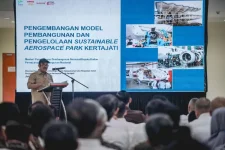
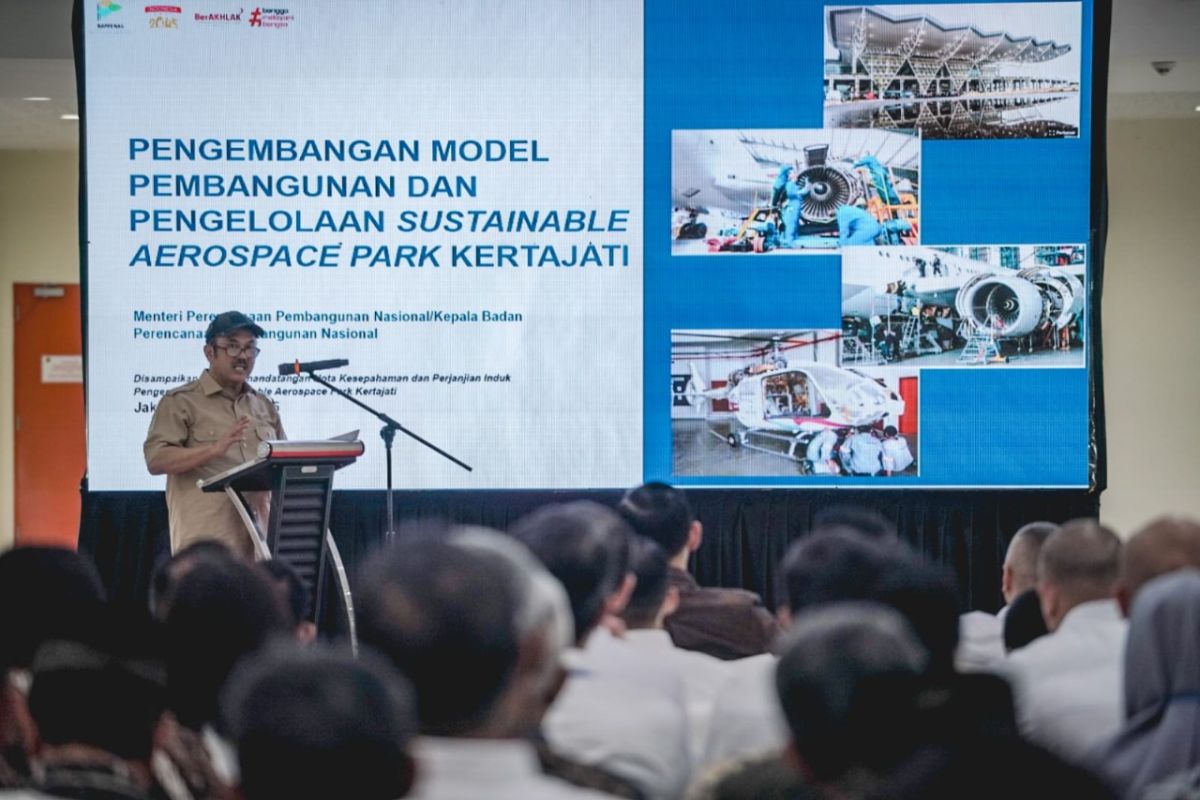
This statement was conveyed in the agenda of signing a Memorandum of Understanding between the Ministry of VAT / Bappenas, PT Garuda Maintenance Facility Aero Asia Tbk, and PT Bandar Internasional West Java (Perseroda / BIJB) on the collaboration of strengthening the aerospace industry through the development of Sustainable Aerospace Park Kertajati in Majalengka, West Java

"Kertajati Airport has a qualified infrastructure, but the utilization has only reached 6.42 percent. With a runway of 3 thousand meters and a cargo terminal of 90 thousand square meters, this becomes a great opportunity if it is developed strategically, "he said as in a statement in Jakarta, Tuesday.

According to him, it is important to reduce Indonesia’s dependence on overseas MRO services. The MRO industry in Indonesia has great potential with projected operational aircraft growth from 614 units in 2024 to 1,017 units in 2033, as well as the growth of the Southeast Asia MRO industry by 3.8 percent.

However, Indonesia is said to still face major challenges, such as 46 percent dependence on foreign MRO, limitations of international certification, Original Equipment Manufacturer (OEM) support, and access to financing.


"We need to strengthen regulations, encourage the use of domestic MROs, and forge global strategic partnerships to build a resilient and competitive aerospace industry," said Head of Bappenas.

Through the Sustainable Aerospace Park Kertajati project, it plays a role in drawing up master plans, innovative financing facilitation, and the coordination of accelerating the preparation of Special Economic Areas in Kertajati.

"This project is not just the optimization of the airport, but a real step to build industrial independence, create quality jobs, and foster inclusive and sustainable economic growth," Rachmat said.

The development of Sustainable Aerospace Park Kertajati is in line with the direction of the policy of the National Medium Term Development Plan (RPJMN) 2025-2029 and the National Long-Term Development Plan (RPJPN) 2025-2045, as well as being part of the National Priority (PN) related to the downstream industrial and strengthening of labor and technology sectors.


Danantara Set for Launch on Feb. 24 with $20 Billion Initial Capital​


To view this content we will need your consent to set third party cookies.
For more detailed information, see our cookies page.


Jayanty Nada Shofa

February 14, 2025 | 3:11 pm

Jakarta. President Prabowo Subianto is set to launch Danantara, the state-owned investment super holding that will be the Indonesian equivalent to Singapore’s Temasek, later this month.


The much-awaited superholding will start off with $20 billion in initial funding (from SOE's dividend this year (2025))


Work is underway for Indonesia’s second sovereign wealth fund. The country’s lawmakers recently revised a law on state-owned enterprises (SOEs) -- an amendment that could pave the way for Danantara.

This superholding will manage multibillion-dollar assets belonging to state-run businesses. Speaking virtually at Dubai’s World Governments Summit, Prabowo revealed that Indonesia would officially launch Danantara on Feb. 24 after a series of delays. The retired army general is also banking on Danantara to put Indonesia on track towards his 8 percent growth goal.


“According to our initial evaluations, Danantara’s assets under management will exceed $900 billion. … This fund will invest our natural resources and state assets into sustainable, high-impact projects,” Prabowo told the conference.


The country at present already has a sovereign wealth fund: the Indonesia Investment Authority (INA), which was founded under Former President Joko “Jokowi” Widodo in 2021. Reports showed that Danantara would manage assets of SOEs, including banks Mandiri and BNI, state utility PLN, oil and gas company Pertamina, mining giant MIND ID, and telecommunications company Telkom. There are also plans to have Danantara consolidate the $10.5 billion sovereign wealth fund INA under its wings.

 
Post from Yudi Supriono in his Facebook (Indonesia defense related writer, mostly on aerospace, avionics matter), recently publish a book about Avionics Industry in Indonesia :

Since its establishment in 1976 until 1990 or around 24 years,

PT. Industri Pesawat Terbang Nusantara (IPTN, now PT. Dirgantara Indonesia) has successfully delivered around 298 units of airplanes and helicopters (97 units of NC-212, 38 units of CN-235, 114 units of NBO-105, 27 units of NBELL-412, and 22 units of NAS-332).

In addition, it also delivered 50,000 units of rockets and 150 units of torpedoes, as well as 10,000 units of aircraft components (F-16, Boeing, Airbus).

----------


Source: Book "Fragmen PT Nurtanio sampai dengan Dirgantara Indonesia, 1983-2007"

1747906293307.jpeg
 
Previously, when PTDI was called IPTN. IPTN was part of the Global Supply Chain of F-16 components which at that time was still held by GD. At that time IPTN also succeeded in getting the "Best Military Aircraft Coproduction" award from GD.---Cr: Aviahistoria - web

To view this content we will need your consent to set third party cookies.
For more detailed information, see our cookies page.
 
Kertajati Airport Ready to Become Aerospace Park, Center for the Aviation Industry

By Dadan Kuswaraharja
4–5 minutes


Bandung –

To view this content we will need your consent to set third party cookies.
For more detailed information, see our cookies page.

Kertajati Airport, West Java


West Java International Airport (BIJB) Kertajati doesn’t just want to be known as a passenger airport. Beyond its long runway, Kertajati aims to become an integrated aviation industry center or Aerospace Park.


Ronald Sinaga, Senior Vice President of Kertajati Airport, explained that Kertajati still has around 84 hectares of land available to be developed as an aircraft maintenance hub.


With such vast land, Kertajati sees an opportunity rarely found at other, already crowded, airports. At present, the demand for regular aircraft maintenance continues to rise, but the facilities at major airports are already full.


To view this content we will need your consent to set third party cookies.
For more detailed information, see our cookies page.

Kertajati road access, Majalengka, West Java


“Aircraft will always need regular maintenance. Soekarno-Hatta has GMF, it’s full. Bali is also full. Batam as well,” said Ronald.


This is the gap Kertajati wants to fill. The airport is preparing the 84-hectare site to become a Maintenance Repair Overhaul (MRO) center and, beyond that, a complete Aerospace Park.


The plan has already taken shape through a cooperation agreement between PT GMF AeroAsia, PT Bandar Udara Internasional Jawa Barat (BIJB), and the Ministry of National Development Planning (Bappenas).


To view this content we will need your consent to set third party cookies.
For more detailed information, see our cookies page.

GMF AeroAsia


“We won’t call it just an MRO; it will be an Aerospace Park. Because if it’s called an Aerospace Park, it’s not just about MRO. We’ll also build OEM manufacturing, make spare parts there as well—to make things easier. Then we’ll build a training center there. We’ll do a variety of things,” Ronald explained.


The vision is not just a business for aircraft maintenance. Ronald emphasized the importance of creating an integrated aviation economic ecosystem, from MRO and spare parts manufacturing to education and training. “So, it will create an economic ecosystem,” he said.


To view this content we will need your consent to set third party cookies.
For more detailed information, see our cookies page.

Vast empty area around the airport


As an initial step, Kertajati Airport has partnered with GMF AeroAsia. Ronald mentioned that the groundbreaking for helicopter maintenance facilities is expected to take place in September or October 2025.


“Right now, together with GMF, hopefully soon GMF will break ground to build helicopter repair facilities first. Hopefully by September or October. It depends on GMF, that’s their target,” he said.


However, this development won’t be easy or instantaneous. Ronald revealed there are technical challenges to overcome. One of them is building a taxiway for aircraft from the runway to the MRO area. “It has to be built. 200 meters by 45 meters. That’s another investment. So that aircraft can access the site,” he explained.


Building this taxiway itself is expected to require significant investment and at least 1–2 years to complete.


“Future investments are necessary and can’t be done overnight. A minimum of 1 to 2 years. Because just the construction itself will take at least 1 year,” Ronald said.


The optimistic target is to begin seeing the effectiveness of this Aerospace Park by 2025, with several initial facilities already operating.


More than just an industrial zone, Ronald stressed the importance of developing aviation human resources. He highlighted how there used to be STM (now SMK) Aviation Vocational Schools, which are now increasingly rare.


Kertajati aspires to build a training center and an aviation polytechnic as part of the Aerospace Park. This way, graduates of vocational schools (SMK/STM) can receive an additional year of training before entering the workforce.


“If you want to fly later, at our place, we will build it. We’ll have our own polytechnic. So, the STM or SMK can be anywhere. When they join, there will be a one-year training program,” he explained.


1752895287950.jpeg

N2130 Regional Jet​

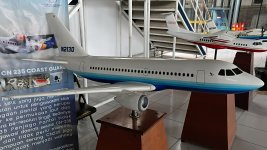
Companies considering a regional jet (or participation in a program) include PT Industri Pesawat Terbang Nusantara (IPTN) of Indonesia. Indonesia has indicated its desire to bring to market the IPTN-designed N-2130 turbofan, a 104- to 132-seat aircraft that began as an outgrowth of its N-250 turboprop. The N250 turboprop carrier was the pride of Indonesia. Coming exactly a week before the 50th anniversary of Indonesia's declaration of independence from the Dutch, the first flight of the N-250 turboprop in August 1995 brimmed with symbolism. The successful first flight for Indonesia's new N-250 commercial airplane led to an announcement of a plan for a mid-range jet aircraft to be finished in 2003 or 2004. Experts said the new, $2 billion plan was even more ambitious, entering a fiercely competitive arena. Habibie's son, a former Boeing engineer, was to head it up.

The N2130 Technology Program (NTP) was launched in October 1994 as a market and product-definition study. The NTP team was headed by Habibie's eldest son, Ilham, and consists of IPTN's younger, so-called "second generation", design engineers and managers. Its work was to be concluded by March 1997, with the drafting of the aircraft's design requirements and objectives.

PT Dua Satu Tiga Puluh (DSTP) as owner or holding company was founded in 1995 [1996?], soon after IPTN N250's roll out. Though industry officials pointed to the aerospace sector's lack of skill in finding and attracting varied sources of capital, the industry had made some progress in securing alternate funding. PT Dua Satu Tiga Puluh (DSTP) was founded to function as IPTN's fund-raising agency for the N-2130. DSTP was to raise the $2 billion needed for the design, prototyping, and certification of the aircraft through the private investment of individuals, corporations, and foundations, and an initial shares offering to the Indonesian public.

n2130-image01.jpg
The aircraft itself, the twin jet 80-130 passenger aircraft N2130, was put into design since 1994, while the plan was already announced three years earlier. According to the timetable presented by IPTN during the Le Bourget Paris Airshow 1995, on March 1997 N2130 should be on 'Design Requirements and Objective' phase, by April 1997, it should have been in the preliminary design process which will be finalized in 2000. According to the 1995 time table, the all-Indonesian-made aircraft would have its maiden flight on March 2004, and the very next month go into certification process until it finally delivered to its first operator on the June 2006 Indonesia Air Show.

Considering the cost and level of technology involved, some observers questioned whether the N2130 project was just a ticket to participation in one of the other various Asian 100-seater projects. In a market report published on 16 May 1996, the Teal Group dismissed the project as a scheme "driven by techno-nationalist fantasies, not market realities." Even Western firms jockeying for a spot on the aircraft were guarded about its prospects.

By late 1996 three versions were envisaged, with a 29.45m-long airframe serving as the baseline 100-seat design. This will be followed by an 80-seat, 22.20m-shrink version and a 39.20m-stretch derivative, seating up to 130 passengers, in a single-class configuration. Subsequent consultations with airlines, however, revealed little support for either an 80-seater or a five-abreast cabin cross-section. So by 1997 IPTN had dropped plans to develop a shortened, 80-seat, version of the planned N2130 short-haul jet-airliner and instead opted for a larger-aircraft family with six-abreast seating for between 104 and 132 passengers.

Designers opted for a 3.95m-diameter circular-section hull, while the length of the baseline aircraft was been lengthened by 1m, to 31.25m. The baseline N2130, tentatively designated the -100, would be able to accommodate 114 passengers in single-class configuration, with 812mm seat pitch, or 104 in a mixed two-class layout. The stretched, 33.86m-long, -200 version would seat up to 132 passengers in an all-tourist-class configuration. In the face of increased competition from other Asian consortia in the 100-seat jet market, by 1998 IPTN had opted to speed up development by 2 years, leading to planned production of the first N-2130 aircraft by 2002 and deliveries beginning in 2004.

A wing part of a 1:7.89 scale half-span wind tunnel model was designed and built for Indonesian Aircraft Industries (IPTN) in the years 1999/2000 by Vojnotehnièki Institut Ratka Resanoviæa [VTI], Beograd, Serbia. The wing segment comprised: wing, including main wing box (1805mm half-span), single-slotted flaps (4 positions), clean high-speed leading edges, slats, an immovable aileron, and installation for measurement of pressure distribution on seven chordwise wing sections, ·wing-fuselage fairing, through-flow nacelle (TFN) and its pylon, with instrumentation for measurement of pressure distribution, turbofan power simulator nacelle (TPS) and its pylon, with instrumentation for measurement of internal flow parameters and other installations necessary or the operation of the power simulator.

Most of the model was produced on CNC milling machines. For some specific components CNC EDM (electrode and wire-cut) was used. Artistic hand finish was applied when appropriate. Main parts were built from high-grade stainless steel, while the less stressed parts were made from aluminum alloy. Quality control was carried out on CMM coordinate measuring machines. Main parts of the wing were the outer and the inner wing box, each box assembled from the upper and the lower half. Sides of the boxes formed two main spars of the wing. Leading and trailing edge devices were detachable in order to enable changing of wing configuration.

In July 2000 the wing was transported to ONERA facilities at Tolouse and there was assembled with the fuselage-tail assembly. During the summer of the same year the model was successfully tested in F1 and S1 wind tunnels.

In the decade of the 1990's the human aspect once again took center stage in the design and operation of commercial aircraft. As occupation health and safety has gained importance in society in general, it has gained even more importance in the design an operation of commercial aircraft. In aircraft design today, the man-machine interface is considered in every task of the human workload. The discipline of ergonomics truly impacts each phase of product or tool design. At IPTN, the ergonomics effort is principally being applied to the design of the cockpit, cabin and cargo compartment of the N250. The ergonomists at IPTN are keenly aware that there would be a conflict between the user and his working environment without proper attention to the human considerations in the design is left for ergonomists and innovative programs like IPTN's participatory approach, to ensure that the human aspect is optimized in the man-machine interface.

While industry sources confirmed the existence of a potential Indonesian market for regional aircraft, opinions differed as to the size of this market, an important factor in IPTN's ability to achieve the economies of scale necessary to produce an international competitive aircraft. A feasibility study by IPTN projected that 25 percent of global demand for regional jet aircraft of approximately 100 seats will be met through sales of the N-2130, specifically 168 units domestically and 632 units internationally during 2005-2025.

By 1998 the Indonesian aircraft industry faced serious economic and political uncertainty because of the region's financial crisis. Nonetheless, Indonesian industry officials indicated that the aircraft industry was proceeding into the preliminary and detail design stages of the N-2130 program. Though IPTN had long supported a large aerospace work force, employees' work hours were cut to reduce expenditures and the company plans to lay off 3,000 workers in 1998.

Despite a possible postponement of 2-3 years, as of 1998 Indonesia intended to continue development of the N-2130 regional jet and looked to market the aircraft throughout Asia. In 1998 DSTP officials indicated that the company was considering listing its shares on the Jakarta Stock Exchange in 5-6 years and may eventually allow foreign investment. As of September 1997, DSTP raised 25 percent of the N-2130's development costs. However, the ability of DSTP to meet its goal of raising $2 billion by 2002 was uncertain. DSTP officials indicated that the country's financial situation had severely inhibited fund-raising abilities, and complaints over the public shares offering have reportedly prompted IPTN to call for a review of the company's methods of capital mobilization.

On September 29, 1999, PT Dua Satu Tiga Puluh (DSTP), the company responsible for N2130's funding, was officially dismissed. Its preliminary design was to be handed over to the Ministry of Industry and Trade, and the US$ 70 million spent on the design process was to be considered as 'sunk-cost'.


2030 is a reasonable and realistic time frame according to me to start EMD (Engineering and Manufacturing Development) phase of this R80 program.

Let focus on current programs like N219, N219 Amphibious, KF21/IFX and Elang Hitam MALE UCAV first, then the next natural project is likely R80 program.

At the time R80 development completed inshaAllah if EMD is started in 2030, including test flight for certification, the Indonesian economy and market are expected to be already supportive for the plane sales. ASEAN market is also very potential for this type of planes.

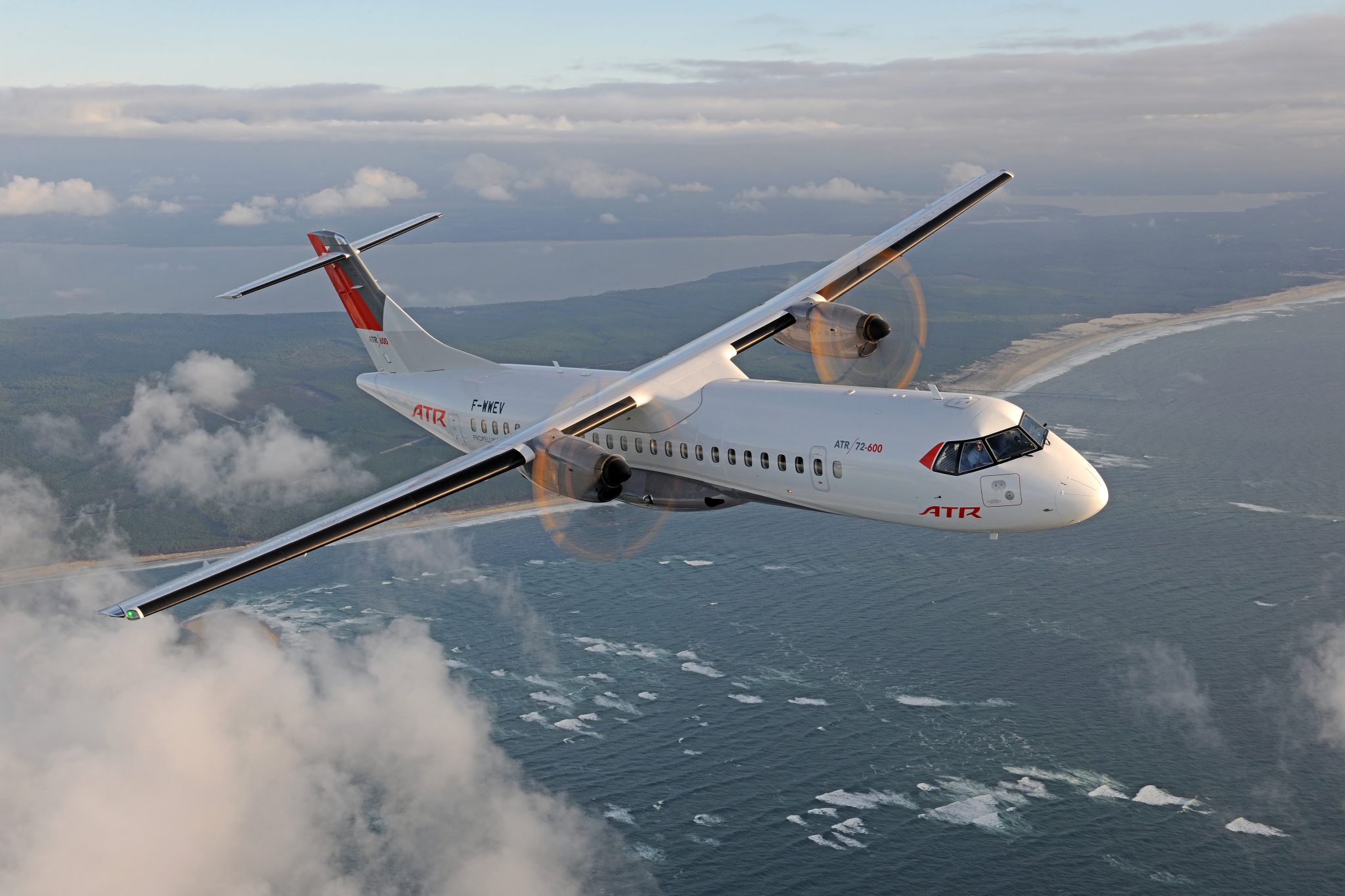
Currently this type of plane is dominated by ATR

To view this content we will need your consent to set third party cookies.
For more detailed information, see our cookies page.


To view this content we will need your consent to set third party cookies.
For more detailed information, see our cookies page.


-----------------

To view this content we will need your consent to set third party cookies.
For more detailed information, see our cookies page.


To view this content we will need your consent to set third party cookies.
For more detailed information, see our cookies page.


Danantara needs to build its own aircraft leasing company if we want to make R80 program successful. It is also important for N219 and N219 Amphibious programs that will enter civilian/commercial market inshaAllah.

To view this content we will need your consent to set third party cookies.
For more detailed information, see our cookies page.


There is huge demand for aircrafts globally and that gives us some pricing power: BOC Aviation CEO​

 
From what I see on the design, ATR 72 hasnt yet used winglet on the plane wings, while Indonesian Aerospace has already developed CN235 and NC212i with winglet

To view this content we will need your consent to set third party cookies.
For more detailed information, see our cookies page.

To view this content we will need your consent to set third party cookies.
For more detailed information, see our cookies page.

To view this content we will need your consent to set third party cookies.
For more detailed information, see our cookies page.
 
Danantara needs to build its own aircraft leasing company if we want to make R80 program successful. It is also important for N219 and N219 Amphibious programs that will enter civilian/commercial market inshaAllah.

Alhamdulillah

Danantara Investment Management, SMBC Aviation Capital, and Mandiri Investment Management Announce Indonesia's First Aviation Leasing Fund​


1776513432440.png

Danantara


Tokyo, 1 April 2026 – Danantara Investment Management, SMBC Aviation Capital, and Mandiri Investment Management announced the framework agreement for the development of Mandiri Aviation Leasing Fund, Indonesia's first dedicated aviation leasing investment platform. The initial portfolio value of the fund is around USD 800 million.

The fund brings together three complementary capabilities: SMBC Aviation Capital's position as one of the world's largest aircraft lessors, with a track record spanning over two decades and operations across multiple global offices; Danantara Investment Management's role as a strategic anchor investor; and Mandiri Group's execution and financing ecosystem, anchored by Mandiri Investment Management – the only subsidiary of an Indonesian state-owned bank to hold an offshore investment management license.

The Mandiri Aviation Leasing Fund is structured as a scalable, institutional-grade platform designed to provide investors with access to high-quality global aviation assets. The fund will be co-managed by Mandiri Investment Management and SMBC Aviation Capital under a framework agreement that combines Mandiri Investment Management's fund structuring capabilities with SMBC Aviation Capital's deep operational expertise in aircraft leasing.

As part of the partnership, SMBC Aviation Capital will provide aviation and leasing services to the Mandiri Aviation Leasing Fund, building long-term institutional capabilities in aviation leasing within Indonesia. Over time, the success of this platform is expected to support Danantara Investment Management's expansion into adjacent global asset classes.

The fund is expected to deliver attractive risk-adjusted returns to investors while positioning Indonesia within the global aviation leasing value chain. All three parties will work closely and participate in the fund's governance, ensuring strategic alignment across all partners.

The partnership also serves as a foundation for broader economic cooperation between Indonesia and Japan, creating opportunities for further cross-border investment between SMBC Group and Danantara Indonesia.

Pandu Sjahrir, Chief Investment Officer Danantara Indonesia, said:
"This partnership represents a significant step in Indonesia's participation in the global aviation finance ecosystem. By anchoring this project alongside SMBC Aviation Capital and Mandiri Investment Management, Danantara Indonesia is investing in a world-class platform that delivers strong returns while building strategic capabilities for the nation."

Barry Flannery, Chief Commercial Officer of SMBC Aviation Capital, said:
"We are very pleased to form this strategic partnership, which will help progress the aviation ecosystem in Indonesia and beyond. Working closely with Mandiri and Danantara Indonesia, we look forward to supporting longterm growth, innovation and collaboration across the sector."

Baskoro Adi, Chief Executive Officer of Mandiri Investment Management, said:
"This partnership reflects our commitment to developing innovative investment solutions that connect global investors with high-quality aviation assets. We are proud to collaborate with SMBC Aviation Capital, with the support of Danantara Investment Management, to establish Indonesia's first aviation leasing fund—delivering attractive risk-adjusted returns while positioning the region as an emerging player in the global aviation leasing market."


Indonesia Is Tired of Just Buying Planes, Now It’s Teaming Up with Airbus to Help Build Them

Ignacio Geordi Oswaldo

1778396492801.png

Jakarta

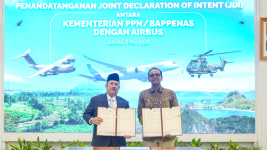
The Ministry of National Development Planning/National Development Planning Agency, or Bappenas, has officially established a strategic partnership to strengthen Indonesia’s national aerospace ecosystem with Airbus, one of the world’s largest aircraft manufacturers.

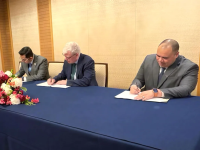
The cooperation was marked by the signing of a Joint Declaration of Intent between Minister of National Development Planning/Head of Bappenas Rachmat Pambudy and Airbus Asia-Pacific President Anand Stanley at the Bappenas office in Central Jakarta this morning.

Rachmat said the cooperation to strengthen Indonesia’s aerospace ecosystem does not only cover aircraft procurement, but also targets the development of related industries.

“The development of Indonesia’s aerospace industry must be carried out comprehensively, not merely limited to aircraft transactions and usage. It must go further by covering the aircraft industry supply chain,” he said during the JDI signing ceremony with Airbus at the Bappenas office in Central Jakarta on Wednesday, May 6, 2026.

In this context, the industrial strengthening refers to the development of human resources, maintenance, repair, and overhaul systems, or MRO, as well as increasing domestic industrial capacity so that Indonesia becomes not only a market, but also a growth center for the regional aerospace industry.

“Based on my notes, just one A320 aircraft, for example, requires 4 million components from 30 countries, including Indonesia. By strengthening the capacity of Indonesia’s aerospace industry, we will not only become a market, but also part of the global supply and value chain,” he said.

“Hopefully, PTDI can become a tier-1 supplier for Airbus, which means PTDI could start producing complete A320 wings or even aircraft, with a factory later to be built in Kertajati. For that, improvements are needed in standardization, service quality, operational efficiency, technology utilization, and, equally important, human resource development,” Rachmat continued.

He added that the development of the aerospace industry and ecosystem is also important because Indonesia is an archipelagic country that needs a strong aviation sector as one of the pillars of national connectivity.

“To meet that need, an expansion of air fleet capacity is certainly required. Currently, the number of active aircraft is around 550 units and is projected to increase more than threefold to 1,900 units by 2045,” Rachmat said.

On the same occasion, Airbus Asia-Pacific President Anand Stanley said cooperation between the European aircraft manufacturer and Indonesia has been ongoing for more than 50 years, since 1976.

According to him, since then, cooperation between Airbus and Indonesia has continued to grow, including in the manufacturing of several aircraft components for the A320, A330, A350, and H225.

“A320, A330, A350, and H225 components are exported from Indonesia. You have also helped us support human capital development over the past 50 years. Beyond that, we have also supported human capital development, from pilots and engineers to technicians. One major area of development that Airbus believes in is MRO,” he said.

Through this strategic cooperation, Airbus wants Indonesia to strengthen the company’s supply chain for aircraft and helicopter components, including the development of human resources and aircraft maintenance technicians.

“We want to partner to build not only the A320 and A330, but also other products to reach global standards,” Stanley said.


Users who are viewing this thread

Latest Posts

Back
Top