Railway News / Discussion

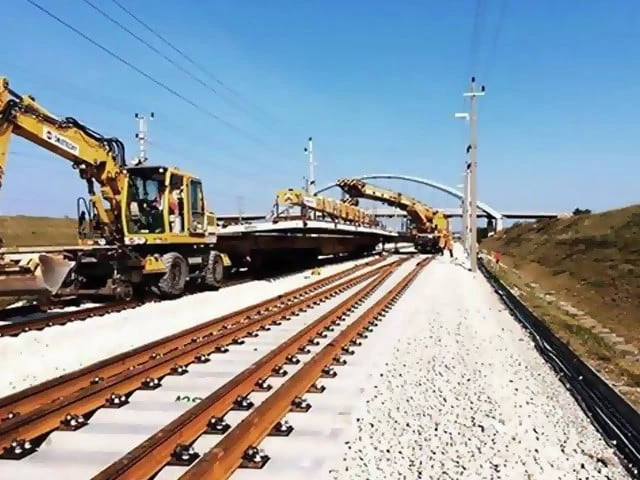
ML-1 removed from CPEC framework​

Project to seek financing from ADB, other lenders

Our Correspondent
July 03, 2026


tribune


The federal government has disclosed that the Main Line-1 (ML-1) railway project has been removed from the China-Pakistan Economic Corridor (CPEC) framework and will now seek financing from the Asian Development Bank (ADB) and other international financial institutions.

The revelation came before the Senate Standing Committee on Economic Affairs, which also sought explanations regarding the project's financing, an inquiry into the Power Division and the Economic Affairs Division's (EAD) decision to seek legal advice from the Ministry of Law.

The committee, which met under the chairmanship of Senator Saifullah Abro, reviewed matters relating to foreign borrowing by the federal and provincial governments, foreign-funded development projects in Sindh, and the role of the Economic Affairs Division.

Proceedings were dominated by a heated exchange over a letter written by a section officer suggesting that certain matters raised by the committee did not fall within its jurisdiction.
 

Govt approves Rs278.6 billion rail upgrade to support Reko Diq mineral transport​

996km ML-3 upgrade to be completed by 2033 with $390 million bridge financing from Reko Diq Mining Company; Planning Commission flags repayment, revenue and viability risks


July 8, 2026
2 min read

The government is moving ahead with a Rs278.62 billion upgrade of the 996-kilometre Main Line-3 (ML-3) railway corridor from Rohri to Koh-e-Taftan to facilitate the transportation of minerals from the multibillion-dollar Reko Diq mining project, The News reported.

According to project documents, the scheme will be financed through $390 million in bridge financing from Reko Diq Mining Company (RDMC), along with funding from the federal government's Public Sector Development Programme (PSDP). The bridge financing will be repaid by the government through a lump-sum payment by June 2028, requiring the Ministry of Finance to arrange the necessary funds.

The project is scheduled for completion by 2033 and has been identified as the primary long-term transport solution for mineral exports from the Reko Diq mine, for which the government has already signed an agreement with Barrick Gold/RDMC.


The railway upgrade will be implemented in two phases comprising four packages. Phase I includes the 243km Rohri-Sibi section and the 522km Spezand-Alam Reg section, while Phase II covers the 14km Sibi-Quetta stretch and the 90km Alam Reg-Koh-e-Taftan section.

The project includes complete renewal of 195km of track between Rohri and Sibi and 636km between Quetta, Spezand and Koh-e-Taftan. It also provides for reconstruction of 457.5km of the Ahmedwal-Koh-e-Taftan section through engineered embankments and bridges, along with the construction of 11 new railway stations between Spezand and Alam Reg.

According to the PC-I, the upgraded line will improve safety, reduce derailments, shorten travel times and increase fuel efficiency, while enhancing the railway's capacity to transport mineral exports.

However, the Planning Commission, in its appraisal of the project, raised concerns over its financial sustainability and the absence of a comprehensive cost-benefit analysis.


The Commission noted that while the project is expected to reduce derailment-related losses and improve operational efficiency, the sponsoring agencies had not quantified the expected economic benefits or provided detailed freight traffic and revenue projections to justify the investment.

It also observed that no tariff structure, track access charges framework or revenue-sharing arrangement with RDMC had been finalised.

The appraisal warned that the government's obligation to repay the $390 million bridge financing by June 2028 could create fiscal pressure and repayment risks.

The Planning Commission also highlighted the project's dependence on Reko Diq as its principal freight customer, warning that reliance on a single client creates concentration risk for future revenues.

It further pointed out that the project allocates Rs46.38 billion for security, equivalent to around 17% of the total cost, and suggested exploring a cost-sharing arrangement with the provincial government.

The Commission also noted that no post-completion operation and maintenance funding had been included in the project documents, potentially understating the project's long-term lifecycle costs.

It added that the 6.5% escalation provision may prove insufficient given the project's seven-year implementation period and reliance on imported materials such as rails and fastening systems.
 

PM Shehbaz directs plan for Rohri–Multan ML-1 upgradation

  • Chairs a meeting to review progress on the Pakistan Railways Transformation Plan
Prime Minister Shehbaz Sharif instructed on Monday that proposals be presented regarding the upgradation of the Rohri–Multan section of Main Line-1 (ML-1).

A meeting to review progress on the Pakistan Railways Transformation Plan was held today in Islamabad under the chairmanship of PM, as per the Prime Minister’s Office (PMO).

The Rohri–Multan section is an integral part of Pakistan Railways’ Main Line-1 (ML-1) project, which is undergoing a major upgrade under the China-Pakistan Economic Corridor (CPEC).

This endeavor aims to establish a 1,733 km double line from Peshawar to Karachi.

Meanwhile, the PM said that Pakistan Railways was the most cost-effective and efficient mode of transportation for both passengers and freight.

“A modern and efficient railway system will play a pivotal role in strengthening the national economy, promoting trade, and enhancing regional connectivity,” the PM said.

He added that the modernization of Pakistan Railways’ infrastructure will be instrumental in establishing Pakistan as a regional trade and logistics hub.

PM Shehbaz directed that railway development projects should be completed within the stipulated timelines while maintaining the highest quality standards.


Moreover, the meeting was briefed on the progress of the ML-1 and ML-3 upgradation projects, the Thar Coal Railway Connectivity Project, and other ongoing initiatives.

The briefing informed participants that the detailed engineering design for the Karachi–Rohri section of ML-1 has been completed, as per the PMO.

It was further stated that the upgradation of the Rohri–Nokundi section of ML-3 will be carried out under the Public Sector Development Programme (PSDP) and bridge financing arrangements.

The 112-kilometre railway track of the Thar Coal Railway Connectivity Project, extending from the Thar coalfields to Chhor Railway Station, is 60 percent complete and is expected to be completed by December 2026.

Furthermore, the meeting was informed that on the PM’s instructions, the services of an international consultant have been engaged to implement railway reforms.

The services of schools and hospitals operated under Pakistan Railways have already been outsourced, while work is being initiated on the commercialization of six major railway stations.
 

Thar coal rail link nears completion​


Our Correspondent
July 24, 2026

ISLAMABAD: Federal Minister for Railways Muhammad Hanif Abbasi has said that around 60% work on the Thar Coal Railway Connectivity Project had been completed and the project was expected to be completed by December 2026.

Addressing a roundtable conference organised under the Uraan Pakistan Forum, the minister said the Ministry of Railways had prepared a comprehensive Strategic Roadmap 2033, focusing on the implementation of the ML-1 and ML-3 projects, regional connectivity, digital transformation and modern railway infrastructure.
 

ML-1 removed from CPEC framework​

Project to seek financing from ADB, other lenders

Our Correspondent
July 03, 2026


tribune


The federal government has disclosed that the Main Line-1 (ML-1) railway project has been removed from the China-Pakistan Economic Corridor (CPEC) framework and will now seek financing from the Asian Development Bank (ADB) and other international financial institutions.

The revelation came before the Senate Standing Committee on Economic Affairs, which also sought explanations regarding the project's financing, an inquiry into the Power Division and the Economic Affairs Division's (EAD) decision to seek legal advice from the Ministry of Law.

The committee, which met under the chairmanship of Senator Saifullah Abro, reviewed matters relating to foreign borrowing by the federal and provincial governments, foreign-funded development projects in Sindh, and the role of the Economic Affairs Division.

Proceedings were dominated by a heated exchange over a letter written by a section officer suggesting that certain matters raised by the committee did not fall within its jurisdiction.
Shouldn’t Pakistan seek Saudi investment into ML-1 (and the completion of the Sukkur-Hyderabad motorway) as part of an investment into military logistics under the new Mecca military alliance?
 

Railway line project from Gwadar to Jacobabad begins on May 4​

By Yasir Habib Khan | Gwadar Pro
May 4, 2026

GWADAR - The land acquisition phase for the railway line project from Gwadar to Jacobabad (connecting Gwadar, Turbat, Panjgur, Basima, Khuzdar, and Jacobabad) has officially begun on May 4.

This development is being viewed in the context of Pakistan’s efforts to open six land routes for the transportation of goods to Iran, including the Gwadar-Gabd route, which is the shortest and expected to reduce transit time by up to 87%. The move aims to provide a secure alternative for third-country goods to reach Iran, especially during times when maritime trade is disrupted

Under the federal government’s Uraan Pakistan Vision, the railway line project from Gwadar to Jacobabad also aims to link Balochistan with inner Sindh through a modern transport network.

Passing through Gwadar, Turbat, Panjgur, Basima, and Khuzdar, the project is expected to play a significant role in the national economy. According to railway authorities, the project will cost approximately Rs15.5 billion and was approved in November 2024.
Another line should be extended from Panjur to Taftan to connect to the Iranian rail network there, and making Gwadar a more viable port for trade with Central Asia, as well as exporting from Reko-Diq. It can also be an alternative route to Quetta, and help in military logistics and securing the Iranian and Afghan borders.
 

Pakistan Railways seeks LTE-R band for Karachi-Sukkur ML-1 section

  • Pakistan Telecommunication Authority moves to expand modern communications infrastructure across the country’s railway corridors
August 10, 2026
Tahir Amin

ISLAMABAD: Long Term Evolution for Railways (LTE-R) band allocation for the Karachi-Sukkur section of the ML-1 railway project is being pursued by Pakistan Railways as the Pakistan Telecommunication Authority (PTA) moves to expand modern communications infrastructure across the country’s railway corridors.

Official documents reveal that the move is part of a broader PTA-led plan to improve mobile coverage and quality of service (QoS) along railway routes, motorways, highways, tourist destinations and other underserved areas in coordination with cellular mobile operators (CMOs), the Universal Service Fund (USF) and relevant stakeholders.

Under the plan, telecom operators will be required to accelerate network expansion through additional BTS sites and phased 5G deployment, while USF projects will focus on commercially unviable areas, including transport corridors.

The PTA is also pursuing infrastructure sharing among operators to lower deployment costs and exploring satellite connectivity for difficult-to-cover locations.
 

Work on $2.5bn ML-1 to begin in January


Officials from a mission of five multilateral international lenders survey the Karachi Railway Division, as it will be connected to ML-1.—Courtesy Railways
• Phase-I covers 480km Karachi-Rohri railway section
• Online market engagement with contractors, consultants set for Sept 8
• Project expected to take up to three years to complete

LAHORE: Civil work on the $2.5 billion first phase of the Main Line-1 (ML-1) railway project is likely to begin in January 2027, as Pakistan Railways (PR) accelerates market consultations, pre-bid preparations and other processes required to meet the timeline set by Prime Minister Shehbaz Sharif.

PR has announced an online early market engagement session for Sept 8, inviting local and international civil works contractors as well as project design and monitoring consultants to discuss project readiness, procurement progress and strategy, developments since March and other matters related to the first phase.

“We are trying our level best to launch this project as early as possible. The prime minister wants its commencement by January next year by all means,” Railways Minister Hanif Abbasi told Dawn on Saturday.


He said early market engagement, international tendering, bidding, shortlisting of contractors and consultants and award of contracts could take four to five months, but PR would make every effort to have the project launched by the prime minister in January.

The first phase of ML-1 covers the 480km Karachi-Rohri/Sukkur section, where new up and down tracks will be laid along with fencing on both sides to prevent unauthorised access by people, animals and vehicles.

The project is expected to take between two-and-a-half and three years to complete and will serve a corridor carrying 76 per cent of passenger and 98pc of freight traffic, besides connecting major population centres and industrial zones.


The project is expected to be financed by the Asian Development Bank, while co-financing is being explored from AIIB, EIN, the World Bank and IsDB.

Its indicative scope includes civil and track works on the Keamari-Landhi-Hyderabad, Hyderabad-Nawabshah and Nawabshah-Rohri sections, including track reconstruction, limited realignments, bridges, culverts and other structures, stations, freight yards and buildings.

The plan also includes upgrading Walton Academy, signalling and telecommunications across the corridor, project management and supervision consultancy services.

During engagement with contractors and consultants, discussions will cover package sizes and scope, qualification criteria and joint-venture structures, experience requirements, signalling and telecommunications packages, bid preparation periods, technical and financial weightings, risk allocation, construction under live railway operations, local industry participation and climate-resilient and digital solutions.

“Karachi-Rohri and Rohri-Multan are the most critical railway sections where most derailments and accidents take place due to the existing decaying track, which is repaired off and on at a huge cost. This is why PR has selected the Karachi-Rohri section as the first to start the ML-1 project,” a PR official told Dawn.

The official expressed confidence that work could begin in January, or possibly earlier, given the government’s priority attached to the project.

He said the upgraded infrastructure would enable trains to operate at speeds of up to 160km per hour.

Meanwhile, an important meeting on the ML-1 project was held at PR headquarters on Saturday, chaired by Railway Board Chairman Syed Mazhar Ali Shah and attended by international design and review consultants and senior railway officials.

The meeting reviewed the planned upgrade of the Karachi-Rohri section, project preparations, progress and the future course of action.

Mr Shah directed that the review phase of the ML-1 project be completed by Oct 30, 2026, and ordered weekly monitoring of progress.

It was also decided that the second phase of market consultations would begin on Sept 8, involving detailed discussions with market experts and relevant stakeholders on project preparation, technical issues and the way forward.

PR said international experience, market proposals and expert opinions would be used to make the project more effective, modern and viable, while merit, transparency and competitiveness would be ensured throughout preparation and implementation.

Mr Abbasi expressed satisfaction over the progress, describing ML-1 as the foundation for the development and modernisation of Pakistan Railways and its future requirements.

“The upgradation of the project will significantly improve train speeds, passenger facilities and the overall performance of Pakistan Railways,” he said in a statement.

He said the project would be further strengthened in light of expert recommendations and stressed that there would be no compromise on merit, transparency and competitiveness.

Published in Dawn, August 16th, 2026
 

Users who are viewing this thread

Pakistan Defence Latest

Latest Posts

Back
Top