Remittances from Overseas Pakistanis - Updates

Everyone wants to see exports grow when there's nothing to export.
Well, Pakistan can always export "ingenious" brains as per your "genius" CM of Punjab Maryam Nawaz 🙄
@PakFactor @SaadH @ziaulislam @Samlee @SoulSpokesman
 
The Messiah Khan is another Mujib ur Rehman.

The Failed Mistry is just another Yahya Khan.

That time Yahya Khan had his up General Rani's hole and surrendered half the
Country. Now we have Failed Mistry who has his head up Maryam's hole and
we have the same situation as 1971.
 
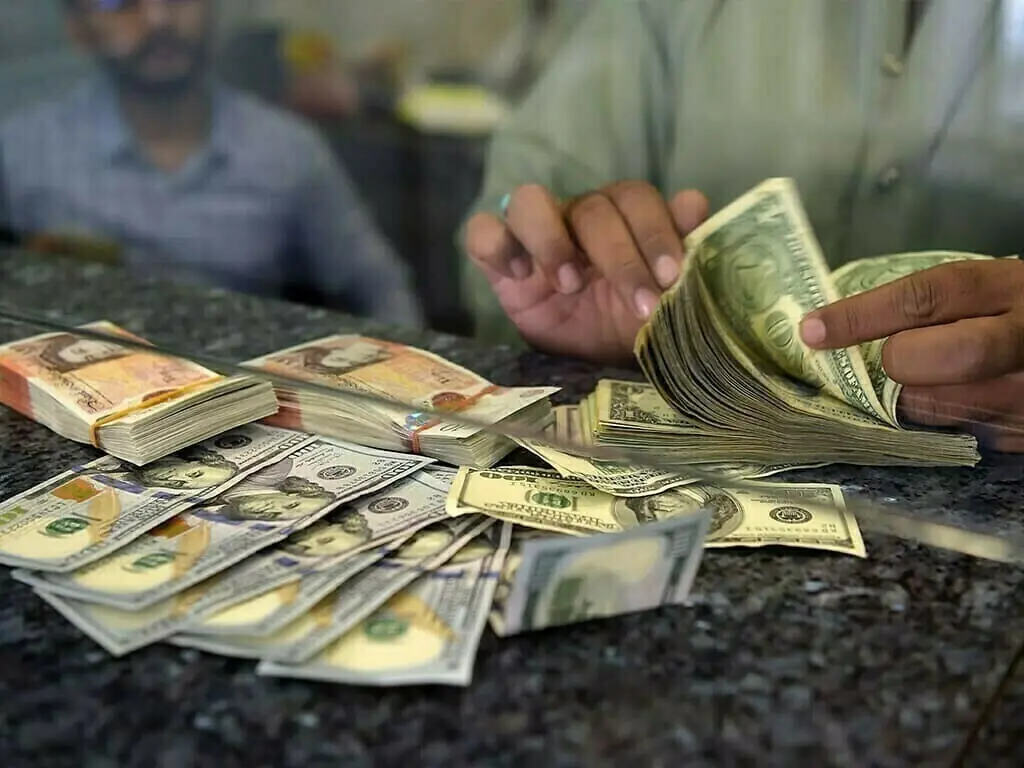
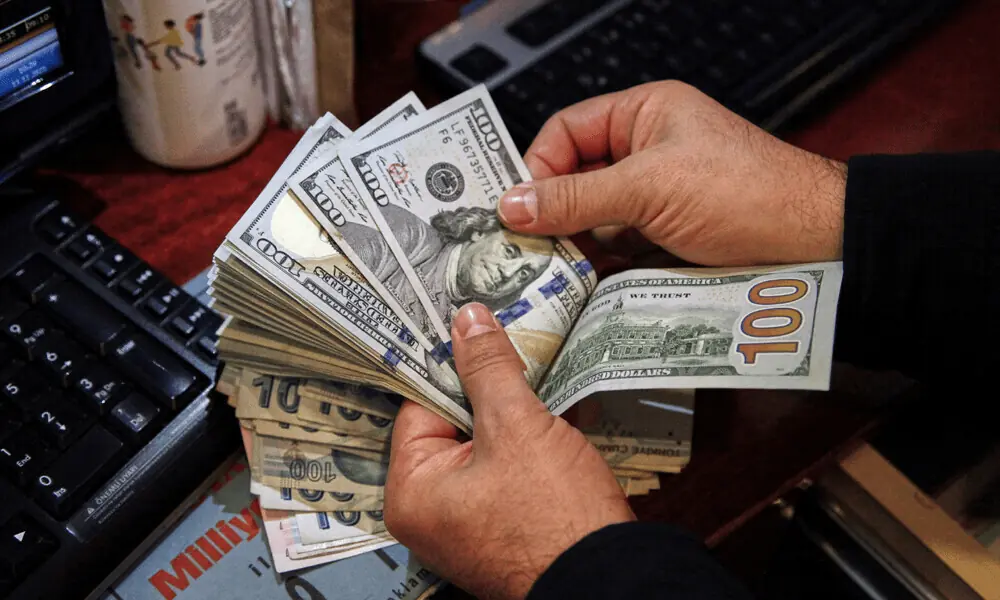
last year remittances was $38 billion

this years target is $41 billion

Jan 2026 was $3.5 billion

this coming from between 9-10 million Pakistanis abroad

Pakistan total exports were about the same as its remittances

another words the 241 million lazy Pakistanis vs 9-10 million hard working ones

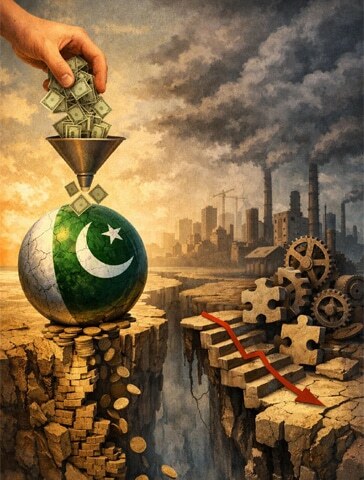
Correct. But the issue is much deeper: remittances, which help families stay afloat, are not working their way into the system in a way that creates more jobs and investment.

The majority of the funds are used for daily necessities:

-> Food and basic household expenses
-> Rent and utilities
-> Healthcare and education

The dollars themselves go straight to the government — and vanish into obligations, which leads to my next point.

The following is the bigger issue

Very little, if any, is used to expand the productive economy. Not to mention the erosion of purchasing power in the local currency; each year, the family's money is worth less than in the previous year. In essence, they are losing money.

The hundi system, by contrast, allows the overseas worker to retain his foreign currency, preserve the real value of his savings, and rely on local currency dealers for rupees, since, over time, his earnings in dollars, dinars, and other stable currencies appreciate relative to the local currency's depreciation.

The current overseas worker holding is losing value over time. If we look at the math after working 10, 15, 20, or 30 years, he comes out a loser in the current system, even if he goes through the formal channel, which the government prefers for obvious reasons.

If you work, for example, for 15 years, earning $15,000 annually, and send back home 1,000,000 Rupees annually, over time, you will have destroyed your hard-earned money by 40%-45% over a 15-year time period. That 15,000,000 Rupees is worth at most 8,000,000 Rupees. Had you kept the money in Dubai, exchanged it with a dealer, and partially saved, you would come out ahead by about 20-30% over 15 years [conservative estimate], keeping your savings and wealth intact.

Well, Pakistan can always export "ingenious" brains as per your "genius" CM of Punjab Maryam Nawaz 🙄
@PakFactor @SaadH @ziaulislam @Samlee @SoulSpokesman

...and still lose monetarily.
 
Last edited:
The idiots in GHQ have already wrecked the Economy, not just that they surrendered
3 parts of the Country.

Your cure to Gonorrhea is to also get Syphilis....? You've been listening to an idiot in a lab coat .

another words the 241 million lazy Pakistanis vs 9-10 million hard working ones

Ridiculous statement. The 9-10 million can serve coffee part-time and still earn exponentially more than entire Pakistani families slaving away in labor, agriculture, manufacturing, cleaning, you name it. You earn more because of your adopted socio-economic system, which you did not create and was not offered to the 241 mil.

But why is it a "shame"?

If I send money to my own bank account in Pakistan, is that somehow a shameful thing to do?

To me, money going into Pakistan from exports, FDI and remittances, is all good. Yes, we can argue this and that could be higher, but that's how things are.

Everyone wants to see exports grow when there's nothing to export.

The shame is not that the remittances are high but that the exports are low.
 
Last edited:
Nope. If those 241 million "lazy" Pakistanis were also paid in foreign currency (such as US dollar), Pakistan won’t suffer from chronic balance of payment crisis. 🤭
All the gangster politicians of PPP and MLN have wrecked the economy by extorting money from investors. Asif Zardari was arrested on 10 October 1990 on charges relating to kidnapping and extortion. The charges alleged an extortion scheme that involved tying a supposed bomb to a British businessman's leg.

Bhutto and Sharif families are billionaires solely by the corruption in Pakistan.

To view this content we will need your consent to set third party cookies.
For more detailed information, see our cookies page.
 

Remittances bonanza: Strong inflows, rising dependence

BR Research Published February 11, 2026

Facebook


Twitter


Whatsapp


Comments


3


Save

Follow us
The bonanza of inward home remittances continues, as inflows jumped by 11 percent in 7MFY26 to $23.2 billion. The remarkable part is that growth is coming off a high base, as remittances had already grown by 32 percent in the same period last year.

At this pace, annual inflows may touch $42 billion—around 10 percent of GDP—which would be the highest among countries with a population of 100 million or more.

READ MORE: Jul-Jan FY26: Workers’ remittances post 11pc growth


Although there is a growing urge among the masses (especially the middle class) to move abroad, the actual numbers are not astronomically high. In 2025, 762k people left Pakistan for work purposes, which is still below the peak of 947k recorded in 2015.

Overall, the number of people leaving annually averaged 774k in 2022–25, compared to 666k in 2015–18. This suggests that the overall exodus has indeed accelerated in recent years.

A more interesting—and intuitive—development is the sharp rise in the number of educated professionals leaving the country in search of better prospects. For example, during 2022–25, an average of 3,641 doctors left Pakistan annually, which is 69 percent higher than the average in 2015–18. Similarly, the outflow of engineers increased by 41 percent over the same period, compared to an overall increase of 18 percent in total emigrants.

One may wonder whether these emigrants are sending higher amounts, as remittance growth is clearly outpacing the increase in the number of people leaving. However, that may not be the case. For instance, remittances from the UAE jumped by 54 percent in 7MFY25 and then grew by another 14 percent in 7MFY26, despite the high base. Meanwhile, the number of people going to the UAE has fallen sharply—from 230k in 2023 to roughly a quarter of that, averaging only 58k in 2024 and 2025.

Today, the UAE contributes 21 percent of total remittances, and its exceptional growth stands in sharp contrast to the declining number of people moving to the Emirates. Clearly, there is more to the story.

One obvious explanation is the shift of remittances from informal to formal channels, driven by a crackdown on smuggling and illegal money-transfer routes, as well as stronger incentives for banks to attract formal inflows. Another possibility is that people are moving income (and wealth) to the UAE and sending back smaller amounts periodically for household consumption in Pakistan.

On the other hand, the number of people going to Saudi Arabia is rising at a much faster pace. During 2022–25, an average of 500k people went there annually—62 percent higher than the annual average in 2015–18. In contrast, the number of people going to the UAE declined by 70 percent over the same period.

Beyond economic demand in host countries, there is also a geopolitical angle to the changing pattern of worker destinations. For example, after Pakistan refused to send forces to Yemen in 2015, there was a significant decline in the number of people going to Saudi Arabia—falling by 35 percent, from an annual average of 366k during 2012–15 to 236k. Now, with improved relations, around 491k people annually have gone to Saudi Arabia over the last two years. Meanwhile, the number of people going to the UAE has fallen, partly due to visa-related issues, while geopolitical frictions may also be playing a role.

In 7MFY26, 45 percent of remittances are coming from Saudi Arabia and the UAE alone. This creates concentration risk, as history suggests that any geopolitical shift can materially impact inflows. The risk becomes more serious as reliance on remittances increases to finance imports, since remittances are a key factor in containing the current account deficit.

In 2025, remittances were almost a quarter higher than goods exports and nearly equal to total exports of goods and services combined. As a share of GDP, remittances are approaching 10 percent—again, the highest among countries with populations above 100 million. This is more than twice India’s level and 50 percent higher than Bangladesh’s. Pakistan has now even surpassed the Philippines.

These risks highlight the need to diversify foreign exchange earnings toward goods and services exports. Goods exports remain in poor shape, while services exports are growing at a healthy pace but are still only around a quarter of remittance inflows.

The government and the SBP can take comfort in the continued rise in remittances, which is supporting currency stability and fuelling consumption-led growth. At the same time, policy must increasingly focus on diversification.

 
India is the world's top recipient of foreign remittances, consistently ranking #1 globally with inflows expected to exceed
-
billion in 2024-2025. This marks a record high, with the US, UAE, and UK being the primary sources, significantly boosting India's foreign exchange reserves and offsetting trade deficits.

.
=>
we find India defeating most of "migrant countries" in terms of foreign emittances, on the top, to maintain CAD, the current account deficit ........
 

Maybe only good thing PTI did that will last.

Inflows in Roshan Digital Accounts totalled $216 million in January 2026​


Overall, RDA inflows have reached $11.92 billion since its inception in 2020, with $1.97 billion repatriated and $7.66 billion used locally
By
News Desk

rda.jpg


As of January 2026, Pakistan has received $11.92 billion in inflows under the Roshan Digital Account (RDA), according to data from the State Bank of Pakistan (SBP).


The facility, which allows overseas Pakistanis to open digital accounts for banking and investment, continues to gain momentum with January inflows reaching $216 million, up from $213 million in December.

Net inflows for January totaled $145 million, slightly below the six-month average of $175 million but still reflective of consistent participation. Since its launch in September 2020, the RDA has mobilized $9.6 billion, surpassing the financial support Pakistan received from the International Monetary Fund (IMF) during the same period.

SBP data shows that of the $11.92 billion in total inflows, $1.97 billion has been repatriated, while $7.66 billion has been used locally, contributing to the country’s foreign exchange reserves.

The number of RDA accounts increased to 901,764 in January, compared to 893,130 the previous month.


The RDA scheme, which is in partnership with commercial banks, also facilitates remittances from overseas workers. Remittances from the Pakistani diaspora surged to $23.2 billion in the first seven months of fiscal year 2026, an 11% increase from the previous year.

This steady rise in RDA inflows underscores the growing confidence of overseas Pakistanis in the initiative, which continues to support the country’s foreign exchange reserves. As of February 6, SBP’s foreign exchange reserves stood at $16.18 billion, with expectations to rise to $18 billion by June 2026, providing coverage for nearly three months of imports.
 
last year remittances was $38 billion

this years target is $41 billion

Jan 2026 was $3.5 billion

this coming from between 9-10 million Pakistanis abroad

Pakistan total exports were about the same as its remittances

another words the 241 million lazy Pakistanis vs 9-10 million hard working ones
cant agree. when people leave tis country they become asset . why ?
 
The idiots in GHQ have already wrecked the Economy, not just that they surrendered
3 parts of the Country.
We have no growth in any sector, such as health, social, security, economy, law and order, FDI, export, education, freedom of speech, media, etc.
All indicators are downward now. In previous martial law, at least some were rising.
 

Users who are viewing this thread

Back
Top