Navigation
Install the app
How to install the app on iOS
Follow along with the video below to see how to install our site as a web app on your home screen.
Note: This feature may not be available in some browsers.
More options
Style variation
You are using an out of date browser. It may not display this or other websites correctly.
You should upgrade or use an alternative browser.
You should upgrade or use an alternative browser.
Remittances from Overseas Pakistanis - Updates
- Thread starter ghazi52
- Start date
More options
Who Replied?

warking2005
Registered Member
Tell them ok try it let's see how dubai runs without pakistanis they can import as many Indians they want in return let's see what happensThat is alot of remittance from GCC nations, no wonder they hold Pakistan rulers by their throats and make threats on sending back workers to scare the rulers among other reasons.


ghazi52
THINK TANK: CONSULTANT
- Thread starter
- #34
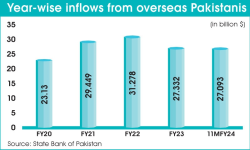
KARACHI: The country received over $30 billion in remittances in FY 2024, showing an increase of 10.7 per cent over the last fiscal year, while inflows for last month jumped by 44pc year-on-year, the central bank reported on Tuesday.
The country received almost $3bn more than the receipts for last year, but it was still below the record inflows of $31.3bn in FY22. The growth in remittances has already exceeded the earnings from exports, reflecting the increasing dependence of the economy on overseas Pakistanis.
According to the State Bank, the total remittances in FY24 were $30.3bn, compared to $27.3bn in FY23. Financial experts said the growth is satisfactory for the government since it follows another encouraging report that the current account deficit had come down to just $464 million during the first 11 months of FY24 (July 2023 to May 2024).
They cautioned, however, that the economy’s growing dependence on remittances could be disastrous, especially if exports start declining.
Exporters have been shouting against fresh taxes proposed in the budget, as well as against the relentless march of power rates, as the twin menace had made the cost of doing business uncompetitive in the international market.
Prime Minister Shehbaz Sharif said on Monday that the nation needed to “swallow more bitter pills” in order to secure IMF loans.
The SBP data shows that inflows were $3.2bn last month, compared to $2.187bn in June FY23, marking a jump of 44.4 per cent.
In May FY24 Pakistan received $3.242bn. The second half of FY24 was much better than the first half as inflows recorded a substantial rise.
The financial sector sees higher inflows as a sign of confidence in the economy, particularly the exchange rate stability which had remained stable for more than four months.
The inflows from almost all important destinations recorded an improvement and significantly increased, compared to the last fiscal year FY23.
The highest inflows of $7.424bn were received from Saudi Arabia, showing a growth of 13.6 per cent in FY24. This was against a decline of 15.8 per cent in FY23. The previous fiscal year, FY23, was the worst for Pakistan; it lost about $4bn in remittances compared to the preceding year.
The second highest inflows came from UAE, rising by 18.9 per cent to $5.534bn. In FY23 the remittances from the UAE posted a net decline of 20.4 per cent.
The inflows from the United Kingdom and the United States saw a growth of about 11 per cent, with inflows of $4.521bn and $3.531bn, respectively.
Receipts from the GCC countries and the European Union recorded a positive growth of 0.6 per cent and 12.7 per cent with inflows of $3.18bn and 3.53bn, respectively. Remittances from Italy showed an improvement of 16.5 per cent over FY23 with an amount of $978m.
Some analysts believe that remittances will rise further in the coming years as hundreds and thousands of Pakistanis leave the country for jobs.
Published in Dawn, July 10th, 2024
The country received almost $3bn more than the receipts for last year, but it was still below the record inflows of $31.3bn in FY22. The growth in remittances has already exceeded the earnings from exports, reflecting the increasing dependence of the economy on overseas Pakistanis.
According to the State Bank, the total remittances in FY24 were $30.3bn, compared to $27.3bn in FY23. Financial experts said the growth is satisfactory for the government since it follows another encouraging report that the current account deficit had come down to just $464 million during the first 11 months of FY24 (July 2023 to May 2024).
They cautioned, however, that the economy’s growing dependence on remittances could be disastrous, especially if exports start declining.
Exporters have been shouting against fresh taxes proposed in the budget, as well as against the relentless march of power rates, as the twin menace had made the cost of doing business uncompetitive in the international market.
Prime Minister Shehbaz Sharif said on Monday that the nation needed to “swallow more bitter pills” in order to secure IMF loans.
The SBP data shows that inflows were $3.2bn last month, compared to $2.187bn in June FY23, marking a jump of 44.4 per cent.
In May FY24 Pakistan received $3.242bn. The second half of FY24 was much better than the first half as inflows recorded a substantial rise.
The financial sector sees higher inflows as a sign of confidence in the economy, particularly the exchange rate stability which had remained stable for more than four months.
The inflows from almost all important destinations recorded an improvement and significantly increased, compared to the last fiscal year FY23.
The highest inflows of $7.424bn were received from Saudi Arabia, showing a growth of 13.6 per cent in FY24. This was against a decline of 15.8 per cent in FY23. The previous fiscal year, FY23, was the worst for Pakistan; it lost about $4bn in remittances compared to the preceding year.
The second highest inflows came from UAE, rising by 18.9 per cent to $5.534bn. In FY23 the remittances from the UAE posted a net decline of 20.4 per cent.
The inflows from the United Kingdom and the United States saw a growth of about 11 per cent, with inflows of $4.521bn and $3.531bn, respectively.
Receipts from the GCC countries and the European Union recorded a positive growth of 0.6 per cent and 12.7 per cent with inflows of $3.18bn and 3.53bn, respectively. Remittances from Italy showed an improvement of 16.5 per cent over FY23 with an amount of $978m.
Some analysts believe that remittances will rise further in the coming years as hundreds and thousands of Pakistanis leave the country for jobs.
Published in Dawn, July 10th, 2024
ghazi52
THINK TANK: CONSULTANT
- Thread starter
- #36
Financial experts attribute the surge partly to the timing of Eidul Azha, as remittance inflows typically spike during the two Eid festivals.
However, other factors such as a stable exchange rate, anticipated foreign investments and a buoyant equity market, also contribute to this positive trend.
It was also observed that due to a steep fall in property prices, remittances have partially diverted towards this sector. Financial experts said that if real sector activities increase, more remittances could come for investment.
Pakistan depends more on remittances than exports, which remained lower than the remittances in most of the last five years.
However, other factors such as a stable exchange rate, anticipated foreign investments and a buoyant equity market, also contribute to this positive trend.
It was also observed that due to a steep fall in property prices, remittances have partially diverted towards this sector. Financial experts said that if real sector activities increase, more remittances could come for investment.
Pakistan depends more on remittances than exports, which remained lower than the remittances in most of the last five years.
ghazi52
THINK TANK: CONSULTANT
- Thread starter
- #37
The remittances will also help the government reduce the trade deficit and save surplus for debt servicing. The country is estimated to pay about $25bn as debt servicing in the next fiscal year (FY25).
The data shows that the highest inflow was noted from Saudi Arabia, as the remittances during July-May were $6.615bn, a growth of 10pc compared to last year.
Remittances from the UAE increased 12.7pc to $4.88bn during 11 months of this fiscal year, the highest growth compared to all other countries or destinations. However, inflows from the GCC countries declined 1.6pc to $2.879bn during this period.
The data shows that the highest inflow was noted from Saudi Arabia, as the remittances during July-May were $6.615bn, a growth of 10pc compared to last year.
Remittances from the UAE increased 12.7pc to $4.88bn during 11 months of this fiscal year, the highest growth compared to all other countries or destinations. However, inflows from the GCC countries declined 1.6pc to $2.879bn during this period.
ghazi52
THINK TANK: CONSULTANT
- Thread starter
- #38
The higher remittances inflows are helpful in reducing the current account deficit, stabilising the exchange rate and improving the overall confidence in the economic sector.
The remittances, which have already exceeded the revenue from export earnings, also help the State Bank in debt servicing, which is now considered the main threat to Pakistan’s economy.
The country would pay about $24bn in FY24, while $25bn would be required for debt servicing during the next fiscal year.
The remittances are higher than the country’s need for debt servicing, but the huge trade deficit eats up almost all inflows, forcing the government to borrow more money.
The remittances, which have already exceeded the revenue from export earnings, also help the State Bank in debt servicing, which is now considered the main threat to Pakistan’s economy.
The country would pay about $24bn in FY24, while $25bn would be required for debt servicing during the next fiscal year.
The remittances are higher than the country’s need for debt servicing, but the huge trade deficit eats up almost all inflows, forcing the government to borrow more money.


FuturePAF
THINK TANK: CONSULTANT
Is there any breakdown of how remittances are spent? What percentage of remittances are invested into housing and other “big ticket items”, after the need to support one’ family; what percentage is “discretionary”?

Oscar
Moderator
The only question that I have is - does this figure account for inflation? Not just devaluation but price inflation both at home and abroad?Is there any breakdown of how remittances are spent? What percentage of remittances are invested into housing and other “big ticket items”, after the need to support one’ family; what percentage is “discretionary”?
FuturePAF
THINK TANK: CONSULTANT
As the numbers are listed in dollars, I don’t think they are taking into account buying power differences with currency exchange or devaluation or how the costs of products and services have increased, all exports and imports are current year dollars as well.The only question that I have is - does this figure account for inflation? Not just devaluation but price inflation both at home and abroad?
A few interesting metrics would be what has the cost of living abroad done to how much overseas Pakistanis are able to remit? and what percentage of their incomes are remittances? Therefore, we can calculate how much more remittances are possible.
The point of my earlier post is, should the investment climate improve, and realizing that the country needs improvements in productivity or lowering the cost of doing business to increase exports, how much potential FDI/investments could come from overseas Pakistanis?
For example, could the overseas Pakistanis buy out the IPPs or fund the distribution lines or gas pipelines to lower the cost of doing business in Pakistan, and earn a fixed percentage profit (lower than current terms but still some what worthwhile). The right investment environment would not only include laws to safeguard their investments, even under a government they accept, but also to get industrialists to pay their fair share of taxes and be part owners of these industrial projects.
Another such investment opportunity would be a $10-20 billion refinery that could meet the entire countries needs and lower the cost of importing refined petrochemical and plastics and pharmaceuticals, and jump start the local petrochemical/pharmaceutical industry.
This would also allow steady and affordable electricity which could help rebuild the IT sector.
Between higher taxes on industrialists and large farm owners, import substitutions via these kinds of investments funded in part by remittances, and the increase in exports that these investments make possible, the trade gap could be closed and making debt repayments easier, allowing money to be spend on social services (such as universal education, clean water, minimal healthcare, affordable basic food for the working class, etc.) creating a better workforce, that could in part be better able to go abroad and get even higher paying jobs, and send home more remittances.
Currently Pakistanis are being squeezed out of many jobs in the gulf because they lack the skills and are somewhat distracted by things happening back home, to worry about and not give 100% to their careers.
P.S. privatizing some SOEs, Like PIA, could probably best be done with Overseas Pakistanis, who would be disproportionately more users of these SOEs. Especially if these Overseas Pakistanis work in these industries, such as in freight railways in the US, such as someone who works at Berkshire Hathaway (Warren Buffet’s company) who owns BNSF.
Last edited:
Oscar
Moderator
100%As the numbers are listed in dollars, I don’t think they are taking into account buying power differences with currency exchange or devaluation or how the costs of products and services have increased, all exports and imports are current year dollars as well.
A few interesting metrics would be what has the cost of living abroad done to how much overseas Pakistanis are able to remit? and what percentage of their incomes are remittances? Therefore, we can calculate how much more remittances are possible.
The point of my earlier post is, should the investment climate improve, and realizing that the country needs improvements in productivity or lowering the cost of doing business to increase exports, how much potential FDI/investments could come from overseas Pakistanis?
For example, could the overseas Pakistanis buy out the IPPs or fund the distribution lines or gas pipelines to lower the cost of doing business in Pakistan, and earn a fixed percentage profit (lower than current terms but still some what worthwhile). The right investment environment would not only include laws to safeguard their investments, even under a government they accept, but also to get industrialists to pay their fair share of taxes and be part owners of these industrial projects.
Another such investment opportunity would be a $10-20 billion refinery that could meet the entire countries needs and lower the cost of importing refined petrochemical and plastics and pharmaceuticals, and jump start the local petrochemical/pharmaceutical industry.
This would also allow steady and affordable electricity which could help rebuild the IT sector.
Between higher taxes on industrialists and large farm owners, import substitutions via these kinds of investments funded in part by remittances, and the increase in exports that these investments make possible, the trade gap could be closed and making debt repayments easier, allowing money to be spend on social services (such as universal education, clean water, minimal healthcare, affordable basic food for the working class, etc.) creating a better workforce, that could in part be better able to go abroad and get even higher paying jobs, and send home more remittances.
Currently Pakistanis are being squeezed out of many jobs in the gulf because they lack the skills and are somewhat distracted by things happening back home, to worry about and not give 100% to their careers.
P.S. privatizing some SOEs, Like PIA, could probably best be done with Overseas Pakistanis, who would be disproportionately more users of these SOEs. Especially if these Overseas Pakistanis work in these industries, such as in freight railways in the US, such as someone who works at Berkshire Hathaway (Warren Buffet’s company) who owns BNSF.
Inflation is hitting everyone and what is missed in these figures is the impact of the upcoming gulf squeeze on Pakistanis and their poor performance especially in the labor class.
I don’t think overseas Pakistanis are interested in investing or improving Pakistan with their money beyond a token generous few simply due it being a very bad return at this point.
Finally, they don’t really have the billions you refer to and with the current corrupt system even that is going to be sunk.
FuturePAF
THINK TANK: CONSULTANT
True, under the current circumstances people are holding back. If the powers that be wait to long, many overseas Pakistanis that can spare to send money will mentally make the leap to invest elsewhere and get use to remitting less. Costs overseas are also increasing and many are less able to send as much back, but even beyond ROI, many find a sense of purpose, especially in their mid to later careers or post retirement to see if they can do well for the country of their birth or of their forefathers.100%
Inflation is hitting everyone and what is missed in these figures is the impact of the upcoming gulf squeeze on Pakistanis and their poor performance especially in the labor class.
I don’t think overseas Pakistanis are interested in investing or improving Pakistan with their money beyond a token generous few simply due it being a very bad return at this point.
Finally, they don’t really have the billions you refer to and with the current corrupt system even that is going to be sunk.
Remit money as well as knowledge.
I’m pricing in a government coming to power the people respect (and trust enough), sooner or later, and how that could be utilized to solve some of the mess; a catalyst to realize the fruits of early reforms, low hanging fruits.
One element of this could be bring back some companies that moved to the gulf, for ease of doing business reasons, bring dollars into Pakistan and circulating in Pakistan rather then in an escrow account in a gulf country.
Part of this would also be building back Pakistan’s political influence, especially in the west, by overseas Pakistanis, instead of remitting directly, making western joint ventures, that overseas Pakistanis lead but use western tech, to improve Pakistani industries. Such as the BNSF example I gave, but also in modern agriculture, such as from the Netherlands, a world leader in crop yield. The increased trade with the west could help boost exports and open other more Pakistanis to emigrate to the west and create a virtuous cycle. This would also mitigate the risk of western governments putting sanctions on Pakistan for things like FATF, in the way India’s growth has made many western governments weigh the interests of economics over selective application of principles.
Pakistan is so under developed and with a population of 250 million, set to go to 500 million in 30-40 years. With the right investment, Pakistan could actually make use of that large population, turning it from a burden for the government into an attractive opportunities most countries of the world would want to get access to. For example, with such a large population in a relatively compact area, it would make more sense to build high capacity infrastructure. Sure we would like to do it all ourselves, but being in foreign partner in the higher tech elements of many areas, in the form of ToT joint ventures would move us up the tech ladder and give these companies high returns in one of the few places where population is growing and hopefully the government is stable and focused on economics.
If these Indicators are there, even low ROI initially for overseas Pakistani could turn into healthy ROI, but also respect in their local communities, and elevated social standing. Many people in previous generations build large homes to show off to the communities, but many for here homes sit dormant. But what if these overseas Pakistani got community recognition from building a local chain of food storage facilities or the local industrial infrastructure alongside the railways. Earning them money but also status in their native locales.
Finally, overseas Pakistanis are the most likely people to be convinced once they earn a profit to reinvest most of it back into Pakistan. Reinvest into local R&D, reinvest into infrastructure they need to support to growth of their business and reinvest into the local education system to create the talent they will need to Jee their businesses competitive globally. Many overseas Pakistan, especially in the west, that are able to afford to send investment levels of money back, probably would by then, have western citizenship, a home, and their kids on track in their education. They would mostly be investing in their adopted countries for their retirements, but would be “diversifying” to invest into Pakistan.
Last edited:
ghazi52
THINK TANK: CONSULTANT
- Thread starter
- #45
Pakistan’s remittance inflow stands at $3bn in July, up 48% year-on-year
- On monthly basis, inflow down 5%
- Amount from Saudi Arabia remains highest at $761mn
August 9, 2024
Inflow of overseas workers’ remittances clocked in at nearly $3 billion in July, a massive 48% higher on a year-on-year basis when compared with $2.03 billion in the same month of the previous year, showed data released on Friday by the State Bank of Pakistan (SBP).
Remittance inflows in Pakistan clocked in at $2.995 billion in July 2024, 5% lower on a month-on-month basis when compared to $3.158 billion in June 2024.
The amount is the “highest ever for the month of July,” said brokerage house Topline Securities.
Home remittances play a significant role in supporting the country’s external account, stimulating Pakistan’s economic activity as well as supplementing disposable incomes of remittance-dependent households.
Back in June, the World Bank in its report ‘Migration and Development Brief 40’ expected remittances in Pakistan to recover and grow at about 7% to reach $28 billion in (calendar year) 2024 and increase another 4% to about $30 billion in 2025.
However, Pakistan collected $30.3 billion in fiscal year 2023-24 (FY24), 10.7% higher on a year-on-year basis.
Breakdown of remittances
Overseas Pakistanis in Saudi Arabia remitted the largest amount in July 2024 as they sent $761 million during the month. The amount declined by 6% on a monthly basis, but was 56% up than the $487 million sent by the expatriates in the same month of the previous year.
Inflows from the United Arab Emirates (UAE) also declined 7% on a monthly basis, from $654 million in June to $611 million in July. However, on a yearly basis, remittances improved by 94%, as compared to $315 million reported in same month last year.
Remittances from the United Kingdom amounted to $443 million during the month, a decrease of 9% compared to $487 million in June 2024.
Meanwhile, remittances from the European Union improved nearly 6% month-on-month as they amounted to $351 million in July 2024. Overseas Pakistanis in the US sent $300 million in July 2024, a month-on-month decrease of 7%.
Users who are viewing this thread
Total: 9 (members: 0, guests: 9)
Pakistan Defence Latest
-
-
 Federal cabinet gives nod to imposition of emergency in KP; summary sent to president (59 Viewers)
- Latest: Cipher212
-
 PTI Murad Saeed in Afghanistan, was 'controlling KP govt' from there: Rana Sanaullah (7 Viewers)
- Latest: Meengla
-

-

Country Watch Latest
-
Forged by fire: Iran’s military preparedness at an all-time high after 12-day war (8 Viewers)
- Latest: Kyussis
-
-
-

-

Latest Posts
-
Forged by fire: Iran’s military preparedness at an all-time high after 12-day war (8 Viewers)
- Latest: Kyussis
-
 Israel declares all Arab states as Illegitimate Official government declaration (4 Viewers)
- Latest: Solomon2
-
-
Magnitude-7 earthquake hits Tibet, killing at least 16 and destroying hundreds of homes (17 Viewers)
- Latest: Pioneer
