Renewable Energy News

ghazi52

THINK TANK: CONSULTANT
Joined
Mar 21, 2007
Messages
160,546
Reaction score
209,758
Reputation
9,330.3
Country of Origin
Country of Residence

CHINT Power Signs 200MW Solar Inverter Deal to Boost Pakistan's Renewable Energy​


CHINT Power further expands its presence in the solar market in Pakistan by signing a 200MW power inverter distribution cooperation agreement with two Pakistani companies at the Solar PV Expo in Turkey.

This move will boost the development of renewable energy in Pakistan, aligning with the government's target for renewable energy to reach 30% of total power generation by 2030.
CHINT Power will offer solar storage system products, technical support, and service backup in the Pakistani market, along with providing solar PV technology training to facilitate the local shift towards clean energy.
 

Integrating renewable energy into operations :

Nepra grants approval to two of three RFPs submitted by KE

Recorder Report

ISLAMABAD: In a significant development, National Electric Power Regulatory Authority (NEPRA) has granted approval for two of the three Requests for Proposals (RFPs) submitted by K-Electric (KE) for the addition of renewable energy to its power generation fleet.

These approvals were part of KE’s strategic plan to integrate renewable energy into its operations aimed at contributing to a cleaner and more sustainable energy future. Under the approved RFPs, solar projects would be installed within KE’s territory, aligning closely with the power utility’s commitment to diversify its generation mix with renewable energy resources.

Moonis Alvi, CEO of KE, emphasized the importance of these approvals, saying, “As we strive towards the goal to incorporate at least 30% renewable into our fleet by 2030, the approval of these RFPs by NEPRA serves as a cornerstone of our ambitious plan. The impending commencement of the installation process signifies a tangible step forward in KE’s journey towards a greener energy ecosystem.”

“With the necessary regulatory approvals in place, KE is poised to initiate the implementation phase promptly, aiming at expediting the integration of renewable energy solutions into its system,” he said, adding that “this initiative underscores KE’s unwavering commitment to sustainability and environmental stewardship, while also contributing to the broader national agenda of transitioning towards clean energy resources.”

Alvi extended his gratitude to NEPRA, and all other stakeholders involved for their support and collaboration throughout the approval process.
 
Suzuki Motor Corporation plans to establish a biogas plant in Karachi to bolster Pakistan's automobile sector by utilizing food waste and animal manure for renewable energy production.

The Global Vice President, Kenichi Ayukawa, conveyed this intention during a meeting with Federal Minister for Industries and Production, Rana Tanveer Hussain.

Incentives are provided for localization and adoption of new technologies like electric vehicles (EVs) and hybrids, aiming to boost local manufacturing and exports in the automotive sector.

The meeting underscores Pakistan's commitment to promoting innovation, quality, and export-oriented growth in the automobile industry.
 

Illuminating Pakistan: Leading solar provider commit to dig deep PV market​

Gwadar Pro

“Today, LONGi’s footprint in Pakistan is around 5GW. I believe we are well positioned to seize such an opportunity to further our efforts towards a green future for Pakistan.”

In recent months, clean energy has experienced a new period of rapid growth, with global renewable energy capacity increasing by 50 percent in 2023 compared to the previous year. Pakistan is committed to becoming an important renewable energy development hub in South Asia and the entire Asian region, and is vigorously promoting green transformation at the national level.

As report goes, the Sindh government lately announced to provide solar systems to 200,000 households across the province, including 50,000 homes in Karachi. “A total of 6,656 solar systems will be distributed in each district of the province,” the Director of Sindh Solar Energy has confirmed. Ali Majid, Pakistan General Manager of leading solar solutions provider LONGi, believes that it is undoubtedly good news for Pakistan’s photovoltaic industry, specifically, for Chinese PV companies that have been deeply involved in the local market.

Illuminating Pakistan: Leading solar provider commit to dig deep PV market


Ali (R1) is talking to a partner [Photo provided to GP]

The systems will include solar panels, charge controllers, and batteries. Currently, Sindh generates 400 megawatts of electricity from solar energy. This project is expected to significantly increase solar power generation in the province.

“Nestled in a region blessed with ample sunlight, Pakistan boasts approximately 2.9 million MW of solar power potential,” Ali told in an interview with Gwadar Pro. “And while the initial cost of solar technology has been a deterrent, the decreasing global cost is making it more economically viable for Pakistan.”

“Our government has been focusing on the development of large-scale centralized PV projects, including solar parks and utility-scale solar installations,” the GM added, “these distributed household PV systems will help to work in synergy with centralized large-scale PV networks, increasing the country’s overall renewable energy capacity and helping to diversify the energy mix.”

Photovoltaic power generation, as the best choice to solve Pakistan’s power shortage and optimize its energy structure to a great extent based on fossil fuels, while saving foreign exchange required for energy imports, has vast potential for future development. For now, the solar energy market in Pakistan is experiencing rapid growth, with a compound annual growth rate (CAGR) of 49.68% expected from 2023 to 2028. Government initiatives are aiming to increase the share of solar energy in the country’s energy mix, with a goal of obtaining 30% of the country’s power from renewable sources by 2030.

Illuminating Pakistan: Leading solar provider commit to dig deep PV market


A LONGi photovoltaic project in Pakistan [Photo provided to GP]

In recent years, the Pakistani government has successively formulated a number of related policies, thus the country's photovoltaic industry has shown good development potential. According to Pakistan's long-term power plan - the Indicative Generation Capacity Expansion Plan (IGCEP), the cumulative installed capacity of photovoltaics will reach 12%, or 13.2GW, by 2030, and the government will continue to provide maximum support for renewable energy projects. “The global photovoltaic industry is developing in full swing. China-Pakistan cooperation in related industries can make due contributions to the global response to climate change,” Majid emphasized, “By providing high-quality solar panels and promoting sustainable energy solutions, LONGi is aiding the country in achieving its renewable energy goals.”
 
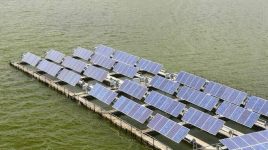
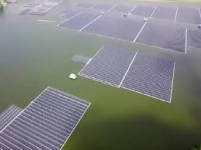
Pakistan’s first 550MW floating solar energy project has been launched.

Sindh Energy Minister Syed Nasir Shah on Thursday participated in the signing ceremony of the memorandum of understanding between the Department of Energy and Go Energy (Private) Limited for the 550MW floating solar energy project on Kinjhar Lake.

Secretary Energy Musaddiq Ahmed Khan, CEO-STDC Salim Shaikh, CEO-Go Green Amar Ali Talat and Director K-Electric Haris Siddiqui were also present.

Syed Nasir Shah said on this occasion that Go Energy Private Limited is making this project with the cooperation of STDC, Sindh Energy Department and Sindh Irrigation Department. STDC Kinjhar Lake Power Project will lay a 220kv transmission line of about 60km to K-Electric grid station Dhabeji Karachi. He said that K-Electric is the off-taker of the 500MW floating power project for which K-Electric has provided Letter of Intent (LOI) and Energy Department has also provided a Letter of Intent (LOI).

He said this project is environmentally friendly as it will help prevent water evaporation and will be beneficial for aquatic life. The project will also benefit land conservation and this project is environment friendly which will promote green energy in Sindh and provide source of affordable electricity. He said this project will boost the economy of Sindh province by creating jobs.

Nasir Shah said the government of Sindh is determined and trying hard to utilize these renewable resources at a faster pace and our effort is to reduce the overall basket tariff of NEPRA and make it more affordable electricity for the common people of the country.

Apart from tariff reduction, renewable energy will also contribute to the achievement of sustainable development goals to create a clean, reliable and sustainable environment and we hope to complete the project by the end of 2026.

Secretary Energy Musaddiq Ahmad Khan said that on the special directives of Minister Energy, work is underway on several projects to provide cheap and free electricity to the people. He said mini-grid stations will be set up at the district level to provide affordable and environment-friendly electricity to the remote areas of Sindh.

Secretary Energy said that the cost of electricity generated from this floating plant will be Rs.15 per unit which will be much low price than other power generation plants.

Earlier, STDC CEO Saleem Sheikh and Go Green Energy CEO Amar Ali Talat signed the MoU.
 

Chinese wind power technology new green source for Karachi’s captive energy market​

Gwadar Pro
Sep 8, 2024

ISLAMABAD - Orient Energy Systems, a local renewable solutions company, on September 6 announced completion of erection and installation of a total 38.4 MWs of wind power plants, comprising 8 Gold wind turbines of 4.8 megawatts capacity each.

The development, powered by China’s prominent manufacturer, Goldwind, showcases wind power as another source of clean, green and low-cost energy for captive power market in the country’s Southern port and industrial city of Karachi.

Six of the 8 turbines were installed at Lucky Cement Ltd., Karachi while two of the turbines were installed at Yunus Textile Mills, Karachi.

The Goldwind turbine, boasting an impressive hub height of 110 meters, is the largest wind turbine ever installed in the country, Orient Energy earlier said.

The 6*4.8 MWs Lucky Cement plant is arguably the largest captive wind power plant in the country.

The first captive wind power plant of 2*4.8 MWs capacity was installed by Liberty Mills, Karachi in March this year.

Orient Energy has signed an agreement with the Goldwind for provision of 150 MWs wind power plants for Pakistan’s captive market.

Wind power plants have an edge over other renewable sources as these can run round the clock.
 

Pakistan sets 60% renewable energy goal for 2030, NA told


Share of on-grid renewable capacity currently stands at 37 percent, says energy minister

Zulfiqar Ahmad | Naveed Butt
December 6, 2025

ISLAMABAD: The National Assembly was informed on Friday that the country is making significant strides towards a greener future, with the government setting ambitious targets to increase the share of renewable energy in the national grid to 40 percent by 2025 and 60 percent by 2030.

In a written response to questions posed by lawmakers, Awais Leghari, the Minister for Energy (Power Division), said the country has already surpassed its 2025 target, with renewable energy accounting for more than 46 percent of Pakistan’s power generation mix as of September 2025.

He noted that the share of on-grid renewable capacity currently stands at 37 percent, but this figure is expected to rise significantly as both private and public sector projects continue to come online.
 
Leghari highlighted that 60 private sector renewable energy projects, developed under the Private Power and Infrastructure Board (PPIB), are currently operational, contributing a total of 4,753 megawatts (MW) to the national grid.

These projects include 680 MW of solar power, 1,937 MW of run-of-river hydropower, 1,845 MW of wind energy, and 291 MW of bagasse cogeneration.

Additionally, public sector projects like the 9,619 MW hydropower plants and 100 MW solar energy capacity at Karachi’s K-Electric are helping to further increase the renewable energy share.

“Pakistan’s clean energy share has exceeded 46 percent, surpassing our 2025 renewable energy target years ahead of schedule,” he said, emphasising the importance of the government’s renewable energy policies in securing the nation’s long-term energy needs.

In a move to further promote clean energy, he said that the government is encouraging solar energy adoption at the consumer level across residential, commercial, and industrial sectors.

He said that net-metering regulations, which allow individuals to generate and share solar or wind power with the grid, are seen as a key strategy to expand renewable energy use across the country.

Leghari also pointed out that the government is working to streamline the power sector, citing a reduction of Rs780 billion in circular debt over the past year.

He noted that circular debt, a persistent issue in the energy sector, stood at Rs2,393 billion as of 30 June 2024, but had dropped to Rs1,614 billion by 30 June 2025.

He attributed this decline to a combination of efforts, including negotiations with power producers to reduce late payment interest charges and improvements in the efficiency of distribution companies (DISCOs).

“Our goal is not just to enhance renewable energy capacity, but also to ensure a sustainable and efficient energy system for the country,” he added.
 

“Energy Security” Makes Us Less Secure. Renewables Are The Answer​

1 day ago
82 Comments


If there is a lesson to be drawn from the horrific events in the Middle East initiated by the corrupt government in Washington, it is that the path to peace is through renewable energy — not armaments, boots on the ground, or “regime change.” Writing on The Climate Brink on Substack, Andrew Dessler, a professor of atmospheric sciences at Texas A&M, said, “When people debate the cost of fossil fuels versus renewables, the conversation almost always centers on the price at the pump or the cost per kilowatt-hour of your electricity bill. That’s understandable — those are the costs you can see — but they’re not the whole story.”

Dessler says the discussion usually focuses on subsidies for renewable energy, but fossil fuels get enormous subsidies as well. They are deeply hidden, however, as they are spread across government budgets, healthcare systems, and military spending in ways most people can’t connect back to their energy choices. To the extent that they do get attention, most of it goes to the implicit subsidy for fossil fuels from climate change and air pollution, which economists have valued at trillions of dollars per year.

Hidden Costs Of Fossil Fuels​

“There’s another hidden subsidy that few talk about — national security. As oil prices surge in response to US attacks on Iran, that cost is impossible to ignore.” According to Securing America’s Future Energy, a nonpartisan national security organization led by retired senior military officers, about one fifth of the entire Department of Defense base budget exists, at least in part, to keep oil flowing through vulnerable choke points like the Strait of Hormuz, the Suez Canal, and shipping lanes in the South China Sea.

The US each year spends more than $81 billion to protect the global supply of oil, but that cost does not appear at the gas pump. That makes it a subsidy, paid for by taxpayers, which makes oil look cheaper than it actually is. Spread across all US oil consumption, it is equivalent to about $11 per barrel — or about 28 cents per gallon — money that is hidden in the defense budget.

For a typical fill-up, that subsidy amounts to about $5.00, and that is just to be ready for war, Dessler says. Once the shooting starts, the costs go up exponentially. The 2003 Iraq War’s cost was estimated to be $3 trillion, which translates to nearly $10,000 per US citizen. Dessler says:

“When you add it all up, fossil fuels are not cheap. They’ve never been cheap. We’ve just been brilliant at hiding the costs — in the defense budget, in emergency rooms, in FEMA disaster relief, and so forth. And it’s not just the cost of fighting the war. Despite trillions spent protecting global oil routes, we will always be economically vulnerable to disruption in oil supplies.

“Why? Because oil is a globally priced commodity, meaning everyone pays the same price. When something disrupts supply anywhere in the world, prices go up everywhere, including the US. This happens despite the United States being the largest oil producer in the world.

“We saw this play out in real time just last week. Following U.S. and Israeli strikes on Iran, oil prices surged. Gas prices are following. And this was before the conflict escalated to directly threaten the Strait of Hormuz, through which roughly 20 percent of the world’s petroleum and LNG flows every day.

“Fossil fuel pushers don’t want you to understand this. And they particularly don’t want you to recognize that the price of solar energy and wind energy is not affected by events in the Middle East [emphasis added]. A missile strike on Iranian oil infrastructure has zero effect on the cost of generating electricity from a solar panel in Texas or a wind turbine in Iowa. The ‘fuel’ — sunlight and wind — is free, domestic, and geopolitically inert.”

Geopolitical Risks​

One of the primary reasons why China is pushing electric vehicles so strongly with government policy is that it imports most of its oil, which has opened it to enormous geopolitical risk. Electric vehicles charged by solar energy are an important way for China to address the national security problems created by fossil fuels, Dessler says.

“In many parts of the country and world, solar and wind are now the cheapest sources of new electricity generation — not because of subsidies but because the underlying economics have shifted irreversibly. Renewable energy is the only credible path to energy and economic security. Drill, baby, drill is a fantasy — and an expensive one. More drilling means more pain, not more security.”

The unprovoked attack on Iran has cut the world off from LNG. Liquefied natural gas from Qatar was a safe energy bet for countries across Europe and Asia, but now they face an energy crisis. On March 5, 2026, Qatar shut down LNG production at a facility in Doha after Iranian attacks targeting energy installations, cutting off nations from India to Italy from a crucial energy source and potentially increasing costs for key industries in the United States.

“It’s worth pausing to appreciate what fossil fuels made possible. They powered our civilization for the last 200 years. But the transition to renewable energy isn’t a rejection of that legacy. It is the next chapter and a better one,” Dessler contends.

Krugman On Renewables & Energy Security​

Paul Krugman agrees. In his Substack post on March 6, 2026, he wrote that by attacking Iran, the deranged US president made a strong case for renewable energy, not because it does less damage to the environment but because dependence on fossil fuels is a threat to national security. “In a dangerous world, it’s infinitely safer to rely on the sun and the wind than to depend on fossil fuels that must be transported long distances, from nations that are untrustworthy, often exploitative, and located in regions that frequently devolve into war zones.”

Anyone with a fourth grade education should be able to comprehend Krugman’s argument, and yet most of those leading the US government cannot. “The current situation in the Middle East is essentially the worst-case scenario for world energy supplies. Normally around 20 percent of the world’s oil supply transits through the Strait of Hormuz. It’s also a crucial route for shipment of liquefied natural gas and fertilizer. That passage is now effectively closed and there are no good alternatives. Oil industry experts predict that the squeeze on oil supplies will become much more severe if the Strait isn’t re-opened within a few days.”

Krugman notes that while the price of oil has increased, the price of gasoline has gone up much more quickly. Are oil companies taking advantage of the situation to extract additional profits? What do you think?

The so-called US president — in his lucid moments — rails against renewable energy, probably because the fossil fuel industry has so generously supported his lunacy for their own private benefit. But Krugman suggested the UK and other European nations must be wishing they were getting an even larger share of their energy from renewables rather than natural gas, which would free them both from the idiocy of Trump’s delusions and the Middle East war.

Choices​

Writing in the Financial Times this week, Alan Beattie puts energy policy in the context of geopolitical rivalry by saying the competing positions of the economic superpower are:

  • From the US you get forced into trade deals promising a future of burning fossil fuels whose price is subject to wildly destructive US adventurism.
  • From China you get reliably cheap EVs and green tech to generate renewables.
Krugman adds, “The problem with demands that nations ‘burn, baby, burn’ isn’t just American adventurism. It’s also the fact that relying on the United States for LNG, which is what doing things Trump’s way would amount to, is itself unsafe. Are you sure that Trump or a Trump-like future president won’t cut off energy supplies to nations that annoy him? I’m not.

“So the US war against Iran is making a strong case for nations around the world to seek energy independence. And for those nations that don’t have large fossil fuel reserves, that means wind and solar (and, yes, nuclear.) Donald Trump, hero of renewable energy? Who knew?”

The bottom line for Krugman is the old law of unintended consequences. Or put another way, “Be careful what you wish for, you just might get it.” Renewables equal energy security. Fossil fuels equal someone always has a knee on your neck. What do you think is a better long-term strategy for you and your community?
 

'Made in Pakistan' clean energy push begins​


E-Cluster model to localise Chinese tech, build domestic production capabilities

China Economic Net
August 15, 2026

tribune


SUZHOU: An "E-Cluster" model is being implemented in Pakistan to establish an integrated clean-energy manufacturing ecosystem across the country, with the aim of transforming Pakistan into a regional clean energy manufacturing and technology hub, according to China Economic Net.

Qasim Kamal, Group Director of Suzhou IBI Engineering (Belt & Road Economic and Trade Centre), said high-end technological capabilities, manufacturing know-how, quality standards and supply-chain expertise will be progressively introduced and localised in major industrial hubs in Pakistan.

"At the heart of the initiative is the transfer and localisation of Chinese technology and industrial expertise. The goal is to build Pakistan's own production capabilities and develop competitive 'Made in Pakistan' products and brands," he said.

Through a phased localisation strategy, production will adopt a completely knocked down (CKD) assembly model in the initial stage, allowing manufacturing to begin while local capabilities are developed. Over time, localisation of key components will increase, eventually leading to the establishment of a comprehensive domestic supply chain.

"For the first time, the '3+3' model is developed in Pakistan," Kamal said. "The Chinese side provides technology transfer, R&D support, manufacturing lines and integrated supply-chain capabilities. Local partners provide land, regulatory approvals, market development and sales capabilities."

Joint R&D projects are being established in cooperation with Pakistani universities and local industry partners to cultivate indigenous research capacity and develop new technologies.

The programme is also exploring hydrogen fuel-cell technologies to develop market-competitive solutions as hydrogen technologies mature, Kamal said.

The initiative, conceived in 2022, has now entered implementation phase in 2026, bringing four to five partners into the programme covering battery manufacturing, electric-vehicle production and energy-storage systems. Large-scale production is expected to begin within five to six months.
 
Pakistan has become one of the fastest-growing new energy markets in Asia and globally, with cumulative solar PV deployed capacity reaching 38 GW by FY25, from less than 2 GW three years ago. Lithium-ion battery energy storage system (BESS) imports rose 220% year-on-year to 4.6 GWh in calendar year 2025, according to Renewables First, a think tank.

Earlier this month, Federal Minister for Power Awais Leghari unveiled an ambitious roadmap to increase clean electricity's share to 90% by 2035, up from the current level of 55%.

"For long, Pakistan's renewable market has been driven by import. Through the initiative, we aim to transform Pakistan into a regional clean energy manufacturing and technology hub, creating local jobs and added value," Kamal added.
 

Users who are viewing this thread

Country Watch Latest

Back
Top