Royal Moroccan Armed forces

Moroccan negotiations on the acquisition of F-35 fighters are progressing rapidly​

October 22, 2025:

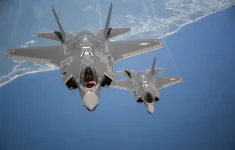
A report issued by the Africa Intelligence website, which specializes in intelligence affairs in the region, revealed that Moroccan negotiations regarding the acquisition of the advanced American F-35 fighter are going well, with clear indications of tangible progress in the course of the negotiations.

1761191227260.webp

According to the newspaper, Morocco has obtained official Israeli approval to supply these fighters, within the framework of what is known as “Israel’s Qualitative Military Edge Law,” which gives Israel security and military advantages that prevent any country in the Middle East from superiority over it.

African Intelligence confirmed that it had seen official documents regarding these negotiations, and also obtained official statements confirming that Israel does not mind supplying Morocco with these fighters, which indicates a strong desire on the part of both parties to complete the deal within a political and technical framework compatible with international laws.

This step is considered part of Morocco's strategy to enhance its air capabilities and arm itself with fifth-generation fighters, which reflects the Kingdom's keenness to keep pace with modern military developments and modernize its air fleet in line with regional and international challenges.

For his part, the newspaper's sources indicate that the talks include precise technical details about types of armament, radar systems and advanced combat capabilities, in addition to training programs and logistical support, which indicates that the deal will not be limited to merely delivering aircraft, but rather includes an integrated structure to support long-term operation.

Therefore, the Moroccan negotiations on F-35 fighters appear to be a prominent example of strategic coordination between Morocco and the United States, emphasizing that this deal represents a qualitative step to strengthen Moroccan air power within the context of preserving regional balances in the Middle East and North Africa.

1761191374703.webp

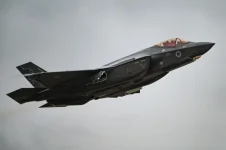
The aircraft is designed to reduce the cost of operation and maintenance compared to previous generations of fighters, with autonomous systems to detect faults and facilitate maintenance, allowing it to fly for long periods without the need for continuous interventions. Its internal and external fuel capacity gives it a long range that enables it to carry out long-range missions without the need for frequent refueling, while advanced flight control systems ensure exceptional stability and accuracy in various combat conditions.
 
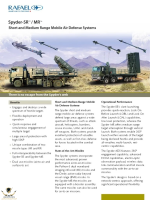
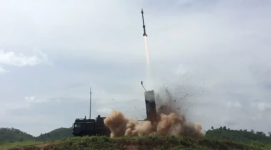
Zona Militar newspaper confirmed that the Czech Republic and Morocco have chosen the Spyder air defense system to enhance their short-range air defense capabilities, while Greece is negotiating the same system

1778000708823.png

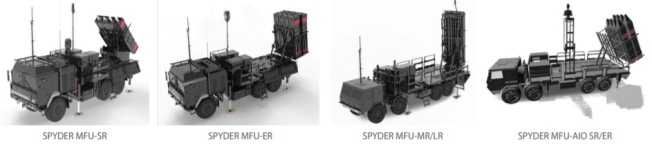
The Israelis provide the battery with 6 launchers and 3 radars, according to the customer’s desire.

The lineup comes as either SR/ER due to the similarity to projectiles with inclined launches with 360 degree coverage, or MR/LR due to the similarity to projectiles with vertical launches with 360 degrees coverage.

The MIXED battery can also be diversified between inclined and vertical firing with different and varied ranges and heights.

The system has capabilities to repel ballistic missiles after the latest development, and an independent version has also been developed to accompany convoys, but it remains weak in terms of the number of missiles.

Regarding radars, the Spider can work with ELM-2084, ELM-2138M, which Morocco acquired with Barak.. And finally, ELM-2106 ATAR

1778001161519.png

1778001476537.png
 
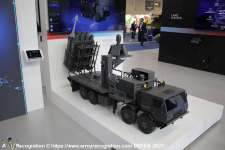
The first appearance of the Israeli short- and medium-range "SPYDER" air defense system in Morocco

The Israeli SPYDER air defense system appeared for the first time in Morocco. This appearance drew attention to the system's reliance on Tatra 8×8 trucks, which appeared longer and more capable compared to the Tatra 6×6 trucks that appeared alongside them, reflecting a clear difference in payload and operational capabilities.

1778007821889.png

Data indicate that Morocco has likely moved towards the latest version, SPYDER All in One, which is an integrated version that combines radar, electro-optical sensor systems, command and control system, and missile launchers within one platform. This version was specifically designed to escort military convoys and provide immediate and mobile protection against air hazards, while reducing the need for direct human intervention.

The Spyder system is produced by the Israeli company Rafael Advanced Defense Systems (Rafael Advanced Defense Systems), and is currently used by a number of armies around the world. This system provides an integrated solution to deal with a wide range of threats, including fighter aircraft, helicopters, drones, cruise missiles, and even some types of tactical ballistic missiles.

"Spyder" relies on two main families of interceptor missiles: "Python-5" (Python-5) missiles guided by infrared and electro-optical imaging, and "Derby" (Derby) missiles equipped with active radar guidance. Each launch unit is capable of carrying four missiles of either combination of these two types, providing high operational flexibility depending on the nature of the threat.

 
1782269329273.png

The Moroccan F-16 Viper has become a monster with AESA radar and AMRAAM C8 missiles.

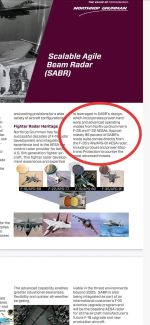
It is the APG-83 radar derived directly from the F-22 and F-35 radars from Hardware and Electronics... and 95% of the radar countermeasures are the same as those found in the F-35 radar to confront threats.

1782269626023.png

Notably, the launch range of the AIM-120C-8 has increased by approximately 50% over the AIM-120C-7, reaching up to 180 km.

AIM-120D P3I Phase 4 (formerly known as AIM-120C-8)
 
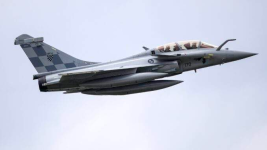
Advanced Moroccan-French negotiations to purchase up to 18 Rafale F4 fighters​
1783370275822.png
Direct negotiations between the two governments

According to what was reported by the French business newspaper “L’Essenciel du Lecho”, citing Spanish defense media, the discussions are taking place directly between the Moroccan and French governments, and could lead to the delivery of the aircraft during the years 2030 and 2031, in line with the production schedule of the manufacturer, Dassault Aviation. To date, Rabat or Paris have not issued any official confirmation of these negotiations, which requires dealing with the circulating details with some caution.

The Rafale F4, with its advanced electronic warfare system “Spectra” and its long-range combat capabilities, is the closest option to counterbalancing any potential regional air superiority with fifth-generation fighters.

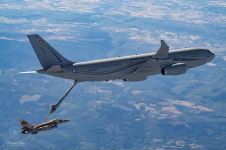
Circulating information indicates that potential defense cooperation may not be limited to fighters, but rather extends, according to French reports, to future options that include A330 MRTT air refueling aircraft and Scorpene-class submarines for the Royal Navy.
 
In a $524 million deal that includes 18 platforms.. The US Army reveals the schedule for delivering 10 Himars systems to Morocco during 2027

 
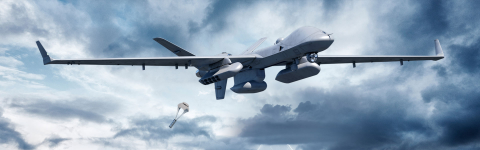
Washington agrees to sell Morocco four advanced MQ-9B SeaGuardian drones​

1789228027023.png

SeaGuardian is designed to fly over the horizon via satellite for over 30 hours (depending on configuration) in all types of weather and safely integrate into civil airspace, enabling joint forces and civil authorities to deliver real-time situational awareness anywhere in the maritime domain—day or night. This highly versatile maritime patrol and reconnaissance aircraft can seamlessly integrate a centerline wide-area maritime radar, an automatic identification system, electronic support measures, and a self-contained anti-submarine warfare (ASW) mission kit. SeaGuardian not only integrates the most advanced maritime intelligence, surveillance, and reconnaissance (ISR) capabilities, but it is also the first RPAS in its class to enable real-time search and patrol above and below the ocean’s surface.
 
Spanish "Larathon": After Saudi Arabia.. Morocco aims for 32 F-35 fighters in $18 billion deal
 
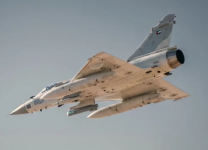
Morocco is close to strengthening its air force with 30 Emirati Mirage 2000-9 fighters​

1790374505174.png

According to the Moroccan website Le Desk, the discussion revolved around transferring approximately 30 Mirage 2000-9E fighter jets to the Royal Moroccan Air Force, representing nearly half of the UAE's fleet of this model. Deliveries were expected to begin in 2027, coinciding with the entry into service of the first Emirati Rafale F4 fighter jets.

The Mirage 2000-9 is of particular importance to Morocco because it represents a significant leap forward compared to the older Moroccan Mirage F1 fighters. The Royal Air Force already operates Mirage F1 fighters that have undergone extensive upgrades to the MF2000/ASTRAC standard, making the transition to the Mirage 2000-9 platform more in line with previous experience operating French fighters. The UAE fighter can use MICA air-to-air missiles, guided bombs, and the long-range Black Shaheen missile, which is the export version of the SCALP/Storm Shadow family.

1790374634875.png

The UAE's Mirage 2000-9 is one of the most advanced versions of the Mirage 2000 family. Developed specifically to meet the requirements of the UAE Air Force, it has undergone a wide range of upgrades, transforming it into a multirole fighter capable of air superiority, interception, ground attack, long-range strike, and maritime operations. The aircraft features the RDY-2 multi-role radar, capable of air-to-air, air-to-ground, and air-to-sea missions, with the ability to track multiple targets and utilize high-resolution ground mapping and moving target tracking.

The UAE version is also equipped with an advanced electronic warfare suite known as IMEWS, along with threat warning and countermeasures systems, enhancing its ability to operate in complex air environments. Furthermore, the aircraft incorporates the Shehab targeting, navigation, and sensor systems, derived from Damocles technology, enabling precise target detection, identification, and guidance of guided munitions, in addition to enhanced low-altitude operating capabilities.

In air combat, the Mirage 2000-9 can carry up to six MICA missiles, available in both the MICA EM active radar-guided variant and the MICA IR infrared-guided variant. Each missile weighs approximately 112 kg and is 3.1 meters long.

For long-range strikes, the fighter is capable of launching the Black Shaheen cruise missile, the UAE's version of the SCALP/Storm Shadow family. This missile has a declared range of approximately 290 km and a warhead weighing approximately 450–500 kg. The UAE ordered approximately 600 Black Shaheen missiles as part of its Mirage 2000-9 armament program.

The aircraft can also utilize a wide range of guided munitions, including laser-guided bombs, Al Hakim air-to-surface missiles, and AM39 Exocet anti-ship missiles. Available armament data shows that the UAE acquired 30 AM39 Exocet missiles for its Mirage 2000 fleet, while the UAE's MICA package included substantial numbers, including 200 MICA missiles at one point in the contract, with other sources documenting even larger total orders within the program.

The fighter jet uses the SNECMA M53-P2 engine, which gives it a speed exceeding Mach 2, with aerial refueling capabilities, thus increasing its range and operational flexibility. For Morocco, acquiring these aircraft would be a significant addition to its F-16 fleet, providing an advanced French platform combining air combat, ground attack, long-range strikes, electronic warfare, and maritime missions.
 
The American L3Harris unveils the new Moroccan spy plane Global 6500, which specializes in monitoring radars and air defenses
​
1790375211209.png

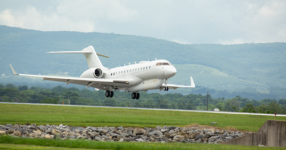
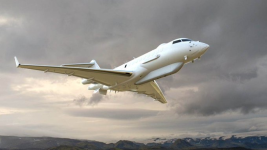
September 13, 2026: L3Harris Technologies revealed a new clip showing the ISR special mission, reconnaissance and intelligence aircraft assigned to the Royal Moroccan Air Force, built on the Bombardier Global 6500 platform, in a step that reflects Morocco's move towards strengthening its capabilities in the field of information gathering and advanced air surveillance.

Reports indicate that the first aircraft has already entered the production and outfitting phase, in preparation for delivery to the Royal Moroccan Air Force. However, the number of aircraft and details of their electronic equipment remain undisclosed.

The importance of this platform lies in its ability to provide advanced intelligence on the operational theater by monitoring targets, tracking troop movements and movements, detecting and locating radars and air defense systems, and gathering electronic information that can be used to support planning and targeting operations.

1790388152725.png

These capabilities are not limited to reconnaissance alone. Special mission aircraft of this type can act as a link between various sensors, air and ground forces, and drones, enabling the provision of accurate and timely information to units deployed in the field.

These capabilities gain particular significance with the introduction of the modern F-16 Block 70/72 fighter jets into Moroccan service. Advanced reconnaissance, command, and control platforms can enhance the effectiveness of fighter jets and drones by providing broader information about the airspace, target locations, and air defense systems.

This type of platform is also related to the concept of ISR, i.e. intelligence, surveillance and reconnaissance.
 
Last edited:
Morocco knocks on the door of the American stealth F-35.. 32 potential fighters in a huge deal
1790377637255.png
​

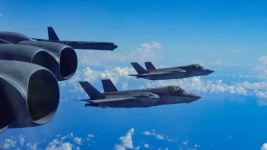
There are growing indications that Morocco is interested in acquiring American F-35A Lightning II fighter jets. If this deal is finalized, it would elevate the Royal Moroccan Air Force to a new level of air power and make Morocco the first African nation to operate this fifth-generation fighter.

Specialized reports suggest that Morocco could acquire up to 32 F-35A fighters, with estimates indicating that the entire program, including training, logistical support, and decades of maintenance, could cost around $17 billion. However, these figures do not yet represent a publicly announced contract or a deal officially approved by the United States.

The issue of Morocco acquiring the F-35 has been circulating for years, particularly following the resumption of Moroccan-Israeli relations in 2020. In February 2025, Aviation Week reported that discussions about a potential Moroccan deal for 32 aircraft had resurfaced strongly, coinciding with Donald Trump's return to the White House. The idea had previously been raised during his first term but did not result in a final agreement. Reports also indicate that Lockheed Martin representatives presented the F-35's capabilities to a Moroccan military delegation at the IDEX exhibition in Abu Dhabi.

The potential deal gains added significance given the rapid development of the Moroccan Air Force's capabilities. The Air Force is upgrading its F-16 fleet to the Block 72 standard, while simultaneously introducing new fighter jets and enhancing its reconnaissance, networking, and electronic warfare capabilities.

Morocco's defense budget has also increased significantly in recent years. According to data related to the 2026 budget, defense spending reached approximately 157.171 billion dirhams, equivalent to roughly $16 billion.

If Rabat acquires the F-35, the impact will not be limited to adding an advanced fighter jet to its fleet. It will also include stealth capabilities, advanced sensors, data fusion, and networked engagement—elements that allow for a more robust air force based on information superiority and operating within an integrated network of sensors and command and control systems.

This possibility arises in the context of escalating military competition in North Africa, particularly with Algeria, which is also moving towards bolstering its Russian air capabilities. With reports indicating Algeria's acquisition of Russian Su-57 fifth-generation fighters, the entry of the F-35 into Moroccan service would add a new dimension to the advanced fighter race in the region.

Israel's role in any potential deal is tied to US policy of maintaining Israel's qualitative military edge in the Middle East. Reports in 2025 suggested that Israel does not oppose Morocco acquiring the F-35; in fact, its positive stance could be a contributing factor to the deal's progress. However, this does not mean that Israel alone has the authority to approve the sale, nor that the deal is a foregone conclusion.

Recent developments underscore the importance of this factor. In May 2026, Israel approved a plan to purchase a fourth squadron of F-35Is and a second squadron of F-15IAs from the United States, as part of a long-term arms deal worth hundreds of billions of shekels. This move confirms Washington's continued commitment to maintaining Israel's qualitative military edge while simultaneously considering advanced deals for its allies in the region.

In the same vein, US President Donald Trump's statements regarding Saudi Arabia's acquisition of F-35s have garnered significant attention. In November 2025, Trump stated that allies seeking the aircraft should receive "the best," rejecting the idea of providing them with inferior versions, in the context of discussing the Saudi deal.

Another factor that could enhance Morocco's chances of acquiring F-35As is Spain's withdrawal from the American fighter option. Madrid decided to focus on the Eurofighter Typhoon and the European FCAS program, halting the preliminary discussions it had initiated with the United States regarding the F-35.

This development is particularly significant given the recent escalation of tensions between Madrid and Washington, making Morocco, with its growing defense partnership with the United States, a prime candidate to benefit from any additional market share in the American F-35.

For Washington, transferring some of the advanced capabilities that Spain had been considering to a reliable ally like Morocco could serve broader objectives in North Africa, especially as Rabat continues to modernize its armed forces and strengthen its defense cooperation with the United States.

Therefore, the specialized reports and increasing indications of Morocco's interest in acquiring 32 F-35A fighter jets reflect Rabat's ambition to reach a new level of air power and possess fifth-generation capabilities. While the deal still requires the completion of formal US procedures and approvals, its realization would represent a qualitative leap in the capabilities of the Royal Moroccan Air Force, making Morocco the first African nation to operate the F-35. This would solidify its position as one of the continent's leading air powers and grant it a significant technological and strategic advantage in North Africa.
 

Users who are viewing this thread

Back
Top