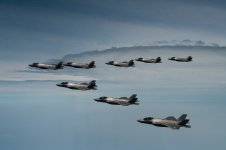
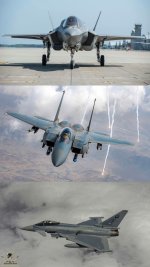
The F-35 is an integrated combat platform created to change the rules of engagement. If you want to summarize the idea: the difference between it and a regular plane is like the difference between a precise weapon that cuts the mission artery, and a scattered bullet that hits luck. I explain to you the main points:
Stealth means entering through the unexpected door.
The stealth feature means that the aircraft can perform depth missions (hitting radars, command and control centers) before the enemy realizes that the attack has begun. This "golden time" in battles changes outcomes - because you break the opponent's ability to alert and coordinate.
Integrating sensors (Sensor Fusion) gives the pilot a single tactical image.
Not just a radar or F-35 camera that integrates AESA radars, infrared surveillance, electronic warfare systems, and data links, providing the pilot (and allies) with a "unified combat image". This reduces decision-making time and increases the success rate of the task.
Network Warfare (Networked Warfare) F-35 as a command platform.
The plane acts as an informational "Hub": it participates momentarily with aircraft, ships, satellites and guidance missiles. Even if she doesn't hit the target, her information enables other elements to deliver the hit. This ability to bind is why it is a force multiplier (force multiplier).
First strike capability and loss reduction.
In advanced battle scenarios, whoever controls the air defense layer and paralyzes command centers has a huge advantage. The F-35 is designed to minimize detection of attacking force and execute accurately, reducing the potential for long and costly escalation.
Continuous updates are not a "final product" but an evolving system.
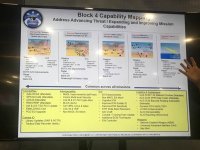
The update software (Block/Continuous upgrades, TR-3, Block-4, etc.) makes investments renewable and relevant to new threats. This means that you are not buying an "airplane of the day" and it expires; you are buying an upgradeable platform. (It is true that there are time and technical challenges in some recent updates, but the principle remains.)
American Politics and Restrictions - Real Truth.
Of course, there is a political dimension: sales like this go through complex approval processes (Pentagon, White House, Congress) and criteria for "maintaining Israel's qualitative superiority" (QME). This means that the conditions for technology transfer and localization may be strict or have specific exceptions. But this is political and doesn't negates that purchasing the platform itself provides immediate and significant capacity.
Finally, the pressure of the AIPAC is stronger than the president himself, and whoever knows how to make decisions in Washington knows that Congress sometimes stops any deal that contradicts their interests or shakes Israel's military superiority.
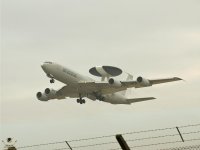
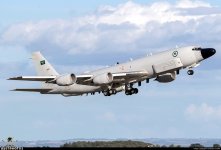
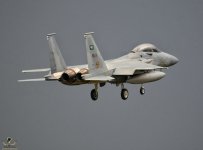
However, KSA could win it like it won the AWACS and the F-15 deals despite the opposition of AIPAC at the time, which later turned into one of our most successful defense deals and the most influential in the balance of power in the region. History repeats itself, and the historical opportunity may be repeated if Saudi diplomacy moves with the same acumen from which we knew it.