Navigation
Install the app
How to install the app on iOS
Follow along with the video below to see how to install our site as a web app on your home screen.
Note: This feature may not be available in some browsers.
More options
Style variation
You are using an out of date browser. It may not display this or other websites correctly.
You should upgrade or use an alternative browser.
You should upgrade or use an alternative browser.
Royal Saudi Arabia Armed forces
- Thread starter The SC
- Start date
More options
Who Replied?

AZ_HighCountry
INT'L MOD

Am I seeing that right? They are carrying AKs?
rakib
Registered Member

Comprehensive Operational Plan
Phase 1: The Sea and Land Cordon (Starving the Pipeline via the MMDA)
The strategic goal is to cut the flow of Iranian missile and drone components before they reach Yemeni assembly caves.
Phase 2: The Makkah MDA Tactical Drone Project (The Local Factory)
Instead of importing finished products, Saudi Arabia will finance a localized manufacturing ecosystem to build un-jammable, low-cost weapon systems.
Phase 3: Border Protection, Counter-Insurgency, and Specialized Use Cases
Deploying the newly manufactured MDA drone fleet alongside specialized Turkish systems to secure the Southern Border and neutralize Houthi units.
Phase 4: Sustainable Air Defense (Flipping the Economic Math)
Replacing multi-million dollar air defense systems with a tiered, cost-effective interception grid to absorb Houthi salvos. Note that recently introduced low-cost development platforms like MBDA's CMI, Lockheed Martin's PAC-3 ACE, or the exo-atmospheric SİPER Block 4 are currently unavailable for active combat deployment (with test flights and full rate production targeted between 2027 and 2028). The current active interceptor grid relies on immediately available systems:
Phase 5: Legal & Diplomatic Activation
Under the collective defense mandate of the Mecca Defense Alliance (MDA), Saudi Arabia can formally trigger a joint command structure. With recent Houthi strikes directly threatening Saudi infrastructure, activating this mechanism allows Pakistani military units and Turkish technical support teams to legally deploy to operational sectors, distributing the strategic and operational weight of the defense campaign seamlessly across all three sovereign allies.
Phase 1: The Sea and Land Cordon (Starving the Pipeline via the MMDA)
The strategic goal is to cut the flow of Iranian missile and drone components before they reach Yemeni assembly caves.
- High-Altitude ISR Drones peer sideways from safe airspace (100km+ off-shore) to look for anomalous behavior.
- If a target is flagged, the MMDA Naval Task Force deploys high-speed boarding teams (VBSS) to choke the smuggling pipeline.
- Naval Cordon (The Dhow Shield): Deploy Turkish-built MILGEM-class corvettes operated jointly with Pakistani naval personnel under the MMDA command structure headquartered in Riyadh. This force polices the Arabian Sea and the Bab al-Mandeb strait.
- Standoff Night Tracking: Station long-range maritime UAVs at an altitude of 25,000+ feet, remaining 100 to 200 kilometers off the Yemeni coast to stay out of range of Houthi Saqr (358) loitering anti-air missiles. Use FLIR thermal optics at night to flag unflagged dhows riding low in the water or executing mid-ocean cargo handoffs.
- Horn of Africa Choke Point: Leverage MMDA members Djibouti, Somalia, Sudan, and the Comoros to monitor East African transshipment hubs. This stops Houthi front companies from hiding drone electronics and microchips inside civilian cargo before moving them onto local wooden dhows.
- The Land Blind Spot: Secure the eastern border transit lines by deploying automated ground sensors and Turkish Asisguard Songar drones to act as airborne border sentries, preventing smuggled electronics from crossing over by land.
Instead of importing finished products, Saudi Arabia will finance a localized manufacturing ecosystem to build un-jammable, low-cost weapon systems.
- Saudi Arabia (SAMI/GAMI): Financially anchors the decentralized production facilities, establishing factory lines inside Pakistan to scale output rapidly.
- Pakistan (The Workshop): Utilizes its domestic high-tech manufacturing capacity (such as the Alsons Group) to produce localized drone frames and brushless drone motors, bypassing Chinese export blocks.
- Turkey (The Optics/Weapons Hub): Integrates stabilized thermal payloads and laser target designators onto the platforms.
- Ukraine (The Tech Loop & Training): Fast-tracks the transfer of full technical blueprints under its "Drone Deal" framework. Ukraine provides the source code for 100% jam-immune fiber-optic telemetry spools. Crucially, Ukrainian specialists run intensive courses for local mechanics, assemblers, and frontline pilots, teaching them how to spool micro-fiber cables correctly, handle explosive initiators safely, and fly in heavy electronic warfare environments.
- Payload and Interceptor Standardization: The localized drone mass-production line will standardize simple, cheap RPG payloads (using legacy RPG-7 anti-tank warheads) via 3D-printed release or impact detonation brackets, mimicking Ukrainian frontline doctrine. These FPV frames are engineered strictly as 100% expendable one-way munitions without recovery logic. Additionally, the Pakistan facility will directly assemble STING and MaXon AI-assisted interceptor drone units to secure organic, regional mass production.
Deploying the newly manufactured MDA drone fleet alongside specialized Turkish systems to secure the Southern Border and neutralize Houthi units.
- Night-Hunting Mountain Operations: Deploy 15km–25km Ukrainian-blueprinted fiber-optic FPV kamikaze drones (costing $1,500–$3,000 with thermal lenses) to flush out Houthi fighters using simple RPG payloads.
- Immunity to Electronic Warfare: Because these drones unspool physical glass-fiber wires, they are completely immune to Houthi/Iranian radio-frequency jamming. They provide crystal-clear HD thermal video feeds directly into hidden mountain caves and ridges.
- The Asisguard Songar Reusable Use Cases: While cheap FPVs handle one-way strikes, the reusable Turkish Asisguard Songar and Gök Alp drone platforms are deployed for specific high-value tactical roles:
- Convoy Protection & Ambush Mitigation: Hovering over moving columns to provide air-to-ground suppressive machine gun fire or rotary grenade launcher barrages when technical trucks attack. Includes an emergency "Cut-and-Return" pyrotechnic cutter module to cleanly drop its trailing fiber-optic line if snagged, booting internal VIO visual-mapping software to fly back autonomously in total radio silence.
- Base & Border Security (Sentry Duty): Acting as an automated perimeter watch at night using FLIR thermal optics to intercept intruders before they breach fences.
- Precision Laser-Guided Strikes: Operating out of the range of small arms to paint targets and launch micro-munitions like Troy Tech micro-missiles or Roketsan MAM-C glide bombs into cave openings or sniper positions.
Replacing multi-million dollar air defense systems with a tiered, cost-effective interception grid to absorb Houthi salvos. Note that recently introduced low-cost development platforms like MBDA's CMI, Lockheed Martin's PAC-3 ACE, or the exo-atmospheric SİPER Block 4 are currently unavailable for active combat deployment (with test flights and full rate production targeted between 2027 and 2028). The current active interceptor grid relies on immediately available systems:
- Tier 1: Anti-Drone Swarms (The $2,000 Kill): Deploy locally assembled Ukrainian "STING" or MaXon AI-assisted interceptor drones. Capable of hitting 300+ km/h, these platforms use autonomous machine-vision to ram or detonate next to Houthi Wa'id (Shahed-136) and Samad drones, matching the threat dollar-for-dollar.
- Tier 2: Counter-Cruise Missile Defense: Protect ports and coastal facilities using Turkey's GÖKDENİZ CIWS firing smart air-bursting ammunition. This stops $80,000 Quds cruise missiles without burning through high-end missiles. Close-in weapon systems (CIWS) cannot hit or intercept hypersonic ASBMs due to tracking speed limits.
- Tier 3: Ballistic Shield (The ASBM Interceptor): Neutralize fast-descending, hypersonic Palestine-2 anti-ship ballistic missiles by utilizing the MDA’s frontline long-range surface-to-air systems, such as Turkey's SİPER Block 1 (Mach 4+, 20 km ceiling) and HİSAR-O+ (Mach 2+, 15 km ceiling) air-defense batteries, cued by the ALP 300-G long-range S-band AESA radar to absorb hypersonic salvos safely during their terminal atmospheric entry phase.
Under the collective defense mandate of the Mecca Defense Alliance (MDA), Saudi Arabia can formally trigger a joint command structure. With recent Houthi strikes directly threatening Saudi infrastructure, activating this mechanism allows Pakistani military units and Turkish technical support teams to legally deploy to operational sectors, distributing the strategic and operational weight of the defense campaign seamlessly across all three sovereign allies.

The SC
INT'L MOD
- Thread starter
- #575
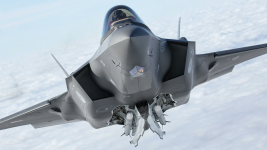
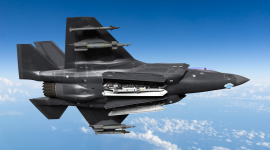
Saudi F-35 deal reaches Congress
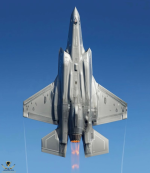
The US State Department has referred the sale of F-35 Lightning II fighter jets to two congressional committees, a move that paves the way for final approval and brings the Saudi-American deal closer to a final contract, according to The New York Times, citing US officials.
This step comes after US President Donald Trump announced in November 2025 his approval of the sale of F-35 fighter jets to Saudi Arabia, confirming that the United States would proceed with the sale.
According to the US officials quoted by The New York Times, the deal includes 48 F-35 fighter jets, along with spare engines, components, equipment, and services related to the program, with a total value of approximately $24 billion.
The referral of the deal to Congress follows progress in discussions between Riyadh and Washington regarding the Kingdom's acquisition of the fighter jets, which gained prominence in November 2025, as part of a broader effort to strengthen defense cooperation between the two countries.
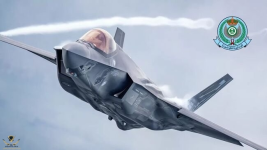
After completing congressional procedures and passing the deal, it will move to the final contractual stage between the United States and the Kingdom of Saudi Arabia, in preparation for the start of implementing the program, including production, processing, training and delivery procedures according to the timetable that will be agreed upon between the two sides.
Thus, the Saudi F-35 deal enters a new phase, after moving from the framework of negotiations to the official path of the necessary American procedures in preparation for completing the contract.
The SC
INT'L MOD
- Thread starter
- #578
What will the F-35 add to the Saudi Air force?
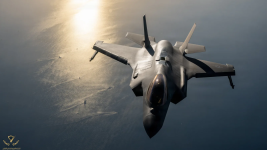
Why is the F-35 generating so much interest? Simply because its introduction to any air force doesn't just mean adding a new fighter jet, but rather introducing a different generation of air combat that relies as much on stealth, intelligence, and sensors as it does on speed and missiles.
With the US State Department's approval of a potential deal for 48 F-35 fighters for Saudi Arabia, the most important question arises: What can this aircraft add to the Royal Saudi Air Force if the deal is finalized?
What it can offer: The first thing the F-35 offers is stealth. The aircraft's design, the materials used in its construction, and the fact that its weapons are carried internally in a stealth mode make it much more difficult for radar to detect and track compared to previous generations of fighters. This doesn't mean it's "invisible," but it increases its ability to operate in environments with advanced air defense systems.
But surprisingly, the most important weapon in the F-35 might not be a missile; The aircraft is equipped with an advanced suite of sensors, including an AESA radar, an electro-optical targeting system, and sensors distributed around the aircraft. It then integrates the incoming information to provide the pilot with a comprehensive picture of its surroundings.
For the Royal Saudi Air Force, this capability could be a significant addition. The F-35 is not merely a weapons launch platform; it can collect, analyze, and share information with other platforms, contributing to a more complete picture of the airspace. This makes the value of 48 aircraft far greater than just the number of planes themselves.
In numbers: The F-35A has a top speed of approximately Mach 1.6, a range exceeding 2,200 kilometers with internal fuel, and a combat radius exceeding 1,090 kilometers. It can carry up to approximately 8.1 tons of weapons in configurations utilizing internal and external hard-points.
The aircraft also possesses advanced electronic warfare, reconnaissance, and intelligence-gathering capabilities, in addition to its air-to-air combat and ground attack missions.
This is precisely where the potential benefit for Saudi Arabia lies: the F-35 will not necessarily be a replacement for the F-15 and Typhoon fighters, but rather a new layer that can work alongside them, adding fifth-generation capabilities to the Saudi Air Force.

Hakikat ve Hikmet
VIP Member
By of a joke, I mentioned 500K Pak troops are required to secure the KSA/GCC a couple of years back! Looks like it might come true by HIS PERMISSION....
Historically speaking, the Turkic Empires in Persia were more-or-less OK with a dominant Ottoman Empire in the Muslim Heartlands and the Mughal Empire in the subcontinent...
Needless to say, around 40% folks in the present-day Iran are of Turkic origin including Khamnai, Pezishkian etc. A sizeable % of the Pak folks follows Shia Mezheb....
Historically speaking, the Turkic Empires in Persia were more-or-less OK with a dominant Ottoman Empire in the Muslim Heartlands and the Mughal Empire in the subcontinent...
Needless to say, around 40% folks in the present-day Iran are of Turkic origin including Khamnai, Pezishkian etc. A sizeable % of the Pak folks follows Shia Mezheb....
AZ_HighCountry
INT'L MOD
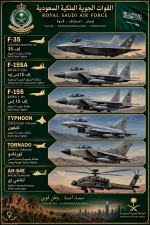
Are the Saudis still flying the Tornado?

Yasser76
Elite Member


Are the Saudis still flying the Tornado?
Yes, they got BAE to upgrade them a few years back I think so have improved capabilities over the standard Tonka
Nimble
SpeedLimited

Saudi airforce which is already among the most modern airforce will become number 1 with F35s..... offcourse Japan, South Korea and Israel too will be number 1.... however after Iran and Houthis who have left the kingdom almost landlocked they should seriously start investing money on building powerful navy and ground forces..... with only air power they can't win.....
The SC
INT'L MOD
- Thread starter
- #584
Only the Navy..they need submarines (working on it with South Korea), the rest is quite powerful..Saudi airforce which is already among the most modern airforce will become number 1 with F35s..... offcourse Japan, South Korea and Israel too will be number 1.... however after Iran and Houthis who have left the kingdom almost landlocked they should seriously start investing money on building powerful navy and ground forces..... with only air power they can't win.....

Hussain
Trusted Member
any idea how many subs?Only the Navy..they need submarines (working on it with South Korea), the rest is quite powerful..
Users who are viewing this thread
Total: 1 (members: 0, guests: 1)
Pakistan Defence Latest
-
 Federal cabinet gives nod to imposition of emergency in KP; summary sent to president (3 Viewers)
- Latest: Goenitz
-
-
-

-
 PTI Murad Saeed in Afghanistan, was 'controlling KP govt' from there: Rana Sanaullah
- Latest: Pakistanithinktank
Country Watch Latest
-

-
Turkiye Builds A Hyperwar Capable Military ( unrivaled in the region ) (13 Viewers)
- Latest: hyperman
-

-

-

Latest Posts
-
-
-
Saudi Arabia Executes Two Bangladeshi Nationals Over 'Having Sex' Inside Mecca Mosque (24 Viewers)
- Latest: Aghor Warrior
-
Turkiye Builds A Hyperwar Capable Military ( unrivaled in the region ) (13 Viewers)
- Latest: hyperman
-
