
Navigation
Install the app
How to install the app on iOS
Follow along with the video below to see how to install our site as a web app on your home screen.
Note: This feature may not be available in some browsers.
More options
Style variation
You are using an out of date browser. It may not display this or other websites correctly.
You should upgrade or use an alternative browser.
You should upgrade or use an alternative browser.
Russia-Ukraine War - News, Discussions & Updates
- Thread starter ghazi52
- Start date
- Status
- Not open for further replies.
More options
Who Replied?
F-22Raptor
Elite Member
F-22Raptor
Elite Member
F-22Raptor
Elite Member
F-22Raptor
Elite Member

BHAN85
Trusted Member

Putin’s Strategic Blunder
May 20, 2024
The blunder began years before February 2022. Putin failed to realize that the US was preparing the overthrow of the Ukraine government. When the overthrow began, Putin took no action to prevent the overthrow. Instead, Russia permitted Washington to take over the former province of the Russian state.
A hostile Ukraine is an existential threat to Russia. Why did Russia stand aside and permit Washington’s takeover? Why did Russia sit for the next 8 years on its hands, rejecting the votes of the independent Donbas republics to be reunited with Russia from which they were torn by Soviet leaders and stuck in Ukraine? The culprit in these strategic blunders was the Kremlin’s lack of realism. Putin relied on diplomacy despite the fact that Washington relies on threats, bribes, and coercion. The Kremlin simply did not understand that with the Minsk Agreement it was saddling a dead horse that could go nowhere.
When Putin was finally forced to intervene by the prospect that the inhabitants of Russian Donbas were about to be slaughtered like Palestinians in Gaza today, Putin failed to respond decisively. Still playing all by himself a diplomatic game, he insisted that there be no Russian invasion of Ukraine, only a “special military operation” to clear hostile Ukrainian forces from Donbas. Lost in a diplomatic world that no longer exists, Putin failed to realize that regardless of what he said or did, Western propaganda would present the intervention as a reconstruction of the Soviet Empire that would extend to all of Europe.
It was immediately obvious that the limited and slow-paced “special military operation” would provide Washington and its NATO puppets abundant time to become involved in the conflict, thus endlessly widening the conflict until the conflict became an existential issue for Russia. This is what has occurred.
Still the Kremlin thinks unrealistically. Putin is on the verge of succeeding with his purpose of driving Ukrainian forces out of, and away from, the Russian populated areas, and the assumption is that the war will be over and Russia’s success will be acknowledged in a negotiated settlement.
This delusion persists despite Russian Foreign Minister Lavrov’s acknowledgement that Washington intends Russia’s destruction. Both Lavrov and Putin continue to stress that they are willing to negotiate with Washington Washington’s intention to destroy Russia. It would be hilarious if it were not so deadly.
Listen to Lavrov’s speech. He understands the threat to Russia but is incapable of matching a Russian response to the threat. https://informationclearinghouse.bl...on-the-battlefield-russia-is-ready-lavrov/13/
Thinking Russia’s intervention to be limited, Putin was unprepared for war. He has done very little to hamper the Ukrainian government’s ability to conduct war. Rather than shutting down Ukraine, Putin chose a long drawn-out village by village conquest. The West interpreted this as limited Russian military capability, and this provided both encouragement and time for the West to involve itself in the conflict.
The West is so involved now and the Western political leaders are so certain that Russia intends more aggression that they are preparing for war against Russia. Still, Putin and Lavrov speak of negotiation. After a decade of the West’s rejection of negotiation, how can the Kremlin still see negotiation as a solution?
What needed to be done was to knock Kiev out of the war, install a Russian friendly government in place of the American puppet regime, and present the West with a fait accompli before the West had time to get involved. It is Western involvement that presents the danger of the conflict widening into a war between Russia and the West.
Possibly the solution is still viable. It would leave a neutral Ukrainian state west of the Dnieper River with no Black Sea access. It is highly unlikely that such an outcome can be achieved by negotiation. It can only be imposed by force.
By restraining Russia’s use of force, Putin has opened the road to nuclear Armageddon.

 www.paulcraigroberts.org

 en.wikipedia.org
May 20, 2024
The blunder began years before February 2022. Putin failed to realize that the US was preparing the overthrow of the Ukraine government. When the overthrow began, Putin took no action to prevent the overthrow. Instead, Russia permitted Washington to take over the former province of the Russian state.
A hostile Ukraine is an existential threat to Russia. Why did Russia stand aside and permit Washington’s takeover? Why did Russia sit for the next 8 years on its hands, rejecting the votes of the independent Donbas republics to be reunited with Russia from which they were torn by Soviet leaders and stuck in Ukraine? The culprit in these strategic blunders was the Kremlin’s lack of realism. Putin relied on diplomacy despite the fact that Washington relies on threats, bribes, and coercion. The Kremlin simply did not understand that with the Minsk Agreement it was saddling a dead horse that could go nowhere.
When Putin was finally forced to intervene by the prospect that the inhabitants of Russian Donbas were about to be slaughtered like Palestinians in Gaza today, Putin failed to respond decisively. Still playing all by himself a diplomatic game, he insisted that there be no Russian invasion of Ukraine, only a “special military operation” to clear hostile Ukrainian forces from Donbas. Lost in a diplomatic world that no longer exists, Putin failed to realize that regardless of what he said or did, Western propaganda would present the intervention as a reconstruction of the Soviet Empire that would extend to all of Europe.
It was immediately obvious that the limited and slow-paced “special military operation” would provide Washington and its NATO puppets abundant time to become involved in the conflict, thus endlessly widening the conflict until the conflict became an existential issue for Russia. This is what has occurred.
Still the Kremlin thinks unrealistically. Putin is on the verge of succeeding with his purpose of driving Ukrainian forces out of, and away from, the Russian populated areas, and the assumption is that the war will be over and Russia’s success will be acknowledged in a negotiated settlement.
This delusion persists despite Russian Foreign Minister Lavrov’s acknowledgement that Washington intends Russia’s destruction. Both Lavrov and Putin continue to stress that they are willing to negotiate with Washington Washington’s intention to destroy Russia. It would be hilarious if it were not so deadly.
Listen to Lavrov’s speech. He understands the threat to Russia but is incapable of matching a Russian response to the threat. https://informationclearinghouse.bl...on-the-battlefield-russia-is-ready-lavrov/13/
Thinking Russia’s intervention to be limited, Putin was unprepared for war. He has done very little to hamper the Ukrainian government’s ability to conduct war. Rather than shutting down Ukraine, Putin chose a long drawn-out village by village conquest. The West interpreted this as limited Russian military capability, and this provided both encouragement and time for the West to involve itself in the conflict.
The West is so involved now and the Western political leaders are so certain that Russia intends more aggression that they are preparing for war against Russia. Still, Putin and Lavrov speak of negotiation. After a decade of the West’s rejection of negotiation, how can the Kremlin still see negotiation as a solution?
What needed to be done was to knock Kiev out of the war, install a Russian friendly government in place of the American puppet regime, and present the West with a fait accompli before the West had time to get involved. It is Western involvement that presents the danger of the conflict widening into a war between Russia and the West.
Possibly the solution is still viable. It would leave a neutral Ukrainian state west of the Dnieper River with no Black Sea access. It is highly unlikely that such an outcome can be achieved by negotiation. It can only be imposed by force.
By restraining Russia’s use of force, Putin has opened the road to nuclear Armageddon.
Putin’s Strategic Blunder |
www.paulcraigroberts.org
Paul Craig Roberts - Wikipedia

Fatman17
THINK TANK: CONSULTANT

UKRAINE’S ATTACK WORKHORSE
- Aviation Features
- UKRAINE’S ATTACK WORKHORSE
By and photos: Alexander Golz and Rich Cooper/COAP 4th May 2017
FEATURE
The low-flying, hardhitting, battle-hardened Su-25 ‘Frogfoot’ fleet of the Ukrainian Air Force has seen recent combat action and, despite its age, still offers a meaningful battlefield support capability.
THE POVITRYANI SYLY (PS, Ukrainian Air Force) operates a range of charismatic fast jets, not least its weatherbeaten Sukhoi Su-25s of 299 brihada taktichnoyi aviatsiyi (BrTa, tactical aviation brigade), based at Kulbakino, near the town of Mykolaiv. This is Ukraine’s sole remaining ‘Frogfoot’ wing and it’s a unit with a history that can be traced back some 40 years. Despite this, only now is Ukraine’s Su-25 ‘Frogfoot’ community at its most purposeful.

A Su-25 is refueled between missions at Kulbakino- Mykolaiv.

A rare air-to-air shot of a Ukrainian Su-25. This non-upgraded example carries ‘Adros’ KUB 26-50 multi-caliber flare launchers.

The fight line at Kulbakino- Mykolaiv as technicians prepare for the day’s flying.
Col Oleksandr Diakiv commands the base and 299 BrTa. The latter has its roots in a research unit formed at Saki air base on November 4, 1976, under a directive of the Soviet Navy General Staff. Back then one squadron flew the Yak-38 ‘Forger’ — USSR’s only operational vertical take-off and landing (VTOL) fighter — and the second MiG-21 ‘Fishbeds’. The unit also used L-39s from September 1979 until October 1981, when they were transferred to Ochakiv.
The primary role of the unit at that time was pilot training for the demanding ‘Forger’, as well as the preparation of crews for the inhospitable carrier deckbased attack aviation regiments of the Air Forces of the Northern and Pacific Fleets.
In June 1979, 299 KShAP (Korabelny Shturmovoy Aviatsionnyy Polk, shipbased attack regiment) as it was then known, took part in the Black Sea Fleet’s Exercise ‘Coast 79’. A notable event saw a group of personnel deploying with three Yak-38s to Afghanistan as part of the ‘Rhombus’ task team from April 4 to June 9, 1980. Based at Shindand, the unit performed a range of ‘special tasks’ on behalf of the Soviet government that included testing the Yak-38 in combat over the Democratic Republic of Afghanistan (DRA). The results achieved were less than impressive.
’Frogfoot’ force
The regiment was re-equipped with the Su-25 in September 1989 and began a new role as a training unit for these ground attack aircraft. The MiG-21s were gone and the ‘Forgers’ were also consigned to history on July 3, 1991. As Ukraine declared independence that year, the ‘Frogfoot’ regiment solidified its position in the ground attack role, being officially incorporated into the Ukrainian armed forces under Order No 06, dated March 17, 1992.

With the L-39 cameraship’s tip tank in view, Su-25 ‘41 Blue’ overflies the military airfield at Kulbakino- Mykolaiv, with the naval aviation enclave of the base clearly visible.

The sole upgraded Su-25UBM1 is cleared onto the runway by the lastchance check technicians.

The twinbarrel 30mm AO-17A gun is evident in this head-on view.
Fatman17
THINK TANK: CONSULTANT
Prior to the end of Ukraine’s Soviet era, there had been two units with Su-25s and a handful of Su-25UTGs for training purposes in Crimea. However, 456 Otdelnyy Shturmovoy Aviatsionnyy Polk (OShAP, Independent Attack Aviation Regiment) at Chortkiv was disbanded in the 1990s and the majority of its aircraft transferred to 299 OShAP, as it was then known, with a handful of excess airframes being exported to a few African nations.
On September 1, 2003, 299 OShAP (along with its support units) was reformed as 299 brTa. It moved to the airfield at Kulbakino, near the town of Mykolaiv, where it now resides as Ukraine’s sole ‘Frogfoot’ unit.

The M1 upgrade improved the Su-25’s night-attack capabilities. This twin-seat Su-25UBM1 maintains both training and combat roles.
’Frogfoot’ fresh
The MiGremont works at Zaporizhzhia, Ukraine, is one of the most experienced facilities for the maintenance and upgrade of Soviet-designed combat aircraft. For the Ukrainian Air Force, which embarked on a process of modernization from 2010, Zaporizhzhia is the ‘go-to’ location for all major upgrade work. Ukrainian Ministry of Defense spokesman Dmytro Gutsulyak stated recently that some 60 aircraft and helicopters would be updated this year.
In March 2010, 299 BrTa received its first three modernized Su-25s (two single-seat Su-25M1s and one Su-25UBM1). The next two aircraft, both Su-25M1s, were taken on by the unit on November 29, 2011. On September 28, 2012, the MiGremont works delivered the first Su-25M1 to receive the new ‘pixelated’ gray camouflage scheme — it was the fifth modernized Su-25M1, and the sixth upgrade in total (accounting for the two-seat Su-25UBM1). This latter aircraft, ‘06 Blue’, was handed over to the unit having been ferried from the MiGremont plant by the facility’s commander Col Vladimir Pomohaybo.
By March 2013 the pilots at Kulbakino- Mykolaiv had six Su-25M1s and one Su-25UBM1 at their disposal, and all the updated aircraft delivered after this date have received the new gray camouflage. In 2013, Bort numbers 07, 08, 38 and 40 all returned to service in upgraded form.
The M1 designation denotes that MiGremont has added its upgrade package. This makes improvements to the weapons control and navigation systems, providing for improved bomb-aiming accuracy and weapons release from an altitude three times higher (in excess of 16,000ft) as well as new attack options, such as multiple programmed attacks against a given target. Furthermore, the cockpit boasts the SN-3307 satellite navigation system, which takes data from the American NAVSTAR GPS, Russian GLONASS, and the forthcoming European Galileo system. A new radio system is installed, and a structural upgrade enables a further eight years of operational service before the next major overhaul is required.

With its drag ‘chute billowing in the exhaust, a Su-25 returns from a mission.

A pair of 299 BrTa Su-25s on a mission near their home base at Kulbakino-Mykolaiv.

he old green paint scheme of the Ukrainian Su-25 provides good cover when flying at low level and viewed from above.
As a result, the Su-25M1 can broadly employ weapons day and night and in poor weather conditions, with expanded release parameters.
Another minor modernization on the Ukrainian Su-25s is the ‘Adros’ KUB 26-50 multi-caliber flare system that has been installed on all flyable jets. This indigenous system is a more effective dispenser with larger, 50mm flares in addition to the 26mm versions. It can be used on different aircraft types, as well as helicopters, but it is highly visible on the Su-25s. The system is said to be more effective against the powerful Russian air defense network that is now located in the Donbass region.
So far, ‘Adros’ has been retrofitted after the M1 modernization work is completed. Indeed, even the sixth aircraft (‘06 Blue’ in March 2013) was still handed over minus the system, only for it to be added later.
Into battle
Ukraine’s fast jets have been engaged in combat operations in the anti-terror operation (ATO) zone since April 2014, when MiG-29 ‘Fulcrums’ and Su-27 ‘Flankers’ first saw action. The Su-25s were called upon at the end of May 2014 when they could be seen in the battle for Donets’k airport on a daily basis. They were operating from reserve bases near the front line such as Chuguyiv and Dnipropetrovs’k. During this period the Ukrainian Air Force lost one Il-76, one An-26, one An-30, two MiG-29s, one Su-24 (plus one non-combat loss) and a staggering five Su-25s (plus one non-combat loss) in the period up to the time when the Minsk II agreement was put in place, which bans the use of military aircraft over the Donbass region.
The Su-25M1s were pressed into action as the ‘Frogfoot’ variant of choice. Despite their new ability to employ weapons from altitude, the combat missions were typically flown at very low level to help mitigate against the Russian air defense systems in the region.
Today, the brigade continues to fly on a fairly regular basis and with a decent inventory. Recent combat operations have endorsed the need to maintain low-level proficiency, and regular practice of employing live weapons.
COMBAT LOSSES
July 2, 2014:
Su-25M1 ‘06 Blue’, wearing digital camouflage, was lost at Dnipropetrovs’k airport after returning from a combat mission. A technical failure was reported and the pilot, Col Oleksandr Diakiv, ejected safely.
July 16, 2014:
Su-25M1 ‘03 Blue’ was lost over Gorlovka, in the Donets’k region. According to the Ukrainian Ministry of Defense, the Su-25 was hit by a MANPADS and the pilot was forced to abandon the mission and land. The aircraft was deemed a write-off.
July 23, 2014:
Su-25M1s ‘04 Blue’ and ‘Bort 33’ were both shot down near Shakhtars’k, in the Donets’k region.
August 29, 2014:
Su-25M1 ‘08 Blue’ in digital camouflage was shot down near Starobeshevo, in the Donets’k region.

Su-25M1 ‘Blue 06’ was lost on July 2, 2014 at Dnipropetrovs’k airport after returning from a combat mission. It is shown here at Ivano- Frankivsk in September 2013.

A non-upgraded Su-25 gets a final once-over from the technicians prior to launching.
On September 1, 2003, 299 OShAP (along with its support units) was reformed as 299 brTa. It moved to the airfield at Kulbakino, near the town of Mykolaiv, where it now resides as Ukraine’s sole ‘Frogfoot’ unit.
The M1 upgrade improved the Su-25’s night-attack capabilities. This twin-seat Su-25UBM1 maintains both training and combat roles.
’Frogfoot’ fresh
The MiGremont works at Zaporizhzhia, Ukraine, is one of the most experienced facilities for the maintenance and upgrade of Soviet-designed combat aircraft. For the Ukrainian Air Force, which embarked on a process of modernization from 2010, Zaporizhzhia is the ‘go-to’ location for all major upgrade work. Ukrainian Ministry of Defense spokesman Dmytro Gutsulyak stated recently that some 60 aircraft and helicopters would be updated this year.
In March 2010, 299 BrTa received its first three modernized Su-25s (two single-seat Su-25M1s and one Su-25UBM1). The next two aircraft, both Su-25M1s, were taken on by the unit on November 29, 2011. On September 28, 2012, the MiGremont works delivered the first Su-25M1 to receive the new ‘pixelated’ gray camouflage scheme — it was the fifth modernized Su-25M1, and the sixth upgrade in total (accounting for the two-seat Su-25UBM1). This latter aircraft, ‘06 Blue’, was handed over to the unit having been ferried from the MiGremont plant by the facility’s commander Col Vladimir Pomohaybo.
By March 2013 the pilots at Kulbakino- Mykolaiv had six Su-25M1s and one Su-25UBM1 at their disposal, and all the updated aircraft delivered after this date have received the new gray camouflage. In 2013, Bort numbers 07, 08, 38 and 40 all returned to service in upgraded form.
The M1 designation denotes that MiGremont has added its upgrade package. This makes improvements to the weapons control and navigation systems, providing for improved bomb-aiming accuracy and weapons release from an altitude three times higher (in excess of 16,000ft) as well as new attack options, such as multiple programmed attacks against a given target. Furthermore, the cockpit boasts the SN-3307 satellite navigation system, which takes data from the American NAVSTAR GPS, Russian GLONASS, and the forthcoming European Galileo system. A new radio system is installed, and a structural upgrade enables a further eight years of operational service before the next major overhaul is required.
With its drag ‘chute billowing in the exhaust, a Su-25 returns from a mission.
A pair of 299 BrTa Su-25s on a mission near their home base at Kulbakino-Mykolaiv.
he old green paint scheme of the Ukrainian Su-25 provides good cover when flying at low level and viewed from above.
As a result, the Su-25M1 can broadly employ weapons day and night and in poor weather conditions, with expanded release parameters.
Another minor modernization on the Ukrainian Su-25s is the ‘Adros’ KUB 26-50 multi-caliber flare system that has been installed on all flyable jets. This indigenous system is a more effective dispenser with larger, 50mm flares in addition to the 26mm versions. It can be used on different aircraft types, as well as helicopters, but it is highly visible on the Su-25s. The system is said to be more effective against the powerful Russian air defense network that is now located in the Donbass region.
So far, ‘Adros’ has been retrofitted after the M1 modernization work is completed. Indeed, even the sixth aircraft (‘06 Blue’ in March 2013) was still handed over minus the system, only for it to be added later.
Into battle
Ukraine’s fast jets have been engaged in combat operations in the anti-terror operation (ATO) zone since April 2014, when MiG-29 ‘Fulcrums’ and Su-27 ‘Flankers’ first saw action. The Su-25s were called upon at the end of May 2014 when they could be seen in the battle for Donets’k airport on a daily basis. They were operating from reserve bases near the front line such as Chuguyiv and Dnipropetrovs’k. During this period the Ukrainian Air Force lost one Il-76, one An-26, one An-30, two MiG-29s, one Su-24 (plus one non-combat loss) and a staggering five Su-25s (plus one non-combat loss) in the period up to the time when the Minsk II agreement was put in place, which bans the use of military aircraft over the Donbass region.
The Su-25M1s were pressed into action as the ‘Frogfoot’ variant of choice. Despite their new ability to employ weapons from altitude, the combat missions were typically flown at very low level to help mitigate against the Russian air defense systems in the region.
Today, the brigade continues to fly on a fairly regular basis and with a decent inventory. Recent combat operations have endorsed the need to maintain low-level proficiency, and regular practice of employing live weapons.
COMBAT LOSSES
July 2, 2014:
Su-25M1 ‘06 Blue’, wearing digital camouflage, was lost at Dnipropetrovs’k airport after returning from a combat mission. A technical failure was reported and the pilot, Col Oleksandr Diakiv, ejected safely.
July 16, 2014:
Su-25M1 ‘03 Blue’ was lost over Gorlovka, in the Donets’k region. According to the Ukrainian Ministry of Defense, the Su-25 was hit by a MANPADS and the pilot was forced to abandon the mission and land. The aircraft was deemed a write-off.
July 23, 2014:
Su-25M1s ‘04 Blue’ and ‘Bort 33’ were both shot down near Shakhtars’k, in the Donets’k region.
August 29, 2014:
Su-25M1 ‘08 Blue’ in digital camouflage was shot down near Starobeshevo, in the Donets’k region.
Su-25M1 ‘Blue 06’ was lost on July 2, 2014 at Dnipropetrovs’k airport after returning from a combat mission. It is shown here at Ivano- Frankivsk in September 2013.
A non-upgraded Su-25 gets a final once-over from the technicians prior to launching.
Originally published in Combat Aircraft Journal
F-22Raptor
Elite Member


Ukraine copies the russians.
3,000 convicts have joined the Ukraine army. murders, rapists, drug dealers are excluded.
win win
Ukraine army participates with 26,000 prisoners and convicts.

 www.fr.de

Ein ukrainischer Soldat feuert im Ukraine-Krieg eine Panzerfaust auf russische Stellungen an der Frontlinie in der Nähe von Awdijiwka in der Region Donezk ab. © LIBKOS/AP/dpa
3,000 convicts have joined the Ukraine army. murders, rapists, drug dealers are excluded.
win win
Ukraine army participates with 26,000 prisoners and convicts.
3000 Häftlinge melden sich für Ukraine-Krieg – Baerbock besucht Kiew und kritisert Russlands „Terror“
Aktuelle News zum Ukraine-Krieg im Ticker: Außenministerin Baerbock besucht Kiew. Russlands Charkiw-Offensive ist derweil stark verlangsamt.
www.fr.de
Ein ukrainischer Soldat feuert im Ukraine-Krieg eine Panzerfaust auf russische Stellungen an der Frontlinie in der Nähe von Awdijiwka in der Region Donezk ab. © LIBKOS/AP/dpa
Ukraine destroys Russia´s last missile corvette "Tsiklon"
Congrats
Now the Crimea is down until underwear without missile carriers.

 www.yahoo.com
Congrats
Now the Crimea is down until underwear without missile carriers.
Ukraine says it may have destroyed Russia's last cruise missile carrier based out of Crimea
Ukraine's navy said it is confirming whether it destroyed the Tsiklon, which it says is Russia's last cruise missile carrier operating out of Crimea.
Looks like hell
The battle of Vovchansk

 www.theguardian.com
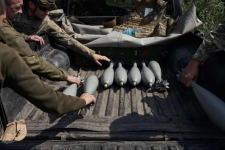
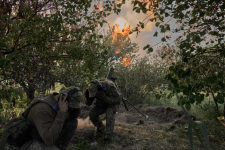
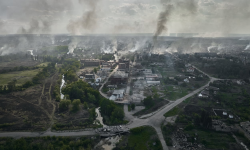
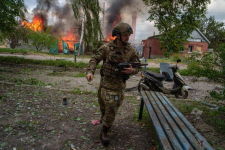
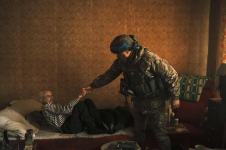
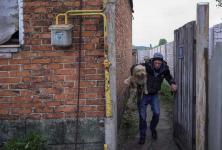
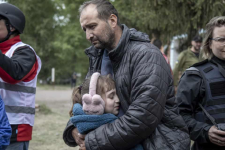
The battle of Vovchansk
The battle for Vovchansk in Ukraine – in pictures
Russian forces have gained ground in Kharkiv, a region that Ukraine had largely reclaimed in the months after Russia’s invasion in February 2022. Ukraine has been evacuating civilians from around Vovchansk, where Russian forces control 40% of the city. They launched a surprise assault in the...
www.theguardian.com
Soldier35
Trusted Member

Footage of an attempted attack by Ukrainian FPV kamikaze drones on a Russian serviceman. There were reportedly 7 drone attacks in total, but not all attacks are shown in the video. It is worth noting that the soldier walks calmly and makes almost no attempt to dodge the drones. But the drones cannot hit the soldier. It is possible that the serviceman is using a portable electronic warfare system. The location of the shooting has not been announced, the video has been shortened.
Front report by a German media
Thanks to massive ammo supply from the west Ukraine army successfully stops Russia advance, Vochansk, Advidka, Kharkiv. New javelin, himars from the US. The russians die like flies.
Thanks to massive ammo supply from the west Ukraine army successfully stops Russia advance, Vochansk, Advidka, Kharkiv. New javelin, himars from the US. The russians die like flies.
F-22Raptor
Elite Member
- Status
- Not open for further replies.
Users who are viewing this thread
Total: 3 (members: 0, guests: 3)
Pakistan Defence Latest
-
-

-
 Federal cabinet gives nod to imposition of emergency in KP; summary sent to president (9 Viewers)
- Latest: prothought
-
-

