Notable Far Right extremist groups in Europe with links directly or indirectly to Azov Movement:
To limit the threats related to paramilitary forces, these units were subordinated to the Ministry of the Interior, Ministry of Defence, or incorporated into the National Guard. Initially, not all agreed, and some were dissolved, but some retained broad autonomy, only coordinating their activities with Ukraine’s army (including Right Sector and formations subordinated to it that include foreign fighters).
Russia’s Use of Foreign Fighters
During the annexation of Crimea and in its aggression in eastern Ukraine, Russia has used irregular units, including foreign fighters, employed through private military companies (PMCs), special services, “patriotic organizations,” and criminal groups operating in Russia and other countries, such as Belarus, Moldova, Kazakhstan, and Serbia. On the separatist side, units with foreign fighters, including Bryanka SSSR, the Oplot Brigade, the Ghost Brigade (Prizrak), the Rusich Company, and Vostok Battalion, were directly involved in the fight against Ukrainian forces.
The influx of foreign fighters on the separatist side internationalized the conflict and was intended to provide support by fighters experienced in military tactics. At the same time, foreign fighters on the Ukrainian side have been the subject of Russian propaganda, especially the participation of neo-Nazis in the Azov Regiment or ISIS veterans in Tatar battalions.
Stimulation of the inflow of foreign fighters has become a permanent element of hybrid operations conducted by Russia, including in other countries. Foreign fighters from Ukraine (sometimes also those fighting on the Ukrainian side) have been recruited by Russian PMCs, including the famous Wagner Group. As mercenaries, they took part in other conflicts, including in Syria, Libya, Sudan, Central Africa, and Mozambique.
Russian security services—notably, the special unit GRU 29155—has used foreign fighters for subversive activities and as agents of influence in other countries (including the preparation of a coup in Montenegro in 2016). Some of the foreign fighters leaving Ukraine have infiltrated the security institutions of their home countries.
Guillaume Cuvelier, one of the leaders of the foreign fighters on the separatist side in Ukraine, was awarded a medal of bravery by Igor Girkin, a GRU officer and the creator of the separatist military structures. Cuvelier concealed his past and joined the U.S. Army in 2017 before being discharged a few months later.
Risks for other countries:
Beyond individuals operating in theaters in the Middle East and North Africa, Foreign fighters on both sides of the conflict in Ukraine have taken part in subsequent conflicts, including fighting on the side of the Kurds against ISIS in Syria and Iraq or working as mercenaries.
Some have also been involved in radical activities in their own countries (militant activity within the yellow-vest protests in Paris, which started in 2018), building radical organizations, or trading arms on EU territory.
On 15 July, Italian police, investigating far-right groups that had fighters who had been in Ukraine, arrested three suspects, during which an arsenal intended for sale to Libya was discovered, including an air-to-air missile, 26 firearms, and 20 bayonets. Foreign fighters have also engaged in terrorist activities—the perpetrator of the attacks on 15 March in Christchurch, New Zealand, had been involved in the conflict in Ukraine.
Polish territory has been used by foreign fighters, including for transit to Ukraine, some involving illegal crossings—in 2014, a group of Chechens from Denmark crossed the “green” border with Ukraine in the Carpathian Mountains (Eastern Beskids).
Chetniks Bratislav Živković
In Poland, foreign fighters have organized lectures (one by the leader of the pro-Russian Serbian Chetniks Bratislav Živković in 2016), given interviews, raised funds, and organized paramilitary exercises (Tactical Group Belarus in Warsaw in 2017).
Benjamin Fisher
Foreign fighters have been arrested in Poland (Austrian Benjamin Fisher in April 2017), however, a huge number of them freely conducted their activities in Poland and in other EU countries.
On 27 February 2022, Ukraine invited foreign nationals to join its armed forces as it seeks to repel Russia’s invasion. Volodymyr Zelensky, President of Ukraine, announced the establishment of the “International Legion of Territorial Defence in Ukraine” in a written statement on Sunday.
The move is reminiscent of the International Brigades that fought during the Spanish Civil War (1936-1939) with the Republicans. Foreign ministers in Canada and the United Kingdom voiced support for any of its citizens joining Ukraine’s armed forces. However, critics say this would be "reckless and illegal".
Lessons not learned:
A common related concern is that the returnees will serve as heroic examples and recruit, or help the recruiters attract, new fighters for the cause. This seems to be a somewhat valid risk in Ukraine, albeit it seems to be most pronounced while the fighters are still on the battlefield rather than upon their return. Namely, most foreign fighters claim to have been inspired by social media posts by other fighters on the battlefield and have found their way to Ukraine through social networks – reaching out to the fighters they knew or approaching unfamiliar prominent fighters.
For instance, Malet (2015) has found that the heroic effect of foreign fighters serving as inspiration to others through social media is much greater while they are still active in the conflict, compared to when they return home.
A noteworthy example here would be the Christchurch shooter – an Australian extremist, who claims to have visited Ukraine (although does not appear to have participated in the fighting) and references the conflict in the infamous manifesto he distributed as justification for shooting up a mosque in New Zealand in 2019.
With the growing international prevalence of lone-wolf terrorism (as opposed to organized terrorist groups), the concerns about self-radicalization are justifiably on the rise – but it seems yet again that radicalism is feeding into the conflict in Ukraine more so than the other way around: the Christchurch manifesto has been promptly translated into Russian, Ukrainian, and other less-common languages and was reportedly making the rounds among the far right fighters, including the Azov battalion (Bellingcat 2019).
Another example is that of "Mosque Bomb teen" Pavlo Lapshyn A Ukrainian student who travelled to the UK and murdering 82-year-old man and plotted explosions near mosques..
Conclusion:
Foreign volunteers intensify the conflicts to which they travel and can destabilize the countries to which they travel next. With the increasingly complexity of the humanitarian crisis on the borders of Ukraine and diversity of combat experience, weapons proliferation and converging risks, nations in Europe need to consider the genuine and ever-present risk promoting and supporting foreign fighters within its borders poses to local, regional and global security.
References:
BBC News. 2022. Italy seizes 'combat-ready' missile in raids on far right. [online] Available at: <
https://www.bbc.co.uk/news/world-europe-48987723> [Accessed 2 March 2022].
Time. 2022.
How a White-Supremacist Militia Uses Facebook to Radicalize and Train New Members. [online] Available at: <
https://time.com/5926750/azov-far-right-movement-facebook/> [Accessed 2 March 2022].
Beliakova, P., 2022.
Volunteer troops can be a curse, not a blessing. But Ukraine may be figuring it out. [online] Revista de Prensa. Available at: <
https://www.almendron.com/tribuna/v...-blessing-but-ukraine-may-be-figuring-it-out/> [Accessed 2 March 2022].
Beliakova, P., 2022.
Volunteer troops can be a curse, not a blessing. But Ukraine may be figuring it out. [online] Revista de Prensa. Available at: <
https://www.almendron.com/tribuna/v...-blessing-but-ukraine-may-be-figuring-it-out/> [Accessed 2 March 2022].
Vilniusinstitute.lt. 2022. [online] Available at: <
https://vilniusinstitute.lt/wp-cont...TERS-IN-UKRAINE-ASSESSING-POTENTIAL-RISKS.pdf> [Accessed 2 March 2022].
Donnelly, Maria Galperin, et al.
Foreign Fighters in History. Center for Strategic and International Studies (CSIS), 2017,
http://www.jstor.org/stable/resrep23304.
Arkansas Online. 2022.
Army ousts soldier with militant past. [online] Available at: <
https://www.nwaonline.com/news/2017/may/30/army-ousts-soldier-militant-past/> [Accessed 2 March 2022].
Unodc.org. 2022. [online] Available at: <
https://www.unodc.org/documents/terrorism/Publications/FTF SSEA/Foreign_Terrorist_Fighters_Asia_Ebook.pdf> [Accessed 2 March 2022].
Boutin, B., Chauzal, G., Dorsey, J., Jegerings, M., Paulussen, C., Pohl, J., Reed, A. and Zavagli, S., 2016. The Foreign Fighters Phenomenon in the European Union.
International Centre for Counter Terrorism,.
Link to original post on OLD Forum:
https://pdf.defence.pk/threads/russia-ukraine-war-news-and-developments.706984/post-13599376

commonslibrary.parliament.uk


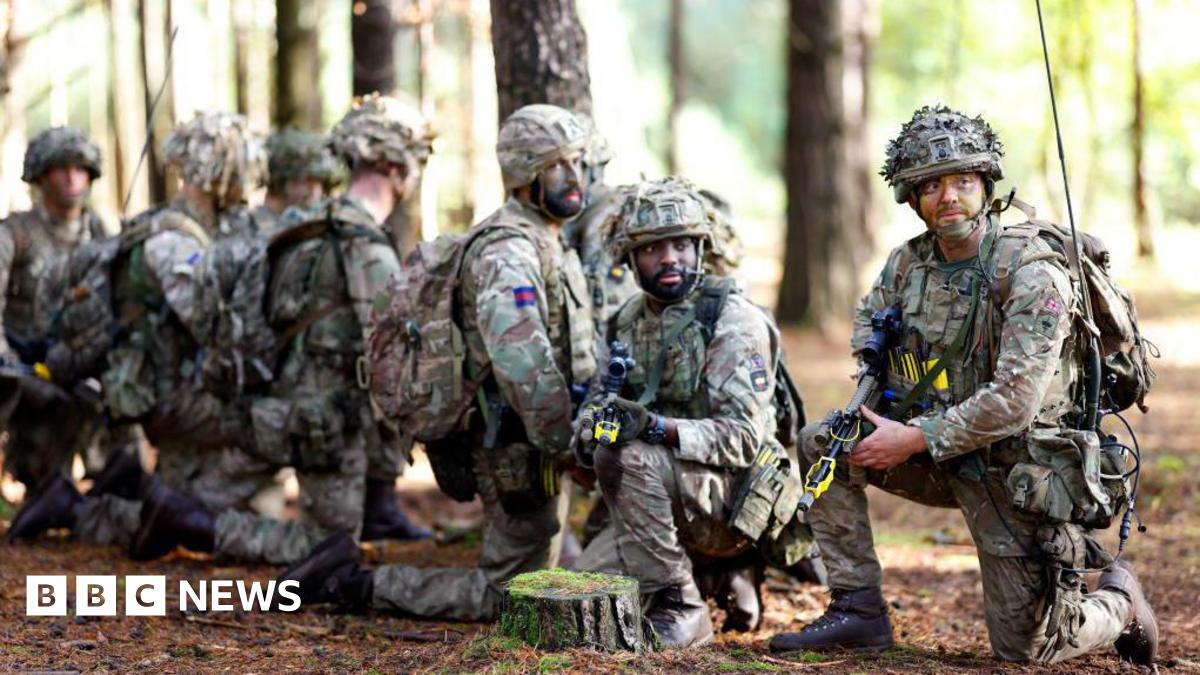


 . I do enjoy watching such people embrace the "Tacticool" operator vibe xD. Makes me laugh every time.


