Saudi Arabia strategic Projects: news, discussions & updates

Japanese Broadcasting Corporation:Riyadh to host on August 18 and 19 a high-level Japanese delegation led by Foreign Minister "Toshimitsu Motegi," who will meet with Prince "Faisal bin Farhan" to discuss regional developments and strengthen Saudi-Japanese cooperation in clean energy, critical minerals, and advanced technologies.

To view this content we will need your consent to set third party cookies.
For more detailed information, see our cookies page.
 
"Al Sharq – Bloomberg" Agency:Saudi Arabia's Public Investment Fund discloses a stake exceeding $26 billion in "SpaceX," making it the largest of its investments in U.S. stocks within a portfolio totaling $37.9 billion at the end of the second quarter.

-Details:The Fund's disclosures to the U.S. Securities and Exchange Commission showed it owns more than 154 million shares in "SpaceX," with the company claiming the largest portion of its U.S. stock investments.The disclosure came following the company's historic initial public offering, which raised approximately $75 billion at a share price of $135, amid demand exceeding $350 billion from institutions and individual investors.In the first quarterly results after the offering, "SpaceX" recorded revenues of $7.8 billion in the second quarter, surpassing analysts' expectations of $6.81 billion, while capital expenditures rose to $18.4 billion.The Fund's portfolio in the U.S. market also includes investments in Uber, Lucid, Clarivate, and Electronic Arts, following the completion of the full acquisition of the latter and its conversion to a private company.

To view this content we will need your consent to set third party cookies.
For more detailed information, see our cookies page.
 
Datavolt CEO, Rajit Nanda:

Saudi Arabia is likely, within 8 to 10 years, to become one of the largest computing exporters in the world, benefiting from competitive elements that may place it in the digital economy in a position equivalent to its current weight in the oil markets.

-Details:

The forecasts are based on three main pillars that the Kingdom enjoys: energy, connectivity, and geographical location, which are elements that form the basis for building a vast infrastructure for data centers and expanding computing capabilities directed to global markets.

The cost of energy stands out as one of the most important advantages of the Saudi market, as the cost of producing electricity from large-scale green energy projects is about two years per kilowatt-hour, which is about 40% less than China, according to the company’s estimates.

This advantage, in addition to the Kingdom's location and connectivity capabilities, gives Saudi Arabia a competitive base for developing large data centers and exportable computing services, supporting its transformation into a major center for digital infrastructure in the coming years.

The vision of Data Volt, which is headquartered in Riyadh, reflects the growing investment bet on the Saudi market as an environment capable of attracting large-scale computing and data center projects and linking them to global demand.

To view this content we will need your consent to set third party cookies.
For more detailed information, see our cookies page.
 
To view this content we will need your consent to set third party cookies.
For more detailed information, see our cookies page.


To view this content we will need your consent to set third party cookies.
For more detailed information, see our cookies page.


To view this content we will need your consent to set third party cookies.
For more detailed information, see our cookies page.


To view this content we will need your consent to set third party cookies.
For more detailed information, see our cookies page.


1787126301520.png

To view this content we will need your consent to set third party cookies.
For more detailed information, see our cookies page.


1787126292166.png
 
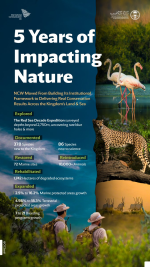
A reminder that Saudi Arabia has reforested/restored a land mass the size of Lebanon in recent years.

To view this content we will need your consent to set third party cookies.
For more detailed information, see our cookies page.


To view this content we will need your consent to set third party cookies.
For more detailed information, see our cookies page.


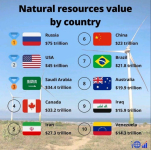
KSA is the richest country in the world compared to area size and population size.

1787126621847.png


Much of the country remains unexplored.


KSA is one of the most educated societies on the planet.

This was an article from 2016 from NATURE:

The rise of Saudi Arabia as a science powerhouse​


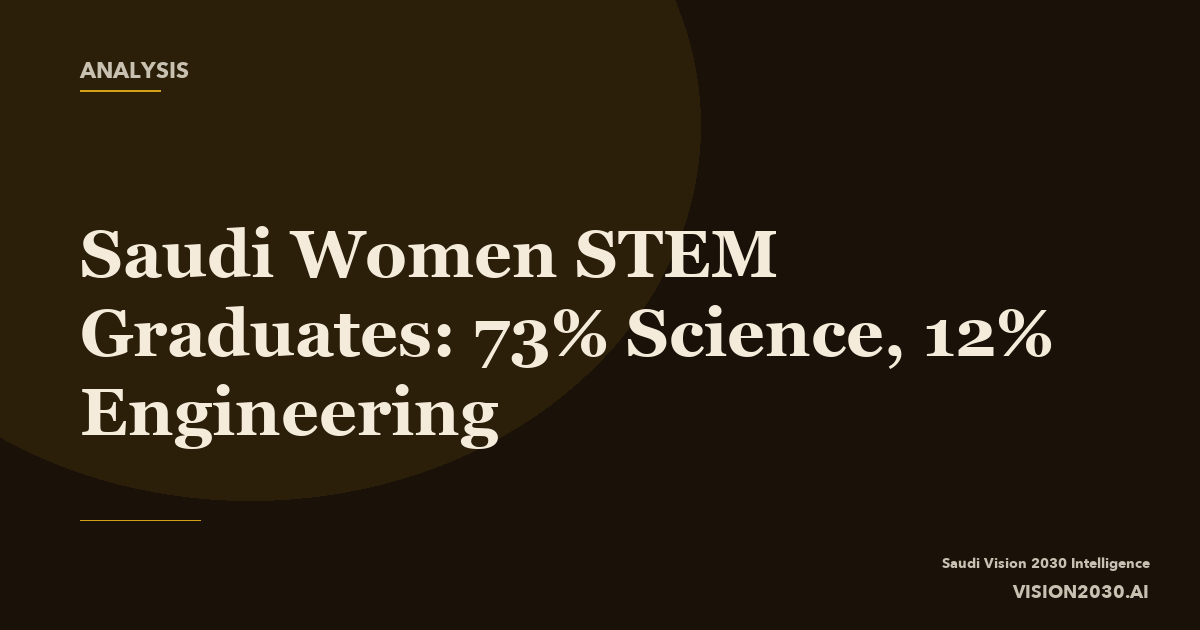
Saudi Arabian women are one of the most educated in the world and have one of the highest percentages of STEM graduates in the world as well.


Saudi Arabian universties are the best-ranked in the entire Muslim world and one of the highest ranked overall.


Saudi Arabia ranks first at International Nuclear Science Olympiad as students claim gold medals​


Saudi Arabia ranks first at International Nuclear Science Olympiad as students claim gold medals

August 9, 2026 | 02:28 PM
Saudi Gazette
Last Updated: August 9, 2026 | 02:51 PM

EDDAH — Saudi student Jana Al-Sabil’s gold medal and “Best Female Student” award at the third International Nuclear Science Olympiad 2026, along with Amjad Al-Darwish’s gold medal and “Nuclear Science Ambassador” title, helped Saudi Arabia rank first overall in the competition.

Jana Saleh Al-Sabil won the gold medal and “Best Female Student” award in recognition of her scientific excellence and performance in the competition.

Presented by the International Atomic Energy Agency (IAEA), the award was among the special prizes approved by the Olympiad’s International Council to honor female students for scientific excellence, highlight their contributions to nuclear science, and encourage their participation in specialized scientific fields.

Al-Sabil was selected following her outstanding performance in the Olympiad, which included two examinations — one theoretical and one practical — each lasting five hours.

The exams assessed participants’ knowledge and skills in nuclear science, as well as their abilities to conduct scientific analysis and experiments, interpret results, and solve advanced problems.

Saudi Arabia ranks first at International Nuclear Science Olympiad as students claim gold medals


Saudi Arabia ranked first in the third edition of the Olympiad after Amjad Mahmoud Al-Darwish won a gold medal and the title of “Nuclear Science Ambassador” for achieving the highest combined score in the theoretical and practical examinations among all competitors.

In addition, Abdulaziz Abdulmohsen Al-Sharait won a silver medal, while Saleh Mubarak Dhaifallah Al-Harbi received a bronze medal.

The Olympiad, hosted by Saudi Arabia in Jeddah from August 2 to 9, brought together 120 students and scientific specialists representing 19 countries.

It was jointly organized by the Ministry of Education, the King Abdulaziz and His Companions Foundation for Giftedness and Creativity (Mawhiba), and King Abdullah City for Atomic and Renewable Energy, while King Abdulaziz University hosted the competitions and activities.

The International Nuclear Science Olympiad, approved by the IAEA in 2024, is an international scientific competition for secondary school students that aims to develop their knowledge and skills in nuclear science and its peaceful applications and encourage innovation and scientific research in the field.


To view this content we will need your consent to set third party cookies.
For more detailed information, see our cookies page.


1787126886046.png

To view this content we will need your consent to set third party cookies.
For more detailed information, see our cookies page.


1787126898337.png
 
To view this content we will need your consent to set third party cookies.
For more detailed information, see our cookies page.


To view this content we will need your consent to set third party cookies.
For more detailed information, see our cookies page.


To view this content we will need your consent to set third party cookies.
For more detailed information, see our cookies page.


To view this content we will need your consent to set third party cookies.
For more detailed information, see our cookies page.


To view this content we will need your consent to set third party cookies.
For more detailed information, see our cookies page.


Rosewood AMAALA opens as Saudi Red Sea destination expands​


Rosewood AMAALA opens as Saudi Red Sea destination expands

1 / 2
The 110-key resort is located at AMAALA’s Triple Bay. (SPA photo)

Rosewood AMAALA opens as Saudi Red Sea destination expands

2 / 2
The resort features 202 elegantly designed rooms, suites, villas, and garden accommodations, all overlooking the Red Sea. (SPA)

ARAB NEWS
August 20, 2026
  • New 110-key resort is the third to open at AMAALA’s Triple Bay
  • 5 more set to join Saudi Arabia’s growing Red Sea tourism spot
TABUK: Red Sea Global has opened Rosewood AMAALA, the third luxury resort to begin operations at the Kingdom’s flagship wellness destination on the northwestern Red Sea coast, the Saudi Press Agency reported recently.

The 110-key resort is located at AMAALA’s Triple Bay and follows the opening this year of Four Seasons Resort and Residences AMAALA, the destination’s first operational property, and Six Senses AMAALA.

The latest opening marks another step in Red Sea Global’s phased development of AMAALA as a global destination for luxury, wellness and regenerative tourism.

“Rosewood AMAALA strengthens the destination’s position as a world-class wellness destination by bringing together Rosewood’s distinctive approach to luxury hospitality with personalized wellbeing experiences,” Red Sea Global Group CEO John Pagano said.

He said the resort expanded the range of experiences available to guests seeking “restorative, meaningful and immersive stays” along the Red Sea coast.

amaala-rosewood2.jpg
Rosewood AMAALA’s 2,100-square-meter spa includes six treatment rooms, a double suite, sauna and steam facilities. (SPA)
Rosewood AMAALA covers about 40 hectares and was designed by Antonio Citterio Patricia Viel to blend into the surrounding Red Sea landscape and the mountains of Tabuk.

The low-density resort comprises pavilions, suites and villas, many with private pools, as well as shared swimming areas, indoor-outdoor living spaces and two natural rock pools on the Red Sea coast.

Its spa over 2,100 sq. meters includes six treatment rooms, a double suite, sauna and steam facilities, while two fitness centers are equipped with Technogym Artis equipment and complemented by yoga and movement studios.

The resort also offers eight dining venues, ranging from Mediterranean and grill concepts to lounges and poolside outlets, as well as the Rosewood Explorers children’s club and other family facilities.

Adjacent Rosewood Residences AMAALA includes 26 branded residences, with three- to five-bedroom villas designed with interiors by Tristan Auer.

Like the wider AMAALA development, Rosewood AMAALA will be powered entirely by solar energy. Red Sea Global also aims to achieve a 30 percent net conservation gain across the destination by 2040.

The opening builds on the June launch of Four Seasons Resort and Residences AMAALA, which introduced 202 rooms, suites, villas and garden accommodation, alongside branded residences, wellness facilities and access to the wider Triple Bay attractions.

six_senses_amaala.jpg
Red Sea Globa’s Six Senses AMAALA is a 100-suite and villa beachfront resort with 25 branded residences. (SPA)
In July, Red Sea Global opened Six Senses AMAALA, a 100-suite and villa beachfront resort with 25 branded residences and an extensive wellness offering that includes longevity, recovery and holistic therapy facilities.

Triple Bay is expected to eventually feature more than 1,600 hotel rooms across nine resorts, in addition to branded residences, wellness facilities, yacht marinas, luxury retail and dining.

The destination’s wider attractions include the AMAALA Yacht Club and Corallium, a marine life experiential institute.

Five more resorts are expected to open in the coming months as Red Sea Global continues the phased rollout of AMAALA, part of Saudi Arabia’s broader push to develop high-end tourism destinations under Vision 2030.


Looks great.
 
To view this content we will need your consent to set third party cookies.
For more detailed information, see our cookies page.


To view this content we will need your consent to set third party cookies.
For more detailed information, see our cookies page.


To view this content we will need your consent to set third party cookies.
For more detailed information, see our cookies page.


To view this content we will need your consent to set third party cookies.
For more detailed information, see our cookies page.
 
To view this content we will need your consent to set third party cookies.
For more detailed information, see our cookies page.


To view this content we will need your consent to set third party cookies.
For more detailed information, see our cookies page.


To view this content we will need your consent to set third party cookies.
For more detailed information, see our cookies page.


To view this content we will need your consent to set third party cookies.
For more detailed information, see our cookies page.


To view this content we will need your consent to set third party cookies.
For more detailed information, see our cookies page.
 
To view this content we will need your consent to set third party cookies.
For more detailed information, see our cookies page.


1787291139990.png

1787291248021.png

To view this content we will need your consent to set third party cookies.
For more detailed information, see our cookies page.


To view this content we will need your consent to set third party cookies.
For more detailed information, see our cookies page.


To view this content we will need your consent to set third party cookies.
For more detailed information, see our cookies page.


To view this content we will need your consent to set third party cookies.
For more detailed information, see our cookies page.


Nice X user page focused on Najd with obscure, less obscure and interesting posts and information. Good to see more of such regional Saudi Arabian pages emerging in English.

The hilarious and unique Najdi sheep:

1787291618924.png
 
To view this content we will need your consent to set third party cookies.
For more detailed information, see our cookies page.


To view this content we will need your consent to set third party cookies.
For more detailed information, see our cookies page.


To view this content we will need your consent to set third party cookies.
For more detailed information, see our cookies page.


1787306969149.png

1787307258387.png

1787307003359.png

1787307020203.png

1787307326412.png

To view this content we will need your consent to set third party cookies.
For more detailed information, see our cookies page.


To view this content we will need your consent to set third party cookies.
For more detailed information, see our cookies page.


1787308240762.png
 
Last edited:
To view this content we will need your consent to set third party cookies.
For more detailed information, see our cookies page.


To view this content we will need your consent to set third party cookies.
For more detailed information, see our cookies page.


To view this content we will need your consent to set third party cookies.
For more detailed information, see our cookies page.


1787308078916.png

1787308094119.png

1787308118911.png


1787308128903.png
1787308153770.png

1787308278874.png
 
Saudi Arabia Signs Four BESS Agreements Worth SAR 4.35 Billion For 2,000 MW Storage Capacity

By Mohan Gupta
21st August 2026

Saudi Arabia has signed four major Battery Energy Storage System (BESS) agreements as part of its efforts to strengthen the national electricity network and accelerate the integration of renewable energy. The agreements were signed by the Saudi Power Procurement Company (SPPC), the Kingdom’s Principal Buyer, during a ceremony attended by Prince Abdulaziz bin Salman bin Abdulaziz, Minister of Energy, along with senior officials from the Ministry of Industry and Mineral Resources and SPPC.

The projects represent the first group of large-scale energy storage developments aimed at supporting Saudi Arabia’s transition toward a more sustainable electricity generation mix. The initiative is aligned with the Kingdom’s target of generating around 50% of its electricity from renewable energy sources by 2030.

The four BESS projects involve a total investment of more than SAR 4.35 billion. Collectively, they will provide 2,000 MW of energy storage capacity with a four-hour duration, helping improve grid flexibility, reliability and the effective utilization of renewable power.

The projects are located across three regions. The Makkah Region will host the Al Muwyah BESS Independent System Provider (ISP) and Haden BESS ISP projects. The Al Kahafa BESS ISP project will be developed in the Hail Region, while the Al Khushaybi BESS ISP project will be located in the Qassim Region.

everal major energy and engineering companies are participating in the agreements. These include Saudi Electricity Company (SE), ACWA Power, Al Sharif Contracting (ASC), ENGIE, and Haji Abdullah Alireza & Co. Ltd., alongside SPPC.

The agreements highlight Saudi Arabia’s growing focus on large-scale energy storage as a critical component of its renewable energy strategy. By deploying BESS facilities across strategically important regions, the Kingdom aims to enhance grid stability, manage renewable generation more effectively and support the modernization of its power infrastructure.

The projects are expected to play an important role in enabling higher levels of renewable energy integration while strengthening the reliability and resilience of Saudi Arabia’s electricity system.


Saudi Arabia awards 8 GWh of battery storage projects​

Aug 21, 2026, 9:41:27 AMArticle by Anna Vassileva

The Saudi Power Procurement Company (SPPC), the Kingdom’s principal buyer, has awarded four battery energy storage projects with a combined capacity of 2,000 MW and four-hour duration, representing investments of more than SAR 4.35 billion (USD 1.15 bn/EUR 999m).

Three of the projects - the 500-MW Al-Muwyah and Haden schemes in Makkah province and the 500-MW Al-Kahafa project in Hail province - were awarded to a consortium comprising Saudi Electricity Company, ACWA Power and Al Sharif Contracting and Commercial Development Company.

The 500-MW Al-Khushaybi project in Al-Qassim province will be developed by a consortium of Engie and Haji Abdullah Ali Reza & Co Ltd.

The agreements were signed in the presence of Saudi energy minister and SPPC chairman Abdulaziz bin Salman Al Saud, the Ministry of Energy said on Thursday.

The projects, overseen by the Ministry of Energy, are the first group of battery storage schemes to be developed under a build-own-operate (BOO) model. Their goal is to strengthen the reliability and efficiency of the Kingdom’s power system as Saudi Arabia expands its use of renewable energy.

The projects will support the growth of renewable generation and energy storage, with the aim of bringing their combined share of the energy mix to around 50% by 2030.

The competitive tender attracted 52 applications, of which 33 companies were prequalified.

Meanwhile, SPPC is advancing the tender for the second group of battery energy storage projects under the National Renewable Energy Programme (NREP), which seeks to award a total of 3,000 MW/12,000 MWh of storage capacity.


Saudi renewable investment reaches $9.64bn as capacity surges 88%​

Saudi Arabia’s cumulative investment in operational renewable energy projects reached SAR36.11 billion by the end of 2025, as installed capacity climbed 88% year on year

By Nora Watts August 19, 2026

62vCQQ1t-shutterstock_369887342-1200x800.jpg


Highlights

Saudi Arabia’s cumulative investment in operational renewable energy projects reached SAR36.11 billion ($9.64 billion) by the end of 2025, according to data from the General Authority for Statistics (GASTAT).

Projects that entered operation during 2025 accounted for SAR16.27 billion, or around 45% of the total investment.

The number of operational renewable energy projects increased to 15 by the end of the year, with combined capacity reaching 12,313MW.

That represented an 88% increase compared with 2024.

The growth was driven largely by the commissioning of five new solar projects during 2025, adding a combined 5,762MW of capacity.

GASTAT said the weighted average production cost across operational renewable energy projects stood at 6.60 Saudi halalas per kilowatt-hour.

Among individual developments, the Al-Rass 2 project recorded the highest investment at SAR5.52 billion, followed by Al-Kahfa at SAR4.06 billion.

The expansion also increased the estimated number of housing units that could be supplied with renewable electricity.

According to GASTAT, operational renewable energy projects in the Kingdom are now capable of supplying around 2.1 million homes.

The figures highlight the pace of Saudi Arabia’s renewable buildout as additional large-scale solar capacity moves into operation and investment continues to expand across the sector.


Saudi Arabia finds new life for date palm waste​

Saudi Arabia finds new life for date palm waste

Date palm residues are being turned into products ranging from engineered wood and furniture to biodegradable plastics. (SPA)

HAJAR ALQUSAYER AND RAFAA BUKHARY
August 21, 2026

  • Palm residues are being transformed into engineered wood and biodegradable plastics
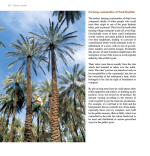
RIYADH: Saudi Arabia is home to about 37 million date palms, but efforts are increasingly focused on finding value in what remains after the fruit is harvested.

Date palm residues are being turned into products ranging from engineered wood and furniture to biodegradable plastics, while researchers are exploring wider industrial applications.

At Aramco, researchers have developed a lost-circulation material made from date pits to help prevent drilling-fluid losses during oil and gas operations.

Faisal Al-Howikan, CEO of Jarid Al-Mustaqbal Co., said the Kingdom’s date palms represent economic value beyond their fruit.

“Their byproducts can be utilized and transformed into economic products that support the national economy,” he told Arab News.

Discarded palm fronds are one area being explored. The fronds are collected, cleaned and shredded before being compressed at specific temperatures to produce boards.

“At the beginning, these boards were used to produce souvenirs in support of environmental sustainability,” he said. “After that, we began producing trays targeting cafes and restaurants.”

The material is also being used to make furniture, including tables and chairs.

gb_graphic_edit.jpg


“One of the new areas we are currently conducting experiments and research on is turning date palm fronds, after grinding them into powder, into environmentally friendly bioplastic,” he said.

“We are targeting the production of single-use products, such as eating utensils, as well as products used on a daily basis, such as water bottles.”

Al-Howikan said further research could unlock uses for other parts of the date palm.

“I believe that with support from the government sector like the Ministry of Environment and the National Center for Palms and Dates alongside ongoing research and government support, we will be able to develop additional products and manufacture different products from the date palm,” he said.

From waste to bioplastics

Another Saudi company is exploring how agricultural waste, including date palm residues, can replace conventional plastics.

Rodrigo Jimenez Sandoval, CEO of Polymeron, said the company’s biodegradable materials were initially developed in response to Saudi Arabia’s plastic waste problem.

“Saudi Arabia produces around 3 million tonnes of plastic waste every year, which is a lot. And also, you know, plastic waste contaminates the soil, contaminates the ocean, and it’s really very harmful to the environment,” he told Arab News.

“My co-founder and I wanted to do something about it, and that’s why we started thinking on having a biodegradable option that could be an alternative use for traditional plastics.”

gb_1.jpg
Date palm fronds are being transformed into engineered wood for use in souvenirs, furniture and other products. (Supplied)
Polymeron uses compounding, extrusion and other mechanical and chemical processes to convert agricultural waste, including date palm residues, into biodegradable plastic pellets.

“In a nutshell, what we basically did was to transform agricultural waste such as date waste … into biodegradable plastic pellets,” Sandoval said.

The pellets can be used for single-use products such as cutlery, trash bags and plant pots, as well as filament for 3D printing.

A key distinction, Sandoval said, is what happens to the material after disposal. Conventional plastics can take hundreds of years to decompose, while some degradable alternatives break down into microplastics.

“The oxo-degradable options are very popular now in Saudi Arabia. However, there is a disadvantage of this oxo-degradable plastics because even though they degrade, they are only broken down into small pieces. And these small pieces are called microplastics. You are not really degrading the plastics. You are just transforming them into very small pieces,” he said.

“In contrast, biodegradable options like our plastics, they don’t leave any microplastics.”

Sandoval said the material is designed to eventually biodegrade completely rather than leave plastic particles in the environment.

“So if you leave it in the street or in the ocean, they will eventually degrade completely. They will not become microplastics.”

DID YOU​

• Saudi Arabia produces more than 1.9 million tonnes of dates annually.

• The Kingdom is home to more than 123,000 date palm farms.

• Saudi Arabia has more than 157 date-processing factories.
Economic potential

Beyond waste reduction, wider adoption could create new links between Saudi Arabia’s agricultural and manufacturing sectors.

Sandoval said applying the technology to part of the Jeddah market could replace about 21,000 tonnes of traditional plastic and avoid around 44,000 tonnes of carbon dioxide emissions.

“This is just by taking into account a small portion of the market,” Sandoval said. “Obviously, these metrics could be higher when the market expands and when we expand our operations.”

Agricultural waste could also become a source of revenue for farmers and create activity in collection, transport and processing.

“When farms or the agricultural industry produces waste, this waste can be sold to industries like this, the bioplastics industry, to transform it into a valuable product,” Sandoval said.

“And at the same time, because there will be a new logistics and new transportation activities, there will be a whole new revenue for the country in this new industry that is the bioplastic or the circular economy industry in general.”

Scaling up

Cost remains one of the main challenges to wider adoption. Sandoval said locally produced biodegradable plastics can be cheaper than imports from Europe or India because they avoid international transportation costs and use waste as a raw material.

Compared with conventional plastics, however, they remain more expensive.

gb3.jpg
Saudi Arabia is home to around 37 million date palm trees, with researchers and businesses exploring new uses for their byproducts. (Supplied)
“When you compare to traditional plastics, yes, the cost can be higher. But that’s true for every type of bioplastics.” he said.

He said policy support could help narrow the gap.

“We have in our favor that the country is releasing new policies that enforce the industries and the people in general to buy the degradable options.”

Locally produced materials can also avoid some of the price volatility affecting conventional plastics, which are derived from oil.

“You have to take into account, for example, the volatility of the petrochemical market. So the traditional plastics are derivatives of oil, they are subjected to these changes in petrochemical market. So because we are producing locally we avoid this volatility in the prices.”

Scaling production, however, will require significant investment.

“The first barrier comes down to the CapEx, the capital expenditure that is required, because this is an industry that uses heavy machinery and these machines are very expensive,” Sandoval said.

Research and development is another hurdle.

“Bioplastics are a deep technology industry, so they need some time to incubate and develop the technology.”


France’s Macron to host Saudi crown prince for two-day official visit​

France’s Macron to host Saudi crown prince for two-day official visit

French President Emmanuel Macron, left, meets with Saudi Arabia’s Crown Prince Mohammed Bin Salman during an official visit in Riyadh on Dec. 2, 2024. (AFP file photo)

  • The visit follows Emmanuel Macron’s visit to Saudi Arabia in December 2024
RIYADH: French President Emmanuel Macron will receive Saudi Crown Prince and Prime Minister Mohammed bin Salman on Sunday for a two-day official visit, a statement from Elysee Palace said.

The visit follows Macron’s visit to Saudi Arabia in December 2024.

“It reflects the vitality of the dialogue between the Kingdom of Saudi Arabia and France and will provide an opportunity to further strengthen the strategic partnership between our two countries. To this end, the President of the Republic and the Crown Prince will, for the first time, convene a meeting of the Franco-Saudi Strategic Partnership Council,” the statement said.

The two leaders will discuss major economic and strategic issues shaping the Franco-Saudi partnership, and exchange views on key regional issues, at a time when close coordination between France and its Gulf partners is essential to promoting stability and peace in the Near and Middle East, the statement added.

Both leaders would also attend the closing ceremony of the Esports World Cup on Sunday, which is being held in Paris for the first time outside Saudi Arabia since its creation.

The hosting of this major global championship demonstrates France’s renewed appeal as a destination for major international sporting events, following in particular the success of the Paris 2024 Olympic and Paralympic Games, the Elysee Palace statement said.

It also reflects the shared ambition of France and Saudi Arabia to make sport and culture drivers of closer ties between the two countries, it added.


I wonder what France will propose and vice versa.

UAE wants to build oil pipelines that go through KSA all the way to the Red Sea.

To view this content we will need your consent to set third party cookies.
For more detailed information, see our cookies page.


To view this content we will need your consent to set third party cookies.
For more detailed information, see our cookies page.
 

Users who are viewing this thread

Pakistan Defence Latest

Back
Top