Saudi Arabia finds new life for date palm waste
Date palm residues are being turned into products ranging from engineered wood and furniture to biodegradable plastics. (SPA)
HAJAR ALQUSAYER AND RAFAA BUKHARY
August 21, 2026
- Palm residues are being transformed into engineered wood and biodegradable plastics
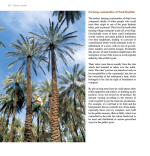
RIYADH: Saudi Arabia is home to about 37 million date palms, but efforts are increasingly focused on finding value in what remains after the fruit is harvested.
Date palm residues are being turned into products ranging from engineered wood and furniture to biodegradable plastics, while researchers are exploring wider industrial applications.
At Aramco, researchers have developed a lost-circulation material made from date pits to help prevent drilling-fluid losses during oil and gas operations.
Faisal Al-Howikan, CEO of Jarid Al-Mustaqbal Co., said the Kingdom’s date palms represent economic value beyond their fruit.
“Their byproducts can be utilized and transformed into economic products that support the national economy,” he told Arab News.
Discarded palm fronds are one area being explored. The fronds are collected, cleaned and shredded before being compressed at specific temperatures to produce boards.
“At the beginning, these boards were used to produce souvenirs in support of environmental sustainability,” he said. “After that, we began producing trays targeting cafes and restaurants.”
The material is also being used to make furniture, including tables and chairs.
“One of the new areas we are currently conducting experiments and research on is turning date palm fronds, after grinding them into powder, into environmentally friendly bioplastic,” he said.
“We are targeting the production of single-use products, such as eating utensils, as well as products used on a daily basis, such as water bottles.”
Al-Howikan said further research could unlock uses for other parts of the date palm.
“I believe that with support from the government sector like the Ministry of Environment and the National Center for Palms and Dates alongside ongoing research and government support, we will be able to develop additional products and manufacture different products from the date palm,” he said.
From waste to bioplastics
Another Saudi company is exploring how agricultural waste, including date palm residues, can replace conventional plastics.
Rodrigo Jimenez Sandoval, CEO of Polymeron, said the company’s biodegradable materials were initially developed in response to Saudi Arabia’s plastic waste problem.
“Saudi Arabia produces around 3 million tonnes of plastic waste every year, which is a lot. And also, you know, plastic waste contaminates the soil, contaminates the ocean, and it’s really very harmful to the environment,” he told Arab News.
“My co-founder and I wanted to do something about it, and that’s why we started thinking on having a biodegradable option that could be an alternative use for traditional plastics.”
Date palm fronds are being transformed into engineered wood for use in souvenirs, furniture and other products. (Supplied)
Polymeron uses compounding, extrusion and other mechanical and chemical processes to convert agricultural waste, including date palm residues, into biodegradable plastic pellets.
“In a nutshell, what we basically did was to transform agricultural waste such as date waste … into biodegradable plastic pellets,” Sandoval said.
The pellets can be used for single-use products such as cutlery, trash bags and plant pots, as well as filament for 3D printing.
A key distinction, Sandoval said, is what happens to the material after disposal. Conventional plastics can take hundreds of years to decompose, while some degradable alternatives break down into microplastics.
“The oxo-degradable options are very popular now in Saudi Arabia. However, there is a disadvantage of this oxo-degradable plastics because even though they degrade, they are only broken down into small pieces. And these small pieces are called microplastics. You are not really degrading the plastics. You are just transforming them into very small pieces,” he said.
“In contrast, biodegradable options like our plastics, they don’t leave any microplastics.”
Sandoval said the material is designed to eventually biodegrade completely rather than leave plastic particles in the environment.
“So if you leave it in the street or in the ocean, they will eventually degrade completely. They will not become microplastics.”
DID YOU
• Saudi Arabia produces more than 1.9 million tonnes of dates annually.
• The Kingdom is home to more than 123,000 date palm farms.
• Saudi Arabia has more than 157 date-processing factories.
Economic potential
Beyond waste reduction, wider adoption could create new links between Saudi Arabia’s agricultural and manufacturing sectors.
Sandoval said applying the technology to part of the Jeddah market could replace about 21,000 tonnes of traditional plastic and avoid around 44,000 tonnes of carbon dioxide emissions.
“This is just by taking into account a small portion of the market,” Sandoval said. “Obviously, these metrics could be higher when the market expands and when we expand our operations.”
Agricultural waste could also become a source of revenue for farmers and create activity in collection, transport and processing.
“When farms or the agricultural industry produces waste, this waste can be sold to industries like this, the bioplastics industry, to transform it into a valuable product,” Sandoval said.
“And at the same time, because there will be a new logistics and new transportation activities, there will be a whole new revenue for the country in this new industry that is the bioplastic or the circular economy industry in general.”
Scaling up
Cost remains one of the main challenges to wider adoption. Sandoval said locally produced biodegradable plastics can be cheaper than imports from Europe or India because they avoid international transportation costs and use waste as a raw material.
Compared with conventional plastics, however, they remain more expensive.
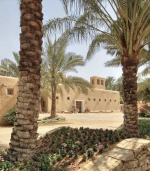
Saudi Arabia is home to around 37 million date palm trees, with researchers and businesses exploring new uses for their byproducts. (Supplied)
“When you compare to traditional plastics, yes, the cost can be higher. But that’s true for every type of bioplastics.” he said.
He said policy support could help narrow the gap.
“We have in our favor that the country is releasing new policies that enforce the industries and the people in general to buy the degradable options.”
Locally produced materials can also avoid some of the price volatility affecting conventional plastics, which are derived from oil.
“You have to take into account, for example, the volatility of the petrochemical market. So the traditional plastics are derivatives of oil, they are subjected to these changes in petrochemical market. So because we are producing locally we avoid this volatility in the prices.”
Scaling production, however, will require significant investment.
“The first barrier comes down to the CapEx, the capital expenditure that is required, because this is an industry that uses heavy machinery and these machines are very expensive,” Sandoval said.
Research and development is another hurdle.
“Bioplastics are a deep technology industry, so they need some time to incubate and develop the technology.”
France’s Macron to host Saudi crown prince for two-day official visit
French President Emmanuel Macron, left, meets with Saudi Arabia’s Crown Prince Mohammed Bin Salman during an official visit in Riyadh on Dec. 2, 2024. (AFP file photo)
- The visit follows Emmanuel Macron’s visit to Saudi Arabia in December 2024
RIYADH: French President Emmanuel Macron will receive Saudi Crown Prince and Prime Minister Mohammed bin Salman on Sunday for a two-day official visit, a statement from Elysee Palace said.
The visit follows Macron’s visit to Saudi Arabia in December 2024.
“It reflects the vitality of the dialogue between the Kingdom of Saudi Arabia and France and will provide an opportunity to further strengthen the strategic partnership between our two countries. To this end, the President of the Republic and the Crown Prince will, for the first time, convene a meeting of the Franco-Saudi Strategic Partnership Council,” the statement said.
The two leaders will discuss major economic and strategic issues shaping the Franco-Saudi partnership, and exchange views on key regional issues, at a time when close coordination between France and its Gulf partners is essential to promoting stability and peace in the Near and Middle East, the statement added.
Both leaders would also attend the closing ceremony of the Esports World Cup on Sunday, which is being held in Paris for the first time outside Saudi Arabia since its creation.
The hosting of this major global championship demonstrates France’s renewed appeal as a destination for major international sporting events, following in particular the success of the Paris 2024 Olympic and Paralympic Games, the Elysee Palace statement said.
It also reflects the shared ambition of France and Saudi Arabia to make sport and culture drivers of closer ties between the two countries, it added.
I wonder what France will propose and vice versa.
UAE wants to build oil pipelines that go through KSA all the way to the Red Sea.


:max_bytes(150000):strip_icc()/GettyImages-1323151704-53b2c793e93f4e4988a4002c955f48c0.jpg)