Navigation
Install the app
How to install the app on iOS
Follow along with the video below to see how to install our site as a web app on your home screen.
Note: This feature may not be available in some browsers.
More options
Style variation
You are using an out of date browser. It may not display this or other websites correctly.
You should upgrade or use an alternative browser.
You should upgrade or use an alternative browser.
Saudi Arabia strategic Projects: news, discussions & updates
- Thread starter The SC
- Start date
More options
Who Replied?

The SC
INT'L MOD
- Thread starter
- #827
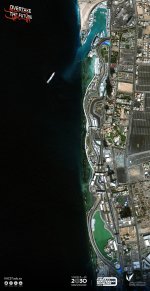
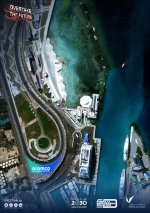
On the Artemis 2 mission, the Kingdom embodies its vision to be at the forefront of countries contributing to exploration of space, by launching the first Saudi satellite to study the space climate represented by the Saudi Space Agency in a strategic partnership with @NASA
And with the support of @nidlp_2030
To localize technologies, enable national competencies, and to achieve the targets of #Saudia_2030

The SC
INT'L MOD
- Thread starter
- #829
The Saudi Foreign Minister and his Turkish counterpart chairs the second meeting of the Saudi -Turkish Coordination Council
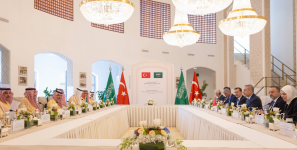
The Foreign Minister, Prince Faisal bin Farhan, received, at the Ministry’s Court in Riyadh, yesterday Türkiye's Foreign Minister, Hakan Fidan, they discussed during the reception, ways to enhance cooperation between the two countries in various fields..In addition to discussing developments in the region.
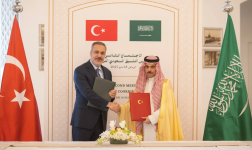
After the reception, the Foreign Minister and his Turkish counterpart chaired the second meeting of the Saudi -Turkish Coordination Council. where they discussed the intensification of bilateral cooperation mechanisms in various fields..And ways to enhance joint coordination towards issues of concern to the two brotherly countries and serve their common interests.
The Foreign Minister, Prince Faisal bin Farhan, received, at the Ministry’s Court in Riyadh, yesterday Türkiye's Foreign Minister, Hakan Fidan, they discussed during the reception, ways to enhance cooperation between the two countries in various fields..In addition to discussing developments in the region.
After the reception, the Foreign Minister and his Turkish counterpart chaired the second meeting of the Saudi -Turkish Coordination Council. where they discussed the intensification of bilateral cooperation mechanisms in various fields..And ways to enhance joint coordination towards issues of concern to the two brotherly countries and serve their common interests.
The SC
INT'L MOD
- Thread starter
- #830
Saudi Sovereign fund Governor: We will double our investments in Europe to 170 billion dollars
Fund purchases and investments in Europe provided 254 thousand jobs
https://asharqbusiness.com/economics/83299/الرميان-سنضاعف-استثماراتنا-في-أوروبا-إلى-170-مليار-دولار/
The SC
INT'L MOD
- Thread starter
- #831
Saudi Arabia: Partnerships in Defense and Technology
Saudi Arabia has agreed with the United States to purchase American defense equipment valued at about $ 142 billion.
The package also included sectoral investment funds, including a $ 5 billion fund, and another with the same value of defense and space technology, and a 4 billion dollar sports fund, all of which will focus on local spending within the United States.
Saudi Arabia will also import a $ 14.2 billion GE Fernova gas turbines, and Boeing 737-8 aircraft, at a value of $ 4.8 billion, for the company "Avilis".
Invidia, the world's largest conductor company, will provide the Saudi Humayne Company, which has been established to push the Kingdom's efforts to build an infrastructure for artificial intelligence, with hundreds of thousands of advanced processors during the next five years, starting with 18 thousand units of its pioneering product GB300 Grace Blackwell, and its technology for networks, Infini Band.
AMD, the closest competitor to "Invidia" in the field of artificial intelligence accelerators, will provide chips and software for data centers that extend from Saudi Arabia to the United States, as part of a $ 10 billion project.
Global Ai, a start -up American technology company, also plans to cooperate with "Humain", in an agreement expected to reach billions of dollars, at a time when the Saudi company agreed with Qualcomm to develop data centers without determining value.
Amazon and "Humain" announced that they would invest more than $ 5 billion to build a "artificial intelligence zone" in Saudi Arabia. CISCO Systems, the world's largest network equipment company, will cooperate with Humain
The Saudi bold capital "STV" also launched a fund of $ 100 million for artificial intelligence, with the support of "Alphabet" Google. The volume of funding provided by Google has not been disclosed.
Saudi Aramco signed, through a group of its companies, 34 memoranda of understanding and agreement with American companies, with a possible value of approximately $ 90 billion.
American companies are expanding in the Saudi market
In addition to direct deals, American companies have sought their business in the Saudi market, as the American company "Parsons" won two contracts to participate in the development of King Salman International Airport in Saudi Arabia.
The first contract included the development of airport assets of runways, corridors, aircraft parking and air traffic control towers. While the second contract is concerned with packets of the Earth's infrastructure, including roads, facilities, tunnels, bridges, rail network and landscapes.
Agreements of 11 billion dollars with the Public Investment Fund
The Saudi Public Investment Fund also signed on the sidelines of the investment forum, several agreements with American companies specialized in asset management, some of which included pledges to pump a total of $ 11 billion.
The first agreements were signed with "Newperger Berman", the global company specialized in managing investments, with the aim of accelerating the growth of capital markets in Saudi Arabia and the Middle East region, through the cooperation of the two sides in supporting investments of up to $ 6 billion in the Kingdom.
The second agreement was signed with the company "Franklin Templeton" for financial services with the aim of investing about $ 5 billion to enhance the growth of Saudi financial markets, and it is expected that these investments will include Saudi stocks and fixed income strategies in public and private markets.
The agreements also included the Saudi Black Rock, where it was agreed with the Public Investment Fund to pump possible new investments in the "Black Rock Riyadh for Investment Management" platform that was established in April last year. Under the agreement, an investment tool will also be launched with an indicator that tracks the performance of Saudi stocks.
The sovereign fund also signed another agreement with the "i -Square Capital" for investment management in the infrastructure sector with the aim of developing an investment strategy focusing on the infrastructure sector in the Middle East.
Last edited:
The SC
INT'L MOD
- Thread starter
- #832
The President of INVIDIA to "Al -Sharq":
We will develop together artificial intelligence here in Saudi Arabia
Saudi Humain is working with "Invidia" to implement a 500 -megawatt project in Saudi Arabia
Jinsen Huang, CEO of "Invidia", said that his company will cooperate with Saudi "Humayen" to build a huge infrastructure for artificial intelligence, adding in an interview with "Al Sharq": "Together we will develop artificial intelligence here in Saudi Arabia."
Video:https://asharqbusiness.com/technolo...للشرق-سنطور-الذكاء-الاصطناعي-هنا-في-السعودية/
We will develop together artificial intelligence here in Saudi Arabia
Saudi Humain is working with "Invidia" to implement a 500 -megawatt project in Saudi Arabia
Jinsen Huang, CEO of "Invidia", said that his company will cooperate with Saudi "Humayen" to build a huge infrastructure for artificial intelligence, adding in an interview with "Al Sharq": "Together we will develop artificial intelligence here in Saudi Arabia."
Video:https://asharqbusiness.com/technolo...للشرق-سنطور-الذكاء-الاصطناعي-هنا-في-السعودية/
The SC
INT'L MOD
- Thread starter
- #833
Saudi Humain and "AMD" investing $ 10 billion in artificial intelligence
"Humain" will supervise the development of data centers and sustainable energy systems, while "AD" will provide chips and software

- A partnership aimed at building data centers that extend from the Kingdom of Saudi Arabia to the United States
"Humain" will supervise the development of data centers, sustainable energy systems and global communications with optical fibers, while "AD" will provide chips and software, according to a statement issued on Tuesday. The two companies said that these efforts aim to build data centers "extending from Saudi Arabia to the United States."
"Our investment with - Humain - is an important achievement in developing the global infrastructure of artificial intelligence. Together, we build a global artificial intelligence platform, which provides performance, openness and wide range with unprecedented levels," Lisa Soo, CEO of AMD.
Similar to its largest rival, "Invidia", "AMD" seeks to expand its customer base in the field of artificial intelligence parks, the chips used in developing artificial intelligence software. This market is currently dominated by a small group of data centers operators, including "Microsoft" and "Amazon".
These announcements come at a time when the Trump administration is preparing to announce a deal that gives Saudi Arabia more access to advanced semiconductors, according to people familiar with the matter, a step that would pave the way to increase the capacity of data centers in the Gulf state.
The SC
INT'L MOD
- Thread starter
- #834
Bloomberg: "Saudi Humain" is investing an American artificial intelligence company
An agreement that gives Humain access to US data centers of Global AI
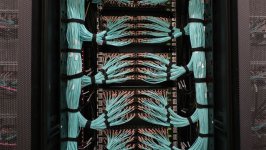
The American technology company "Global Ai" plans to cooperate with the Saudi AI (Humain), in an agreement that is expected to reach billions of dollars, according to a person familiar with the matter.
The American company, which was established less than a year ago by a team of technology experts, is to build a data center in New York that will use segments developed by Invidia, with plans to create more centers. According to the company, Global AI offers an infrastructure for artificial intelligence more secure and economical to private companies and sovereign countries compared to American cloud computing companies.
Global AI, CEO John Kelly said: "Our basic vision is to build data centers where companies and countries can use them in particular and safe, and computers are not shared with anyone else." He explained: "This is if you are a bank and deals with risks, or a health care institution that has very sensitive data, a drug company that works to discover medicines, or a country that does not want to seize its data by another country."
According to the agreement, which is likely to reach billions of dollars in multiple stages of the project, Humain will have access to American data centers of Global AI, and eventually build a center in Saudi Arabia..
The SC
INT'L MOD
- Thread starter
- #835
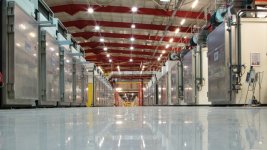
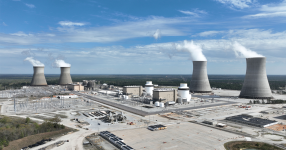
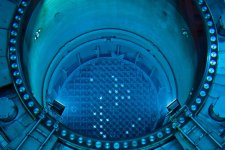
Energy Secretary Chris Wright, who traveled to Saudi Arabia before Trump’s trip, said the world can expect to see “meaningful developments” this year on helping the kingdom build a commercial nuclear power industry. Wright said the U.S. was “very excited” about it.
The SC
INT'L MOD
- Thread starter
- #838
The Italian company Vintentei, one of the largest shipbuilding groups in the world, intends to establish a specialized company in Saudi Arabia through a long -term strategy, aimed at launching a large ship industry center, according to what he mentioned to the Economic CEO of the company, Yerubiro Vulgero
The SC
INT'L MOD
- Thread starter
- #839
Saudi Arabia To License Alcohol In Select Locations From 2026
In a landmark policy shift, Saudi Arabia has announced that beginning in 2026, it will license the sale and consumption of alcoholic beverages in approximately 600 designated locations across the country
2 days ago
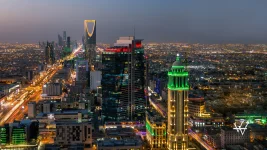
This strategic move marks a significant transformation in the Kingdom’s traditionally strict regulatory stance on alcohol and is part of a broader vision to modernize its tourism industry, particularly in preparation for hosting the 2030 World Expo and the 2034 FIFA World Cup.
Controlled Legalization in High-End and Restricted Zones
The Saudi government will authorize the sale of wine, beer, and cider—excluding spirits and drinks exceeding 20% alcohol content—only in controlled environments. These include:
- Five-star hotels and luxury resorts
- Licensed distributors and authorized embassies
- Tourist hubs like the Red Sea Resort, Sindalah, and Neom
- Residential compounds for expatriates
- Designated international cultural and business events
The decision was influenced by the positive impact of similar models in neighboring countries, such as the United Arab Emirates and Bahrain, where regulated alcohol availability has enhanced tourist experiences and boosted foreign visitor numbers. Saudi Arabia now aims to replicate this success while balancing cultural and religious considerations.
Maintaining Social Norms and Tight Control
While this policy signals increased openness, the authorities have stressed that alcohol sales will remain prohibited in open public spaces, private homes, retail stores, and for home production. Access will be tightly controlled, with licenses granted under specific conditions and strict regulations to ensure alcohol is consumed responsibly and discreetly.
Licensed venues will be subject to clear operational guidelines, and service staff will receive specialized training to manage alcohol provision in accordance with Saudi laws and customs. These steps are designed to prevent abuse, ensure cultural sensitivity, and maintain the Kingdom’s Islamic identity while accommodating international standards of hospitality.
A Strategic Move for Economic Diversification
The introduction of alcohol licenses is seen as part of Saudi Arabia’s Vision 2030 program, which aims to diversify the economy beyond oil, develop world-class tourism infrastructure, and attract foreign investment. Tourism officials believe this reform will lead to the creation of new jobs in hospitality, restaurants, event planning, and entertainment sectors, while also attracting global hotel chains and event organizers.
Already, several international hotel groups have initiated talks with Saudi authorities to modify their properties in anticipation of the new regulations. Tour operators and MICE (Meetings, Incentives, Conferences, and Exhibitions) organizers also view the policy as a positive step toward improving the international appeal and competitiveness of Saudi Arabia as a destination for global events.
Balancing Progress and Tradition
Saudi Arabia’s move to allow limited alcohol sales reflects a desire to reposition itself as a modern, forward-thinking destination while upholding its deeply rooted values. The initiative balances economic ambition with cultural respect, aiming to cater to the expectations of international travelers without compromising national identity.
With a robust regulatory framework and collaboration with international hospitality experts, this reform may not only transform Saudi tourism but also set a new regional standard for modernization with cultural integrity.
https://www.gulf-insider.com/saudi-to-license-alcohol-in-select-locations/

Sultan Baybars
Registered Member

I thaught it was a joke and didnt believe it.
The birthplace of the Holy Prophet - who banned alcohol - is welcoming it again.
A country with a Sharia Law, a King who claims himself the “Protector of the Holy Cities” and “Leader of The Umma”.
What a disgrace. What a disaster.
Muslims shouldnt boycot Israel. They should boycot Saudi Arabia and the Hadj pilgrimage.
The birthplace of the Holy Prophet - who banned alcohol - is welcoming it again.
A country with a Sharia Law, a King who claims himself the “Protector of the Holy Cities” and “Leader of The Umma”.
What a disgrace. What a disaster.
Muslims shouldnt boycot Israel. They should boycot Saudi Arabia and the Hadj pilgrimage.
Users who are viewing this thread
Total: 1 (members: 0, guests: 1)
Pakistan Defence Latest


Country Watch Latest
-
 Official B-21 Discussion Thread: Manufacturing ramping as operational capability expected in 2027 (11 Viewers)
- Latest: AZ_HighCountry
-
-
-

-
Latest Posts
-
 Makkah Defence Alliance: Turkey, Saudi Arabia, and Pakistan, news & updates (32 Viewers)
- Latest: Master Chief
-
-
-
-
Official B-21 Discussion Thread: Manufacturing ramping as operational capability expected in 2027 (11 Viewers)
- Latest: AZ_HighCountry