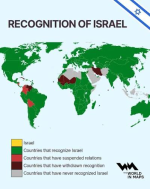
Saudis must recognise Israel for nuclear deal, says Trump

Agreed, Donald Trump can bark like a dog.

But still I think Saudi Arabia should get nuclear technology from China or Russia.

I noticed several here saying that exact thing.

If that was the case, then why haven't they done it already? It's because in the real world, countries just don't hand over nuclear material.

Including China and Russia
 
He became first directly involved with the development of Riyadh and the Riyadh region in 1954. Later he was a governor of the province for almost 50 years until 2011. Many of the main successful and large-scale projects (early ones) in and around Riyadh were constructed and implemented under his watch. He was known for his successful tenure in this regard and many other governors copied (tried to at least with various successes) his approach across KSA.


Which can always be withdrawn as North Korea did back in 2003. They signed in 1985.
When my cousin asked me ( couple of years ago ) hey ! you remember when you went for your visa extension to the governor of Riyadh ? I said yes ...then he told me king salaman was the governor at that time..... honestly I didn't believe him....now , what I remember is a simple kind soul , no fkin protocols no fukin security...I walked straight to his office , my application was in English , he read it and asked me to get it translated into Arabic...I did that and he signed it right away..he is a saint my friend.
 
Again, there is zero evidence of what Trump has claimed on X or elsewhere (most likely due to Zionist/Mossad pressure) namely that KSA must recognize Israel and sign the Ibrahim (AS) accords, for the deal to be valid.

Trump has been around in high-ranking US politics for almost 10 years by now and KSA is yet to sign any normalization with Israel.

It is unlikely to occur with this current regime around (Israeli regime) and unlikely without concession to Palestine and Palestinians.

What is signed is signed in the deal between KSA and USA and If the US (Trump administration) wants to break their own oaths and the deal signed, KSA will have to look towards China and Russia. So in the end it will be a US loss here. KSA has nothing to lose in this regard.

Speaking of which, who has built the nuclear power plants within Pakistan? And if Pakistan is able to help build the entire civilian nuclear program and enrichment, what prevents KSA and Pakistan from making a deal tomorrow?
 
Last edited:
Again, there is zero evidence of what Trump has claimed on X or elsewhere (most likely due to Zionist/Mossad pressure) that KSA must recognize the Israel and sign the Ibrahim (AS) accords. Trump has been around in high-ranking US politics for almost 10 years by now and KSA is yet to sign any normalization with Israel.

It is unlikely to occur with this regime around (Israeli regime) and unlikely without concession to Palestine and Palestinians.

What is signed is signed in the deal between KSA and USA and If the US (Trump administration) want to break their own oaths and deal signed, KSA will have to look towards China and Russia. So in the end it will be a US loss here. KSA has nothing to lose in this regard.

Speaking of which, who has built the nuclear power plants within Pakistan? And if Pakistan is able to help build the entire civilian nuclear program and enrichment, what prevents KSA and Pakistan from making a deal tomorrow?
You talk about evidence when the word is literally coming out from the horse's mouth.

Fact: No nuclear enrichment for saudis as long as they dont join abraham accords and kneel before jewish supremacy, even if they do, the nuclear enrichment in ksa will literally be contained in a blackbox, no saudis allowed to even enter the facility, forget about TOT.
 
They really thought they were gonna get uranium enrichment handed to them just for s*kcing jew c*ck and bribing trump's family lol.
They may still get it. Trump is simply signaling he wants more compensation before he bothers pushing through this deal in Congress.

Something like the $2 billion Jared got from Riyadh because he is so good at investing.
 
You talk about evidence when the word is literally coming out from the horse's mouth.

Fact: No nuclear enrichment for saudis as long as they dont join abraham accords and kneel before jewish supremacy, even if they do, the nuclear enrichment in ksa will literally be contained in a blackbox, no saudis allowed to even enter the facility, forget about TOT.
1785000925662.png

Try again. There has never been any Jewish supremacy in Arabia or KSA unlike many other areas of the world.

That is not what was signed and if that is the case, KSA will sign a similar deal with China or Russia who have been proposing it to KSA for many years now.

Yes, just like the missile program of KSA, 100's of missile bases within KSA that are expanding while we speak, the uranium within KSA (KSA has 5-10% of the world's uranium reserves), the existing nuclear research reactors within KSA and the 1000's of Saudi Arabian nuclear engineers and scientists who have gradated from Saudi Arabian and global universities in the past 15 years alone.

Try again.

You KSA/Arab obsessed trolls also claimed that KSA would never get the F-35, THAAD, Patriots, the world's most advanced F-15 (SA), advanced microchips, that main US firms would be establishing their regional headquarters in KSA, that direct foreign US investment in KSA would be higher than ever before etc. List is long.

@The SC look at the comedy in this thread from the usual suspects.
 
Last edited:
Courtesy of brother @The SC in the "KSA developments and projects thread" on this section:

Saudi Arabia now has all the capabilities:

Owns a research reactor

1784993013677.png


National human resources

1784993096003.png


Has the ability to operate nuclear reactor systems


1784993158324.png


Saudi Arabia owns 43% of the intellectual property rights for reactor SMART

1784993238119.png


1784993409783.png


Uranium reserves estimated at 5% of the world's reserves

The right to enrich uranium, build reactors, and many other points..
 
I am not aware of KSA asking for this technology for 20 years. Any evidence of this?

You do realize that this is exactly what is going to occur according to the deal signed with the US?

It allows KSA to enrich uranium within KSA for "peaceful" purposes. As well as the establishment of advanced nuclear reactors and nuclear power plants to met the energy needs of KSA in regards to electricity, water desalination etc.

KSA already has nuclear warheads due to the Pakistani connection (open secret). Confirmed by high-ranking CIA elements, MI6 and even as recently as Iranian high-ranking iRGC officials (February 2026).

You think that KSA financial and political help for Pakistan in this endeavor (nuclear weapons) came for free?

Same way that Pakistan provides KSA a nuclear umbrella. The recent signed defense treaty mentions that nuclear weapons are part of this deal.

Once again, KSA has the uranium, the missiles, the missile bases, the wealth, the political will, the scientific and human capital and soon to be (either with the US or another partner) a civilian nuclear program and infrastructure.

Basically allowing KSA to eventually pursue domestically constructed nuclear weapons some time in the future if the need to do so arrises.

We have seen the limitations of US regime removals in numerous countries what makes you think that the 3rd richest country on the planet in terms of natural resources and wealth, one of the largest countries on earth, one of the wealthiest in terms of economic size and the homeland of Makkah and Madinah and one of the most important countries for 2 + billion Muslims and 550 + million Arabs worldwide, will be easy?

If Pakistan in the 1990's (weaker than KSA nowadays) and North Korea could do it and a host of countries were close to it, KSA could do so as well.

And KSA would be much harder to sanction than Iran for 100's of reasons.

To view this content we will need your consent to set third party cookies.
For more detailed information, see our cookies page.


Western "experts" are already panicking, lol.

Israeli leaders are already crying because they can see where all this will ultimately lead to.:cool:

The topic is clear and does not require any possibilities if you are following the project

Everything that will be mentioned now was announced in statements from officials from both sides:

When the negotiations officially began, the discussion was about a nuclear agreement and normalization with the Zionists, and the Zionists were very enthusiastic

But Saudi Arabia stipulated that the path of a Palestinian state on the 1967 borders be written, specific, and at a known and binding time.

The Zionists refused

Saudi Arabia moved to plan (B)

Continuing negotiations on the project without normalizing it and removing it from the equation

At the same time, Saudi Arabia began to mobilize the countries of the world to recognize Palestine

This means that Saudi Arabia is telling the Zionists that you have two options:

Either accepting a historic deal of normalization in exchange for a Palestinian state, and it will be part of the deal

Or international pressure and I will get the project without normalization

The Zionists did not expect Saudi Arabia to succeed in what it proposed

And this is what happened: A number of countries recognized Palestine

Negotiations and agreement on the nuclear project continued

When it was announced, they went crazy and tried to correct what could be corrected

But it is too late now and the agreement has been signed.

This is the quick summary

As for what Congress and others say?
Members of Congress have been active since the beginning of this project and are part of the discussions and negotiations, The agreement came to an end with their prior approval


As for Trump’s statements, they are clear to the Americans themselves before the world and the Zionists
It is nothing but an attempt to calm people down from the shock
 
Saudi source:

The nuclear agreement has been signed and everything is over, and there are absolutely no new terms to negotiate.

The tweets do not cancel the agreements that were signed. As for the issue of normalization, there will be no peace except with an independent Palestinian state with East Jerusalem as its capital.

To view this content we will need your consent to set third party cookies.
For more detailed information, see our cookies page.
 
They may still get it. Trump is simply signaling he wants more compensation before he bothers pushing through this deal in Congress.

Something like the $2 billion Jared got from Riyadh because he is so good at investing.
I don’t know about enrichment but trump can back track whenever he chooses on issues whenever he wishes written agreements or public statements that he will follow through on things he can say no sorry that’s not what I meant
F35 to turkey…..naaa Fake Media manipulated my own words
Iran MOU…..naaaa fake media manipulated the agreement for Irans benefit
Saudi Arabia…..naaaa Jared needs another 4 billion
 
I don’t know about enrichment but trump can back track whenever he chooses on issues whenever he wishes written agreements or public statements that he will follow through on things he can say no sorry that’s not what I meant
F35 to turkey…..naaa Fake Media manipulated my own words
Iran MOU…..naaaa fake media manipulated the agreement for Irans benefit
Saudi Arabia…..naaaa Jared needs another 4 billion
Which part of KSA having the Chinese, Russian, French and other options do you not understand, should the US and Trump break their own deal that they have just signed?

Which part of Trump/Biden the US talking about the Ibrahim (AS) Accords and KSA signing it every second day for 10 + years now, and that not occurring, do you not understand?

Or which part of Trump/the US in general (throughout history at least) not backtracking when it comes to KSA?

Case in point claims of KSA not getting the F-35, THAAD, Patriots, the world's most advanced F-15 (SA), advanced microchips, that main US firms would be establishing their regional headquarters in KSA, similarly with major AI firms, that direct foreign US investment in KSA would be higher than ever before etc. List is quite long.

Not going to talk about the KSA-Pakistani nuclear relationship here as it is even obvious for the most ignorant person out there.
 
US professors agreeing with me and saying that not even Trump himself believes that KSA will sign the Ibrahim (AS) accords and that the deal will proceed as it was signed originally.

To view this content we will need your consent to set third party cookies.
For more detailed information, see our cookies page.
(ABC news)

Not watched this Al-Jazeera English report yet so cannot judge its content:

To view this content we will need your consent to set third party cookies.
For more detailed information, see our cookies page.
 
There seems to be a consensus among various nuclear experts (Saudi Arabian, Arab and foreign) that pretty much agree with my conclusions.

While China and Russia were eager and are eager to give KSA civilian uranium enrichment technology and help with construction nuclear power plants etc., that would likely lead to US sanctions, US making life very difficult for KSA in terms of politics, military, economics etc.

KSA's military is closely tied to the US (nothing wrong with this - they have the world's most powerful military technology and military and KSA has some of the world's most advanced weapons that money can buy and we have benefitted greatly from F-15SA, THAAD, Patriots, various drones, F-35 soon etc.).

At the same time KSA is very quickly industrializing on all fronts (STEM, AI, mineral sector, renewables, agricultural sector, petrochemicals - which was already advanced, economic sector, infrastructure sector, medicine and healthcare sector etc.).

The economy is also one of the world's largest and fastest growing with one of the world's largest trade surpluses, sovereign wealth funds etc.

HOWEVER, KSA is at the beginning of the journey to truly reach full independence on many critical fields.


Choosing the US option here and signing this deal (the Ibrahim (AS) Accords nonsense is just Trump being pressured by Mossad, Israel and Jews in America who want to prevent all countries in the region from being a nuclear threshold state - forgetting that KSA likely has access to nuclear warheads already due to the Pakistani connection or now that Pakistan has signed a defense pact with KSA where Pakistani nuclear umbrella is part of it).

Those invented conditions are NOT a part of the signed deal.

And frankly speaking, only China would be another realistic option. KSA and China have strategically close ties and China is the largest trade partner of KSA.

Russia, while not at odds directly, has never been a great ally of KSA and I don't believe that there is full trust and besides of that KSA will soon overtake Russia in terms of economic size and Russia has huge problems with Ukraine, isolation, sanctions, weak leadership and many divisions. They also take ages to build anything. The 1 sole nuclear power plant in next door Iran (Bushehr - literally 250 km away from Eastern Province in KSA), is not fully build yet and fully run by Russians and it has been a project in the works for 30-40 years if I am not wrong.

So choosing the Russian option, moreover to build potentially 16 nuclear power plants, would likely take 100 years with the Russian speed.
 

Saudi Arabia ranks first at International Nuclear Science Olympiad as students claim gold medals​


Saudi Arabia ranks first at International Nuclear Science Olympiad as students claim gold medals

August 9, 2026 | 02:28 PM
Saudi Gazette
Last Updated: August 9, 2026 | 02:51 PM

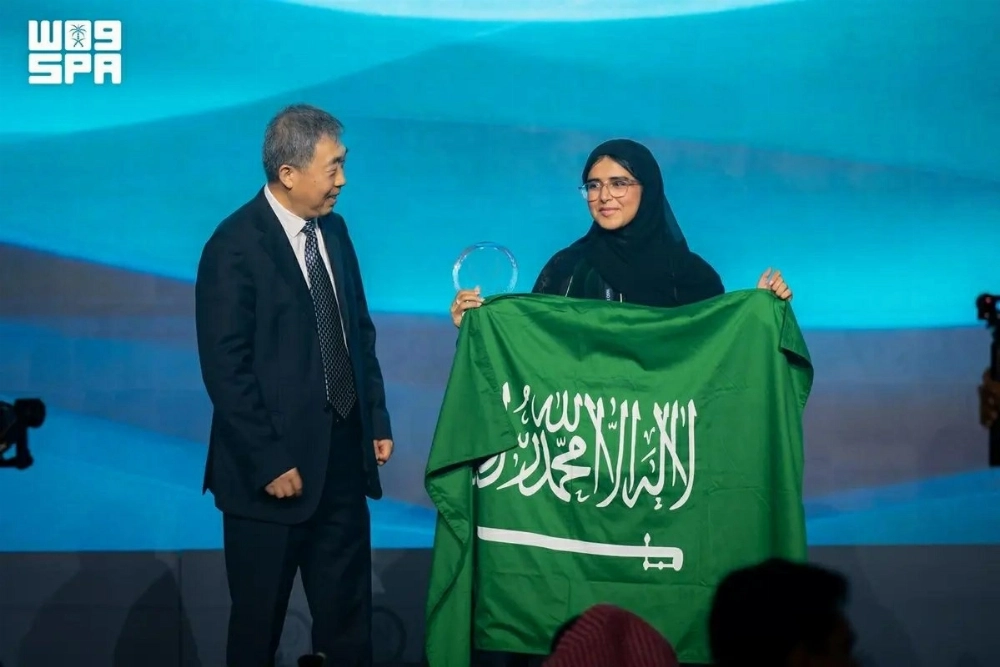
EDDAH — Saudi student Jana Al-Sabil’s gold medal and “Best Female Student” award at the third International Nuclear Science Olympiad 2026, along with Amjad Al-Darwish’s gold medal and “Nuclear Science Ambassador” title, helped Saudi Arabia rank first overall in the competition.


Jana Saleh Al-Sabil won the gold medal and “Best Female Student” award in recognition of her scientific excellence and performance in the competition.


Presented by the International Atomic Energy Agency (IAEA), the award was among the special prizes approved by the Olympiad’s International Council to honor female students for scientific excellence, highlight their contributions to nuclear science, and encourage their participation in specialized scientific fields.


Al-Sabil was selected following her outstanding performance in the Olympiad, which included two examinations — one theoretical and one practical — each lasting five hours.


The exams assessed participants’ knowledge and skills in nuclear science, as well as their abilities to conduct scientific analysis and experiments, interpret results, and solve advanced problems.


Saudi Arabia ranks first at International Nuclear Science Olympiad as students claim gold medals


Saudi Arabia ranked first in the third edition of the Olympiad after Amjad Mahmoud Al-Darwish won a gold medal and the title of “Nuclear Science Ambassador” for achieving the highest combined score in the theoretical and practical examinations among all competitors.


In addition, Abdulaziz Abdulmohsen Al-Sharait won a silver medal, while Saleh Mubarak Dhaifallah Al-Harbi received a bronze medal.


The Olympiad, hosted by Saudi Arabia in Jeddah from August 2 to 9, brought together 120 students and scientific specialists representing 19 countries.


It was jointly organized by the Ministry of Education, the King Abdulaziz and His Companions Foundation for Giftedness and Creativity (Mawhiba), and King Abdullah City for Atomic and Renewable Energy, while King Abdulaziz University hosted the competitions and activities.


The International Nuclear Science Olympiad, approved by the IAEA in 2024, is an international scientific competition for secondary school students that aims to develop their knowledge and skills in nuclear science and its peaceful applications and encourage innovation and scientific research in the field.


The Arabized low IQ cretins here (from mostly impoverished and illiterate shitholes in comparison - harsh but it is largely the accurate description of their entities - they know who they are) and elsewhere raging and fuming right now while claiming that KSA has no human capital.:ROFLMAO:

A very interesting article about the recently signed nuclear deal with the US.

No “Gold Standard,” No Israel Clause: What the Saudi Nuclear Deal Actually Says (MBN)​

August 7, 2026 Articles, Greater Middle East & Africa, Missiles, Defenses, and Space, Op-Eds & Blogs, The Nonproliferation Regime
Two weeks ago, President Trump was about to send the Hill a U.S.-Saudi nuclear cooperative agreement. After a torrent of criticism from Fox News, The Wall Street Journal, and The New York Times, though, he changed his mind and insisted that the United States would not help Saudi Arabia make nuclear fuel and that the deal would not come into force until Saudi Arabia recognized Israel.

The question now is what’s next. Below is an interview I granted to the U.S. government’s Middle East Broadcasting Network that takes a stab at where we’re headed.

First, if the deal proceeds as the U.S. Energy Department and the press have described it will provide the Saudis with a pathway to make nuclear fuel—the most difficult and essential step to making nuclear weapons. The problem here is that Israel and the United States have been bombing a variety of nuclear sites to throttle this very same activity in Iran.

In an attempt to avoid this contradiction, the Energy Department insists there will be no enrichment unless a two-year study concludes that Saudi nuclear fuel-making is economically sound and can be rendered safe. Yet, as I note below, the premise of conducting such a study—that the answer could be yes—is disingenuous. We already know the honest answer is no.

The second problem with the agreement is that it does not require Riyadh to adopt international nuclear inspections (known as Protocol I visits) that would allow the International Atomic Energy Agency (IAEA) to go anywhere, anytime outside declared nuclear sites. One hundred and forty four nations have already granted authority to the IAEA to conduct such inspections on their soil. Saudi Arabia has refused.

This suggests that Riyadh has something it wants to hide, possibly including a covert nuclear weapons program. Saudi officials are already on record that the Kingdom must get nuclear weapons if it believes Iran is acquiring them. Saudi Arabia also has tight connections to Pakistan, which has mastered both enrichment and nuclear weapons design.

Finally, by creating a pathway to dangerous nuclear weapons-related activities, it will set a precedent for Riyadh’s neighbors, including the United Arab Emirates, Turkey, and Egypt—nations pursuing large nuclear power programs.

The Energy Department’s rejoinder is that if the United States doesn’t help Saudi Arabia make nuclear fuel, Russia and China will with fewer controls. That gets things backwards. In fact, no country—not the United States, not China or Russia—during the last half-century has offered to transfer nuclear fuel-making technology to states lacking nuclear weapons. The last country to do that was the United States in the 1960s with India, which used the assistance to set off a “peaceful” nuclear explosion.

If, as proposed, the United States violates this sound standard by helping Saudi Arabia enrich uranium, the very thing our Energy Department says it is worried China and Russia might do, is what our violation of this standard will ensure.

The President has yet to send the Saudi nuclear agreement to Hill for review. As I argue in the attached interview, it would be best if it never left his inbox or, at least, our government renegotiated to include the very things President Trump now insists are necessary—no enrichment and Saudi Arabia’s recognition of Israel.

As always, I’m curious to get your take on the attached.


August 4, 2026

Henry Sokolski Interview with Middle East Broadcasting Networks


No “Gold Standard,” No Israel Clause: What the Saudi Nuclear Deal Actually Says


The Trump administration has yet to formally send to Congress the nuclear cooperation agreement it signed with Saudi Arabia last month.

Energy Secretary Chris Wright and Saudi Energy Minister Prince Abdulaziz bin Salman signed a Section 123 agreement – the legal step that allows American companies to share nuclear technology with another country – in Riyadh on July 22. The Department of Energy said at the time that the agreement would “now be transmitted to Congress for review.”

Until it is, the review clock cannot start. Once transmitted, the agreement takes effect “after 90 consecutive legislative days of sitting before Congress” – days Congress is actually in session, not calendar days – “which could be sometime before the end of this year,” said Henry Sokolski, who runs the Nonproliferation Policy Education Center and served as the Pentagon’s deputy for nonproliferation policy in the George H.W. Bush administration.
The administration has also complicated its own deal. A day after the signing, President Trump posted on Truth Social that Saudi Arabia would not be allowed to enrich uranium, and that the entire arrangement depended on Riyadh joining the Abraham Accords and establishing relations with Israel.

Those conditions do not appear in what the two governments actually signed, Sokolski told MBN.

“I’m with the Saudis on this. I think they’ve got it right, which is: you’ve got to be kidding. We signed documents. They didn’t have anything in it about these other conditions,” Sokolski said. “It is not part of the deal.”

Saudi Arabia has said repeatedly that it will not normalize relations with Israel unless Israel agrees to Palestinian statehood — a condition Prime Minister Benjamin Netanyahu has refused.

Sokolski noted that the president retains one lever regardless: even after the agreement takes effect, he can decline to approve nuclear exports to Saudi Arabia. “He has that power. But it’s not something that he’s legally bound to do. It’s something that’s executive discretion,” he said.

What the deal actually allows

A full assessment is still impossible. The text of the agreement has not been published, nor have two side letters that accompany it. “We haven’t seen them,” Sokolski said. “Of course, we haven’t even seen the 123 agreement yet.” Most of what is known comes from briefings the Energy Department has given reporters.

What is known is this: once in force, the deal defers the central question to a study. “There’ll be a two-year study on, well, is the making of nuclear fuel by enriching uranium really all that economical for Saudi Arabia,” Sokolski said.

If the study says yes, American firms would build an enrichment plant on Saudi soil, operating under U.S. oversight.

“If the conclusion of that is yes, then the United States would actually build a plant, an enrichment plant, that would bring the most sensitive technologies that we’re now currently bombing in Iran to Saudi Arabian soil,” Sokolski said, referring to the U.S. military campaign aimed at preventing Iran from obtaining nuclear weapons.

If the study says no, “the agreement somehow will bind the Saudis to not get enrichment from anyone else for 10 years,” Sokolski said, citing reporting on two side letters that have not been made public. A separate side agreement, he added, would limit Saudi reactor purchases to Westinghouse — a company headquartered in Pennsylvania but owned by two Canadian firms.

A departure from the “gold standard”

The agreement breaks with the terms Washington set for the United Arab Emirates in 2009 – an arrangement so strict it became known as the “gold standard.” Abu Dhabi made a legal commitment to forgo both uranium enrichment and the reprocessing of spent fuel, the two most direct pathways to a nuclear weapon. It also accepted the International Atomic Energy Agency’s Additional Protocol, an inspection regime that lets IAEA monitors examine nuclear-related sites a country has not formally declared.

Saudi Arabia has agreed to neither.

“In the case of Saudi Arabia, the forswearing did not occur at all,” Sokolski said. “Worse, they did not agree to the Additional Protocol — which raises the question: do they have something to hide, or do they think they will?”

“144 countries – almost all the countries in the world – have agreed to the Additional Protocol,” he added. “Not Saudi Arabia.”

Supporters of the deal argue that American oversight of a Saudi facility is better than pushing Riyadh toward Russia or China, which might offer looser terms. Sokolski is skeptical that American control would survive contact with reality.

“We have this expression in the United States: possession is 90 percent of the law. If you have something on your soil, you can always tell the Americans to leave. And there you go – you have it,” he said.

A declared facility, he added, does nothing to rule out a covert program – especially without the Additional Protocol, which exists precisely to let inspectors chase undeclared activity.

A history of finding out too late

Sokolski pointed to Saudi Arabia’s record of acquiring missile capabilities without Washington managing to stop it in advance. “The track record there is 100 percent consistent. Every time they’ve gotten a missile, it was too late for us to do anything to block it,” he said. The Washington Post has reported that Riyadh secretly bought Chinese ballistic missiles in the 1980s, and that Washington learned of the deal only after the missiles had arrived and construction of their bases had begun inside the kingdom.

The stakes are raised by the Saudi crown prince’s own words. In 2018, Mohammed bin Salman told CBS’s “60 Minutes” that if Iran builds a nuclear weapon, Saudi Arabia would “follow suit as soon as possible.”

“In the case of Saudi Arabia, they’ve been pretty clear that if they think Iran’s getting a bomb, they have to get one too,” Sokolski said.

The fight in Congress

The deal “hasn’t sat well with a lot of people on the Hill,” Sokolski said, including some staunch Trump supporters – among them Sen. John Kennedy of Louisiana, who has been “quite emphatic saying there’s no way he’s going to support this.”

Blocking it is hard, but not impossible. “You don’t need many Republican senators to join a whole lot of Democrats to pass a piece of legislation,” Sokolski said, especially if Democrats take the House next year. The president could veto such a bill – but, he added, “you do not, as a president, want to see that coming to your desk.”

He suggested two narrower options for Congress: bar the use of American funds to implement any part of the agreement that permits nuclear fuel production inside Saudi Arabia, or write in an explicit condition that cooperation cannot lead to an enrichment facility.

The regional echo

The consequences do not stop at Saudi Arabia’s borders. The U.S.-UAE agreement contains a consultation clause triggered if Washington gives another country in the region more generous terms – and granting Riyadh a future path to enrichment, Sokolski said, could prompt Abu Dhabi to demand a renegotiation of its own deal. Egypt and Turkey could invoke the Saudi precedent to press their own claims to a full nuclear fuel cycle on their territory.

“Folks assume the worst when someone says they’re going to do something and they have the means to do it,” he said.

Sokolski worries the agreement could unravel a policy Washington has held since India’s nuclear test in the 1970s: refusing to help non-nuclear-weapon states produce nuclear fuel. Russia and China have largely taken the same public position, he said — but an American exception for Saudi Arabia could invite others to make their own.

The argument that the United States must cooperate because someone else will anyway is, he said, “a self-fulfilling fallacy.”

“People say, well, if you’re going to do that, then we got to do that,” he said.

Not settled yet

For all his criticism, Sokolski stressed that nothing is final. The economic study has not begun, Congress has not reviewed the agreement, and the administration could still tighten its terms or attach conditions to implementation. The deal, he said, looked like “a trial balloon” whose drafters “may have been a little too clever by half, not knowing exactly what they were locking into.”

“I just don’t know how the story ends,” he said, “and it could end very badly.”

 
Last edited:

Users who are viewing this thread

  • Back
    Top