South Korea Defence and News Forum

Koreans basically eat from beginning to end.
 

South Korea's Dilemma in Confronting China's Industrial Dominance

From Sewing to Robots, How to Counter a Nation Monopolizing Every Industry
By The Chosunilbo

Published 2025.09.24. 00:10

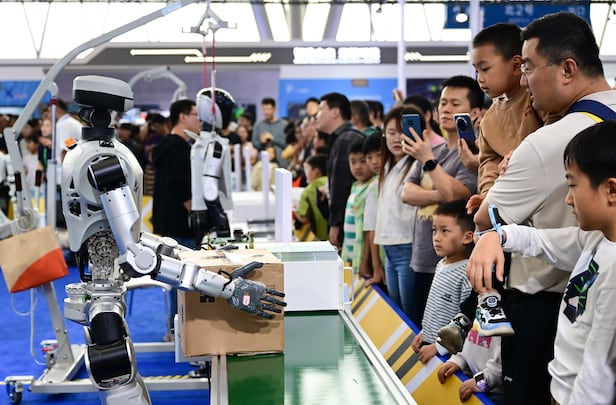
On the 20th, a humanoid robot demonstrates parcel delivery to visitors at the 2025 World Manufacturing Convention held in Hefei City, Anhui Province, eastern China. /Xinhua-Yonhap

On the 20th, a humanoid robot demonstrates parcel delivery to visitors at the 2025 World Manufacturing Convention held in Hefei City, Anhui Province, eastern China.

The UK, US, Japan, and Germany, once the “factories of the world,” were powerhouses in certain key industries. Today, China is different. It seeks to dominate everything from the lowest to the highest tiers of manufacturing.

While reviving the sewing industry—a sector even middle-income countries avoid—into a “super-gap” industry armed with AI, it also monopolizes future industries like drones and robots. These are all fields where South Korea has excelled, is currently strong, or aims to succeed. What should we do in the face of a China that does everything?

China accounts for 31% of global manufacturing production—double that of the US (16%, second place) and more than the combined share of Japan, Germany, India, South Korea, and others ranked 3rd to 10th. Within that 31%, China dominates the skies (70% of the drone market), land (60% of the electric vehicle market), and seas (70% of the shipbuilding market). Moreover, its reach extends from the past (sewing) to the future (robots, AI).

The surprising return of the sewing industry to China, which had been shifting to Vietnam and Bangladesh, unfolded as follows. Alibaba, the world’s largest e-commerce company, launched the “Smart Garment Factory” project. AI analyzes sales data to predict which designs will sell well and establishes production plans accordingly. In factories, AI robots cut fabric with 99% accuracy and swiftly produce clothing. Recently, the company announced a “See now, Buy now” plan to release new clothing products weekly.

Shein, which is rewriting fashion formulas, goes further. It uses AI to analyze trends in real time, generating over 1,000 designs daily, then produces 100–200 pieces in small batches. It then runs an AI demand-prediction program and immediately scales up production for popular items. Even in the sewing industry, “inventory-free production” has become a reality. Tens of thousands of garment factories in Guangdong and Zhejiang now compete not on labor costs but on data and speed.

Next, logistics company SF Express steps in. AI calculates optimal delivery routes, and robots sort and package goods around the clock. The Wall Street Journal described this as the “new logistics era led by Alibaba and SF Express.”

The garment sector symbolizes Chinese manufacturing, which makes everything. From low-cost mass products like vitamin C raw materials (over 90%) and bicycles to high-end appliances, green energy sectors like solar panels, national infrastructure industries like telecommunications equipment and high-speed rail, and cutting-edge fields like robots and AI, it holds dominant global market shares in hundreds of industries. It is now said that modern life worldwide cannot be sustained for a day without Chinese products—a statement not exaggerated.

In every industry, it floods the market with near-comprehensive products. For example, in drones, it produces and controls every conceivable type: pesticide spraying, seed planting, construction bricklaying, painting, and high-rise window cleaning. Military drones are just a part. Robots are also rapidly expanding beyond factories to surgical assistants and caregiving robots. The world’s dependence on a China that makes everything continues to grow.

South Korea is becoming the biggest victim in the face of a China that makes and dominates everything. Whether intentional or not, most sectors China has encroached upon are those where South Korea has excelled or is strong. It seems China thinks, “If South Korea can do it, we can too,” and follows to overtake. In our representative industries, steel faces an uncertain future due to Chinese barriers. POSCO’s FINEX technology, once a global leader, was quickly caught up by Chinese companies like Bao Steel and Hebei Steel using similar technologies.

Petrochemicals, once a cash cow, now face an unprecedented crisis as China, our largest export market, expands production capacity. In market share, automobiles, shipbuilding, and smartphones have already fallen behind. China is rapidly entering fields where Korean companies were dominant, such as LNG carriers. In memory semiconductors, it has reached a level threatening Samsung Electronics and SK Hynix in 3D NAND flash. China narrowed the technology gap by poaching Korean engineers with high salaries, extracting their expertise, and discarding them. Even OLED technology, which South Korea commercialized first, was lost to China this way. Now, in every field, we are at the stage of being overtaken, not just chased.

We cannot abandon manufacturing. Arguments for transitioning to high-value industries or services by discarding manufacturing are outdated. The issue is not just manufacturing’s job creation and value-added effects. Without a manufacturing base, we cannot keep up with the Fourth Industrial Revolution. Even if AI designs smart factories, there must be facilities to implement and produce them. That data, in turn, strengthens AI. No matter how groundbreaking a new drug is, it is useless without mass production technology.

South Korean manufacturing has world-class artisans who have written the “Made in Korea” myth over decades. Their tacit knowledge—like a master welder’s skill in attaching dozens of tons of steel plates without error, a maintenance expert’s ability to detect machine abnormalities by subtle sounds, or a veteran engineer’s know-how affecting semiconductor yield by 0.1%—cannot be transmitted through money or manuals. It is a legacy passed down from the first generation of industrialization to us.

Ultimately, we must awaken and develop the manufacturing DNA within us. We must AI-ify the skills and spirit of these masters. POSCO’s “Lighthouse Factory” is one example. It captures artisans’ movements with sensors and vision AI, teaches robots, and digitizes problem-solving processes. This must spread across all manufacturing. New motivation must also be injected into research labs and production sites. Mannerism permeates our entire industry.

China does everything. It will not change. This means we cannot avoid it. Then, the only option is to fight and win.
 

Formidable 'China Speed,' Once Our Identity

South Korea's manufacturing future at risk as outdated regulations stifle innovation race against 'China Speed'

Published 2025.09.23. 00:10

Last January, the Chinese generative AI model ‘DeepSeek’ shocked the world. It achieved performance comparable to ChatGPT using low-cost semiconductors instead of high-end NVIDIA chips subject to U.S. sanctions. Even more shocking was its development period: a mere "two months," far shorter than ChatGPT’s one year. This unimaginable "China Speed" lies at the heart of the nation’s rise.

Ten years ago, Chinese Premier Li Keqiang lamented, "As the world’s largest steel producer, we still cannot make a single ballpoint pen tip." At the time, China produced 80% of the world’s ballpoint pens, but the core technology—the pen tip—was mostly imported from Japan, Germany, and other countries. The deep-seated complex was that "Chinese manufacturing is big but not strong (大而不强)."

A decade later, China has transformed from a "low-cost manufacturing factory" into a "top-tier manufacturing powerhouse." This is the result of the national strategy "Made in China 2025," which nurtures 10 key industries, including robots, shipbuilding, electric vehicles, batteries, and aerospace. Half of the world’s industrial robots are now produced in China, and in aerospace—a field where South Korea cannot even present its credentials—China has achieved independent operation of an unmanned space station and the world’s first landing on the far side of the moon. This astonishing transformation occurred in just "10 years."

The speed of innovation in Chinese manufacturing is formidable. While domestic automakers like Hyundai Motor and Kia take 3–4 years to develop a new car, Chinese electric vehicle (EV) companies release new models in just 1.5 years. Aito, a joint venture between Huawei and EV maker Seres, launched its premium M9 model in December 2023, two years after its founding, and became the top premium car brand in China within a single year. This is incomparable to the 48 years Hyundai Motor took to launch its premium brand Genesis. Huawei, Xiaomi, traditional automakers, and battery companies have merged into one body, dominating the EV ecosystem in the blink of an eye.

When China joined the World Trade Organization (WTO) in 2001, its manufacturing competitiveness ranked 23rd globally. It took just over 20 years to rise to second place, behind only Germany. The U.S., with over 100 years of manufacturing history, ranks fourth, Japan fifth, and South Korea third. "China Speed" differs from the "Miracle on the Han River," which symbolized compressed high-speed growth. The Han River Miracle was about industrialization, but China is simultaneously accelerating industrialization, informatization, and the AI revolution. Harvard University evaluated national competitiveness in five key technologies—artificial intelligence, biotech, semiconductors, space, and quantum—and found that China ranked second in all categories, following the U.S. South Korea ranked fifth in semiconductors, ninth in AI, and tenth in biotech, but did not place in the top 10 for space or quantum technology. Chinese manufacturing is integrating Fourth Industrial Revolution technologies like AI and big data into production sites faster than any other country. Consequently, 41% of the world’s "lighthouse factories," which lead manufacturing innovation, are located in China.

Speed determines the outcome of economic and industrial competition. SK Group Chairman Chey Tae-won said, "Looking at China’s speed, there’s a high probability that we won’t be able to keep up and will die." This "China Speed" is also the work of the Chinese Communist Party. They have turned the vast domestic market of 1.4 billion people into a testing ground for companies. Chinese firms release products to the market even if they are not fully refined, then quickly improve them based on feedback. The party turns a blind eye to safety accidents or personal data leaks that arise in the process—a gap that the West cannot replicate. Autonomous driving technology rose to world-class levels in such a short time.

China’s research and development (R&D) focuses on commercialization rather than fundamental technologies. Last year, its R&D expenditure was 705 trillion Korean won, exceeding South Korea’s entire budget (656 trillion Korean won). However, 82% of China’s R&D spending was allocated to experimental development for commercialization, not fundamental technologies. While the U.S. excels in fundamental technologies, China leads in commercialization. In the foldable phone market, which Samsung Electronics pioneered, Huawei was the first to release a smartphone that folds twice.

When catching up with advanced countries seems impossible, China makes bold "leaps" to overcome its late start. It skipped landline telephones and went straight to mobile phones, bypassed credit cards for mobile payments, and jumped to electric vehicles when it lacked the technology to build sophisticated internal combustion engines.

The fierce internal competition in China, even more intense than in free-market countries, also fuels speed. Only three of over 200 EV companies are profitable, reflecting cutthroat competition. A moment’s lapse leads to collapse. Chinese shipyards routinely complete ships early, as employees work desperately for performance-based pay, which often exceeds their base salaries. The U.S. cannot match China’s speed in warship construction. Every year, 400,000 top talents enter STEM fields, and engineers earn more than doctors—a social reward system that acts as a lubricant for the speed race.

Observers say watching China’s speed race is like seeing a massive conveyor belt roaring and spinning terrifyingly. Once, "speed" was South Korea’s strength and weapon, leaving foreigners speechless. But since democratization, "speed" has become an "evil." Social and political conflicts spread at terrifying speeds. SK Hynix’s Yongin semiconductor cluster began construction only last February, six years after the initial investment. Even semiconductor R&D is shackled by the 52-hour workweek, preventing those who want to work from doing so.

Every administration has pledged to eliminate regulations—such as "utility pole regulations," "nail regulations," and "spiderweb regulations"—but none have succeeded. Political factions trapped in ideological battles have fueled conflict and division. Countless corporate regulations, like the 52-hour workweek and the yellow envelope bill, inevitably slow speed.

Democracy and speed often seem incompatible. Yet Elon Musk, who works 24 hours a day instead of 52 hours a week, is American. South Korea has a small population, a small market, scarce resources, and mediocre technology. If it does not regain the "Han River Speed," its very livelihood could disappear. The ruling and opposition parties must reach a consensus to boldly remove outdated regulations that shackle new technologies and industries, establish the principle of "permit first, regulate later," and let companies race ahead. If South Korea cannot even match half of China’s innovation speed, its manufacturing future will vanish.


Hundreds of Korean Researchers at Huawei; Talent Being Absorbed by China​

  • 2025.10.08 19:07
Over 300 Korean Scientists Work at Huawei; High Salaries Attract Korean Talent to Chinese Tech Giants

As the phenomenon of Korean science and engineering talents leaving for China becomes increasingly serious, it has been reported that there are over 300 Korean researchers working at Huawei, China’s leading big tech company.

According to a recent report by CBS No Cut News, it has been confirmed that the number of Korean R&D personnel working at Huawei, China’s representative big tech company, is in the 300s as of June this year.

A high-ranking industry official familiar with the situation at Huawei in China said, “There are about 300 Korean R&D personnel working at Huawei,” adding, “These are not ethnic Koreans from China, but Korean nationals who received regular education in Korea.”

The official continued, “While it’s well known that Korean science and engineering talents are going to U.S. big tech companies, I understand that the number of Korean science and engineering personnel working at other Chinese technology companies besides Huawei is also substantial.”

This case numerically confirms that a significant number of Korean researchers are already stationed in China, as Chinese big tech companies are attracting global talent by offering high salaries.

Huawei’s R&D personnel account for 55% of its total workforce (208,000), so it cannot be said that Koreans make up a majority of the R&D staff.

However, contrary to the general perception that mainly science and engineering personnel nearing retirement choose to go to China, it was revealed through interviews that the proportion of active talents is also considerable.
 
Only South Korea benefits. The US is getting very little and stuck in a forever war. Who cares today if North Korea takes the south ? And shouldn't it be a china problem now ? We keep hearing about China the next great Power blah blah but Chinese never want to get their hands dirty, they just want to machinate behind the scenes and make money. Hence the US remains stuck.

Same with effing Japan, mooching off America for 70 plus years whole refusing American access to its markets but selling every last item in the US market.
Lol, it's obvious It's part of US world hegemony puzzle, keep SK and Japan occupied to keep China and Russia down in Asia.


Great. Hope Singapore catches on.
 

South Korea’s Hanwha debuts K-NIFV infantry fighting vehicle with AI drone defense​


Hanwha Aerospace revealed the Korea New Infantry Fighting Vehicle (K-NIFV) at Seoul ADEX 2025, introducing a next-generation unmanned turret and counter-drone defense suite. The platform marks South Korea’s latest step toward self-reliant, export-ready armored vehicles designed for drone-heavy battlefields.

https://go.ezodn.com/ads/charity/pr...unnel=tofu&utm_type=traffic.&ffid=1&co=PK
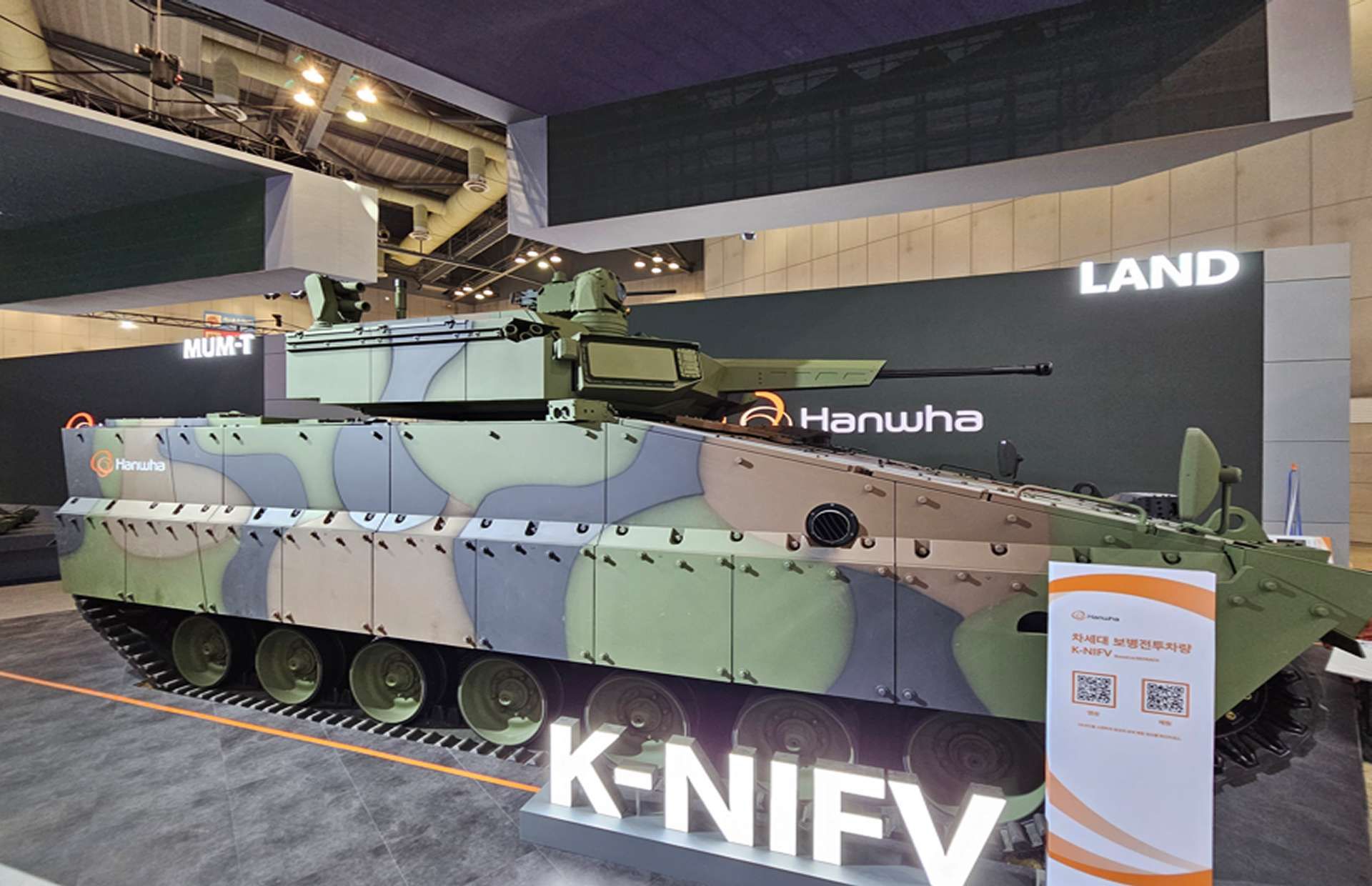
Seoul, Oct 21, 2025: Hanwha Aerospace used the Seoul ADEX 2025 show to unveil the Korea New Infantry Fighting Vehicle, or K-NIFV, a next-generation tracked IFV derived from the Redback platform. On the Hanwha stand, the company emphasized a new unmanned turret armed with a 30 mm cannon and growth to a 40 mm cased-telescoped gun, plus provision for an indigenous anti-tank missile. The headline feature is a multi-layered counter-drone suite that fuses radar-guided remote weapons, AI-assisted sights, and a hard-kill active protection system. Hanwha says the design raises domestic content and lowers life-cycle costs while preserving Redback-level protection and mobility.


Hanwha’s K-NIFV is a Redback-derived IFV with an unmanned 30 mm turret (ATGM-ready), eight-troop capacity, and layered counter-drone plus APS protection (Picture source: Hanwha Aerospace).

Hanwha’s K-NIFV is a Redback-derived IFV with an unmanned 30 mm turret (ATGM-ready), eight-troop capacity, and layered counter-drone plus APS protection (Picture source: Hanwha Aerospace).

https://go.ezodn.com/ads/charity/pr...funnel=tofu&utm_type=traffic&ffid=1&co=PK
The K-NIFV reuses the Redback’s hull architecture but shifts to an unmanned turret to free internal volume for an eight-soldier dismount team and additional mission payload. Company literature and officials indicate a modular armament set: baseline 30 mm, optional 40 mm CTA cannon, a coaxial 7.62 mm, and twin canisters for a homegrown ATGM now in development under Hanwha’s Precision Guided Munitions line. Subsystems that were foreign on Redback migrate to Korean suppliers, with SNT Dynamics taking the main gun and transmission, Hanwha Systems providing the active protection and sights, and Hanwha’s own remote weapon station integrated with cueing radar for C-UAS work.

https://go.ezodn.com/ads/charity/pr...unnel=tofu&utm_type=traffic.&ffid=1&co=PK
Hanwha plans K-APS as the hard-kill layer, replacing the Redback’s earlier Iron Fist fit, while domestic mine-protection kits replace foreign packages. The C-UAS architecture is staged: detection and AI-tracking via commander and gunner sights, radar-slaved RCWS fire against small drones at roughly one kilometer, then APS intercepts inside a few hundred meters. This layered design explicitly targets loitering munitions and small quadcopters that have punished armored formations in Ukraine and the Middle East.

The K-NIFV grew out of an “export Redback modification” effort launched in October 2024 with a budget of 34.5 billion won. Hanwha says the concept passed critical design review and is planned to be completed in March 2028. The firm is positioning the first block to compete to replace South Korea’s aging K200A1 reconnaissance vehicles, with a Block-2 evolution eyed as a K21 successor that adds a serial hybrid powertrain and active suspension. Countries flagged for early outreach include Romania, Italy, Norway, the UAE, and Saudi Arabia, signaling a broad export push from day one.

On the ground, the K-NIFV’s operational proposition is clear: an unmanned turret lowers the silhouette and removes crew from the turret ring, increasing survivability and usable volume for troops and mission kits. The vehicle is designed to fight in contested electromagnetic and drone-saturated airspace, combining hunter-killer sights, stabilized fire control, and an RCWS that can be radar-queued to swat commercial-class UAVs. Optional packages under discussion include organic reconnaissance drones and manned-unmanned teaming links to small UGVs, enabling the IFV to clear intersections, scout defilades, and provide beyond-line-of-sight fires without exposing the squad. For operators, the domestic supply chain is as much a capability as the hardware itself, promising faster upgrades and fewer export bottlenecks.


The K-NIFV lands as South Korea’s defense industry enters a decisive growth phase. ADEX 2025 is the country’s largest arms fair to date, a stage for AI-enabled systems that Seoul is funding amid an 8.2 percent defense-budget rise proposed for 2026. With North Korea’s accelerating missile and UAV programs, and with European armies rearming after Ukraine, Seoul’s mix of competitive pricing, fast delivery, and credible technology has turned K-defense into one of the world’s fastest-growing export engines. The K-NIFV, with its domestic content and anti-drone pedigree, is built to ride that wave.


Written by Evan Lerouvillois, Defense Analyst, Army Recognition Group.

Evan studied International Relations, and quickly specialized in defense and security. He is particularly interested in the influence of the defense sector on global geopolitics, and analyzes how technological innovations in defense, arms export contracts, and military strategies influence the international geopolitical scene.
 

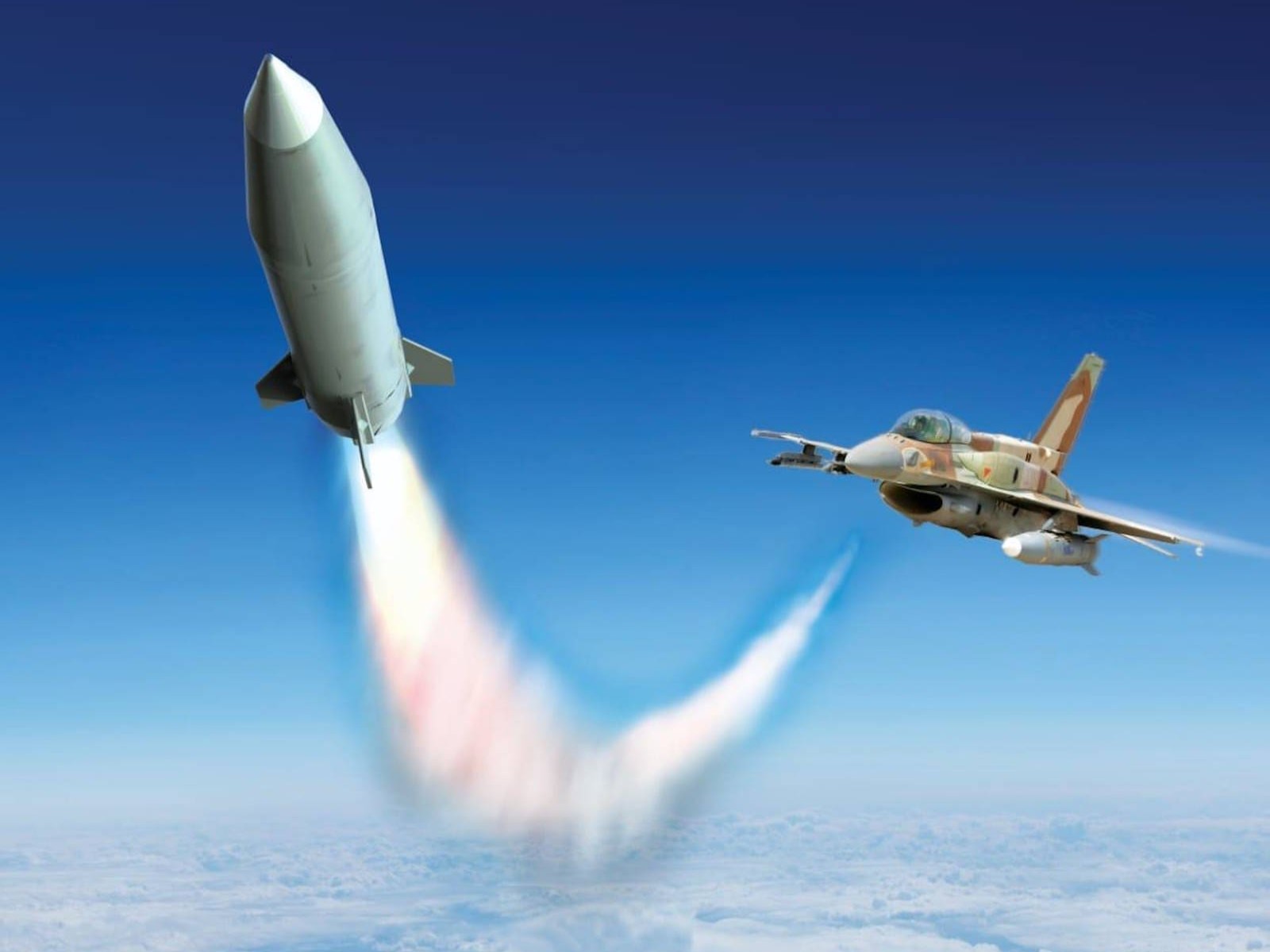
Israel calls on South Korea to join in developing defense against hypersonic missiles​

19 August, 17:51
0
Yuval Baseski, vice president of the Israeli company Rafael Advanced Defense Systems, in an interview with the media called on South Korea to join the development of defense systems against hypersonic missiles, Naver.com reports.

Baseski said he will visit South Korea in September to participate in the World Knowledge Forum, where he is expected to continue discussing cooperation in this area. He also noted that conventional air defenses will not cope with hypersonic missiles.

"Every air defense system today is based on flying faster than the target... But this principle does not apply to hypersonic missiles. To intercept an object moving at Mach 10, you need a defense moving at Mach 30, which is impossible in the atmosphere due to friction," Baseski said.
He compared intercepting hypersonic missiles to basketball.

"One interceptor missile tracking one hypersonic missile is like protecting LeBron James with one player... You can keep chasing him, but you can't stop him from scoring," the company's vice president explained.
As Baseski clarified, hypersonic missiles can actually be shot down if a "zone defense" model is employed, where several interceptors cover designated areas and strike threats as soon as they enter that zone.

Rafael is already developing the Sky Sonic interception system to counter this new threat. Baseski invited South Korea to join the project, as he said it would be a promising defense direction.

The vice president called it "a unique opportunity to take a leading position in the global market."

It is worth noting that it was Rafael that created the famous Israeli "Iron Dome" - a missile defense system that protects cities.

In January of this year, North Korea announced the successful test of a new hypersonic missile, which reached an altitude of 100 km, then descended to 42.5 kilometers and headed for a target in the East Sea. And in 2023, Iran unveiled its hypersonic missile Fattah-1. Russia also has a similar project.

Hypersonic missiles are those capable of flying in the atmosphere at speeds exceeding Mach 5 (more than 6,000 km/h), maneuvering horizontally and vertically, making interception difficult. This is different from ballistic missiles, which cannot actively maneuver, and cruise missiles, which most often fly at subsonic speeds.

It was previously reported that South Korea is developing a hypersonic ballistic missile for the KF-21 fighter.
 
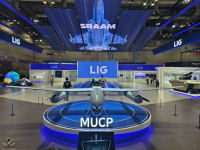
1761411762810.png
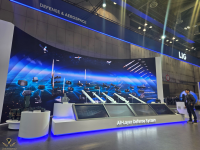
1761411746330.png

To view this content we will need your consent to set third party cookies.
For more detailed information, see our cookies page.


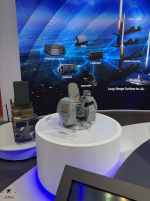
1761411934983.png

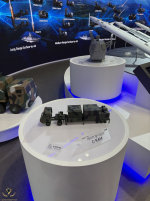
1761411951692.png

1761412030911.png

1761412042889.png
 

Peru to locally produce South Korean combat vehicles​


NewsArmy
ByGu Min Chul

Oct 27, 2025
Modified date: Oct 27, 2025


A K2 tank in Hongcheon, Republic of Korea, Feb. 13, 2025. Photo by Jason W. Cochran

Key Points
  • Peru will import 99 K808 armored vehicles and 46 K2 tanks from South Korea between 2026 and 2028.
  • From 2029 to 2040, Peru will locally produce 181 K808s and 104 K2s under license from Hyundai Rotem.
Peru has unveiled an ambitious plan to modernize its armored forces through a long-term partnership with South Korea’s Hyundai Rotem and STX, combining imports and local production of advanced military vehicles.

The initiative will replace Peru’s aging fleet of tanks and armored vehicles, most of which date back to the 1970s, and lay the foundation for a domestic defense manufacturing industry.

During a national defense industry forum in Lima, Major General Jorge Arévalo Calinowski, head of the Army’s logistics command and a board member of FAME SAC, described South Korea’s defense development model as a roadmap for Peru’s modernization effort.

- ADVERTISEMENT - CONTINUE READING BELOW -

He recalled how Seoul’s acquisition of the American M1 Abrams in the late 1970s, combined with a policy of technology transfer and sustained state support, enabled the country to develop its own K1 and K2 series tanks—now among the most advanced in the world.

“The K2, which is entirely Korean technology, demonstrates what can be achieved through long-term planning, research, and industrial cooperation,” Arévalo said.

Major General Jorge Arévalo Calinowski, during a national defense industry forum in Lima, PeruMajor General Jorge Arévalo Calinowski, during a national defense industry forum in Lima, Peru
According to the Army’s presentation, the Peruvian program will unfold in two main phases:

  • Phase 1 (2026–2028) involves the direct import of 99 K808 wheeled armored vehicles and 46 K2 main battle tanks from South Korea. These vehicles will be delivered with training and maintenance packages to prepare local personnel for future assembly and production.
  • Phase 2 (2029–2040) will transition to local manufacturing, with Peru expected to produce 181 K808 armored vehicles and 104 K2 tanks domestically under license. Production will be carried out at facilities developed by FAME SAC in partnership with Hyundai Rotem, with an estimated 30 percent of the components sourced from Peruvian suppliers, including welding, machining, electrical systems, and hydraulics.
Hyundai Rotem has committed an initial investment of around $270 million to establish assembly lines in Peru for both tanks and 8×8 armored vehicles. The 15-year project is designed to progressively increase the country’s defense self-sufficiency while supporting industrial and economic growth.

K808 armored personnel carriers at Rodriguez Live Fire Complex, South Korea, March 11, 2025. Photo by Thomas Vu

“This cooperation will create jobs, build technical capacity, and generate a sustainable defense industry,” Arévalo said. He noted that local production could generate thousands of jobs and contribute billions of dollars to the national economy over the life of the program.

Officials emphasized that South Korea’s success in defense manufacturing illustrates how industrial policy and military modernization can advance together. They pointed to similar models in Brazil and Spain, where defense industries have become key economic drivers.

Arévalo warned that relying solely on foreign suppliers in times of global instability poses risks to national defense. “The wars in Europe and growing tensions in Asia remind us that a country must be able to sustain its own capabilities,” he said.

Under the partnership, Hyundai Rotem will also provide technology transfer, training, and support for establishing a supply network of certified local companies capable of contributing to the armored vehicle production chain.

By 2040, Peru aims to field a modern armored fleet built largely within its borders, marking a shift from dependency on imports to national industrial autonomy.

“No strong defense exists without a strong national industry,” Arévalo said. “Our goal is a Peruvian defense industry that serves the nation and strengthens its economy.”
 

South Korea to turn KF-21 into 5th-gen stealth jet

https://en.globes.co.il/en/article-...h-37b-for-israeli-defense-missiles-1001525182
NewsAviation
ByGu Min Chul

Sep 10, 2025
Modified date: Sep 10, 2025


KAI courtesy photoKAI courtesy photo
South Korea is pushing forward with sweeping enhancements to its KF-21 Boramae fighter program, aiming to transform the domestically built aircraft into a full fifth-generation stealth platform.

The plan includes internal weapons bays, advanced radar-evading materials, and a next-generation engine developed entirely in-country.

According to South Korea’s 2026 defense budget proposal, the government is allocating expanded funding to support long-term stealth development for the KF-21 and other advanced aviation systems. The Korea Aerospace Industries (KAI), which manufactures the KF-21, is currently finalizing Block I development, with efforts already underway to initiate Block II and the conceptual Block III upgrades.

- ADVERTISEMENT - CONTINUE READING BELOW -

The Block III version, as envisioned by KAI, would move the KF-21 beyond its current limited stealth configuration by housing missiles and sensors within the fuselage—similar to the U.S. F-35 Lightning II. This design shift would minimize radar cross-section and enhance survivability in contested environments.

The government’s proposal includes ₩86 billion ($62 million) to launch development of an indigenous advanced jet engine, and an additional ₩630 billion ($453 million) for stealth-related sensor and material technologies. If successful, the engine could eventually replace the current U.S.-supplied GE F414-GE-400K turbofan.

KAI said it aims to complete Block I development by late 2026, followed by expanded testing of air-to-ground capabilities leading into Block II. For Block III, the company plans to introduce a fully stealthified configuration with internal bays capable of carrying four Meteor air-to-air missiles or precision-guided bombs. The aircraft would also feature embedded electronic warfare systems and a redesigned internal optical targeting suite, replacing the current external pods.

The push toward stealth extends beyond airframe design. The Ministry of National Defense is also moving to develop a long-range air-to-air missile similar to the European Meteor, which already equips the KF-21. The domestic missile is expected to feature a ducted ramjet propulsion system, enabling extended range and sustained terminal phase acceleration.

The upgraded KF-21 will eventually integrate with unmanned wingmen, with plans for a high-speed, high-capacity datalink enabling the lead aircraft to coordinate swarms of autonomous drones. In contested airspace, drones could be used to decoy enemy defenses or conduct strikes, allowing the manned fighter to remain at standoff distance.

South Korea’s development strategy reflects a growing emphasis on defense self-sufficiency. The Defense Acquisition Program Administration (DAPA) and KAI are also prioritizing engine localization to avoid future supply chain constraints. Hanwha Aerospace and Doosan Enerbility are leading development of a new 16,000-pound-thrust-class turbofan, with a scaled-down 5,500-pound demonstrator scheduled to begin testing by year’s end.

In addition to the aircraft and engine, the Ministry has earmarked ₩7.5 trillion ($5.4 billion) through 2033 to fund development of the new air-to-air missile. This system is expected to exceed the performance of the U.S.-made AIM-120 AMRAAM, especially in terminal engagement phases, the ministry said.

However, the effort is not without challenges. Developing a ducted ramjet-powered missile or a modern stealth jet engine involves a high level of technological risk and can require decades to mature. The Meteor missile program, for example, took over 25 years to bring to operational status, despite being a multinational effort among experienced European defense firms.

South Korea’s experience with drone and turbofan development, combined with support from potential international partners, could help mitigate some of the risks. Still, observers warn that delays and cost overruns remain possible.

By transforming the KF-21 into a fully stealth-capable platform, Seoul seeks not only to strengthen its airpower but also to build a competitive aerospace industry capable of exporting next-generation fighters—much like Turkey’s approach with its Kaan stealth jet.

If the program proceeds as planned, the KF-21 Block III could represent a milestone: South Korea’s first fully indigenous stealth fighter, bridging today’s tactical needs with the future of unmanned teaming and long-range precision warfare.
 
Armament
Defence & Space
Industry
Military
Hyunmin-Park-100x100.jpg

HyunMin Park 13.10.2025
Translation
564480968db4072f950be948205cc04527f2b6dd3fbef06323c33f156d8bc4a1

Wojciech Gruchała

South Korea Buys Israeli Air-Launched Ballistic Missiles Air LORA and Rampage​

In 2024 the Armed Forces of South Korea submitted a request to purchase Israeli air-launched ballistic missiles (ALBMs). Under the agreement, Air LORA and Rampage missiles are planned to be introduced into service in 2027–2030.
On Saturday, 11 October 2025, the newspaper NewsPim reported that in October the Armed Forces of South Korea began analyzing the possibility of acquiring air-launched ballistic missiles (ALBMs) that would serve as a response to North Korea’s nuclear weapons systems and new types of armament. According to sources in the South Korean defense industry, Seoul has decided to purchase the Israeli Air LORA and Rampage missiles, manufactured by the Israeli defense industry, and a deal is expected soon.

Images: Israel Aerospace Industries

In 2024 the South Korean Joint Chiefs of Staff approached the Israeli side with an inquiry about the possibility of selling these missiles for use in precision strikes against North Korean missile bases and nuclear facilities. According to available information, Israel opted for a direct-sale transaction, foregoing the option of a licensed local production. The Israeli government recently approved an export license, and deliveries of the air-launched ballistic missiles, if a deal is concluded quickly, could take place in 2027–2030.

The Air LORA missile was unveiled at ILA Berlin 2024 and is a development of the land-based tactical ballistic missile LORA (LOng Range Artillery) with a declared range of 430 km (first used in combat by Azerbaijan against Armenia in 2020). Air LORA is intended to carry two types of warheads interchangeably:high-explosive fragmentation, and penetration. The missile is guided by GNSS/INS navigation and a TV-camera sensor in the terminal phase.


The Rampage missile, meanwhile, is the air-launched version of the 306-mm EXTRA ballistic missile, with a baseline range of 150 km extended to 250 km and a 150-kg warhead. It can reach speeds of up to Mach 1.6 and achieves strike accuracy on the order of 10 m.


Israel’s Air Force has successfully used air-launched ballistic missiles in recent operations against Iran (Operation Rising Lion), making this technology particularly attractive to South Korea, which plans in the future to target North Korean bunkers and missile bases.


Because Israel has integrated both missile types with U.S.-made aircraft, South Korea is not expected to face major problems integrating them with its F-15K Slam Eagle and KF-16 fleets. Seoul has also shown interest in integrating these systems with the new KF-21 Boramae and in potential technical cooperation with the Israeli defense industry.
 

Users who are viewing this thread

Country Watch Latest

Back
Top