Southeast Asia quarterly economic review: Holding up strongly, September 3, 2024 | Full Report by McKinsey

China backs Malaysia's bid to join BRICS following Bazil's endorsement: Chinese FM

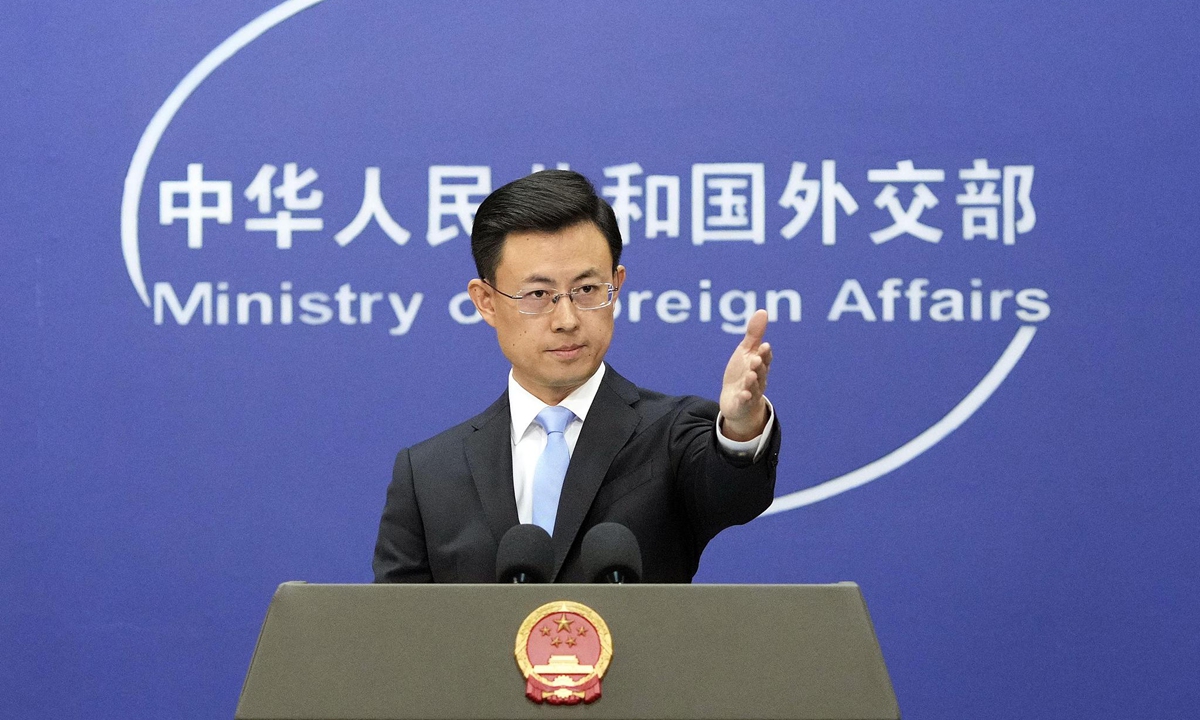
When asked if China, like Brazil, supports Malaysia's application to join BRICS, after Brazilian President Luiz Inacio Lula da Silva expressed support for Malaysia's aspiration to become a full member of BRICS at a press conference in Kuala Lumpur on Monday, Chinese Foreign Ministry spokesperson Guo Jiakun said on Tuesday that BRICS serves as an important platform for cooperation among emerging markets and developing countries, injecting strong momentum into world multipolarization and the democratization of international relations and earning widespread recognition from the Global South.


28.10.25 15:00

Russia announces Malaysia’s readiness to become full BRICS member

Malaysia meets the criteria to obtain full BRICS membership, said Deputy Prime Minister of the Russian Federation Aleksey Overchuk, as reported by BERNAMA, a TV BRICS partner.

According to him, the member states of the group are currently discussing Malaysia’s intention to join the group.

“BRICS countries exchange views on global issues and views on common approaches to strategic issues that shape our modern world. In that sense, of course, Malaysia fits that criteria quite well,” he told journalists during the 47th Association of Southeast Asian Nations (ASEAN) Summit in Kuala Lumpur.

Earlier, President of Brazil Luiz Inacio Lula da Silva stated that his country is ready to support Malaysia’s possible accession to BRICS as a full member. Currently, Malaysia is a partner country of the group.

During the ASEAN events, Overchuk also emphasised that BRICS and the Association possess significant potential for cooperation, as both frameworks build relations based on mutual respect and sovereign equality. He noted that BRICS is already exploring new formats of interaction.

bkp0zomori66wyb1go6lzpbzmypb3b20.jpg


The Russian Deputy Prime Minister also addressed the 20th East Asia Summit (EAS), according to the Russian government’s press service. He noted that ASEAN countries are showing great interest in the Northern Sea Route.

“We are establishing new container shipping routes with the Southeast Asian countries and working on the development of the Northern Sea Route,” he said.

Overchuk paid special attention to supporting regional states in their efforts to combat natural disasters.

“Southeast Asia is the region most exposed to natural calamities on our planet. Russia will continue to assist the countries in this region in dealing with their consequences,” the Deputy Prime Minister stressed.

In addition, he pointed out the vast opportunities for cooperation in the energy sector, recalling that Russia remains a reliable supplier of traditional energy resources.
 
ASEAN’s dealmaking with Trump shows promise


Robert Walker

The US President is still dictating terms but critical mineral
cooperation might give the region a bargaining tool


To view this content we will need your consent to set third party cookies.
For more detailed information, see our cookies page.


Donald Trump’s blitz through the ASEAN meetings at the weekend has shone a spotlight on usually dry and unambitious regional summitry. Exaggerated claims by the US President that “we intend to be a strong partner for many generations” will prompt a collective sigh of relief across the region. Southeast Asian countries can walk away pointing to progress, but any temptation towards complacency must be avoided.

In a whirlwind of activity, Trump personally oversaw signing of the peace deal he claims to have brokered between Cambodia and Thailand and confirmed trade deals with Malaysia and Cambodia, while progressing framework agreements on negotiations with Vietnam and Thailand.

Virtually unimpeded market access for most US exports appears to be the price for negotiation, as well as specific purchases of aircraft and agricultural and energy products. The explicit commitments from Malaysia and Cambodia to eliminate or lower tariffs on US goods and engage in regulatory reforms are what Trump also seeks from Thailand and Vietnam. Malaysia also committed to US$70 billion in new investments in the United States and to forgo any future export restrictions of rare earth elements.

Provisions targeting alignment with US economic and national security objectives appear to be efforts to bind these countries to the Trump administration’s attempts to de-risk from China. These include commitments to act against foreign firms that impinge upon US economic interests and stronger cooperation with US export controls.

In return, reciprocal tariff product exemptions were secured – around 12% of Malaysia’s exports are exempt according to a government official.

Trump had already carved out some exemptions from reciprocal tariffs on a product basis. These agreements therefore confirm a possible shift in the Trump administration’s thinking about the end point of all of this. Exempted goods include agricultural and forestry products, critical minerals, as well as some industrial inputs and materials with certain sectors receiving further carve outs like pharmaceuticals and aircraft.

A key detail missing, however, was the issue of transshipment.

Briefly mentioned in the agreement with Cambodia, when the White House statement on the Malaysia deal was first released the “rules of origin” section was intentionally left blank, only to be subsequently changed to include one of two provisions within the Cambodia agreement. The terminology remains vague with no strict commitments on either country.


A container ship at a dock (JAXPORT/Flickr)

Transshipment would still represent a small amount of ASEAN’s overall US exports (JAXPORT/Flickr)


Transshipment refers to when goods are fraudulently certified in customs as having come from locations they did not. The US trade negotiations with Southeast Asian countries brought general tariffs to 20% but included the provision that 40% tariffs would be applied to goods transhipped through ASEAN. That rate is close to the initial reciprocal tariffs announced on April 2 for many countries, even as transshipment in this context remains undefined.

This will prove more consequential in determining whether US trade policy truly challenges the region’s export-led growth model than existing product level carve outs.

Transhipment tariffs are targeting China’s role in the region’s supply chains.

If Chinese content within goods is targeted, rather than real transshipment, this would pose major difficulties for producers.

ASEAN countries are commonly seen as a “backdoor” for Chinese goods to enter the US market and avoid tariffs. To be sure, supply chains moved out of China in response to the US-China 2018 trade war. Southeast Asia began supplying many of the goods America had previously sourced from China. These exports rely on materials, parts and components from China.

However, the reality is transshipment of goods is not the same thing. In Vietnam, often cited as a more egregious example, transshipment only represented 8.8% of the increase in exports to the United States by 2021. That is less than US$ 8 billion. The amount could reasonably be said to be higher now, but transshipment would still represent a small amount of ASEAN’s overall US exports.

Southeast Asia cannot allow a broad definition of transhipment to be applied.

If Chinese content within goods is targeted, rather than real transshipment, this would pose major difficulties for producers. Critical to the region’s own competitiveness has been investment, capital goods, as well as inputs and intermediates from China. Attempts to sever or drastically impede those economic linkages would see the region’s supply chains find it much harder adapting to US tariff policy.

Even with these agreements, it is not clear how far Trump might go.

The inclusion of critical mineral collaboration announcements with Cambodia, Malaysia, and Thailand demonstrates ASEAN does have cards to play with Trump. Attracting the United States into critical mineral supply chains in the region could be a powerful tool for carving out concessions on transshipment. Trump already demonstrated interest in Indonesia’s copper and critical minerals when finalising trade negotiations. He clearly views the region as a viable hedge to China’s critical mineral dominance.

Despite China’s limited backdown from its expansive rare earth control regime, critical mineral exposure to China will remain an ongoing strategic risk for the United States. ASEAN could therefore capitalise on its potential to be a “major contributor” to global supply chain diversification for critical minerals to strengthen its hand in trade negotiations. Domestic political and popular opposition due to concerns about environmental damage pose hurdles but adequately addressing these is both possible and beneficial in the long run.

After the ASEAN summit, the transshipment issue remains. Perhaps critical minerals might be a pathway to set the agenda.


To view this content we will need your consent to set third party cookies.
For more detailed information, see our cookies page.


China, Japan, South Korea meet Asean bloc​

 
To view this content we will need your consent to set third party cookies.
For more detailed information, see our cookies page.


Hong Kong, Bangladesh, Sri Lanka and Chile seeking to join ASEAN-led RCEP​


Korea will "swiftly" commence talks with the Association of Southeast Asian Nations (ASEAN) to discuss upgrading the free trade agreement (FTA) the two sides signed nearly 20 years ago, as part of efforts to expand their bilateral trade, the industry ministry said Monday.
 

The Bank of Thailand (BOT) has officially inaugurated a cross-border QR Code payment service between Thailand and the People's Republic of China, effective immediately from today, 30 October 2025.

The project is the result of collaboration between key institutions, including Thailand's payment service provider, National ITMX Co., Ltd., three major Chinese payment providers, and the international settlement banks: Bangkok Bank and Krungthai Bank.

Chinese users can now use their existing payment applications—Alipay, UnionPay, and WeChat Pay—to pay for goods and services at Thai merchants simply by scanning a Thai QR Code.
 

Indonesia issues first ever yuan-dominated bonds as China–ASEAN cooperation expands​

China and the bloc of Southeast Asian nations have signed an upgrade to their trade agreement, aiming to hit a collective GDP of $3.8 trillion

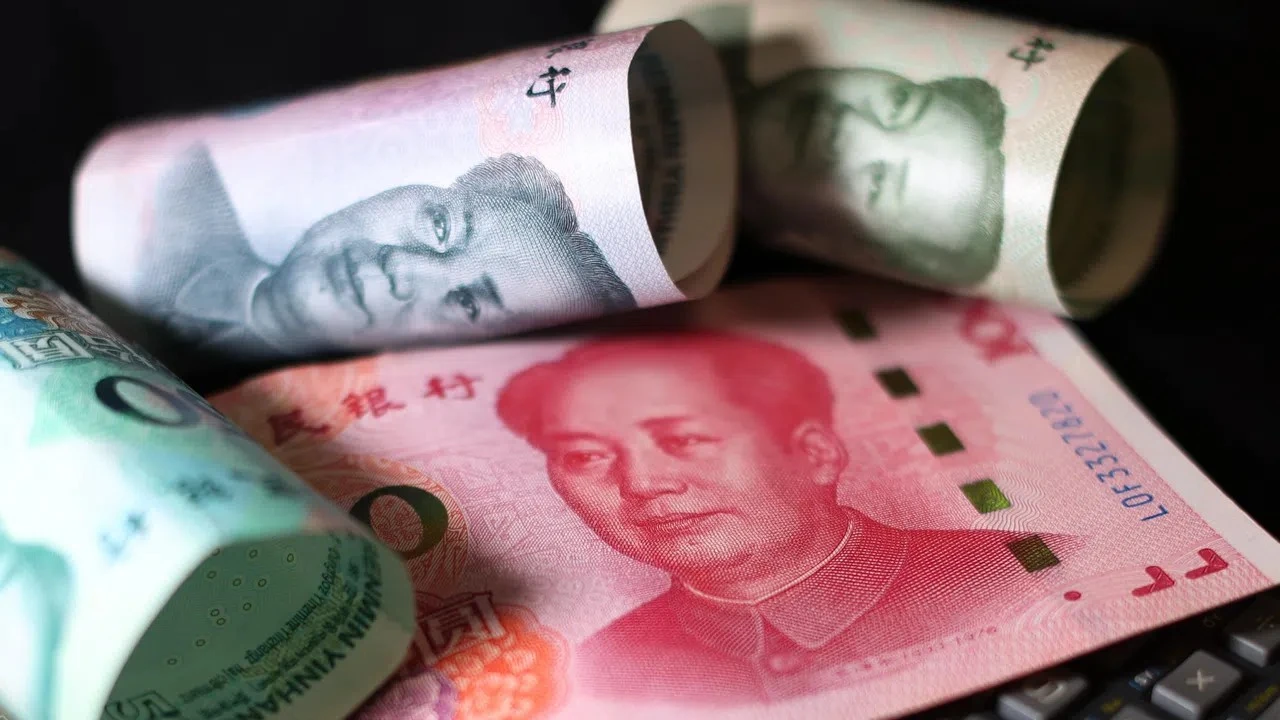
Indonesia has issued yuan-dominated sovereign bonds for the first time ever, worth around $842 million, the country’s Finance Ministry announced.

The Dim Sum Bonds, as they are called, are worth six billion in Chinese currency.

The Indonesian Finance Ministry said the bonds received total orders of up to 18 billion yuan – three times the issuance amount.

“The high level of demand demonstrates trust in Indonesia’s medium-term growth prospects and the government’s fiscal credibility,” the ministry said.

Dim Sum Bonds are yuan-denominated bonds issued outside of mainland China, mainly in Hong Kong.

According to data cited by Bloomberg, China’s offshore bonds are likely to hit record numbers this year.

Dim Sum Bond issuance tripled between 2022 and 2024, reaching 1.4 trillion yuan. The number is expected to grow further this year.

“As corporations accumulate more yuan, they need more yuan-denominated investment products to better manage their offshore renminbi holdings. By investing offshore yuan holdings in dim sum bonds – which is less risky than stocks – enterprises can earn more interest returns than traditional bank deposits,” said Billy Mak Suichoi, associate professor at Hong Kong Baptist University's Department of Accountancy, Economics and Finance.

“When Hong Kong enlarges dim sum bond issuances, this will also spur more cross-currency trading between the renminbi, Hong Kong dollar and US dollar,” he added.

The Indonesian announcement coincided with the start of the 47th summit of the ASEAN bloc in Malaysia’s Kuala Lumpur.

During the summit, China and the bloc of Southeast Asian nations signed an upgraded version of their free trade agreement.

The bloc is Beijing’s largest trading partner. Last year, bilateral trade totaled around $771 billion.

The upgraded deal aims to expand cooperation to new areas and hit a collective GDP of $3.8 trillion. It comes as China is facing expanded US tariffs, which threaten to reignite a trade war between Beijing and Washington.

At the summit, Chinese Prime Minister Li Qiang called on ASEAN nations to “uphold free trade and the multilateral trading system, oppose all forms of protectionism, and continuously advance regional economic integration.”

“China is willing to strengthen the alignment of development strategies with various parties, uphold openness and cooperation, and continuously unleash economic potential to explore broader development space,” he added.

According to last month’s UN Development Program (UNDP) report, Southeast Asia faces a significant threat from US tariffs – potentially a nearly 10 percent drop in exports to the US.

A September report by Foreign Policy claimed that Southeast Asian nations are “now preparing for a trading future that does not rely on the US.” The bloc has recently expanded agreements with several countries, including Canada, China, and South Korea.
 
Opinion: US investment commitments — The heavy task that awaits Malaysia's GLICs


By Mazli Noor
05 Nov 2025, 09:27 am


To view this content we will need your consent to set third party cookies.
For more detailed information, see our cookies page.

Kuala Lumpur, Malaysia


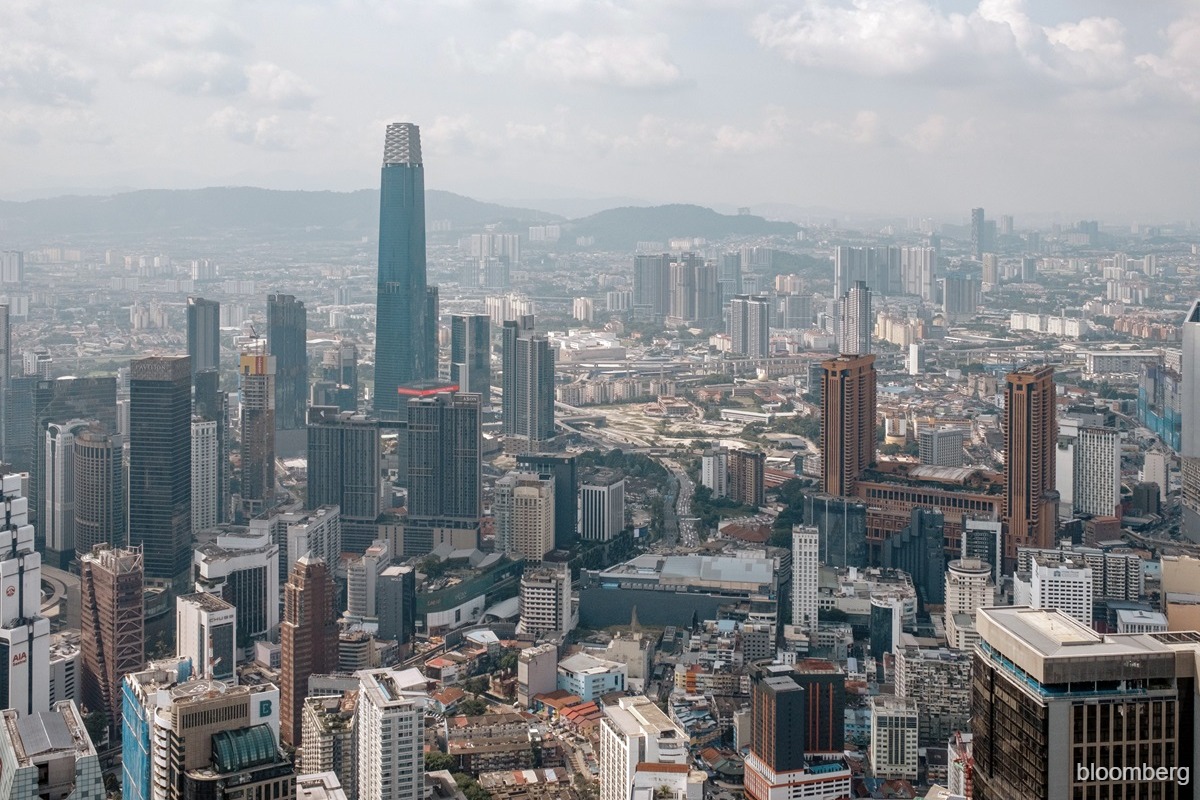
THE Malaysia-US Agreement on Reciprocal Trade (ART) announced recently will see Malaysia channel RM294 billion into job-creating investments into the United States over the next ten years, per Article 6.1(3). The agreement is a result of months of negotiations designed specifically to offset Malaysia’s trade surplus and boost American domestic economic figures.

Given its political nature — devoid of any fiduciary responsibility, prudence, and policy coherence, it is clear that investments under the ART will largely fall on the nation’s government-linked investment companies (GLICs). The onus on us now is to assess how it will affect Malaysia's long-term economic interests, whether our GLICs are being positioned for success or structural compromise, and how then to mitigate risks that will arise.

GLIC capacity: Strength within limits​

Malaysia's six GLICs collectively manage assets exceeding RM2,065.96 billion (approximately RM2.06 trillion), with four institutions maintaining sophisticated overseas operations: the Employees' Provident Fund (EPF), Permodalan Nasional Berhad (PNB), Khazanah Nasional Bhd (KNB), and Kumpulan Wang Persaraan (KWAP). All have significant experience in navigating international capital markets with existing US exposure.

However, institutional capability is not unlimited flexibility. The ART represents approximately 15% of the combined AUM (assets under management) of the four GLICs that one can anticipate will shoulder the bulk of the investment burden. Spread evenly across, all four would therefore exceed the 30% overseas portfolio threshold set by the Honourable Prime Minister (Datuk Seri Anwar Ibrahim) earlier this year, with EPF and KNB approaching or exceeding 50% foreign exposure.


The question before us is not if US markets are attractive. The S&P 500 equities market currently averages 10% p.a.— registering a 12.8% gain in the last 10 years — with a vibrant start-up ecosystem that averages 20% in Internal Rates of Return (IRR). The question is whether such a concentrated commitment in a single foreign market, regardless of its quality, represents the optimal portfolio for institutions with explicitly domestic-focused mandates. This is not prudence or flexibility: it is policy incoherence that places fund managers in an impossible position.

The proposed alternative, i.e. to rapidly expand AUM to accommodate both objectives, is unrealistic, given current market volatility and the compressed ten-year implementation timeline. Asset growth of the magnitude required cannot be realised through policy fiat; it requires favourable market conditions, sustained returns and contribution growth, none of which can be guaranteed in the current environment.

Macroeconomic consequences: Beyond portfolio metrics​

The broader economic implications of this commitment extend well beyond GLIC balance sheets and the need for transparent public discussions.

Currency market pressure​

The ART requires substantial US dollar acquisition, creating persistent structural demand for foreign currency over the next decade. Its emphasis on job creation in the United States means these investments will be long-term capital commitments with limited near-term repatriation potential. This directly contradicts stated government objectives to support ringgit valuation. We cannot simultaneously strengthen our currency while engineering long-term capital outflows of this magnitude. The economic logic is contradictory.

Accelerated capital flight​

Malaysia's equity markets are already under pressure, with foreign capital outflows reaching RM16.4 billion in the first nine months of 2025 alone — four times the RM4.2 billion outflow for the entire 2024. A structurally weakened ringgit with limited upside will only incentivise further foreign investor exit, as they rotate towards stronger currency denominated opportunities. We risk creating a self-reinforcing cycle of currency weakness and capital flight.

Opportunity cost to domestic development​

Every ringgit committed to meeting this quota is a ringgit unavailable for domestic infrastructure, technology development, and industrial capacity building. While the government correctly emphasises Malaysia's need for economic transformation, this agreement fundamentally redirects capital away from that transformation towards job creation in the United States. We must ask whether this represents optimal allocation of increasingly scarce national resources.

The way forward​

We do not oppose international investment or US market exposure in principle. We must however call out the subordination of fiduciary duty and portfolio prudence to diplomatic expediency. Malaysia's GLICs manage the retirement security of millions, the strategic reserves of the nation, and the pension promises made to public servants.

The die has been cast but the rakyat (people) deserves clarity. The government must address these contradictions before the ART is implemented in any real form. Will there be a parliamentary oversight mechanism in place for the major investment decisions? Can transparent risk assessments be published for parliamentary — if not public — scrutiny? This is not obstructionism — it is the least we must expect in responsible governance.


Mazli Noor is a fellow of the Institute of Corporate Directors Malaysia (ICDM) and serves on the boards of several public and private companies.
 

Indonesia-China Local Currency Transactions Near $7 Billion​

November 4, 2025 | 9:49 am

Jakarta. Indonesia’s local currency transactions have hit nearly $7 billion, according to the central bank, amidst a global effort to distance itself from the American dollar.

Bank Indonesia and its Chinese counterpart, the People’s Bank of China, established the local currency settlement framework in 2021, which cleared the way for current account transactions and direct investments being settled in either rupiah or yuan. The central banks expanded its scope to cover all balance-of-payments items after launching the local currency transaction framework in September. This followed a memorandum of understanding (MoU) signed during Chinese Premier Li Qiang’s Jakarta visit in May.
 

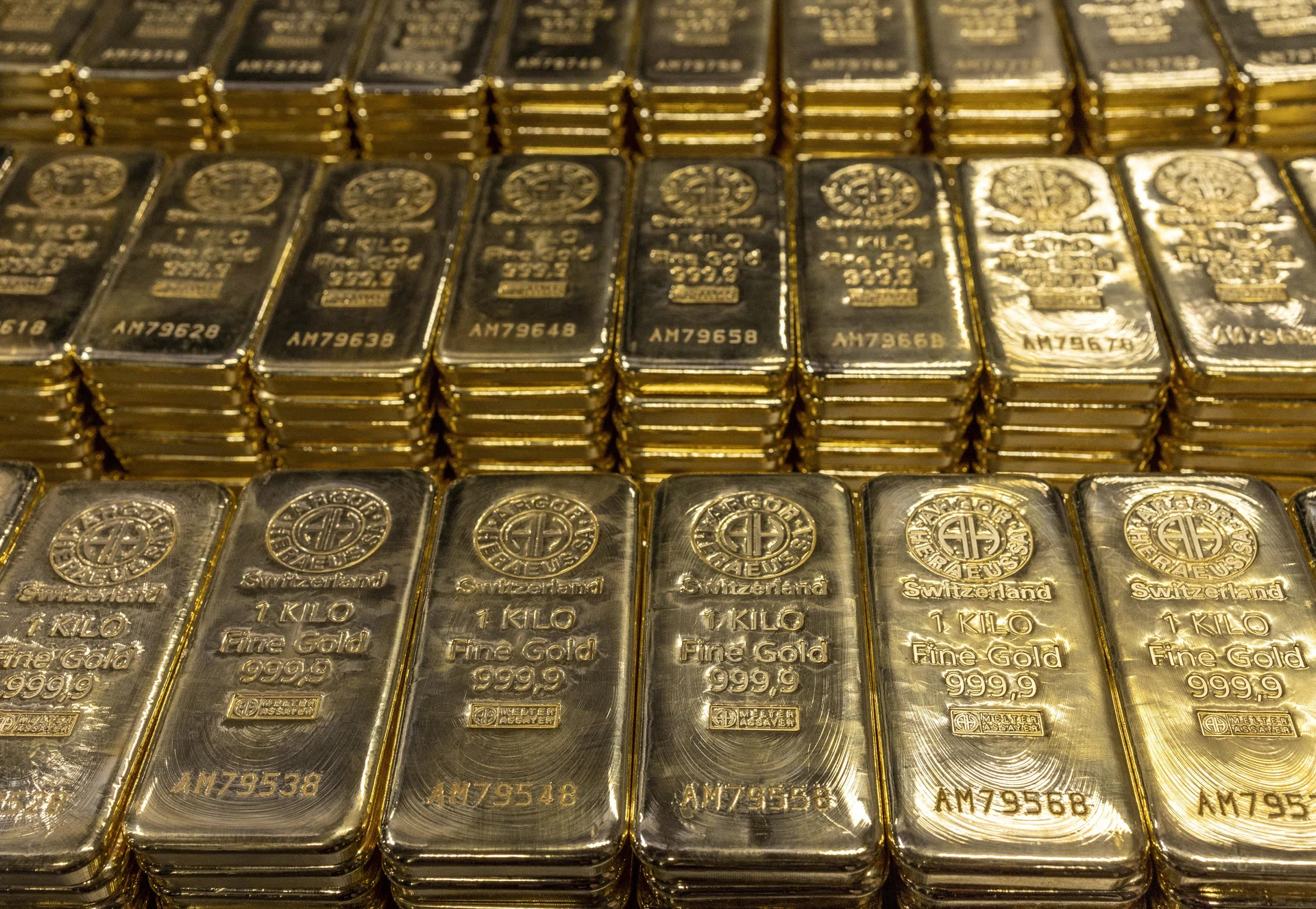
Cambodia readies gold deposit in China as Beijing pushes to host global bullion hub​

Cambodia to store gold in China, boosting Beijing’s bid to build global bullion hub: sources​


SINGAPORE - Singapore workers saw their incomes grow in 2025 after taking lower inflation into account, while the proportion of the workforce in permanent jobs hit a high of over 90 per cent, according to data released by the Ministry of Manpower (MOM) on Nov 28.

These trends indicate that Singapore’s labour market is stable despite a more uncertain external environment, it added.

Real incomes rose 4.3 per cent for resident workers at the median wage level. Residents refer to those who are either citizens or permanent residents here.

Lower-wage earners also saw greater strides in their pay. Real incomes rose 3.8 per cent for those at the 20th percentile threshold, MOM’s preliminary labour force data showed.

...

For 2024 as a whole, overall inflation averaged 2.4 per cent, while the official forecast for 2025 is 0.5-1.0 per cent. With continued nominal income growth and inflation easing, real incomes grew in 2025, higher than the growth seen over the past decade.

As for nominal income growth – that is, before accounting for inflation – the median wage rose 5 per cent to $5,775 in 2025, from $5,500. For 20th-percentile earners, it rose 4.6 per cent to $3,164, from $3,026 in 2024.

...

Resident unemployment rates for both PMET (professionals, managers, executives and technicians) and non-PMET jobs stayed stable and low at 2.8 per cent, while long-term unemployment declined further for both groups.
 

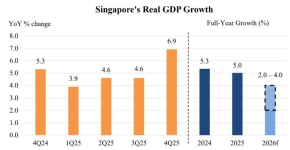
[SINGAPORE] The Republic’s economy expanded 4.8 per cent year on year in 2025, advance estimates from the Ministry of Trade and Industry (MTI) showed on Friday (Jan 2) morning.

Aside from being faster than the revised 4.4 per cent growth recorded in the previous year, 2025’s gross domestic product expansion also exceeded the official forecast of “around 4 per cent”, to which MTI upgraded last November.

In 2026, MTI expects Singapore’s economy to grow by between 1 and 3 per cent.

...


SINGAPORE – Singapore’s economy may have set a level of peak performance in 2025 that will be hard to beat in 2026, but most analysts believe it can achieve enough economic growth in 2026 to keep unemployment low and wages up.

The familiar alarm over US tariffs delivering a devastating blow to global trade and economic growth – sounded at the start of 2025 – is likely to turn out again to be overdone.

Still, for an export-driven economy, such as Singapore, swings in global demand for goods will always remain a vulnerability.

Indeed, when US President Donald Trump unveiled his sweeping tariffs on April 2, 2025, raising the world’s largest economy’s average import duties to the highest since World War II, the quick conclusion was that a new era of protectionism was at hand.

But most of that gloom and doom did not really come to pass.

Thanks to Mr Trump’s back-and-forth on his reciprocal tariff rates, importers in the US and exporters in Asia and elsewhere took full advantage of the gaps between the threats and the actual imposition of tariffs by front-loading orders for goods.

And when the front-loading started to fade in the second quarter, AI-driven demand for electronic hardware, such as semiconductors, put the Singapore economy on track for a 4-per-cent-plus growth rate for a second year in a row.

...
 
To view this content we will need your consent to set third party cookies.
For more detailed information, see our cookies page.


1767786682960.png
1767786700076.png
 

Singapore's median monthly household income crosses S$12,000, up 6.8% after adjusting for inflation


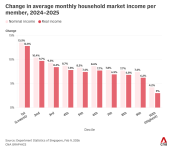
SINGAPORE: The median monthly household income in Singapore rose to S$12,446 (US$9,250) last year, up from S$11,558 the year before, an increase of 6.8 per cent after adjusting for inflation.

After accounting for household size, the median monthly household income per household member rose by 7.5 per cent in real terms, from S$3,837 in 2024 to S$4,160 in 2025.

The figures were released on Monday (Feb 9) in the Key Household Income Trends 2025 paper by the Singapore Department of Statistics (Singstat).

In a video posted on social media after the figures were released, Prime Minister Lawrence Wong noted that real wages across all income levels rose over the past 10 years.

"That means that for many Singaporean workers and households, wage growth has outpaced inflation," he added.

"Importantly, wage growth has been strongest for lower-income workers, faster than for those in the middle or at the top."


1770655376916.png

...

TRANSFERS, TAXES AND INEQUALITY​

Households in the first to seventh income deciles received more in government transfers than the amount of taxes they paid.

On average in 2025, resident households received S$7,300 per household member in government transfers, down from S$7,725 in 2024. This was attributed to the end of one-off schemes introduced in 2024, including the Majulah Package and Cost-of-Living Special Payment.

Residents living in one- and two-room Housing and Development Board flats continued to receive the most support, averaging S$16,519 per household member, more than double the overall average.

For every dollar of tax paid by lower-income households, they receive about S$7 in benefits, said Mr Wong, who is also Finance Minister.

Middle-income households receive about S$2 for every dollar of tax paid, while the top 20 per cent receive about S$0.20, he said.

“So everyone contributes but those who are able contribute more. And everyone benefits, but those with greater needs receive much more. And that’s how we keep our system fair and equitable.”


Top 20% of Singapore households hold average wealth of S$5.3 million: MOF


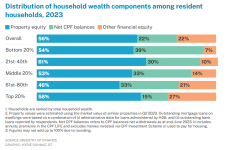
[SINGAPORE] The wealthiest 20 per cent of resident households in Singapore held an average net wealth of S$5.3 million in 2023, driven primarily by property assets valued at S$3.4 million, the first comprehensive household wealth data released by the Ministry of Finance (MOF) on Monday (Feb 9) indicated.

MOF defines net wealth as total assets minus total liabilities. Assets comprise property values, net CPF balances and other financial assets such as cash savings and investments; liabilities consist mainly of outstanding mortgages and other debts.

...

Households in the bottom 20 per cent held positive net wealth of S$293,000 on average, also driven by home equity.

This contrasts sharply with countries elsewhere. In the United Kingdom and Australia, for example, households in the bottom quintile have zero or negative home equity on average, MOF said.

In the top quintile, property assets accounted for the lion’s share of wealth, followed by other financial assets of S$1.4 million and net CPF balances of S$771,000. Total liabilities averaged S$331,000, with mortgages accounting for S$317,000.

Among the bottom 20 per cent, average household wealth comprised property assets of S$221,000, net CPF balances of S$114,000 and other financial assets of S$29,000. Total liabilities averaged S$71,000, comprising S$64,000 in mortgages and S$8,000 in other liabilities.

Overall, resident households held average net wealth of S$1.76 million in 2023.

1770655630088.png
 
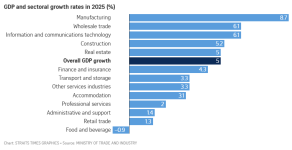
Thanks to the current boom in semiconductor demand, Singapore just reported a GDP growth of 5% in 2025, which is pretty decent for a highly mature economy.

This is on top of a 5.3% growth in 2024. I wonder how significantly our economy will slowdown when the big tech eventually scale back their current unsustainable capex spending.

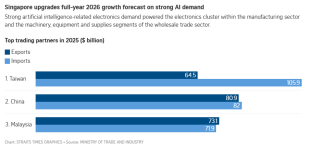
Interestingly Taiwan (which grew at 8.6% in 2025), as part of the semiconductor supply chain, surpassed mainland China to become our largest trading partner in 2025.

/


1770739250530.png
1770739259269.png
1770739269075.png

...

Strong AI-related demand powered Singapore’s electronics cluster within the manufacturing sector, and the machinery, equipment and supplies segments of the wholesale trade sector.

The boom in AI-related demand saw Singapore raise its forecast for key exports on Feb 10. They are now expected to grow 2 per cent to 4 per cent in 2026, up from the previous forecast of 0 per cent to 2 per cent.

Most analysts believe the momentum from the AI capital expenditure boom will continue. Some of the world’s top tech firms announced plans last week to invest more than US$660 billion (S$835 billion) in 2026 in AI-related infrastructure, assuring demand for electronics hardware such as semiconductors, which is a key Singapore export.

Mr Augustin Lee, the MTI’s Permanent Secretary for Energy and Trade, said the stronger-than-projected upswing in the AI investment cycle could provide a greater boost to electronics demand.

However, he added that this outlook is subject to downside risks as well.

“A renewed escalation in tariff actions or flare-ups in geopolitical tensions could lead to a resurgence in economic uncertainty,” Mr Lee said in a virtual media briefing on Feb 10.

Also, a sudden pullback in global AI-related capital spending could trigger sharp corrections in global financial markets, he added.

MTI said the finance and insurance sector saw broad-based growth across all segments amid largely accommodative financial conditions, thanks to low interest rates.

In contrast, the food and beverage services sector contracted, partly due to a decline in the sales volume at restaurants amid shifts in dining preferences.

MTI said its previous forecast for 2026, announced in November 2025, was based on the expectation that gross domestic product (GDP) growth in major economies would ease as US tariffs worked their way through the global economy.

“Since then, the global economy has outperformed expectations, with most major economies turning in stronger-than-expected growth in the fourth quarter of 2025,” MTI noted in a statement.

Global trade activity remained resilient despite the US tariffs, likely reflecting effective US tariff rates that were lower than the announced headline rates, trade diversion facilitated by supply chain adjustments, and robust AI-related exports amid the AI investment boom.

“The stronger-than-expected growth momentum seen in the last quarter of 2025 is projected to carry into 2026,” MTI noted.

Apart from the AI investment boom, which is expected to be sustained in 2026, expansionary fiscal policies in several economies such as the US, Germany and Japan, as well as accommodative global financial conditions, should also support global growth in the quarters ahead.

...

Within the manufacturing sector, the electronics cluster is projected to grow at a stronger pace than previously expected, supported by robust demand for semiconductor chips in the data centre end-market due to the AI investment boom.

This will have positive spillover effects on the precision engineering cluster and the wholesale trade sector.

Both the information and communications technology and finance and insurance sectors are projected to register healthy growth.

While sectors such as construction and real estate will be supported by public construction works and new residential launches, the performance of consumer-facing services sectors, such as retail trade and food and beverage services, is likely to remain subdued. This is partly due to locals shifting their spending overseas and changing dining preferences.
 

Users who are viewing this thread

Pakistan Defence Latest

Latest Posts

Back
Top