Southeast Asia quarterly economic review: Holding up strongly, September 3, 2024 | Full Report by McKinsey

Here are the full-year 2025 trade balances (surplus or deficit) for the ASEAN-5 countries (Indonesia, Malaysia, Philippines, Thailand, and Vietnam) based on the most recent data available:

📊 ASEAN-5 Trade Balances — Full Year 2025

Country2025 Trade Balance (Full Year)Result
**🇮🇩 IndonesiaUS $41.05 billion surplusStrong export growth led to a large merchandise surplus. (Trading Economics)
**🇲🇾 MalaysiaMYR 151.8 billion surplus (~US$32 billion+)Malaysia recorded a full-year goods trade surplus in 2025. (Xinhua News)
**🇻🇳 VietnamUS $20.03 billion surplusVietnam’s exports outpaced imports in 2025. (Trading Economics)
**🇹🇭 ThailandUS $ 5.31 billion trade deficitThailand’s imports slightly exceeded exports overall. (Trading Economics)
**🇵🇭 PhilippinesLikely trade deficit (monthly deficits in Dec 2025)Monthly data shows persistent deficits; overall 2025 external trade likely remained negative. (id.tradingeconomics.com)

🧾 Key Takeaways

🇮🇩 Indonesia

  • Registered a substantial trade surplus of US $41.05 billion in 2025, driven by robust export performance and relatively slower import growth. (Trading Economics)

🇲🇾 Malaysia

  • Achieved a goods trade surplus in 2025, amounting to around MYR 151.8 billion, continuing a long run of surplus trade. (Xinhua News)

🇻🇳 Vietnam

  • Recorded a full-year trade surplus of about US $20.03 billion, with strong export growth in manufactured goods and industrial products. (Trading Economics)

🇹🇭 Thailand

  • Posted a trade deficit (approx. US $5.31 billion) for the full year 2025, as imports slightly outpaced exports overall. (Trading Economics)

🇵🇭 Philippines

  • Monthly trade data (e.g., December 2025) indicate consistent trade deficits, and while full-year consolidated figures aren’t widely published yet, the Philippines likely ran an overall trade deficit in 2025. (id.tradingeconomics.com)

📈 Summary Perspective​

  • Among the ASEAN-5, Indonesia, Malaysia, and Vietnam reported positive trade balances (surpluses) in 2025.
  • Thailand experienced a goods trade deficit when aggregated over the full year.
  • The Philippines continued to record monthly trade deficits, suggesting an overall 2025 deficit.
If you want, I can break these down by major trading partners (e.g., ASEAN, China, US, EU) or by goods vs services trade for each country — just let me know!
 
1771610181016.png

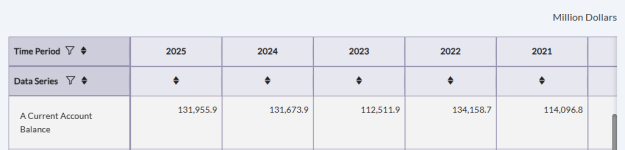
Singapore's 2025 current account surplus: ~SGD132bil (~USD104bil)

/

Some of Singapore's key economic metrics in 2025

GDP: ~USD623bil
GDP per capita: ~USD100K
Real GDP growth: 5.0%
Inflation: 0.9%
Median household income growth: 6.8% (~USD9250 per month)
Citizen unemployment rate: 3.0%
Government budget surplus: SGD15.1bil (~1.9% of GDP)

Honestly, for a highly mature economy, Singapore did unusually well in 2025. Many advanced countries with lower GDP per capita are stagnating and racking up huge budget deficits.

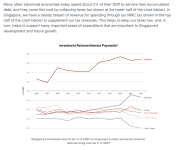
Japan for example, another advanced Asian economy with GDP per capita ~1/3 of SG's, is growing at an average of ~1%, and a quarter of their annual budget goes to paying interests.

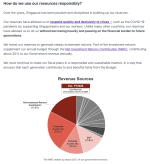
It's the opposite in Singapore; the returns from our accumulated budget surplus are contributing almost 20% to our annual budget, higher than personal income tax revenue. That's how we can pay lower income taxes and still achieve decent outcomes in education/healthcare for our people.

The economy is of course cyclical, and we are not going to keep growing at 5%. We should continue a prudent fiscal policy, accumulate surpluses when the economy is still doing well, save and invest our resources for an inevitable downturn.

/

1771614136693.png
1771614186271.png

 
This incoming China built Ping Lu canal goes almost unreported.
Once completed goods can be transported much faster between China and Vietnam and ASEAN, via the bay of China and Vietnam
bypassing all traditional ship transport.

 
To view this content we will need your consent to set third party cookies.
For more detailed information, see our cookies page.


1773073497431.png

Comprehensive Asian oil exposure ranking:Net oil import sensitivity puts Singapore and Taiwan at the very top of Asia’s risk ladder.

City‑states and high‑income tigers (SG, TW, HK, KR) take the biggest GDP hit because they rely on 95%+ imported energy with limited policy levers.

India and the Philippines sit in the middle: heavy import dependence but larger economies and subsidy toolkits to cushion the blow.

Malaysia and Indonesia flip the script as exporters or transition cases, with Malaysia actually benefiting from higher prices.

China is the outlier: ~72% dependent on imports, but its scale, reserves, and bargaining power with suppliers mean it eats the least GDP damage from an oil spike.
 
The analysis only focus on Indonesia oil import while dont touch the fact that Indonesia is the largest exporter of coal and CPO which price follow oil price. Electricity generation in Indonesia mostly use coal and gas/LNG and not oil, and we are the biggest producer and user of biodiesel in the world

They also dont count Indonesia as exporter of both gas and LNG with many untapped potential gas fields.
 

China Wants to Help ASEAN Switch to Renewables as Manila Faces Energy Emergency
March 26, 2026 | 3:09 pm

Jakarta. The Iran war energy crisis has opened doors for Beijing to help ASEAN switch to renewables, according to a Chinese envoy, as the Philippines became the world’s first country to declare an energy emergency.

In a press briefing, Chinese Ambassador to ASEAN Wang Qing responded to a question on whether Beijing would lend a helping hand to shield Southeast Asian nations from the energy crisis. Wang responded that China was quite well-prepared thanks to its early shifts to emissions-free sources, and this could be something to work on together with the ASEAN states.

"We have done a lot of work for our energy transition. We are in a better position to tackle this challenge. Over 50% of our electricity comes from renewables, … be it hydrogen, solar, wind, and nuclear,” Wang saidon Thursday.

“We will continue to enhance our energy transition. I think it provides a new opportunity for China-ASEAN cooperation.”

Wang admitted that sources such as wind and solar could not meet 24/7 power needs. This brings the need to develop battery energy solar systems, another area that Beijing is willing to partner on.

Philippine President Ferdinand Marcos Jr had just announced that an energy emergency would enable his government “to implement responsive and coordinated measures”. The state of emergency, which will be in force for a year, will allow officials to take action against fuel hoarding and supply manipulation.
 

China Wants to Help ASEAN Switch to Renewables as Manila Faces Energy Emergency
March 26, 2026 | 3:09 pm

Jakarta. The Iran war energy crisis has opened doors for Beijing to help ASEAN switch to renewables, according to a Chinese envoy, as the Philippines became the world’s first country to declare an energy emergency.

In a press briefing, Chinese Ambassador to ASEAN Wang Qing responded to a question on whether Beijing would lend a helping hand to shield Southeast Asian nations from the energy crisis. Wang responded that China was quite well-prepared thanks to its early shifts to emissions-free sources, and this could be something to work on together with the ASEAN states.

"We have done a lot of work for our energy transition. We are in a better position to tackle this challenge. Over 50% of our electricity comes from renewables, … be it hydrogen, solar, wind, and nuclear,” Wang saidon Thursday.

“We will continue to enhance our energy transition. I think it provides a new opportunity for China-ASEAN cooperation.”

Wang admitted that sources such as wind and solar could not meet 24/7 power needs. This brings the need to develop battery energy solar systems, another area that Beijing is willing to partner on.

Philippine President Ferdinand Marcos Jr had just announced that an energy emergency would enable his government “to implement responsive and coordinated measures”. The state of emergency, which will be in force for a year, will allow officials to take action against fuel hoarding and supply manipulation.
Chinese gov would be stupid to lend a helping hand to the Filipin as***** to solve its energy crisis now. Other ASEAN countries are OK.
 
Japan for example, another advanced Asian economy with GDP per capita ~1/3 of SG's, is growing at an average of ~1%, and a quarter of their annual budget goes to paying interests.

It's the opposite in Singapore; the returns from our accumulated budget surplus are contributing almost 20% to our annual budget, higher than personal income tax revenue. That's how we can pay lower income taxes and still achieve decent outcomes in education/healthcare for our people.

The economy is of course cyclical, and we are not going to keep growing at 5%. We should continue a prudent fiscal policy, accumulate surpluses when the economy is still doing well, save and invest our resources for an inevitable downturn.


Bendeich: And Singapore’s contingency plans. What would they include?


Minister: First, let me put it to you this way. We are an energy importer. There is no doubt to it. Fortunately, we have diversified our sources of energy, although I will say that a significant proportion of our LNG obviously comes from the Gulf. We have got some very good, steady, and reliable friends amongst the Gulf states, who have absolutely been trustworthy, reliable partners all these years. But through no fault of theirs, this transmission of energy to Singapore has been impacted. Fortunately, because we have LNG terminals, we are therefore able to import from the world market. And also, fortunately, because we have got the fiscal buffers. We will have to pay what the international rates are. What I will not go through in detail is that we also have buffers internally – reserves, which all countries should have. But none of this will protect us from the inflationary impact of high energy prices. This is something which we will have to deal with within our economy and obviously from a social security point of view. Fortunately, you may recall that one of the criticisms levelled at us in the recent Budget debate was our surplus that was unexpectedly high. At a time like this, we should all be thankful that the Finance Minister, who happens to be our Prime Minister, has a few cards up his sleeve.


Bendeich: Do you think he will need to play those chips up his sleeve?


Minister: I am not in a position to make pronouncements, or maybe you have to ask him that. We are watching this situation very carefully as an open economy, as an economy where trade is three times our GDP, as an energy importer, all these amber lights are flashing for all of us. What to do depends very much on how high prices go, how long it prolongs, and what happens when you get the inevitable restructuring of supply chains, and you will have to adapt. It is still too early to be definitive, but the point is Singapore is fortunate that we have got some fiscal buffers. We are fortunate that we have significant sovereign wealth funds that generate returns. For most countries, including some very big countries, they spend a significant chunk, sometimes up to 3% of GDP, servicing debt. For us, it is a complete reverse. We are collecting dividends on our reserves, so having that fiscal firepower is essential.
 
The analysis only focus on Indonesia oil import while dont touch the fact that Indonesia is the largest exporter of coal and CPO which price follow oil price. Electricity generation in Indonesia mostly use coal and gas/LNG and not oil, and we are the biggest producer and user of biodiesel in the world

They also dont count Indonesia as exporter of both gas and LNG with many untapped potential gas fields.
The Arabs can’t deliver, the Russians can’t deliver. That’s a big opportunity for Indonesia if you can sell the surplus. Vietnam will likely ask for massive increase of coal and biofuels from Indonesia if not already happening.
 
The Arabs can’t deliver, the Russians can’t deliver. That’s a big opportunity for Indonesia if you can sell the surplus. Vietnam will likely ask for massive increase of coal and biofuels from Indonesia if not already happening.

There should be huge gas flow from our gas field to Vietnam, but due to European sanction the gas is still not yet able to reach Vietnam. It is because one of the stake is owned by Russian companies and the main stake hold by British companies left the project due to afraid getting US/ EU sanction. I think there should be Vietnam companies to replace that Britain gas company. If I am not mistaken it is premier oil.

For coal of course Vietnam is one of our big customers in SEA
 
'Domino effect': Why Singapore's oil shock will play out in Australia


What happens on a small artificial island near Singapore's CBD plays out at petrol pumps across Australia.

Jurong Island, a 32-square-kilometre patch of reclaimed land, is the centre of an Asian oil hub that supplies about 20 per cent of Australia's refined oil.

"When people are worried about their petrol, they should be keeping a close eye on what happens in Singapore," said Kevin Morrison, an energy finance analyst at the Institute for Energy Economics and Financial Analysis.

While the small island city state is one of Asia's biggest oil producers, it has no crude oil reserves of its own, buying about two-thirds of its supply from the Middle East for refining.

This leaves Singapore's refineries exposed to the oil shock from Iran's effective closure of the Strait of Hormuz, a critical choke-point on trading routes between Gulf states and Asia.

"This disruption … is having a big impact on Singapore," Mr Morrison said.

On Jurong Island, two of Singapore's three refineries have cut back their output due to constrained crude availability, news wires agency Reuters reported last month, citing anonymous sources.

Australia was exposed to any impacts on Singapore's refineries because it had limited domestic oil refining and was highly dependent on imports, said Lee Poh Seng, professor and executive director at the National University of Singapore's Energy Studies Institute.

"If Singapore's throughput or flexibility [in oil production] is impaired, the consequences are regional, not merely domestic," he said.

Meanwhile, Singapore's energy minister met his Australian counterparts in Canberra on Wednesday after the countries agreed last month to keep their energy trade flowing despite the oil shock.

Singapore's economic officials have also told market intelligence group S&P Global Energy the country's refineries are maintaining stable operations and drawing on diverse supplies of crude oil as war between the United States, Israel and Iran disrupts trade.

All eyes on Singapore​

Singapore, once nicknamed the "Houston of Asia", has made itself an oil hub by capitalising on its geographic location.

It used its place along major trade routes between the Middle East and Asia to attract oil companies to its shores, building one of the world's largest oil trading and refining hubs, capable of processing 1.5 million barrels of crude a day.

Multiple oil tankers at sea.

Singapore's oil industry supports its status as a major fuel station for ships. (Reuters: Edgar Su)

"The real importance is not what it produces, it is what it connects," said Rahman Daiyan, an associate professor at the University of New South Wales.

"Crude oil flows in, largely from the Middle East, gets refined and blended, and then flows back out across the region."

It makes Singapore the place where fuel prices for much of the Asia-Pacific region — including Australia — are effectively decided, Dr Daiyan said.

"It is where fuels from different origins are blended into standardised products, allowing them to be bought and sold interchangeably," he said.

"Traders store fuel [there] and move it across the region in response to price differences."

As many of Australia's domestic refineries closed in the past decade, it became more reliant on Asian oil refining hubs like Singapore.

Chimneys and storage tankers next to a bay with a tanker on the water.

Bukom Island hosts one of Singapore's major oil refineries. (AFP: Roslan Rahman)

The influence of Singapore's fuel price index also means that disruptions to its refining industry — such as crude supply shocks or geopolitical events — are reflected at bowsers across Australia.

"Reduced refinery output, combined with strong underlying demand, pushes up Singapore benchmark prices," Dr Daiyan said.

"This is further amplified by volatility in crude markets and logistical pressures, including higher shipping and bunker fuel costs."

Australia is yet to directly feel the impact of supply shortages caused by the Iran war. But that's set to change in the coming weeks, with oil supply shortages now hitting the country's fuel suppliers in Asia.

Experts say countries most affected by disruptions to Singapore's oil refining would be those depending on it for refined oil to meet surges in demand and smoothen out price shocks.

"The main impact on Singapore's export destinations will likely come through higher prices, thinner cargo availability, and longer lead times rather than an abrupt stop in supply," Professor Lee said.

"If Asia remains 'short-fuelled' because of reduced crude inflows, refinery run cuts, and export restrictions elsewhere, then Singapore-origin barrels become more valuable and more contested.

"In that environment, buyers are not just paying more for fuel; they are paying more for reliability and proximity."

In his national address on Wednesday, Australian prime minister Anthony Albanese said the government was using the country's "strong trading relationships with our region to bring more petrol, diesel and fertiliser to Australia".

'Domino effect'​

Singapore's economic officials are projecting confidence, telling S&P Global Energy last month that its refineries have the flexibility to source crude from other regions in response to the oil shock.

The financial intelligence firm said its data showed shipments of crude and condensate — liquid hydrocarbons typically occurring with natural gas — from Russia, Brazil, the US and Venezuela rose for Singapore in the first half of March.

Singapore Economic Development Board (EDB) executive vice president Lim Wey-Len told S&P Global Energy it was in close contact with energy companies.

People walk on a pier in front of Singapore's merlion statue and the city's skyline

Singapore is looking for alternative sources of crude supply after disruptions to shipments from Gulf states. (Unsplash: Jisun Han)

The EDB — Singapore's government body overseeing business and investment — declined to respond to questions from the ABC, while Singapore's three refinery operators ExxonMobil, Aster and Singapore Refining Company either did not respond or declined to comment.

But securing alternative crude oil supplies would take time and constraints would have a "domino effect" among export destinations, Dr Daiyan said.

"The impact is immediate and cascading. Refineries in Singapore cannot simply substitute [crude oil supply] at short notice, which forces them to scale back operations and reduce utilisation," he said.

"Lower refinery [output] means less refined product entering the market, tightening regional supply."

Singapore was prioritising the continuity of supply as it responded to the oil shock, he said.

"The government has worked closely with industry to secure diversified crude and fuel imports, optimise refinery operations, and draw on commercial and strategic stockpiles where needed," he said.

"It has also prioritised keeping markets open and liquid, ensuring that Singapore continues to function as a reliable trading and redistribution hub.

"The emphasis has been on flexibility, re-routing cargoes, managing inventories, and coordinating across the system, rather than imposing controls."

A reputation to protect​

Ahead of his trip to Canberra, Singapore's energy minister Tan See Leng said on Facebook he hoped "to strengthen our essential energy supplies nexus, especially important in these tumultuous times".

It followed a joint statement last month from Australian Prime Minister Anthony Albanese and Singapore's Prime Minister Lawrence Wong, committing to support the flow of oil and liquefied natural gas (LNG) between the countries, and to consult each other on any disruptions impacting trade.

"We call on other trading partners to join us in ensuring global energy supply chains are kept open, for the benefit of the security and prosperity of our peoples," they said.

The statement contrasted to decisions from South Korea — another major supplier for Australia — and China to restrict refined oil exports in response to the fuel crisis.

Professor Lee said Singapore appeared to be signalling the opposite instinct to countries halting or limiting exports, instead preserving trade flows where possible.

Meanwhile, the country imported Australian LNG for energy, and its government had flagged Australia's supplies could help replace disrupted Middle Eastern shipments.

But for Singapore, there was something other than energy supply at stake, Professor Lee said.

"From Singapore's perspective as a hub, the bigger issue is reputational as well as commercial," he said.

"The country's strategic value lies … in being a reliable aggregation, processing, storage, and redistribution node.

"If shocks start to impair that reliability, the issue is not just refinery profit, it is Singapore's role as a trusted regional platform."
 

China Wants to Help ASEAN Switch to Renewables as Manila Faces Energy Emergency
March 26, 2026 | 3:09 pm

Jakarta. The Iran war energy crisis has opened doors for Beijing to help ASEAN switch to renewables, according to a Chinese envoy, as the Philippines became the world’s first country to declare an energy emergency.

In a press briefing, Chinese Ambassador to ASEAN Wang Qing responded to a question on whether Beijing would lend a helping hand to shield Southeast Asian nations from the energy crisis. Wang responded that China was quite well-prepared thanks to its early shifts to emissions-free sources, and this could be something to work on together with the ASEAN states.

"We have done a lot of work for our energy transition. We are in a better position to tackle this challenge. Over 50% of our electricity comes from renewables, … be it hydrogen, solar, wind, and nuclear,” Wang saidon Thursday.

“We will continue to enhance our energy transition. I think it provides a new opportunity for China-ASEAN cooperation.”

Wang admitted that sources such as wind and solar could not meet 24/7 power needs. This brings the need to develop battery energy solar systems, another area that Beijing is willing to partner on.

Philippine President Ferdinand Marcos Jr had just announced that an energy emergency would enable his government “to implement responsive and coordinated measures”. The state of emergency, which will be in force for a year, will allow officials to take action against fuel hoarding and supply manipulation.


Levanta Renewables Awards EPC Contract to China Energy for 166 MWp Solar and BESS Project in Philippines

Levanta Renewables, a renewable energy company backed by Actis, has awarded the engineering, procurement, and construction contract for its 166-megawatt Barotac solar power and battery energy storage system to China Energy Engineering Group.

The contract covers the full EPC scope for the solar facility and 80-megawatt-hour BESS in Iloilo province, representing an estimated investment of P5 billion. The project is designed to enhance grid reliability and support the power supply in the Visayas region.

Pramod Singh, chief executive of Levanta Renewables, said the award is a key step in advancing the company’s greenfield portfolio in the Philippines, “reflecting Levanta’s end-to-end capabilities across development, financing, construction, and operations.”

“By combining Levanta’s development expertise with CEEC’s EPC capabilities, we are well-positioned to deliver the project to high standards of execution, reliability, and safety,” Singh said.

Levanta secured the project under the Department of Energy’s fourth Green Energy Auction.

“We are honored to partner with Levanta Renewables on this important project,” said Guo Jizhong, chairman of CEEC Anhui Electric Power Design Institute Co. Ltd. “Leveraging our global EPC experience and commitment to quality and safety, we will ensure the successful delivery of this project to the highest standards.”Alena Mae S. Flores

Spanning approximately 155 hectares with an estimated average capacity factor of 43 percent, the project is expected to reduce the country’s reliance on imported fossil fuels and avoid more than 200,000 tons of carbon dioxide emissions annually.
 

April 12, 2026

China-invested hydropower project to boost Cambodia’s green energy shift​


The groundbreaking ceremony for the Upper Tatay pumped storage hydropower BOT project in Koh Kong province Cambodia. Xinhua

Cambodian and Chinese officials gather in Koh Kong province to mark the start of the Upper Tatay pumped storage hydropower project, a $1 billion initiative designed to serve as a “green power bank” for the national grid.

Construction has officially begun on Cambodia’s first gigawatt-scale pumped-storage hydropower station, a Chinese-invested venture poised to transform the Southeast Asian nation’s renewable energy landscape. The Upper Tatay project, located in the southwestern province of Koh Kong, represents a nearly $1 billion investment in the country’s burgeoning green energy infrastructure.

Operating as a large-scale rechargeable battery system, the facility will have an installed capacity of 1,000 megawatts. The technical design uses four 250-megawatt single-stage vertical-shaft reversible pump-turbine units to manage electricity loads. During periods of low demand, excess power pumps water from a lower reservoir to an upper one; when demand peaks, the water is released back down through the turbines to generate electricity. This mechanism allows the station to provide essential services, including peak regulation, valley filling, and the stable integration of intermittent solar and wind energy.

During the ground-breaking ceremony on April 10, the Mines and Energy Minister Keo Ratanak described the development as a historic milestone. He emphasised that this is the first time the Cambodian government has authorised such a sophisticated energy storage project.

The minister said that the initiative directly addresses the global oil and gas crisis by bolstering domestic energy security. According to Ratanak, the station is a primary driver of the national strategy to increase Cambodia’s share of clean energy from 63% in 2025 to more than 70% by 2030.
 

52 minutes ago

China biggest investor in Cambodia in Q1 2026​

Khmer Times

China is ranked first as the largest investor in Cambodia in the first quarter of this year, with $1.169 billion invested.

A report by the Council for the Development of Cambodia stated that in the first quarter, investment from China was 46.77% of the total investment of $2.5 billion.

Cambodian investors are in second place, contributing approximately 38.06% of the total, or $951 million, while Malaysia is in third place, contributing 8.14%, or $203 million.

In the first quarter, the investment projects registered in Cambodia by the Council for the Development of Cambodia (CDC) and the Provincial Investment Subcommittee (PISC) were 146, with an investment capital of approximately $2.5 billion and the potential to create approximately 82,000 jobs.

Of these 146 investment projects, 95 were registered by the CDC, 60 outside the Special Economic Zones and 35 inside the Special Economic Zones, and 51 by the PISC.

In the first quarter, Cambodia attracted large investment projects for the establishment of a special economic zone, the development of wind power plants, car and motorcycle assembly plants and tyre production.

In the first quarter, the infrastructure and other sectors attracted investments of $839 million, the industrial sector was $1.3 million, the agricultural and agro-industrial sector $24 million, and the tourism sector $300 million.


China curtailing, not banning fuel exports, shipping data shows​

By Chen Aizhu, Trixie Sher Li Yap and Sam Li
April 20, 20264:34 PM GMT+8Updated 1 hour ago

April 20 (Reuters) - China is curtailing refined fuel exports rather than banning them, with countries including Malaysia and Australia receiving supplies even after Beijing extended last month's restriction into April, according to shipping ‌data and traders.

China's April shipments have included 234,000 tons combined to ⁠Vietnam, Indonesia, Malaysia, Australia and the Philippines, plus 82,000 tons to South Asia via Singapore, Vortexa data showed.

China's Commerce and Foreign ministries and state planner did not immediately respond to requests for comment.

In March, exports of the three fuels to markets including Singapore, Malaysia, the Philippines, Australia, Vietnam and Bangladesh came in at 436,000 barrels per day (bpd), down 20% from 551,000 bpd in February, according to Vortexa.

"Flows into Malaysia and Vietnam have held close to pre-ban levels, suggesting Beijing ⁠is making deliberate allocation decisions rather than applying a blanket restriction," said Kpler analyst Zameer Yusof.

"This is consistent with the Foreign Ministry's stated willingness to work with Southeast Asian neighbours on energy security."
 

Users who are viewing this thread

Pakistan Defence Latest

Latest Posts

Back
Top