Navigation
Install the app
How to install the app on iOS
Follow along with the video below to see how to install our site as a web app on your home screen.
Note: This feature may not be available in some browsers.
More options
Style variation
You are using an out of date browser. It may not display this or other websites correctly.
You should upgrade or use an alternative browser.
You should upgrade or use an alternative browser.
Sudan Civil war 2023 - present
- Thread starter PakAl
- Start date
More options
Who Replied?


"They boiled water and put the baby inside." — A displaced woman describes the horrific murder of her sister's newborn by paramilitary forces in Sudan.There is no systematic genocide of any minority groups.

ayesha.a
Registered Member


Without getting into politically fraught questions of what is a genocide or not, or the race issues involved, I would like to correct your casualty count. It is over 150,000 since Nov 2023, according to most reliable sources:There is no systematic genocide of any minority groups. Unless less than 10.000 casualties in 2.5 years of civil war constitutes genocide.
You are confusing recent events with the actual genocide (Darfur conflict 20 + years ago).
Disaster by the Numbers: The Crisis in Sudan (NYT)
The New Arab
ayesha.a
Registered Member
Sudan’s war takes horrific turn, as Trump looks away
The world has known about the disaster of El Fashir for more than a year. The city was the last redoubt of Sudan’s armed forces in the western region of Darfur, which had otherwise mostly fallen under the sway of the paramilitary Rapid Support Forces since the ruinous civil war between the two rival factions flared in 2023. For 18 months, the residents of El Fashir, once a regional capital of over a million people, endured a grueling siege, punctuated by massacres and other atrocities carried out by the RSF’s fighters. No humanitarian aid could get in, and the attackers walled off the city with a sand berm. A full-blown famine hit the communities trapped within and in nearby displacement camps. Locals subsisted off animal feed, weeds and peanut shells. The desperate entreaties of U.N. officials to the international community fell on deaf ears.
In the past week, things took an all-the-more hideous turn in El Fashir. RSF units broke through and have captured the city, triggering the panicked flight of its remaining starving civilians. The victorious militias, which are predominantly ethnically Arab, have gone on a shocking killing rampage of the local non-Arab population. The violence echoes the genocidal slaughters carried out by the Janjaweed militia — the RSF’s predecessor — in Darfur two decades ago. Eyewitnesses reported numerous incidents of summary executions, rapes and other abuse. The latest brutality follows the RSF’s earlier campaigns in other parts of Darfur, which led to the Biden administration on its way out of office declaring that the group was guilty of acts of genocide.
This week, the RSF’s leader, Gen. Mohamed Hamdan Dagalo, known by the sobriquet Hemedti, tried to assuage international observers that his outfit would investigate allegations of abuses. Hemedti’s reassurances mean little: He is viewed by many as the man with the most blood on his hands.

On Thursday, Tom Fletcher, the U.N’s top humanitarian official, briefed ambassadors at the Security Council about the “darker hell” to which El Fashir has descended. “Women and girls are being raped, people being mutilated and killed — with utter impunity,” he said, detailing reports that have penetrated the telecommunications blackout gripping the war-torn country. “We cannot hear the screams, but — as we sit here today — the horror is continuing.”
This photo released by UNICEF shows displaced children and families from El Fashir at a displacement camp on Monday. (Mohammed Jammal/AP)
In the shadow of Sudan’s misery, President Donald Trump has done conspicuously little. He insists he’s the world’s greatest peacemaker — claiming credit for resolving conflicts that, in some instances, are either still raging or never existed in the first place. But ending the world’s greatest humanitarian disaster has not been a priority for his administration. The White House was more focused on gutting USAID, an agency that propped up critical elements of the humanitarian complex aiding Sudanese people. It also wants to fast-track deportations of unwanted migrants to neighboring South Sudan, which itself is in the grip of a brewing civil war.
There is no simple solution to ending the war in Sudan. The two rival forces — the Sudanese military under Gen. Abdel Fattah al-Burhan and Hemedti’s RSF — are entrenched in their fiefdoms and backed by a tangle of foreign powers. The former counts on aid from countries including Egypt and Iran, while the RSF, which lost its foothold in the capital Khartoum in March, was reinforced by shipments of weapons from the United Arab Emirates. Turkey, Russia and even Ukraine have played roles in supplying the warring parties. Saudi Arabia and Qatar, too, have extensive interests in the region.
According to documents seen at the U.N. Security Council, RSF fighters touted British-manufactured small arms, among other material, that were probably first exported to the UAE. A recent report in the Wall Street Journal cited the assessment of U.S. intelligence agencies that the UAE also sent sophisticated weapons like Chinese drones to boost the sagging fortunes of the RSF, which seemed on the precipice of losing the war after its retreat from Khartoum. Now, it’s on firmer ground. It remains in control of much of Sudan’s gold mines, whose ore often makes its way to markets in Dubai. The UAE denies any role in supporting the RSF’s military campaign.
“The war would be over if not for the UAE,” Cameron Hudson, a former chief of staff to successive U.S. presidential special envoys for Sudan, told the Journal. “The only thing that is keeping [the RSF] in this war is the overwhelming amount of military support that they’re receiving from the UAE.”
A host of analysts believe Trump could do more to lean on the UAE, a monarchy to which he has many close connections. After relative silence, lawmakers in Congress are also starting to speak up. Sen. James E. Risch (R-Idaho), the chairman of the Senate Foreign Relations Committee, called on the United States to officially designate the RSF as a foreign terrorist organization. “The horrors in Darfur’s El-Fasher were no accident — they were the RSF’s plan all along,” he said in a statement Tuesday. “The RSF has waged terror and committed unspeakable atrocities, genocide among them, against the Sudanese people.”
Sen. Jeanne Shaheen (D-New Hampshire), Risch’s Democratic counterpart on the committee, pointed the finger at the United States’ Persian Gulf ally. “The UAE has been an irresponsible player who has contributed to one of the worst humanitarian crises that we have on the planet right now,” she told reporters Wednesday.
There’s little hope for any Trumpian art of the deal in Sudan. “The U.S. is not a hegemon here, but a secondary player in a crowded field of ambitious middle powers,” noted Sudanese analyst Elfadil Ibrahim, arguing that ending the war would require “sustained engagement and … a willingness to exert real pressure on external patrons, as well as a long-term commitment to supporting a genuinely inclusive political process.”
For a White House that loves its quick deals and photo-ops, such an effort is unlikely. And so a sprawling tragedy that has claimed more than 150,000 lives and displaced millions keeps unfurling. “The Sudan crisis is, at its core, a failure of protection, and our responsibility to uphold international law,” Fletcher, the top U.N. humanitarian official, said Thursday. “Atrocities are committed with unashamed expectation of impunity. … The world has failed an entire generation.”
Sudan’s war takes horrific turn, as Trump looks away
The White House loves quick deals and photo-ops, but there’s no simple solution to ending the war in Sudan.The world has known about the disaster of El Fashir for more than a year. The city was the last redoubt of Sudan’s armed forces in the western region of Darfur, which had otherwise mostly fallen under the sway of the paramilitary Rapid Support Forces since the ruinous civil war between the two rival factions flared in 2023. For 18 months, the residents of El Fashir, once a regional capital of over a million people, endured a grueling siege, punctuated by massacres and other atrocities carried out by the RSF’s fighters. No humanitarian aid could get in, and the attackers walled off the city with a sand berm. A full-blown famine hit the communities trapped within and in nearby displacement camps. Locals subsisted off animal feed, weeds and peanut shells. The desperate entreaties of U.N. officials to the international community fell on deaf ears.
In the past week, things took an all-the-more hideous turn in El Fashir. RSF units broke through and have captured the city, triggering the panicked flight of its remaining starving civilians. The victorious militias, which are predominantly ethnically Arab, have gone on a shocking killing rampage of the local non-Arab population. The violence echoes the genocidal slaughters carried out by the Janjaweed militia — the RSF’s predecessor — in Darfur two decades ago. Eyewitnesses reported numerous incidents of summary executions, rapes and other abuse. The latest brutality follows the RSF’s earlier campaigns in other parts of Darfur, which led to the Biden administration on its way out of office declaring that the group was guilty of acts of genocide.
This week, the RSF’s leader, Gen. Mohamed Hamdan Dagalo, known by the sobriquet Hemedti, tried to assuage international observers that his outfit would investigate allegations of abuses. Hemedti’s reassurances mean little: He is viewed by many as the man with the most blood on his hands.
On Thursday, Tom Fletcher, the U.N’s top humanitarian official, briefed ambassadors at the Security Council about the “darker hell” to which El Fashir has descended. “Women and girls are being raped, people being mutilated and killed — with utter impunity,” he said, detailing reports that have penetrated the telecommunications blackout gripping the war-torn country. “We cannot hear the screams, but — as we sit here today — the horror is continuing.”
This photo released by UNICEF shows displaced children and families from El Fashir at a displacement camp on Monday. (Mohammed Jammal/AP)
In the shadow of Sudan’s misery, President Donald Trump has done conspicuously little. He insists he’s the world’s greatest peacemaker — claiming credit for resolving conflicts that, in some instances, are either still raging or never existed in the first place. But ending the world’s greatest humanitarian disaster has not been a priority for his administration. The White House was more focused on gutting USAID, an agency that propped up critical elements of the humanitarian complex aiding Sudanese people. It also wants to fast-track deportations of unwanted migrants to neighboring South Sudan, which itself is in the grip of a brewing civil war.
There is no simple solution to ending the war in Sudan. The two rival forces — the Sudanese military under Gen. Abdel Fattah al-Burhan and Hemedti’s RSF — are entrenched in their fiefdoms and backed by a tangle of foreign powers. The former counts on aid from countries including Egypt and Iran, while the RSF, which lost its foothold in the capital Khartoum in March, was reinforced by shipments of weapons from the United Arab Emirates. Turkey, Russia and even Ukraine have played roles in supplying the warring parties. Saudi Arabia and Qatar, too, have extensive interests in the region.
According to documents seen at the U.N. Security Council, RSF fighters touted British-manufactured small arms, among other material, that were probably first exported to the UAE. A recent report in the Wall Street Journal cited the assessment of U.S. intelligence agencies that the UAE also sent sophisticated weapons like Chinese drones to boost the sagging fortunes of the RSF, which seemed on the precipice of losing the war after its retreat from Khartoum. Now, it’s on firmer ground. It remains in control of much of Sudan’s gold mines, whose ore often makes its way to markets in Dubai. The UAE denies any role in supporting the RSF’s military campaign.
“The war would be over if not for the UAE,” Cameron Hudson, a former chief of staff to successive U.S. presidential special envoys for Sudan, told the Journal. “The only thing that is keeping [the RSF] in this war is the overwhelming amount of military support that they’re receiving from the UAE.”
A host of analysts believe Trump could do more to lean on the UAE, a monarchy to which he has many close connections. After relative silence, lawmakers in Congress are also starting to speak up. Sen. James E. Risch (R-Idaho), the chairman of the Senate Foreign Relations Committee, called on the United States to officially designate the RSF as a foreign terrorist organization. “The horrors in Darfur’s El-Fasher were no accident — they were the RSF’s plan all along,” he said in a statement Tuesday. “The RSF has waged terror and committed unspeakable atrocities, genocide among them, against the Sudanese people.”
Sen. Jeanne Shaheen (D-New Hampshire), Risch’s Democratic counterpart on the committee, pointed the finger at the United States’ Persian Gulf ally. “The UAE has been an irresponsible player who has contributed to one of the worst humanitarian crises that we have on the planet right now,” she told reporters Wednesday.
There’s little hope for any Trumpian art of the deal in Sudan. “The U.S. is not a hegemon here, but a secondary player in a crowded field of ambitious middle powers,” noted Sudanese analyst Elfadil Ibrahim, arguing that ending the war would require “sustained engagement and … a willingness to exert real pressure on external patrons, as well as a long-term commitment to supporting a genuinely inclusive political process.”
For a White House that loves its quick deals and photo-ops, such an effort is unlikely. And so a sprawling tragedy that has claimed more than 150,000 lives and displaced millions keeps unfurling. “The Sudan crisis is, at its core, a failure of protection, and our responsibility to uphold international law,” Fletcher, the top U.N. humanitarian official, said Thursday. “Atrocities are committed with unashamed expectation of impunity. … The world has failed an entire generation.”

eIsQengiz
Registered Member


Eritrean President Isaias Afwerki Stands with Sudan
TRANSCEND MEMBERS, 8 Dec 2025Ann Garrison | Black Agenda Report – TRANSCEND Media Service
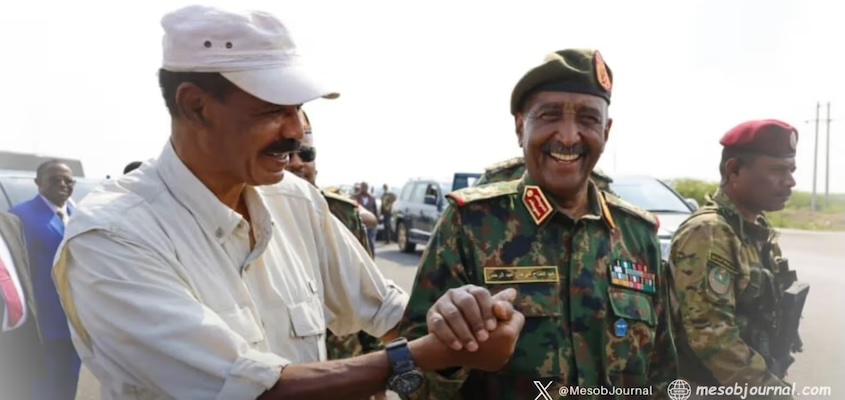
Eritrean President Isaias Afwerki arrived in Port Sudan on 29 Nov to stand with General Abdel Fattah al-Burhan for the unity of Sudan.
3 Dec 2025 – President Isaias Afwerki arrived in Sudan on 29 Nov on the invitation of General Abdel Fattah al-Burhan, the Chairman of Sudan’s Sovereign Council and Commander of the Sudanese Armed Forces (SAF). Isaias and his entourage traveled 305 miles by road from Asmara, the Eritrean capital, to the entrance of Port Sudan on the Red Sea, where thousands of the city’s residents came out to welcome them.
Eritrea’s Ministry of Information described the visit as “both symbolic and a vivid gesture of the warm and robust solidarity that Eritrea harbours towards the people of Sudan and their government in these times of adversity.” By standing alongside the Commander of the national army, President Isaias is standing for the unity of Sudan at a time when it is in danger of a second partition, which would create two smaller, weaker nations, both more vulnerable to neocolonial domination and resource exploitation.
Eritrea also has its own national security concerns, as the conflict has spilled into Sudan’s eastern Gedaref, Kassala, and Red Sea States, which share a porous 605-km border with Eritrea and ethnic ties to its western provinces. Eritrea is protecting itself from spillover violence, arms trafficking, and further refugee influxes. Over 100,000 Sudanese had fled to Eritrea by late 2025.
The worst humanitarian crisis in the world
The UN and humanitarian agencies now describe Sudan as the worst humanitarian crisis in the world with estimates of the displaced ranging from 9 to 13 million, at least a million more than the 8 million displaced in the Democratic Republic of the Congo. Seven million remain within Sudanese borders with the rest sheltering in neighboring countries.
On November 5, the International Rescue Committee reported that 30.4 million people, more than half the population, need aid but that attacks on aid workers make it difficult to deliver. They also called it “the largest recorded and fastest displacement crisis in the world.”
Over 635,000 people, many in the country’s largest camp for displaced people, are experiencing famine conditions and a heightened risk of death. That’s a greater population living in famine conditions than in the rest of the world combined. Food shortages are leaving people vulnerable to illness and infection, and basic medicines are in short supply if available at all.
The UN says it has received alarming reports of human trafficking by the Rapid Support Forces and widespread rape of girls, women, and children.
The Sudanese Armed Forces and the Rapid Support Forces
Sudan’s civil war began in April 2023 as a fight for power and resources between General al-Burhan, the Sudanese Armed Forces, and General Mohamed Hamdan Dagalo, also known as Hemedti, Commander of the Rapid Support Forces (RSF). The RSF is a paramilitary group that grew out of the Janjaweed, Arab militias that operated primarily in Darfur, western Sudan, and parts of eastern Chad during the Darfur conflict that began in 2003. Omar al-Bashir, the dictator who ruled Sudan from 1993 to 2019, used the Janjaweed to fight Sudan’s non-Arab populations. The group did not disband after the partition of Sudan and instead became a mercenary force serving both Saudi Arabia and the United Arab Emirates (UAE) in their war with Yemen’s Houthi rebels.
Al-Burhan and Hemedti at first united to overthrow al-Bashir in 2019, but Hemedti then refused to integrate his forces into the national army. He and his RSF are not fighting a secessionist war to detach a specific ethnic or regional territory (like Darfur) from Sudan to form an independent state. They have been fighting for national control and power, but their consolidation of a parallel government in the areas they control has led to de facto territorial divisions that risk once again partitioning Sudan.
On March 6, Sudan filed an application at the International Court of Justice (ICJ) accusing the UAE of violating the 1948 Genocide Convention through its alleged military, financial, and political support for the RSF. The case claims that the UAE is complicit in RSF-perpetrated atrocities against the non-Arab Masalit ethnic group in West Darfur, including killings, rapes, and forced displacement amounting to genocide. Sudan requested provisional measures to halt UAE support and ensure reparations, but the ICJ rejected the case on jurisdictional grounds.
The Quad: US, Egypt, Saudi Arabia, and the UAE
“The Quad” refers to a diplomatic grouping of four key international actors—the United States, Egypt, Saudi Arabia, and the UAE—purportedly formed to mediate and push for an end to the civil war. This is distinct from the earlier “Quad” on Sudan (involving Saudi Arabia, UAE, UK, and the US from 2023), which focused on initial ceasefires but has since evolved.
In September 12, 2025, it put forth a proposal for a three-month humanitarian truce, a permanent ceasefire, and a nine-month transition to a civilian-led government excluding the warring parties and “extremist groups,” implicitly targeting Islamist factions like the Muslim Brotherhood.
However, as of December 2025, the proposal remains stalled, with fighting intensifying and the RSF advancing in the Darfur region where they have filmed themselves committing massacres and atrocities that much of the world is now calling genocide.
Positive as the Quad’s proposal sounds, its authors are external powers who’ve been fueling the conflict. Egypt and Saudi Arabia have backed the national army, but most importantly, the UAE has armed and financed the RSF, its sometime mercenary army, largely with profits from gold smuggled from Sudan to Dubai.
The UAE was NATO’s ally in the 2011 destruction of Libya and has since become an even closer US ally, so their agenda can be assumed to be the same, weakening Sudan and controlling its resources.
How can de facto perpetrators also be mediators?
Al-Burhan rejects the Quad proposal
Al-Burhan rejected the proposal, labeling it the “worst yet” for echoing Abu Dhabi “talking points.” He argued it “eliminates the armed forces” while allowing the RSF to retain territorial gains, particularly in Darfur and Kordofan.
By calling for a permanent ceasefire, the proposal treats the national government and national army and the Rapid Support Forces as equals. It disrespects Sudan’s legitimate institutions and its right to self-defense and sidelines Sudanese-led processes. Its call to exclude both the SAF and the RSF from the transition, while dissolving security agencies, is a de facto disarmament of the national army.
Al-Burhan, who rightly represents the Sudanese state, has insisted that any truce requires the RSF to “retreat totally.”
Once again, President Isaias rightly stands with General al-Burhan for the unity and sovereignty of Sudan.

Eritrean President Isaias Afwerki Stands with Sudan
The UN and humanitarian agencies now describe Sudan as the worst humanitarian crisis in the world with estimates of the displaced ranging from 9 to 13 million, at least a million more than the 8 million displaced in the Democratic Republic of the Congo. Seven million remain within Sudanese...
www.transcend.org

_Arabia_
Trusted Member
Read again what I wrote. I was specifically talking about the war crimes and massacres that RSF terrorists committed in Darfur. The number I gave (10.000 casualties of civilians in the area) is what most international groups say. Your number (150.000) covers ALL of Sudan during the civil war. The genocide in the region (Darfur) was committed under Al-Bashir as I also wrote. Go read up on it. Everything I wrote in this thread so far is based on factual and historical facts. Including how this civil war started in the first place and the history of Al-Burhan and Hemedti (former allies) and their close involvement with the Al-Bashir regime.Without getting into politically fraught questions of what is a genocide or not, or the race issues involved, I would like to correct your casualty count. It is over 150,000 since Nov 2023, according to most reliable sources:
Disaster by the Numbers: The Crisis in Sudan (NYT)
The New Arab
Any way, RSF is the worst party here (no saints though) and they will eventually be defeated.
Eritrean President Isaias Afwerki Stands with Sudan
TRANSCEND MEMBERS, 8 Dec 2025
Ann Garrison | Black Agenda Report – TRANSCEND Media Service
Eritrean President Isaias Afwerki arrived in Port Sudan on 29 Nov to stand with General Abdel Fattah al-Burhan for the unity of Sudan.
3 Dec 2025 – President Isaias Afwerki arrived in Sudan on 29 Nov on the invitation of General Abdel Fattah al-Burhan, the Chairman of Sudan’s Sovereign Council and Commander of the Sudanese Armed Forces (SAF). Isaias and his entourage traveled 305 miles by road from Asmara, the Eritrean capital, to the entrance of Port Sudan on the Red Sea, where thousands of the city’s residents came out to welcome them.
Eritrea’s Ministry of Information described the visit as “both symbolic and a vivid gesture of the warm and robust solidarity that Eritrea harbours towards the people of Sudan and their government in these times of adversity.” By standing alongside the Commander of the national army, President Isaias is standing for the unity of Sudan at a time when it is in danger of a second partition, which would create two smaller, weaker nations, both more vulnerable to neocolonial domination and resource exploitation.
Eritrea also has its own national security concerns, as the conflict has spilled into Sudan’s eastern Gedaref, Kassala, and Red Sea States, which share a porous 605-km border with Eritrea and ethnic ties to its western provinces. Eritrea is protecting itself from spillover violence, arms trafficking, and further refugee influxes. Over 100,000 Sudanese had fled to Eritrea by late 2025.
The worst humanitarian crisis in the world
The UN and humanitarian agencies now describe Sudan as the worst humanitarian crisis in the world with estimates of the displaced ranging from 9 to 13 million, at least a million more than the 8 million displaced in the Democratic Republic of the Congo. Seven million remain within Sudanese borders with the rest sheltering in neighboring countries.
On November 5, the International Rescue Committee reported that 30.4 million people, more than half the population, need aid but that attacks on aid workers make it difficult to deliver. They also called it “the largest recorded and fastest displacement crisis in the world.”
Over 635,000 people, many in the country’s largest camp for displaced people, are experiencing famine conditions and a heightened risk of death. That’s a greater population living in famine conditions than in the rest of the world combined. Food shortages are leaving people vulnerable to illness and infection, and basic medicines are in short supply if available at all.
The UN says it has received alarming reports of human trafficking by the Rapid Support Forces and widespread rape of girls, women, and children.
The Sudanese Armed Forces and the Rapid Support Forces
Sudan’s civil war began in April 2023 as a fight for power and resources between General al-Burhan, the Sudanese Armed Forces, and General Mohamed Hamdan Dagalo, also known as Hemedti, Commander of the Rapid Support Forces (RSF). The RSF is a paramilitary group that grew out of the Janjaweed, Arab militias that operated primarily in Darfur, western Sudan, and parts of eastern Chad during the Darfur conflict that began in 2003. Omar al-Bashir, the dictator who ruled Sudan from 1993 to 2019, used the Janjaweed to fight Sudan’s non-Arab populations. The group did not disband after the partition of Sudan and instead became a mercenary force serving both Saudi Arabia and the United Arab Emirates (UAE) in their war with Yemen’s Houthi rebels.
Al-Burhan and Hemedti at first united to overthrow al-Bashir in 2019, but Hemedti then refused to integrate his forces into the national army. He and his RSF are not fighting a secessionist war to detach a specific ethnic or regional territory (like Darfur) from Sudan to form an independent state. They have been fighting for national control and power, but their consolidation of a parallel government in the areas they control has led to de facto territorial divisions that risk once again partitioning Sudan.
On March 6, Sudan filed an application at the International Court of Justice (ICJ) accusing the UAE of violating the 1948 Genocide Convention through its alleged military, financial, and political support for the RSF. The case claims that the UAE is complicit in RSF-perpetrated atrocities against the non-Arab Masalit ethnic group in West Darfur, including killings, rapes, and forced displacement amounting to genocide. Sudan requested provisional measures to halt UAE support and ensure reparations, but the ICJ rejected the case on jurisdictional grounds.
The Quad: US, Egypt, Saudi Arabia, and the UAE
“The Quad” refers to a diplomatic grouping of four key international actors—the United States, Egypt, Saudi Arabia, and the UAE—purportedly formed to mediate and push for an end to the civil war. This is distinct from the earlier “Quad” on Sudan (involving Saudi Arabia, UAE, UK, and the US from 2023), which focused on initial ceasefires but has since evolved.
In September 12, 2025, it put forth a proposal for a three-month humanitarian truce, a permanent ceasefire, and a nine-month transition to a civilian-led government excluding the warring parties and “extremist groups,” implicitly targeting Islamist factions like the Muslim Brotherhood.
However, as of December 2025, the proposal remains stalled, with fighting intensifying and the RSF advancing in the Darfur region where they have filmed themselves committing massacres and atrocities that much of the world is now calling genocide.
Positive as the Quad’s proposal sounds, its authors are external powers who’ve been fueling the conflict. Egypt and Saudi Arabia have backed the national army, but most importantly, the UAE has armed and financed the RSF, its sometime mercenary army, largely with profits from gold smuggled from Sudan to Dubai.
The UAE was NATO’s ally in the 2011 destruction of Libya and has since become an even closer US ally, so their agenda can be assumed to be the same, weakening Sudan and controlling its resources.
How can de facto perpetrators also be mediators?
Al-Burhan rejects the Quad proposal
Al-Burhan rejected the proposal, labeling it the “worst yet” for echoing Abu Dhabi “talking points.” He argued it “eliminates the armed forces” while allowing the RSF to retain territorial gains, particularly in Darfur and Kordofan.
By calling for a permanent ceasefire, the proposal treats the national government and national army and the Rapid Support Forces as equals. It disrespects Sudan’s legitimate institutions and its right to self-defense and sidelines Sudanese-led processes. Its call to exclude both the SAF and the RSF from the transition, while dissolving security agencies, is a de facto disarmament of the national army.
Al-Burhan, who rightly represents the Sudanese state, has insisted that any truce requires the RSF to “retreat totally.”
Once again, President Isaias rightly stands with General al-Burhan for the unity and sovereignty of Sudan.
Eritrean President Isaias Afwerki Stands with Sudan
The UN and humanitarian agencies now describe Sudan as the worst humanitarian crisis in the world with estimates of the displaced ranging from 9 to 13 million, at least a million more than the 8 million displaced in the Democratic Republic of the Congo. Seven million remain within Sudanese...www.transcend.org
"A Sudanese Sharif addresses a message to the Sudanese:.
- You have no brothers except the Kingdom of Saudi Arabia.
- The Kingdom of Saudi Arabia, as soon as the war broke out in Sudan, sent its fleets to help us..
- The only country that allowed us to enter its land without fees and without costing us financially is the Kingdom of Saudi Arabia"

U.S. imposes sanctions on network it accuses of fueling war in Sudan

U.S. imposes sanctions on network it accuses of fueling war in Sudan
By Daphne PsaledakisWASHINGTON, Dec 9 (Reuters) - The U.S. on Tuesday imposed sanctions on actors it accused of fueling the war in Sudan, taking aim at what it said was a transnational network that recruits former Colombian military personnel and trains soldiers, including children, to fight...
Last edited:
At least 60,000 murdered in Sudanese city, which resembles ‘a slaughterhouse’
Satellite evidence shows extent of paramilitary massacre in El Fasher

 www.irishtimes.com
Satellite evidence shows extent of paramilitary massacre in El Fasher
At least 60,000 murdered in Sudanese city, which resembles ‘a slaughterhouse’
Satellite evidence shows extent of paramilitary massacre in El Fasher

Watandar
SpeedLimited

Washington Post : Sudan’s RSF holds thousands hostage — and kills those who can’t pay
NAIROBI — Sudanese paramilitary forces have carried out mass kidnappings after overrunning the western city of El Fashir, holding thousands of civilians for enormous ransoms and executing those who cannot pay, according to survivors, rights groups and relatives of hostages.
The Rapid Support Forces (RSF) paramilitary besieged El Fashir for a year and a half beginning in 2024 and routinely killed and kidnapped those who attempted to escape. When the Sudanese army abandoned its final positions in late October and the city fell to the RSF, its fighters seized civilians en masse, including women and children. Prisoners were subjected to torture and deprivation, survivors said, and then forced to call their families to beg for cash.
The Washington Post spoke to nine kidnapping victims, family members and activists for this story. Although individual accounts could not be independently verified, details about methods of attack and the location and treatment of hostages often overlapped with reports from eyewitnesses and rights groups.
A communications blackout in El Fashir makes it difficult to assess the magnitude of the abuses being committed there, but the testimonies that have trickled out paint a horrific picture — of families deliberately crushed by armored vehicles, captured detainees executed on camera and orphaned children left to wander alone through the desert.
The United Nations has already declared Sudan the site of the world’s worst humanitarian crisis, with untold thousands killed and 12 million displaced over nearly three years of civil war. The fighting began in April 2023 amid a feud between the head of Sudan’s armed forces and the RSF and has steadily engulfed every corner of the country, including Darfur, a region already synonymous with genocide.
Accounts of atrocities in El Fashir, one of Darfur’s largest cities, have underscored divisions between Saudi Arabia and the United Arab Emirates, wealthy Persian Gulf monarchies that are both U.S. allies but have competing interests in Sudan
Saudi Arabia is considered close to the military, while the UAE has been accused of providing military and financial support to the RSF. Emirati leaders have denied the allegations, but weapons sold to the UAE have repeatedly shown up in RSF stockpiles, and bipartisan congressional leaders in Washington have begun to criticize the country by name.
Repeated rounds of U.S. sanctions on both the RSF and the Sudanese military, which has also committed widespread human rights abuses, have done little to stop the killing. Last month, during a visit to the White House, Saudi Crown Prince Mohammed bin Salman appealed to President Donald Trump to help end the conflict. Trump said on Truth Social that he would work with regional partners “to get these atrocities to end.”
In the meantime, vast numbers of survivors are being held at gunpoint.
‘I couldn’t save her’
There were an estimated 270,000 people left in and around El Fashir when it fell on Oct. 27. About 106,000 have escaped the city over the past six weeks, the U.N. says, leaving the rest unaccounted for.Nathaniel Raymond, head of the Humanitarian Research Lab at the Yale School of Public Health, believes tens of thousands of people have already been killed by the RSF. Next week, his lab will release a report mapping at least 140 body piles and documenting large-scale efforts by the paramilitary to hide evidence of the slaughter.Ask The Post AIDive deeper
“You have a brigade-size force cleaning up human remains, with no return to pattern of life: activity at water points, markets, on the streets or civilian transport,” Raymond said. “They believe they have to absorb a large amount of human remains as fast as possible before anyone gets into the city.”
One medical worker, 37, told The Post he had stayed in the city throughout the siege, speaking like others in this story on the condition of anonymity for fear of reprisals. A younger brother tried to flee in August but was kidnapped and killed by the RSF, even after their impoverished family paid a ransom to his captors. When fighters overran the city, the medical worker said he fled with a group of about 100 people, but they were quickly captured. About 30 were executed on the spot, he said.
“I told them I was a doctor and that I help everyone, including RSF members,” he said. That saved his life, he believes. The survivors were taken in a convoy to the city of Kutum, a day and a half’s drive away, he recounted.
“They dropped us off in an abandoned house and ordered us to contact our families. They told me, ‘You must convince them to pay 50 million Sudanese pounds, or we will execute you immediately,’” he said. “I contacted my friends because I knew very well that my family didn’t have enough money.”
His friends negotiated the ransom down to 15 million Sudanese pounds — about $25,000 — the medical worker said. As he waited to learn his fate, the fighters brought in more young men from El Fashir and were urged by their superiors to kill at will. He remembered one conversation where their captors were told: “You must kill half of them to pressure the rest into paying.”
The next day, he said, his friends transferred the full amount for his freedom, and he was released near the town of Tawila, where many escapees from El Fashir have found refuge.
Another man, 26, said he had joined a large crowd fleeing westward from the city on Sept. 26. The group was targeted by artillery and drone strikes as they ran, he remembered, and when they reached an earthen berm the RSF had built to wall off the city, armored vehicles opened fire.
“Some tried to escape, but it was hopeless,” he said. “A large number of people were killed. Others pretended to be dead, lying motionless on the ground like us. Then the vehicles began running people over.”
The drivers of the armored vehicles would scan the ground, he said, running over anything that moved. “Around 10 people were crushed, including my sister,” the man said. “I couldn’t save her.”
At every successive roadblock, the man said, more people were shot dead by RSF fighters or attacked by allied Arab militiamen on camels. The crowd he left El Fashir with, which had numbered about 150, had been cut down to about 30, he said.
But the horrors were not yet over.
“I was with my friend and his wife. One of the soldiers tried to take his wife as a servant, but he refused and held her tightly,” he recalled. As a result, he was shot, and his wife lay over him. One of the soldiers said, “Leave them — let them bleed to death.”
The man and about a dozen remaining survivors were blindfolded by RSF fighters and had their hands tied behind their backs, he said. They were taken “like livestock” to Zamzam, formerly a refugee camp, and placed with other prisoners. Then, the man, said, their captors singled out people from ethnic groups associated with militias that had defended El Fashir from the RSF.
Each person was asked to identify their tribe, he said. “If someone said ‘Zaghawa’ or one of the African tribes, they were killed. If someone said they were a soldier, they were also killed,” he said.
The RSF largely draws its forces from Darfur’s Arab tribes. Many men from the Zaghawa ethnic group, and other regional African tribes, were members of former rebel groups that made alliances with the military.
Finally, the man said, he and 10 other captives were taken to a prison cell southwest of El Fashir. They were starved and sometimes forced to roll on thorny branches, he recalled. On the third day, he said, the RSF told them to call their families on a satellite internet connection and ask for 15 million Sudanese pounds.
Two of the prisoners asked for a reduction, saying their relatives couldn’t possibly raise that much. “They were killed immediately,” the man said.
The RSF ordered the rest to call their families. “While making the call, they held a rifle to your head,” the man said. “You would be beaten and humiliated until they responded.”
The man’s family was able to pay his ransom in a series of installments, he said, and he was released with three other survivors at a nearby displacement camp.
A third account highlighted the systematic nature of the extortion scheme. Daqris prison, in the city of Nyala, is filled with thousands of captives taken from El Fashir, according to a person familiar with the situation. Detainees can only be released by the RSF officer who brought them, the person said, and only after a ransom has been paid by friends or family through a mobile money application.
About 60 detainees have been packed into every standard-size cell, the person said, with six people crammed into each solitary confinement room.
“Prisoners are subjected to torture and violence at the hands of guards. Many detainees have died,” the person said. Deaths from abuse and disease, including cholera, have been so frequent that a communal burial ground near the prison was soon full, they added.
In a statement this week, the Sudan Doctors Network said more than 5,000 civilians were being held in Nyala, including in Daqris prison. Among them were medical staff, politicians and media workers.
Rights groups such as Amnesty International have also reported widespread kidnapping. A survivor told the U.N. Population Fund (UNFPA) that he too had witnessed men, women and children being run over by armored vehicles during his escape from El Fashir. When he was taken with a group of detainees to an RSF prison, the man said, fighters gave them two hours to transfer about $2,800.
“Only four of us managed to pay,” the man said, in an account shared with The Post by UNFPA. The rest, he said, were executed.
“They killed children, the elderly and women. It was unbearable to watch people die right in front of you, each with a single bullet.”
A 26-year-old woman, kidnapped with her husband and children, told UNFPA her husband didn’t have enough money for all of them.
“He could only afford to pay the ransom for me and our children,” she said. “They killed my husband in front of me.”
_Arabia_
Trusted Member
Saudi crown prince meets head of Sudanese transitional council to discuss security and stability

Saudi Arabia’s Crown Prince Mohammed bin Salman met Abdel Fattah Al-Burhan in Riyadh on Monday to discuss the latest developments in Sudan and efforts to restore security and stability in the country. (SPA)
ARAB NEWS
December 15, 2025
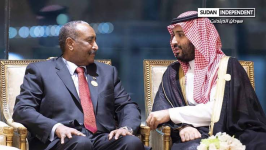
RIYADH: Saudi Arabia’s Crown Prince Mohammed bin Salman met Abdel Fattah Al-Burhan in Riyadh on Monday to discuss the latest developments in Sudan and efforts to restore security and stability in the country, the Saudi Press Agency reported.
The meeting took place at Al-Yamamah Palace, where the crown prince held talks with the chairman of Sudan’s Transitional Sovereignty Council, and his delegation.
During the talks, the two sides reviewed the situation in Sudan, its regional implications, and efforts aimed at achieving security and stability amid the country’s continuing crisis, SPA added.
The meeting was also attended by Saudi Minister of Defense Prince Khalid bin Salman, Foreign Minister Prince Faisal bin Farhan, Minister of State and National Security Adviser Musaed bin Mohammed Al-Aiban, Finance Minister Mohammed Al-Jadaan, and Saudi Ambassador to Sudan Ali Hassan Jaafar.

Saudi crown prince meets head of Sudanese transitional council to discuss security and stability
RIYADH: Saudi Arabia’s Crown Prince Mohammed bin Salman met Abdel Fattah Al-Burhan in Riyadh on Monday to discuss the latest developments in Sudan and efforts to restore security and stability in the country, the Saudi Press Agency reported. The meeting took place at Al-Yamamah Palace, where the...
 www.arabnews.com
Riyadh celebrates Sudanese heritage in cultural week finale

Riyadh celebrates Sudanese heritage in cultural week finale
RIYADH: The Sudanese Culture Week continues in Riyadh until Dec. 20, attracting visitors from a variety of nationalities to diverse cultural performances, the Saudi Press Agency reported. The Ministry of Media has organized the events as part of the Global Harmony 2 initiative, in cooperation...
www.arabnews.com
Sudan’s al-Burhan, Saudi crown prince discuss peace efforts in Riyadh
- 15 DECEMBER 2025
- IN INTERNATIONAL, MIDDLE EAST, NEWS, SAF RSF PEACE
2 Min
December 15, 2025 (RIYADH) – Abdel Fattah al-Burhan, the head of Sudan’s Sovereign Council, held talks with Saudi Crown Prince Mohammed bin Salman in Riyadh on Monday, concluding a one-day visit to the Kingdom.
Ambassador Muawia Osman, Undersecretary of the Ministry of Foreign Affairs, said al-Burhan and Prince Mohammed bin Salman discussed strengthening bilateral relations into a sustainable strategic partnership. This partnership, he added, would be facilitated through a Strategic Cooperation Council sponsored by the leaderships in Sudan, and the Kingdom.
Al-Burhan thanked Prince Mohammed bin Salman and his government for their “significant and valuable efforts” to achieve peace, and stability in Sudan. He also praised the Crown Prince’s “wise vision” for regional peace, economic cooperation, and strategic partnerships.
The visit also focused on ongoing efforts to achieve security, and stability. Al-Burhan expressed appreciation for US President Donald Trump’s determination to engage in peace efforts to end the war, with Saudi Arabia’s participation.
He affirmed Sudan’s eagerness to work with President Trump, his Secretary of State, and his Peace Envoy to achieve that goal.
Al-Burhan arrived in the Saudi capital earlier in the day following an invitation conveyed by Saudi Foreign Minister Walid al-Khereiji, who visited Port Sudan last Saturday to meet with him.
The official Saudi Press Agency (SPA) had earlier reported that Crown Prince Mohammed bin Salman met with al-Burhan and his delegation at Al-Yamamah Palace. They reviewed the latest developments and repercussions of the current events in Sudan, as well as efforts to achieve security and stability.
The meeting marks the first such talks since the Saudi Crown Prince reportedly asked U.S. President Donald Trump last month to intervene to end the war in Sudan personally.
Saudi Arabia is active within the Quad Mechanism, which also includes Egypt, the United States, and the UAE, and aims to end the ongoing military conflict in Sudan.
However, the Sudanese government has repeatedly objected to the UAE’s participation in the Quad Mechanism, stating it would not cooperate and would only hold bilateral discussions with the remaining three countries to resolve the crisis.
On September 12, 2024, the foreign ministers of the Quad Mechanism countries proposed a roadmap to end the war in Sudan. The proposal included approving an initial three-month humanitarian truce, paving the way for a permanent ceasefire, followed by the launch of a comprehensive and transparent transitional process.
Saudi Arabia pushes for political settlement as Sudan war intensifies pressure
Saudi Arabia has significant leverage over military leaders and is seen as capable of encouraging them to consider compromise and engage with peace proposals.
Tuesday 16/12/2025

Saudi Crown Prince Mohammed bin Salman meets Sudan’s military leader General Abdel Fattah al-Burhan in Sharm el-Sheikh, Egypt, November 7, 2022.
RIYADH
The visit of Sudan’s Transitional Sovereignty Council chairman and army chief Abdel Fattah al-Burhan to Saudi Arabia this week carries exceptional significance, both in timing and strategic context. The country is at a dangerous turning point, with ongoing clashes between the Sudanese Armed Forces and the paramilitary Rapid Support Forces (RSF) threatening to fragment the nation and destabilise the wider region.
Burhan arrived in Riyadh on Monday at the invitation of Saudi Crown Prince Mohammed bin Salman. Neither side has publicly detailed the agenda or duration of the visit. Yet analysts argue that the engagement signals an urgent push to advance peace efforts, as the situation on the ground has reached critical levels. Observers note that Riyadh has elevated Sudan to a foreign policy priority, and Burhan is acutely aware of the army’s precarious position, having lost control of Darfur and facing setbacks in the Kordofan region.
The Saudi-led initiative, framed by the “humanitarian truce” previously proposed by the international Quad, which includes the United States, Egypt and the UAE, offers a potential roadmap for peace. While the plan requires adjustments to gain acceptance from both conflict parties, it provides a framework from which Riyadh could steer negotiations. Analysts warn Sudan’s military leadership against persisting in a zero-sum approach or assuming a decisive military victory is achievable; failure to recognise the limits of armed confrontation risks the country’s collapse.
Since April 2023, the RSF and the Sudanese army have been locked in a brutal struggle over the transitional phase. The war has claimed tens of thousands of lives and displaced around 13 million people, exacerbating one of the world’s most severe humanitarian crises. Early mediation attempts led by Saudi Arabia and the United States through the Jeddah Platform failed to halt hostilities, highlighting the complexity of achieving peace in Sudan.
For Riyadh, the Sudan conflict is no longer merely an internal affair. The kingdom views the ongoing fighting as a threat to Red Sea security, vital trade routes and regional stability across the Horn of Africa. Continued instability could invite competing international and regional interventions, shifting the balance of influence in a way that would challenge Saudi strategic interests. From this perspective, a swift political settlement that preserves Sudan’s unity and institutional integrity is far preferable to leaving the country an open battlefield.
Saudi officials have also highlighted the risk of uncontrolled armed groups proliferating across Sudan, potentially spilling chaos into neighbouring countries and the Horn of Africa. This scenario runs counter to Riyadh’s recent policy of reducing regional tensions and promoting negotiated political solutions over open conflict.
Last month, Crown Prince Mohammed bin Salman directly appealed to US President Donald Trump to intervene in the Sudanese crisis during a visit to Washington. Trump later recounted that the crown prince conveyed the gravity of the situation vividly, warning: “Sir, you’re talking about a lot of wars, but there’s a place on Earth called Sudan … and it’s horrible what’s happening.” According to Trump, this appeal prompted immediate US attention, with steps now under way to address the crisis.
The Saudi role extends beyond diplomacy into a practical effort to influence the Sudanese army’s stance. The kingdom has significant leverage over military leaders and is seen as capable of encouraging them to consider compromise and engage with peace proposals. Sudanese officials have publicly acknowledged Riyadh’s contribution, praising the crown prince’s “wise vision and comprehensive outlook” and expressing gratitude for his government’s efforts to stabilise the country.
Coordination with Egypt and the United States remains critical. Ahead of Burhan’s arrival in Riyadh, Saudi Foreign Minister Prince Faisal bin Farhan spoke by phone with Egyptian counterpart Badr Abdelatty, underscoring the need for continued collaboration under the Quad framework. Both ministers stressed the importance of establishing safe havens and humanitarian corridors to ensure aid reaches civilians without obstruction, reflecting a holistic approach that balances political, military and humanitarian considerations.
As the Sudanese conflict continues, Saudi Arabia’s strategy appears to follow a calibrated, phased approach. Its immediate objective is to curb military escalation and prevent further humanitarian collapse. Next is to construct a credible political framework that can form the basis for negotiations. Finally, Riyadh seeks to secure the active participation of the Sudanese army in any peace process, using diplomatic weight and political incentives to reduce internal resistance to compromise.
The success of these efforts remains contingent on the willingness of Sudanese actors to engage constructively, and on the continued support and coordination of the international community. If these elements align, Saudi Arabia could emerge as a decisive force in steering Sudan away from the brink and towards a sustainable peace.

Saudi Arabia pushes for political settlement as Sudan war intensifies pressure | | AW
For Riyadh, the Sudan conflict is no longer merely an internal affair. The kingdom views the ongoing fighting as a threat to Red Sea security, vital trade routes and regional stability.

Fatman17
THINK TANK: CONSULTANT
 reshaped Sudan
  civil war
_Arabia_
Trusted Member
After dealing with the UAE/Zionist aligned plot in South Yemen, KSA has upped the ante in Sudan recently.
KSA media says that KSA was directly involved in this drone attack and others in recent times as a direct warning to UAE after their Yemen fiasco of late. Not playing games any longer, it seems.
I expect SAF to gain additional strength, considering recent setbacks in Western Sudan and Darfur, if KSA removes the gloves and goes all in with the SAF militarily, financially and diplomatically.
The two countries that can change things on the ground, outside of the US, are neighboring KSA and Egypt.
But given the hopeless quagmire that Sudan is, it is a very risky operation which is why nobody (so far) has intervened directly with ground troops.
Egypt is most poised to do it due to geographic proximity and a direct land border but the problem is that the border with Sudan is mostly desert and not very populated so the Egyptian army would be stretched substantially given the porous situation in Libya and Gaza next door but they should seriously act, if their vital interests are threatened, much like KSA did in Yemen next door. I don't believe that the Sisi regime has the will to do it, given past history, but the UAE/Zionist/Ethiopia/RSF axis is a threat for Egypt. Not to mention the Ethiopian Dam.
KSA media says that KSA was directly involved in this drone attack and others in recent times as a direct warning to UAE after their Yemen fiasco of late. Not playing games any longer, it seems.
I expect SAF to gain additional strength, considering recent setbacks in Western Sudan and Darfur, if KSA removes the gloves and goes all in with the SAF militarily, financially and diplomatically.
The two countries that can change things on the ground, outside of the US, are neighboring KSA and Egypt.
But given the hopeless quagmire that Sudan is, it is a very risky operation which is why nobody (so far) has intervened directly with ground troops.
Egypt is most poised to do it due to geographic proximity and a direct land border but the problem is that the border with Sudan is mostly desert and not very populated so the Egyptian army would be stretched substantially given the porous situation in Libya and Gaza next door but they should seriously act, if their vital interests are threatened, much like KSA did in Yemen next door. I don't believe that the Sisi regime has the will to do it, given past history, but the UAE/Zionist/Ethiopia/RSF axis is a threat for Egypt. Not to mention the Ethiopian Dam.
Last edited:

Users who are viewing this thread
Total: 5 (members: 0, guests: 5)
Pakistan Defence Latest
-

-
-
 Federal cabinet gives nod to imposition of emergency in KP; summary sent to president (16 Viewers)
- Latest: Mighty_Dragon_Strike
-

-

Country Watch Latest
-

-

-
Iran - Israel/US War: Israel-US declare war on Iran, Iran responds (284 Viewers)
- Latest: BananaRepublic
-

-

Latest Posts
-
-
-
-
-
Israel declares all Arab states as Illegitimate Official government declaration (25 Viewers)
- Latest: mythbuster