Terrorism: Watch

He highlighted the extreme difficulty of managing the Pak-Afghan border, which is highly challenging and comprises difficult terrain, especially the 1,229 km stretch in Khyber-Pakhtunkhwa featuring 20 crossing points.

DG ISPR’s briefing focused on exposing a “very strong political–terror–crime nexus” operating in the border areas. He stated that this nexus is being facilitated by the “Fitna al-Khawarij” and uses millions of non-custom-paid vehicles allegedly in circulation to carry out suicide attacks inside Pakistan.

The crackdown on Iranian diesel smuggling has seen the daily volume drop from 20.5 million litres to 2.7 million litres, with proceeds previously funding groups like the Balochistan Liberation Army (BLA) and Balochistan Youth Council (BYC).
 
DG ISPR reaffirmed Pakistan's clear stance regarding the Doha Agreement, demanding that the Afghan Taliban regime cease facilitating terrorists whose leadership and infrastructure, including al-Qaeda and Daesh, exist in Afghanistan and receive arms and funding for use against Pakistan.

Pakistan is calling on the Afghan regime to agree on a “verifiable mechanism,” stating that Pakistan would have no objection if this mechanism were established by a third party.

He dismissed the Taliban regime's claim that militants are Pakistani citizens who migrated and are “guests,” challenging them to hand over any Pakistani national to be dealt with under Pakistani law.

Lt Gen Chaudhry reiterated that the Afghan regime is currently harbouring “Non-State Actors” who pose a threat to various countries in the region, noting the Taliban’s failure to establish an inclusive state and government post-2021.

He stressed that Pakistan's issue is with the Afghan Taliban regime, not the Afghan people, criticising the lack of representation for all ethnicities and the exclusion of 50 per cent of women.
 

Suicide Terrorism: then and now

An analysis of suicide terrorism in Pakistan, from its inception in 2002 through its peak and eventual decline.

By Manzar Zaidi |
November 23, 2025

The recent suicide attack in Islamabad—the first of its kind in over a decade—has once again thrust Pakistan’s capital into the spotlight of global security concerns. With a bomber detonating near the District Judicial Complex, killing at least a dozen and injuring dozens more, many analysts have rushed to interpret this as a “return” of suicide terrorism to Pakistan’s urban centres.

Yet history and context urge caution before drawing such conclusions. Suicide terrorism, as a strategic operational choice, thrives not as a single dramatic act but as a sustained campaign—an environment that Pakistan’s current security architecture, strengthened by years of counterterrorism operations, may no longer readily support.

An analysis of suicide terrorism in Pakistan from its inception in 2002 through its peak and eventual decline as below provides crucial perspective. The early years saw high-profile attacks targeting civilians and foreigners, escalating into campaigns against military and law enforcement after 2006, only to gradually wane as public condemnation, tighter security, and militant displacement reshaped the operational landscape.

The beginning

The spate of suicide bombings started in earnest within Pakistan in 2002, with two major suicide attacks perpetrated that year. On March 17, 2002, Sarfraz Ahmed attacked an Islamabad Sunday church service in the capital's diplomatic enclave, killing five people, including an American diplomat's wife and his daughter. This attack coincided chronologically with Operation Anaconda, which was being led in eastern Afghanistan against the Taliban and Al Qaeda insurgents by the US and its allies.

The May 8 car bombing outside Karachi’s Sheraton Hotel, which killed 14 people including 11 French engineers, was the second such attack. The first two suicide attacks specifically targeted foreigners, though attacks directed specifically at foreigners and civilians accounted for only 10 percent of the total attacks from 2002 to January 2009.

Adoption of the suicide tactic

Between 2002 and 2006, 25 human bombs exploded themselves across Pakistan implying that terrorist organisations had started assessing the use of the suicide tactic as a strategic tool. In succeeding attacks, many high-ranking government officials were targeted, including General Pervez Musharraf and sitting Prime Minister Shaukat Aziz.

Pakistan witnessed a ten-fold increase in the incidents of suicide bombings in 2007 as compared to 2006, as 2007 witnessed 56 suicide attacks, killing 472 law enforcement personnel and injuring 230 civilians; an average of a blast per week claimed more than 1,100 lives.

The ‘Red’ Trigger

There was a marked escalation of suicide activities in the aftermath of the Lal Masjid (Red Mosque) operation; before the operation, there had been 12 attacks in Pakistan between January 1 and July 3, 2007, killing 75 people.

The remaining 44 suicide attacks took place after the Lai Masjid action, between July 4 and December 27, 2007, spreading to Karachi, Quetta, Peshawar, Lahore, Rawalpindi, Islamabad and other urban centres, killing 567 people, mostly the members of military, civil armed forces and the police.

The PPP chairperson Benazir Bhutto's assassination on December 27, 2007 in Rawalpindi was the most high-profile suicide attack of the year 2007. The previous attempt to assassinate her on October 18, 2007 was also perpetrated by a suicide bomber, who blew himself up near a procession welcoming her home after eight years in self-exile. The suicide bomber could not target Bhutto during the first such attempt, but did kill over 140 other people, mostly PPP supporters.

This became the deadliest attack in the world at that time; before the October 18 attack, the deadliest suicide attack carried out anywhere in the world was the one that killed 133 people in Baghdad on February 3, 2007 when a bomber had detonated an explosive-laden truck at a busy marketplace.

Responsibility was placed on Tehreek-e- Taliban Pakistan (TTP), even though it vehemently denied the charges.

blast1763842471-2.jpg


The worst years

In 2008, Pakistan hardly fared any better. Pakistan topped the list of countries suffering from the menace of suicide bombings that year, leaving Afghanistan and Iraq behind during the first eight months of 2008. According to figures, Pakistan suffered 28 suicide attacks during the first eight months of the year 2008, killing over 471 people and wounding 713 others, including innocent civilians and the armed forces personnel.

On the other hand, war-ridden Afghanistan and Iraq, despite facing a higher digit of suicide attacks during the same period, experienced lesser number of human losses.

Figures show a total of 42 incidents of suicide attacks in Iraq between January 1 and August 31, 2008, claiming 463 lives besides wounding 527 others. In contrast, 436 people were killed and 394 injured in 36 suicide attacks that took place in Afghanistan during the same period. There were 59 suicide incidents in 2008 in total.

The two most prominent attacks that year in Pakistan were the August 22 attack on the main army munitions factory near Rawalpindi -- Wah Ordnance Factory — killing 80 workers in the deadliest attack on a military installation in the country's history, and the September 20 suicide attack on Marriott Hotel in Islamabad. The Marriott blast was touted as Pakistan’s 9/11, killing as many as 80 people and injuring over 200.

Ubiquity of suicide attacks

As regards the area-wise breakup of suicide attacks, the Federally Administered Tribal Areas (FATA- since then renamed as newly merged districts) and the North-West Frontier Province (NWFP- since then renamed as Khyber Pakhtunkhwa province or KP) were the main battlegrounds between the militants and the Pakistan Army, accounting for 60 percent of all suicide attacks between 2002-2008.

Punjab's 20 percent targeting included the attacks on the Army’s General Headquarters (GHQ), situated in Rawalpindi. Rawalpindi alone at the time accounted for nearly 10 percent of the total attacks. This was more than the share of Sindh, Balochistan and Islamabad, respectively, implying that urban centres had faced the brunt of terrorism.

Examining the total suicide attacks that took place in different areas at any given time between January 2002 and September 2002, a picture emerges: suicide attacks first started in Islamabad, Sindh and Balochistan, the very areas that accounted for the least number of attacks at that moment in time.

Till 2006, Punjab and Sindh accounted for nearly 70% of the suicide attacks, while there are none in NWFP and FATA at the same time. It is only in the first half of 2006 that attacks began in these areas. This corresponds with escalating unpopularity and widespread condemnation of these attacks in Punjab and Sindh, with large demonstrations against suicide terror perhaps indicating to the terrorist organisations that they were losing public support of these actions.
 
The simultaneous rise in NWFP corresponds temporally with the cross-border strikes by the US and its allied forces from Afghanistan into Pakistan for ‘taking out strategic targets.’

The sharpest increase in FATA and NWFP took place in July 2007, the month in which the military operation against Lal Masjid in Islamabad was carried out. Around this time, there is also a dramatic increase in the attacks in Punjab. After March 2008, however, attacks abated somewhat in FATA and Punjab, though they continued ceaselessly in NWFP.

Simultaneously, suicide attacks on religious targets -- which till 2007 comprised the majority of terrorist attacks, nearly ceased altogether, indicating a marked shift in targets towards the military as the conflict in tribal areas intensified.

Shift to ‘harder’ targets

Overwhelmingly, suicide attacks targeted military and police personnel and buildings, with military installations being targeted after the military started operations in Bajaur Agency. Interestingly, no suicide attacks were carried out on military or police targets till 2006, even though the military operation against militants began in South Waziristan in July 2002.

The first attack on a military target took place on May 28, 2006 in North Waziristan which killed three soldiers. The second was carried out on October 30, 2006, when the Pakistani government, allegedly in cooperation with the US conducted an air strike on a madrassah (said to be a terrorist base) in Bajaur, killing over 80 people. This incident, in particular seems to have changed the militants' approach: within days they carried out a devastating suicide attack on a military base in Dargai, killing 42 soldiers to avenge the October strike. Thereafter, suicide attacks on military and police targets became frequent.

Strategic logic of Suicide Terrorism

Organisations undertaking the suicide tactic in Pakistan have tended to compete for market shares by outbidding other organisations by escalation of the suicide tactic, and have also tended to change their use of the tactic in response to a backlash of public opinion in the context of shifting to military targets from civilian ones. Even though they could hardly be described as in-depth studies, the empirical analysis carried out to date points to suicide tactic in Pakistan as mainly organisational undertakings, with different organisations pursuing their sectarian and ‘foreigner’ targeted agendas till 2005-06, after which the focus seems to have shifted towards attacking military personnel and installations in Pakistan’s tribal areas as a response to the Pakistani army’s operations against militants being conducted in those areas.

The fact that the sectarian and religious focus of suicide attacks diverted nearly exclusively to the tribal areas at the time indicated that the public opinion in the settled areas of Pakistan has shifted against suicide violence, perhaps forcing the organisations to take stock of the public response indicators vis-à-vis news reports, opinion pieces, public rallies, etc.

In the absence of open source information, it is hard to say with absolute certainty, but the lull in attacks in major cities seemed to suggest that major organisations had focused their energies on the tribal areas. This period was the time when TTP was becoming the major anti-state terrorist organidation in Pakistan.
 
The ‘Peak’ and Decline

A total of 2,113 terrorist attacks were recorded across Pakistan in 2010, resulting in 2,913 fatalities and 5,824 injuries. The worst-affected region was the insurgency-hit province of Balochistan, which reported the highest number of attacks (737). This was followed by the militancy-ridden FATA with 720 attacks. KPK emerged as the third most volatile region, witnessing 459 attacks. In comparison, Sindh recorded 111 incidents, Punjab 62, Gilgit-Baltistan 13, Islamabad 6, and Azad Kashmir 5.

Suicide bombing still accounted for a majority of attacks, but hit-and-run operations by terrorists had also started, perhaps implying that either terrorist organidations were re-assessing suicide bombing as the main tactic or were exploring alternatives. Suicide bombing of course needs recruitment and indoctrination of people willing to become human bombs and, by then, suicide terrorism had become so abhorrent to the public in Pakistan there might have been a rising shortage of suicide cannon fodder for terrorist organisations.

The last half of 2011 was a period of comparative peace in Pakistan in terms of internal armed conflict, acts of terrorism and consequent casualties. A decrease in the number of suicide attacks and drone strikes were the major contributing factors. Although the security situation slowly improved as violence decreased by 24 percent, Pakistan still remained among the most volatile regions in the world.

Suicide terrorism had fallen significantly as operations to retake FATA gained traction, and terrorist groups were displaced from many areas.

Early indications of cross-border entrenchment

Simultaneously, cross-border attacks and clashes surged sharply in 2011, the majority occurring along Pakistan’s western frontier with Afghanistan. A total of 84 such incidents were reported along Pakistan’s borders with Afghanistan, India, and Iran, with over 80 percent concentrated on the Pak–Afghan border. These involved missile and rocket strikes on Pakistani posts by Afghan forces, armed engagements with security personnel, and both air and ground incursions into Pakistani territory.

Viewed in this broader context, these escalations also signalled the early phase of terrorist displacement across the border and the potential establishment of sanctuaries inside Afghanistan—an emerging pattern that, in retrospect, was neither new nor unexpected.

The data for 2012 indicates that suicide terrorism was already on a downward trajectory, with the number of attacks dropping by 27 percent—from 45 incidents in 2011 to 33 in 2012. This decline can be attributed to a combination of factors: intensified counterterrorism operations, disruptions to militant logistics and movement, better intelligence coordination, and the erosion of TTP infrastructure in key strongholds.
 
Public abhorrence of suicide terrorism

Equally important was the shift in public sentiment, which had by this period turned overwhelmingly hostile and morally repulsed by suicide attacks. The mounting civilian toll generated widespread condemnation, and a growing number of religious clerics and scholars openly denounced suicide terrorism as un-Islamic. This created an environment in which suicide bombings no longer offered militants the social cushioning or ideological cover they once relied on, potentially discouraging groups from deploying this tactic as frequently.

Despite the overall decline, KP remained the primary target, accounting for 54 percent of all suicide attacks in 2012—mostly attributed to TTP. This pattern remained consistent with 2011, when 60 percent of such attacks across the country also occurred in Khyber Pakhtunkhwa.

The number of suicide attacks nationwide rose by 39 percent in 2013, reaching 46 incidents compared with 33 in 2012. Of these, 18 (39 percent) took place in KP, followed by 12 in FATA, nine in Balochistan, five in Sindh, and one each in Rawalpindi and Azad Kashmir. Overall, 34 attacks were attributed to the TTP and its allied factions, nine were sectarian in nature—primarily carried out by Lashkar-e-Jhangvi and associated groups—one was linked to nationalist insurgents, and two occurred during inter-militant clashes.

The decline of suicide terrorism

Although these figures suggested a troubling rise in suicide bombings for 2013, the broader trajectory of militancy in Pakistan was already shifting. Suicide terrorism—once the preferred high-impact tactic of militant groups—was nearing a critical decline. By 2014, it would begin losing its centrality as an operational choice, shaped by worsening public hostility, clerical denunciations, disrupted networks, and tighter security pressures. In hindsight, even the 2013 spike was more of a final surge than a sustained trend, marking the last phase before suicide bombing began to fall out of favour among Pakistan-based militant organisations.

The number of suicide attacks nationwide fell sharply by 43 percent in 2014, dropping to 26 incidents from 46 in 2013. Of these, 10 attacks (38 percent) occurred in KP, followed by five in Balochistan, four in Karachi, three each in Punjab and FATA, and one in Islamabad. The groups responsible included the TTP, Jamaatul Ahrar, Ansarul Mujahideen, Ahrarul Hind, Jaishul Islam, Jundullah, Lashkar-e-Islam, and Lashkar-e-Jhangvi.

This sharp decline, however, cannot be viewed in isolation. The extensive public backlash following the Army Public School massacre in December 2014—where innocent schoolchildren were deliberately targeted—proved to be a turning point. Public sentiment turned overwhelmingly and permanently hostile toward militant groups, including the TTP, stripping them of any residual sympathy or ideological space. The outrage was so profound that it reshaped the national mood, delegitimized militancy across the board, and unified public opinion against extremist violence.

For terrorist organisations, this came at a time when they were already confronting setbacks: increasingly disrupted operations, diminishing safe havens due to military offensives, and growing displacement from Pakistani territory. In this environment, suicide terrorism—once central to their strategy—began losing operational viability and social cover. The decline in 2014 thus reflected not only military pressure, but also a decisive shift in tal attitudes that terrorist groups could no longer ignore.

In 2019, Pakistan had recorded its lowest number of terror-related deaths since 2006, with fatalities declining by 45% from 543 in 2018 to 300 in 2019. This downward trend began after terrorist attacks reached their peak in 2013. TTP emerged as the deadliest terror group in 2019, responsible for 73 deaths. Other notable groups included Lashkar-eJhangvi (LeJ) and Hizb-ul-Ahrar (HuA), which accounted for 21 and 20 deaths respectively.

This significant reduction in terrorism can be attributed to comprehensive counter-terrorism operations led by Pakistani military and security forces against various militant groups, including TTP and the Khorasan Chapter. The most impacted regions in 2019 were Balochistan and KP, accounting for 77% of terrorist attacks and 85% of deaths.

In 2020, Pakistan experienced a significant further decline in terrorist activities, with 146 incidents, including three suicide bombings, marking a 38% decrease from the previous year. This decrease also led to a substantial drop in casualties, with 220 lives lost (a 38% decrease from 2019) and 547 injuries. Security forces and law enforcement personnel faced significant losses, with 97 personnel killed and 113 injured. Civilians suffered 94 fatalities and 372 injuries.
 
Terrorism rising, again

In 2021, the downward trend abruptly reversed with a 42% increase in terrorist attacks, totalling 207 incidents, including five suicide bombings. This surge resulted in 335 deaths, a 52% increase from the previous year, and 555 injuries. TTP, local Taliban factions, and Islamic State Khorasan (ISK) carried out 128 attacks, up from 95 in 2020, resulting in 236 deaths and 278 injuries.

Baloch insurgents intensified their activities, causing substantial casualties. One of the significant shifts of this surge was that the security forces casualties had increased more than civilian deaths, implying that security forces were being increasingly targeted.

As military and police installations became the main targets, fortified perimeters made suicide attacks increasingly difficult and risky, diminishing their strategic appeal.

Militant groups adapted by employing IEDs, roadside bombs, ambushes, and sniper attacks, enabling strikes against hardened targets from a distance without breaching defences.

By 2020, only three suicide bombings occurred nationwide, highlighting the tactic’s decline as militants adjusted to evolving security measures.

Although attacks surged again in 2021, suicide bombings remained rare, with most incidents carried out through IEDs, targeted shootings, and ambushes.

Security forces absorbed the majority of casualties, reinforcing the shift from mass-casualty urban attacks toward precision operations targeting military and police through non-suicide methods.

In 2023, Pakistan experienced the highest number of terrorist attacks between 2019-23, with 306 incidents, marking a further 17% increase from the previous year. Major terrorist groups, including the TTP, ISK and Balochistan Liberation Army (BLA), were responsible for 78% of the attacks and 82% of the fatalities. Again, the security forces were the target of such attacks.

There was a marked escalation in brazen attacks on security forces in Pakistan, as opposed to suicide bombings which remained at lower levels. For instance, in August 2022, militants attacked a police station in Turbat, southern Balochistan, using suicide bombers and gunmen to breach the security perimeter. The BLA claimed responsibility for the attack, indicating its intention to target state security apparatus.

In February 2024, militants stormed a police station in Zhob, northern Balochistan, using explosives to breach the station's defences and engage in a fierce gun battle with police officers inside. The attacks were attributed to the BLA's intention to escalate its campaign against state institutions.

Thus, terrorism was not only on the rise through the reorganisation of TTP, but Baloch nationalist groups also found a window to challenge the state. The problem is compounded by the fact that TTP and many other groups are now operating primarily from command-and-control centres outside Pakistan. TTP and BLA amongst other groups now have sanctuary in Afghanistan, which makes the situation even more complicated. The terrorism scenario is thus even more tied into the international power politics than previously.
 
Islamabad and beyond

The recent suicide attack in Islamabad is alarming, and has understandably drawn widespread attention. However, it cannot be definitively interpreted as a full-scale return of suicide terrorism to Pakistan’s urban centres. This may well be an incident rather than a broader trend. The TTP has denied responsibility, consistently claiming that their operations now focus exclusively on military targets rather than civilians, which must be factored into any assessment.

Moreover, given that most militant groups operating in Pakistan rely on cross-border logistics, sleeper cells, and infrastructure based in Afghanistan to execute attacks, this incident alone does not indicate a sustained resurgence of the tactic. While the attack highlights ongoing vulnerabilities in urban security and underscores that suicide terrorism remains a potential strategic option for high-impact operations, it is premature to conclude that suicide bombings have returned as a central feature of Pakistan’s urban terrorism landscape.

Counterterrorism strategies must continue to address evolving militant methods while carefully interpreting isolated incidents within broader operational and geopolitical contexts.

This historical arc discussed above underscores that isolated attacks, no matter how shocking, cannot alone signify a revival of a once-prevalent tactic. Rather, they illuminate persistent vulnerabilities, evolving militant strategies, and the complex interplay of cross-border logistics, sleeper networks, and regional geopolitics—a nuanced reality that demands careful scrutiny beyond headlines and immediate speculation.


The writer is a security analyst. His LinkedIn handle is ‘Manzar Zaidi, PhD'
 

Security forces kill 14 terrorists in operations across K-P, Balochistan: ISPR​


PM praises security forces for successful operations against terrorists, says nation stands firmly behind armed forces

Khalid Mehmood
December 06, 2025


photo file


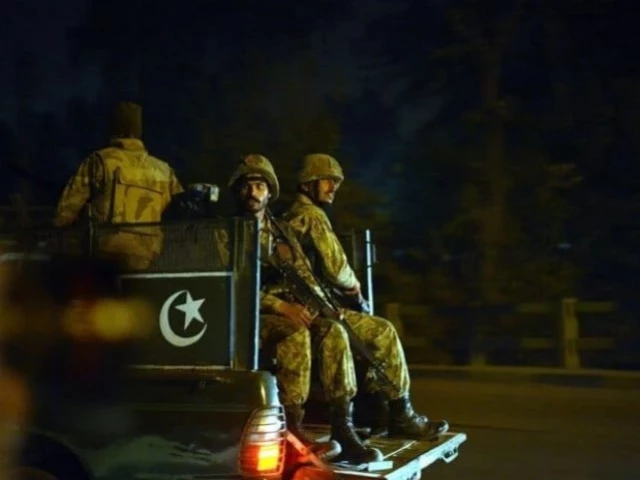
Security forces killed 14 Indian-backed terrorists in separate operations in Khyber-Pakhtunkhwa and Balochistan, the military’s media wing said in a statement.

According to the Inter-Services Public Relations (ISPR), following reports of the presence of terrorists belonging to the Indian proxy group Fitna al-Hindustan on December 5, security forces conducted an intelligence-based operation in Dera Bugti district of Balochistan.

During the operation, security forces effectively engaged the terrorists’ location. After an intense exchange of fire, five Indian-sponsored terrorists were killed.

The statement added that weapons, ammunition, and explosives were recovered from the terrorists, who had been actively involved in numerous terrorist activities in the area.

The ISPR said sanitisation operations are ongoing to eliminate any other Indian-sponsored terrorists in the region, as part of the relentless counter-terrorism campaign under the vision “Azm-e-Istehkam.”

“Security forces and law enforcement agencies of Pakistan will continue at full pace to wipe out the menace of foreign-sponsored and supported terrorism from the country,” the statement added.
 

K-P sees 50% surge in terror attacks in 2025​


Over 1,500 incidents reported in 2025; 420 terrorists killed as police deploy advanced technology

Ahtesham Khan
December 08, 2025

photo file


PESHAWAR: Khyber-Pakhtunkhwa experienced a significant surge in terrorism during 2025, with over 500 attacks reported, marking a 50 per cent increase compared to the previous year.

According to a detailed security assessment obtained by The Express Tribune, the province faced 1,588 terrorism-related incidents, reflecting a rapidly escalating militant threat across both settled and tribal regions. Despite the rise in attacks, security forces managed to prevent 320 major strikes, while 137 police officers and personnel laid down their lives in the line of duty.

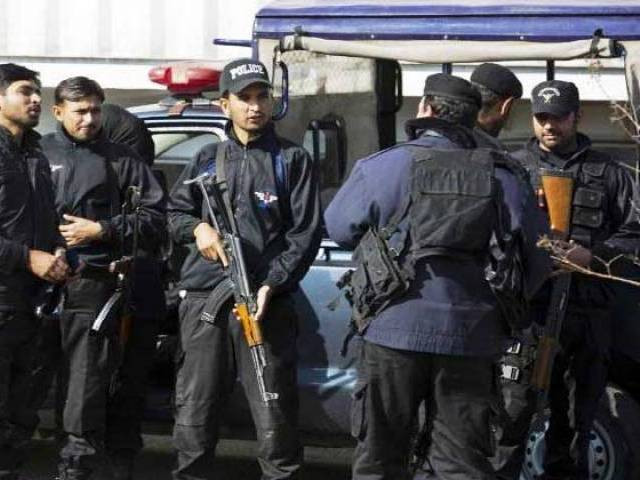
The Counter Terrorism Department (CTD) report highlights that joint operations carried out by K-P police, CTD, and security agencies led to the arrest of 1,244 suspected terrorists, while 420 high-profile militants were neutralized in intelligence-based operations.

Districts such as Bannu, Dera Ismail Khan, Lakki Marwat, Hangu, and Peshawar remained the most frequently targeted, with a noticeable pattern of attacks planned and executed from across the Afghan border.

Inspector General of Police Zulfiqar Hameed, in an interview with The Express Tribune, acknowledged the increase in attacks on police but noted that the number of police casualties had decreased compared to last year. He emphasized that advanced technologies, including anti-drone systems and thermal imaging, enabled counterterrorism teams to stay ahead of militants' shifting tactics.

According to the IGP, weapons that were once used by NATO forces in Afghanistan are now being found in the possession of terrorists operating in K-P's tribal belt and southern districts. Yet, he stressed, police remained firmly on the frontline, setting new benchmarks in counterterrorism efforts.
 
In a significant development, the federal government approved a historic Rs1 billion package for policing in the merged tribal districts. This funding will support the construction of police lines, new police stations, and the procurement of bulletproof vehicles and jackets, marking the first substantial investment in the region's security apparatus.

IGP said this upgraded infrastructure will strengthen policing capacity in areas adjacent to the Afghan border, where militant infiltration remains a persistent challenge. He added that militants attempted to establish illegal checkpoints on highways in DI Khan and parts of Bannu earlier this year, but state authority has since been fully restored.

The CTD report also points to a 56 per cent increase in attacks targeting police personnel, rising from 327 in 2024 to 510 in 2025.

Throughout the year, security agencies conducted 2,791 search-and-strike operations and uncovered 25 high-value foreign terrorist operatives linked to global militant networks. Meanwhile, extortion rackets operating in Peshawar and other districts were systematically dismantled.

Peshawar Capital City Police Officer Dr Mian Saeed confirmed that the notorious Lali Group, which was wanted in nearly 30 criminal cases, had been eliminated in a recent police operation.
 
To view this content we will need your consent to set third party cookies.
For more detailed information, see our cookies page.
 

Security gaps, lack of services expose governance failures in Tirah Valley​


Frontier Corps says fencing and cameras installed to curb infiltration along Afghan border

Web Desk
December 13, 2025

KHYBER PAKHTUNKHWA: The deteriorating situation in Tirah Valley has highlighted deep-rooted governance failures, with security officials pointing to the absence of basic services, weak administration and limited law enforcement as key challenges in the remote region of Khyber Pakhtunkhwa.

Officials of the Frontier Corps said the vacuum created by poor governance has been exploited by extremist and criminal groups, including Fitna-al-Khawarij, which they accused of promoting instability and financing activities through drug trafficking and extortion.

Inspector General Frontier Corps Khyber Pakhtunkhwa North said the province shares a 1,224-kilometre-long border with Afghanistan, of which around 717 kilometres fall under the responsibility of the FC. He said the terrain includes snow-covered and rugged mountains, high peaks and narrow passes, making border management a complex task.

The IG said cameras have been installed at various points to counter infiltration, adding that the border can only be fully sealed if it is respected from both sides. He noted that fencing between Pakistan and Afghanistan has been completed for the first time, turning it into what can now be termed an international border and creating a barrier against unchecked movement and infiltration.


Referring to security challenges, the IG said that last year in Bagh Maidan, 64 FC personnel were martyred and 198 were injured, adding that no other institution had suffered such a high number of casualties in the area. He said there are locations such as Duatoi where a narrow passage exists but effective checking cannot be carried out due to lack of legal authority.

He further pointed out that only three police personnel are currently deployed to monitor the entire local population, underscoring the severe shortage of law enforcement resources.

Wing Commander Colonel Waqas said the absence of civil administration was stark, noting that for a stretch of up to 60 kilometres in Tirah Valley there is no district administration, police presence or hospital. He said there are no government schools in the area and no appointed teachers, which has deprived children of education.

“When children do not go to school and are denied education, awareness does not develop and they are pushed towards illegal activities,” he said.

Colonel Waqas said the FC is running 16 schools in the valley and has recruited teachers on its own to provide basic education. He added that there is no hospital in the area and residents often approach the FC even for basic medical needs such as injections. The FC, he said, also organises free medical camps for the local population.

He described drug trafficking as a major problem in Tirah Valley, alleging the involvement of Fitna-al-Khawarij. He said funds generated through narcotics and extortion are used against security forces and civilians.

Officials warned that continued mismanagement and the failure of local governance structures are allowing militant and criminal elements to entrench themselves further in the region, aggravating both security and humanitarian challenges for the local population.
 
To view this content we will need your consent to set third party cookies.
For more detailed information, see our cookies page.
 
‼️Following a meeting of scholars from all schools of thought in Karachi, a joint declaration has been issued condemning armed struggle in Pakistan.

‼️The declaration also demands from the Islamic Emirate of Afghanistan that it should not allow its territory to become a hub for corrupt groups and factions who are taking advantage of the available facilities in Afghanistan to carry out acts of sabotage and terrorism in Pakistan.

‼️The ten-point statement says that any armed struggle, whether in the name of Islam or nationalism, can only benefit the enemies of the country.

To view this content we will need your consent to set third party cookies.
For more detailed information, see our cookies page.
 

Users who are viewing this thread

Country Watch Latest

Back
Top