TF-X / KAAN / Hürjet Turkish Fighter & Trainer Aircrafts News & Discussions

1771690983697.png

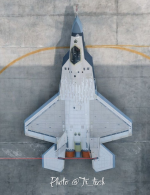
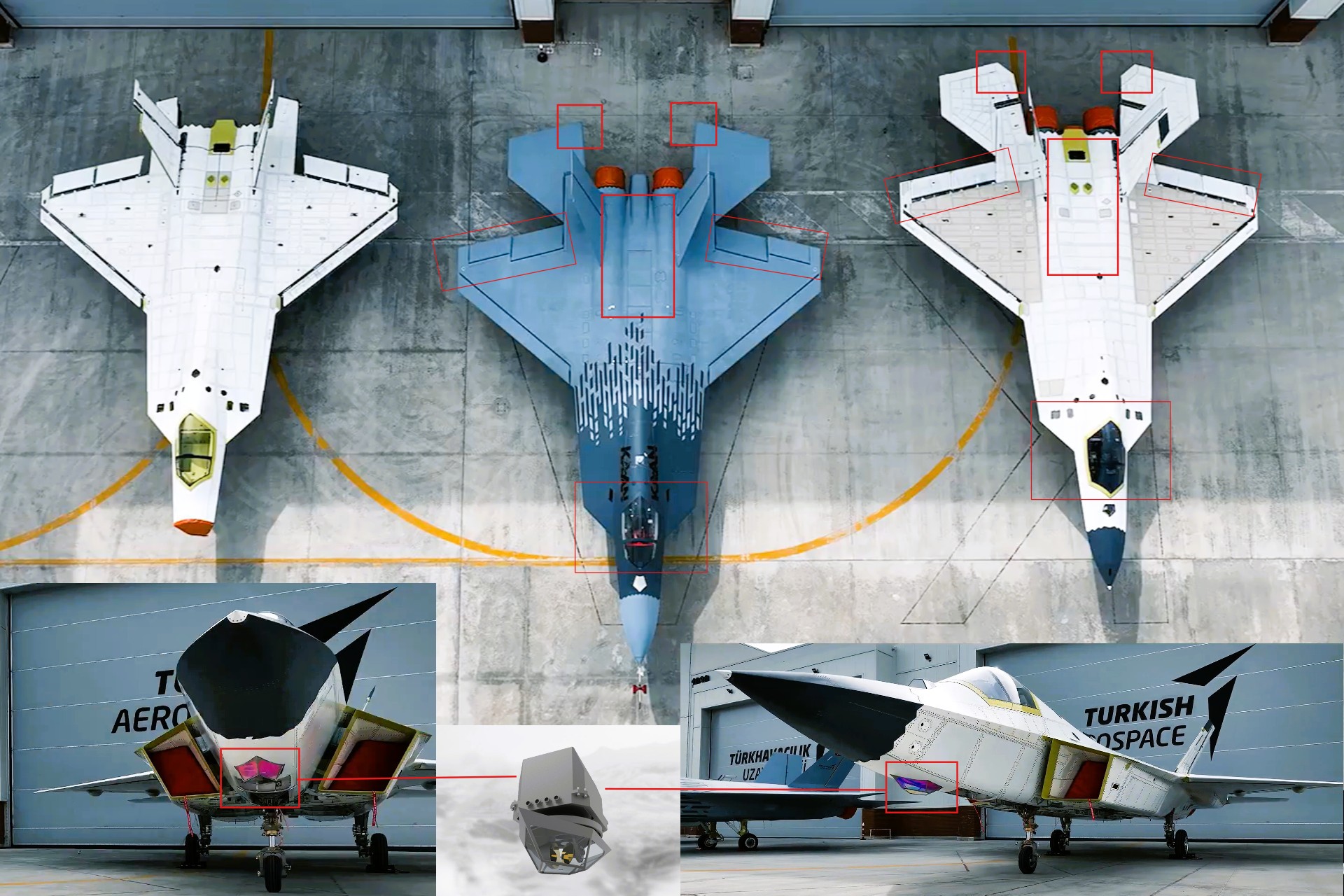
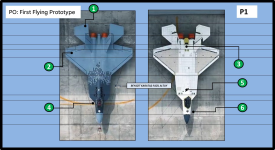
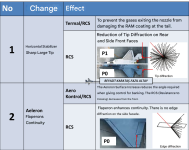
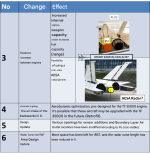
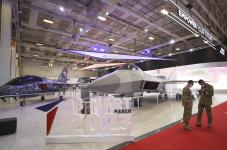
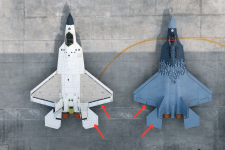
Fuselage comparison-KAAN

➡️The flap+aileron placement has definitely changed on wings

➡️The horizontal stabilizer geometry has also definitely undergone a change

➡️From this perspective, there seems to be a slight difference in the distance between the engines

➡️The engines are less prominent in the upper fuselage form of P1

➡️I can't see a clear difference in the photo of air intakes, but I think the intake volume may have increased after moving the intake backward

To view this content we will need your consent to set third party cookies.
For more detailed information, see our cookies page.
 
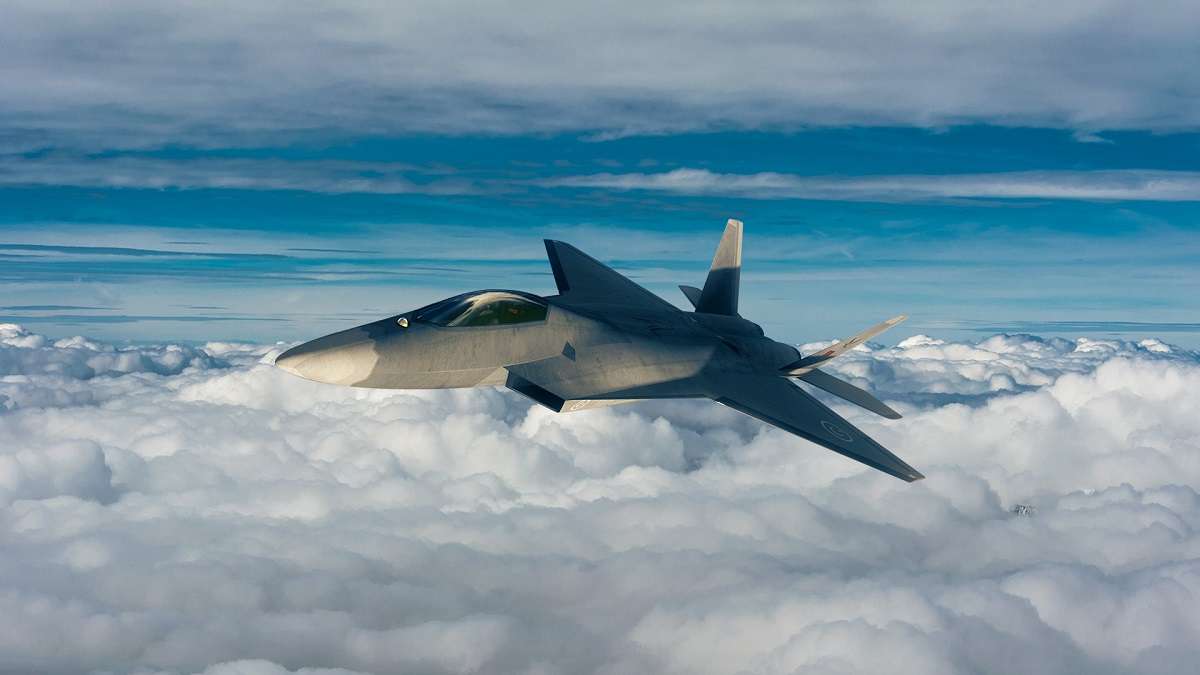
KAAN looks really good and clearly the other prototypes proves that Turkey is not testing here

this is a robust and well planned program which is going through a rapid development phase

when it comes to 6th generation Turkey might even lead frog some Western nations

the days of buying foreign fighter jest maybe over
 
1771706527011.png

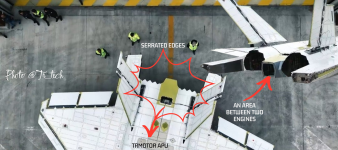
The location of the APU (which was developed by TRMotor) is clearly visible between the engines. The serrated edges at the points where the engine nozzle joins the body are now larger, but it appears that there will be a wider area between the two engines in P1. According to CEO Mehmet Demiroğlu's statement, the Nose AESA+Side radars will perform instantaneous scanning in a 270⁰ coverage area. This means that the idea of an AESA radar at the rear has been shelved. If this is still valid, what will this large area be used for? We will see many more exciting news related to KAAN.

To view this content we will need your consent to set third party cookies.
For more detailed information, see our cookies page.
 
KAAN looks really good and clearly the other prototypes proves that Turkey is not testing here

this is a robust and well planned program which is going through a rapid development phase

when it comes to 6th generation Turkey might even lead frog some Western nations

the days of buying foreign fighter jest maybe over

Why do you think the Zionists are desperate to get Iran out of the way.
 
The funny part of the story is most of the Arabs thinks they are going to make Kaan in ther own country. The thing is they will build licence in ther own country some parts, they can make, if they have the industry. Kaan structure is made off Composite material and Titianium. I do not think they have the knowhow about aviations at that level.

Still what comes after making parts is important, that wher abition starts. What is our level of knowledge and what can we make. Like when Aselsan started, what can we make in our own country, that was walkie talkies. Transfor of technology is pipe dream....

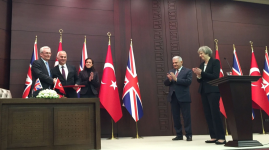
BAE Systems signs Heads of Agreement for a future contract with Turkish Aerospace Industries for TF-X Programme​


1771804534234.png

Signing this agreement in Ankara ahead of a planned contract with a value in excess of £100 Million, BAE Systems Chief Executive, Ian King, said: ‘‘BAE Systems is a leader in designing, manufacturing and supporting fighter aircraft and is in an excellent position to contribute technical and engineering expertise and experience of managing complex projects to this key Turkish programme. The announcement signals an exciting next step in relations between both Turkey and the UK with the co-operation between BAE Systems and TAI paving the way for a deeper defence partnership. The agreement confirms ongoing collaborative work on the design and development of the aircraft."

At its peak hundreds of Turkish and UK engineers will collaborate on the TF-X programme helping to support collaboration on the skills, technology and technical expertise required to deliver the programme.

https://www.baesystems.com/en/artic...rkish-aerospace-industries-for-tf-x-programme


Turkey working with Rolls-Royce on 5th-gen combat aircraft engine​

1771804727637.png

The top body of Turkey’s defense industry has started cooperating with United Kingdom-based Rolls-Royce on the engine to power the country’s National Combat Aircraft (MMU), the head of the authority said Saturday.

In a televised program on broadcaster CNN Türk, Ismail Demir, head of the Presidency of Defense Industries (SSB), commented on the developments regarding the MMU, a long-awaited domestic defense industry project.

The TF-X MMU, which is a fifth-generation jet with similar features to Lockheed Martin's F-35 Lightning II, is being developed by the local defense industry with the Turkish Aerospace Industries (TAI) as the main contractor.

Stating that there is an alternative engine option in addition to the F-110 engine to be supplied from the U.S., Demir noted: “We also had the possibility of working with Rolls-Royce for the engine."

“We previously had some concerns (about this cooperation),” he said; however, the company resolved these concerns as a result of the meetings held.

“The work has begun,” he added.

Demir, back in March 2021, stated that the British company didn't have an engine for this particular aircraft and that the company was offering to develop an engine for the MMU with a partnership it established in Turkey.

However, there were conditions that the Turkish side didn’t accept, Demir said at the time, and added that once the company is ready, Turkey was in a position to boost the business to a better standing.

Open sources overwhelmingly suggest that Turkey’s TRMotor and Rolls-Royce will work together to develop an engine for the MMU.

Meanwhile, Rolls-Royce has close relations with another Turkish company, the Kale Group, as well.

The Kale research and development (R&D) company, under the roof of the Kale Group, has domestically developed turbojet missile engines that power Turkish missiles.

The national fighter jet is scheduled to exit the hangar in 2023, make its maiden flight in 2025 or 2026, and be added to the Turkish Armed Forces' (TSK) inventory in 2029.

https://www.dailysabah.com/business...rolls-royce-on-5th-gen-combat-aircraft-engine
 
Turkey tries to seduce Spain with its fighter fighters in the face of the collapse of the European program

The discrepancies between France and Germany force Spain to propose alternatives so as not to be left behind in the air combat

[...]

Alternatives in Spain and the Turkish Way

Which path will Spain choose? The United Kingdom, Italy and Japan develop their own hunting, but our country would join late, with the consequent loss of control of the project, and would also give up its one hundred percent European plan.

New new-generation Eurofighters could also be acquired, but they would not bring the same capabilities as the FCAS. The U.S. F-35 is not a viable option by political decision. And extending the life of the current fighters means falling far behind in air combat.

In these, Turkey presents its credentials. The KAAN project focuses on developing a fifth-generation stealth fighter aircraft under the baton of Turkish Aerospace Industries (TAI). Its main objective is to progressively replace the Turkish Air Force’s F-16 fighter fleet with its own aircraft, capable of air-to-air and air-to-ground missions with advanced technologies.

The program started more than a decade ago and has already reached concrete milestones, such as the first prototype flight in February 2024. Serial production is expected to begin by the end of this decade. Turkey has presented images of the second and third prototype of the KAAN aircraft this week, boasting of the success of a program that is advancing in meeting the established milestones.

With this program, Turkey aims to strengthen its strategic autonomy in the air defense sector, becoming one of the few countries to develop aircraft of this nature. Turkish Aerospace Industries has already successfully designed and manufactured the Hürjet, a training aircraft and light attack.

And this is where the Turkish passion emerges for Spain. Because our country has already signed an agreement for the acquisition of 45 Hürjet training aircraft, with their corresponding simulators, to train the future pilots of the Air and Space Army.

Once the road is opened, from Turkey they maintain that everything is possible; that the KAAN aircraft is an alternative to the dilemma of the Spanish Ministry of Defense, with an immediate performance and at a price markedly lower than the development of a new prototype combat fighter with other partners.

The Turkish industry has already slipped on several occasions that Spain is a potential market for the KAAN, given the “success” of the operation with the Hürjet. Industry sources consulted by this newspaper, however, consider that this is still a “far away” option, which has not even closed the episode of the FCAS – from which some technological aspects can still be saved, even if the hunting does not prosper – and that other avenues to explore are still left.

One of them is the German. Because Berlin does not renounce the development of a new European fighter jet, despite the foreseeable failure with France. It is here that Sweden comes into action, having already taken the first steps to design its own new generation fighter, based on technology from the Saab company.

This option, although still very incipient, would fit into the canons that Spain seeks, of European autonomy and a custom-made hunt; but it would weigh down deadlines that are already adjusted, would delay the incorporation of the future hunting in the Spanish Armed Forces, and derail all the effort invested in the FCAS.

That is why Turkey looks with interest at every step that Spain takes, with the KAAS as the Adam’s apple to tempt a market that, today, has no certainty about its future with air combat.


BAE Systems signs Heads of Agreement for a future contract with Turkish Aerospace Industries for TF-X Programme​


View attachment 180469

Signing this agreement in Ankara ahead of a planned contract with a value in excess of £100 Million, BAE Systems Chief Executive, Ian King, said: ‘‘BAE Systems is a leader in designing, manufacturing and supporting fighter aircraft and is in an excellent position to contribute technical and engineering expertise and experience of managing complex projects to this key Turkish programme. The announcement signals an exciting next step in relations between both Turkey and the UK with the co-operation between BAE Systems and TAI paving the way for a deeper defence partnership. The agreement confirms ongoing collaborative work on the design and development of the aircraft."

At its peak hundreds of Turkish and UK engineers will collaborate on the TF-X programme helping to support collaboration on the skills, technology and technical expertise required to deliver the programme.

https://www.baesystems.com/en/artic...rkish-aerospace-industries-for-tf-x-programme


Turkey working with Rolls-Royce on 5th-gen combat aircraft engine​

View attachment 180470

The top body of Turkey’s defense industry has started cooperating with United Kingdom-based Rolls-Royce on the engine to power the country’s National Combat Aircraft (MMU), the head of the authority said Saturday.

In a televised program on broadcaster CNN Türk, Ismail Demir, head of the Presidency of Defense Industries (SSB), commented on the developments regarding the MMU, a long-awaited domestic defense industry project.

The TF-X MMU, which is a fifth-generation jet with similar features to Lockheed Martin's F-35 Lightning II, is being developed by the local defense industry with the Turkish Aerospace Industries (TAI) as the main contractor.

Stating that there is an alternative engine option in addition to the F-110 engine to be supplied from the U.S., Demir noted: “We also had the possibility of working with Rolls-Royce for the engine."

“We previously had some concerns (about this cooperation),” he said; however, the company resolved these concerns as a result of the meetings held.

“The work has begun,” he added.

Demir, back in March 2021, stated that the British company didn't have an engine for this particular aircraft and that the company was offering to develop an engine for the MMU with a partnership it established in Turkey.

However, there were conditions that the Turkish side didn’t accept, Demir said at the time, and added that once the company is ready, Turkey was in a position to boost the business to a better standing.

Open sources overwhelmingly suggest that Turkey’s TRMotor and Rolls-Royce will work together to develop an engine for the MMU.

Meanwhile, Rolls-Royce has close relations with another Turkish company, the Kale Group, as well.

The Kale research and development (R&D) company, under the roof of the Kale Group, has domestically developed turbojet missile engines that power Turkish missiles.

The national fighter jet is scheduled to exit the hangar in 2023, make its maiden flight in 2025 or 2026, and be added to the Turkish Armed Forces' (TSK) inventory in 2029.

https://www.dailysabah.com/business...rolls-royce-on-5th-gen-combat-aircraft-engine
My friend, they only made us waste time. Those agreements were never implemented. Don’t think that Europeans will give technology to the Turks
 
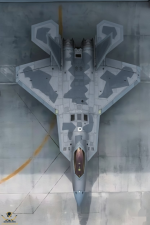
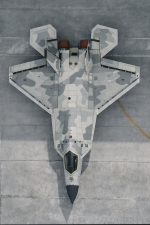
Using AI techniques, we see what the Kaan P1 will look like with Raptor-style camouflage.

In fact, it's an impressive design.

Roberto Escamez

View attachment 180467
Camouflage is one thing, something a hobbyist might do by adding 2D nozzles and F-22 camouflage, but KAAN has a different design. Some fuselage features are clearly digitally reshaped and appear to be an attempt to copy the F-22 onto KAAN. KAAN’s outer wingtips have a sharper geometry, and the trailing-edge angle and wing proportions of the KAAN P1 are slightly different; the modified version appears closer to F-22 geometry, whereas the original KAAN P1’s trailing-edge angle and overall wing ratio are distinct.. The tail fins also clearly conform to the F-22 dimensions and pitch angle, not KAAN's.

KAAN's cockpit shape is different; the guys just used F-22 skins and even did a reshaping that mimics the F-22 surface panel structural details.
The shorter nose and more compact rear fuselage create a more F-22-like stance that doesn't reflect KAAN's original design balance. KAAN's radome structure is designed to integrate a larger AESA radar and more advanced IRST systems, and its fuselage proportions have been optimized for higher internal weapon bay capacity. Transforming a modern KAAN and its sensor mounts into something resembling a 1980s concept for less capabilities is, in my opinion, a step backward rather than an advancement.
 
Last edited:
My friend, they only made us waste time. Those agreements were never implemented. Don’t think that Europeans will give technology to the Turks

You are so right

1 --
No official agreement has even been signed with ROLLS ROYCE, and they have made absolutely no contribution to the development of the TF-35,000 Engine

No any technology transfer or technical support from NATO
Turkiye itself develops the TF-6.000 , TF-10.000 and TF-35.000 turbofan Engines


2 -- Türkiye has signed a consultancy and design support agreement worth approximately £100 million with BAE Systems in 2017

but Years ago , TEMEL KOTIL had said that Turkiye did not receive the support we expected from BAE Systems for KAAN Fighter Jet

It wasn't as extensive as Lockheed Martin's agreement with Korea (KF-21) .... meaning there was no technology transfer from the BAE Systems ; it remained at the consultancy level rather than a full partnership.
 

Users who are viewing this thread

Latest Posts

Back
Top