The origin of Han China was Vietnamese?

chuethnic

Registered Member
Joined
Apr 9, 2024
Messages
47
Reaction score
9
Reputation
103.0
Country of Origin
Country of Residence
Hello there, many of the posters here seem incredibly knowledgeable about Vietnam and China so I wanted to post here to discuss this topic with you. As you all know Chu people formed the Han Dynasty from which Han Chinese are named after and take great pride in but are they really related to modern Han or Vietnamese?

For many years I furiously researched into the origins of Vietnamese and two universal truths were apparent:
  • Vietnamese were never native to northern Vietnam but an intrusive group
  • The 'natives' as Vietnamese claim to be were the Baiyue and related to Tais
That leaves Vietnamese origin as somewhere outside, it is explicitly stated in Vietnamese historical records their origin is South China.

Establishing the non Chineseness of Chu:
Despite the historical revisionism of modern Chinese people Chu ethnics were detested by the northern Huaxia and faced extreme discrimination. I think it's well known EAs are deeply racist to SEAs so that's the first clue Chu were racially outside and some type of SEA not Chinese.

Language:
  • Chu was only granted a very tiny distant inhospitable piece of land that was full of thorny bushes to make their home - the words Jing and Chu both have Austroasiatic roots not Sinitic meaning thorns/bushes
  • Analysis of the Fangyan by Chinese themselves showed many connections between Chu speech and AA https://zhuanlan.zhihu.com/p/33979260
  • the word for “child” in the Chu language was something like /koːn/ (written as “觀”), which was a cognate with Vietnamese con

Genetics:
从基因层面上讲,越南人和我国南方汉人的基因高度重叠。根据现代分子基因技术的研究,有80%的越南人拥有O系基因单倍群,这80%的人里面又大多数是O1b1
而贵州、湖南以及东北地区,则有10%到24%的人携带有O1b1
而中国湖南地区携带O1b1基因的人,则在几千年内不断和别的基因融合,造成了现在主要以O3基因单倍群占据主导地位的情况
所以越南人的起源,可能是一支出身于湖南湘西一带的人种,在之后的几千年里不断向南迁移,并到达了现在的越南一带

Vietnamese relevance:
  • Vietnam was colonised by people that came from 'China', where specically did these people come from? Logically, being the most discriminated and from the closest region of 'China' at that time to northern Vietnam, the colonialists must specifically have come from Chu
  • The first Vietnamese kingdom was called Xich Quy and supposedly covered South China, Xich Quy translated means red ghosts. Chu were known to revere the colour red and also ghosts which was considered weird everywhere else in China. How is it possible for Vietnamese to know this name of Xich Quy because it doesn't appear in any Chinese records?
  • rulers of chu were called 熊, rulers of vietnam were called 雄
  • chu people were also called 荊, vietnamese are called 京
  • it is impossible for vietnamese to use 'xiong' and 'jing' in the same context by chance

So there it is, I don't think there can be any doubt that true origins of Chu people were Austroasiatic not Sinitic and that their direct descendants today are the Vietnamese not Chinese. As such I believe this has many far reaching implications for Vietnam and China such historical attributions, territorial claims etc.
 
Source:
Not Applicable
In brief, the Viet people are not native to present day Vietnam. There is a genetic origin study from the university of Havard. When following the DNA traces the Viet people came from present day Taiwan. The first settlement of Viet people is the Red river.
 
Chu?

You mean 楚 kingdom in Zhou dynasty?

The founder of the Han dynasty was born in Jiangsu.
 
In brief, the Viet people are not native to present day Vietnam. There is a genetic origin study from the university of Havard. When following the DNA traces the Viet people came from present day Taiwan. The first settlement of Viet people is the Red river.
Taiwan?
Chu?

You mean 楚 kingdom in Zhou dynasty?

The founder of the Han dynasty was born in Jiangsu.
Yes that kingdom. Xiang Yu was also born in Jiangsu and both were ethnically Chu not Huaxia. Chu hated and were hated by Huaxia people
Chu is the last to submit when there is a True Monarch, and the first to rebel when there is none. They are barbarians (yidi) and immensely hate the Central States. When southern savages and northern barbarians established ties, the Central States were like a thread due to be cut.
楚有王者則後服,無王者則先叛。夷狄也,而亟病中國,南夷與北狄交。中國不絕若線
 
Yes that kingdom. Xiang Yu was also born in Jiangsu and both were ethnically Chu not Huaxia. Chu hated and were hated by Huaxia people
Chu is the last to submit when there is a True Monarch, and the first to rebel when there is none. They are barbarians (yidi) and immensely hate the Central States. When southern savages and northern barbarians established ties, the Central States were like a thread due to be cut.
楚有王者則後服,無王者則先叛。夷狄也,而亟病中國,南夷與北狄交。中國不絕若線

It could be they have a common ancestor with Vietnamese.

Huaxia is a very ancient culture, and at the time their territory is very small.

During the period of Huaxia, there were many other cultures exist in China.

Have their own art style, language, and even handwriting.

Many people say Chu kingdom is mainly Miao or Hmong.

Even among Miao or Hmong, there are many tribes or sub-cultures.

Miao is the first people who eat rice and drink alcohol.

While northern people, Huaxia, eat bread and noodle.
 
Hello there, many of the posters here seem incredibly knowledgeable about Vietnam and China so I wanted to post here to discuss this topic with you. As you all know Chu people formed the Han Dynasty from which Han Chinese are named after and take great pride in but are they really related to modern Han or Vietnamese?

For many years I furiously researched into the origins of Vietnamese and two universal truths were apparent:
  • Vietnamese were never native to northern Vietnam but an intrusive group
  • The 'natives' as Vietnamese claim to be were the Baiyue and related to Tais
That leaves Vietnamese origin as somewhere outside, it is explicitly stated in Vietnamese historical records their origin is South China.

Establishing the non Chineseness of Chu:
Despite the historical revisionism of modern Chinese people Chu ethnics were detested by the northern Huaxia and faced extreme discrimination. I think it's well known EAs are deeply racist to SEAs so that's the first clue Chu were racially outside and some type of SEA not Chinese.

Language:
  • Chu was only granted a very tiny distant inhospitable piece of land that was full of thorny bushes to make their home - the words Jing and Chu both have Austroasiatic roots not Sinitic meaning thorns/bushes
  • Analysis of the Fangyan by Chinese themselves showed many connections between Chu speech and AA https://zhuanlan.zhihu.com/p/33979260
  • the word for “child” in the Chu language was something like /koːn/ (written as “觀”), which was a cognate with Vietnamese con

Genetics:
从基因层面上讲,越南人和我国南方汉人的基因高度重叠。根据现代分子基因技术的研究,有80%的越南人拥有O系基因单倍群,这80%的人里面又大多数是O1b1
而贵州、湖南以及东北地区,则有10%到24%的人携带有O1b1
而中国湖南地区携带O1b1基因的人,则在几千年内不断和别的基因融合,造成了现在主要以O3基因单倍群占据主导地位的情况
所以越南人的起源,可能是一支出身于湖南湘西一带的人种,在之后的几千年里不断向南迁移,并到达了现在的越南一带

Vietnamese relevance:
  • Vietnam was colonised by people that came from 'China', where specically did these people come from? Logically, being the most discriminated and from the closest region of 'China' at that time to northern Vietnam, the colonialists must specifically have come from Chu
  • The first Vietnamese kingdom was called Xich Quy and supposedly covered South China, Xich Quy translated means red ghosts. Chu were known to revere the colour red and also ghosts which was considered weird everywhere else in China. How is it possible for Vietnamese to know this name of Xich Quy because it doesn't appear in any Chinese records?
  • rulers of chu were called 熊, rulers of vietnam were called 雄
  • chu people were also called 荊, vietnamese are called 京
  • it is impossible for vietnamese to use 'xiong' and 'jing' in the same context by chance

So there it is, I don't think there can be any doubt that true origins of Chu people were Austroasiatic not Sinitic and that their direct descendants today are the Vietnamese not Chinese. As such I believe this has many far reaching implications for Vietnam and China such historical attributions, territorial claims etc.
Nonsense, different ancient Chinese ethnicities in different regions of China mingled, mixed and sometimes fought. Warring States period was not the beginning or the only important ancient history of China. The 楚辞 poetry book compiled at the time by the Chu kingdom was basically written in Chinese language eventhough in different style compared to central China's 诗经. The founder of Han dynasty was from Northern China plain, northern Jiangsu, eventhough at one time the area was ruled by the Chu kingdom.
 
Last edited:
Taiwan?

Yes that kingdom. Xiang Yu was also born in Jiangsu and both were ethnically Chu not Huaxia. Chu hated and were hated by Huaxia people
Chu is the last to submit when there is a True Monarch, and the first to rebel when there is none. They are barbarians (yidi) and immensely hate the Central States. When southern savages and northern barbarians established ties, the Central States were like a thread due to be cut.
楚有王者則後服,無王者則先叛。夷狄也,而亟病中國,南夷與北狄交。中國不絕若線
Han was a dynasty in China, we call ourselves Han because we consider it one of the earliest greatest Chinese dynasty.

Huaxia was much earlier, it was probably 4000-5000 years ago when tribes along the Yellow River Basin started millet farming and created the first Chinese civilization. Huaxia was a modern term, xia refering to the first dynasty and Hua a pre-Xia term for the Chinese people.
 
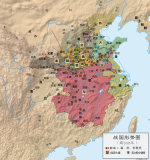
Yeah I don't believe Vietnamese are descendants of Chu Because geographically Chu kingdom is in present-day Hubei and Hunan far away from the Vietnam border
1712715149376.png
Most likely Vietnamese come from Bai yue which is geographically close to Vietnam This guy explains it well

To view this content we will need your consent to set third party cookies.
For more detailed information, see our cookies page.


They are close to Cantonese which comes from the fusion of baiyue and Han Chinese. I don't think the Chinese look down on Bai Yue they are part of the gene pool that makes up southern Chinese.

You can trace the origin of Vietnam from the name itself
The name Vietnam has an interesting origin. Let’s delve into its history:
  1. Etymology:
  2. Historical Context:
So, the name Vietnam emerged from a blend of historical influences, linguistic evolution, and cultural context. It reflects the rich heritage and identity of this vibrant nation.
 
Last edited:
In brief, the Viet people are not native to present day Vietnam. There is a genetic origin study from the university of Havard. When following the DNA traces the Viet people came from present day Taiwan. The first settlement of Viet people is the Red river.
I think you confused Austoasiatic and Austronesia They are 2 different races. Austroasiatic come from Yunnan . Austronesia comes from Taiwan. It is related and not mutually exclusive The ancestors of Indonesian west of Celebes or Sulawesi are a combination of both Austorasiatic and Austronesian. Iask chat gt

Vietnamese language is Austroasiatic
Vietnamese, also known as tiếng Việt, is an Austroasiatic language spoken primarily in Vietnam, where it serves as the national and official language. Here are some key points about Vietnamese:
  1. Origins and Classification:
 
Last edited:
42_22693_c1928dbfb06f4bc1.jpg
 
Yeah I don't believe Vietnamese are descendants of Chu Because geographically Chu kingdom is in present-day Hubei and Hunan far away from the Vietnam border
View attachment 32489
Most likely Vietnamese come from Bai yue which is geographically close to Vietnam This guy explains it well

To view this content we will need your consent to set third party cookies.
For more detailed information, see our cookies page.


They are close to Cantonese which comes from the fusion of baiyue and Han Chinese. I don't think the Chinese look down on Bai Yue they are part of the gene pool that makes up southern Chinese.

You can trace the origin of Vietnam from the name itself
The name Vietnam has an interesting origin. Let’s delve into its history:
  1. Etymology:
  2. Historical Context:
So, the name Vietnam emerged from a blend of historical influences, linguistic evolution, and cultural context. It reflects the rich heritage and identity of this vibrant nation.

He didn't change Nam Viet because he wanted to avoid confusion, he was instructed by the Chinese Emperor to change that name because Nan yue was a Chinese ancient state.

Han Chinese is not homogenous, we absorbed many genetics from various races but ultimately there is always Han blood in them and that's enough to qualify as Chinese as long as they carry our surname and speak our language. How do you think the Han race expanded to a continent size?
 
That is true most of the early settlers in the South were young men with no family. Their general recommends the soldier marry or cohabitate with native women. Yeah, there was a kingdom called Nanyue at one time It was the beginning of Vietnam but politically incorrect because the founder was Chinese, a general by the name Zhao Tuo. The same story as Korean founder of the first Korean Dynasty is Zhumong and he is Chinese too or from Central plain

Nanyue (Chinese: 南越[1] or 南粵[2]; pinyin: Nányuè; Jyutping: Naam4 Jyut6; lit. 'Southern Yue', Vietnamese: Nam Việt, Zhuang: Namz Yied),[3] was an ancient kingdom founded by the Chinese general Zhao Tuo, whose family (known in Vietnamese as the Triệu dynasty) continued to rule until 111 BC.[4][5] Nanyue's geographical expanse covered the modern Chinese subdivisions of Guangdong,[6] Guangxi,[6] Hainan,[7] Hong Kong,[7] Macau,[7] southern Fujian[8] and central to northern Vietnam.[6]

Zhao Tuo, then Commander of Nanhai Commandery of the Qin dynasty, established Nanyue in 204 BC after the collapse of the Qin dynasty. At first, it consisted of the commanderies of Nanhai, Guilin, and Xiang.

Nanyue and its rulers had an adversarial relationship with the Han dynasty, which referred to Nanyue as a vassal state while in practice it was autonomous. Nanyue rulers sometimes paid symbolic obeisance to the Han dynasty but referred to themselves as emperor. In 113 BC, fourth-generation leader Zhao Xing sought to have Nanyue formally included as part of the Han Empire.

His prime minister Lü Jia objected vehemently and subsequently killed Zhao Xing, installing his elder brother Zhao Jiande on the throne and forcing a confrontation with the Han dynasty. The next year, Emperor Wu of Han sent 100,000 troops to war against Nanyue. By the year's end, the army had destroyed Nanyue and established Han rule. The dynastic state lasted 93 years and had five generations of monarchs.

The existence of Nanyue allowed the Lingnan region to avoid the chaos and hardship surrounding the collapse of the Qin dynasty experienced by the northern, predominantly Han Chinese regions. The kingdom was founded by leaders originally from the Central Plain of China and were all of Han Chinese in origin.[5] They were responsible for bringing Chinese-style bureaucracy and handicraft techniques to inhabitants of southern regions, as well as knowledge of the Chinese language and writing system.

Nanyue rulers promoted a policy of "Harmonizing and Gathering the Hundred Yue tribes" (Chinese: 和集百越), and encouraged ethnic Han to immigrate from the Yellow River region to the south. Nanyue rulers were then not against the assimilation of Yue and Han cultures.[9]

In Vietnam, the rulers of Nanyue are referred to as the Triệu dynasty. The name "Vietnam" (Việt Nam) is derived and reversed from Nam Việt, the Vietnamese pronunciation of Nanyue.[10] In traditional Vietnamese histogrioraphy, important works such as the Đại Việt sử ký considered Nanyue to be a legitimate state of Vietnam and the official starting point of their history.

However, starting in the 18th century, the view that Nanyue was not a legitimate Vietnamese state and Zhao Tuo was a foreign invader started gaining traction. After World War II, this became the mainstream view among Vietnamese historians in North Vietnam and after Vietnam was reunified, it became the official state orthodoxy promoted by the ruling Vietnamese Communist Party. Nanyue was removed from the national history while Zhao Tuo was established as a foreign invader.[11]
 
That is true most of the early settlers in the South were young men with no family. Their general recommends the soldier marry or cohabitate with native women. Yeah, there was a kingdom called Nanyue at one time It was the beginning of Vietnam but politically incorrect because the founder was Chinese, a general by the name Zhao Tuo. The same story as Korean founder of the first Korean Dynasty is Zhumong and he is Chinese too or from Central plain

Nanyue (Chinese: 南越[1] or 南粵[2]; pinyin: Nányuè; Jyutping: Naam4 Jyut6; lit. 'Southern Yue', Vietnamese: Nam Việt, Zhuang: Namz Yied),[3] was an ancient kingdom founded by the Chinese general Zhao Tuo, whose family (known in Vietnamese as the Triệu dynasty) continued to rule until 111 BC.[4][5] Nanyue's geographical expanse covered the modern Chinese subdivisions of Guangdong,[6] Guangxi,[6] Hainan,[7] Hong Kong,[7] Macau,[7] southern Fujian[8] and central to northern Vietnam.[6]

Zhao Tuo, then Commander of Nanhai Commandery of the Qin dynasty, established Nanyue in 204 BC after the collapse of the Qin dynasty. At first, it consisted of the commanderies of Nanhai, Guilin, and Xiang.

Nanyue and its rulers had an adversarial relationship with the Han dynasty, which referred to Nanyue as a vassal state while in practice it was autonomous. Nanyue rulers sometimes paid symbolic obeisance to the Han dynasty but referred to themselves as emperor. In 113 BC, fourth-generation leader Zhao Xing sought to have Nanyue formally included as part of the Han Empire.

His prime minister Lü Jia objected vehemently and subsequently killed Zhao Xing, installing his elder brother Zhao Jiande on the throne and forcing a confrontation with the Han dynasty. The next year, Emperor Wu of Han sent 100,000 troops to war against Nanyue. By the year's end, the army had destroyed Nanyue and established Han rule. The dynastic state lasted 93 years and had five generations of monarchs.

The existence of Nanyue allowed the Lingnan region to avoid the chaos and hardship surrounding the collapse of the Qin dynasty experienced by the northern, predominantly Han Chinese regions. The kingdom was founded by leaders originally from the Central Plain of China and were all of Han Chinese in origin.[5] They were responsible for bringing Chinese-style bureaucracy and handicraft techniques to inhabitants of southern regions, as well as knowledge of the Chinese language and writing system.

Nanyue rulers promoted a policy of "Harmonizing and Gathering the Hundred Yue tribes" (Chinese: 和集百越), and encouraged ethnic Han to immigrate from the Yellow River region to the south. Nanyue rulers were then not against the assimilation of Yue and Han cultures.[9]

In Vietnam, the rulers of Nanyue are referred to as the Triệu dynasty. The name "Vietnam" (Việt Nam) is derived and reversed from Nam Việt, the Vietnamese pronunciation of Nanyue.[10] In traditional Vietnamese histogrioraphy, important works such as the Đại Việt sử ký considered Nanyue to be a legitimate state of Vietnam and the official starting point of their history.

However, starting in the 18th century, the view that Nanyue was not a legitimate Vietnamese state and Zhao Tuo was a foreign invader started gaining traction. After World War II, this became the mainstream view among Vietnamese historians in North Vietnam and after Vietnam was reunified, it became the official state orthodoxy promoted by the ruling Vietnamese Communist Party. Nanyue was removed from the national history while Zhao Tuo was established as a foreign invader.[11]
The Han was considered as invader not Zhào Tuó himself. Zhào wanted to establish a second China, an independent state south of China, equal footing to China, means Vietnam, that was an unprecedented provocation, something the Han was not willing to accept.
 
It could be they have a common ancestor with Vietnamese.

Huaxia is a very ancient culture, and at the time their territory is very small.

During the period of Huaxia, there were many other cultures exist in China.

Have their own art style, language, and even handwriting.

Many people say Chu kingdom is mainly Miao or Hmong.

Even among Miao or Hmong, there are many tribes or sub-cultures.

Miao is the first people who eat rice and drink alcohol.

While northern people, Huaxia, eat bread and noodle.
Miao people have blonde hair and blue eyes genes so their origin must be somewhere else, they existed amongst Chu but the lack of linguistic impression on Chinese means they cannot have been the dominant ethnic

It may surprise readers, but this ABC sample suggests that, for any substantial number of Old Chinese entries, TB comparanda will account for roughly 43.8% of entries, AA-affiliated words for 24.1% (and "southeastern" ones for 27.8%), unknown etymologies for 27.8%, and words with two plausible alternative roots and area words will account for 8% (again, figures add up to slightly more than 100%, because of the last two categories).
Given roughly 5,500 words in ABC, we would estimate he found about 2,420 TB comparanda, 1,323 AA, 204 Thai, maybe 34 MY, a meager handful of AN, 34 "others," about 1,527 unknown etymologies, and perhaps 440 area-words and words with two or more plausible etymologies

Nonsense, different ancient Chinese ethnicities in different regions of China mingled, mixed and sometimes fought. Warring States period was not the beginning or the only important ancient history of China. The 楚辞 poetry book compiled at the time by the Chu kingdom was basically written in Chinese language eventhough in different style compared to central China's 诗经. The founder of Han dynasty was from Northern China plain, northern Jiangsu, eventhough at one time the area was ruled by the Chu kingdom.
Funny that you bring up Shijing because Chu was excluded from it which proves they were considered outside of Huaxia ethnically. Chu were considered savage barbarians by Huaxia, can you explain why Han emperors were obsessed with barbarian Chu culture if they were Huaxia

Shusun Tong wore Confucian robes. The prince of Han [Liu Bang] detested them, so Tong changed them and wore the short tunic, in the style of Chu. The prince of Han was pleased.7
the region he understood to be Chu, the people employed shamans in the worship of "ghosts and spirits" (guishen) and placed great weight on yinsi (excessive, or lewd, rites) a term used by Han and later writers to describe the religious practices of other peoples. These regional practices involved great expenditures, dancing and singing, animal sacrifices, and the use of shamans, exorcism, or prayers to local gods.11 They were the practices, in fact, that the Han emperors were obsessed with, much to the distress of their Confucian ministers

Han was a dynasty in China, we call ourselves Han because we consider it one of the earliest greatest Chinese dynasty.

Huaxia was much earlier, it was probably 4000-5000 years ago when tribes along the Yellow River Basin started millet farming and created the first Chinese civilization. Huaxia was a modern term, xia refering to the first dynasty and Hua a pre-Xia term for the Chinese people.
But was the Han dynasty ethnically Chinese? Yuan and Qing both ruled China but you cannot say they were ethnically Chinese, you call yourselves Han because the Han
dynasty existed much further back in time so presumed to be Chinese which is not the case, the Chu/Han were ethnically not the same as you

Huaxia ethnically is the amalgamation of all the Sino-Tibetan people from Shang and Zhou
 
Yeah I don't believe Vietnamese are descendants of Chu Because geographically Chu kingdom is in present-day Hubei and Hunan far away from the Vietnam border
View attachment 32489
Most likely Vietnamese come from Bai yue which is geographically close to Vietnam This guy explains it well

To view this content we will need your consent to set third party cookies.
For more detailed information, see our cookies page.


They are close to Cantonese which comes from the fusion of baiyue and Han Chinese. I don't think the Chinese look down on Bai Yue they are part of the gene pool that makes up southern Chinese.

You can trace the origin of Vietnam from the name itself
The name Vietnam has an interesting origin. Let’s delve into its history:
  1. Etymology:
  2. Historical Context:
So, the name Vietnam emerged from a blend of historical influences, linguistic evolution, and cultural context. It reflects the rich heritage and identity of this vibrant nation.

So you think Singaporeans came from Indonesia because Fujian and Guangdong are too far away? You acknowledge the existence of Zhao Tuo despite Hebei being even further away from Nanyue than Hunan is from Vietnam? Vietnamese are close to Cantonese because both sets of people assimilated the Baiyue natives, the natives of Vietnam or Dongsonians direct descendants today are the Zhuang not Vietnamese

Premodern Vietnamese predominantly identified with Nam ie Southerners not Viet

The most common autonym in Vietnamese texts was “South” (Nam). For Vietnamese, Dai Viet was the Southern Country (Nam Quoc) ruled by the southern emperor. It was also frequently called the “Heavenly South,” the “Great South,” or “our South.” China was the explicit northern half of this binary. In Vietnamese texts, China is referred to as the
Northern Country, ruled by the northern emperor and populated by northerners. As implied in Ly Thuong Kiet’s poem “The Southern Emperor Rules the Southern Land,” there were separate heavenly mandates for the two realms. There were two suns in the sky.
 

Users who are viewing this thread

Country Watch Latest

Back
Top