Navigation
Install the app
How to install the app on iOS
Follow along with the video below to see how to install our site as a web app on your home screen.
Note: This feature may not be available in some browsers.
More options
Style variation
You are using an out of date browser. It may not display this or other websites correctly.
You should upgrade or use an alternative browser.
You should upgrade or use an alternative browser.
The Top 25 Most Impactful US Inventions
- Thread starter F-22Raptor
- Start date
More options
Who Replied?


BHAN85
Trusted Member

Can't say the same about Europe here in the US as Europe is just known for Spaghetti Westerns, Monty Python, Dr Who, and Benny Hill...and most of that is British.
I think Spotify is European.
Not really any..maybe the 120MM gun on the Abrams tank, Swedish Bofors gun, and H&K rifles.
Not really any European computer stuff...maybe SAP
Not really any European stuff here either other than some Electrolux vacuums and Miele dishwashers...I wouldn't call that high tech though.
Well other than chocolate, cars, and women's perfume/clothes/cosmetics/handbags Europe isn't doing that great in the US either...and this is for the last 50 years...not much inroads at all.
Well don't get your hopes up about what people here are buying from Europe. Other than Ikea furniture, Aldi stores, Nestle/Danone/Unilever, and less than 9% of the car market there isn't much else well known. Even the mighty Adidas has disappeared.
Now instead of weak attempts at trolling this US invention thread lets get back on topic....
I had no intention to trolling.
Just show the fact of the coincidence about the Made in USA things that can be seen here.
So a company before trust their data and know-how to AWS and Azure cloud servers should think twice before why some things are from USA and some others not.
And the same can be said when a country buy Patriot batteries, F16 fighters jet and so on.
Yes, Spotify is from Sweden.
Nokia was from Finland, bought by Microsoft and sunk in misery.
It doesnt happen the same to European appliances, it's not bought and ruined by USA companies, because appliances, although it's technology, it's not useful for espionage, domination and so on.

Hamartia Antidote
Elite Member
It doesnt happen the same to European appliances, it's not bought and ruined by USA companies, because appliances, although it's technology, it's not useful for espionage, domination and so on.
uh...actually appliances are big in the news lately about espionage. People connecting smart assistants/speakers/tvs/appliances/cameras to their wifi and giving them their network access passwords and then it connects to some server overseas for "updates".
Smart TVs and Refrigerators Used in Internet-of-Things Cyberattack
Can you just save your security rant for another thread instead of ruining this invention one?
Last edited:

RescueRanger
Meme Lord

Great list but one MAJOR exception. The first programmable desktop computer was the Olivetti Programmable 101 made in Italy.The votes are in. For the past three months, readers of The Wall Street Journal have ranked 60 U.S. inventionson their total impact on society. Those inventions ranged from the cotton gin to bluejeans, bypass surgery to the dishwasher, and, yes, even Post-it Notes.
Here are the 25 U.S. inventions with the greatest impact, according to those WSJ readers. Let the debate continue.
1
Internet
The digital age began with a stutter in 1969, when an attempt to transmit the word “LOGIN” between UCLA and Stanford University crashed after two letters. That partial “LO” became the first breath of Arpanet, a Cold War project funded by the Defense Department to build a resilient communications network.
It took more than two decades for the internet to transform from a closed military experiment into a universal utility, revolutionizing modern life. Following the rise of commercial web browsers in the 1990s, the internet erased the constraints of geography and became the central nervous system of the global economy. It enabled trillion-dollar industries, upended retail and media, and democratized access to information on a scale unseen since the Gutenberg press.
Today, the internet is the indispensable infrastructure of the 21st century, facilitating nearly every economic and social interaction.
The internet transmits more data in a single second than it did in an entire month in the early 1990s.
2 Lightbulb
Thomas Edison’s incandescent bulb emerged as the victor of a crowded race. His winning edge was the carbonized bamboo filament he pioneered shortly after his initial 1879 breakthrough, providing the longevity needed to turn a novelty into a utility. This invention fundamentally restructured the human relationship with time and severed our dependency on the sun.
The 1882 installation of the first central power station on New York’s Pearl Street signaled the end of the gas-lamp era, which had plagued cities with soot and fire hazards. By extending the productive hours of the factory floor and the laboratory, the bulb accelerated the pace of the Industrial Revolution. It transformed the American night from a period of dormant isolation into a commercial and social frontier, paving the way for the 24-hour city.
Edison and his team tested more than 6,000 vegetable fibers over 18 months before settling on bamboo filament. Copy link to Lightbulb.
3
Integrated Circuit
By the late 1950s, the future of computing was stymied by size. It was physically impossible to solder millions of connections by hand. The breakthrough arrived in 1958 when Jack Kilby of Texas Instruments built the first integrated circuit. Months later, Robert Noyce of Fairchild Semiconductor independently developed a more-scalable silicon version.
The result collapsed entire rooms of electronics into microchips, driving exponential gains in computing power. Those gains enabled the navigational precision of the Apollo missions, automated the factory floor and migrated computing from government labs to car dashboards and the pockets of billions. It also turned silicon into a strategic resource and sparked the modern semiconductor industry.
Modern chips can contain more than 50 billion transistors; early integrated circuits contained just a handful of components.Copy link to Integrated Circuit.
4
Personal Computer
Before the mid-1970s, computers were hulking mainframes housed in climate-controlled rooms, accessible mainly to governments and large corporations. The shift toward the personal began with the Altair 8800, a mail-order kit that lacked a screen or keyboard but proved a market existed for home hobbyists. Soon after, companies like Apple and International Business Machines offered fully assembled, ready-to-use machines.
The desktop revolution accelerated the Information Age by placing analytical power in individuals’ hands. Applications like the electronic spreadsheet and the word processor turned the PC from a novelty into an indispensable business engine, helping to birth the modern software industry. Beyond the corporate ledger, the PC ignited a digital gaming market and laid the foundation for the internet.
Time magazine named the personal computer its "Machine of the Year" in 1982.
5
Airplane
Human flight went from myth to reality on a cold morning in 1903, when two self-taught bicycle mechanics took a 12-second, 120-foot flight. While contemporaries struggled with airborne instability, Wilbur and Orville Wright used a system of pulleys to warp their aircraft's fabric wings, allowing a pilot to bank and turn with greater ease.
The airplane rewrote the rules of global commerce. Aviation fundamentally compressed space and time, turning grueling ocean and train voyages into routine daytime flights. It catalyzed the modern mass-tourism industry, revolutionized the global supply chain and forged an interconnected global economy.
Today, the legacy of the Wright brothers’ invention is a world without borders and a remarkable safety record.
After the Wright brothers' historic flight in 1903, it took less than 11 years for the first scheduled commercial airline flight.
6
AC/DC Power
The dawn of the electrical age was constrained by a logistical bottleneck: Thomas Edison’s direct current systems could only transmit power about a mile before the voltage degraded. The solution emerged in the late 1880s through the bitter "War of the Currents," when George Westinghouse and Nikola Tesla championed alternating current. Unlike DC, alternating current could travel vast distances before being safely lowered for household use.
AC’s victory served as a catalyst for global industrialization. By decoupling power generation from power consumption, AC meant that massive factories no longer had to be anchored to rushing rivers or local coal plants. Electricity went from an expensive, highly localized urban luxury to a ubiquitous global utility, driving the Second Industrial Revolution and making the modern city possible.
While power grids run on AC, most modern electronics convert it to DC internally.Copy link to AC/DC Power.
7
Telephone
Alexander Graham Bell’s 1876 patent for the telephone beat rival Elisha Gray by hours, sparking a contentious legal battle. While the telegraph had already achieved near-instant communication, it was limited to the sterile clicks of Morse code. Bell’s device was the first to successfully convert the human voice into an undulating electrical current—introducing intimacy, emotion and increased immediacy into long-distance communications.
The country’s expanding copper network fundamentally rewired the economy and the American home. For business, it eliminated the need for geographic proximity, allowing corporations to disperse their operations and enabling the first skyscrapers to function efficiently. For society, the telephone collapsed a massive continent into a single, interconnected neighborhood.
Demand for switchboard operators brought hundreds of thousands of women into corporate offices, reshaping the clerical workforce.
8
Smartphone
For decades, the consumer electronics industry operated in distinct silos: phones for talking, cameras for capturing and computers for processing. The introduction of the modern smartphone–crystallized by the 2007 debut of the iPhone–collapsed multiple devices into a single pocket-sized tool. By combining an intuitive multitouch interface with always-on internet connectivity, the smartphone became a universal remote control for modern life.
The smartphone birthed the multitrillion-dollar app economy, enabling new algorithmic business models like ride-hailing, food delivery and frictionless mobile commerce. On a global scale, it allowed billions of people in developing nations to bypass expensive desktop grids and landline infrastructure, granting a new demographic instant access to mobile banking, digital markets and the collective knowledge of the internet.
U.S. users average more than five hours a day on their smartphones.
9
Refrigeration
For most of human history, the diet was a prisoner of the seasons and dictated by whatever could be smoked, pickled, salted or buried in a dark cellar. The escape from that lifestyle began in 1834 with Jacob Perkins’s patent for a vapor-compression cycle, though it took further refinements to create practical refrigeration.
Mastering refrigerated transport and storage decoupled society from its local geography, allowing the cattle ranges of the American West to feed the East Coast via insulated, ice-cooled railcars. In the 1930s, Freon made the domestic refrigerator a staple of the American middle-class kitchen.
Beyond the dinner table, mechanical cooling became the backbone of modern medicine, providing the thermal stability required to produce, store and transport temperature-sensitive vaccines and biological agents.
Less than 1 in 5 American households had a mechanical refrigerator in 1930; by 1950, roughly 4 in 5 did.
10 Nuclear Power
After the world witnessed the destructive power of the atomic bomb, the U.S. launched initiatives to harness atomic energy for commercial projects. The successful launch of the Shippingport Atomic Power Station in 1957 proved that nuclear energy could be safely harnessed to generate electricity for civilian grids.
U.S. interest in commercial nuclear power weakened over time because of the industry’s immense capital costs, labyrinthine regulations, high-profile reactor accidents and public-safety concerns. Instead, the country’s nuclear ambitions have primarily focused on defense and nonproliferation efforts.
Today, commercial nuclear power is being re-examined, driven in part by the energy demands of artificial intelligence and the push for climate-neutral power.
A uranium-fuel pellet the size of a fingertip packs as much energy as roughly one ton of coal or 149 gallons of oil.Copy link to Nuclear Power.
11
Polio Vaccine
Polio was the most feared disease in America by the early 1950s, paralyzing thousands of children annually and frequently closing public places to halt its spread. The highly contagious virus reached a peak of U.S. cases in 1952.
The breakthrough arrived in 1955 when Dr. Jonas Salk introduced a safe and effective injected vaccine, funded by grassroots donations to the March of Dimes, then officially known as the National Foundation for Infantile Paralysis. Shortly after, Albert Sabin developed a cheaper oral version—delivered on a sugar cube—that became key to global immunization. By 1979, the virus was eliminated in the U.S., proving that modern medicine could conquer a nationwide epidemic. Recent declines in vaccination rates have led to rare re-emergences of the virus.
Salk didn’t patent his discovery. His decision likely cost him billions of dollars but accelerated the immunization effort.
12
Model T
Before 1908, the automobile was a fragile, custom-built luxury largely restricted to paved city streets and the ultrawealthy. Henry Ford shifted this paradigm by designing the Model T as a rugged, universal utility vehicle for the everyday American.
The vehicle incorporated several practical innovations. It used a strong, lightweight vanadium steel alloy to improve durability and featured a high ground clearance engineered to navigate dirt roads. Its use of interchangeable parts reduced the need for specialized mechanics and helped enable the moving assembly line.
The result was an affordable, reliable vehicle that put the world on wheels. By the early 1920s, the Model T commanded 50% of the global auto market and fundamentally reshaped the geography and economy of the 20th century.
With the Model T, Ford standardized placing the steering wheel on the left side of the cabin, dictating the design of American roadways.
13 Global Positioning System
Designed by the Pentagon in the 1970s to support military operations, the Global Positioning System has evolved into an indispensable utility.
The technology remained locked behind Cold War secrecy until 1983, when the tragic downing of an off-course Korean Air Lines flight prompted President Reagan to open the satellite network for civilian aviation. In 2000, the U.S. took the final step by turning off “Selective Availability,” the intentional degradation of public signals—giving commercial users the accuracy previously reserved for the military.
That policy shift unleashed a silent engine of the global economy. Today, GPS serves as a foundational macroeconomic pillar: It manages international supply chains, synchronizes global cellular networks, guides autonomous agricultural machinery and timestamps high-frequency trades on Wall Street.
A government-sponsored study in 2019 estimated that the GPS network had generated $1.4 trillion in U.S. economic benefits.
14
Television
Electronic television emerged from a 1927 breakthrough by Philo Farnsworth, but its true impact arrived during the postwar boom. By 1955, half of U.S. households owned a set, usurping radio as the nation’s primary entertainment hub.
The medium fundamentally rewired society by creating shared national experiences. Whether mourning the tragedy of President Kennedy’s assassination, marveling at the Apollo 11 moon landing or tuning in to a Super Bowl, tens of millions of Americans suddenly experienced news, history and culture simultaneously.
That synchronized attention created a commercial juggernaut. By creating a mass market, television became the ultimate engine of the modern consumer economy. It allowed corporations to build national brands overnight, promoting everything from automobiles to packaged goods.
U.S. TV ad revenue jumped from $58 million in 1949 to over $1 billion by 1955, and could approach $100 billion by 2027.
15 Artificial Intelligence
Artificial intelligence began as a theoretical pursuit in the 1950s to automate human thought, but it took 21st-century computing power to fuel its recent explosion. Aided by massive datasets, machines evolved from simply following rigid instructions to recognizing patterns and making autonomous decisions.
These advances shifted the computer from a passive calculator to an active collaborator. Today, AI is the invisible brain behind modern commerce. It automates high-frequency trades on Wall Street, optimizes global supply chains and powers the algorithms behind digital advertising.
Yet, AI’s power is as disruptive as it is promising. The automation of complex decision-making promises a seismic boom in global productivity and understanding, but it also threatens a historic displacement of labor and introduces risks to economic and national security.
AI could contribute up to $15.7 trillion to the global economy by 2030, according to PwC.
16
Fiber Optics
In 1970, Corning Glass Works developed hair-thin silica strands capable of carrying light for miles with dramatically reduced signal loss. The breakthrough allowed data to travel via light pulses rather than electrical signals, enabling higher speeds and capacity than traditional copper wiring.
Today, the internet’s global architecture is essentially a map of buried glass that has slashed the cost of long-distance communication and transformed data into a global commodity.
A single hair-thin fiber strand can transmit the entire U.S. Library of Congress in less than one second.
17
Auto Assembly Line
In 1913, Henry Ford reorganized his Detroit factory around a moving assembly line, slashing the Model T’s assembly time to 93 minutes from 12.5 hours. This efficiency collapsed the vehicle’s price to $260 from $850 and transformed the automobile from a rich man’s toy into an attainable purchase for the average worker.
Ford also paired mass production with a landmark $5-a-day wage. That strategy was imitated across industries, making complex goods affordable and helping establish the modern middle class.
Ford was producing a new Model T every 10 seconds by 1925.
18 Email
Email’s invention led to the collapse of the interoffice memo and the fax machine, freeing workers from the need to communicate in real time. By allowing colleagues to send and receive information on their own schedules, it restructured the workday and made the physical location of an office negotiable.
The technology traces back to 1971, when Ray Tomlinson chose the @ symbol to separate a user from the host—a technical routing fix that created a universal digital identity.
The average office worker spends roughly 28% of the workweek reading and answering email, according to a 2012 study.
19
Air Conditioning
Before Willis Carrier’s 1902 breakthrough in mechanical cooling, the American South and West were economically constrained by summer heat, which capped factory output and office productivity. Air conditioning removed climate as a constraint on settlement; Phoenix, Houston and Miami owe much of their current scale because of it.
The invention enabled a migration that has rewired American politics, pulling congressional seats south and west for more than half a century.
The U.S. uses more energy for air conditioning than the entire continent of Africa uses for all purposes.
20
Interchangeable Parts
Eli Whitney's 1801 musket demonstration before Congress was partly theater because the parts weren't fully interchangeable as advertised. However, the concept took root in U.S. armories, ensuring a broken rifle required only a spare part rather than a skilled gunsmith.
That logic propagated from muskets to sewing machines and farm equipment, eroding craft economics and laying the groundwork for the modern assembly line.
British observers touring U.S. armories in 1854 were so struck by the uniformity of American manufacturing they coined a name for it: "the American system."
21
Lasers
In 1960, Theodore Maiman demonstrated the first working laser using a synthetic ruby rod and a photographer’s flash lamp. According to Maiman, the laser was initially dismissed as “a solution looking for a problem.”
The device has since become the backbone of hundreds of applications, including bar-code scanners and DVD players, and is essential for high-speed telecommunications, robotic manufacturing and precision surgery.
Laser eye surgery has been performed on more than 40 million patients worldwide since FDA approval in 1999.
22 Chemotherapy
The path to chemotherapy began with a 1943 wartime disaster in Bari, Italy, where sailors exposed to mustard gas showed severely depleted white blood cell counts. Physicians recognized this cell-killing property as a potential weapon against malignant growth. The first infusions of nitrogen mustard derivatives in the 1940s produced partial remissions in lymphoma patients.
Chemotherapy built the modern oncology industry, established the randomized clinical trial as medicine's evidentiary standard and helped transform cancer into a managed condition for millions.
Global cancer drug sales topped $200 billion in 2022.
23
Magnetic Resonance Imaging
The physics of nuclear magnetic resonance had been a laboratory tool since the 1940s, but it took Raymond Damadian’s 1977 breakthrough to produce the first human scan. The original 1970s machine took nearly five hours to produce one blurry cross-section of a human torso.
MRI did what X-rays couldn't do: See soft tissue without using ionizing radiation. MRI displaced exploratory surgery as the first diagnostic step for neurological injury, joint damage and tumor staging. It also spawned an industry of specialized diagnostic centers.
A single MRI scanner costs between $1 million and $3 million; the U.S. has about 10,000.
24 Commercial Steamboat
Before Robert Fulton’s “Clermont” proved the viability of steam power in 1807, American rivers were essentially one-way roads. Goods floated down, but nothing came back up reliably.
The steamboat reversed this flow, reshaping the antebellum economy decades before the railroad. It turned the Mississippi basin into a global grain supply chain, integrated the American interior with the global market and concentrated wealth in river hubs like New Orleans and St. Louis.
The number of steamboats on Western U.S. rivers grew to 740 by 1850 from 17 in 1817.
25
Birth Control Pill
The FDA approved the pill for contraception in 1960, although women had access to it for years through a regulatory workaround. Reliable birth control allowed women to plan careers with a predictability long afforded to men. Enrollment of women in law schools, medical schools and M.B.A. programs surged through the 1960s and 1970s.
Economists have linked the pill to the narrowing of the gender pay gap and the dramatic rise of women in the labor force.
More than 100 million women worldwide now use oral contraceptives daily.
RescueRanger
Meme Lord
Second this. @BHAN85 please don't post off topic comments here.uh...actually appliances are big in the news lately about espionage. People connecting smart assistants/speakers/tvs/appliances/cameras to their wifi and giving them their network access passwords and then it connects to some server overseas for "updates".
Smart TVs and Refrigerators Used in Internet-of-Things Cyberattack
Can you just save your security rant for another thread instead of ruining this invention one?
Hamartia Antidote
Elite Member
Great list but one MAJOR exception. The first programmable desktop computer was the Olivetti Programmable 101 made in Italy.

EEVblog 1705 - World's First Desktop Personal Computer: Olivetti Programma 101
okay i think this claim has some merit....especially since it can load stuff...have to think about it as it has no alpha char input and it seems it is more like a programmable calculator with number answers as the printer output.
remember these mechanical calculator things (1940s-early 1960s)...my mother had one (not this brand). I think Olivetti was targeting these users.
9,999,999,999 squared on the Friden STW10
Last edited:

KAL-EL
VIP Member
1 love Spotify. Especially now that they have upgraded their catalog to lossless FLACI had no intention to trolling.
Just show the fact of the coincidence about the Made in USA things that can be seen here.
So a company before trust their data and know-how to AWS and Azure cloud servers should think twice before why some things are from USA and some others not.
And the same can be said when a country buy Patriot batteries, F16 fighters jet and so on.
Yes, Spotify is from Sweden.
Nokia was from Finland, bought by Microsoft and sunk in misery.
It doesnt happen the same to European appliances, it's not bought and ruined by USA companies, because appliances, although it's technology, it's not useful for espionage, domination and so on.
Hamartia Antidote
Elite Member

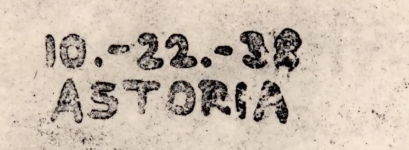
the first photocopy

Xerography - Wikipedia
Xerography (from the Greek roots ξηρός xeros, meaning "dry" and -γραφία -graphia, meaning "writing") is a technique of printing and photocopying. Originally called electrophotography, it was renamed to emphasize that it uses no liquid chemicals, unlike reproduction techniques then in use such as cyanotype.
Chester Carlson - Wikipedia
Chester Floyd Carlson (February 8, 1906 – September 19, 1968) was an American physicist, inventor, and patent attorney born in Seattle, Washington. Carlson invented electrophotography (now xerography, meaning "dry writing"), producing a dry copy in contrast to the wet copies then produced by the Photostat process; it is now used by millions of photocopiers worldwide.
The History of Photocopiers | Innovation Nation
Hamartia Antidote
Elite Member

Mechanical Reaper

Reaper - Wikipedia
A mechanical reaper or reaping machine is a mechanical, semi-automated device that harvests crops. Mechanical reapers and their descendant machines have been an important part of mechanized agriculture and a main feature of agricultural productivity.

Cyrus McCormick - Wikipedia

Cyrus Hall McCormick (February 15, 1809 – May 13, 1884) was an American inventor and businessman who founded the McCormick Harvesting Machine Company, which became part of the International Harvester Company in 1902.[1] Originally from the Blue Ridge Mountains of Virginia, he and many members of the McCormick family became prominent residents of Chicago.
How Cyrus McCormick OUTSMARTED Hand Reapers With His "Impossible" Mechanical Reaper In 1831
Last edited:
Hamartia Antidote
Elite Member

David Bowie - Blue Jean
Lyrics
Blue Jean, I just met me a girl named Blue Jean
Blue Jean, she got a camouflaged face and no money
Remember they always let you down when you need 'em
Oh, Blue Jean, is Heaven any sweeter than Blue Jean?
She got a police bike
She got a turned up nose
Sometimes I feel like (oh, the whole human race)
Jazzin' for Blue Jean (oh, and when my blue jean's blue)
Blue Jean can send me (oh, somebody send me)
Somebody send me (oh, somebody send me)
One day I'm gonna write a poem in a letter
One day I'm gonna get that faculty together
Remember that everybody has to wait in line
Oh, Blue Jean, look out world, oh, you know I've got mine
She got Latin roots
She got everything
Sometimes I feel like (oh, the whole human race)
Jazzin' for Blue Jean (oh, and when my blue jean's blue)
Blue Jean can send me (oh, somebody send me)
Somebody send me (oh, somebody send me)
Sometimes I feel like (oh, the whole human race)
Jazzin' for Blue Jean (oh, and when my blue jean's blue)
Blue Jean can send me (oh, somebody send me)
Somebody send me (oh, somebody send me)
Somebody, somebody (oh, somebody send me)
Somebody send me (oh, somebody send me)

Jeans - Wikipedia
Jeans are a type of trousers made from denim or dungaree cloth. Often the term "jeans" refers to a particular style of trousers, called "blue jeans", with the addition of copper pocket rivets added by Jacob W. Davis in 1871[1] and patented by Davis and Levi Strauss on May 20, 1873. Prior to the patent, the term "blue jeans" had been long in use for various items of workwear (including trousers, overalls, and coats), constructed from a heavy blue-colored denim fabric.

Levi Strauss - Wikipedia
Levi Strauss (born February 26, 1829 – September 26, 1902) was a German-born American businessman who founded the first company to manufacture blue jeans. His firm of Levi Strauss & Co. (Levi's) began in 1853 in San Francisco, California
Iran
China
South Africa
Brazil
Last edited:
Hamartia Antidote
Elite Member


Barcode - Wikipedia
A barcode or bar code is a method of representing data in a visual, machine-readable symbolic form. Initially, barcodes represented data by varying the widths, spacings and sizes of parallel lines. These barcodes, commonly referred to as linear or one-dimensional (1D), can be scanned by optical scanners known as barcode readers. Later, two-dimensional (2D) variants were developed, using rectangles, dots, hexagons and other patterns, called matrix codes or 2D barcodes. Despite being often included as barcodes, these do not use bars as linear barcodes do. These can be read using purpose-built 2D optical scanners.
The barcode was invented by Norman Joseph Woodland and Bernard Silver and patented in the US in 1952.[1] The invention was based on Morse code[2] that was extended to thin and thick bars. However, it took over twenty years before this invention became commercially successful.
Universal Product Code - Wikipedia
The Universal Product Code (UPC or UPC code) is a barcode symbology that is used worldwide for tracking trade items in stores. The chosen symbology has bars (or spaces) of exactly 1, 2, 3, or 4 units wide each; each decimal digit to be encoded consists of two bars and two spaces chosen to have a total width of 7 units, in both an "even" and an "odd" parity form, which enables being scanned in either direction. Special "guard patterns" (3 or 5 units wide, not encoding a digit) are intermixed to help decoding.
In 1973, a group of trade associations from the grocery industry formed the Uniform Product Code Council (UPCC) which, with the help of consultants Larry Russell and Tom Wilson of McKinsey & Company, defined the numerical format that formed the basis of the Uniform Product Code.[6] Technology firms including Charegon, IBM, Litton-Zellweger, Pitney Bowes-Alpex, Plessey-Anker, RCA, Scanner Inc., Singer, and Dymo Industries/Data General, put forward alternative proposals for symbol representations to the council.[citation needed]
The Symbol Selection Committee finally chose to implement the IBM proposal designed by George J. Laurer in the North Carolina Research Triangle Park but with a slight modification to the font in the human readable area
Grocery Store in Pakistan
Grocery Tour April 2025 | Imtiaz Lahore POV 
Grocery Store in South Africa
Checkers Quick Grocery Run
 South-Africa
Grocery Store in Brazil
Brazilian Supermarkets Surprised Me.. [4K]
Grocery Store in the south Pacific Island of Fiji
ফিজি (FIJI) Supermarket
Also note another ubiquitous American invention seen in the above videos

Shopping cart - Wikipedia
One of the first shopping carts was introduced on June 4, 1937, the invention of Sylvan Goldman, owner of the Humpty Dumpty supermarket chain in Oklahoma. One night, in 1936, Goldman sat in his office wondering how customers might move more groceries.[3] He found a wooden folding chair and put a basket on the seat and wheels on the legs. Goldman and one of his employees, a mechanic named Fred Young, began tinkering. Their first shopping cart was a metal frame that held two wire baskets.

Sylvan Goldman - Wikipedia
Sylvan Nathan Goldman (November 15, 1898 – November 25, 1984) was an American businessman and inventor of the shopping cart.
Last edited:
Hamartia Antidote
Elite Member
Hamartia Antidote
Elite Member

(powered refrigeration)

Refrigeration - Wikipedia
....
modern refrigeration is a self-sustaining heat exchanger process by which thermal energy is transferred against the temperature gradient via the use of a heat-transfer working fluid (also known as refrigerant), which absorbs heat from a low-temperature medium and releases it to another higher-temperature medium, typically involving active phase change via a compressor and aided by a radiator system.

Jacob Perkins
In 1820, Michael Faraday liquefied ammonia and other gases by using high pressures and low temperatures, and in 1834, Jacob Perkins built the first working vapor-compression refrigeration system in the world. It was a closed-cycle that could operate continuously, as he described in his patent, "I am enabled to use volatile fluids for the purpose of producing the cooling or freezing of fluids, and yet at the same time constantly condensing such volatile fluids, and bringing them again into operation without waste." His prototype system worked although it did not succeed commercially
US Frigidaire B-9 from 1924 - early electric wooden refrigerator, working!
Refrigerators have now become ubiquitous around the world
Pakistani Refrigerator company
Dawlance Refrigerators | Bigger Crisper | Energy Saving
South African refrigerator company
DFF590 - New Defy Premium Multi-Door
German refrigerator company
Bosch and stress – for more freshness and less food waste | Bosch Home Suisse
US refrigerator company
Why Sub-Zero Refrigeration?
Last edited:


The votes are in. For the past three months, readers of The Wall Street Journal have ranked 60 U.S. inventionson their total impact on society. Those inventions ranged from the cotton gin to bluejeans, bypass surgery to the dishwasher, and, yes, even Post-it Notes.
Here are the 25 U.S. inventions with the greatest impact, according to those WSJ readers. Let the debate continue.
1
Internet
The digital age began with a stutter in 1969, when an attempt to transmit the word “LOGIN” between UCLA and Stanford University crashed after two letters. That partial “LO” became the first breath of Arpanet, a Cold War project funded by the Defense Department to build a resilient communications network.
It took more than two decades for the internet to transform from a closed military experiment into a universal utility, revolutionizing modern life. Following the rise of commercial web browsers in the 1990s, the internet erased the constraints of geography and became the central nervous system of the global economy. It enabled trillion-dollar industries, upended retail and media, and democratized access to information on a scale unseen since the Gutenberg press.
Today, the internet is the indispensable infrastructure of the 21st century, facilitating nearly every economic and social interaction.
The internet transmits more data in a single second than it did in an entire month in the early 1990s.
2 Lightbulb
Thomas Edison’s incandescent bulb emerged as the victor of a crowded race. His winning edge was the carbonized bamboo filament he pioneered shortly after his initial 1879 breakthrough, providing the longevity needed to turn a novelty into a utility. This invention fundamentally restructured the human relationship with time and severed our dependency on the sun.
The 1882 installation of the first central power station on New York’s Pearl Street signaled the end of the gas-lamp era, which had plagued cities with soot and fire hazards. By extending the productive hours of the factory floor and the laboratory, the bulb accelerated the pace of the Industrial Revolution. It transformed the American night from a period of dormant isolation into a commercial and social frontier, paving the way for the 24-hour city.
Edison and his team tested more than 6,000 vegetable fibers over 18 months before settling on bamboo filament. Copy link to Lightbulb.
3
Integrated Circuit
By the late 1950s, the future of computing was stymied by size. It was physically impossible to solder millions of connections by hand. The breakthrough arrived in 1958 when Jack Kilby of Texas Instruments built the first integrated circuit. Months later, Robert Noyce of Fairchild Semiconductor independently developed a more-scalable silicon version.
The result collapsed entire rooms of electronics into microchips, driving exponential gains in computing power. Those gains enabled the navigational precision of the Apollo missions, automated the factory floor and migrated computing from government labs to car dashboards and the pockets of billions. It also turned silicon into a strategic resource and sparked the modern semiconductor industry.
Modern chips can contain more than 50 billion transistors; early integrated circuits contained just a handful of components.Copy link to Integrated Circuit.
4
Personal Computer
Before the mid-1970s, computers were hulking mainframes housed in climate-controlled rooms, accessible mainly to governments and large corporations. The shift toward the personal began with the Altair 8800, a mail-order kit that lacked a screen or keyboard but proved a market existed for home hobbyists. Soon after, companies like Apple and International Business Machines offered fully assembled, ready-to-use machines.
The desktop revolution accelerated the Information Age by placing analytical power in individuals’ hands. Applications like the electronic spreadsheet and the word processor turned the PC from a novelty into an indispensable business engine, helping to birth the modern software industry. Beyond the corporate ledger, the PC ignited a digital gaming market and laid the foundation for the internet.
Time magazine named the personal computer its "Machine of the Year" in 1982.
5
Airplane
Human flight went from myth to reality on a cold morning in 1903, when two self-taught bicycle mechanics took a 12-second, 120-foot flight. While contemporaries struggled with airborne instability, Wilbur and Orville Wright used a system of pulleys to warp their aircraft's fabric wings, allowing a pilot to bank and turn with greater ease.
The airplane rewrote the rules of global commerce. Aviation fundamentally compressed space and time, turning grueling ocean and train voyages into routine daytime flights. It catalyzed the modern mass-tourism industry, revolutionized the global supply chain and forged an interconnected global economy.
Today, the legacy of the Wright brothers’ invention is a world without borders and a remarkable safety record.
After the Wright brothers' historic flight in 1903, it took less than 11 years for the first scheduled commercial airline flight.
6
AC/DC Power
The dawn of the electrical age was constrained by a logistical bottleneck: Thomas Edison’s direct current systems could only transmit power about a mile before the voltage degraded. The solution emerged in the late 1880s through the bitter "War of the Currents," when George Westinghouse and Nikola Tesla championed alternating current. Unlike DC, alternating current could travel vast distances before being safely lowered for household use.
AC’s victory served as a catalyst for global industrialization. By decoupling power generation from power consumption, AC meant that massive factories no longer had to be anchored to rushing rivers or local coal plants. Electricity went from an expensive, highly localized urban luxury to a ubiquitous global utility, driving the Second Industrial Revolution and making the modern city possible.
While power grids run on AC, most modern electronics convert it to DC internally.Copy link to AC/DC Power.
7
Telephone
Alexander Graham Bell’s 1876 patent for the telephone beat rival Elisha Gray by hours, sparking a contentious legal battle. While the telegraph had already achieved near-instant communication, it was limited to the sterile clicks of Morse code. Bell’s device was the first to successfully convert the human voice into an undulating electrical current—introducing intimacy, emotion and increased immediacy into long-distance communications.
The country’s expanding copper network fundamentally rewired the economy and the American home. For business, it eliminated the need for geographic proximity, allowing corporations to disperse their operations and enabling the first skyscrapers to function efficiently. For society, the telephone collapsed a massive continent into a single, interconnected neighborhood.
Demand for switchboard operators brought hundreds of thousands of women into corporate offices, reshaping the clerical workforce.
8
Smartphone
For decades, the consumer electronics industry operated in distinct silos: phones for talking, cameras for capturing and computers for processing. The introduction of the modern smartphone–crystallized by the 2007 debut of the iPhone–collapsed multiple devices into a single pocket-sized tool. By combining an intuitive multitouch interface with always-on internet connectivity, the smartphone became a universal remote control for modern life.
The smartphone birthed the multitrillion-dollar app economy, enabling new algorithmic business models like ride-hailing, food delivery and frictionless mobile commerce. On a global scale, it allowed billions of people in developing nations to bypass expensive desktop grids and landline infrastructure, granting a new demographic instant access to mobile banking, digital markets and the collective knowledge of the internet.
U.S. users average more than five hours a day on their smartphones.
9
Refrigeration
For most of human history, the diet was a prisoner of the seasons and dictated by whatever could be smoked, pickled, salted or buried in a dark cellar. The escape from that lifestyle began in 1834 with Jacob Perkins’s patent for a vapor-compression cycle, though it took further refinements to create practical refrigeration.
Mastering refrigerated transport and storage decoupled society from its local geography, allowing the cattle ranges of the American West to feed the East Coast via insulated, ice-cooled railcars. In the 1930s, Freon made the domestic refrigerator a staple of the American middle-class kitchen.
Beyond the dinner table, mechanical cooling became the backbone of modern medicine, providing the thermal stability required to produce, store and transport temperature-sensitive vaccines and biological agents.
Less than 1 in 5 American households had a mechanical refrigerator in 1930; by 1950, roughly 4 in 5 did.
10 Nuclear Power
After the world witnessed the destructive power of the atomic bomb, the U.S. launched initiatives to harness atomic energy for commercial projects. The successful launch of the Shippingport Atomic Power Station in 1957 proved that nuclear energy could be safely harnessed to generate electricity for civilian grids.
U.S. interest in commercial nuclear power weakened over time because of the industry’s immense capital costs, labyrinthine regulations, high-profile reactor accidents and public-safety concerns. Instead, the country’s nuclear ambitions have primarily focused on defense and nonproliferation efforts.
Today, commercial nuclear power is being re-examined, driven in part by the energy demands of artificial intelligence and the push for climate-neutral power.
A uranium-fuel pellet the size of a fingertip packs as much energy as roughly one ton of coal or 149 gallons of oil.Copy link to Nuclear Power.
11
Polio Vaccine
Polio was the most feared disease in America by the early 1950s, paralyzing thousands of children annually and frequently closing public places to halt its spread. The highly contagious virus reached a peak of U.S. cases in 1952.
The breakthrough arrived in 1955 when Dr. Jonas Salk introduced a safe and effective injected vaccine, funded by grassroots donations to the March of Dimes, then officially known as the National Foundation for Infantile Paralysis. Shortly after, Albert Sabin developed a cheaper oral version—delivered on a sugar cube—that became key to global immunization. By 1979, the virus was eliminated in the U.S., proving that modern medicine could conquer a nationwide epidemic. Recent declines in vaccination rates have led to rare re-emergences of the virus.
Salk didn’t patent his discovery. His decision likely cost him billions of dollars but accelerated the immunization effort.
12
Model T
Before 1908, the automobile was a fragile, custom-built luxury largely restricted to paved city streets and the ultrawealthy. Henry Ford shifted this paradigm by designing the Model T as a rugged, universal utility vehicle for the everyday American.
The vehicle incorporated several practical innovations. It used a strong, lightweight vanadium steel alloy to improve durability and featured a high ground clearance engineered to navigate dirt roads. Its use of interchangeable parts reduced the need for specialized mechanics and helped enable the moving assembly line.
The result was an affordable, reliable vehicle that put the world on wheels. By the early 1920s, the Model T commanded 50% of the global auto market and fundamentally reshaped the geography and economy of the 20th century.
With the Model T, Ford standardized placing the steering wheel on the left side of the cabin, dictating the design of American roadways.
13 Global Positioning System
Designed by the Pentagon in the 1970s to support military operations, the Global Positioning System has evolved into an indispensable utility.
The technology remained locked behind Cold War secrecy until 1983, when the tragic downing of an off-course Korean Air Lines flight prompted President Reagan to open the satellite network for civilian aviation. In 2000, the U.S. took the final step by turning off “Selective Availability,” the intentional degradation of public signals—giving commercial users the accuracy previously reserved for the military.
That policy shift unleashed a silent engine of the global economy. Today, GPS serves as a foundational macroeconomic pillar: It manages international supply chains, synchronizes global cellular networks, guides autonomous agricultural machinery and timestamps high-frequency trades on Wall Street.
A government-sponsored study in 2019 estimated that the GPS network had generated $1.4 trillion in U.S. economic benefits.
14
Television
Electronic television emerged from a 1927 breakthrough by Philo Farnsworth, but its true impact arrived during the postwar boom. By 1955, half of U.S. households owned a set, usurping radio as the nation’s primary entertainment hub.
The medium fundamentally rewired society by creating shared national experiences. Whether mourning the tragedy of President Kennedy’s assassination, marveling at the Apollo 11 moon landing or tuning in to a Super Bowl, tens of millions of Americans suddenly experienced news, history and culture simultaneously.
That synchronized attention created a commercial juggernaut. By creating a mass market, television became the ultimate engine of the modern consumer economy. It allowed corporations to build national brands overnight, promoting everything from automobiles to packaged goods.
U.S. TV ad revenue jumped from $58 million in 1949 to over $1 billion by 1955, and could approach $100 billion by 2027.
15 Artificial Intelligence
Artificial intelligence began as a theoretical pursuit in the 1950s to automate human thought, but it took 21st-century computing power to fuel its recent explosion. Aided by massive datasets, machines evolved from simply following rigid instructions to recognizing patterns and making autonomous decisions.
These advances shifted the computer from a passive calculator to an active collaborator. Today, AI is the invisible brain behind modern commerce. It automates high-frequency trades on Wall Street, optimizes global supply chains and powers the algorithms behind digital advertising.
Yet, AI’s power is as disruptive as it is promising. The automation of complex decision-making promises a seismic boom in global productivity and understanding, but it also threatens a historic displacement of labor and introduces risks to economic and national security.
AI could contribute up to $15.7 trillion to the global economy by 2030, according to PwC.
16
Fiber Optics
In 1970, Corning Glass Works developed hair-thin silica strands capable of carrying light for miles with dramatically reduced signal loss. The breakthrough allowed data to travel via light pulses rather than electrical signals, enabling higher speeds and capacity than traditional copper wiring.
Today, the internet’s global architecture is essentially a map of buried glass that has slashed the cost of long-distance communication and transformed data into a global commodity.
A single hair-thin fiber strand can transmit the entire U.S. Library of Congress in less than one second.
17
Auto Assembly Line
In 1913, Henry Ford reorganized his Detroit factory around a moving assembly line, slashing the Model T’s assembly time to 93 minutes from 12.5 hours. This efficiency collapsed the vehicle’s price to $260 from $850 and transformed the automobile from a rich man’s toy into an attainable purchase for the average worker.
Ford also paired mass production with a landmark $5-a-day wage. That strategy was imitated across industries, making complex goods affordable and helping establish the modern middle class.
Ford was producing a new Model T every 10 seconds by 1925.
18 Email
Email’s invention led to the collapse of the interoffice memo and the fax machine, freeing workers from the need to communicate in real time. By allowing colleagues to send and receive information on their own schedules, it restructured the workday and made the physical location of an office negotiable.
The technology traces back to 1971, when Ray Tomlinson chose the @ symbol to separate a user from the host—a technical routing fix that created a universal digital identity.
The average office worker spends roughly 28% of the workweek reading and answering email, according to a 2012 study.
19
Air Conditioning
Before Willis Carrier’s 1902 breakthrough in mechanical cooling, the American South and West were economically constrained by summer heat, which capped factory output and office productivity. Air conditioning removed climate as a constraint on settlement; Phoenix, Houston and Miami owe much of their current scale because of it.
The invention enabled a migration that has rewired American politics, pulling congressional seats south and west for more than half a century.
The U.S. uses more energy for air conditioning than the entire continent of Africa uses for all purposes.
20
Interchangeable Parts
Eli Whitney's 1801 musket demonstration before Congress was partly theater because the parts weren't fully interchangeable as advertised. However, the concept took root in U.S. armories, ensuring a broken rifle required only a spare part rather than a skilled gunsmith.
That logic propagated from muskets to sewing machines and farm equipment, eroding craft economics and laying the groundwork for the modern assembly line.
British observers touring U.S. armories in 1854 were so struck by the uniformity of American manufacturing they coined a name for it: "the American system."
21
Lasers
In 1960, Theodore Maiman demonstrated the first working laser using a synthetic ruby rod and a photographer’s flash lamp. According to Maiman, the laser was initially dismissed as “a solution looking for a problem.”
The device has since become the backbone of hundreds of applications, including bar-code scanners and DVD players, and is essential for high-speed telecommunications, robotic manufacturing and precision surgery.
Laser eye surgery has been performed on more than 40 million patients worldwide since FDA approval in 1999.
22 Chemotherapy
The path to chemotherapy began with a 1943 wartime disaster in Bari, Italy, where sailors exposed to mustard gas showed severely depleted white blood cell counts. Physicians recognized this cell-killing property as a potential weapon against malignant growth. The first infusions of nitrogen mustard derivatives in the 1940s produced partial remissions in lymphoma patients.
Chemotherapy built the modern oncology industry, established the randomized clinical trial as medicine's evidentiary standard and helped transform cancer into a managed condition for millions.
Global cancer drug sales topped $200 billion in 2022.
23
Magnetic Resonance Imaging
The physics of nuclear magnetic resonance had been a laboratory tool since the 1940s, but it took Raymond Damadian’s 1977 breakthrough to produce the first human scan. The original 1970s machine took nearly five hours to produce one blurry cross-section of a human torso.
MRI did what X-rays couldn't do: See soft tissue without using ionizing radiation. MRI displaced exploratory surgery as the first diagnostic step for neurological injury, joint damage and tumor staging. It also spawned an industry of specialized diagnostic centers.
A single MRI scanner costs between $1 million and $3 million; the U.S. has about 10,000.
24 Commercial Steamboat
Before Robert Fulton’s “Clermont” proved the viability of steam power in 1807, American rivers were essentially one-way roads. Goods floated down, but nothing came back up reliably.
The steamboat reversed this flow, reshaping the antebellum economy decades before the railroad. It turned the Mississippi basin into a global grain supply chain, integrated the American interior with the global market and concentrated wealth in river hubs like New Orleans and St. Louis.
The number of steamboats on Western U.S. rivers grew to 740 by 1850 from 17 in 1817.
25
Birth Control Pill
The FDA approved the pill for contraception in 1960, although women had access to it for years through a regulatory workaround. Reliable birth control allowed women to plan careers with a predictability long afforded to men. Enrollment of women in law schools, medical schools and M.B.A. programs surged through the 1960s and 1970s.
Economists have linked the pill to the narrowing of the gender pay gap and the dramatic rise of women in the labor force.
More than 100 million women worldwide now use oral contraceptives daily.
Bihari innovators and scientists have significantly impacted US industries, particularly in the US West. Notable figures include mathematical prodigy Vashishtha Narayan Singh (from Bhojpur), who worked at NASA and Columbia University on space theory, and Prof. Ratneshwar Lal (from Darbhanga), who has led major research in US nanotechnology. [1, 2]


These inventors have significantly advanced multiple fields across the American technology, aerospace, and medical sectors:

- Space and Aerospace: Trailblazing mathematicians like Dr. Vashishtha Narayan Singh contributed to the foundations of aerospace modeling, having worked at NASA in the US on the Peace of Space Theory and trajectory calculations during the Apollo era. [1]
- Nanotechnology and Medicine: Researchers like Prof. Ratneshwar Lal (based in California) have driven US innovation in nanoscience, developing nanoscale tools used in biomedical applications and the early detection of diseases.
- Telecommunications & Software: Countless engineers from Bihar working in Silicon Valley have patented foundational cloud-computing infrastructure, data analytics models, and advanced wireless network protocols.
- Sustainable Tech: Entrepreneurs rooted in Bihar's rural-tech ecosystem (such as those working with organizations like IIT Patna) are actively commercializing sustainable materials, like eco-friendly packaging and green energy, which are exported and adopted in Western green-tech markets. [1]
Hamartia Antidote
Elite Member


Air conditioning - Wikipedia
Air conditioners, which typically use vapor-compression refrigeration, range in size from small units used in vehicles or single rooms to massive units that can cool large buildings


Electricity made the development of effective units possible. In 1901, American inventor Willis H. Carrier built what is considered the first modern electrical air conditioning unit. In 1902, he installed his first air-conditioning system in the Sackett-Wilhelms Lithographing & Publishing Company in Brooklyn, New York. He patented "air conditioning" in 1906, and by 1914, the first domestic (or "residential") air conditioner was installed. His invention controlled both the temperature and humidity, which helped maintain consistent paper dimensions and ink alignment at the printing plant.
Willis Carrier: Air Conditioning | Heroes of Progress
Pakistani Air conditioner company
Dawlance Prima Line | Air Conditioner | Pursense Technology | Designed For Better Lifestyle
South African Air conditioner company
One Unit. Year-Round Comfort
Brazilian Air conditioner company
Ar condicionado Split Cassete 1 Via One Air Elgin
US Carrier: Commercial Heating, Ventilation, and Air Conditioning ( HVAC) all-in-one units
Rooftop Units Overview
Last edited:
Users who are viewing this thread
Total: 1 (members: 0, guests: 1)
Pakistan Defence Latest


Country Watch Latest
-
-

-
 France offers flexibility for India to integrate indigenous weapons with Rafale (6 Viewers)
- Latest: Pakistanithinktank
-

-
Latest Posts
-
-

-

-
 Makkah Defence Alliance: Turkey, Saudi Arabia, and Pakistan, news & updates (36 Viewers)
- Latest: gamaji
-