hyperman
INT'L MOD

This seems very much like the
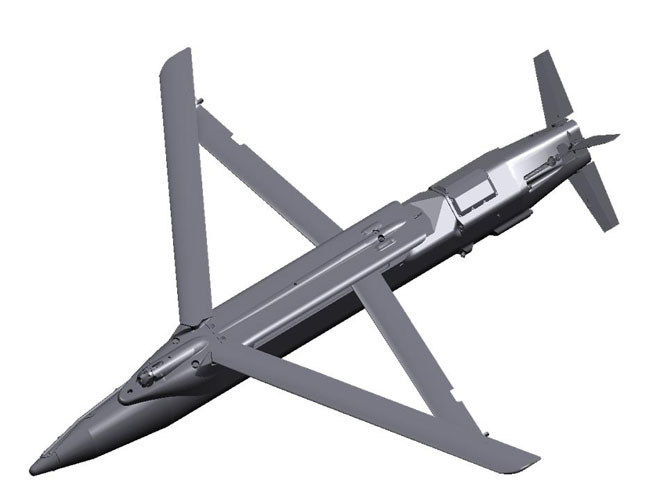
The Ground Launched Small Diameter Bomb (GLSDB) which only went into production in 2023, its amazing that they have managed to build an equivalent in only a few short years.
Follow along with the video below to see how to install our site as a web app on your home screen.
Note: This feature may not be available in some browsers.

So I was looking thought some Defense Expo videos recently, and there is some ridiculous competition coming. It seems everyone is teching up. The only way to stay competitive in this environment is to climb the tech tree to keep a moat on being able to build things others can't yet, as well as completely localize the subsystems to be from the domestic production. More money needs to be poured into research and development as well as aggressively export to build a steady diversified revenue stream.
I don't think there is any other way to survive, if you are building armored vehicles without building the engine and transmission and the turret and gun itself domestically, these new companies are going to take your business. Seeing companies in Saudi and UAE that didn't even exist 10 years ago, get investments from the Govts, building their own vehicles by poaching South African engineers or European or western engineers, get them to design vehicles and then buying subsystems from various places, has allowed these companies to catch up quite quickly.
Defense industry is going to be hyper competitive in the coming years. Unless people are building the entire solution system inhouse, its going to be difficult to offer a product thats unique able to stand out amongst the competition.
Right now I only see BMC build their powerpacks. things like that will be essential going forward. The days of buying steel from Finland and other systems from Cockerill for the turret of vehicles and the deisel engine from Scania and then putting that all toether to build your vehicle is not going to be competitive in the long terms, b/c these new companies from Saudi and UAE and other places can do the same thing, there is nothing unique. Turkish companies are going to have to start sourcing everything in their vehicles locally(and even inhouse if possible) to stand out and have advantage against a company that is sourcing subsystems from elsewhere.
A country that don't have industry can only design, they should make it designburea.
Thats the thing tho, the Emiratis are running companies, but the employees are all White South Afrikaaners and Europeans and American engineers, ex: Denel, BAE, Lockheed, etc etc. As well as poaching Russian/Ukrainian engineers.
It not like they magically grew engineering capacity, they are buying Engineering Mercenaries essentially with the oil money.
There was a news story a few years ago of South Africans Afrikaaner engineers being charged with trying to transfer tech illegally to the UAE when they got hired by them and other drama.
Obviously some elements they will have a hard time replicating, but stuff on the lower level, they will catch up. And frankly they are caught up atleast in land systems with regards to building armored vehicles.
They still don't have a robust supply chain or ability to build subcomponents(engine, transmission, electronics and software). but they are able to build platforms by buying off the shelf.
To remain competitive, there is a need to strengthen local supply chains and build even the smallest things locally and preferably inhouse. As well as climb the tech tree to higher level stuff, b/c soon the advantages are going to erode.
They are now able to essentially build a 2007-2010 level TB1/TB2 drone, with off the shelf parts(engine, avionics, wescam cameras, etc etc). Also able to build armored vehicles like the Wahash with foreign engines and other subcomponents.
The Area Turkey has the advantage in is the capability to build the engines and the electronics from Aselsan and the weapons integration from Rocketsan and BMC Power building engines and transmissions. These elements needs to be further indigenized at the nuts on bolts level, so that the engines are produced domestically(and Turkey is moving towards that) and even the circuit board and chipsets if possible, to be built locally with local subcontractors.
 . Because off that they are concentrating to landvehicle.The question is who is going to buy weapons from UAE? They are wasting money, they want to act like the zionists but the differences is amreecans are backing them. Buying weapons is buying allience who are they going to protect?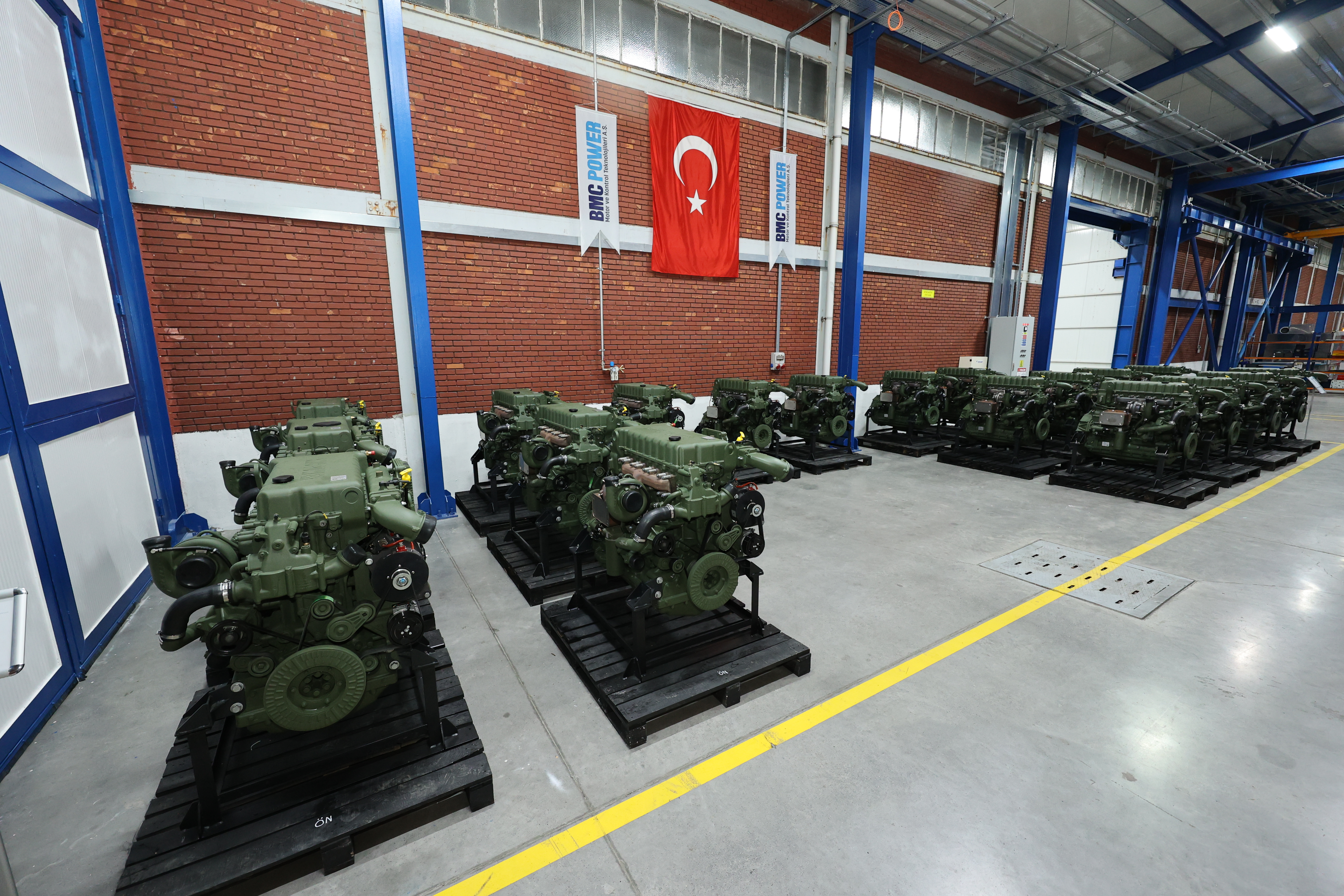
 www.defenceturkey.com
Turkish and Emirati companies are essentially on the same path, except that Turkish companies have taken a few more steps ahead.Thats the thing tho, the Emiratis are running companies, but the employees are all White South Afrikaaners and Europeans and American engineers, ex: Denel, BAE, Lockheed, etc etc. As well as poaching Russian/Ukrainian engineers.
It not like they magically grew engineering capacity, they are buying Engineering Mercenaries essentially with the oil money.
There was a news story a few years ago of South Africans Afrikaaner engineers being charged with trying to transfer tech illegally to the UAE when they got hired by them and other drama.
Obviously some elements they will have a hard time replicating, but stuff on the lower level, they will catch up. And frankly they are caught up atleast in land systems with regards to building armored vehicles.
They still don't have a robust supply chain or ability to build subcomponents(engine, transmission, electronics and software). but they are able to build platforms by buying off the shelf.
To remain competitive, there is a need to strengthen local supply chains and build even the smallest things locally and preferably inhouse. As well as climb the tech tree to higher level stuff, b/c soon the advantages are going to erode.
They are now able to essentially build a 2007-2010 level TB1/TB2 drone, with off the shelf parts(engine, avionics, wescam cameras, etc etc). Also able to build armored vehicles like the Wahash with foreign engines and other subcomponents.
The Area Turkey has the advantage in is the capability to build the engines and the electronics from Aselsan and the weapons integration from Rocketsan and BMC Power building engines and transmissions. These elements needs to be further indigenized at the nuts on bolts level, so that the engines are produced domestically(and Turkey is moving towards that) and even the circuit board and chipsets if possible, to be built locally with local subcontractors.
Turkish and Emirati companies are essentially on the same path, except that Turkish companies have taken a few more steps ahead.
Both of them have Dependence on imported core technologies. Turkey still relies on imports for core components such as avionics systems and propulsion systems. For example, the Akinci heavy-duty drone depends on the AI-450C engine from Ukraine, and the TF-X "Khan" fighter jet currently uses the F110-GE-129 engine from General Electric Company of the United States.
There is a risk that these core components could be cut off from supply at any time.
Aselsan is an electronic component integrator, and it just has stronger capabilities compared to other Islamic countries.Which Avionics dependency?
Avionics are the one area where Turkey is largely self sufficient. Aselsan has been very very productive on that front.
Its the engines that are the so called "Achilles heel", but Turkey is working on this matter. There should be large levels of self sufficiency on most platforms within 10 years if projected timetables are met.
Update your information, you are 4-5 years out of date.- For the TB-2 unmanned aerial vehicle (UAV), its electro-optical turret is the MX15HD imported from WESCAM Company in Canada, and the infrared components are products of FLIR Company in the United States.
In addition, since Turkey does not have the capability to manufacture military aviation-grade electronic components, most of the various integrated circuits in the UAV system are secretly imported from Europe, the United States, or China.
In 2024, Turkey imported products worth 38.115 billion US dollars from China, among which electronic products and electronic components accounted for approximately 30%.
Aselsan is an integrator, it has a relatively high degree of integration.
This is just one example, and there are many things that outsiders are not aware of even if Turkish people themselves.
Turkey has made some progress in its independent research and development capabilities of military electronic components in recent years. However, due to limitations in technological accumulation, the integrity of the industrial chain, and the international political and economic environment, there are still certain limitations in its degree of autonomy.Update your information, you are 4-5 years out of date.
There is no wescam in Turkey anymore. Aselsan produces better and cheaper electro-optical cameras than wescam. We use aselsan produced cameras in the ucavs we export.
Aselsan can produce radar and all other avionics. We are upgrading all the F-16s we have with the Block 70 equivalent Özgür program. It will even be better than block 70 in some areas.
Turkey has no more problems in avionics. We are not dependent on foreign sources for radar, interceptors and communication systems.
Your information is outdated. I think you're copying from artificial intelligence. Artificial intelligence should be banned.Turkey has made some progress in its independent research and development capabilities of military electronic components in recent years. However, due to limitations in technological accumulation, the integrity of the industrial chain, and the international political and economic environment, there are still certain limitations in its degree of autonomy.
- UAV Electronic Systems:
The electro-optical targeting systems (EO/IR) carried by UAVs such as Bayraktar TB2 and Akıncı have been partially localized (such as the CATS system of ASELSAN). However, thermal imaging sensors still need to be imported from China (such as Guide Infrared) or France.
- Communication Data Link: Turkey has developed a local encrypted communication module, but radio frequency front-end chips still need to be imported, usually from china.
- Electronic Equipment of Air Defense Systems:
The fire control radar and command and control system of the HISAR air defense system are independently developed by ASELSAN. However, some high-frequency microwave devices (such as T/R components) rely on European and American technologies.
Overall, Turkish companies and Emirati companies follow the same path. They both aim to become system integrators. It's just that Turkish companies started their development earlier and have a higher degree of integration. Turkey is the best in muslim countries until now.
But KSA and UAE catch very fast.
The key to manufacturing engines or basic high-end electronic components lies in a country's scientific research capabilities. The foundation for building scientific research capabilities is its talent system, and the soil for the talent system is the education system, especially science and engineering universities.


