
Foinikas
Elite Member

You've told us 50,000 times.Turkiye developed even 2 different Aircraft in 1930-40s .... but pro-American Politics blocked Turkish aviation Industry
On the contrary!Greece never had a good Defense Industry
Historical review
The effort to develop Greek modern weapons and weapon systems had already begun since the interwar period. Some interesting weapon systems were the following:
– Assault rifle and GP10 submachine gun of CHROPEI.
– KEA HELIDON training-surveillance aircraft of EAF (Aircraft Factory), later KEA. One aircraft was built, which was used by the Hellenic Navy.
– AEKKEA-RAAB R27 fighter aircraft
– AEKKEA-RAAB R29 fighter aircraft. A number of these were built for the Spanish government forces during the Spanish Civil War.
Bomber/Transport aircraft AEKKEA-RAAB R54.
More recent period
A pivotal point in the efforts of the Greek Defense Industry was the development of the ARTEMIS 30 A/A system, which proved to be quite ambitious for its time - and given that the newly established EBO had no previous experience in the development and management of a complex system. This may have resulted in suspicion on the part of the military and political leadership towards any new effort to develop new weapons systems by the Greek defense industry in the following years.
LEONIDAS S30
In the 1990s, ELVO developed an anti-aircraft version of the LEONIDAS TOMB -which was already in production in Greece, 500 units, on behalf of the Greek army- to cover motorized formations. A system that today would be very useful in dealing with UAVs and missiles, as the brief service of the corresponding Gepard in the war in Ukraine has shown.
The LEONIDAS S30 system was based on the WILDCAT II self-propelled A/A system developed by KRAUSS MAFFEI.
Although there was initially interest from both the Greek and Cypriot sides in such a system, the idea never materialized into a purchase and integration of the system into the Greek and Cypriot arsenals. After a decade and while the needs for the entry into Greek service of a self-propelled V-SHORADS were increasing, it was decided to purchase 54 ASRAD systems with a STN ATLAS turret on a HUMMER vehicle, a system with the same capabilities but which does not share the same armor and agility nor does it provide the same comprehensive A/A protection of the combination of A/A guns and A/A missiles. Also, the possibility of commercializing a Greek system on the international market was lost, with what this could mean for the company itself but also for the other Greek subcontractors, -e.g. EBO with its gun, in terms of profits and recognition.
Technical Characteristics
The LEONIDAS S30 vessel would have 99% common spare parts with the APC version while providing the same protection. It was made of welded sheets of homogeneous armor steel, providing protection to the crew from medium and small caliber armor-piercing ammunition and artillery fragments.
The turret housing the weapon system, radar and target locking system would be adapted to the Leonidas APC,which would provide agility and protection to the system's crew, due to the vehicle's armor and low silhouette. The 35mm guns of the WILDCAT would be replaced by the 30mm MAUSER guns of EBO. The system's ability to add STINGER air-to-air missiles, either in single or double launchers mounted on the outer side of each gun or in a quadruple launcher in place of the gun itself, was also of interest.
ALEXANDER IFV
The development of the ALEXANDROS IFV began at the end of the 1980s with the agreement between ELVO and the then STEYR DAIMLER PUCH for the development of a new IFV that would cover the future needs of the Austrian and Greek armies. Other Greek companies would participate as subcontractors in the new IFV,incorporating their products into the final product. The entire philosophy of the vehicle and the specifications were based to a very large extent on Greek needs, meaning it would be the first vehicle of its kind to be manufactured according to the needs of the Greek army.
When the entire program in Greece faltered, the Austrian company requested permission from the Greek side to also include the Spanish SANTA in the development program. Eventually, the vehicle was purchased by the Spanish and Austrian armies and promoted on the international market as ASCOD.
Once again, Greece missed the opportunity to develop a purely Greek product with the Spanish army as its initial, very likely customer, which ultimately purchased the vehicle.
Technical Specifications
The hull of ALEXANDROS was constructed of welded sheets of hardened armor steel, providing protection to the crew and personnel carried against medium and small caliber armor-piercing ammunition and artillery fragments. The two-man turret would have a dual-feed 30 mm main gun (EBO Mauser MK 30 F) and a 7.62 mm secondary gun (MG-3).
KENTAVROS IFV
In 1998, the development of a new IFV began by ELVO, in an entirely Greek effort to develop a main weapon system based on the experience gained by the company with the production of LEONIDAS and its involvement in the development of ALEXANDROS. Two years later, the prototype was a reality. Despite the initial indifference of both the Greek military and the political leadership, both eventually contributed to further development. The former with proposals and technical details that would bring the vehicle closer to its needs and the latter with the initial decision to purchase the vehicle and allocate funds for the final configuration phase.
And while everyone believed that finally, after almost 20 years of the Greek defense industry being devalued by the political leadership, we would be faced with the first Greek main weapons system that would go from the design phase to the production line, unfortunately they were proven wrong. Once again, the program was locked away forever in the drawer with the unclaimed.
Technical Specifications
The hull of the KENTAURUS was constructed of welded sheets of hardened armor steel, providing protection to the crew and personnel carried against medium and small caliber armor-piercing ammunition, artillery fragments and mines. The one-man KUKA E8 turret would have a dual-feed 30 mm main gun (EBO Mauser MK 30 F) and a 7.62 mm secondary gun (MG-3).
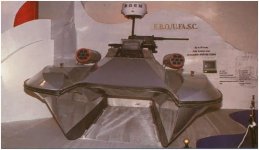
The UFASC II (Ultra Fast Craft) was a concept developed by EBO and presented at the Defendory exhibition in 1994. It was a high-speed, 45-50 knots, catamaran-type vessel with considerable armament. It was capable of carrying two 2.75in rocket pods, a light torpedo between the two hulls, and for self-defense, a heavy 0.50in cannon and a 40mm grenade launcher. One could say that such a weapon system in the hands of experienced special forces personnel would be extremely effective. Small groups equipped with the UFASC, scattered throughout the eastern Aegean, would become the terror of any ship of any size, up to a missile launcher. They would certainly act as a deterrent to any thought by the eastern "allies" for a landing operation on an island in the eastern Aegean, when the small, weak landing craft filled with troops and weapons would first have to pass through the "herds" of the UFASC before reaching the coast
UAV
The idea of developing a Greek UAV or RPV, as the code name for remote-controlled aerial vehicles was, began in Greece in the mid-1970s! The result was the RPV PEGASUS, which was designed by a group of retired PA technicians, while the Hellenic Air Force also joined the production process. PEGASUS was a high-winged aerial vehicle with a cylindrical fuselage that weighed 80-100 kg, had a payload of 20 kg and a speed of 120 km/h.
After twenty years of inactivity and reluctance since the first flight of PEGASUS, in 2000 it was decided to operationally exploit the system by the Hellenic Air Force, which consisted of four aircraft and a control cage. It was decided that the experience gained from the use of the system would be used in the development of a new system, PEGASUS II, with aircraft with improved flight characteristics and integrated stealth features.
The team that developed PEGASUS, when it saw that the program was not progressing at a satisfactory pace and after the involvement of the Hellenic Air Force, founded a company, AEROMICHANIKI, for the development of aircraft. This development resulted in the appearance of the RPV DELTA PHANTOM, which was superior to the PEGASUS. The DELTA PHANTOM had a square fuselage and delta wings, while it was made of synthetic materials, which gave it stealth characteristics. It had a weight of 45 kg, a payload of 25 kg and a speed of 220 km/h.
Another idea was the RPV TELAMON, which was proposed by the Hellenic Air Force and was based on the American-made BQM-74E flying target. The NORTHROP GRUMMAN BQM-74E is powered by a turbojet engine, reaching 515 knots per hour, with a flight altitude of 7 ft to 40,000 ft (from 2.1 m to 12.2 km), and carrying its load to a range of 350 nmi (648.6 km). While in Greece this idea remained on paper, in Israel the BQM-74E was converted into the Delilah cruise missile.
The effort to develop UAVs in Greece began in the mid-1970s. The Greek demon was once again ahead of developments at a global level and instead of being justified, the result was that the Greek people paid several million euros in 2002 for the purchase of the SPERWER from the French SAGEM, when the originality became a necessity, but without any Greek system in development. Where would Greek know-how in this field have reached if we had invested in PEGASUS, DELTA PHANTOM and TELAMON more than twenty years ago?
ARIS
In the early 1990s, the company ADVANCED TECHNOLOGY APPLICATIONS SA designed an airfield air defense system with the aim of utilizing the huge stock of SIDEWINDER air defense missiles of the Hellenic Air Force. The system would have consisted of a quadruple air defense missile launcher equipped with an electro-optical system and warning radar, but the plans remained on paper. It is worth mentioning that the German Air Force had used a similar system to protect its airfields.
LASER-GUIDED BOMB
In the early 1980s, KETA undertook the development of the first Greek laser-guided bomb. Senior Lieutenant K.Chatziantoniou was appointed head of the program. When the program reached a satisfactory level, it was transferred to the jurisdiction of the Hellenic Air Force for its completion. Although the results from the testing phase were satisfactory, the Hellenic Air Force never proceeded with an order for the weapon.

 en.wikipedia.org
We had the Artemis-30 made in the '80s
https://en.wikipedia.org/wiki/Artemis_30
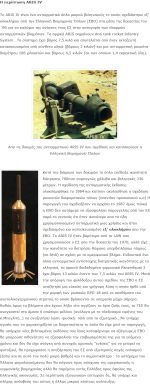
The ARIS IV AT weapon in the mid-80s as well.
Mid-90s the development of Kentavros IFV
en.wikipedia.org
1982 https://en.wikipedia.org/wiki/Namco_Tiger_Armored_Vehicle
 en.wikipedia.org
The effort to develop Greek modern weapons and weapon systems had already begun since the interwar period. Some interesting weapon systems were the following:
– Assault rifle and GP10 submachine gun of CHROPEI.
– KEA HELIDON training-surveillance aircraft of EAF (Aircraft Factory), later KEA. One aircraft was built, which was used by the Hellenic Navy.
– AEKKEA-RAAB R27 fighter aircraft
– AEKKEA-RAAB R29 fighter aircraft. A number of these were built for the Spanish government forces during the Spanish Civil War.
Bomber/Transport aircraft AEKKEA-RAAB R54.
More recent period
A pivotal point in the efforts of the Greek Defense Industry was the development of the ARTEMIS 30 A/A system, which proved to be quite ambitious for its time - and given that the newly established EBO had no previous experience in the development and management of a complex system. This may have resulted in suspicion on the part of the military and political leadership towards any new effort to develop new weapons systems by the Greek defense industry in the following years.
LEONIDAS S30
In the 1990s, ELVO developed an anti-aircraft version of the LEONIDAS TOMB -which was already in production in Greece, 500 units, on behalf of the Greek army- to cover motorized formations. A system that today would be very useful in dealing with UAVs and missiles, as the brief service of the corresponding Gepard in the war in Ukraine has shown.
The LEONIDAS S30 system was based on the WILDCAT II self-propelled A/A system developed by KRAUSS MAFFEI.
Although there was initially interest from both the Greek and Cypriot sides in such a system, the idea never materialized into a purchase and integration of the system into the Greek and Cypriot arsenals. After a decade and while the needs for the entry into Greek service of a self-propelled V-SHORADS were increasing, it was decided to purchase 54 ASRAD systems with a STN ATLAS turret on a HUMMER vehicle, a system with the same capabilities but which does not share the same armor and agility nor does it provide the same comprehensive A/A protection of the combination of A/A guns and A/A missiles. Also, the possibility of commercializing a Greek system on the international market was lost, with what this could mean for the company itself but also for the other Greek subcontractors, -e.g. EBO with its gun, in terms of profits and recognition.
Technical Characteristics
The LEONIDAS S30 vessel would have 99% common spare parts with the APC version while providing the same protection. It was made of welded sheets of homogeneous armor steel, providing protection to the crew from medium and small caliber armor-piercing ammunition and artillery fragments.
The turret housing the weapon system, radar and target locking system would be adapted to the Leonidas APC,which would provide agility and protection to the system's crew, due to the vehicle's armor and low silhouette. The 35mm guns of the WILDCAT would be replaced by the 30mm MAUSER guns of EBO. The system's ability to add STINGER air-to-air missiles, either in single or double launchers mounted on the outer side of each gun or in a quadruple launcher in place of the gun itself, was also of interest.
ALEXANDER IFV
The development of the ALEXANDROS IFV began at the end of the 1980s with the agreement between ELVO and the then STEYR DAIMLER PUCH for the development of a new IFV that would cover the future needs of the Austrian and Greek armies. Other Greek companies would participate as subcontractors in the new IFV,incorporating their products into the final product. The entire philosophy of the vehicle and the specifications were based to a very large extent on Greek needs, meaning it would be the first vehicle of its kind to be manufactured according to the needs of the Greek army.
When the entire program in Greece faltered, the Austrian company requested permission from the Greek side to also include the Spanish SANTA in the development program. Eventually, the vehicle was purchased by the Spanish and Austrian armies and promoted on the international market as ASCOD.
Once again, Greece missed the opportunity to develop a purely Greek product with the Spanish army as its initial, very likely customer, which ultimately purchased the vehicle.
Technical Specifications
The hull of ALEXANDROS was constructed of welded sheets of hardened armor steel, providing protection to the crew and personnel carried against medium and small caliber armor-piercing ammunition and artillery fragments. The two-man turret would have a dual-feed 30 mm main gun (EBO Mauser MK 30 F) and a 7.62 mm secondary gun (MG-3).
KENTAVROS IFV
In 1998, the development of a new IFV began by ELVO, in an entirely Greek effort to develop a main weapon system based on the experience gained by the company with the production of LEONIDAS and its involvement in the development of ALEXANDROS. Two years later, the prototype was a reality. Despite the initial indifference of both the Greek military and the political leadership, both eventually contributed to further development. The former with proposals and technical details that would bring the vehicle closer to its needs and the latter with the initial decision to purchase the vehicle and allocate funds for the final configuration phase.
And while everyone believed that finally, after almost 20 years of the Greek defense industry being devalued by the political leadership, we would be faced with the first Greek main weapons system that would go from the design phase to the production line, unfortunately they were proven wrong. Once again, the program was locked away forever in the drawer with the unclaimed.
Technical Specifications
The hull of the KENTAURUS was constructed of welded sheets of hardened armor steel, providing protection to the crew and personnel carried against medium and small caliber armor-piercing ammunition, artillery fragments and mines. The one-man KUKA E8 turret would have a dual-feed 30 mm main gun (EBO Mauser MK 30 F) and a 7.62 mm secondary gun (MG-3).
The UFASC II (Ultra Fast Craft) was a concept developed by EBO and presented at the Defendory exhibition in 1994. It was a high-speed, 45-50 knots, catamaran-type vessel with considerable armament. It was capable of carrying two 2.75in rocket pods, a light torpedo between the two hulls, and for self-defense, a heavy 0.50in cannon and a 40mm grenade launcher. One could say that such a weapon system in the hands of experienced special forces personnel would be extremely effective. Small groups equipped with the UFASC, scattered throughout the eastern Aegean, would become the terror of any ship of any size, up to a missile launcher. They would certainly act as a deterrent to any thought by the eastern "allies" for a landing operation on an island in the eastern Aegean, when the small, weak landing craft filled with troops and weapons would first have to pass through the "herds" of the UFASC before reaching the coast
UAV
The idea of developing a Greek UAV or RPV, as the code name for remote-controlled aerial vehicles was, began in Greece in the mid-1970s! The result was the RPV PEGASUS, which was designed by a group of retired PA technicians, while the Hellenic Air Force also joined the production process. PEGASUS was a high-winged aerial vehicle with a cylindrical fuselage that weighed 80-100 kg, had a payload of 20 kg and a speed of 120 km/h.
After twenty years of inactivity and reluctance since the first flight of PEGASUS, in 2000 it was decided to operationally exploit the system by the Hellenic Air Force, which consisted of four aircraft and a control cage. It was decided that the experience gained from the use of the system would be used in the development of a new system, PEGASUS II, with aircraft with improved flight characteristics and integrated stealth features.
The team that developed PEGASUS, when it saw that the program was not progressing at a satisfactory pace and after the involvement of the Hellenic Air Force, founded a company, AEROMICHANIKI, for the development of aircraft. This development resulted in the appearance of the RPV DELTA PHANTOM, which was superior to the PEGASUS. The DELTA PHANTOM had a square fuselage and delta wings, while it was made of synthetic materials, which gave it stealth characteristics. It had a weight of 45 kg, a payload of 25 kg and a speed of 220 km/h.
Another idea was the RPV TELAMON, which was proposed by the Hellenic Air Force and was based on the American-made BQM-74E flying target. The NORTHROP GRUMMAN BQM-74E is powered by a turbojet engine, reaching 515 knots per hour, with a flight altitude of 7 ft to 40,000 ft (from 2.1 m to 12.2 km), and carrying its load to a range of 350 nmi (648.6 km). While in Greece this idea remained on paper, in Israel the BQM-74E was converted into the Delilah cruise missile.
The effort to develop UAVs in Greece began in the mid-1970s. The Greek demon was once again ahead of developments at a global level and instead of being justified, the result was that the Greek people paid several million euros in 2002 for the purchase of the SPERWER from the French SAGEM, when the originality became a necessity, but without any Greek system in development. Where would Greek know-how in this field have reached if we had invested in PEGASUS, DELTA PHANTOM and TELAMON more than twenty years ago?
ARIS
In the early 1990s, the company ADVANCED TECHNOLOGY APPLICATIONS SA designed an airfield air defense system with the aim of utilizing the huge stock of SIDEWINDER air defense missiles of the Hellenic Air Force. The system would have consisted of a quadruple air defense missile launcher equipped with an electro-optical system and warning radar, but the plans remained on paper. It is worth mentioning that the German Air Force had used a similar system to protect its airfields.
LASER-GUIDED BOMB
In the early 1980s, KETA undertook the development of the first Greek laser-guided bomb. Senior Lieutenant K.Chatziantoniou was appointed head of the program. When the program reached a satisfactory level, it was transferred to the jurisdiction of the Hellenic Air Force for its completion. Although the results from the testing phase were satisfactory, the Hellenic Air Force never proceeded with an order for the weapon.
HAI Pegasus - Wikipedia
We had the Artemis-30 made in the '80s
https://en.wikipedia.org/wiki/Artemis_30
The ARIS IV AT weapon in the mid-80s as well.
Mid-90s the development of Kentavros IFV
ELVO Kentaurus - Wikipedia
1982 https://en.wikipedia.org/wiki/Namco_Tiger_Armored_Vehicle


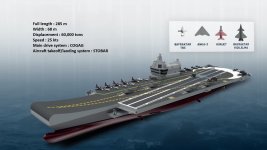
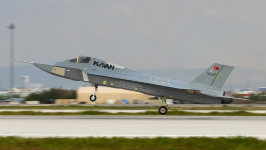


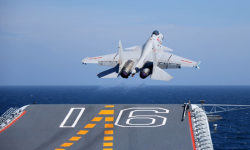
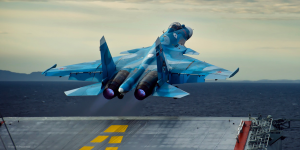



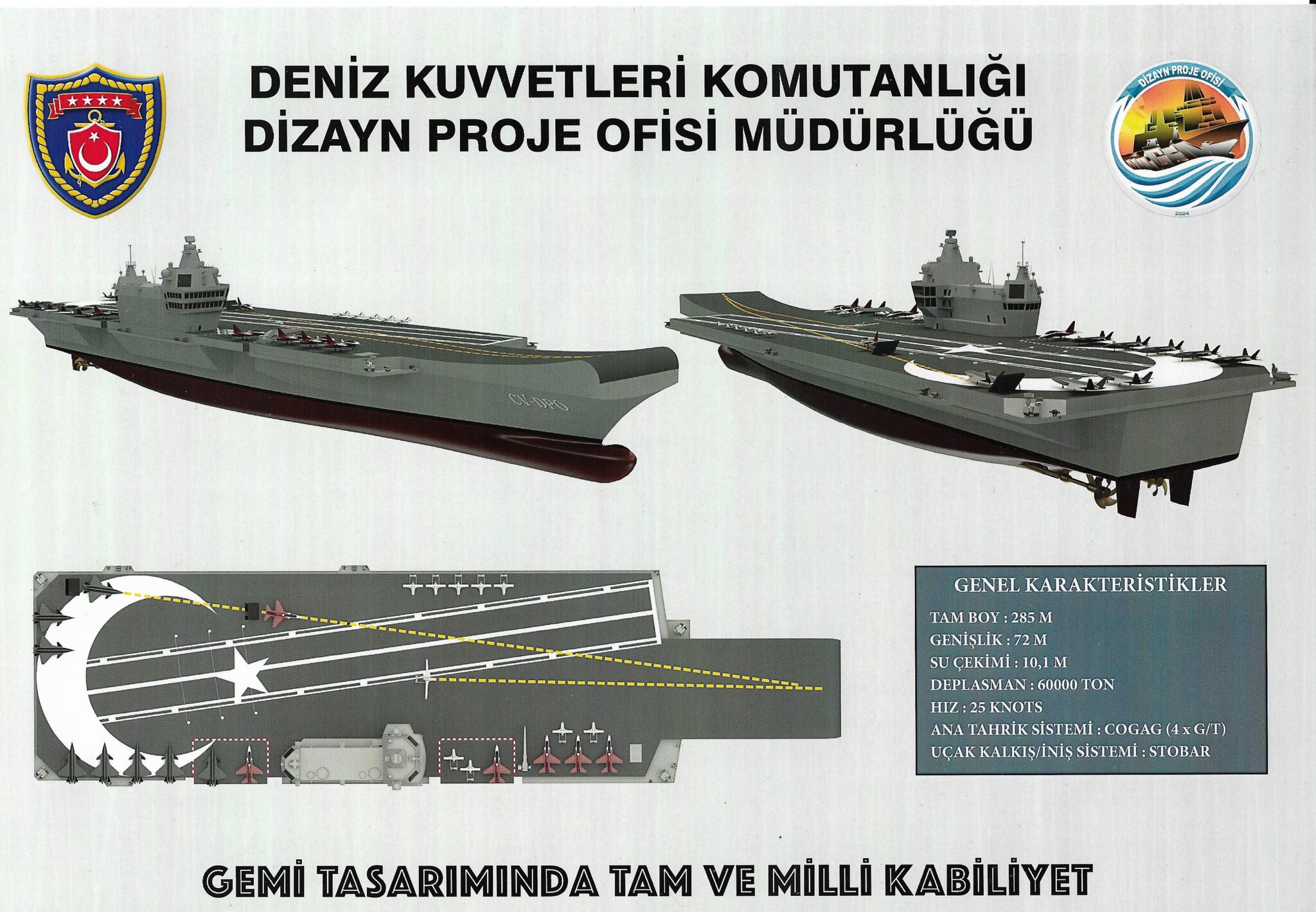


 10,000 nautical mile range: “Our national aircraft carrier will be able to travel to New York and return without refueling.”


