MMM-E
Elite Member

- Thread starter
- #346
Turkiye should develop high altitude Balloon ( 40 km altitude ) to detect even F-22/F-35 Fighter Jets from long distance
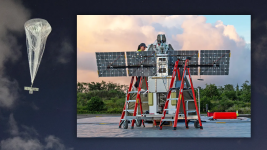
Similar to American HELIOS
The US Army's HELIOS stratospheric Balloon project is being developed specifically for Balloon Radar + ground Missile cueing
China and Russia are also working on the same concept (stratospheric Ballon + Radar + network).
IR Detection
F-35 Engine temperature is high .. detected from 300 km with a Balloon-type IR sensor (like those used in China)
Ground-based radars are at risk of being hit
But High altitude Ballon with AESA Radar will stay at altitude of 40 km ( air to air missiles - air defense systems almost can not able to hit high altitude Ballon )
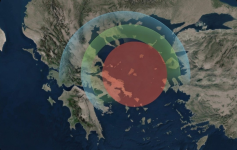
1 -- The line-of-sight horizon of a Radar at an altitude of 40 km reaches approximately 700–800 km
2 -- AESA Radar + high altitude can detect even F-35 stealth Jets earlier and more clearly (look-down advantage) from 200+ km away
3 -- The Balloon transmits the tracks it detects in real time via SATCOM and high-power radio datalink, and this data goes directly to the command and control Center (Aselsan HAKIM) creating an "integrated air picture"
4 -- SİPER-2 , KAAN , KIZILELMA , ANKA-III's architecture fully supports this network centric warfare capability
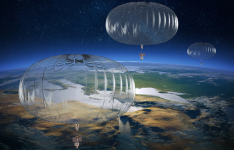
So the Balloon becomes the "eye," and the SIPER battery becomes the "weapon." When the SIPER Missile is launched, it receives mid-course guidance from the Balloon data, then makes a terminal strike with its own active RF seeker
This concept is already the future of modern air defense:
High-altitude sensor network + long-range active seeker Missiles
Similar to American HELIOS
The US Army's HELIOS stratospheric Balloon project is being developed specifically for Balloon Radar + ground Missile cueing
China and Russia are also working on the same concept (stratospheric Ballon + Radar + network).
IR Detection
F-35 Engine temperature is high .. detected from 300 km with a Balloon-type IR sensor (like those used in China)
Ground-based radars are at risk of being hit
But High altitude Ballon with AESA Radar will stay at altitude of 40 km ( air to air missiles - air defense systems almost can not able to hit high altitude Ballon )
1 -- The line-of-sight horizon of a Radar at an altitude of 40 km reaches approximately 700–800 km
2 -- AESA Radar + high altitude can detect even F-35 stealth Jets earlier and more clearly (look-down advantage) from 200+ km away
3 -- The Balloon transmits the tracks it detects in real time via SATCOM and high-power radio datalink, and this data goes directly to the command and control Center (Aselsan HAKIM) creating an "integrated air picture"
4 -- SİPER-2 , KAAN , KIZILELMA , ANKA-III's architecture fully supports this network centric warfare capability
So the Balloon becomes the "eye," and the SIPER battery becomes the "weapon." When the SIPER Missile is launched, it receives mid-course guidance from the Balloon data, then makes a terminal strike with its own active RF seeker
This concept is already the future of modern air defense:
High-altitude sensor network + long-range active seeker Missiles





 TÜRKIYE (All Agencies)
 UNITED STATES (USSOCOM / Total)