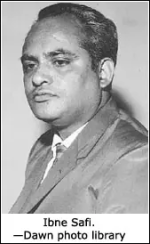
His popularity is often described as a matter of talent alone. Certainly, he was a gifted stylist and storyteller. But literary brilliance does not, by itself, create a readership measured in the millions. Ibne Safi’s success partially rested on a deeper foundation: a whole publishing world that stretched back to colonial North India, reshaped in post-Partition Karachi, and oriented toward cultivating habits of regular reading, lawful conduct, and modern citizenship — ideals closely aligned with the nation’s aspirations at the time.
Seen this way, Ibne Safi was not merely writing spy stories; he was participating in the construction of a cultural market, and more importantly, a moral and civic imagination.
One of the clearest signs that Ibne Safi wasn’t just spinning yarns comes from his
paish lafz (prefaces). Addressing readers directly, he reassured newcomers that each novel in
Jasusi Duniya was “complete” in itself, so that “new readers can start from any number without difficulty”.
At the same time, he urged regular readers to place advance orders through local agents, warning that waiting until publication day might mean missing out altogether.
This was not an incidental authorial chatter, but rather a market discipline. By emphasising advance orders and serial continuity, Ibne Safi helped cultivate what economists would later call “repeat demand”. Readers learned to anticipate release dates, plan purchases, and treat fiction as a regular part of monthly life rather than an occasional indulgence.















 Official B-21 Discussion Thread: Manufacturing ramping as operational capability expected in 2027 (1 Viewer)
 Why all countries especially small Muslim states flocking to Pakistan for defense. A debate (23 Viewers)