Navigation
Install the app
How to install the app on iOS
Follow along with the video below to see how to install our site as a web app on your home screen.
Note: This feature may not be available in some browsers.
More options
Style variation
You are using an out of date browser. It may not display this or other websites correctly.
You should upgrade or use an alternative browser.
You should upgrade or use an alternative browser.
US Perspective on the Iran - Israel / US War
- Thread starter AZ_HighCountry
- Start date
More options
Who Replied?

F-22Raptor
Elite Member

Large amount of American forces continue to flow to the region

Oscar
Moderator
Large amount of American forces continue to flow to the region
Sending a message that we’re not done with the fight if it comes to that
F-22Raptor
Elite Member
Sending a message that we’re not done with the fight if it comes to that
Sec Hegseth noted the US military has deployed less than 10% of its combat power in this entire operation. The US can still escalate to energy and leadership targets, ground operations etc. They take over most of the strategic ports linked to the Hormuz and toll operations.
I’m not optimistic about talks, so the resumption of combat seems likely.
F-22Raptor
Elite Member
Davey Crockett
Elite Member
F-22Raptor
Elite Member
Davey Crockett
Elite Member
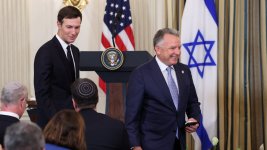
On the psychology of real estate developers like Witkoff, Kushner and Trump and how it fails them at war:
Non-Recourse National Strategy – Syncretica
They learn that hesitation is expensive, that deliberation is for people who don’t have conviction, and that the main failure mode is not swinging. They are, in the language of behavioral finance, calibrated to be systematically overconfident in their own ability to identify signal in noise, and structurally indifferent to path dependence because in their world, paths don’t particularly matter — if this startup dies, you do the next one. The option resets.
…
What happens when you staff an entire executive branch with people whose entire professional formation has been as option holders?
…
Exhibit B is the war in Iran. Heads you win and its regime change, tails…. uh did anyone think about tails? Apparently not – at least certainly not Kushner, Trump and Witkoff the real estate guys.
This is where path dependence enters, and the administration appears constitutionally unable to see it.
…
Countries that interact repeatedly — on trade, on security, on currency arrangements — are playing an iterated game, not a one-shot game. In iterated games, reputation is not a “nice to have” it drives how people play and outcomes. Your counterparty’s willingness to make concessions today is a direct function of what they believe you will do tomorrow, and that belief is formed by what you have done before. Defect once and your partner adjusts their priors.
—
F-22Raptor
Elite Member
US oil exports to hit record as Iran war triggers race for supplies
US crude exports are projected to hit a record high in April as Asian customers hunt for supplies to replace Middle Eastern oil lost because of the Iran war.
Oil research group Kpler estimates exports will jump by almost a third to 5.2mn barrels per day this month, up from 3.9mn b/d in March. Demand from Asian customers will rise by 82 per cent to 2.5mn b/d.
There are currently 68 empty tankers on their way to the US, according to Kpler, compared to 24 in the week before the war began on February 28. Last year the average was 27 tankers. Kpler bases its data on tanker bookings and expected arrivals.
“An armada of tankers are heading this way,” said Matt Smith, a Kpler analyst.

US oil exports to hit record as Iran war triggers race for supplies
‘Armada’ of Asian tankers heads for American ports as energy shortages spread
 www.ft.com

SolarWarden
Trusted Member
How will this lower gas prices which are $6 per gallon for 87 octane?For all the talk about how this war effects the US economy:
- Brent crude is under $100 a barrel
- US oil exports are set for record highs
- Inflation is only 3%
- Stocks are surging back to record highs
I can't believe I miss the good old days when prices were $4.50 per gallon.

gambit
Professional
In general, the label 'rule of law' applies only when sufficient number of society believes that the laws are fairly enforced, even though everyone knows we cannot have 1-1 police to citizenry. Over time, it is the norm to respect the laws, even in the absence of law enforcement.Well, as I said, as much as a society, there are always people who follow the law, and there are always people that break them, the issue is not whether or not the law is enforceable, because it's going to be the same as we had discussed before, we can't police everybody in a community, that's a futile exercise.
Which means the "norm" is the majority of the people in the community, and the question is, do you think it's the norm that people think the law should not be applied to the powerful? Or regardless, we should still respect the law?
But I will say this...
Most of what we call 'international laws' are actually Western values enforced by economic, cultural, and military might, whenever possible. So yes, we are discussing the respect for international laws from that perspective. South Africa's apartheid system, for example. The West do not like it, and various pressures were applied until the system broke. The open seas, or freedom of navigation (FON) is another Western value enforced by Western arms. In short, it is our norm, not the rest of the world, to respect the laws.
I look at international affairs the way the cartels in Mexico or Bolivia looks at their countries. Yes, the US astride the world the way a cartel does in its part of Mexico.I don't know whether or not you have lived in Mexico or even a country like Bolivia, those are the place that law does not apply to the powerful, that's why cartel happens, and if you think the higher up in the echelon level of government should not respect the international law because the US government is all powerful, how do you think that will applies to the community, if we started to think we should be above the law because we live in the better side of town, or I have more guns than everyone else?
Am NOT saying that the US should disregard 'international laws' by sheer virtue of being overwhelmingly powerful. Back in Desert Storm, I would not want our airmen to KNOWINGLY bomb a target surrounded by human shields. But here is the conundrum: Does the capacity and capability to ignore international laws, or at least norms, create the perception that the US is ALREADY above those international laws?
The international community ALREADY thinks so, backed up by instances and events of where the US did ignored international laws and norms. Waterboarding, for example. And yes, I know what waterboarding feel like. The UN Security Council is an example of the powerful putting themselves above the laws they imposed upon others.
Yes, the world is very much like Mexico or Bolivia.
No, we followed norms and laws because we matured AFTER our elders beat the sh!t out of us if we did not.That's not where the norm is tho, though. We didn't follow the law because we listened to our elder. After all, when you think of it, our elders have their elders to a point; there is a first generation of that line of ancestry, then who do these people follow? Or were they all just outlaws?

The diversity of countries demands a set of standards that must be enforced. Even hermit NKR has to obey some norms they do not like. And the only reason they obey is because there are others, like US or China, far more powerful than them.
Wait a sec...Your second point is more closer to the point I raised, because there are always conseqence if you don't follow the law, laws are there to protect EVERYONE, not just people with power or people with money, yes, it may not seem that way, but regardless of either end, that's the argument I made before, no matter how powerful you are, how many guns you have, a burglar just need to get lucky once, and all your defensive mechanism need to work all the time, that's the same as country, again, you may think we are powerful, because we have nuke, X amount of aircraft, whatever and however strong Navy, again, it don't mean shit, because the same principal applies, all of our country defense mechanism had to work ALL THE TIME, and our enemy only need one lucky strike to cause problem. As my line of work always says, "You only need to fail once and your name is going to be headline."
International affairs IS the Wild Wild West. If someone wants to hurt US, there will be no fear of 'international laws' to stop them, vis-a-vis Sept 11, 2001.
Non-state actors have literally nothing to lose because they have no state to lose. They can be amorphous in a week. 'International laws' applies to nation-states precisely because each have so much to lose, and the more powerful you are, the more you are able to point that out. Al-Qaeda was able to hit US once, and the US responded by toppling 2 Muslims countries. How many RATIONAL countries are willing to take that gamble? None. Did the US collapsed after Sept 11, 2001? No. But did Iraq collapsed after the US invaded? Yes.
So regarding 'international laws', the more powerful you are, the less of the consequences you will feel should you ever break them. That is the honest and brutal truth. Always have been.
Yes, they did. The emperor did. Just because a faction of the military refused to see the war's reality, does not negate what the emperor, the actual representative of JPN, wanted to do.And Japan didn't surrender because we dropped two atomic bombs on their soil, they still wanted to fight, and our intelligence back then also said they would fight; that's why Operation Downfall is still planning ahead after the bomb was dropped, and not until the treaty was signed on August 15 when they finally shelved it. We can open a thread and argue why Japan surrendered, but it has to come down to how the Emperor of Japan sees the situation, and he sees no point in getting going, and conforming to the law we impose on them.
My GENERAL point is that as far as 'international laws' goes, persuasion does not work. Never has. It is fear that works. The more powerful you are, the less fearful you can be. If anything, that two world wars should made it clear that deterrence works, that economic and military powers works.
In international affairs, power is EVERYTHING. Yes, the US got hurt on Sept 11, 2001, but in the end, who got hurt more? We got cut, we stemmed the bleeding, then we killed Afghanistan and Iraq. Am not saying we erased those countries off the map. Am saying their leaderships learned the hard way what happened if an angry US is not restrained. Yes, Iraq was not involved in 9-11, but in the aftermath, all we needed was a whiff of a hint of a clue of a suspicion, and Iraq felled. I do not care if Afghanistan never evolved out of the 7th century. Or the entirety of the ME, for that matter.Power is not everything, not now, not since 2001, when people can attack us asymmetrically, i mean, see how we go in Afghanistan? We can bomb Afghanistan back to the Stone Age every day, but does that change anything?
All the more reasons why other countries should get involved in keeping the strait open. And that is the point, as much as I do not like to admit it, that Trump is making. If it hurt US, then it must be hurting them 1x and I have no problems with that. The same grand scheme of thing you are using.The problem with the bolded part is, IT IS OUR PROBLEM, like it or not, Hormuz still is a part of our economy, have you ever wondered why WTI (US Oil Price) went up even if we don't have 5% of traffic out of Hormuz?
Because that is a global price, which means whatever happens there will affect our situation at home. First, this is what our EIA said
View attachment 191599
First of all, 490,000 barrels a day may not be a big number if you compare it to the region's export of over 20,000,000 barrels a day, but in a grand scheme of things, 490,000 barrels a day means 180 million barrels a year, and we have to find a replacement for over 100 Super Large Tankers worths of oil to replace that loss, sure, that's not as bad as Asia, but it still going to hurt us.
Second thing is, Asia is going to need oil, and we are not just talking about China, but every country in Asia, including Japan, South Korea, China, Taiwan, Vietnam, Thailand. Which, in case you didn't notice, that's 90% of the world's industrial output. Oil going to the Asian region will need to be replaced, or nothing is going out of those regions, and guess where they are going to buy oil from? A large part will be in the US simply because we are the world number 1 oil exporter, smaller replacement maybe from Russia, but mostly from us, and they won't buy it at the market price, because that's gonna be a whole new war fighting for resources, which is why it not just bump up the Brent price, it also bumped ours.

Yes, I am making, not a moral judgement, but a cold geopolitical calculus, that some countries MUST not be nuclear weapons states. Those that already are, we will live with them.On the other hand, we are not fighting this war because of Hormuz; it was open before we went in blasting. We went to war with Iran because we wanted to stem their nuclear and ballistic weapons program, which we had not done in this war, to be quite clear.
Yeah...That 'Death To America' has something to do with that...So what happens when the next time Iran says, "We are going to develop nuclear weapons", we're gonna bomb them again? And they close the Strait again? Asia doesn't care whether or not Iran has nuclear weapons; we care, so are we going to keep doing this til the end of time? Or are we going to go in and try to remove the Iranian regime? And we can't invade Iran just by ourselves, we need NATO and Northern Alliance help to invade Afghanistan 20 years ago, and that went nowhere, and that is with NATO, and most of our allies help, and you are suggesting that we invade Iran, which is about 3 times the size of Afghanistan with 3 times the population, we are going to need around 400,000 troop to do that given we had 180,000 in Afghanistan, we don't have that amount of troop to do that, unless we start a draft.
For now, Asia can afford that luxury.
Actions have consequences, we can agree on that.
So making alliances have consequences as well. But the problem here is that being alone also have consequences. So what are nation-states to do? Even the mighty US and USSR had alliances: NATO and the Warsaw Pact.
The IRGC does not exist for Israel, but for the rest of the world. Israel is just a stepping stone.

Fatman17
THINK TANK: CONSULTANT
President Trump’s shaky cease-fire with Iran appears at risk as as world leaders hastened efforts to prevent a return to all-out war.
For a third day, work to prop up the cease-fire focused on Israel’s attacks on Lebanon. Iran says the continued assault violates its deal with Trump to stop U.S. and Israeli attacks on Iran in exchange for safe passage of ships through the Strait of Hormuz. Prime Minister Benjamin Netanyahu of Israel has resisted international pressure to halt his country’s campaign against Iran-backed Hezbollah militants in Lebanon.
Read more: https://trib.al/xIJqfm2
For a third day, work to prop up the cease-fire focused on Israel’s attacks on Lebanon. Iran says the continued assault violates its deal with Trump to stop U.S. and Israeli attacks on Iran in exchange for safe passage of ships through the Strait of Hormuz. Prime Minister Benjamin Netanyahu of Israel has resisted international pressure to halt his country’s campaign against Iran-backed Hezbollah militants in Lebanon.
Read more: https://trib.al/xIJqfm2
Pakistan Defence Latest
-
-
 Federal cabinet gives nod to imposition of emergency in KP; summary sent to president (14 Viewers)
- Latest: Goenitz
-
-

-


