
Navigation
Install the app
How to install the app on iOS
Follow along with the video below to see how to install our site as a web app on your home screen.
Note: This feature may not be available in some browsers.
More options
Style variation
You are using an out of date browser. It may not display this or other websites correctly.
You should upgrade or use an alternative browser.
You should upgrade or use an alternative browser.
US Perspective on the Iran - Israel / US War
- Thread starter AZ_HighCountry
- Start date
More options
Who Replied?
KingQamaR
Elite Member

Lincoln has been cleaned while in Thailand
The ship also carrying std hahahaha
F-22Raptor
Elite Member

Ali_Baba
VIP Member
Let with a lot of memories, and a lot of new STDs on top to take home to their wives and partners ....
Last edited:

AZ_HighCountry
INT'L MOD
- Thread starter
- #7,430
CETCOM(a great desinformation font) and several internet disinformation profiles are trying to deny yet another major US military defeat in this war: the six ships that Iran hit today (with images). These fake profiles deny the event and claim the photos are "old," but when you analyze these so-called old photos, they have nothing to do with those released by Iran. The video below, featuring a Brazilian geopolitics expert, explains how Iran hit six ships, including three oil tankers and three US vessels; images will be shown and analyzed (put in english in youtube to translate):
You actually want us to take this as factual? You can't be serious.
AZ_HighCountry
INT'L MOD
- Thread starter
- #7,431
Misinformation as far as I'm concerned:
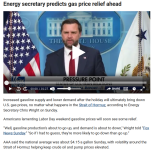

We've been hearing this for awhile now. And now, the narrative has subtly changed: the summer driving season is ending therefore less demand.
Let's not overlook the obvious facts:
1. the only way to increase gasoline supply is to either increase refining capacity or to buy it from other sources. US refiners are already running at capacity at the expense of deferred maintenance. That is a huge risk.
2. squeezing more gasoline from a barrel of oil is not possible. Under the best refining processes and the grade of oil, the most gasoline that can be produced is 55%. The average actually runs between 40-43%. You can't squeeze more from the turnip.
3. Oil can be produced from coal but that is also expensive.
Unless there are new refineries in the US about to come on line, increased gasoline production is not accurate. In fact, thanks to regulations in California, refiners there are shutting down production. Chevron is in the lead with its Richmond facility. That will impact a LOT of industries including the construction industry. A substantial amount of asphalt comes from Richmond.
We've been hearing this for awhile now. And now, the narrative has subtly changed: the summer driving season is ending therefore less demand.
Let's not overlook the obvious facts:
1. the only way to increase gasoline supply is to either increase refining capacity or to buy it from other sources. US refiners are already running at capacity at the expense of deferred maintenance. That is a huge risk.
2. squeezing more gasoline from a barrel of oil is not possible. Under the best refining processes and the grade of oil, the most gasoline that can be produced is 55%. The average actually runs between 40-43%. You can't squeeze more from the turnip.
3. Oil can be produced from coal but that is also expensive.
Unless there are new refineries in the US about to come on line, increased gasoline production is not accurate. In fact, thanks to regulations in California, refiners there are shutting down production. Chevron is in the lead with its Richmond facility. That will impact a LOT of industries including the construction industry. A substantial amount of asphalt comes from Richmond.

The SC
INT'L MOD

U.S. intelligence reports reveal that Iran has grown more confident in its military capabilities and more aware of the limits of American power, and that it is determined to prolong the conflict for several months with the aim of disrupting and exhausting the United States, according to The New York Times..
The SC
INT'L MOD
The UN Security Council will issue a resolution next week authorizing a formal strike against Iran, according to the International Atomic Energy Agency's report describing Iran as a state violating international law.
 This is why Trump came out yesterday and declared:
"We will strike the Axe Mountain nuclear facility in the next few days."
Trump wants UN cover before destroying this particular facility...
Why?!
• Axe Mountain is the only facility that Iran has prevented the IAEA from entering and inspecting.
• It is the only facility that the late Qassem Soleimani prevented anyone from filming inside, making it the most mysterious facility in the world, one that worries America and terrifies Israel.
• It is the only facility in the world carved into a mountain of granite, the second hardest rock in the world after diamond, 100 meters underground, making it the most heavily fortified facility on Earth.
After a lengthy study of the site by military experts at the Pentagon, the US Air Force is preparing to use bunker-buster bombs the world has never seen before, bombs many times more powerful than the Doomsday Bomb.
No country in the world is capable of carrying out this mission except the United States, as it is the only one possessing these giant bombers and an exceptional president.
For all these reasons, Trump preferred to carry out this highly precise and dangerous strike with a UN resolution and international cover.
This is why Trump came out yesterday and declared:"We will strike the Axe Mountain nuclear facility in the next few days."
Trump wants UN cover before destroying this particular facility...
Why?!• Axe Mountain is the only facility that Iran has prevented the IAEA from entering and inspecting.
• It is the only facility that the late Qassem Soleimani prevented anyone from filming inside, making it the most mysterious facility in the world, one that worries America and terrifies Israel.
• It is the only facility in the world carved into a mountain of granite, the second hardest rock in the world after diamond, 100 meters underground, making it the most heavily fortified facility on Earth.
After a lengthy study of the site by military experts at the Pentagon, the US Air Force is preparing to use bunker-buster bombs the world has never seen before, bombs many times more powerful than the Doomsday Bomb.No country in the world is capable of carrying out this mission except the United States, as it is the only one possessing these giant bombers and an exceptional president.For all these reasons, Trump preferred to carry out this highly precise and dangerous strike with a UN resolution and international cover.
Ali_Baba
VIP Member
The UN Security Council will issue a resolution next week authorizing a formal strike against Iran, according to the International Atomic Energy Agency's report describing Iran as a state violating international law.
"We will strike the Axe Mountain nuclear facility in the next few days."
Trump wants UN cover before destroying this particular facility...
• Axe Mountain is the only facility that Iran has prevented the IAEA from entering and inspecting.
• It is the only facility that the late Qassem Soleimani prevented anyone from filming inside, making it the most mysterious facility in the world, one that worries America and terrifies Israel.
• It is the only facility in the world carved into a mountain of granite, the second hardest rock in the world after diamond, 100 meters underground, making it the most heavily fortified facility on Earth.
Absolute rubbish source and rubbish commentary….

PK781
Trusted Member

feel sorry for all the females onboard.....and the victims of bullying(sexual)....The ship also carrying std hahahaha
AZ_HighCountry
INT'L MOD
- Thread starter
- #7,436
The UNSC? Really? Knowing who the members are?Absolute rubbish source and rubbish commentary….
I see the likelihood of that happening about like my hair growing back.
AZ_HighCountry
INT'L MOD
- Thread starter
- #7,437
So, since it is being discussed, I decided to test a hypothesis of mine with ChatGPT. The question asked:
"Under current refining capacity, how much could the US increase the output of gasoline over current production levels?"
A fair question, no? And, the output was not surprising. In its entirety:
As of the latest data available (week ending August 28, 2026), the U.S. is already running its refineries extremely hard, so the amount of additional gasoline that can be produced without adding refining capacity is fairly small.
I would put the near-term maximum increase in U.S. gasoline output from existing refining capacity at roughly 200,000–400,000 b/d, with perhaps ~500,000 b/d as an aggressive theoretical upper bound if refiners simultaneously ran at 100% and maximized gasoline yield.
That's only about 2–5% above the current ~9.8 million b/d gasoline production rate.
The important distinction is that refining capacity isn't the same thing as gasoline capacity. The U.S. has about 2% of its crude-distillation capacity unused at the moment, but converting that last increment entirely into gasoline isn't technically feasible. Refiners can also change their product slate somewhat—for example, reducing distillate output to make more gasoline—but that merely shifts production rather than creating the equivalent amount of new total fuel.
And there is a timing issue: EIA expects refinery utilization to fall during September–October for seasonal maintenance, with crude inputs dropping below 16 million b/d in October. U
 U.S. Energy Information Administration So the 98% utilization figure is essentially a peak-season snapshot, not a sustainable year-round operating rate.
Bottom line: ~0.3 million b/d of extra gasoline is a reasonable central estimate, ~0.5 million b/d an optimistic ceiling. At 9.8 million b/d current production, that's not enough to transform the U.S. gasoline supply picture by itself.
If you're asking this in the context of how much gasoline production could rise if the administration forced/encouraged refiners to maximize output, I can also break down the potential into (1) higher refinery utilization, (2) shifting diesel/jet capacity toward gasoline, (3) restarting idled capacity, and (4) additional imports.
"Under current refining capacity, how much could the US increase the output of gasoline over current production levels?"
A fair question, no? And, the output was not surprising. In its entirety:
As of the latest data available (week ending August 28, 2026), the U.S. is already running its refineries extremely hard, so the amount of additional gasoline that can be produced without adding refining capacity is fairly small.
- U.S. refineries processed 17.5 million barrels/day (b/d) of crude at 98.0% utilization, against about 18.0 million b/d of operable capacity. U
U.S. Energy Information Administration+1
- Gasoline production was about 9.8 million b/d that week. IIndexBox+1
- Thus, simply taking crude runs from 17.5 to 18.0 million b/d gives only about 0.53 million b/d (530,000 b/d) of additional refinery throughput—roughly 3% more than current crude runs.
- But not all of that extra throughput would become gasoline. Refineries also produce diesel, jet fuel, LPG, petrochemical feedstocks, etc., and their ability to shift the product slate toward gasoline is constrained by refinery configuration and blending capacity.
My estimate
I would put the near-term maximum increase in U.S. gasoline output from existing refining capacity at roughly 200,000–400,000 b/d, with perhaps ~500,000 b/d as an aggressive theoretical upper bound if refiners simultaneously ran at 100% and maximized gasoline yield.
That's only about 2–5% above the current ~9.8 million b/d gasoline production rate.
The important distinction is that refining capacity isn't the same thing as gasoline capacity. The U.S. has about 2% of its crude-distillation capacity unused at the moment, but converting that last increment entirely into gasoline isn't technically feasible. Refiners can also change their product slate somewhat—for example, reducing distillate output to make more gasoline—but that merely shifts production rather than creating the equivalent amount of new total fuel.
And there is a timing issue: EIA expects refinery utilization to fall during September–October for seasonal maintenance, with crude inputs dropping below 16 million b/d in October. U
Bottom line: ~0.3 million b/d of extra gasoline is a reasonable central estimate, ~0.5 million b/d an optimistic ceiling. At 9.8 million b/d current production, that's not enough to transform the U.S. gasoline supply picture by itself.
If you're asking this in the context of how much gasoline production could rise if the administration forced/encouraged refiners to maximize output, I can also break down the potential into (1) higher refinery utilization, (2) shifting diesel/jet capacity toward gasoline, (3) restarting idled capacity, and (4) additional imports.
AZ_HighCountry
INT'L MOD
- Thread starter
- #7,438
Now, based on that answer above and the question it posed, I prompted it with:
"How much gasoline production could rise if the administration forced/encouraged refiners to maximize output?"
The answer was interesting:
Yes. If the administration used every practical lever available—pressuring refiners to run harder, relaxing fuel specifications where legally possible, discouraging maintenance, and encouraging a gasoline-heavy product slate—the increase could be materially larger than the simple unused-capacity calculation, but still probably not enormous.
Using the latest EIA data, U.S. operable refinery capacity was about 18.0 million barrels/day, while utilization reached 98.0% in the week ending August 28. U
U.S. Energy Information Administration+1
That leaves only roughly 360,000 b/d of nominal crude-distillation capacity at the 98% utilization level.
If refiners pushed to essentially 100%:
The important qualification is that these aren't all additive indefinitely. Some overlap, and pushing gasoline production means producing less diesel, jet fuel or other products.
If current gasoline production is around 9.8 million b/d, a serious "maximize gasoline" campaign could plausibly take it to roughly:
10.2–10.3 million b/d, or about 4–5% above current production.
An exceptionally aggressive short-term push might get toward 10.4–10.5 million b/d, but I wouldn't regard that as a sustainable level.
There is an interesting distinction, though: the administration can potentially increase gasoline available to consumers by more than it can increase refinery gasoline production.
For example, the administration has already used regulatory flexibility around gasoline specifications. The EPA's early switch toward winter-grade gasoline was reported as potentially adding hundreds of thousands of barrels per day to domestic gasoline supply. That's primarily a specification/blending/supply effect rather than suddenly creating hundreds of thousands of barrels/day of new refinery capacity. O
 OilPrice.com
Likewise, ethanol blending can increase the volume of finished gasoline available without requiring an equivalent increase in refinery crude runs.
In 2Q 2026, EIA said disruptions to international petroleum flows had already driven higher U.S. refinery margins, production and exports. In other words, refiners currently have a substantial economic incentive to run hard. U
U.S. Energy Information Administration
And the utilization numbers bear that out: 98% is already extraordinarily high. U
U.S. Energy Information Administration
There is also less U.S. capacity than there used to be. EIA reports that U.S. refining capacity fell during 2025, including the closure of additional West Coast capacity in 2026. U
U.S. Energy Information Administration
If the objective isn't literally "produce as much gasoline as physically possible," but rather lower gasoline prices, I'd rank the potential measures approximately:
But if you mean "How much more gasoline can American refineries physically manufacture?", I'd stick with roughly 300,000–500,000 b/d, with ~700,000 b/d being an aggressive upper-end scenario rather than a normal sustainable capability.
"How much gasoline production could rise if the administration forced/encouraged refiners to maximize output?"
The answer was interesting:
Yes. If the administration used every practical lever available—pressuring refiners to run harder, relaxing fuel specifications where legally possible, discouraging maintenance, and encouraging a gasoline-heavy product slate—the increase could be materially larger than the simple unused-capacity calculation, but still probably not enormous.
A realistic ceiling
Using the latest EIA data, U.S. operable refinery capacity was about 18.0 million barrels/day, while utilization reached 98.0% in the week ending August 28. U
That leaves only roughly 360,000 b/d of nominal crude-distillation capacity at the 98% utilization level.
If refiners pushed to essentially 100%:
| Lever | Approx. additional gasoline |
|---|---|
| Run remaining ~2% of refinery capacity | ~150–200k b/d |
| Shift refinery yields toward gasoline | ~100–200k b/d |
| Reduce/avoid some discretionary maintenance | ~50–150k b/d |
| Regulatory/blending changes | Potentially another ~100–300k b/d of marketable supply |
| Plausible total | ~300–500k b/d |
| Very aggressive short-term case | ~500–700k b/d |
The important qualification is that these aren't all additive indefinitely. Some overlap, and pushing gasoline production means producing less diesel, jet fuel or other products.
So I'd use ~400,000 b/d as the central estimate
If current gasoline production is around 9.8 million b/d, a serious "maximize gasoline" campaign could plausibly take it to roughly:
10.2–10.3 million b/d, or about 4–5% above current production.
An exceptionally aggressive short-term push might get toward 10.4–10.5 million b/d, but I wouldn't regard that as a sustainable level.
There is an interesting distinction, though: the administration can potentially increase gasoline available to consumers by more than it can increase refinery gasoline production.
For example, the administration has already used regulatory flexibility around gasoline specifications. The EPA's early switch toward winter-grade gasoline was reported as potentially adding hundreds of thousands of barrels per day to domestic gasoline supply. That's primarily a specification/blending/supply effect rather than suddenly creating hundreds of thousands of barrels/day of new refinery capacity. O
Likewise, ethanol blending can increase the volume of finished gasoline available without requiring an equivalent increase in refinery crude runs.
The bigger constraint: refiners are already incentivized to maximize
This is why I'd be skeptical of claims that the government could simply order another million barrels/day of gasoline into existence.In 2Q 2026, EIA said disruptions to international petroleum flows had already driven higher U.S. refinery margins, production and exports. In other words, refiners currently have a substantial economic incentive to run hard. U
And the utilization numbers bear that out: 98% is already extraordinarily high. U
There is also less U.S. capacity than there used to be. EIA reports that U.S. refining capacity fell during 2025, including the closure of additional West Coast capacity in 2026. U
What could actually move gasoline prices?
This is where it gets interesting.If the objective isn't literally "produce as much gasoline as physically possible," but rather lower gasoline prices, I'd rank the potential measures approximately:
- Relax gasoline specifications / accelerate seasonal transitions — potentially a large immediate supply effect.
- Maximize refinery utilization — perhaps 150–200k b/d additional gasoline.
- Push refiners toward gasoline rather than diesel/jet fuel — perhaps another 100–200k b/d, but at the expense of other fuels.
- Increase ethanol blending — increases finished-gasoline volume and can stretch petroleum gasoline supplies.
- Increase imports — potentially much larger than the incremental domestic refining capacity, provided foreign gasoline is available and transportation economics cooperate.
- Release strategic inventories — can have a rapid price effect but doesn't increase production and is inherently temporary.
But if you mean "How much more gasoline can American refineries physically manufacture?", I'd stick with roughly 300,000–500,000 b/d, with ~700,000 b/d being an aggressive upper-end scenario rather than a normal sustainable capability.
AZ_HighCountry
INT'L MOD
- Thread starter
- #7,439
Now, based on that second answer above, there is already known issues with E85. Ethanol eats away at fuel lines, etc. That's why you typically will not find it at most gas stations. The most you will find is a 10% blend of ethanol. Here is a short list of what too much ethanol can do to a vehicle engine:
- reduced fuel economy
- engine performance issues
- potential damage to older engines and fuel systems
- Ethanol can absorb moisture, leading to phase separation and clogging of fuel filters and injectors, which can ultimately harm the engine
Corn growers would gladly love to see more ethanol in gasoline. They make more money.
- reduced fuel economy
- engine performance issues
- potential damage to older engines and fuel systems
- Ethanol can absorb moisture, leading to phase separation and clogging of fuel filters and injectors, which can ultimately harm the engine
Corn growers would gladly love to see more ethanol in gasoline. They make more money.
Users who are viewing this thread
Total: 14 (members: 0, guests: 14)
Pakistan Defence Latest
-
 PAF pilot highlights how chinese J10C fighters have left US F16's Obsolete (34 Viewers)
- Latest: MMM-E
-
-
Pak Ship Collides With Indian Navy Unit, Delhi Summons Islamabad's Envoy (7 Viewers)
- Latest: mythbuster
-
-
 US firm Securiport may secure control over Bangladesh’s border security architecture (4 Viewers)
- Latest: MNZGamerX
Country Watch Latest
-
 Iran - Israel/US War: Israel-US declare war on Iran, Iran responds (74 Viewers)
- Latest: shapurzolaktaf
-

-
-
-
Latest Posts
-
-

-
PAF pilot highlights how chinese J10C fighters have left US F16's Obsolete (34 Viewers)
- Latest: MMM-E
-

-
Iran - Israel/US War: Israel-US declare war on Iran, Iran responds (74 Viewers)
- Latest: shapurzolaktaf