Vietnam Defense and News forum

Vietjet’s Bold Leap Forward: New Long Thanh Hangar and Inaugural Flight to Vietnam’s Largest Airport Mark Game-Changing Milestones for Regional Aviation​

Published on December 22, 2025
By: Tuhin Sarkar
1766910496614.png
Vietjet revolutionizes regional aviation with long thanh hangar and inaugural flight to vietnam’s largest airport!


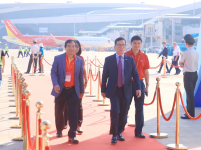
In a move that showcases its growing influence and investment in infrastructure, Vietjet has marked two historic milestones at Long Thanh International Airport — the topping-out of its aircraft maintenance hangar and the launch of its inaugural flight to the airport. Located in the heart of Vietnam, Long Thanh International Airport is poised to be the largest international airport in the country, capable of supporting both Vietnam’s and Vietjet’s long-term aviation growth and connectivity needs.

Vietjet’s new aircraft maintenance facility is a monumental step towards enhancing regional aviation capacity, reinforcing Vietjet’s commitment to providing top-notch, efficient services while strengthening its fleet operations in Southeast Asia. The facility, which covers an expansive 8.4-hectare site, is set to become one of the most advanced aviation hubs in the region, supporting long-term growth and positioning Vietjet as a central player in global aviation operations.

The aircraft maintenance hangar at Long Thanh International Airport represents a $100 millioninvestment by Vietjet into infrastructure development. The complex, set to operate on an 8.4-hectare site, will house Hangars No. 3 and No. 4, capable of accommodating up to 6 narrow-body aircraft and 2 wide-body aircraft simultaneously. This state-of-the-art facility is engineered to support large-scale aircraft maintenance operations, enabling Vietjet to reduce reliance on overseas services, improve cost-efficiency, and enhance regional service capacity.

The top-notch engineering involved, including the long-span steel structure supporting the massive aircraft maintenance operations, highlights the forward-thinking nature of Vietjet’s commitment to long-term aviation growth. By cutting down on international outsourcing, Vietjet can now handle more of its fleet operations locally, making it more agile and cost-effective. This project is also expected to foster skilled employment in the aviation sector, strengthening the overall ecosystem for aviation and technology development in Vietnam.
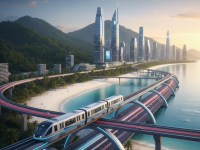
 
the island of Phu Quoc that will host APEC summit 2027 begins the construction of LRT light rail train, the first of this kind in Viet Nam.
To view this content we will need your consent to set third party cookies.
For more detailed information, see our cookies page.

1766913041887.png
 
capacity 4,500 passengers a hour, built by Vingroup, length 18km, cost $300 milion, max speed 100kmh, double tracks running both elevated and underground, using railway LRT technology similar to those LRTs in Singapore and Dubai
To view this content we will need your consent to set third party cookies.
For more detailed information, see our cookies page.
 
Vietnam automaker Kim Long Motor delivers first batch of electric cars, electric buses.
It uses BYD batteries manufactured locally by a Vietnam battery factory.

To view this content we will need your consent to set third party cookies.
For more detailed information, see our cookies page.
 
The Navy plans a helicopter carrier.
too small. should increase to 5x times at least. Probably a prototype before building bigger carrier.

To view this content we will need your consent to set third party cookies.
For more detailed information, see our cookies page.
 
I am engineer I have no clue from railway. From what I see, Yes, HSR is difficult but it is not the most difficult thing to make ever. I did say this years ago: we can do that no problem at all, we just need 2 things: money and technology. We need blueprint. we start from there then we improve and develop own national HSR version.

Vinspeed and Thaco will hire German and Korean senior engineers and consultants. No mass of foreign workers and engineers needed.

Although I hate Japan very much, I still feel that you Vietnamese have treated Japanese people very unfairly this time.

Vietnam and Japan have been cooperating on the high-speed rail project in Vietnam for many years. Japan has done a lot of surveying and planning work, and even provided funding and loan plans.

At this time, Vietnam unilaterally re planned its route and even introduced technical standards from other countries. This is actually a unilateral breach of contract, and Japan cannot continue with this project at all. They have lost all their initial investment. The Vietnamese government's behavior has also damaged its commercial credit.
 
Although I hate Japan very much, I still feel that you Vietnamese have treated Japanese people very unfairly this time.

Vietnam and Japan have been cooperating on the high-speed rail project in Vietnam for many years. Japan has done a lot of surveying and planning work, and even provided funding and loan plans.

At this time, Vietnam unilaterally re planned its route and even introduced technical standards from other countries. This is actually a unilateral breach of contract, and Japan cannot continue with this project at all. They have lost all their initial investment. The Vietnamese government's behavior has also damaged its commercial credit.
From what I understand The gov approved but it was the parliament that rejected Japan’s HSR out of strategic considerations.

Cost too high, thus high debt burden in years to come. $67 billion is a big chunk of money you can check Vietnam was very poor in 2010, now we are no longer poor but now not rich, either just middle income country.

Japan was not willing to transfer technology we would be forever reliant on Japanese assistance. That’s an acceptable risk. In addition the parliament requested a change in the design with cargo transport included in the plan.

At the end it was not a breach of contract because contract was never signed. The fault lies on both sides. Wrong expectations, and inaccurate planning. And as I said previously what Vietnam expects as always: we need 2 things: money and technology.
Japan provides the money, but it refuses to give technology.
 
Building the largest ever passenger terminal at Vietnam’s largest international airport “Long Thanh”

Almost all stuffs from design to materials to aircraft landing bridges to elevators are made and sourced locally by Vietnamese engineers.

To view this content we will need your consent to set third party cookies.
For more detailed information, see our cookies page.
 
From what I understand The gov approved but it was the parliament that rejected Japan’s HSR out of strategic considerations.

Cost too high, thus high debt burden in years to come. $67 billion is a big chunk of money you can check Vietnam was very poor in 2010, now we are no longer poor but now not rich, either just middle income country.

Japan was not willing to transfer technology we would be forever reliant on Japanese assistance. That’s an acceptable risk. In addition the parliament requested a change in the design with cargo transport included in the plan.

At the end it was not a breach of contract because contract was never signed. The fault lies on both sides. Wrong expectations, and inaccurate planning. And as I said previously what Vietnam expects as always: we need 2 things: money and technology.
Japan provides the money, but it refuses to give technology.

No one will offer high-speed rail technology to Vietnam, whether it is China, Japan, or Germany.

We would rather provide high-speed rail technology to India than to Vietnam.

You are too much like the Chinese, and we not foster potential competitors.
 
No one will offer high-speed rail technology to Vietnam, whether it is China, Japan, or Germany.

We would rather provide high-speed rail technology to India than to Vietnam.

You are too much like the Chinese, and we not foster potential competitors.
You rather give to India? are you serious?
You are too late. Siemens has agreed to transfer technology to Vinspeed, Hyundai agrees to give to Thaco. Vinspeed has started the construction this month for the northern and southern sections. Thaco most likely will be given the contract to build north south section in January 2026.

1767015227222.png
 
You are too late. Siemens has agreed to transfer technology to Vinspeed, Hyundai agrees to give to Thaco. Vinspeed has started the construction this month for the northern and southern sections. Thaco most likely will be given the contract to build north south section in January 2026.
You've always claimed to be an engineer. But I think your statements at least show that you are not a rigorous engineer.

In this world, no single company possesses all the technology for high-speed rail.

Let me give you an example:
ASML is the world's most renowned and top-tier lithography machine company. However, even if ASML transferred all its technology to China, or if China directly acquired ASML, China would not be able to immediately manufacture the most advanced lithography machines.

In the modern industrial system, no advanced product is the product of a single company. It is the ultimate manifestation of a vast industrial system.

Many small countries are always keen on Technology Transfer (ToT). But this is actually a commercial game. These so-called ToTs are nothing more than a gimmick. One side gains public support, and the other side gains money.
 
You've always claimed to be an engineer. But I think your statements at least show that you are not a rigorous engineer.

In this world, no single company possesses all the technology for high-speed rail.

Let me give you an example:
ASML is the world's most renowned and top-tier lithography machine company. However, even if ASML transferred all its technology to China, or if China directly acquired ASML, China would not be able to immediately manufacture the most advanced lithography machines.

In the modern industrial system, no advanced product is the product of a single company. It is the ultimate manifestation of a vast industrial system.

Many small countries are always keen on Technology Transfer (ToT). But this is actually a commercial game. These so-called ToTs are nothing more than a gimmick. One side gains public support, and the other side gains money.
Did I ever say Siemens and Hyundai will deliver the complete HSR package ecosystem?

No, of course not. Because they can’t those 2 companies rely on external partners. That’s nothing special. As for Vietnam future HSR for example the US company 3M is selected to provide materials and electrical systems. There are more companies involved. Hundreds if not thousands of contractors, most likely some from China, as well.

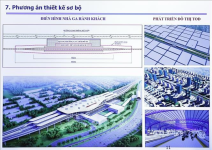
By the way, the planing is almost complete (thanks in part to the Japanese they were involved earlier), 12/15 land clearance underway.

1767019075805.png
 
Did I ever say Siemens and Hyundai will deliver the complete HSR package ecosystem?

No, of course not. Because they can’t those 2 companies rely on external partners. That’s nothing special. As for Vietnam future HSR for example the US company 3M is selected to provide materials and electrical systems. There are more companies involved. Hundreds if not thousands of contractors, most likely some from China, as well.

By the way, the planing is almost complete (thanks in part to the Japanese they were involved earlier), 12/15 land clearance underway.

View attachment 168252
Let's wait and see.

==============================
Recently, a viewpoint has been circulating on social media in Vietnam and China:

Because Laos and Indonesia have already launched high-speed rail operations, the Vietnamese people are putting immense pressure on the Vietnamese government. The people want the government to act quickly.
However, the Vietnamese government knows that a north-south high-speed rail line is impossible to start construction at this stage (due to lack of funds). Therefore, the Vietnamese government is actively mobilizing various global parties to participate, but at the same time, it is setting extremely stringent conditions, causing all parties to voluntarily withdraw from the project. This gives the government a sufficient excuse: "We tried, but no one was willing to participate!"
==============================
Is this true?

I can't comment on that.

Well, let's see when we can actually start taking action.
 
Let's wait and see.

==============================
Recently, a viewpoint has been circulating on social media in Vietnam and China:

Because Laos and Indonesia have already launched high-speed rail operations, the Vietnamese people are putting immense pressure on the Vietnamese government. The people want the government to act quickly.
However, the Vietnamese government knows that a north-south high-speed rail line is impossible to start construction at this stage (due to lack of funds). Therefore, the Vietnamese government is actively mobilizing various global parties to participate, but at the same time, it is setting extremely stringent conditions, causing all parties to voluntarily withdraw from the project. This gives the government a sufficient excuse: "We tried, but no one was willing to participate!"
==============================
Is this true?

I can't comment on that.

Well, let's see when we can actually start taking action.
That’s 99.99% fake news.

The project is approved by the upper hierarchy: the politburo and by the parliament. The gov as executive can’t say “no”. Impossible.
Now as it stands, the decision is now at the ministry of construction. deadline: January 31, 2026.
 
That’s 99.99% fake news.

The project is approved by the upper hierarchy: the politburo and by the parliament. The gov as executive can’t say “no”. Impossible.
Now as it stands, the decision is now at the ministry of construction. deadline: January 31, 2026.
Maybe.

Let's wait and see if the North-South high-speed rail project in Vietnam can be completed before 2040 without China's participation.
 

Users who are viewing this thread

Pakistan Defence Latest

Latest Posts

Back
Top