Who Created Harappan / Indus Valley Civilisation? | How Did It End? | Samvaad With Devdutt Pattanaik

The Concept of Pakistan in the Vedas


Introduction

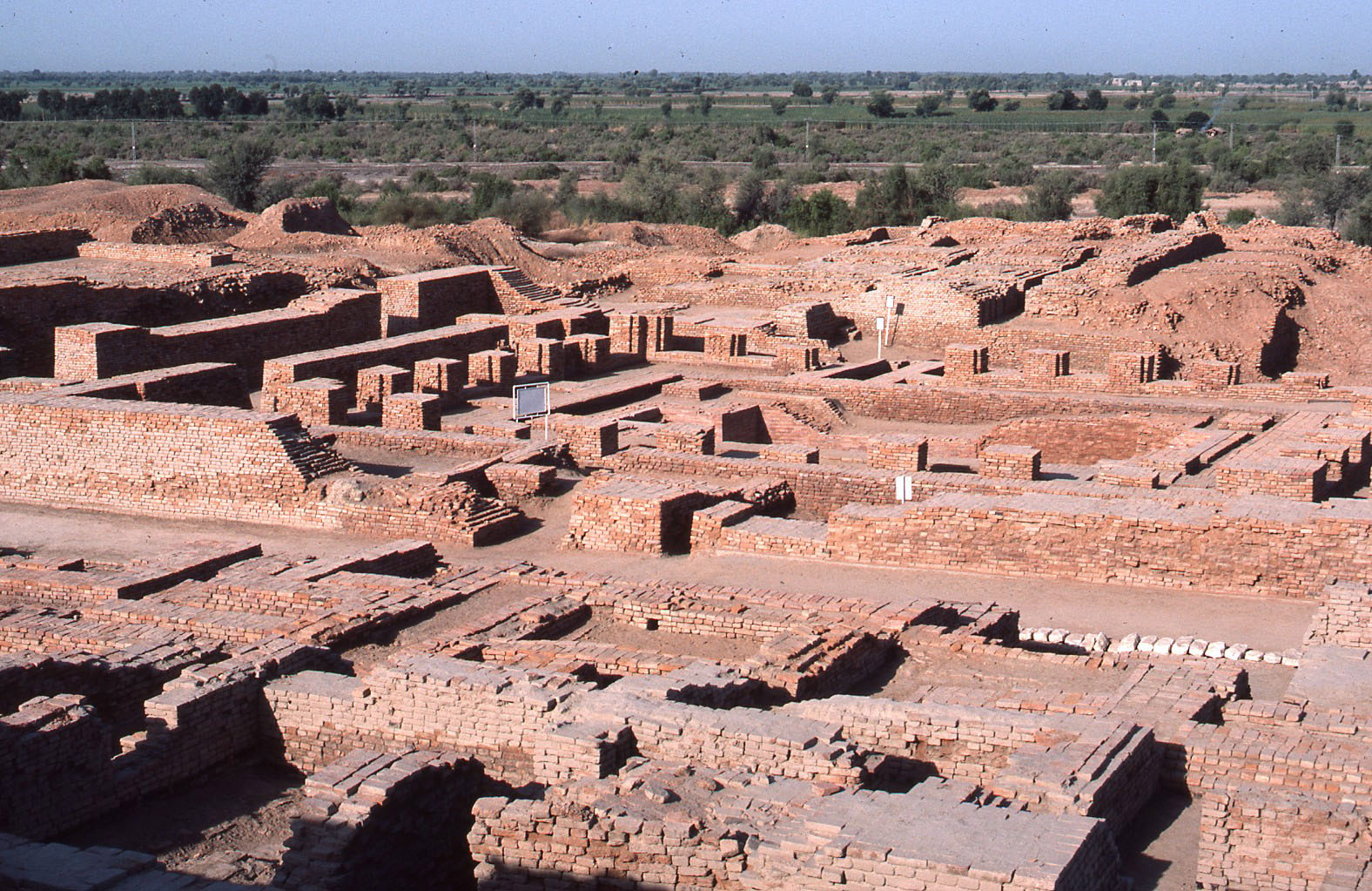
The three most famous sculptures from Mohenjo Daro, on the Sindhu/Indus river, seem ill-chosen to represent the Pakistani publicity campaign “5000 years of Pakistan”. The “king-priest” apparently is an officiant of a stellar cult, and at any rate of a cult other than Islam, so according to the Pakistani state ideology, raison d’être for Pakistan’s very existence, he was a leading figure in a false religion belonging to Jahiliyya, the “age of ignorance”. Like the seated yogi surrounded by animals, “Śiva Paśupati”, he must be burning in hell now. As for the “dancing girl”, stark naked and in a defying pose, in today’s Pakistan she would be stoned to death right away.

And yet, that Pakistani slogan does make sense. Bear with me, as I will take the reader through a convoluted array of scriptural and historical data, and you will see why this conclusion is anything but far-fetched. Indeed, it is inevitable.


Foreign

The Northwest has always had a negative connotation in the Vedic tradition. Thus, R. Siddhantashastree (1978: History of the Pre-Kali-Yuga India, Delhi: Inter-India Publications, p.11) writes:

“The valley of the five tributaries of the Indus had always been held as an unholy region because of its occupation by a non-Aryan tribe antagonistic to the civilized Aryans until the time of Sambarana, (...) the king of Hastinapura belonging to the Lunar dynasty. He was the first Aryan to settle in the valley after driving away the aboriginal non-Aryans to a considerable distance.”

The latter sentence suggests a concession to the Aryan Invasion Theory (AIT) by positing an antagonism between “Aryans” and “aboriginals”, contrary to the Puranic narrative revaluated by the same author, which has the Aryans come from inner India to this peripheral zone and then to Central Asia. This simply exemplifies the confusion regarding Aryan origins. Then again, perhaps it is the reader who is misled by this received wisdom while the author has a different scenario in mind: the Aryans as natives of a part of India, who came as conquerors to subdue the natives of other parts of India, notably the Northwest.

As Shrikant Talageri (The Rigveda, an Historical Analysis, and The Rigveda and the Avesta, the Final Analysis, Delhi: Aditya Prakashan 2000 c.q. 2008) has argued, the ancient Hindu suspicion towards the Northwest is a strong argument against the AIT. Knowing the Hindu veneration for origins, they should have treated the region of their provenance far more positively. Anyway, we note that Siddhantashastree situates this anti-Northwest attitude already in the pre-Vedic age, in the very beginning of Aryan history.


Battle of the Ten Kings

By the time the Vedic seers start composing their hymns, though, the Northwest is already populated by cognate tribes speaking an Indo-European dialect: first, the Druhyu tribe, still remembered in the Rg-Veda as a defeated enemy of the Vedic Pūru tribe, but largely already emigrated to Afghanistan and beyond; then the Anu tribe, the direct enemy confronted by the Vedic people themselves at the time the hymns were being composed. Though speaking related dialects, then probably still mutually understandable, they come into the Vedic horizon as enemies, as harbingers of evil. They add to the region’s negative aura.

Both the successive enemies, from the Druhyu and the Anu tribe, attack the Vedic Pūru tribe from the Northwest. A confederacy led by the Anu tribe comes to confront the Vedic king Sudās in the Battle of the Ten Kings, the foremost historical event in the Ṛg-Veda (7:18-33-83). Unexpectedly, they suffer complete defeat and relocate to Afghanistan. In the names of the tribes and kings, we recognize Iranian (and not Dravidian) names, and in their religion, we recognize the main traits of Mazdeism. The enemies are said to be “without Indra” and “without the Devas”, who were indeed demonized in Mazdeism; and “without fire-sacrifice”, because in Mazdeism, fire is so sacred that one shouldn’t pollute it by throwing things into it. It seems that then already, near the beginning of Vedic history, Mazdeism had its distinctive features.

This is all the more remarkable because this was even before Zarathuštra, the supposed reformer who brought these traits into being. Some three generations later, another battle confirms the division of power and territory. In that more even battle, Ṛjāśva, descendant of Vṛṣagira (hence the “Vārṣāgira battle”), and Sahadeva, descendent of Sudās, face the Iranian king who is remembered in history through the mentions and praise he receives in his court priest Zarathuštra’s own hymns: Kavi Vištāspa. Both parties are mentioned in the Veda 1:100, 1:122) and the Avestā.

The proverbial demons, the Asuras (comprehensively discussed in Hale, Wash Edward: Asura in Early Vedic Religion, Motilal Banarsidass, Delhi 1986, and in Krishna, Nanditha: The Book of Demons, Penguin, Delhi 2014 (2007)), originally indicate the class of gods preferentially worshipped by the Anu tribe, but also by the first Vedic seers. Varuṇa, god of the night sky with its orderly succession of constellations, hence god of the world order (ṛta/aša, seen in Persian names like Artaxerxes) is an Asura, a “lord” or “mighty one”. The Iranians, who often replaced /s/ with /h/, called him Ahura Mazda, “Lord Wisdom”. After the Iranians had demonized the Devas/Daēvas, the Indians started to demonize the Asuras, and Varuṇa gradually fell into disuse, even if by no means as steeply demonized as Indra by the Mazdeans. At any rate, Vedism and Mazdeism conceived of one another as antagonistic, much as Hinduism and Islam do today.

In theological respect, the Iranian religion Mazdeism has often been considered monotheistic, and in popular publications this account still persists. This was not entirely correct (SkjaervØ, Prods Oktor: “Zarathustra: a Revolutionary Monotheist?”, p. 317-350, in Pongratz-Leisten, Beate: Reconsidering the Concept of Revolutionary Monotheism, Eisenbrauns, Winona Lake IN 2011), it remained a polytheism, and Zarathuštra with his hyperfocus on one god was strictly speaking a “henotheist”, and hardly representative for the common religion. But it was sufficiently close. The Persians became the saviours of the Israelites with their budding monotheism, their preferred god Varuṇa was the moralist in the Indo-Iranian pantheon (as is apparent from RV 7:86), a bit like the Christian god, and the idea of exalting a single god so much above the others shows a would-be monotheist urge. All this allows for the conclusion that Islamic monotheism is but a radicalization of Zarathuštra’s henotheism. His religion, and possibly his personal religious dissent, was at any rate sufficiently different from the Vedic religion to be thematized as a factor in the long-drawn-out conflict described in the Ṛg-Veda.

So, Pakistan, which has a Persianized form of Hindi as national language, can really be said to be the heir of the proto-Iranian tribes living in that same territory in the Vedic age, or at least to fulfil the same antagonistic role in the Hindu worldview.


Other considerations

The epics give even more flesh to this hostile attitude. In the epics, the troublesome characters typically come from the Northwest. The Rāmāyaṇa intrigue is caused by Kaikeyī, a co-wife of Rāma’s father coming from the northwestern Kaikeya tribe. Gāndhārī, mother of the enemy Kauravas, and her brother Śakuni, deceiver at dice and evil spirit behind the disrobing of Draupadī, come from Gandhāra in Afghanistan. Mādrī, who triggers the death of king Paṇḍu, cause of the whole war, belongs to the Iranian Madra tribe (apparently related to the Medes).

The first, to my knowledge, to become aware of this dislike’s relevance to the Aryan Homeland issue, was Shrikant Talageri. The negative aura of the Northwest was so consistent and unadulterated that this could not possibly be the venerated land of their ancestors. To the above and other considerations, he has added a fact he remembers from his own Saraswat Brahmin community. When it was time for religious fasting, rice was not eaten, but wheat products were. They did not consider wheat, which in the Vedic age came from the Northwest, as real food, and treated it on a par with foreign foods like potatoes. (Talageri 2008:102-106) The wheat-growing Northwest was a foreign country, as Pakistan now is to India.

For another consideration: a negative designation in Sanskrit is Mleccha, “barbarian”. The word is generally taken to come from Meluhha, the Mesopotamian name for Sindh, now in Pakistan. So, long before Pakistan existed, proto-Pakistanis were already called “barbarians” by orthodox Hindus.

Another Vedic fact, peripheral but symbolically significant, is this. An enemy of the Pauravas is called the Guṅgu tribe (RV 10:48:8). But Guṅgu in Vedic means the firstly-appearing moon, the crescent. And what country has the crescent in its flag?


Territorial claims

The ancient Ānavas lived in West Panjab where they confronted the Vedic king Sudās in the Battle of the Ten Kings, the first Indo-Pak war. (Then already, such wars typically ended in Pakistani defeat.) But where did they come from? Aha, as per Puranic tradition, they immigrated from Kashmir, after taking Panjab from their Druhyu cousins. Kashmir was known in the Mazdean Videvdād as the Airiiānām Vaējo, the “seed of the Iranians”, their intermediary Homeland. It was the place of their ethnogenesis after having migrated westwards from Prayāga as part of Yayāti’s branch of the Lunar Dynasty; much like in 1947, the Mohajirs migrated from the Ganga-Yamuna plain to Pakistan.

This proves, as proofs go in irredentism, that Kashmir belongs with Pakistan. So, if all else fails, Pakistan can justify its separate existence, its hostility to India and its territorial demands by invoking Vedic testimony.
Great post! The pre-amble was a bit odd but the meat of this excerpt was spot on.

IVC is Persian descended. We were regarded as "mlecchas" by the vedic cultists from the Eurasian Steppe.

Neither the IVC nor the vedic culture were products of the Indian subcontinent. One came from Persia and the other from the Eurasian Steppe.

The following quote is the inevitable conclusion of this ancient rivalry.

"At any rate, Vedism and Mazdeism conceived of one another as antagonistic, much as Hinduism and Islam do today."
 
Great post! The pre-amble was a bit odd but the meat of this excerpt was spot on.

IVC is Persian descended. We were regarded as "mlecchas" by the vedic cultists from the Eurasian Steppe.

Neither the IVC nor the vedic culture were products of the Indian subcontinent. One came from Persia and the other from the Eurasian Steppe.

The following quote is the inevitable conclusion of this ancient rivalry.

"At any rate, Vedism and Mazdeism conceived of one another as antagonistic, much as Hinduism and Islam do today."
Vedas was composed in north west pakistan/afghanistan
 
Vedas was composed in north west pakistan/afghanistan
Where did its composers come from? What group of languages was the sanskrit language derived from? Were the ideologies imported or native?

I put it to you that vedic influence is foreign to the subcontinent, as foreign as hindus claim Islamic influence to be.

The rationale for this has been discussed in detail in multiple threads.
 
Where did its composers come from? What group of languages was the sanskrit language derived from? Were the ideologies imported or native?

I put it to you that vedic influence is foreign to the subcontinent, as foreign as hindus claim Islamic influence to be.

The rationale for this has been discussed in detail in multiple threads.
It's foreign but it has been heavily transformed too. I don't think bronze age steppe migrants might find a whole lot of commonality with modern hinduism.

Just look at how the kalash live for example. Even though they follow a pantheon that is directly related to hindu deities; they preserve a way of life and laws that are very different. they eat meat too without hesitation e.t.c. and would probably line up very closely to how these 'vahlika' people were described as
 
One came from Persia and the other from the Eurasian Steppe.
None of the scriptures talk anything about Eurasian Steppe anywhere. Untill you can find a reference to any of the scriptures, Vedas remain originated in Bharat it exclusively talks about Mountains and rivers of this land. Not the Mount Caucusus.
 
I don't think bronze age steppe migrants might find a whole lot of commonality with modern hinduism.
Bronze age steppe migrants were not high culture. If you look at their direct descendants, that is, people with highest steppe ancestry they are often lower in social strata (read caste) say Kalash people or Rors in India. The later migrants like Jatts, a recent central Asian migrants, had a higher upward social mobility vis the Steppe.
 
None of the scriptures talk anything about Eurasian Steppe anywhere. Untill you can find a reference to any of the scriptures, Vedas remain originated in Bharat it exclusively talks about Mountains and rivers of this land. Not the Mount Caucusus.
What they formulated locally for scriptures is not relevant to the point made about their origin. Do not obfuscate needlessly. It doesn't help your cause.

What matters is that these people are FOREIGN to the subcontinent. They brought ideogies with them and refined those ideologies locally to create a religion (Vedism), which was contrarian to the established local customs prior to their arrival. Whether the locally syncretised practices are deemed "good" or "bad" is entirely subjective. To you, vedic ritual will be fantastic. To me, not so much.

It has been explained to you directly, multiple times, on multiple threads, that there is direct evidence that the customs of the Harappans were replaced by the usurpers who arrived from Eurasian lands (the Black Sea region).


The case put forward against Islam being practiced by locals and against Muslim legacy being realised in the subcontinent is that it is "foreign" by origin. The precise same argument applies to Vedism. If you smash a mosque because it is "foreign", be sure to smash a vedic temple for the same reason.

Yes, vedism was ultimately accepted by locals. So was Islam.
 
It's foreign but it has been heavily transformed too. I don't think bronze age steppe migrants might find a whole lot of commonality with modern hinduism.

Just look at how the kalash live for example. Even though they follow a pantheon that is directly related to hindu deities; they preserve a way of life and laws that are very different. they eat meat too without hesitation e.t.c. and would probably line up very closely to how these 'vahlika' people were described as
If your speculation here is that the Kalash are closer in their practices to the precursor Harappan belief system, then you may be right, but there is simply no evidence available to confirm or refute this particular hypothesis. It remains mere speculation.
 
Devdutt Patnaik is a mythologist not a historian. His stories are good, but take his history lessons with a grain of salt
He says as much, that he is a mythologist, not a historian, at the start of the video.
 
What they formulated locally for scriptures is not relevant to the point made about their origin. Do not obfuscate needlessly. It doesn't help your cause.

What matters is that these people are FOREIGN to the subcontinent. They brought ideogies with them and refined those ideologies locally to create a religion (Vedism), which was contrarian to the established local customs prior to their arrival. Whether the locally syncretised practices are deemed "good" or "bad" is entirely subjective. To you, vedic ritual will be fantastic. To me, not so much.

It has been explained to you directly, multiple times, on multiple threads, that there is direct evidence that the customs of the Harappans were replaced by the usurpers who arrived from Eurasian lands (the Black Sea region).


The case put forward against Islam being practiced by locals and against Muslim legacy being realised in the subcontinent is that it is "foreign" by origin. The precise same argument applies to Vedism. If you smash a mosque because it is "foreign", be sure to smash a vedic temple for the same reason.

Yes, vedism was ultimately accepted by locals. So was Islam.
Huh? Do you have any proof that the culture was alien to the local? How can worshipping deities living in Mountains of India, residing in rivers of India originating in the mountains of India be alien to the local custom? A Vedic ritual is fantastic to me because afterall it's of this land and soil. There is absolutely zero evidence or historical accounts for the customs of IVC. The people who found the IVC thought the depiction was an early form of Hinduism like a God revered by animals showing pashupati seal. All you have is theories from a bunch of people regarding their customs, there is no written records that can be deciphered and your only source for India's ancient history is Vedas that's how you know who were the kings ruling the regions back in the day and so on and so forth.

Islam is immaterial to this discussion it came almost 3000 years after IVC to the subcon where we have correct accounts of how and what happened. You can't draw parallels here. Such a discussion wouldn't end well in this forum
 
Huh? Do you have any proof that the culture was alien to the local? How can worshipping deities living in Mountains of India, residing in rivers of India originating in the mountains of India be alien to the local custom? A Vedic ritual is fantastic to me because afterall it's of this land and soil. There is absolutely zero evidence or historical accounts for the customs of IVC. The people who found the IVC thought the depiction was an early form of Hinduism like a God revered by animals showing pashupati seal. All you have is theories from a bunch of people regarding their customs, there is no written records that can be deciphered and your only source for India's ancient history is Vedas that's how you know who were the kings ruling the regions back in the day and so on and so forth.

Islam is immaterial to this discussion it came almost 3000 years after IVC to the subcon where we have correct accounts of how and what happened. You can't draw parallels here. Such a discussion wouldn't end well in this forum
You're incorrect.

There is evidence of Shiva or proto-Shiva related worship in Harappa. At the same time, we know they ate meat, including beef. We also know there is no evidence of any caste structure.

Essentially, immigrants have likely brought innovations ("bid'ah") to the original animist faith practiced by Harappans.

It is a clever strategy, granted - acknowledge the local deity and worship form but add multiple layers of innovation on top to suit the needs of a new brahminist-centric cult led by foreigners.

If you cannot demonstrate the nativity of Sanskrit, the Aryan race, and the Vedic religious cultist beliefs to the subcontinent, then it must be classified as foreign influence. Indeed, contrary to your erroneous statements, hinduism's scriptures do allude to a rivalry between aryans and the remnants of harappa's destroyed civilisation. This rivalry was most likely adversarial and most likely violent.

"Hariyupia" probably refers to Harappa and is mentioned as the site of a battle between foreigners and the Harappans:

RV 6-27-5/6
“In aid of Abhyavartin Cayamana, Indra destroyed the seed of Varasikha.
At Hariyupia he smote the vanguard of the Vrcivans, and the rear fled freighted.

Three thousand, mailed, in quest of fame, together on the Yavyavati, O much sought after Indra
Vrcivan’s sons, falling before the arrow, like bursting vessels went to their destruction”.

Don't get me wrong - I am not criticising these ancient acts. All was fair game back then. Empires changed hands. Slaughter was wholesale, well before the arrival of monotheists - just ask Ashoka if you do not believe me.

If you love the Aryan influence to the point that you compete with other bhakts to name your sons some new variant of the word "Aryan", then please be proud of this civilisational trajectory and own your history rather than deny it!

Aryans came from afar, crushed locally established civilisations and culture, and replaced it with their own ideologies. Nothing to be ashamed of. Just don't complain when some monotheist ideology arrives later on and dishes out the same Ashoka or Aryan treatment to those "liberators" of the past.
 
You're incorrect.

There is evidence of Shiva or proto-Shiva related worship in Harappa. At the same time, we know they ate meat, including beef. We also know there is no evidence of any caste structure.

Essentially, immigrants have likely brought innovations ("bid'ah") to the original animist faith practiced by Harappans.
Beef ban is not Central to Hinduism, there are numerous revered beings, cow is just one. Even then cultures around the world had banned slaughter of cattle one way or the other and it's not Central to any religion.

What you essentially proved is, the religion is indigenous because it exists in this form only in India. Well no shit. You can explain it out in hundred words like saying terms like "absorbed". Yeah migrants influenced a lot, in fact migrants have influenced Hinduism throughout its history that's what makes it an Indian religion.
If you cannot demonstrate the nativity of Sanskrit, the Aryan race, and the Vedic religious cultist beliefs to the subcontinent, then it must be classified as foreign influence. Indeed, contrary to your erroneous statements, hinduism's scriptures do allude to a rivalry between aryans and the remnants of harappa's destroyed civilisation. This rivalry was most likely adversarial and most likely violent.
Can you demonstrate Sanskrit being spoken anywhere outside? This again comes back to the old problem. We are not sure what IVC people spoke, it could be a proto Indo Iranian language given their DNA. But would you go as far as to say Iranians are also Steppe Aryans?
Hinduism scriptures don't allude any such theories. The only major battle mentioned in Vedas is the battle of ten kings which Bharata tribe won and you referenced it here as a war between IVC and Aryans lol!
"Hariyupia" probably refers to Harappa and is mentioned as the site of a battle between foreigners and the Harappans:

RV 6-27-5/6
“In aid of Abhyavartin Cayamana, Indra destroyed the seed of Varasikha.
At Hariyupia he smote the vanguard of the Vrcivans, and the rear fled freighted.
Vrichivans? Wow! One of the Vedic tribes is now Indus Valley indigenous people. Man, they are a famous Vedic tribe ain't no way you make them Harappan IVC. Hariyupia "probably" refers to.... Yeah sure. Linguistics.... It could also referance to nothing.

But let's take your story seriously, Bharata tribe, centered around Haryana in North India defeated IVC Harappans centered around Pakistan. And yet 3500 years later...😂 Chad Haryanvis
Three thousand, mailed, in quest of fame, together on the Yavyavati, O much sought after Indra
Vrcivan’s sons, falling before the arrow, like bursting vessels went to their destruction”.

Don't get me wrong - I am not criticising these ancient acts. All was fair game back then. Empires changed hands. Slaughter was wholesale, well before the arrival of monotheists - just ask Ashoka if you do not believe me.

If you love the Aryan influence to the point that you compete with other bhakts to name your sons some new variant of the word "Aryan", then please be proud of this civilisational trajectory and own your history rather than deny it!

Aryans came from afar, crushed locally established civilisations and culture, and replaced it with their own ideologies. Nothing to be ashamed of. Just don't complain when some monotheist ideology arrives later on and dishes out the same Ashoka or Aryan treatment to those "liberators" of the past.
And you wrote a whole essay based of a silly mistake. Do better.
 
Last edited:
It was the British who basically discovered this entire civilization.

Why do Indians forget this?

If this was such a part of Indian history you think in 3000 years they might have been more aware of it?

Instead it has become communalized rather than a subject of archaeological and historical study.


If anyone can lay claim to the civilization as part of their history it would be the people who have the history under their feet.


It's that simple


Then again, there is so much more under the ground we do not know.
 
Beef ban is not Central to Hinduism, there are numerous revered beings, cow is just one. Even then cultures around the world had banned slaughter of cattle one way or the other and it's not Central to any religion.

What you essentially proved is, the religion is indigenous because it exists in this form only in India. Well no shit. You can explain it out in hundred words like saying terms like "absorbed". Yeah migrants influenced a lot, in fact migrants have influenced Hinduism throughout its history that's what makes it an Indian religion.

Can you demonstrate Sanskrit being spoken anywhere outside? This again comes back to the old problem. We are not sure what IVC people spoke, it could be a proto Indo Iranian language given their DNA. But would you go as far as to say Iranians are also Steppe Aryans?
Hinduism scriptures don't allude any such theories. The only major battle mentioned in Vedas is the battle of ten kings which Bharata tribe won and you referenced it here as a war between IVC and Aryans lol!

Vrichivans? Wow! One of the Vedic tribes is now Indus Valley indigenous people. Man, they are a famous Vedic tribe ain't no way you make them Harappan IVC. Hariyupia "probably" refers to.... Yeah sure. Linguistics.... It could also referance to nothing.

But let's take your story seriously, Bharata tribe, centered around Haryana in North India defeated IVC Harappans centered around Pakistan. And yet 3500 years later...😂 Chad Haryanvis

And you wrote a whole essay based of a silly mistake. Do better.
Get your timelines right first and foremost. Furthermore, do not misrepresent me by creating a strawman argument. I explicitly stated in my preceding post:

"rivalry between aryans and the remnants of harappa's destroyed civilisation."

When the Aryans arrived in the subcontinent. The original IVC was long gone. Its remnants remained, nothing more. This fact has been alluded to in multiple previous posts. Nevertheless, whomsoever was at that site when the Aryans arrived, they were defeated by the "peace loving migrants" one way or another.

The only "mistake" in our conversation is in your attempted strawman argument.

Although we are not sure what the Harappans spoke, the imagery of their script looked nothing like proto-IndoEuropean languages, which Sanskrit categorically was. The very fact you are here denying even Sanskrit's origins leads me to question your motives.

As for modern Iranians, they themselves will tell you what they are genetically - yes, an Aryan contribution certainly exists therein, as it does for Pakistanis and North Indians.

The difference between you and modern Iranians or Pakistanis is a simple one - we have no shame about the scientific facts that underlie our genetic (and linguistic, religious, and cultural) origins. No nation on earth does except for the mighty and pure "exclusively out of India saar" Bharati qom.

We know why India MUST preserve the out-of-India narrative at all costs - that is due to the desire to expunge islamic legacy across the subcontinent on the pretext of it being "invasive" while Vedism must be determined to be "native". However, despite this explanation for the rationale behind Indian obsessions in denying their own history, the facts to support this position are becoming increasingly scarce.
 

Users who are viewing this thread

Pakistan Defence Latest

Latest Posts

Back
Top