Navigation
Install the app
How to install the app on iOS
Follow along with the video below to see how to install our site as a web app on your home screen.
Note: This feature may not be available in some browsers.
More options
Style variation
You are using an out of date browser. It may not display this or other websites correctly.
You should upgrade or use an alternative browser.
You should upgrade or use an alternative browser.
Wildlife in Pakistan
- Thread starter ghazi52
- Start date
More options
Who Replied?


ghazi52
THINK TANK: CONSULTANT
- Thread starter
- #137
Great Indian Bustard population shows recovery in Cholistan
Fragile recovery result of enhanced conservation efforts, ongoing field monitoring, creation of dedicated reserve
Asif Mehmood
July 22, 2025
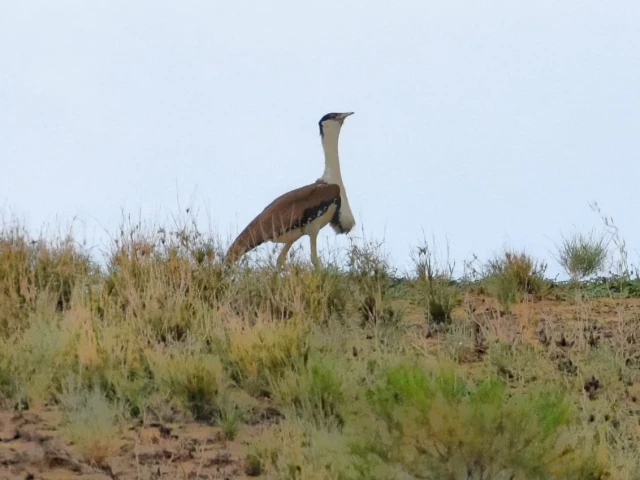
In a significant development for wildlife conservation in Pakistan, the critically endangered Great Indian Bustard, locally known as Bhakhar, has shown promising signs of population recovery in the Cholistan Desert, according to Punjab wildlife authorities.
Wildlife experts estimate the global population of the Great Indian Bustard to be between 80 and 90, with approximately 30 to 35 believed to inhabit the Cholistan region of Pakistan. This fragile recovery is the result of enhanced conservation efforts, ongoing field monitoring, and the creation of a dedicated public wildlife reserve.
“This bird is now restricted to the Cholistan Desert in Pakistan and Rajasthan in India,” confirmed Wildlife Conservator Syed Rizwan Mehmood.
He documented rare video footage and photographs of the species during a recent field survey.
“The sighting and documentation of its presence confirm its continued survival in Pakistan. It’s a major breakthrough.”
Bahawalpur Deputy Chief Wildlife Ranger Syed Ali Usman Bukhari emphasised the role of dedicated habitat protection in aiding the bird’s recovery.
“A designated Public Wildlife Reserve has been established in Cholistan specifically to protect the Great Indian Bustard. Strengthened conservation measures have led to a gradual increase in the population of this native species,” he said.
The Great Indian Bustard (ardeotis nigriceps) is listed as "critically endangered" by the International Union for Conservation of Nature (IUCN), making it one of the most threatened bird species in South Asia.
Once found in large numbers across the Indian subcontinent, the species is now confined to fragmented habitats in India and Pakistan due to habitat loss, hunting and human disturbance.
Renowned for its distinctive appearance, the Great Indian Bustard is among the heaviest flying birds in the world. Males can weigh up to 15 kilograms, stand about one meter tall, and have a wingspan exceeding two meters. The bird is easily identified by its brown, white and black plumage and a prominent black patch on the neck.
It lays only one egg per year, resulting in an extremely low breeding rate making every individual crucial to the survival of the species.
Under the Convention on International Trade in Endangered Species (CITES), all international trade of the species is strictly prohibited. Domestically, the bird enjoys legal protection, with all forms of hunting or trade banned.
Unlike the more commonly targeted Houbara Bustard, which has faced significant pressure from hunting by foreign falconers, the Great Indian Bustard has largely been spared due to its rarity and the strict penalties imposed on violators.
Conservationists remain cautiously optimistic. “The progress we’re seeing in Cholistan is encouraging, but the species remains on the brink,” said a wildlife official. “We must maintain and expand protection efforts, raise awareness, and safeguard critical habitats if we are to prevent its extinction.”

El Sidd
Elite Member


Rare caracal wild cat spotted in Pakistan’s Cholistan desert
ISLAMABAD: The highly elusive and rare caracal wild cat has been spotted in the Cholistan desert in Pakistan’s southern Punjab province this week, a wildlife official said on Tuesday. The caracal is a medium-sized animal native to Africa, the Middle East, Central Asia, and arid areas of Pakistan...
 www.arabnews.com
The Cholistan desert is throwing up surprises again.
ghazi52
THINK TANK: CONSULTANT
- Thread starter
- #139
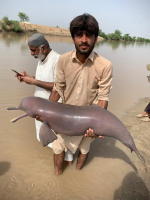
Indus river dolphin , It is known as Blind Dolphin.
According to the last survey which was held in 2019, there were as many as 1,419 dolphins between the Guddu and Sukkur barrages, of Sindh, Pakistan.
The area in which they were counted is called the Indus Dolphin Reserves.
ghazi52
THINK TANK: CONSULTANT
- Thread starter
- #140
China uses 5G, AI ‘robot antelope’ for wildlife monitoring
Lifelike robot scans Hoh Xil plateau in Beijing’s expanding monitoring network
Reuters
August 12, 2025
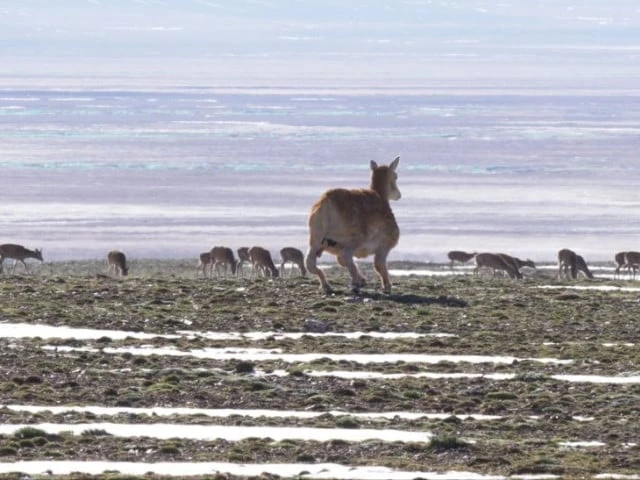
A lifelike “robot antelope” is roaming Tibet’s Hoh Xil plateau as part of China’s expanding surveillance network, state media footage shows.
With doe-like eyes and thick brown fur, the 5G- and AI-enabled device closely resembles the endangered Tibetan antelope while scanning the area with its sensors, according to Xinhua. Developed by Xinhua, the Chinese Academy of Sciences and Hangzhou-based DEEP Robotics, it uses real-time monitoring to track the migration, feeding and mating habits of the species.
China has offered its robotics industry tens of billions in subsidies and recently hosted the 2025 World Robot Conference. 5G services reached Tibet in 2019 and, by 2022, the region had one million users. A base station built in Gogmo in late 2023 extended coverage to every district, state media reported.
Beyond monitoring wildlife, the infrastructure supports AI applications including drones, telemedicine and “smart” yak herding.
ghazi52
THINK TANK: CONSULTANT
- Thread starter
- #141
Rare leopard falls to human wrath
The Wildlife Department later took possession of the carcass
ZUBAIR AYUB
August 15, 2025
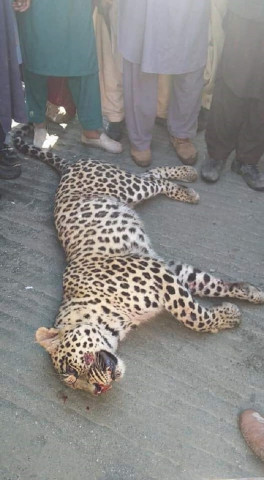
ABBOTTABAD: Locals spotted a rare injured leopard on the roadside on the outskirts of Boi, Abbottabad, and further attacked it with sticks and stones. The animal later died from its injuries.
The animal, which had strayed from the forest in the limits of Bakoat police station into a nearby settlement, was reportedly semi-conscious when a rope was tied around its neck and it was dragged along the road. In some instances, individuals pulled the leopard by its tail for several miles. Many onlookers recorded the disturbing scenes, taking videos and selfies, which they later posted on social media. The footage quickly went viral, with some residents claiming that the attack was a form of revenge for livestock losses in the area.
Police from the Boi checkpoint arrived at the scene and, after considerable efforts, took the injured leopard into their custody. However, the animal succumbed to its injuries shortly after being moved to the police post. The Wildlife Department later took possession of the carcass.
Locals alleged that wild leopards had killed dozens of their goats in recent months. According to wildlife officials, the leopard's condition suggested it may have been poisoned or infected with a dangerous virus affecting the brain.
ghazi52
THINK TANK: CONSULTANT
- Thread starter
- #142
Hunting season opens with new wildlife laws
132 FIRs registered so far; confiscation of weapons, vehicles part of new penalties
Asif Mehmood
August 23, 2025
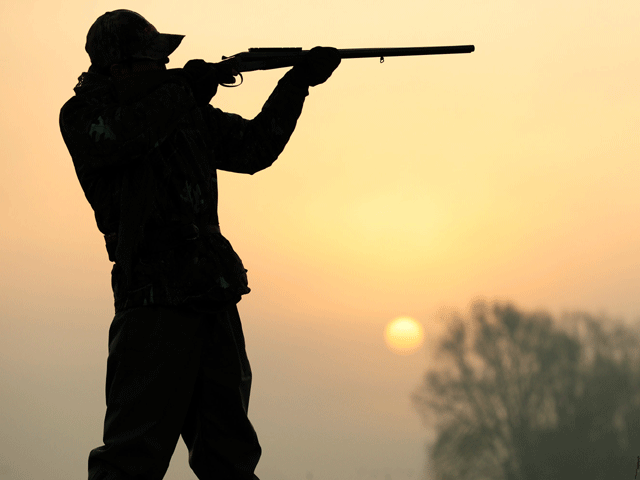
LAHORE: The hunting season for quails and other game birds has officially opened in Punjab from August 1 and will continue until April 15, 2025.
Authorities have cautioned hunters that stricter punishments will apply this year under the newly amended Punjab Wildlife Act, 1974.
So far, 132 FIRs have been registered against offenders since the start of the season.
The amended law, effective from 2025, makes illegal hunting and poaching cognisable and non-bailable offences. Violators now face fines ranging from Rs50,000 to Rs5 million and imprisonment of up to seven years.
According to the Punjab Wildlife Act, hunting is permitted only during notified seasons, within daily limits, and with a valid license.
Hunting inside national parks, wildlife sanctuaries, and game reserves remains strictly prohibited. This year's schedule specifies that quail hunting is allowed from August 15 to April 15, with a daily limit of 50 birds.
For rain-fed quail species, the limit is six per day between August 1 and September 30. Migratory waterfowl, including ducks and geese, may only be hunted on weekends from October 1 to March 31, with a maximum of 10 birds per day.
Crane hunting is permitted from August 15 to April 15 with a limit of three, while chukar partridge and see-see partridge may be hunted between November 1 and March 1, with a daily bag of five each. Black and grey francolins can be hunted only on Sundays from November 15 to February 15, with a limit of six. Larger game such as blue bulls (nilgai) and urial may be hunted only with special permits.
Previously, poaching cases were considered bailable and prosecuted in ordinary courts. Under the new amendments, however, violations of Sections 9, 11, 12, 13, 20, and 28 of the Act now carry penalties of two to five years in prison and fines ranging from Rs50,000 to Rs1 million.
For serious crimes, offenders may face up to seven years' imprisonment and fines as high as Rs5 million. Weapons, vehicles, and other equipment used in illegal hunting will also be confiscated, and cases will be heard in special courts.
Additional Chief Wildlife Ranger Syed Kamran Bukhari said wildlife rangers have been empowered to register FIRs, which will be prosecuted by district public prosecutors. For now, since the rules are still under approval, FIRs are being lodged with police assistance.
ghazi52
THINK TANK: CONSULTANT
- Thread starter
- #143
GB to auction hunting permits for 118 animals
Jamil Nagri
September 3, 2025
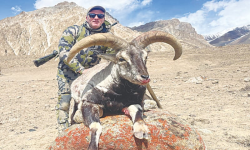
GILGIT: The Gilgit-Baltistan (GB) Wildlife and Parks Department will auction permits for 118 animals — including four Astore markhors, 100 Himalayan ibex, and 14 blue sheep — for the 2025–26 hunting season.
The bidding ceremony is scheduled to be held today (Wednesday) at the Forest, Parks and Wildlife Complex in Gilgit.
For the upcoming season, the base price of an Astore markhor permit has been raised to $200,000, while blue sheep and Himalayan ibex permits are set at $30,000 and $10,000, respectively.
Last year, the base rates were lower: $150,000 for markhor, $9,000 for blue sheep, and $5,500 for ibex. In the 2024-25 season, 118 permits were offered, but only 60 were purchased. The highest bid for a markhor reached $161,000, earning the GB government more than Rs30 million.
Officials note that prices in other regions, such as Khyber Pakhtunkhwa, can reach $500,000 for markhor hunts. However, local outfitters and tour operators argue the sharp fee hikes are damaging their businesses and discouraging international clients. They warn of losses for both outfitters and the local communities who rely on trophy hunting revenue.
Only half of the permits offered in last season found buyers amid various challenges
Ikram Beg, a Gilgit-based outfitter, said participation in the programme has dropped due to inflated rates, causing “devastating” impacts on livelihoods.
Similarly, Syed Sumsam Ali Bokhari, chairman of Safari Club International Pakistan Chapter, warned that rising prices undermine Pakistan’s competitiveness compared to neighbouring countries.
ghazi52
THINK TANK: CONSULTANT
- Thread starter
- #144
In Tajikistan, a markhor hunt costs about $160,000 including logistics; in Nepal, blue sheep hunts average $29,000; and ibex hunts in Central Asia range between $8,500 and $9,900.
Mr Bokhari added that security concerns, geopolitical tensions, and recent terrorist attacks in hunting regions such as Chitral further reduced the country’s attractiveness as a destination.
He urged the GB wildlife department to reconsider its pricing strategy to align with regional market trends.
Launched in 1990 in Bar Valley, Nagar, GB’s trophy hunting programme involves local communities, who receive about 80 per cent of hunting revenues for conservation and development projects.
While it has been credited with protecting endangered species, stakeholders fear the latest price hikes could jeopardise its sustainability.
Published in Dawn, September 3rd, 2025
Mr Bokhari added that security concerns, geopolitical tensions, and recent terrorist attacks in hunting regions such as Chitral further reduced the country’s attractiveness as a destination.
He urged the GB wildlife department to reconsider its pricing strategy to align with regional market trends.
Launched in 1990 in Bar Valley, Nagar, GB’s trophy hunting programme involves local communities, who receive about 80 per cent of hunting revenues for conservation and development projects.
While it has been credited with protecting endangered species, stakeholders fear the latest price hikes could jeopardise its sustainability.
Published in Dawn, September 3rd, 2025
ghazi52
THINK TANK: CONSULTANT
- Thread starter
- #145
The trophy hunting season spans from November till the start of April every year.
In October 2023, the GB Forest, Parks, and Wildlife Department auctioned four licences for the hunting of the prized Astore markhor, one of which fetched a record $186,000. The licences included four for Astore markhors, 14 for blue sheep, and 88 for Himalayan ibex in various community conservation areas across Gilgit-Baltistan.
The second highest permit for the Astore markhor was sold for $181,000, the third for $177,000, and the fourth for $171,000.
The base rate fees for blue sheep and Himalayan ibex permits were $9,000 and $5,500, respectively. Out of these, 51 Himalayan ibex, six blue sheep, and four Astore markhors were hunted by the end of the season.
While the GB Forest and Wildlife Department received Rs309.5 million, 80 per cent of this revenue goes to the respective community-controlled hunting areas, which distributes cheques among respective communities at special ceremonies, while the remaining 20pc goes to the national exchequer.
The trophy hunting programme in Gilgit-Baltistan, which began in the Nagar Valley in 1990, has since expanded to other areas within the region. Despite global controversies surrounding trophy hunting, proponents argue that such programmes help prevent poaching, empower local communities, and contribute to wildlife conservation.
In October 2023, the GB Forest, Parks, and Wildlife Department auctioned four licences for the hunting of the prized Astore markhor, one of which fetched a record $186,000. The licences included four for Astore markhors, 14 for blue sheep, and 88 for Himalayan ibex in various community conservation areas across Gilgit-Baltistan.
One of the four Astore markhor licences issued this season fetched record $186,000
The second highest permit for the Astore markhor was sold for $181,000, the third for $177,000, and the fourth for $171,000.
The base rate fees for blue sheep and Himalayan ibex permits were $9,000 and $5,500, respectively. Out of these, 51 Himalayan ibex, six blue sheep, and four Astore markhors were hunted by the end of the season.
While the GB Forest and Wildlife Department received Rs309.5 million, 80 per cent of this revenue goes to the respective community-controlled hunting areas, which distributes cheques among respective communities at special ceremonies, while the remaining 20pc goes to the national exchequer.
The trophy hunting programme in Gilgit-Baltistan, which began in the Nagar Valley in 1990, has since expanded to other areas within the region. Despite global controversies surrounding trophy hunting, proponents argue that such programmes help prevent poaching, empower local communities, and contribute to wildlife conservation.
ghazi52
THINK TANK: CONSULTANT
- Thread starter
- #146
Currently, 60pc of the area in Gilgit-Baltistan has been declared a protected area.
GB is rich in flora and fauna due to its varied climatic conditions and ecosystem.
The region is home to many rare species, such as the Marco Polo sheep, ibex, markhor, urial, blue sheep, lynx, snow leopard, leopard cat, brown and black bears, wolf, fox, marmot, chakor, and ram chakor, and golden eagle.
However, some of these rare species are facing the threat of extinction due to illegal hunting, negligence by the wildlife department, and climate change-related issues.
Environmentalists also oppose trophy hunting, citing that it causes a decline in the population of wildlife species and encourages poaching.
GB is rich in flora and fauna due to its varied climatic conditions and ecosystem.
The region is home to many rare species, such as the Marco Polo sheep, ibex, markhor, urial, blue sheep, lynx, snow leopard, leopard cat, brown and black bears, wolf, fox, marmot, chakor, and ram chakor, and golden eagle.
However, some of these rare species are facing the threat of extinction due to illegal hunting, negligence by the wildlife department, and climate change-related issues.
Environmentalists also oppose trophy hunting, citing that it causes a decline in the population of wildlife species and encourages poaching.
SoulSpokesman
Trusted Member


hydrabadi_arab
Trusted Member
The legal hunting price of the national animal, the markhor, has reached as high as $370,000.
According to details surfaced on Thursday, for the 2025–26 trophy hunting season in Gilgit-Baltistan, the price for hunting one markhor has been fixed at $370,000.
During the auction of hunting permits for the 2025–26 trophy hunting season, the permit for Pakistan’s national animal was sold at a record bid exceeding Rs100 million. This is considered the highest price ever paid for markhor hunting anywhere in the world.
Last year, the Khyber Pakhtunkhwa Wildlife Department also sold its most expensive markhor hunting permit in Chitral for $271,000.
According to details surfaced on Thursday, for the 2025–26 trophy hunting season in Gilgit-Baltistan, the price for hunting one markhor has been fixed at $370,000.
During the auction of hunting permits for the 2025–26 trophy hunting season, the permit for Pakistan’s national animal was sold at a record bid exceeding Rs100 million. This is considered the highest price ever paid for markhor hunting anywhere in the world.
Last year, the Khyber Pakhtunkhwa Wildlife Department also sold its most expensive markhor hunting permit in Chitral for $271,000.
Rationale
Registered Member
That is because Pakistan is the only country where such permits are sold and other countries generally ban such hunting.This is considered the highest price ever paid for markhor hunting anywhere in the world.
hydrabadi_arab
Trusted Member
That is because Pakistan is the only country where such permits are sold and other countries generally ban such hunting.
Only old markhors are allowed to be hunted. All this money goes to local communities who take care of these animals instead of hunting them for food.
Users who are viewing this thread
Total: 2 (members: 0, guests: 2)
Pakistan Defence Latest
-

-

-

-
KP govt backs out of counterterrorism commitments during talks: Naqvi (7 Viewers)
- Latest: SteppeWolff
-

Country Watch Latest
-
 Iran - Israel/US War: Israel-US declare war on Iran, Iran responds (83 Viewers)
- Latest: Persian Gulf
-

-
-

-
Latest Posts
-
 Pakistan-China 5th gen fighter jet plan a concern, but we possess necessary capabilities: IAF Chief (16 Viewers)
- Latest: Pakistanithinktank
-
H-1B visas must end’: Wife of US citizen shares plight of landing IT jobs (17 Viewers)
- Latest: TangoRomeo
-

-