Wildlife in Pakistan

The Arabian oryx is a straight-horned, long-horned antelope native to the Arabian Peninsula and officially recognized as the national animal of the United Arab Emirates.

Adapted to semi-arid plains, coastal deserts, and shrublands, it can endure intense heat and survive for extended periods without water by relying on moisture-rich vegetation. Its striking white coat and long, parallel horns give it a distinctive appearance, while its ability to detect distant rainfall helps it track fresh plant growth. Once extinct in the wild, the species has been successfully reintroduced through conservation programs and now maintains stable populations in protected areas.

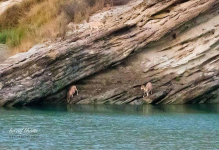
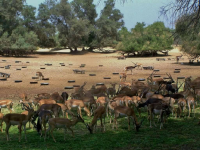
Both the addax and the Arabian oryx are desert-adapted antelopes capable of surviving harsh climates, including prolonged periods without water. They share similar habitats, semi-arid plains, coastal deserts, and shrublands, and exhibit specialized physiological and behavioral traits that allow them to thrive in extreme arid environments

Dr. Khan explained that their diet is managed under a structured feeding plan, ensuring that each animal receives the required nutrition. “Consistent monitoring, proper care, and the improved living environment have resulted in healthy new births within the herd,” he added.
 

Punjab announces partridge hunting season under strict regulations​


Special zones, permit auctions, multi-tiered hunting framework introduced across province

Asif Mehmood
November 26, 2025


tribune


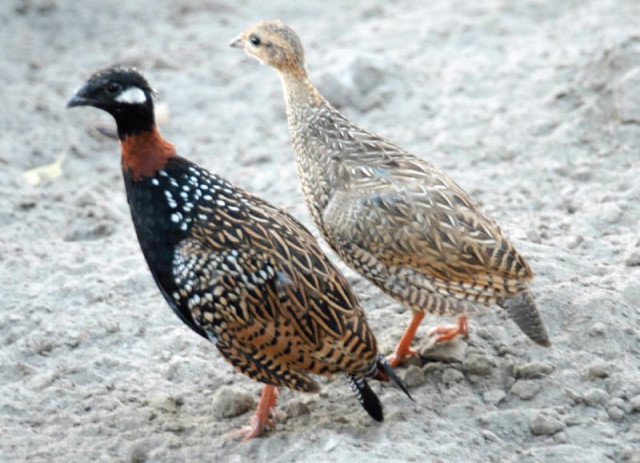
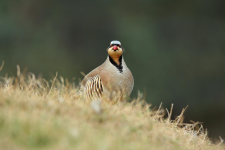
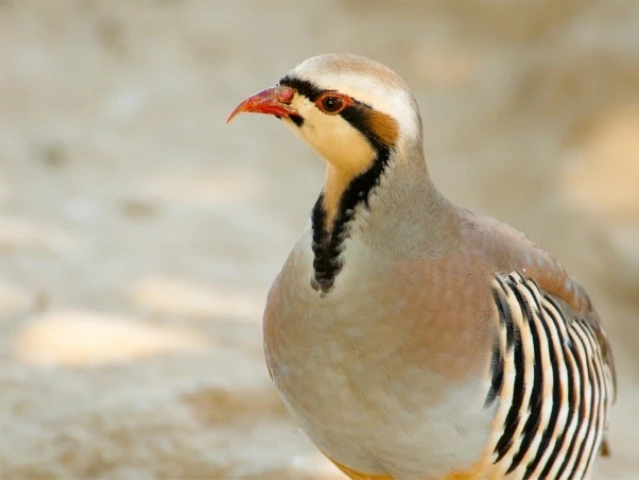
The Punjab Wildlife Department has announced the start of the Partridge hunting season across the province, outlining a detailed framework of designated hunting zones, permit procedures and regulatory conditions.

According to an official notification,Partridge hunting will only be allowed on Sundays and strictly within notified areas and dates. Outside the designated zones, the hunting fee has been set at one thousand rupees.

Under the amended wildlife regulations, the department has established special and general hunting grounds, community conservancies, and both public and private wildlife reserves. In Chakwal, Talagang, Jhelum and Khushab, several locations have been notified as hunting grounds. A total of one hundred and twenty-five special hunting grounds have been created where permits will be issued through an auction process.

Deputy Chief Wildlife Ranger Zahid Ali stated that the auction for special hunting permits will take place on 8 December 2025 at the office of the Deputy Chief Wildlife Ranger Salt Range in Kallar Kahar. “If permits remain available, the auction may continue for the following three days,” he added.

The hunting season in these special grounds will run from 14 December 2025 to 15 February 2026. “A comprehensive survey was carried out before the announcement, and permission will only be granted in areas where the population assessment supports sustainable hunting,” he said.

Apart from the special grounds, the department has designated thirty-six open hunting zones where the season will begin on 1 December and continue until 15 February 2026. However, some areas will remain closed to hunting: Jand in Attock district, the entire Murree district, 18-Hazari in Jhang, areas of Bahawalnagar, Bahawalpur and Rahim Yar Khan within the Cholistan desert, the Thal desert in Muzaffargarh, and Rojhan tehsil in Rajanpur. In all other districts, hunting will be permitted through the Wildlife Pass system.
 
Asim Bilal emphasized that only licensed firearms and valid permits will be allowed. The use of automatic or service weapons, PCP rifles, and air guns is prohibited. The use of drones and electronic devices is also banned. Hunters are not permitted to fire from vehicles, and only licensed gun dogs may be used.

Falconry will only be permitted for individuals holding a falcon-keeping licence. Each hunting party may consist of no more than three hunters and ten beaters.

The department has urged hunters to obtain GIS-based maps or shapefiles from their respective district wildlife offices to ensure awareness of the exact geographical boundaries of hunting zones and avoid boundary violations.

During the Partridge season, hare hunting will also be allowed only on Sundays and only for those who possess a valid Partridge permit. The department reiterated its appeal for hunters to secure all boundary maps beforehand to ensure full compliance with regulations.
 

Stuffed falcons and eagles sold on motorways alarm conservationists​

Experts warn protected raptors are being killed for trade as calls grow for an urgent inquiry and crackdown

Asif Mehmood
December 02, 2025


tribune


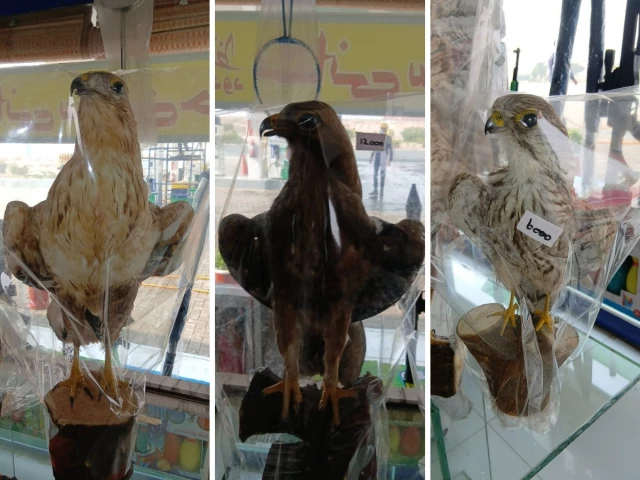
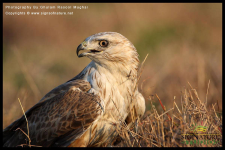
Conservationists have expressed deep concern over the sale of taxidermied falcons, eagles, and other birds of prey at several tuck shops located along Punjab’s motorways. Experts say these species are protected under provincial wildlife laws, and many are already facing the threat of local extinction. Despite this legal protection, their display and sale continue openly at government-regulated service areas.

“Taxidermy is only possible once an animal has died, which indicates that rare birds of prey are being deliberately killed and traded,” said Dr. Kamran Abid, a falconer and raptor conservation specialist affiliated with the Punjab Hawking Club.

He noted that this alleged practice is not only contributing to a significant decline in wildlife but is also destabilizing the ecological balance. “Birds of prey play a critical role in regulating populations of rodents, snakes, and other species, and their removal disrupts entire ecosystems.”


Dr Abid has called upon the Chief Minister of Punjab, Senior Minister Maryam Aurangzeb, and the Punjab Wildlife Rangers to launch an immediate inquiry into the source of these stuffed birds and investigate how such trade is taking place openly at motorway service areas. According to relevant circles, the situation not only constitutes a violation of law but also points to serious negligence on the part of responsible institutions.
 

Wildlife Rangers rescue stray hog deer in Shakargarh​

Two arrested in Lahore for illegal bird trade

Asif Mehmood
December 02, 2025


tribune


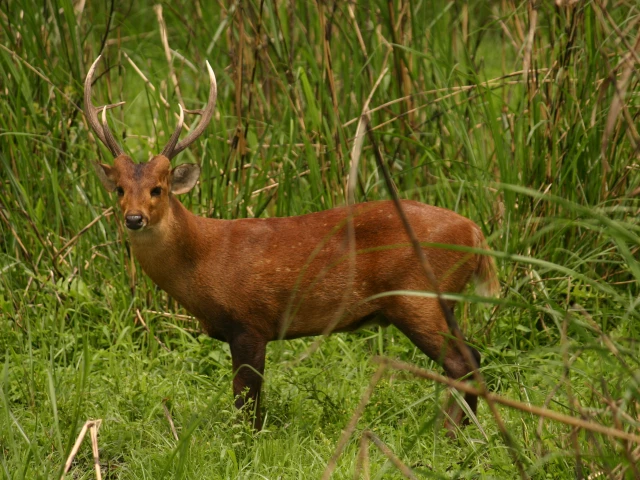
Wildlife Rangers in Lahore have arrested two individuals involved in the illegal trade of wild birds and begun legal proceedings against them. In a separate operation, a stray hog deer was safely rescued near Shakargarh and released back into its natural habitat.

The operation in Lahore was carried out under the supervision of Dr. Ghulam Rasool, Deputy Chief Wildlife Ranger, Lahore Region. Wildlife staff apprehended two dealers engaged in the unlawful sale of various exotic and tree-dwelling bird species. The birds were taken into protective custody, and the suspects were charged with violations of the Wildlife Act, with further legal action underway.

Meanwhile, in Shakargarh, a team led by Assistant Chief Wildlife Ranger Sialkot Muhammad Taimoor rescued a hog deer that had wandered away from its natural environment. The animal was medically examined and later released safely back into the wild.
 

Punjab designates 80 hunting grounds for partridges amid community pushback​


Initiative offers 80% revenue to communities, Salt Range elders impose complete hunting ban in their areas

Asif Mehmood
December 07, 2025


the hunting of partridges in prohibited areas has drawn concern photo express


The hunting of partridges in prohibited areas has drawn concern. photo: express

Punjab has introduced partridge hunting in community-based conservation zones for the first time, following the model established for Punjab Urial conservation and trophy hunting. The Wildlife Department reports that seven Community-Based Conservancies (CBCs) focused on urial and partridge habitats are now registered in the province, with 80 hunting grounds designated specifically for partridge hunting.

Under the new system, 80% of the revenue from legal hunting and trophy hunting will go to local communities, while a reward of Rs10,000 will be given for credible information on illegal hunting, particularly of urial and chinkara (Indian gazelle).

The partridge hunting season will run from December 1 to February 15, with hunting permitted only on Sundays, at specified notified locations, and with a valid license or permit.

Chief Wildlife Ranger Mubeen Elahi said the province has introduced a comprehensive new policy this year that places local communities at the centre of decision-making, monitoring, and conservation efforts. He noted that the Salt Range has significant potential for eco-tourism, combining wildlife and natural landscapes that could help attract international attention through proper management.

Within the 80 hunting grounds, a limited number of permits will be auctioned, while formal applications from communities are being accepted. These initiatives fall under the chief minister's Community Conservation Program, which will also fund breeding, rewilding, and local conservation projects.

This year, 16 international trophy hunting permits for the Punjab urial have been auctioned. Foreign hunters have shown particular interest in hunting wild boar and partridges in the Salt Range. Elahi said improved breeding could lead to more permits in the future.

The government is also transferring 15 eco-lodges to local groups to create year-round income opportunities through tourism, nature trails, and environmental activities, the wildlife ranger said.

However, various Salt Range communities have declared they will not permit hunting in their areas. Village elders in Union Council Kohali and surrounding areas, including Tappa Phadial, Nathot, Dyal, Dhok, and neighbouring villages, have imposed a complete hunting ban in their areas.

A resident, Raja Basharat Ali, said this decision stands as a permanent social and regional law, separate from government hunting seasons or permits. While the government may allow hunting on notified lands with proper licenses, private properties, grazing lands, fields with standing crops, and mountain areas where livestock is grazed remain strictly off-limits, he said.

Ali noted that hunting disrupts crops and poses risks to local communities and livestock. Locals also maintain that the Salt Range's natural environment provides a sanctuary for partridges, quail, and other wild birds that are integral to the region's identity and ecological balance. Due to this, they maintain that hunting in these areas should not be allowed.

Another resident, Abdul Rahman, said recent rains severely damaged crops like peanuts and millet, with remaining crops devastated by wild boar attacks. He explained that a ban on culling wild boars by wildlife authorities has led to an increasing population of the animal and greater agricultural losses.

Fahad Malik, wildlife conservationist and founder of the Mission Awareness Foundation, noted that the complete protection of wildlife requires banning both legal and illegal hunting. He observed that while hunting in ancient times was done out of necessity, continuing it as a recreational activity today is inappropriate.

Malik challenged the argument that legal hunting contributes to conservation, citing differences between Pakistan and India. He pointed out that despite sharing similar wildlife species and environments, India's strict hunting bans have produced notably better conservation results.
 
1765575830714.png

Chitral.
 
The snow leopard is the most iconic animal that lives in Pakistan
 

Users who are viewing this thread

Pakistan Defence Latest

Latest Posts

Back
Top