Navigation
Install the app
How to install the app on iOS
Follow along with the video below to see how to install our site as a web app on your home screen.
Note: This feature may not be available in some browsers.
More options
Style variation
You are using an out of date browser. It may not display this or other websites correctly.
You should upgrade or use an alternative browser.
You should upgrade or use an alternative browser.
Wildlife in Pakistan
- Thread starter ghazi52
- Start date
More options
Who Replied?


ghazi52
THINK TANK: CONSULTANT
- Thread starter
- #215
Pod of dolphins spotted off Gwadar coast
WWF-Pakistan says Noctiluca bloom has not harmed marine life
Aftab Khan
December 29, 2025
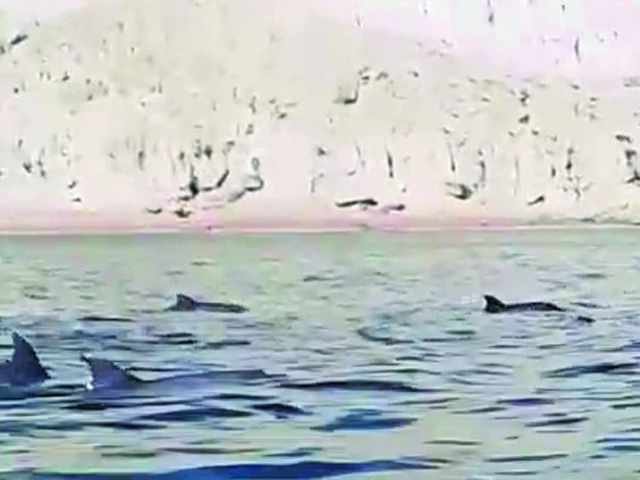
Dolphin. Photo: Express
KARACHI: Despite the unusual green colour of the sea caused by a seasonal marine phenomenon, the coastal waters of Gwadar remain rich in marine life, with pods of bottlenose dolphins recently sighted in the western bay of the port city.
According to a statement issued by WWF-Pakistan, a winter marine occurrence known as the Noctiluca bloom has led to widespread green discolouration of seawater across Pakistan’s coastline, stretching from Karachi to Jiwani, with the phenomenon also extending into the coastal waters of Iran.
The bloom has turned the seawater a deep green in several areas, particularly around Gwadar.
Despite the dense green water, the sea in Gwadar remains teeming with marine life. The WWF said the natural phenomenon has not disrupted fishing activity.
Local fisherman Ameer Dad Khan reported that over the past few days, shrimp catches along the Balochistan coast have been abundant and larger in size, indicating stable marine conditions.
Balochistan Director Marine Fisheries Ahmed Nadeem confirmed on Sunday morning that a large number of dolphins were observed in Gwadar’s western bay.
Commenting on the situation, WWF technical adviser Muhammad Moazzam Khan explained that such colour-changing events in the sea are generally non-toxic and often increase marine productivity.
ghazi52
THINK TANK: CONSULTANT
- Thread starter
- #216
He said Noctiluca blooms only cause mortality in extreme cases. The condition, locally referred to in the Balochi language as “badd aab”, occurs periodically in the Arabian Sea, with a higher frequency during the winter months.
However, he stressed that fishing activity has not been affected and fishermen continue their routine operations without interruption.
Moazzam Khan said the sighting of bottlenose dolphins in the western bay of Gwadar was an encouraging sign, adding that it confirmed the green sea condition has not adversely affected the area’s marine biodiversity.
However, he stressed that fishing activity has not been affected and fishermen continue their routine operations without interruption.
Moazzam Khan said the sighting of bottlenose dolphins in the western bay of Gwadar was an encouraging sign, adding that it confirmed the green sea condition has not adversely affected the area’s marine biodiversity.
ghazi52
THINK TANK: CONSULTANT
- Thread starter
- #217
IWMB confirms presence of common leopard at International Islamic University Islamabad
Jamal Shahid
January 4, 2026
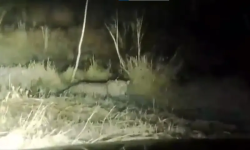
A leopard is seen in grainy footage on the campus of IIUI on December 24, 2025. — WildlifeBoard via XListen
ISLAMABAD: Islamabad Wildlife Management Board (IWMB) on Saturday confirmed the presence of a common leopard on International Islamic University campus.
The wild animal was first spotted on the night of December 24, when students filmed it crouched and then running off into the darkness.
The short clip went viral and Islamabad Wildlife Management Board (IWMB) responded to the call for assistance from the university, situated in Sector H-10.
“Fresh pug marks were found Friday night, confirming that the common leopard was still present on the campus,” said Director Islamabad Wildlife Management Board (IWMB), Sakhawat Ali.
ghazi52
THINK TANK: CONSULTANT
- Thread starter
- #218
Amazon sailfin catfish found in Sindh waters, experts warn of invasive spread
Foreign aquarium species reaches Karachi Fish Harbour, threatening aquatic biodiversity
Aftab Khan
January 05, 2026
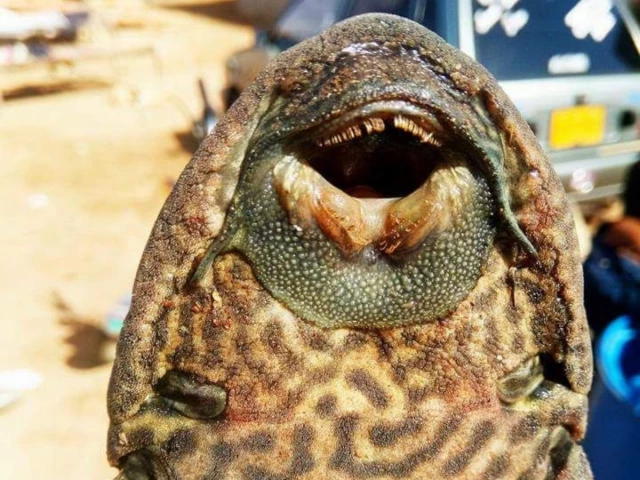
Photo: Express
KARACHI: An unusual fish brought from a dhund, or shallow pond, near Sukkur to the Karachi Fish Harbour on January 4, 2026, has been identified as an Amazon sailfin catfish, officials and experts said.
The foreign species, which is not native to Pakistan, is believed to have accidentally entered natural water bodies and has now spread across Sindh and parts of lower Punjab. The fish initially went unidentified and was described by handlers as an alien species.
The Amazon sailfin catfish is characterised by a body covered with bony plates and a thick, armoured structure. Native to Latin America, it is popular around the world as an aquarium fish but is also known as a highly successful invasive species.
Experts say the fish has now spread on such a large scale in Pakistan that its eradication or effective control is no longer possible.
The species is among at least 26 fish introduced into Pakistan either deliberately or accidentally that later became invasive. These species are having harmful effects on the country’s aquatic biodiversity and are disrupting the balance and functioning of natural ecosystems.
Pakistan’s first alien fish species, brown trout and rainbow trout, were introduced in 1928 in parts of what is now Khyber Pakhtunkhwa.
ghazi52
THINK TANK: CONSULTANT
- Thread starter
- #219
Over time, several other non-native species were brought in to boost fish production or control aquatic weeds, including Mozambique tilapia, common carp, goldfish and grass carp.
In the 1980s, silver carp, bighead carp, Nile tilapia and blue tilapia were also introduced. Grass carp was later reintroduced to further enhance aquaculture production.
All of these species have since established themselves in Pakistan’s natural water bodies, affecting native plants and animals.
Experts say the main goal behind introducing these species was to increase aquaculture output, while their long-term environmental impact was largely overlooked.
According to WWF Pakistan, there is no disagreement that the introduction of alien fish species has adversely affected aquatic biodiversity and natural ecosystems across the country.
In the 1980s, silver carp, bighead carp, Nile tilapia and blue tilapia were also introduced. Grass carp was later reintroduced to further enhance aquaculture production.
All of these species have since established themselves in Pakistan’s natural water bodies, affecting native plants and animals.
Experts say the main goal behind introducing these species was to increase aquaculture output, while their long-term environmental impact was largely overlooked.
According to WWF Pakistan, there is no disagreement that the introduction of alien fish species has adversely affected aquatic biodiversity and natural ecosystems across the country.
ghazi52
THINK TANK: CONSULTANT
- Thread starter
- #221
Markhor sighted in AJK game reserve along LoC
The Newspaper's Staff Correspondent
January 17, 2026
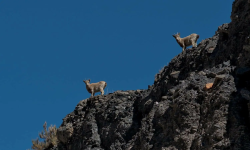
This image shows two Markhor on the side of a mountain. — Photo courtesy: Ali Khurshid/File
MUZAFFARABAD: Wildlife officials in Azad Jammu and Kashmir (AJK) have reported a rare sighting of a markhor in a game reserve along the Line of Control (LoC), reinforcing long-held beliefs that the endangered wild goat still roams the area.
A 37-second video recorded by game watcher Waqar Ayub Chughtai shows the markhor cautiously walking across a grassy slope in the Qazinag Game Reserve of Jhelum Valley district before disappearing into rugged terrain.
Speaking to Dawn by telephone Friday, Mr Chughtai said local elders had long recounted the presence of horned wild rams in the region, but the absence of recording equipment in earlier decades meant such accounts could not be verified visually.
“On January 13, I, along with two colleagues, camped in the reserve to trace hoof marks of an animal we initially thought might be a wild goat or another ungulate,” he said. “We followed the tracks for two days, but they repeatedly led into steep and inaccessible areas.”
He said the breakthrough came on Thursday, when the team spotted the markhor with the naked eye around 2pm between compartments eight and 10 of the reserve.
According to Mr Chughtai, the animal had been moving alongside a flock of domestic goats but altered its route after sensing potential human presence. The footage was later shared with senior wildlife officials in Muzaffarabad once the team reached an area with mobile coverage.
Shaista Ali, the Muzaffarabad-based wildlife monitoring officer, confirmed that the sighted animal was a Pir Panjal markhor, a species that once thrived in the range but suffered population declines due to unhindered hunting.
ghazi52
THINK TANK: CONSULTANT
- Thread starter
- #222
Centre, KP at odds over markhor hunting permits
Mohammad Ashfaq
January 18, 2026
https://whatsapp.com/channel/0029VaMc238IiRov8okfYy3n
PESHAWAR: The federal government’s instructions to the Khyber Pakhtunkhwa government to stop issuing permits for hunting non-exportable trophies in the province is causing unrest in the provincial wildlife department and local communities, which insist the move has threatened the over $1 million permits already sold.
The controversy over the hunting permits for markhor and grey gorals emerged when the wildlife department received minutes of a recent meeting with the climate change and environmental coordination ministry where minister Musadik Masood Malik was in the chair.
“The chair directed that a legal opinion be obtained to clarify the matter and that a subsequent meeting be convened to finalise the non-exportable quota in line with relevant international conventions. Till that time, no quotas for non-exportable trophies will be allocated by any province,” reads minutes of the meeting available with Dawn.
Sources in KP wildlife department told Dawn that the federal ministry of climate change and environmental coordination had bound intermediaries, formally called outfitters, to take no objection certificates before moving permit holders to the region for hunting, a move that was an encroachment on the province’s jurisdiction.
Wildlife dept insists permit restriction encroachment on its domain will discourage hunters
In a formal response to the federal government’s NOC move, the KP wildlife department has feared that the restriction would discourage hunters, mostly foreigners.
It said that Section-11 of the KP Wildlife and Biodiversity (Protection, Preservation, Conservation and Management) Act, 2015, declared that “All wild animals, free ranging or captive, tamed or untamed, found within the territorial jurisdiction of the province shall be deemed to be the property of the government.”
The official documents reveal that the management of wildlife within the province vests with the KP wildlife department as per provision of the said act. In this context, matters relating to non-exportable hunting quota, which do not involve international trade appropriately, remain within the provincial regulatory framework and are not in contravention to the act ibid. The wildlife department has informed the federal government in its reply that “Pakistan Trade Control of Wild Fauna and Flora Rules, 20218 has no provisions to determine local Quotas.”
ghazi52
THINK TANK: CONSULTANT
- Thread starter
- #223
Under the Pakistan Trade Control of Wild Fauna and Flora Act, 20212, the Convention on International Trade in Endangered Species Management Authority is mandated to regulate matters relating to export, import and re-export of wild fauna and flora.
Rules 3 of the Pakistan Trade Control of Wild Fauna and Flora Rules, 2019 provides that the functions of the Management Authority include coordination, facilitation and consideration of advice from the scientific authority and relevant stakeholders.
The rules say that decisions concerning wildlife conservation and management benefits for provincial units shall be made in light of close consultation with the provincial government with a view to develop informed and consensus-based outcomes consistent with constitutional devolution and field realities.
An official of the wildlife department told Dawn that six permits for hunting gray goral had been sold for $398,500 and one of them had already been used.
He added that action on other permits had got blocked as the federal wildlife authority had linked it with its permission.
The official insisted that hunters were reluctant to approach that authority.
He also said the wildlife department had sold 11 permits of non-exportable trophies for $553,300 and only five of them had been used.
The official said that 80 per cent of the revenue generated from the sale of permits was spent on the welfare of communities in the respective areas, while the rest went to the exchequer.
He said the community’s share was spent on public welfare initiatives.
Rules 3 of the Pakistan Trade Control of Wild Fauna and Flora Rules, 2019 provides that the functions of the Management Authority include coordination, facilitation and consideration of advice from the scientific authority and relevant stakeholders.
The rules say that decisions concerning wildlife conservation and management benefits for provincial units shall be made in light of close consultation with the provincial government with a view to develop informed and consensus-based outcomes consistent with constitutional devolution and field realities.
An official of the wildlife department told Dawn that six permits for hunting gray goral had been sold for $398,500 and one of them had already been used.
He added that action on other permits had got blocked as the federal wildlife authority had linked it with its permission.
The official insisted that hunters were reluctant to approach that authority.
He also said the wildlife department had sold 11 permits of non-exportable trophies for $553,300 and only five of them had been used.
The official said that 80 per cent of the revenue generated from the sale of permits was spent on the welfare of communities in the respective areas, while the rest went to the exchequer.
He said the community’s share was spent on public welfare initiatives.
ghazi52
THINK TANK: CONSULTANT
- Thread starter
- #224
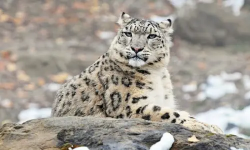
Snow leopard found dead in Chitral
Our CorrespondentJanuary 20, 2026
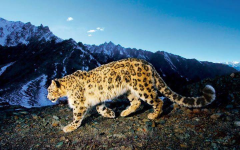
CHITRAL: A snow leopard was found dead in the pastures of Wakht village of Garam Chashma valley here on Monday afternoon. The animal was spotted in the area about two months back after its long disappearance for more than 10 years.
The deputy ranger of wildlife department, Shafiq Ahmed, and regional programme manager of Snow Leopard Foundation, Jamigh Sherazi, told Dawn that after receiving a report about spotting of the snow leopard carcass, they reached the spot along with a team.
They said the carcass was frozen, which meant that the animal had died many hours before their arrival. They said the cause of death of the wild cat would be ascertained only after the postmortem was carried out in the veterinary hospital, where the body was being shifted.
Earlier, the leopard was spotted in Wakht, Munoor and Beghusht villages, which attacked the goats of the local people. The people had also been voicing concern about their losses.
The area has recently received snowfall forcing the animal to come to lower altitude areas in search of food and that was how it came in close conflict with the local population, an official said.
An environmentalist requesting not to be named told Dawn that the death of the wild cat might not be natural.
ghazi52
THINK TANK: CONSULTANT
- Thread starter
- #225
Post-mortem report shows rare snow leopard found dead in K-P's Chitral died of natural causes
'Its natural death indicates the species still thrives in Chitral valleys,' says Chitral divisional forest officer
Ahtesham Khan
January 20, 2026
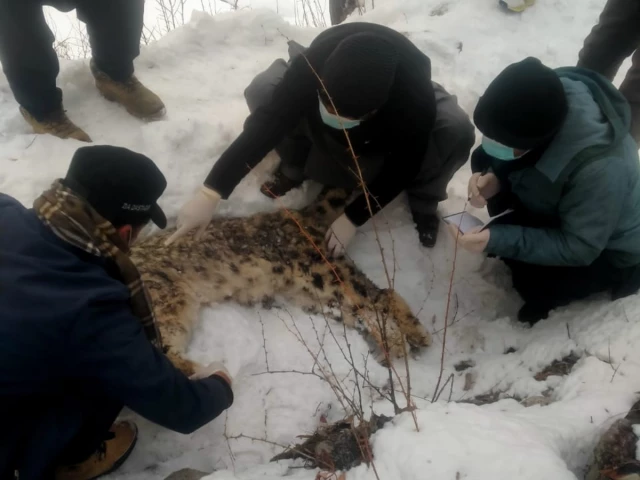
Snow leopard in Chitral dies of natural causes. PHOTO: EXPRESS
PESHAWAR:A rare snow leopard that was found dead in Khyber-Pakhtunkhwa's Chitral region was explained to have died from natural causes, officials said on Tuesday.
The carcass of the snow leopard was discovered in the mountainous region of Garam Chashma a day ago. According to the post-mortem report, dated January 19, obtained by Express Tribune, "the cause of death is determined to be severe untreated diarrhea and dehydration".
It further said that the body was extremely weak and emaciated at the time of examination. It noted that "no bullet wounds were found on any part of the body" and "no external injuries or superficial abrasions were detected". It further said that all internal organs were checked and "found normal".
Chitral’s Divisional Forest Officer (DFO) Farooq Nabi noted that snow leopards typically live between 10 and 13 years in the wild, and the deceased animal was estimated to be "over 12 years old", based on dental examination.
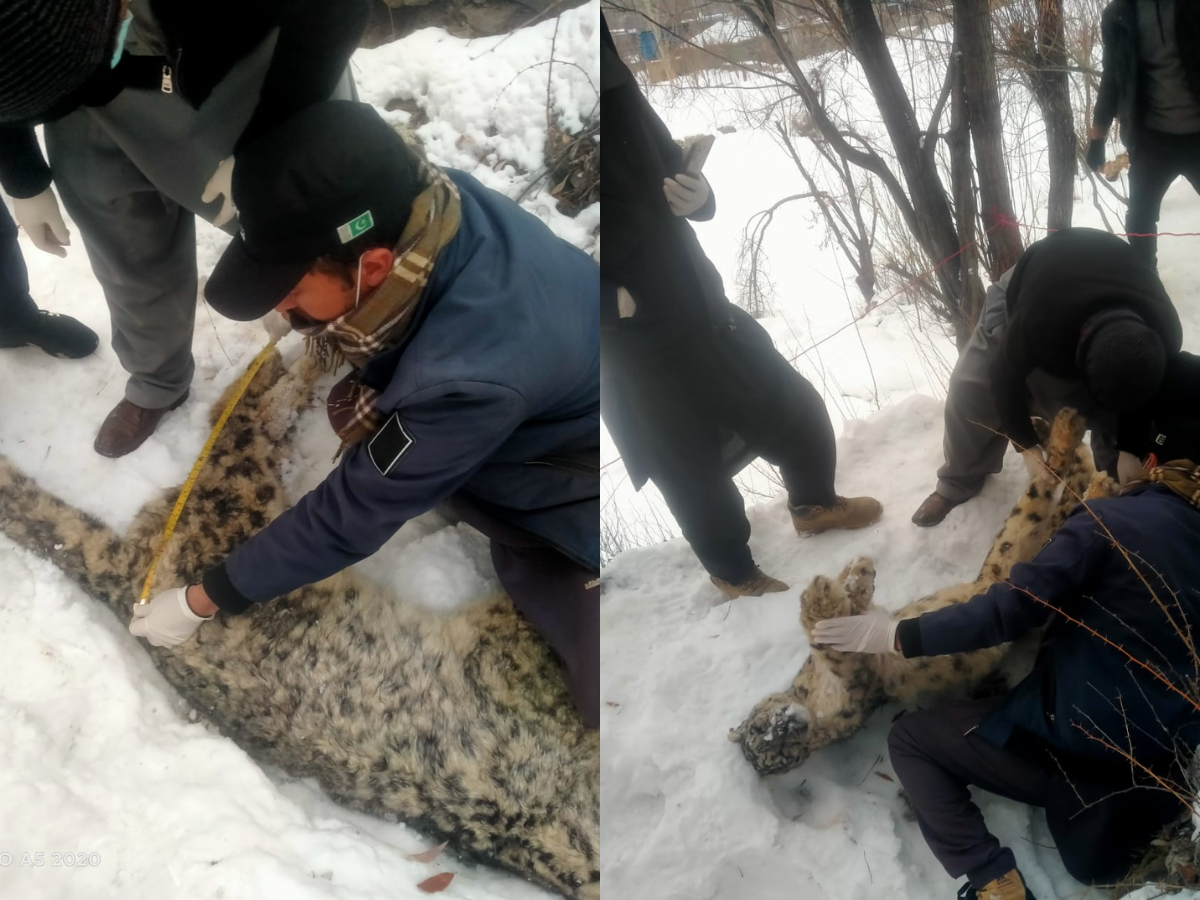
“The appearance of a snow leopard after such a long period was encouraging,” Nabi said, adding that "its natural death indicates that the species still thrives in the Chitral valleys”.
Users who are viewing this thread
Total: 1 (members: 0, guests: 1)
Pakistan Defence Latest
-

-

-

-
KP govt backs out of counterterrorism commitments during talks: Naqvi (4 Viewers)
- Latest: SteppeWolff
-

Country Watch Latest
-
 Iran - Israel/US War: Israel-US declare war on Iran, Iran responds (121 Viewers)
- Latest: Persian Gulf
-
-

-
-

Latest Posts
-
 New Indian movie supports and agitates Tibetan separatism and terrorism (5 Viewers)
- Latest: Panda_Hi
-

-

-

