Navigation
Install the app
How to install the app on iOS
Follow along with the video below to see how to install our site as a web app on your home screen.
Note: This feature may not be available in some browsers.
More options
Style variation
You are using an out of date browser. It may not display this or other websites correctly.
You should upgrade or use an alternative browser.
You should upgrade or use an alternative browser.
Wildlife in Pakistan
- Thread starter ghazi52
- Start date
More options
Who Replied?


ghazi52
THINK TANK: CONSULTANT
- Thread starter
- #228
Punjab recovers 44 rare bar-headed geese in operation
Wildlife department says the geese will be freed at Kala Chitta National Park
Our Correspondent
January 25, 2026
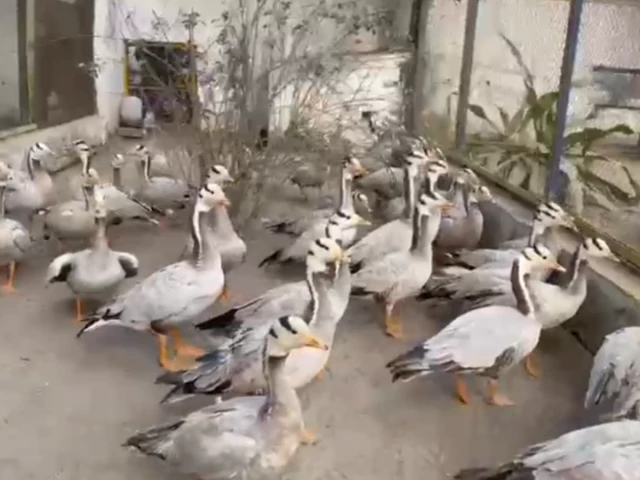
Bar-headed geese, a migratory species that travels to Pakistan from Siberia during winter PHOTO: EXPRESS
LAHORE: Punjab's Forest and Wildlife Department recovered 44 bar-headed geese in an operation against mafia allgedly involved in the illegal smuggling of rare birds on Sunday.
Acting on a tip-off, officials recovered 44 bar-headed geese, a migratory species that travels to Pakistan from Siberia during winter. The birds were seized during a raid conducted by the Forest and Wildlife Department’s staff.
On the instructions of Punjab Chief Minister Maryam Nawaz, the rescued birds will be released into the wild on Wednesday. The department said the geese will be freed at Kala Chitta National Park.
According to a post-examination report issued by the Forest and Wildlife Department, all 44 birds are in good health.
ghazi52
THINK TANK: CONSULTANT
- Thread starter
- #231
Black partridge breeders protest ban on licensing
APPFebruary 21, 2026
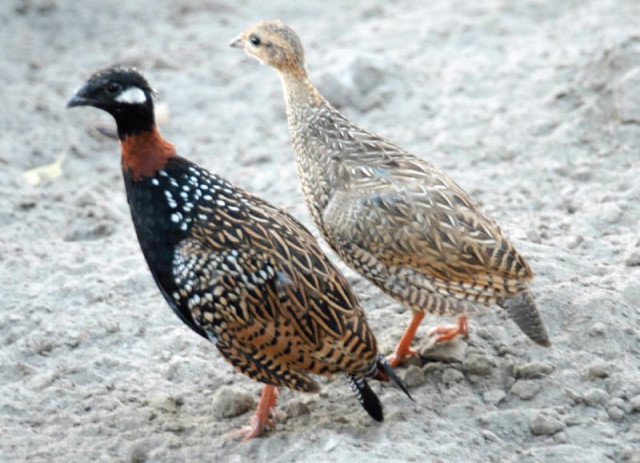
The hunting of partridges in prohibited areas has drawn concern. photo: express
MUZAFFARGARH: In a unique protest demonstration, black partridge breeders staged a rally in Muzaffargarh against the ban on licences for keeping the bird, demanding that Punjab Chief Minister Maryam Nawaz Sharif restore the licensing system.
According to sources, enthusiasts who raise black partridges took out a protest rally under the leadership of Asif Nadeem, President of the Black Partridge Association Pakistan. Protesters carried banners and placards inscribed with slogans supporting their demands.
Addressing the rally, Asif Nadeem said that keeping black partridges is a beautiful part of Punjab's cultural heritage. He stated that breeders and enthusiasts across Punjab are protesting the ban on licenses for keeping the birds.
He further explained that the restriction applies only in Punjab — not only has the issuance of new licenses been stopped, but the renewal of existing licenses has also been suspended — while licenses continue to be issued in the other provinces.
He stated that breeders have been raising rare black partridges in their homes for years to increase their population rather than harm them. "We care for these birds like our own children," he said, adding that their efforts promote Punjab's culture while also helping conserve the species.
ghazi52
THINK TANK: CONSULTANT
- Thread starter
- #232
WINGS OF CHANGE
Climate change & devastating floods have ravaged once familiar abodes of migratory birds, forever altering way of life
BY HEBA MOEEN |
JULY 02, 2023
LARKANA/KARACHI: It had become a winter ritual for us birders to visit Lungh Lake in Larkana to document flocks of local and migratory birds, and forage for content for our documentaries. This year, however it could not be materialised, as our friend Yasir Pechuho who lives in the area, informed us of the lake’s devastated state, after last year’s floods.
Quite a number of trees had succumbed to the wrath of these floods and the aftermath depicted an apocalyptic picture ― hardly welcoming for our migratory feathered friends who decided to opt for alternate options. The consequences of flooding are still being faced by living beings throughout the affected areas, be they humans or birds, several homes have been destroyed and many are still at the mercy of aid.
However, several new water bodies had formed causing the birds to find new abode and scatter around, even influencing census figures which are known to have declined in comparison to those of preceding years. To our surprise, we even spotted a few migratory species including ducks, glossy, ibises, snipes, and even a northern lapwing in water bodies formed around the residential area of Karachi’s DHA Phase 8, near the sea in September last year.
There was abundant food available to be foraged, and these birds were found busy partaking in a lavish, protein-rich platter of insects served by nature.
The following weekend was yet another treat for us as we filmed and documented the species for which we travelled several kilometres. The glossy ibis for instance, in its black brocade-like plumage with shimmers of a variety of hues and long bill was a prized sighting, something which I previously photographed in Thar, followed by Larkana. The rain, despite the troubles, did bring in several blessings, simultaneously.
On the other hand, local bird species have been massively affected as a result of land reclamation, especially along the coasts, and poaching of course. For instance, most people are not aware of the fact that flamingoes are also resident birds and were once sighted in great numbers along the mangroves near the Mai Kolachi route. Although they still do exist in Karachi, they are threatened by poachers.
According to the Pakistan Meteorological Department monthly climate summary for August 2022 the month alone witnessed an above average rainfall in Sindh, which experienced an increase of 726%, breaking a 62-year-old record.
Considering the dire water scarcity in Karachi including that artificially created, had we been equipped with proper rainwater preservation techniques, urban flooding could have been mitigated. Hence, rainwater harvesting is something to invest in. The birds evidently took advantage of the water bodies within the urban sprawl, humans could have too.
According to a bird census conducted by the Sindh Wildlife Department, 613,851 migratory birds had been observed in existing lakes and such temporary water bodies in the season of 2022-23 as compared to 661,537 in 2021 which is a decline of 7.8%. However, not all hope is lost as birders from around Sindh have varying observations and points of view.
“Because of the change in climate and weather patterns i.e. out of season heavy rains resulting in floods and creation of scattered wetlands all over the country, we could never be fully sure of the population of migratory and local birds as nesting, roosting, and relaxing spots for birds are far too many,” says Nusrat Ali, a seasoned bird watcher and photographer who spends his weekends documenting birds and analysing their migratory patterns. Meanwhile Usama Tabani, a wildlife photographer (and a gem that was discovered and polished during the pandemic lockdowns when he chanced upon his newfound hobby) has his own set of observations. He has been travelling domestically and international to document bird and animal species.
“There are several factors contributing to the decline in migratory bird numbers from year to year,” says Tabani, discussing his experience of birding this year and voicing his concerns about habitat loss as a result of a series of long term real estate developments. “Some of these factors are climate change, unregulated hunting, illegal poaching and increase in human pollution are some factors but the most critical one is the loss of habitat.
As a nation, we are converting all uninhabited and wild lands, which are the lifeline for these migratory birds, into housing societies across Pakistan. We need to coexist with the wild because the Earth is what we all have in common.”
Syed Khizar Sharif, a scuba diver and birder from Karachi agrees with Tabani. Introduced by Mirza Naim Beg, the late birding guru for Karachiites, Sharif has been in this hobby for well over five years. “Since many migratory bird species rely on certain environments for breeding, feeding, and resting during their lengthy migrations, it appears that a combination of vital factors, such as habitat loss, climate change, and human activities like hunting, pollution, and urbanisation, are to be blamed for the decline of these migratory birds that we’ve observed in Pakistan,” he says. “Particularly after last year’s floods that severely affected the Sindh province.
ghazi52
THINK TANK: CONSULTANT
- Thread starter
- #233
To sustain migratory bird populations and their critical ecological functions, we must address these issues through conservation projects and ecologically responsible practices.”
Flooding may appear to be a small factor in the entire equation of habitat loss, however, the prevailing ills such as netting and poaching have been a persevering menace and despite efforts by authorities, still linger on.
Pechuho, an ardent wildlife photographer with 353 species documented so far in Sindh has quite an optimistic take regarding the realities and perceptions pertaining to a decline in the migratory bird population this time around.
Also associated with the Sindh Wildlife Department, he has also been contributing to the annual bird census. “Birds were not normally found in large numbers in traditional lakes as the flood water had contaminated these and bird feed was affected too as a result,” he says. “Migratory birds mostly land in Hamal Lake and Lungh Lake, but the numbers were drastically limited. In an unusual case, a large number of birds were found in lakes, unaffected by floods despite the fact that they usually do not descend here, but they opted for these as a better alternative.
The birds seemed to also have opted for the water bodies in Badin, followed by Tando Muhammad, and Sufi Anwar Shah Safari Park where they were found in large numbers and could be seen on roads leading towards the local reserve in the area. Badin homed about 150,000 birds this time. Also, considering the number of misplaced people, whoever got a chance was hunting for these birds for food.”
According to Pechuho, there was a decent presence of birds this time, however, they had changed their resting spots and much to our surprise, they were abundantly found in some places, thus covering the skies in a blanket-like spectacle as they took flight.
Meanwhile, some species stayed beyond their anticipated time as compared to March last year as the weather became warmer bringing him to the conclusion that bird behaviour was quite extraordinary this time around and if allowed more time for conducting the census, the figure would have been far greater than what was calculated.
Yasir’s guidance is always quite obliging whenever we plan our birding trips and his knowledge very insightful, along with his amusing narration of events. He has been maintaining a record of bird species with their names documented, not just in English, but in Urdu and Sindhi as well, something which will be great help locally.
Although it may be too early to say for sure that migratory bird populations have declined, evidence suggests otherwise and even then the difference is not significant. Once, the flood effects dissipate completely and the lakes traverse back to their glory, the next migratory pattern will reveal whatever is in store for us.
Flooding may appear to be a small factor in the entire equation of habitat loss, however, the prevailing ills such as netting and poaching have been a persevering menace and despite efforts by authorities, still linger on.
Pechuho, an ardent wildlife photographer with 353 species documented so far in Sindh has quite an optimistic take regarding the realities and perceptions pertaining to a decline in the migratory bird population this time around.
Also associated with the Sindh Wildlife Department, he has also been contributing to the annual bird census. “Birds were not normally found in large numbers in traditional lakes as the flood water had contaminated these and bird feed was affected too as a result,” he says. “Migratory birds mostly land in Hamal Lake and Lungh Lake, but the numbers were drastically limited. In an unusual case, a large number of birds were found in lakes, unaffected by floods despite the fact that they usually do not descend here, but they opted for these as a better alternative.
The birds seemed to also have opted for the water bodies in Badin, followed by Tando Muhammad, and Sufi Anwar Shah Safari Park where they were found in large numbers and could be seen on roads leading towards the local reserve in the area. Badin homed about 150,000 birds this time. Also, considering the number of misplaced people, whoever got a chance was hunting for these birds for food.”
According to Pechuho, there was a decent presence of birds this time, however, they had changed their resting spots and much to our surprise, they were abundantly found in some places, thus covering the skies in a blanket-like spectacle as they took flight.
Meanwhile, some species stayed beyond their anticipated time as compared to March last year as the weather became warmer bringing him to the conclusion that bird behaviour was quite extraordinary this time around and if allowed more time for conducting the census, the figure would have been far greater than what was calculated.
Yasir’s guidance is always quite obliging whenever we plan our birding trips and his knowledge very insightful, along with his amusing narration of events. He has been maintaining a record of bird species with their names documented, not just in English, but in Urdu and Sindhi as well, something which will be great help locally.
Although it may be too early to say for sure that migratory bird populations have declined, evidence suggests otherwise and even then the difference is not significant. Once, the flood effects dissipate completely and the lakes traverse back to their glory, the next migratory pattern will reveal whatever is in store for us.
ghazi52
THINK TANK: CONSULTANT
- Thread starter
- #234
Punjab govt expands wildlife protection framework
CM highlights legal reforms, digital monitoring, new wildlife hospital
Our Correspondent
March 04, 2026
LAHORE: Punjab Chief Minister Maryam Nawaz has said that wildlife is an invaluable asset for future generations, stressing that its protection and conservation are a collective responsibility to preserve biodiversity and ecological balance.
In her special message on World Wildlife Day, the chief minister described wildlife as indispensable for maintaining the natural ecosystem and expressed satisfaction over what she termed historic initiatives undertaken by the provincial government for its protection, conservation and promotion.
She said the Punjab government had introduced innovative reforms to curb illegal hunting and unlawful possession of wild animals through amendments to the Punjab Wildlife Act 1974 and the Protected Areas Act.
To facilitate the public and ensure swift response to violations, the Wildlife Helpline 1107 has been made fully operational across the province.
Highlighting digitisation efforts, the chief minister said online facilities have been introduced for obtaining shooting licences, import and export permits, hunting permits and registration of breeding farms.
For the first time in Punjab, an artificial intelligence-based animal census system has been implemented to improve data collection and wildlife management. In addition, GPS and collar tracking systems have been introduced to monitor rescued animals and ensure their safety.
ghazi52
THINK TANK: CONSULTANT
- Thread starter
- #235
CM said modern facilities are being added to promote awareness and tourism.
At the Lahore Safari Zoo, a 3D screen, animal sculptures and other features have been installed, while a 7D wildlife cinema is nearing completion. Construction of Punjab's first wildlife hospital has reached 80% completion, where specialist veterinary doctors will be appointed for different species to provide dedicated care.
The chief minister also announced plans to establish a 360-degree virtual zoo to enable citizens to observe wildlife from their homes using digital platforms.
At the Lahore Safari Zoo, a 3D screen, animal sculptures and other features have been installed, while a 7D wildlife cinema is nearing completion. Construction of Punjab's first wildlife hospital has reached 80% completion, where specialist veterinary doctors will be appointed for different species to provide dedicated care.
The chief minister also announced plans to establish a 360-degree virtual zoo to enable citizens to observe wildlife from their homes using digital platforms.
ghazi52
THINK TANK: CONSULTANT
- Thread starter
- #238
Training on wildlife poaching held in Chitral
A CorrespondentApril 4, 2026
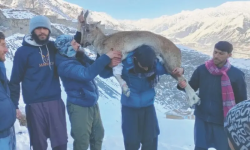
Community workers carry an injured Kashmir markhor to the veterinary hospital in Chitral Gol National Park. — Dawn.File
CHITRAL: The Snow Leopard Foundation (SLF) in collaboration with the Khyber Pakhtunkhwa Wildlife Department organised a one-day refresher training session on wildlife poaching prevention and crime investigation in Chitral district.
The SLF’s regional programme manager for Chitral, Jamiullah Sherazi, describing the aim of the session said that it was a follow-up of the specialised training conducted last year, which was aimed at sharpening the professional expertise of wildlife rangers in identifying and dismantling illegal hunting networks.
He said that the group of 12 rangers from the Chitral Wildlife Department would be provided practical guidance on modern investigative methods including Scientific Evidence Collection containing techniques for gathering biological and physical evidence at crime scenes.
He also mentioned the preservation principles (ensuring that crime scenes remain untampered with for legal scrutiny and chain of custody, maintaining rigorous documentation to ensure evidence is admissible in court) as well as legal requirements (building strong cases against offenders to ensure successful prosecution) as the contents of the session.
Mr Sherazi highlighted that the primary objective is to make conservation efforts more effective and remarked that better-trained rangers act as the first line of defence, leading to a direct reduction in poaching and ensuring the protection of vulnerable species like the snow leopard.
Addressing the participants, Farooq Nabi, Divisional Forest Officer of Wildlife Division Chitral, emphasized that such initiatives are vital for strengthening the capacity of field staff and improving institutional performance.
He lauded the continued cooperation of SLF and expressed the hope for future partnerships to safeguard the region’s biodiversity.
ghazi52
THINK TANK: CONSULTANT
- Thread starter
- #239
The training forms part of a broader initiative supported by the Illegal Wildlife Trade Challenge Fund (IWTCF) to enhance wildlife enforcement across Pakistan’s northern mountain ranges.
Recent assessments suggest that poaching remains a significant threat, making specialised forensic and investigative skills essential for local wildlife authorities.
Recent assessments suggest that poaching remains a significant threat, making specialised forensic and investigative skills essential for local wildlife authorities.
Users who are viewing this thread
Total: 1 (members: 0, guests: 1)
Pakistan Defence Latest
-
 Somalia Reportedly Agrees to Acquire Pakistan’s JF-17 Fighter Jets (22 Viewers)
- Latest: Pakistanithinktank
-
KP govt backs out of counterterrorism commitments during talks: Naqvi (15 Viewers)
- Latest: SteppeWolff
-

-

-

Country Watch Latest


Latest Posts
-
 Elon Musk’s Starlink Launches 1st-Ever Cell Service Satellites (3 Viewers)
- Latest: Hamartia Antidote
-

-

-
China and Europe agree to cut Chinese hybrid vehicle exports by half (6 Viewers)
- Latest: Hamartia Antidote
-
Somalia Reportedly Agrees to Acquire Pakistan’s JF-17 Fighter Jets (22 Viewers)
- Latest: Pakistanithinktank