Wildlife in Pakistan

Punjab to establish wildlife courts​

Rs1.73b project to bolster conservation, tourism

Asif Mehmood
January 15, 2025

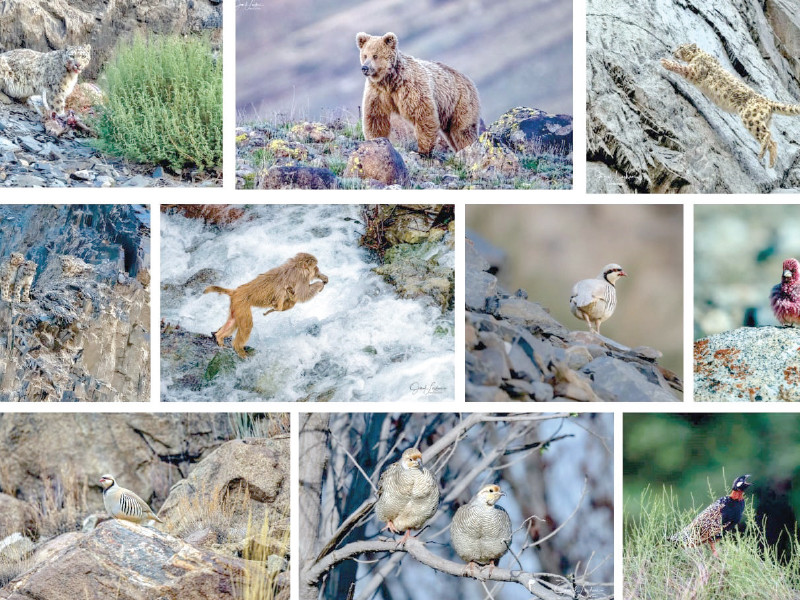
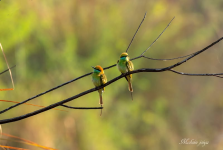
the photographs not only capture the splendour of the wildlife but also underscore the critical need for continued conservation efforts photos express


The photographs not only capture the splendour of the wildlife but also underscore the critical need for continued conservation efforts. PHOTOs: EXPRESS


LAHORE: The Punjab government has approved the establishment of dedicated wildlife courts to address atrocities, encroachments, and other crimes against wildlife.

Offenders could now face fines of up to Rs5 million following amendments to the Wildlife Protection Act of 1974.

The Standing Committee of the Punjab Assembly, chaired by Muhammad Adnan Dogar, approved these amendments after 14 years, introducing changes to align Punjab's wildlife protection framework with international standards.

Senior Provincial and Wildlife Minister Maryam Aurangzeb, in her briefing to the committee, emphasized that these updates will enable stringent action against crimes involving wild animals and significantly strengthen conservation efforts.

The amendments provide legal protection to wildlife areas and introduce a unified board named "Protected Areas and Wildlife Management" to oversee conservation initiatives. The board will be chaired by the Wildlife Minister, with the Secretary of Wildlife as vice-chairman and the DG Wildlife as its secretary. A dedicated wildlife protection force will also be established, along with specialized centers for breeding, treatment, and safeguarding wild animals.

Maryam Aurangzeb announced that modern technology, including drones, will be used for wildlife monitoring. A complete survey of Punjab's wildlife and habitats is planned, and a special helpline (1107) has been launched to address wildlife-related complaints and provide information.

In addition to these measures, a comprehensive project worth Rs1.73 billion has been initiated to protect wildlife and promote global tourism. Punjab's first 3D wildlife cinema, moving theatre, and major tourism projects are under development.

Plans are also in place to utilize areas like Uchhali, Bansera Gali, and Changa Manga as tourism hubs. A wildlife hospital costing Rs1.47 billion is being built, and an internship program for youth in the wildlife sector has been launched with a budget of Rs60 million.
 

Punjab cabinet allows keeping big cats at home


1737034465797.png


The Newspaper's
January 16, 2025

LAHORE: The Punjab cabinet has approved a four-point agenda of the forest department, including the inclusion of “big cats” in Schedule-II of the Wildlife Act of 1974, says Senior Minister Marriyum Aurangzeb.

Keeping of five species of big cats – lions, cheetahs, tigers, pumas, and jaguars – have been regulated under the law.

“There had been no legislation for the past 70 years regarding the keeping of these animals, leading to their presence in homes. A strict ban has been imposed on displaying these animals on TikTok or other social media platforms. Violators will face legal action,” Ms Aurangzeb said on Wednesday.

The wildlife department will now issue a possession licence for these beast, with a fee of Rs50,000 per animal. Minimum standards have been established for keeping them, and they must be housed outside city limits. Owners will be given time to relocate these animals and failure to comply will result in legal action and FIRs.

Under the amended Punjab Forest Transit Rules 2024, checkpoints will be set up at key locations, and the transportation of forest products between sunset and sunrise has been declared illegal.

Forest officers have been empowered to shut down depots and impose fines for violations.

New Forest Depot Rules 2024 mandate that the establishment of depots requires approval from the divisional forest officer (DFO), and depot owners must get their annual registrations renewed.
 

Upper Chitral records first-ever licensed hunt of ibex


Our Correspondent
January 19, 2025


Local hunter Hammad Mohammad Baig (holding rifle) and his team pose for a photograph after the trophy hunting of ibex in Terich Valley of Upper Chitral district. — Dawn


Local hunter Hammad Mohammad Baig (holding rifle) and his team pose for a photograph after the trophy hunting of ibex in Terich Valley of Upper Chitral district. — Dawn

CHITRAL: Upper Chitral marked a historic milestone in the conservation of wildlife and biodiversity with the successful execution of the district’s first-ever licensed Himalayan Ibex trophy hunt by a local the other day.

Divisional forest officer of Chitral Gol National Park Rizwan Yousufzai told Dawn that the ibex was hunted in the rugged and unforgiving terrain on the outskirts of the majestic Udren Peak in Terich Valley in the foothold of the mighty Terich Mir peak of Hindukush system of mountains.

“This event signifies a major advancement in the region’s ecotourism and conservation efforts.”

Yousufzai said that the hunt lasted for four days in temperatures plummeting to -30°C, which tested the endurance and skill of the hunter in one of the world’s most challenging landscapes in Terich Valley, which houses many 7,000-meter mountains.

“The successful completion of this landmark hunt not only reflects the perseverance and commitment of the hunting team but also underscores Upper Chitral’s immense potential as a hub for regulated trophy hunting and conservation-driven tourism,” Mr Yousufzai said.

“As the region celebrates this achievement, the emphasis remains on promoting sustainable practices that directly benefit wildlife preservation and uplift local communities, ensuring that future generations can continue to enjoy this natural heritage,” he said.

The divisional forest officer said that the hunting was in line with the Khyber Pakhtunkhwa Wildlife and Biodiversity Board’s decision last year, allowing auction of 31 permits for ibex trophy hunting in different conservancies of Chitral.

Mr Yousufzai said that the hunter Hammad Mohammad Baig — had obtained the permit in an open bidding for US 554 dollars for the trophy hunting of ibex in Terich Valley. He said the horn of the nine-year-old trophy measured 38 inches.

He said that the other winners of the permits in different protected areas were reaching here to accomplish the trophy hunting, but the continued inclement weather and snowfall in the length and breadth of Chitral was deterring them.

Published in Dawn, January 19th, 2025
 

Degradation of wetlands threatens biodiversity: WWF-P


Recorder Report
February 2, 2025


KARACHI: The survival of Pakistan’s wetlands and the species that depend on them is under severe threat due to water stress, industrial pollution, land reclamation, and agricultural runoff, according to the WWF-Pakistan marking World Wetlands Day on Saturday.

The conservation organization warned that the rapid degradation of wetlands is shrinking critical habitats, putting species such as the Indus River dolphin, freshwater turtles, and migratory birds at risk of extinction.

Pakistan is home to over 240 significant wetlands, covering approximately 10 percent of the country’s land area. These ecosystems provide essential services, including water filtration, carbon storage, flood control, and habitat for countless species.

They also support the livelihoods of local communities through fisheries, agriculture, and eco-tourism. However, unchecked pollution, encroachment, climate change, and unsustainable resource extraction are driving these wetlands toward destruction.

Muhammad Jamshed Iqbal Chaudhry, Senior Manager for Research and Conservation at WWF-Pakistan emphasized that wetlands are a lifeline for millions of Pakistanis. “From fisheries to agriculture and tourism, countless communities depend on these ecosystems.

The Ramsar-listed wetlands, such as Keenjhar Lake, Haleji Lake, Chashma Barrage, and Jiwani Coastal Wetlands, serve as critical breeding and feeding grounds for migratory birds, including flamingos, cranes, white-headed ducks, and the critically endangered Siberian crane,“ he said.
 
The crucial role wetlands play in climate change mitigation. “They act as nature’s buffer, absorbing excess floodwaters and reducing the impact of extreme weather events. Conserving wetlands is not just an environmental responsibility but a social and economic necessity.”

WWF-Pakistan is working to protect and restore wetlands through initiatives such as the Water Resource Accountability in Pakistan (WRAP) and Recharge Pakistan (RP) programs, which employ nature-based solutions to address water scarcity and ecosystem degradation.

The organization is also engaging policymakers to strengthen wetland protection laws and promote sustainable water management. In addition to policy advocacy, WWF-Pakistan is implementing community-based conservation projects in the Indus Delta, Punjab, and Balochistan’s coastal areas.

These efforts focus on sustainable fishing, eco-tourism, and alternative livelihoods to reduce pressure on wetland resources, integrating biodiversity conservation with community resilience.

This year’s World Wetlands Day theme, “Protecting Wetlands for Our Common Future,” underscores the role of wetlands in food security, climate resilience, and sustainable development. WWF-Pakistan has called on government agencies, civil society, businesses, and local communities to take collective action for wetland conservation.
 
The organization urges the public to contribute by reducing water wastage, preventing plastic pollution, promoting sustainable agriculture, and participating in wetland clean-up activities.

With wetlands under increasing pressure, WWF-Pakistan stresses that immediate action is essential to safeguard these ecosystems for future generations.

Copyright Business Recorder, 2025
 
Ghugi in Punjabi, Fakhta in Urdu.


1643653964039.png
 

Wildlife in Pakistan showing signs of recovery​

Deforestation, habitat destruction and water dispersion pose threat to several species


Anadolu Agency
March 02, 2022
.
KARACHI: Massive destruction and alteration of natural habitats, water dispersion, deforestation and illegal hunting and trade have taken a toll on Pakistan’s struggling wildlife over the past decade, posing serious threats to several rare species, according to experts and government officials.

Nevertheless, they said some “balancing” conservation efforts by the government and wildlife groups in collaboration with local communities have resulted in a rise in the population of several otherwise near-extinct species.

“Pakistan’s wildlife has long been under stress due to several factors, including habitat destruction, water dispersion, illegal hunting and trade and deforestation in recent years,” said Mohammad Moazzam Khan, a technical adviser to World Wide Fund for Nature (WWF) -Pakistan.

Speaking to Anadolu Agency on the occasion of World Wildlife Day falling on March 3, Khan, however, observed that there has been a “remarkable” increase in the population of several marine and land species in the country during the same period.

The South Asian country has seen an “ostensible” decrease in the number of migratory birds, wild bears, blackbucks, pangolins and Onagher (Indian asp), whereas there are some animals like leopards whose population has been reduced and increased simultaneously in different areas, according to the WWF official.

The number of snow leopards in the country’s northern Gilgit-Baltistan region, which borders China, and the common leopard found in northeastern Punjab province and the Islamabad-controlled part of Jammu and Kashmir has soared, whereas the leopard population in southern Sindh and southwestern Balochistan provinces has alarmingly declined, he added.

Khan said the population of hogs, gavials and crocodiles has also fallen by alarming levels due to “massive” deforestation” along the Indus River, mainly in Sindh.

Mudassir Hasan, the deputy director of wildlife for Punjab, the country’s largest province, noted that “degrading “ and “shrinking” habitats due to increasing human activity and climate change have wreaked havoc on the wildlife in the province.

“Climate change has brought all natural resources including wildlife around the world under stress, and Pakistan is no exception, “ Hasan told Anadolu Agency, adding the country’s richest province has recorded a huge decline in the number of migratory ducks in recent years.

“Our water bodies have become polluted and are shrinking. Space for migratory birds like cranes, flamingoes, gadwalls and canvasbacks is rapidly shrinking due to pollution and the unavailability of food,” he added.

Fencing and deforestation

According to Nawaz Khuhro, a Karachi-based analyst who regularly writes on the environment and climate change, the forest cover in Sindh has been reduced to an alarming level of less than 2%.

The key factors behind this massive deforestation, he said, are illegal encroachment by tribal chieftains and the allotment of forest lands to politicians and landlords for farming purposes by the government.

“Over the past three decades, over 200,000 acres of forest land have either been illegally occupied or allotted by the successive governments to their favorites in Sindh alone,” he said.

Fencing of the Line of Control – a de facto frontier that divides the Himalayan Kashmir valley between Pakistan and India -- and the Thar border has shrunk the habitat for wild boars, leopards and Onagher, he added.

Sign of recovery

Khan cited huge illegal trade behind the shrinking number of pangolins due to high demand for its meat and shells in China.

“There are some species like vultures and other rare birds which have shown signs of a recovery, but they are still endangered,” he said.

However, the populations of several species of Markhor goat, Pakistan’s national animal, the Sindh Ibex (wild goat), Balochistan Urial (wild sheep), Chinkara (deer), snow leopard and Nilgai (bluebuck) have shown an upward trajectory in recent years, contrary to predictions about their possible extinction, according to Khan.

In terms of marine species, he went on to say the number of blind Indus dolphins, all five species of marine turtles found in the Arabian Sea, and whales has seen significant growth.

Sharing a similar view, Hasan said wildlife authorities “to an extent” have managed to protect the rare Chinkara deer in the northeastern Cholistan Desert which borders neighboring India.

He said in Punjab’s Potohar range, the Urial goat has been protected with the help of local communities.

“The local communities take care of Urial, and in return, the government spends 80% of the money it earns through issuance of the license for hunting the four oldest goats on them every year," he explained, adding that the fee is charged in US dollars, with one Urial costing $18,000 to hunt.

Annually, 12 to 16 licenses are issued to both local and foreign hunters.

Last year, a US hunter paid a record $88,000 to bring down a Markhor in the northwestern Chitral mountains which sit on Afghanistan’s border.
 
-
1648216585954.png


For over 20 years, environmental anthropologist Shafqat Hussain has been working to protect snow leopards in his native Pakistan.

Situated in the north of the country, the Gilgit-Baltistan region is home to three of the highest mountain ranges on Earth. This rocky terrain is perhaps "the best snow leopard habitat in the world," according to Hussain.


1648216674078.png


'
 
To view this content we will need your consent to set third party cookies.
For more detailed information, see our cookies page.
 
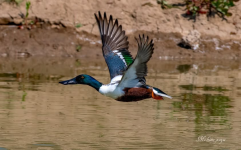
Northern shoveler

1740519066062.png
 
Green bee eater

1740519143555.png
 

Users who are viewing this thread

Pakistan Defence Latest

Back
Top