Pakistani Defense Minister: The Mecca Alliance will take military action if the escalation extends to Saudi territory
September 2026: The joint defense agreement signed in Mecca between Saudi Arabia, Turkey, and Pakistan entered a critical phase, coinciding with the escalating military conflict between Saudi Arabia and the Houthi militias in Yemen. Pakistani Defense Minister Khawaja Muhammad Asif confirmed that his country would uphold its defense commitments if the fighting spilled over into Saudi territory.
Asif stated that the agreement's principle was clear and unambiguous, emphasizing that an "unjustified attack" on any member state or the spillover of the Yemeni conflict into Saudi Arabia could trigger the collective defense mechanism stipulated in the agreement.
This statement is particularly significant because the agreement, signed by Saudi Arabia, Turkey, and Pakistan in Mecca on August 7, stipulates that an armed attack on any of the three countries is considered an attack on all three. Turkish officials have described this mechanism as technically similar to the principle of collective defense outlined in Article 5 of NATO.
However, the agreement's wording does not necessarily mean that any attack will automatically lead to the deployment of ground troops or the launch of joint military operations. Turkish Foreign Minister Hakan Fidan explained that the country under attack requests assistance and specifies the nature of the support it needs, leaving room to determine the form of response based on the nature and scale of the threat.
Asif's remarks come at a highly sensitive time, as Saudi Arabia has witnessed a significant escalation by the Houthis in recent days, including the launch of dozens of missiles and drones toward targets in the south of the Kingdom. Reports indicate that the areas of Khamis Mushait, Abha, Najran, and Jazan were targeted, in addition to facilities related to the energy sector, resulting in dozens of injuries and the temporary disruption of some oil operations.
This follows the first meeting of the joint committee established by Saudi Arabia, Turkey, and Pakistan on August 31 in Istanbul, where the three countries agreed to establish a secretariat in Saudi Arabia and enhance their collective defense capabilities and coordination among their armed forces.
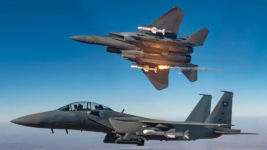
The Military Capabilities of the Mecca Alliance
The Mecca Alliance, comprising Saudi Arabia, Turkey, and Pakistan, provides the coalition with significant and diverse military strengths. The three countries possess distinct yet complementary strengths: Saudi Arabia offers advanced air and defense capabilities, while Turkey boasts a robust defense industrial base and a well-balanced land, air, and naval force. Pakistan adds substantial manpower and military resources, and is the only nuclear power within the alliance. The joint defense agreement aims to enhance collective defense capabilities, strengthen the cohesion of the armed forces, and develop cooperation in defense industries, production, and military technology.
In terms of manpower, Global Firepower estimates for 2026 indicate that Turkey has approximately 481,000 active-duty military personnel, compared to roughly 660,000 in Pakistan and 247,000 in Saudi Arabia, totaling approximately 1.39 million active-duty personnel for the three countries combined. Turkey also maintains around 380,000 reservists, and Pakistan has approximately 550,000.
As for air power, Pakistan, Turkey, and Saudi Arabia stand out, each possessing a distinct air force with its own unique characteristics. Pakistan, according to 2026 estimates, possessed approximately 1,397 aircraft, including 331 fighters and 90 attack aircraft. Turkey had around 1,101 aircraft, including 201 fighters, in addition to a significant force of helicopters and specialized aircraft. Saudi Arabia had approximately 917 aircraft, including 283 fighters, and was particularly notable for its large fleet of aerial refueling aircraft, estimated at around 22, a number that grants it a significant capability to conduct long-range air operations.
Turkey's importance lies in the fact that it adds to the coalition an integrated air, land, and sea system, along with a defense industry sector capable of producing drones, munitions, missiles, armored vehicles, and warships. The Turkish armed forces also possessed approximately 2,284 tanks and nearly 98,000 armored vehicles, according to Global Firepower estimates, as well as more than 500 helicopters, including 111 attack helicopters.
In contrast, Pakistan represents the largest manpower and land force within the alliance, possessing approximately 2,677 tanks and 59,000 armored vehicles, in addition to 662 self-propelled artillery systems, according to 2026 estimates. The Pakistani Air Force also possesses one of the largest fighter fleets in the alliance, with approximately 331 fighters, giving it a significant ability to provide air cover and carry out defensive and offensive operations.
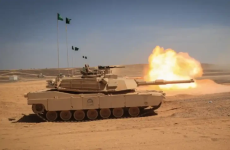
Saudi Arabia offers the alliance a different mix of power, possessing a sophisticated air force including F-15, Eurofighter Typhoon, and Tornado fighter jets, along with significant early warning, refueling, and air defense capabilities. According to Global Firepower estimates, it has approximately 1,085 tanks and over 22,000 armored vehicles.
Naval power also stands out as an area that could benefit from integration among the three countries. Turkey possesses a large navy and growing expertise in shipbuilding, submarine construction, and maritime drone development, while Saudi Arabia has advanced naval capabilities to protect its coasts, waterways, and oil installations. Pakistan provides significant naval expertise in the Indian Ocean and the Arabian Sea. Theoretically, the alliance could distribute different naval roles across the Red Sea, the Arabian Gulf, the Arabian Sea, and the Eastern Mediterranean.
One of the most prominent elements of the alliance's unconventional power is Pakistan's nuclear capability. Pakistan is the only one of the three countries with a declared nuclear arsenal, a factor that adds a crucial strategic dimension to the alliance.
The alliance's importance is further amplified when considering defense industries. Turkey possesses a vast industrial base capable of supplying drones, munitions, missiles, vehicles, and ships. Saudi Arabia has substantial financial resources and programs for localizing military industries, while Pakistan has extensive experience in manufacturing and developing fighter jets, missiles, and armored vehicles in collaboration with international partners, particularly China. The recent trilateral meeting explicitly stipulated enhanced cooperation in defense industries and the development of joint production and technology.


 The steadfastness of the Armed Forces' movements

 ……….leave the humor to the professionals


