 Should Bangladesh join Asean?
As Bangladesh eyes new horizons for economic growth, geopolitical influence, and strategic connectivity after the fall of Sheikh Hasina’s regime, joining Asean has emerged as a compelling option
On 3 November, Chief Adviser Professor Muhammad Yunus sought Indonesia's backing for Bangladesh's bid to join the Association of Southeast Asian Nations (Asean). Before that, on 15 September, the High Commissioner of Malaysia to Bangladesh, Haznah Md Hashim, said that her country will support Bangladesh's proposal for inclusion in the association.
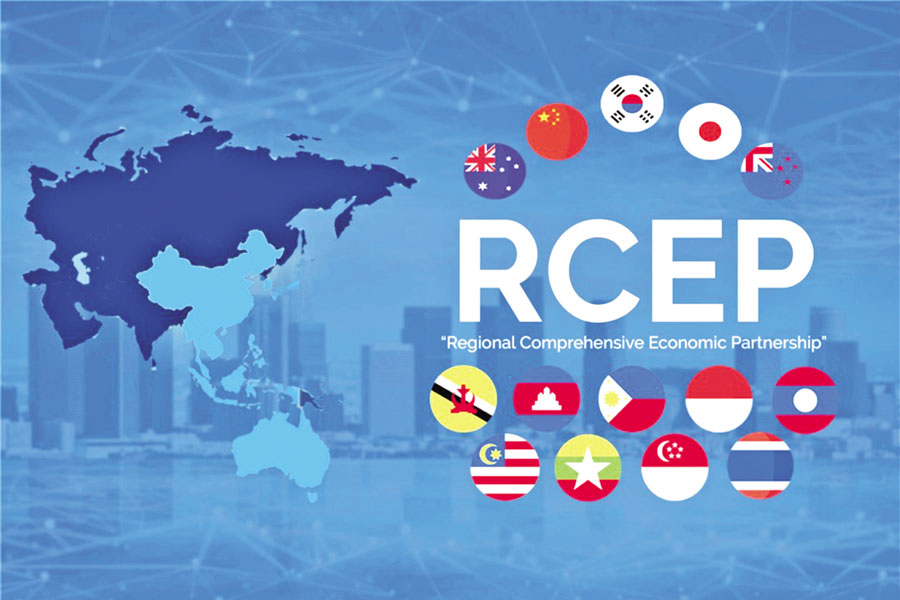
Also, on 17 October, the commerce ministry sent a letter of consent to the foreign ministry, requesting Bangladesh's entry into the China-led Regional Comprehensive Economic Partnership (RCEP), the world's largest trade pact, of which all 10 Asean countries are members.
Bangladesh is currently a member of the Asean Regional Forum, and there have been talks of the country's inclusion to the association for a while. Bangladesh assigned its first Ambassador to Asean in 2013, while the Asean Committee in Dhaka was established a year later.
As Bangladesh eyes new horizons for economic growth, geopolitical influence, and strategic connectivity after the fall of Sheikh Hasina's regime on 5 August, joining the Asean has emerged as a compelling option.
With its expanding economy, strategic geographic position, and shifting political landscape, Bangladesh stands to gain significantly by integrating into this dynamic bloc.
However, the journey to membership has its fair share of challenges, demanding a clear-eyed analysis of both the opportunities and downsides.
Comparative advantages for Bangladesh
Asean economies have developed comparative advantages in diverse industries, such as electronics, natural resources, automotive production, and advanced manufacturing.
"After our LDC graduation, we will need to attract foreign investment. In the countries of Asean or RCEP, our export is still minimal. So if we sign a free trade agreement or comprehensive economic partnership agreement with them, then we will get market benefits."
Professor Mustafizur Rahman, Distinguished Fellow, CPD
The member states have diversified their industrial bases, leveraging innovation to enhance competitiveness in global markets, a sector where Bangladesh has lagged far behind.
Vietnam, for instance, has transformed itself into a manufacturing hub for electronics, exporting products for global giants like Samsung.
Similarly, Malaysia's advanced semiconductor industry positions it as a critical player in global supply chains.
In comparison, Bangladesh's manufacturing remains focused on low-value-added sectors, with limited forays into electronics and other high-tech industries.
While Bangladesh has strengths in agriculture, pharmaceuticals, and light engineering, these industries have not yet achieved the scale or sophistication required to compete with Asean economies.
A free-trade agreement might hamper the growth of our nascent pharmaceutical and light engineering sectors, as we are not in any condition to compete with countries like Vietnam and Indonesia in these sectors.
The agriculture sector offers another comparison. While countries like Cambodia and Myanmar share Bangladesh's reliance on agriculture, Asean nations have increasingly integrated agri-tech to enhance productivity and value addition. For instance, Thailand's food processing industry demonstrates how technological investments can elevate traditional sectors.
Bangladesh, despite its agricultural potential, has lagged in developing value-added products and modernising its supply chains, making this a potential area of growth if it joins Asean.
Innovation and technology form a cornerstone of Asean's success, with countries like Singapore and Malaysia making significant investments in research and development (R&D).
Singapore leads in fintech and biotech innovation, while Malaysia focuses on green technologies and electronics. Bangladesh, by comparison, is at an early stage in building its innovation ecosystem. Although the ICT sector is growing, the country lacks the extensive R&D infrastructure and technological expertise that Asean economies possess.
Integrating into Asean could provide Bangladesh with access to technology transfer, partnerships, and expertise that could accelerate its progress in innovation.
Asean membership would also integrate Bangladesh into regional supply chains, particularly in high-value industries such as electronics, automotive, and advanced manufacturing.
Vietnam's example is instructive, as its Asean membership has facilitated its emergence as a global manufacturing hub.
Bangladesh could similarly benefit by attracting foreign direct investment (FDI) and embedding itself in these networks.
Moreover, Asean's trade agreements, including the Regional Comprehensive Economic Partnership (RCEP), would allow Bangladesh to diversify its export markets, reducing its reliance on traditional partners in Europe and North America.
Economic integration and trade benefits
Asean's economic bloc, valued at $3.8 trillion, represents a lucrative market for Bangladesh. Despite its proximity and strategic advantages, Bangladesh's trade flow to these nations remains disproportionately low.
A study conducted by Atiur Rahman, former governor of Bangladesh Bank, reveals that 40–60% of Bangladesh's export potential to Asean countries remains untapped.
Member countries like Vietnam, Thailand, and Malaysia are examples of how Asean facilitates economic growth through trade liberalisation and intra-regional cooperation.
Professor Dr Mustafizur Rahman, the Distinguished Fellow at the Centre for Policy Dialogue (CPD), thinks that trade negotiations with blocs like RCEP or Asean will be much more beneficial for Bangladesh than signing bilateral trade agreements.
"It reduces the pressure of negotiation for us and it's more convenient to get favourable deals," he said.
Post LDC graduation, Bangladesh will lose its preferential market access and face stringent rules of origin, potentially reducing its baseline exports by 7–14%.
However, Asean's $3 trillion economic bloc offers a lucrative alternative to mitigate these challenges.
"After our LDC graduation, we will need to attract foreign investment. In the countries of Asean or RCEP, our export is still minimal. So if we sign a free trade agreement or comprehensive economic partnership agreement with them, then we will get market benefits," Dr Rahman added.
By diversifying its product range and exploring new markets within Asean, Bangladesh can counterbalance the expected trade losses. Pharmaceuticals, light engineering, and agricultural products stand out as sectors with high growth potential in Asean markets.
Additionally, integration into Asean trade networks could help Bangladesh overcome its overreliance on ready-made garments, which currently account for 85% of its exports.
Moreover, Asean membership could help Bangladesh negotiate better trade terms and attract intra-regional investments. Countries like the Philippines have leveraged their membership to secure significant foreign investments from Asean powerhouses like Singapore and Malaysia. Bangladesh can also take a similar approach to gain more foothold in Southeast Asia.
Being a member of Asean may also help Bangladesh to become a member of RCEP. A study conducted by Bangladesh Trade and Tariff Commission (BTTC) showed Bangladesh signing a free-trade agreement with RCEP-member countries may increase our export by 17% and GDP 0.26%.
Strategic connectivity and infrastructure development
Bangladesh's location as a bridge between South and Southeast Asia makes it a strategic asset for Asean. The Trans-Asian Railway (TAR) and Asian Highway (AH) projects could dramatically boost connectivity, linking Bangladesh to Thailand, Myanmar, and even China's Yunnan province.
Enhanced infrastructure, including the Matarbari deep-sea port and expanded capacity at Chattogram Port, would position Bangladesh as a trade and logistics hub for Asean countries.
The integration of Bangladesh into the Asean network could also help mitigate its dependence on sea routes, providing alternative land-based corridors.
Geopolitical leverage and diversification
Joining Asean would bolster Bangladesh's geopolitical standing. Membership in this bloc offers an alternative to its heavy reliance on India and growing dependence on China.
Asean provides a balanced platform where Bangladesh can engage with regional powers while maintaining its autonomy in foreign policy.
RCEP, which includes China, Japan, and South Korea, further underscores the strategic importance of membership.
This would not only amplify Bangladesh's economic diplomacy but also attract investments in heavy industries, technology, and infrastructure.
Challenges ahead:
Rohingya crisis and Myanmar
One of the most contentious issues in Bangladesh's relations with Asean is the Rohingya crisis. As Myanmar is a member state, Asean has been hesitant to take a firm stance, limiting its involvement to non-binding dialogues.
The Rohingya repatriation has been slow, and diplomatic negotiations often failed to bear fruits. So, it will be hard to overlook the Rohingya crisis and millions of refugees.
However, closer ties with empathetic Asean members like Indonesia and Malaysia could bolster Bangladesh's efforts for a dignified repatriation of Rohingya refugees.
High compliance costs
Joining Asean necessitates adherence to its stringent membership criteria, which involves significant policy changes and infrastructure investments.
Compliance requires reforms in taxation, trade regulations, and governance to align with Asean's standards. Asean is on the path to net zero, where Bangladesh is yet to start paying heed to such ideas.
For Bangladesh, the necessary reforms could be resource-intensive, requiring substantial financial allocations and political will. And the economic returns to such investment is not ensured.
Lack of infrastructure
Infrastructure readiness is another area where Bangladesh faces hurdles. While initiatives like the Matarbari deep-sea port and improvements to the Chattogram Port align with Asean's focus on connectivity, broader investments in transportation and logistics networks are essential.
Integration with projects like the Trans-Asian Railway (TAR) and Asian Highway (AH) will demand both financial commitments and efficient execution. Without these upgrades, Bangladesh risks being seen as an unprepared candidate, further delaying its membership prospects.
Moreover, investing in the infrastructure will involve financial risk, and connectivity through Bangladesh may not be profitable either.
Increased competition
Bangladeshi industries are facing intense competition from established Asean economies such as Vietnam, Thailand and Malaysia. These countries have already adapted to Asean's free trade agreements and integrated supply chains, making them formidable competitors.
Moreover, countries like Vietnam, Malaysia and Indonesia have a large young, dynamic, highly-skilled population which Bangladesh lacks. Without preparation, such competition could potentially disadvantage industries that are not yet prepared for open-market dynamics.
While challenges exist, including compliance costs and diplomatic hurdles, the benefits of joining Asean are also considerable.
By aligning its policies, infrastructure, and diplomacy with Asean's standards, Bangladesh can position itself as a regional powerhouse in the rapidly evolving global economy.
"We import more from these countries than we export to them. So, there is a high chance of our loss of revenue. If we want to get zero-tariff access to Asean, we need to give that to them in our market," Dr Rahman said.
"So, all the decisions must be evidence-based. We need export oriented investment. We must remember that no matter how friendly diplomatic relations are between countries, trade negotiations are always more intense and competitive," he concluded.
As Bangladesh eyes new horizons for economic growth, geopolitical influence, and strategic connectivity after the fall of Sheikh Hasina’s regime, joining Asean has emerged as a compelling option

www.google.com

 thefinancialexpress.com.bd


