Vietnam Defense and News forum

What a circus
SK president invited Trump and few APEC members to a special dinner.

To view this content we will need your consent to set third party cookies.
For more detailed information, see our cookies page.
 
Huge purchase of aircraft
Vietjet confirms 100 Airbus 321 neo series out of 280 on order.
Interesting, also Vietjet buys Pratt & Whitney PW1100Gs engines.
 

India’s Footwear Exports Lag As Vietnam, Indonesia Surge Ahead In Global Market​

Oct 31, 2025

India’s footwear industry is losing ground in global trade as competitors like Vietnam and Indonesia expand their market share through targeted policy reforms, free trade agreements, and export-led growth, according to a new report by Icra Limited. Despite being the world’s second-largest footwear producer after China, India’s export growth has been tepid at around 3 per cent annually since FY2016, with little progress in competitiveness, innovation, or supply chain efficiency.

Icra’s report titled “India’s Missed Steps and the Path Forward” highlights that global footwear production reached nearly 24 billion pairs in calendar year 2024, with Asia remaining both the production and consumption hub. China continued to dominate global output with a 55–58 per cent share, followed by India at 8–10 per cent, Vietnam at 5–8 per cent, and Indonesia at 5–6 per cent. Yet, in terms of exports, India’s share has remained stagnant at around 1.8–1.9 per cent, while Vietnam and Indonesia have steadily grown since 2021, driven by favourable trade policies and foreign investment.

Vietnam and Indonesia have successfully leveraged free trade agreements with major markets, including the United States, the European Union, and the United Kingdom. In contrast, India continues to face tariff disadvantages in the same geographies. The report notes that while Vietnam has secured duty-free access under pacts such as the EU–Vietnam FTA and UK–Vietnam FTA, and Indonesia recently signed an EU trade agreement, India’s footwear exports remain hindered by the absence of such preferential access.

Icra attributes India’s weak export performance to a fragmented industry structure, heavy reliance on imported raw materials, and compliance challenges such as Bureau of Indian Standards (BIS) certification requirements that delay shipments and add costs. Around 70 per cent of the sector remains unorganised, and a significant credit gap limits investment in modernisation, the report says. Global buyers are demanding 20–25 per cent price discounts from Indian exporters due to rising input costs and competition from cheaper suppliers.

The report warns that India’s footwear sector could face further headwinds from potential US tariffs of up to 50 per cent on non-leather footwear — a category that forms nearly 90 per cent of domestic production. Meanwhile, new players like Bangladesh are emerging as competitive exporters, particularly in synthetic and non-leather categories.
 

Vietnam’s durian exports hit $1 billion milestone​

October 30, 2025 | 17:41

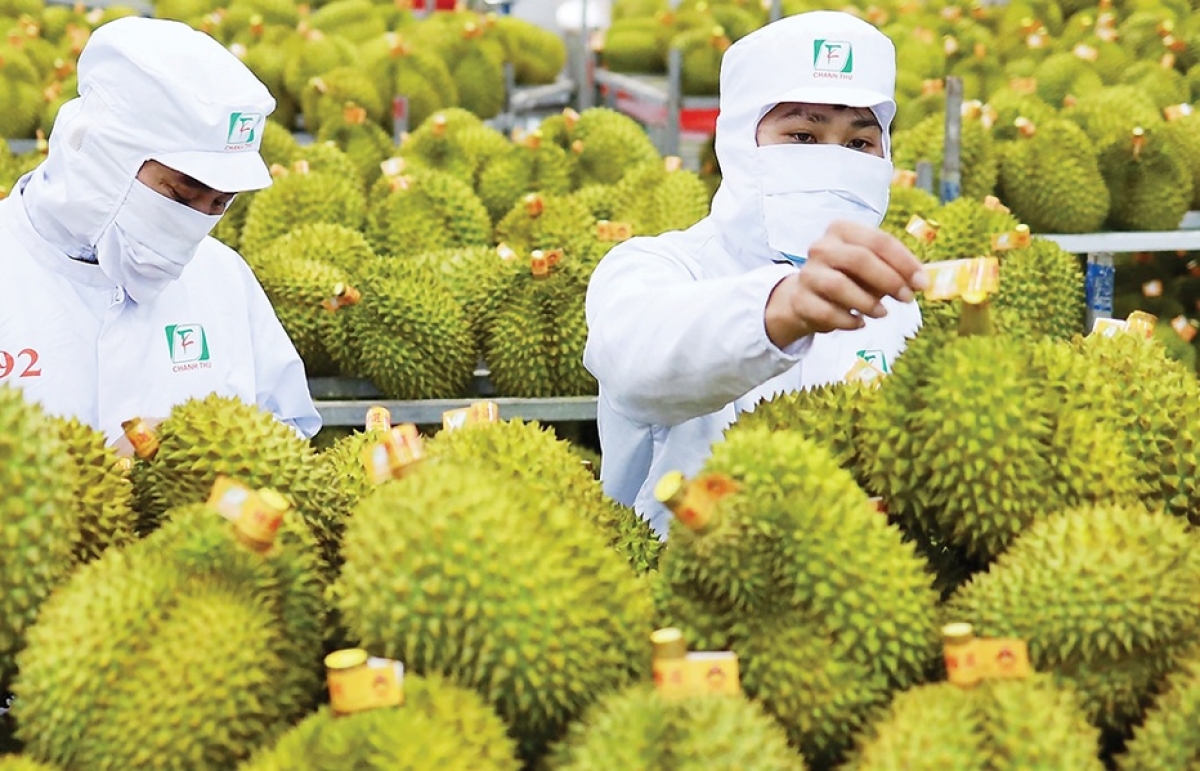
Vietnam's durian exports reached nearly $1 billion in September, with total export turnover for 2025 projected to surpass $3.5 billion, according to the Department of Vietnam Customs.

In September alone, durian exports were valued at $972 million, up 45 per cent on-year. The accumulated value for the first nine months reached nearly $2.8 billion, down only 1.7 per cent compared to the same period last year.

The remarkable growth was largely driven by a strong recovery from the Chinese market, which accounted for $960 million in September, an increase of 52 per cent over the same period in 2024. Cumulatively, exports to China in the first nine months reached nearly $2.6 billion, rising 0.2 per cent on-year.

Other key markets also recorded double-digit growth, including Papua New Guinea, the United States, Canada, Japan, and Australia. Notably, Malaysia saw an exceptional surge of 657 per cent, exceeding $2 million in value. Despite being known for its own premium durian varieties, Malaysia, along with Indonesia and Thailand, continues to import Vietnamese durians thanks to their year-round availability.

Conversely, Thailand, Vietnam’s second-largest durian importer in 2024, experienced a sharp decline. September exports to Thailand stood at only $370,000, a 99 per cent drop on-year, with total nine-month turnover at $34 million, down 75 per cent. Experts attribute this to Vietnam’s new durian export protocol with China, which has diverted supply from frozen durian exports previously sent to Thailand.

According to Dang Phuc Nguyen, secretary general of the Vietnam Fruit and Vegetable Association, September has traditionally been the peak month for durian exports, coinciding with the main harvest season in the Central Highlands, Vietnam’s largest durian-growing region.

“Despite some market challenges, the strong upward momentum suggests that Vietnam’s durian exports could reach $3.5 billion by the end of this year,” Nguyen said.
 
in long term Thailand fruit industry is finished.

I remembered few years back a chinese poster here claimed Vietnamese fruits especially Durian had no chance in China because Chinese loved Thai fruits.
You are bringing up things from 7 years ago.

I was talking about Thailand's fruit industry being stronger than Vietnam's at 2018, not 2025. Back then Vietnam had the most convenient logistics to the Chinese market, but was still being crushed by Thailand in the export data of almost all tropical fruits except lychee. I was right at time.

Of course, the current situation is the result of the efforts and wisdom of the Vietnamese people, but the stupid actions of Thailand and the Philippines are also one of the main.
 
Last edited:
I have a few friends who grow durian on their lands since a few generations (Chanthaburi province).

The Chinese pre order their Durians and their containers await in the warehouse nearby.

The Chinese have a strange obsession with exotic fruits.

Chinese people like eating fruit. The per capita annual consumption of fruit in China is 232 kilograms, ranking first in the world. China is aate country, which hardly produces tropical fruits, so China's demand for tropical fruits is very large.

Vietnam, Thailand, Malaysia, and the Philippines have almost cornered the tropical fruit market in China. The Vietnamese have won more in recent years.
 
An alternative to China?

An alternative to China?
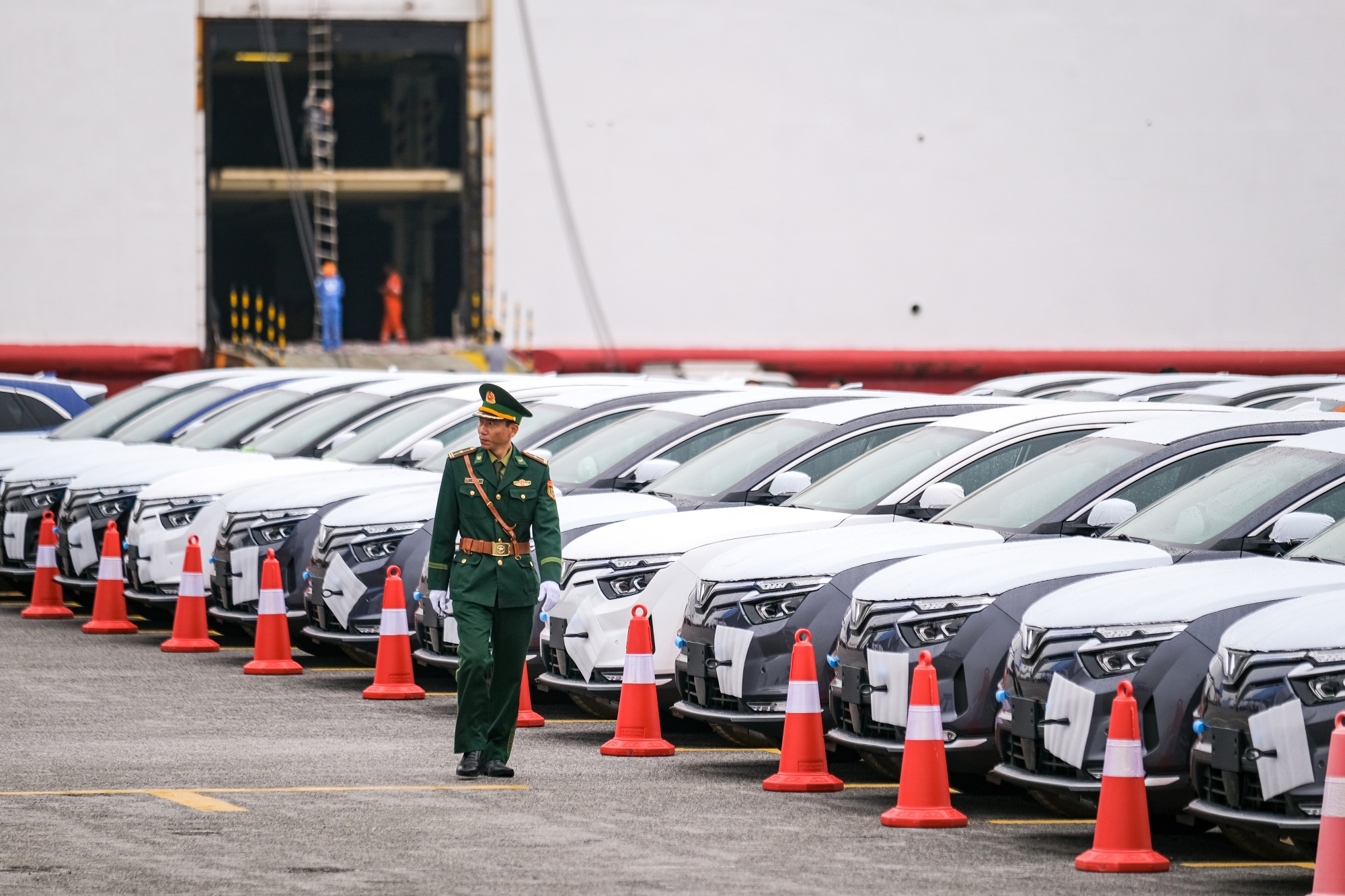
Photographer: Linh Pham/Bloomberg
Save

If India wants to build a robust computer and electronics manufacturing industry, it needs to shift focus, fast. Instead of concentrating on the domestic market, it should become regionally competitive and export-driven. That means recognizing that Vietnam, not China, is its biggest rival.

The latest reminder of this urgency came last week with a US appeal for New Delhi to make the business environment easier and more transparent to navigate, or keep losing out on foreign direct investment. Cutting import duties ought to be high on the list, US Ambassador to India Eric Garcetti told the Indo-American Chamber of Commerce on Jan 30.

If you tax inputs, you are taxing your outputs, Garcetti noted. “You are not taxing us, you are not protecting the market. What you are doing is limiting a market.”

A day later, the Indian government reduced tariffs on a range of imported components including battery covers, lenses, antennae and mechanical parts to 10% from 15%. The timing might look like New Delhi was following orders, but it’s more likely a coincidence and even possible that Washington knew it was coming.

Though India is getting a lot of overseas investment, Foxconn Technology Group’s announcement last month that it will spend $100 million on a new plant in Vietnam is a reminder that it doesn’t hold a monopoly over business migration away from China. Mexico, Thailand, Indonesia and Czech Republic are also in the running to secure additional funding to build out the supply chains of the global computer and electronics makers.

Most nations offer a similar mix of incentives to lure investors. These include tax breaks, dedicated free-trade or industrial zones, discounted utilities like water and electricity, free land and commitments to supply workers. But India stands out among peers in implementing higher import taxes, which motivate companies to set up in the country to supply local consumers but makes them less competitive in the export market.

The Modi government’s “Make In India” policy launched a decade ago looks at first to have achieved its desired result. The government raised tariffs on manufactured products, which in turn spurred spurred companies like Foxconn and Pegatron Corp. to expand operations there to skirt those duties.

bloom

India and SU aren't compared to either China or Vietnam. we find these two countries are similar "Late Comer" as East Asian Countries :coffee:
🇮🇳


=>
Historical trajectory: Russia industrialized early (late 19th–early 20th centuries) and underwent rapid Soviet-era heavy industrialization, so it is not a late comer like the East Asian NICs :) (South Korea, Taiwan, Singapore, Hong Kong). 👍

 
What a circus
SK president invited Trump and few APEC members to a special dinner.

To view this content we will need your consent to set third party cookies.
For more detailed information, see our cookies page.

Not every country sees Trump or the US the same way. The line between political, economic, and military cooperation is sometimes blurred, but it's still meant to stay distinct. And whether Trump is loved or hated, right or wrong, that's subjective and temporary. The alliance between South Korea and the US has deep roots and isn't going anywhere anytime soon.

image.png
 
Laos is a close military ally. Maybe some concerns from Thailand or Cambodia. no reason to worry. What can we do with new 40 jets? Too little.
Yes I know Asean was established to counter Vietnam threat. But that’s old story. USSR is dead.
That's SEATO, not ASEAN. ASEAN was never a military bloc. Sure, anti-communism was part of its early political agenda, but its real focus was regional stability, trade, and cultural cooperation, not collective defense. And I'll say it again, after saying this like a hundred times already, Vietnam, or even North Vietnam back then, wasn't an ideological threat to anyone in Southeast Asia. The only real ideological forces in that era were the Soviet Union, Red China, and the US, not Vietnam.

And if we're insisting on talking about the ideological threats in Southeast Asia, that should start with the Communist Party of Malaya, not Vietnam. The CPM was founded back in 1930 by people connected to the Chinese Communist Party and the Comintern, which was basically Moscow's global communist network. It operated mostly in Malaya and Singapore, and there's no evidence it took orders from Hanoi. The historical record from Singapore's National Library Board makes that pretty clear.

https://www.nlb.gov.sg/main/article-detail?cmsuuid=56327203-9842-46b4-85d3-c4f608578b2c
 
Last edited:
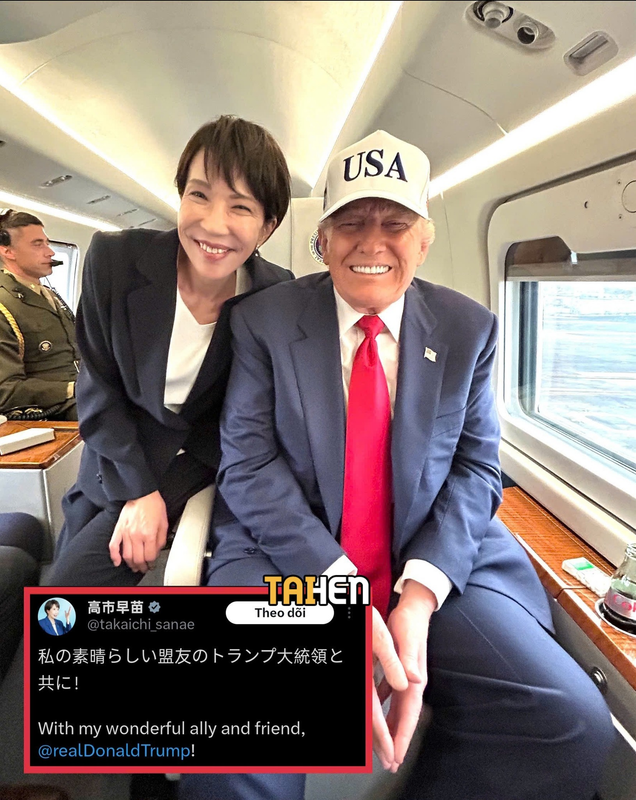
Not every country sees Trump or the US the same way. The line between political, economic, and military cooperation is sometimes blurred, but it's still meant to stay distinct. And whether Trump is loved or hated, right or wrong, that's subjective and temporary. The alliance between South Korea and the US has deep roots and isn't going anywhere anytime soon.

image.png
Yes ok military alliance is ok and necessary in the case of Japan and South Korea,
but this boot licking Trump is really shocking.
Where the self respect of the Japanese, the Koreans?
 
Yes ok military alliance is ok and necessary in the case of Japan and South Korea,
but this boot licking Trump is really shocking.
Where the self respect of the Japanese, the Koreans?

Is it not a common knowledge that Korea has adhered to the diplomatic principle of "flunkeyism(사대주의)" for thousands of years?

Japan is a colony.
 
Is it not a common knowledge that Korea has adhered to the diplomatic principle of "flunkeyism(사대주의)" for thousands of years?

Japan is a colony.
This boot licking is disgusting. The Japanese lose every respect among the Vietnamese.
 
This boot licking is disgusting. The Japanese lose every respect among the Vietnamese.
Don't be so harsh. History rolls forward like a raging river, and countless powerful empires and nations disappear in the river like foam. It's already not easy for a nation to survive. If there were other options, who would be willing to lick boots? Which ethnic group has survived to this day without ever licking boots?
 

Users who are viewing this thread

Pakistan Defence Latest

Back
Top