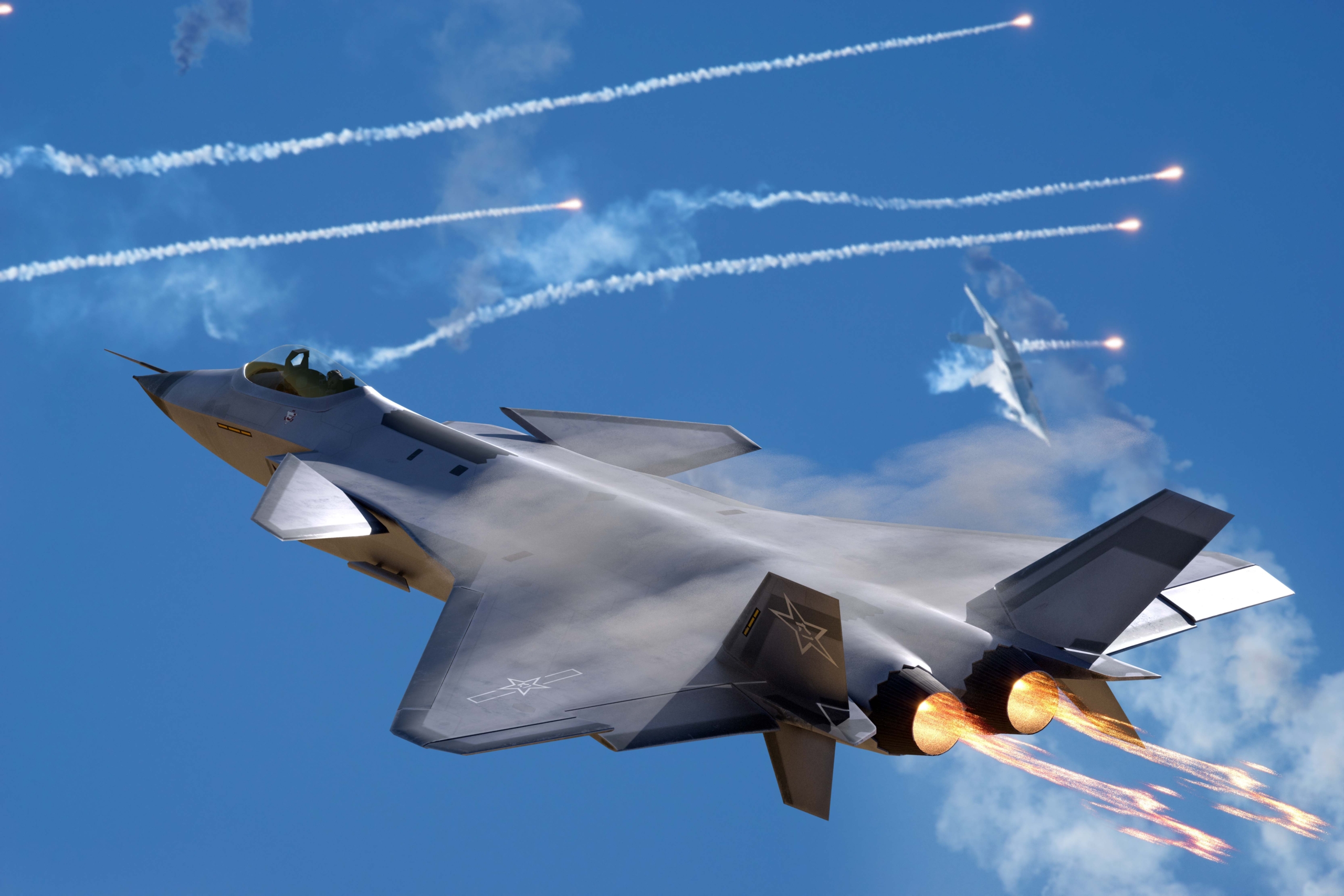
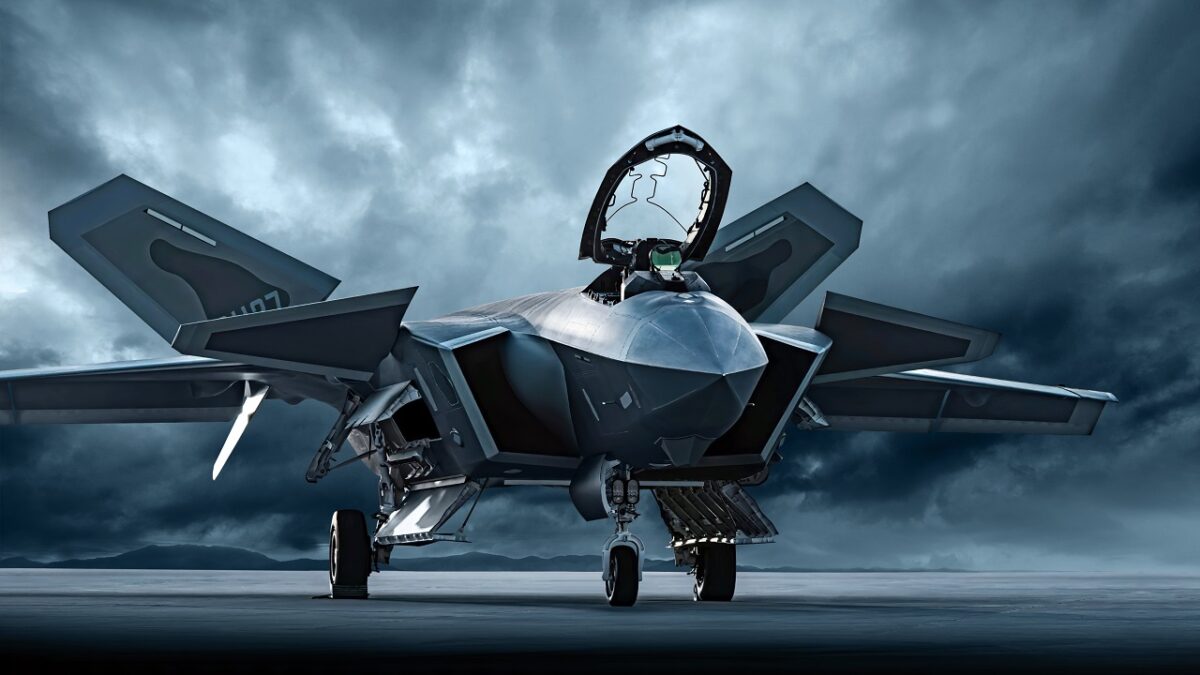
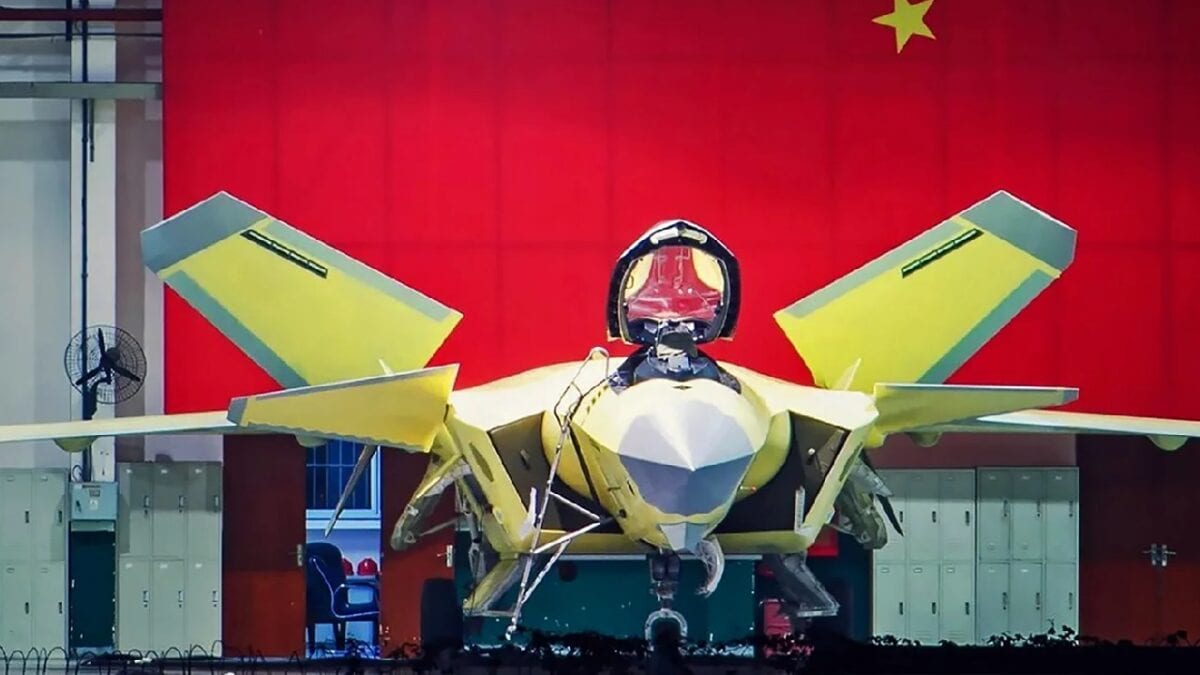
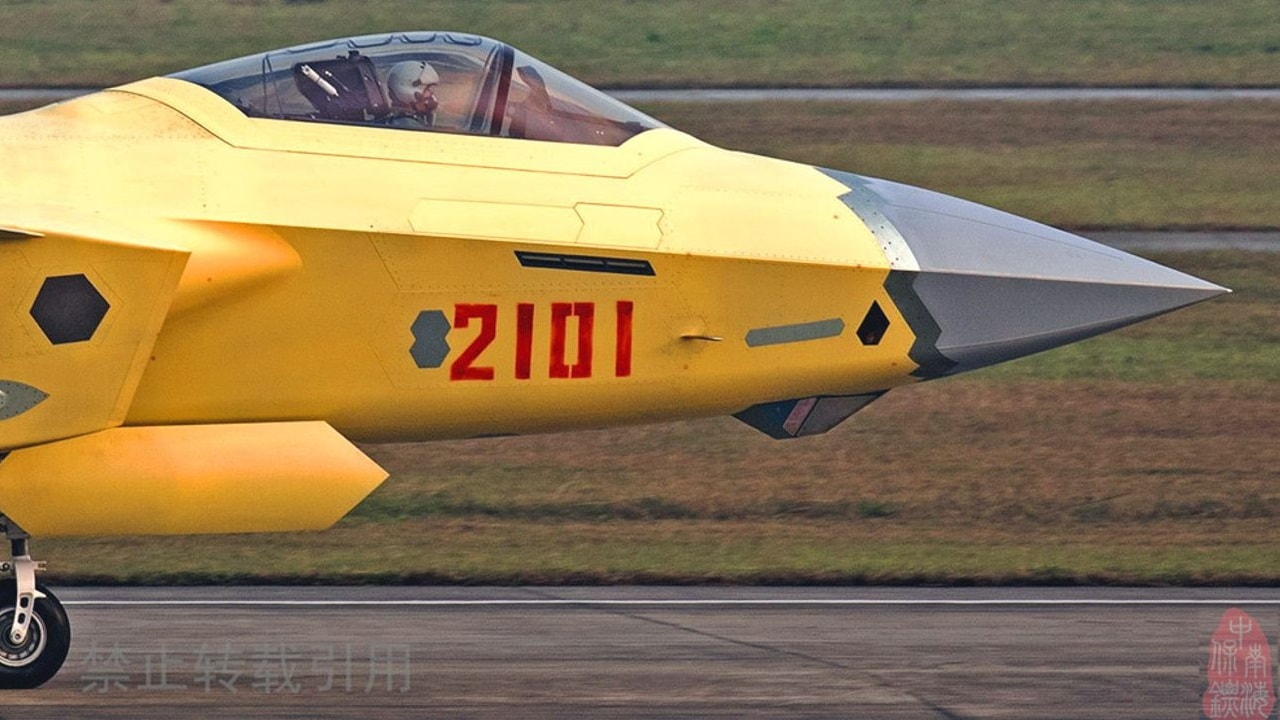
Chengdu J-20 5th Generation Aircraft News & Discussions

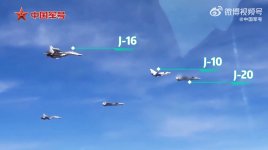
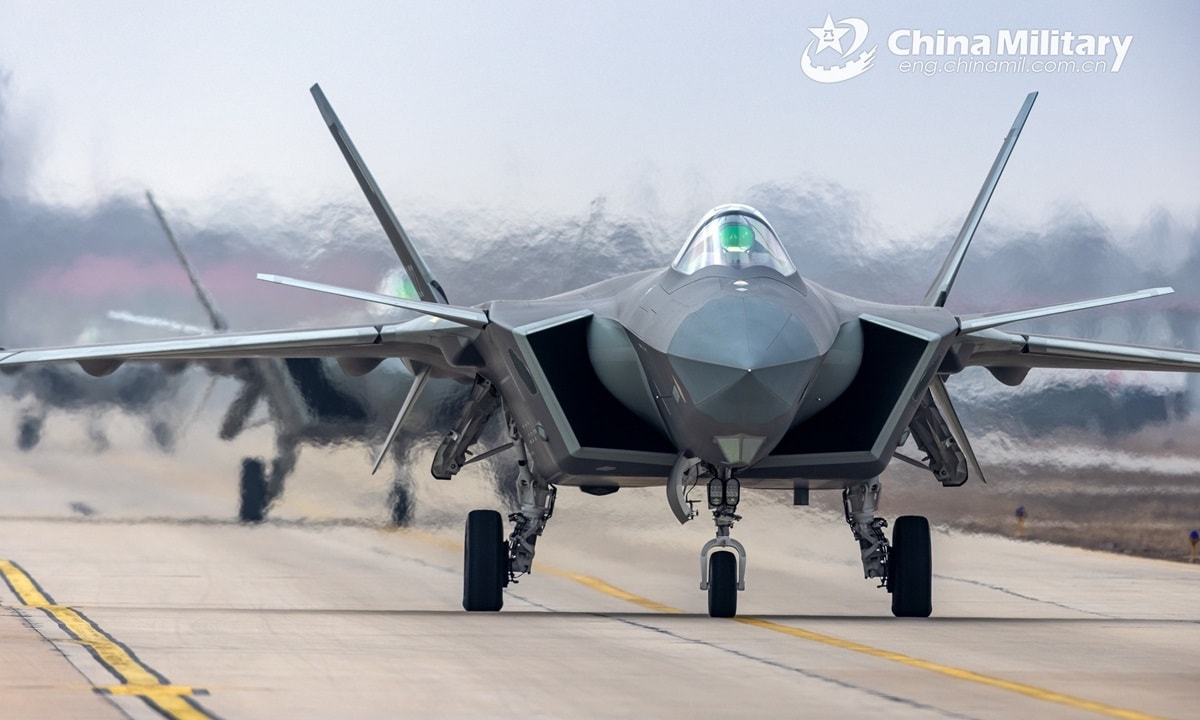
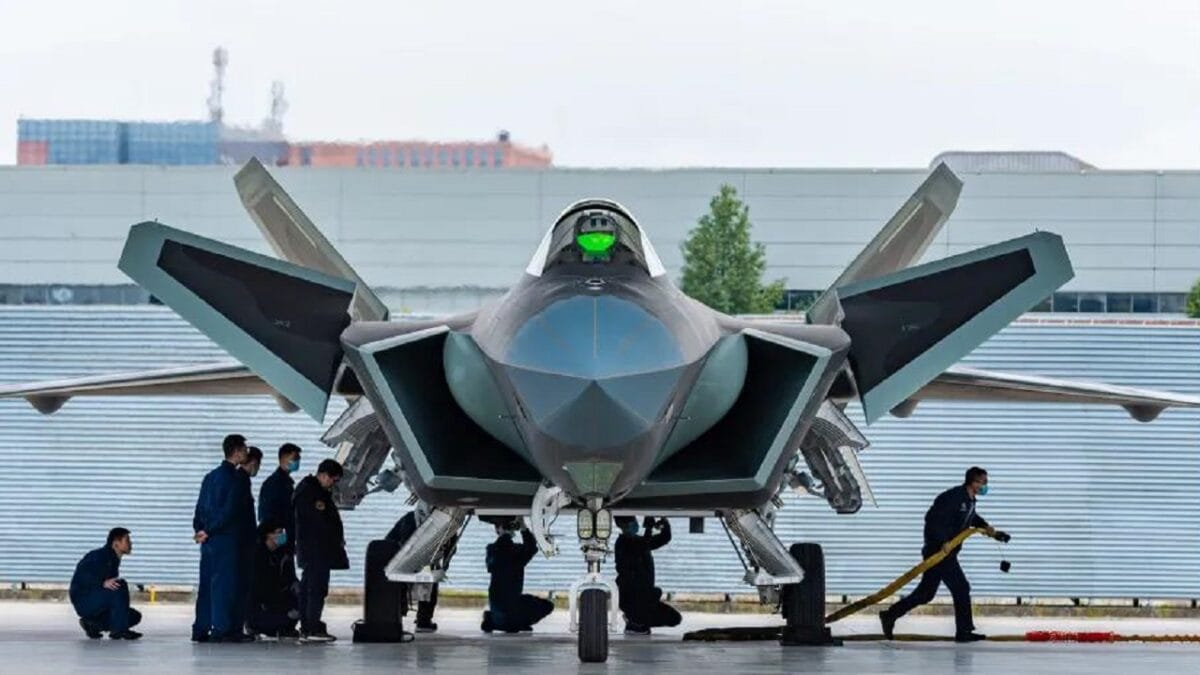
Recently, an air force unit conducted flight training under frigid conditions. Closely aligned with actual combat requirements, the unit designed scientific training programs to enhance pilots’ combat capabilities in full territorial scope and all-weather conditions. (中国军号 China Military)

vedio:

傲游截图20260113081404.jpg
 
Recently, an air force unit conducted flight training under frigid conditions. Closely aligned with actual combat requirements, the unit designed scientific training programs to enhance pilots’ combat capabilities in full territorial scope and all-weather conditions. (中国军号 China Military)

vedio:

View attachment 171886
I re-uploaded this video using my own Twitter account.

To view this content we will need your consent to set third party cookies.
For more detailed information, see our cookies page.


This is my first tweet. LOL
* I do not use Twitter as a social networking tool. Please do not use this account to contact me.
 
Last edited:
Recently, an air force unit conducted flight training under frigid conditions. Closely aligned with actual combat requirements, the unit designed scientific training programs to enhance pilots’ combat capabilities in full territorial scope and all-weather conditions. (中国军号 China Military)

vedio:

View attachment 171886

Likely the well-known 172nd AB from the Cangzhou Flight Training Base or the 176th AB from the Dingxin Flight Test & Training Base.


I re-uploaded this video using my own Twitter account.

To view this content we will need your consent to set third party cookies.
For more detailed information, see our cookies page.


This is my first tweet. LOL
* I do not use Twitter as a social networking tool. Please do not use this account to contact me.


But may I add you?
 
Last edited:
By the way, a strange video was posted including - IMO almost for sure an AI-generated glimpse on - the WS-15-powered J-20A.

It is really strange what AI makes out of blurry images

1768304658681.png
https://b23.tv/qg0Skxu (at 2:35)
 

China’s J-20 enters its next phase with air superiority and MUM-T upgrades​

How the J-20 is evolving into an advanced family of fighter jets increasingly optimized for specific roles.

Aaron Spray
January 13, 2026
AdobeStock_530743217_Editorial_Use_Only-1024x683.jpeg

Two new Chengdu J-20 variants, the J-20A and J-20S, made their public debut at China’s V-Day military parade on 3rd September 2025.

Details of the upgraded aircraft were later reported by state-run English-language outlet Global Times, with Chinese official media releasing further information to coincide with the 15th anniversary of the J-20’s maiden flight.

The disclosures offer the clearest public indication yet of how Beijing is evolving its flagship fighter to support enhanced air superiority and manned-unmanned teaming operations.

More space for new J-20A variant​

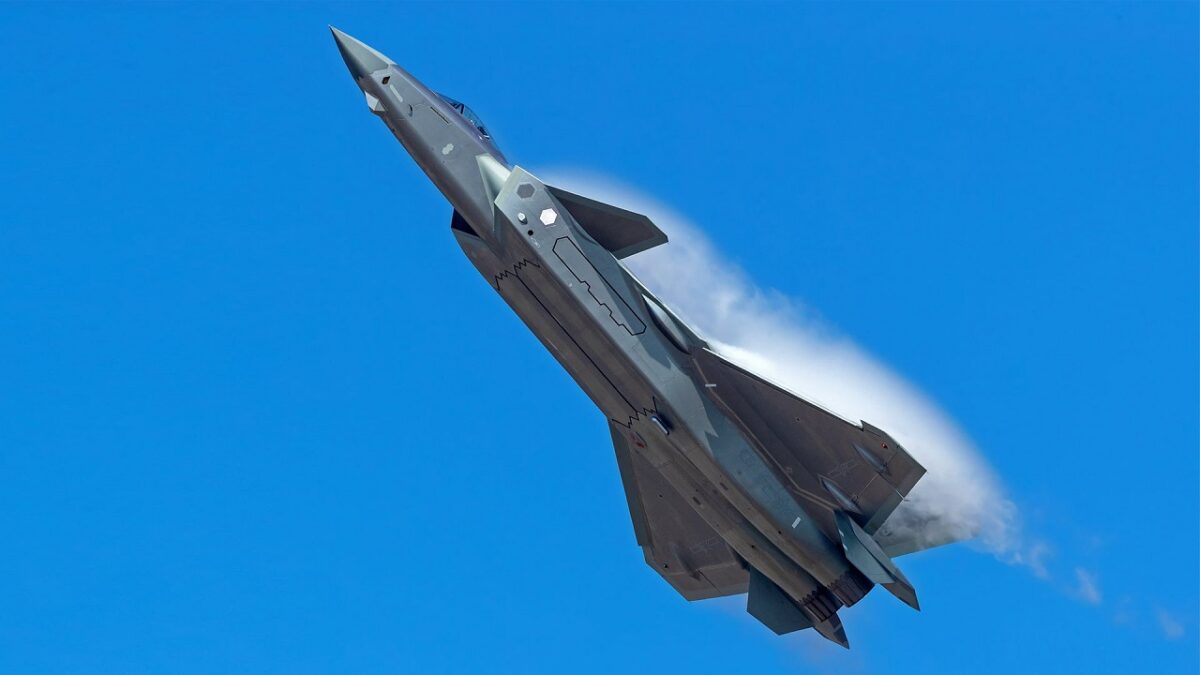
The J-20A is an upgraded variant of the J-20 and functions as the tip of the spear for Chinese air superiority. Externally, the J-20A can be distinguished by a raised section at the junction between the rear of its canopy and its fuselage. New equipment, and possibly fuel, can be installed in the extra space created by the raised section at the rear of the canopy.

Formation of J-20 fighters flying
Photo: Wikimedia Commons

Older versions of the J-20 had a taller canopy, but now it’s more smoothly blended with the fuselage. The redesign reduces drag and minimizes airflow separation at the rear of the canopy.

This may hint at other improvements. The older canopy was optimized for pilots to have a clear view in all directions. The lower canopy may indicate that upgraded systems mean the pilot no longer needs to rely on the naked eye for all-directional visibility. New systems likely provide the pilot with increased situational awareness.

The raised section may increase the aircraft’s weight. In compensation, Global Times reported the jet could be fitted with more powerful engines.

Chinese J-20 at air show
Photo: Ministry of National Defense of the People’s Republic of China

It’s important to note that these are discussed in the Chinese media based on external changes to the aircraft. The most important upgrades for modern fighter jets are internal.

Twin-seat J-20S optimized for loyal wingman role​

The J-20S is designed to be the world’s first twin-seat stealth fighter (the F-35 and F-22 are both single-seat). Global Times cited CCTV News and said, “It boasts exceptional medium-and long-range air superiority capabilities, precision strike capabilities against ground and maritime targets…”

A pair of Chengdu J-20s flying
Photo: Wikimedia Commons

It added that the J-35S is capable of conducting manned-unmanned teaming operations (MUM-T). Loyal wingman drones (called Collaborative Combat Aircraft in the USAF) are seen as the future of air war.

While more and more is becoming autonomous, having loyal wingman drones is placing more strain on pilots. The additional pilot helps the J-20S to “conduct forward tactical command.”

J-20S, J-20A and J-20 side by side.

♦️Top: two-seat J-20S

♦️Left: J-20A (with WS-10C2 engine)

♦️Right: J-20 (with WS-10C engine) pic.twitter.com/nuS2uUIIBR

— 𝔗𝔥𝔢 𝕯𝔢𝔞𝔡 𝕯𝔦𝔰𝔱𝔯𝔦𝔠𝔱△ 🇬🇪🇺🇦🇺🇲🇬🇷 (@TheDeadDistrict) January 6, 2026
Chinese military affairs expert Zhang Xuefeng told CCTV News that the rear-seat pilot enables more precise control of drones and coordination with them. This maximizes “the effectiveness of the entire combat system.”

Japan accuses Chinese J-15 of twice locking radar on F-15 jets near OkinawaJapan accuses Chinese J-15 of twice locking radar on F-15 jets near Okinawa

Mass production of the J-20​

The J-20 is China’s most advanced air superiority fighter jet, and like the F-35, it is constantly evolving and improving. The jet is in mass production with more than 300 examples now believed to have been delivered to the Chinese Air Force (PLAAF).

J-20 flying at air show
Photo: Wikimedia Commons
According to Rusi, an astonishing 120 J-20s were delivered in 2025, making it the second-most delivered fighter jet in the world after the F-35 (191 deliveries).

One of the major developments in the J-20, and Chinese fighter jet programmes writ large, is the development of domestic engines. This is cutting China’s previous reliance on Russian engines.

J-20S is world first with integrated MUMT

With a fast growing CCA ecosystem I guess WSO on other platforms like JH-7A2, J-16 and J-10AS may get such capabilities with comm pods or MLU upgrades to their jetspic.twitter.com/hzH0afADBe

— Xixi®茜茜大姐 🇨🇳🇭🇰🇲🇴 (@Xixi_2328857214) January 7, 2026
Just as the F-35 is not yet considered mature, neither is the J-20. The Global Times noted that more upgrades for the J-20 are reportedly coming that will include improvements to avionics, engines, and AI integration.


Forget The F-22 And F-35: China Is Now Building 120 J-20 Mighty Dragon Stealth Fighters Every Year​

By Reuben Johnson
Published JAN 16, 2026

Summary and Key Points: Fifteen years after its first flight, China’s J-20 is positioned for a major modernization push that targets the areas Beijing believes still lag behind top-tier U.S. fighters.

-Chinese commentary describes upgrades to radar and avionics, longer-range air-to-air weapons with stronger anti-interference performance, engine improvements, and deeper AI integration to support beyond-visual-range combat decision-making.

-The J-20 has already been showcased in networked operations alongside drones and airborne early warning aircraft, reinforcing its role as a node in a wider kill chain. The bigger story is scale: high monthly production and an upgrade path meant to keep the fleet evolving.

China’s J-20 Stealth Fighter Turns 15—and Beijing Has a Big Upgrade Plan

When it first flew on 11 January 2011, the Chengdu J-20 was seen as a sign that the People’s Republic of China’s (PRC) military aircraft industry had come of age.

Yesterday thus marks the 15-year anniversary of that event and “officially” the first time the aircraft had actually been airborne.

Slightly more than 6 years later, in March 2017, the J-20 entered Initial Operational Capability (IOC).

WHAT MAKES THE J-20 FIGHTER SPECIAL

Up to this point, the country’s fighter aircraft factories had been turning out copies of the Russia-designed Sukhoi Su-27, Su-30, and Su-33 models and the J-10, which appeared to be a very close analogue to the 1980s Israel Aircraft Industries (IAI) Lavi.


The J-20 was the first example of the PRC being able to design and build what, at least visually, appeared to be an attempt at a 5th-generation stealth fighter, taking to the air more than two decades after the US flew its YF-22 and YF-23 prototypes.


J-20.jpeg

J-20 fighter. Image Credit: Chinese military.

J-20-2-1200x675.jpg

J-20. Image Credit: Chinese Internet.

THE J-20 MIGHTY DRAGON IS TRULY GETTING AN UPDATE

However, in a recent interview with a PRC-based publication, a Chinese military analyst has detailed the set of improvements to be made to the J-20.

According to the long-time English-language Hong Kong newspaper, the South China Morning Post (SCMP), the aircraft is due for an extensive program of major improvements.

The former Crown Colony daily writes the J-20 stealth fighter with be receiving “avionics upgrades to its radar, engines, and AI integration to cement the fifth-generation jet’s pivotal position in aerial warfare.”

The military commentator who spoke to the SCMP, Zhang Xuefeng, appeared on a Saturday program for the state-controlled China Central Television (CCTV).

He explained that the J-20 has already demonstrated the ability to datalink in joint operations with People’s Liberation Army Air Force (PLAAF) stealth attack drone – as well as airborne early warning and control (AEWC) aircraft.

LEVELING THE PLAYING FIELD WITH THE U.S. AIR FORCE F-22

The initial goal of Chengdu Aerospace Corporation (CAC) was to develop an aircraft that would be an effective counter to the US F-22.

Therefore, the J-20 was not just an achievement of the PRC’s industry in developing a new-generation fighter; it was also a challenge to the US Air Force (USAF).


The twin-engined J-20 was also the first visible sign that the PLAAF was becoming a modern force, no longer tethered to Russian designs and technology as it had been since the 1980s.

The PRC had thought that having the J-20 in its arsenal would “level the playing field” with the US in the tactical aircraft sphere, as a retired defense intelligence officer from a NATO nation explained to 19FortyFive.


J-20-Stealth-Fighter-1200x675.jpg

J-20 Stealth Fighter. Image Credit: Creative Commons.

J-20-Stealth-Fighter-1200x675.jpg

J-20 Stealth Fighter. Image Credit: Artist Rendering/Creative Commons.

The problem from the Chinese perspective, as he explained, “is that the US and its allies have not been suitably terrified by the J-20.” It has proven to demonstrate less than the F-22 level of stealth and has not been seen as equally capable as the US aircraft in performance.

The Chengdu Aircraft Corporation design team has created the J-20 with a blended body shape that reduces reflection, features radar-absorbent external coatings, and has its ordnance housed in an internal weapons bay.

The fighter jet is also capable of supercruise performance, super manoeuvrability, and the combat functions provided by advanced avionics.

ROOM FOR IMPROVEMENT

Despite these officially-declared capabilities, PRC military experts are now saying that the aircraft’s existing technologies need to be refined.

“It needs to improve the performance of its avionics system, such as its radar and infrared searching and tracking,” Zhang said. “Its airborne weapons, or air-to-air missiles, will undoubtedly have increasingly longer ranges and stronger anti-interference capabilities. It is also crucial to continuously upgrade its engines.”

The J-20s were initially powered by Russian Saturn AL-31 engines – the same as flown in the Russian Su-27s in PLAAF service.

More than a decade later, in September 2021, the design team switched to the WS-10C engines, which are said to have been designed and manufactured in China.

The last engine change was to the Shenyang WS-15 Emei engine, which was always planned to power the aircraft.

Zhang then added that AI integration, a worldwide military trend, would be another highlight of future developments for the J-20.

Ukraine-18-1200x675.jpg

Chinese J-20 fighter. Image Credit: Creative Commons.

“If we equip our J-20s with an AI system in the future, it will be like having an extra assistant, which will enable the aircraft to leverage AI in air combat, particularly in medium-to-long-range and beyond-visual-range (BVR) battles to maximise the aircraft’s performance.”

At present, CAC is building 10 single-seat J-20A and two-seat J-20S every month for a total of 120 per year. This is a production tempo several orders of magnitude beyond that of almost all Western aircraft manufacturing centers.

“If CAC are able to keep building at this rate – as well as upgrade all of the models turned out in previous production runs – they will pose a serious challenge to the US and its allies in the Asia-Pacific theatre,” said the NATO intelligence officer.


Forget The F-22 And F-35: China Is Now Building 120 J-20 Mighty Dragon Stealth Fighters Every Year​

By Reuben Johnson
Published JAN 16, 2026

Summary and Key Points: Fifteen years after its first flight, China’s J-20 is positioned for a major modernization push that targets the areas Beijing believes still lag behind top-tier U.S. fighters.

-Chinese commentary describes upgrades to radar and avionics, longer-range air-to-air weapons with stronger anti-interference performance, engine improvements, and deeper AI integration to support beyond-visual-range combat decision-making.

-The J-20 has already been showcased in networked operations alongside drones and airborne early warning aircraft, reinforcing its role as a node in a wider kill chain. The bigger story is scale: high monthly production and an upgrade path meant to keep the fleet evolving.

China’s J-20 Stealth Fighter Turns 15—and Beijing Has a Big Upgrade Plan

When it first flew on 11 January 2011, the Chengdu J-20 was seen as a sign that the People’s Republic of China’s (PRC) military aircraft industry had come of age.

Yesterday thus marks the 15-year anniversary of that event and “officially” the first time the aircraft had actually been airborne.

Slightly more than 6 years later, in March 2017, the J-20 entered Initial Operational Capability (IOC).

WHAT MAKES THE J-20 FIGHTER SPECIAL

Up to this point, the country’s fighter aircraft factories had been turning out copies of the Russia-designed Sukhoi Su-27, Su-30, and Su-33 models and the J-10, which appeared to be a very close analogue to the 1980s Israel Aircraft Industries (IAI) Lavi.


The J-20 was the first example of the PRC being able to design and build what, at least visually, appeared to be an attempt at a 5th-generation stealth fighter, taking to the air more than two decades after the US flew its YF-22 and YF-23 prototypes.


J-20.jpeg

J-20 fighter. Image Credit: Chinese military.

J-20-2-1200x675.jpg

J-20. Image Credit: Chinese Internet.

THE J-20 MIGHTY DRAGON IS TRULY GETTING AN UPDATE

However, in a recent interview with a PRC-based publication, a Chinese military analyst has detailed the set of improvements to be made to the J-20.

According to the long-time English-language Hong Kong newspaper, the South China Morning Post (SCMP), the aircraft is due for an extensive program of major improvements.

The former Crown Colony daily writes the J-20 stealth fighter with be receiving “avionics upgrades to its radar, engines, and AI integration to cement the fifth-generation jet’s pivotal position in aerial warfare.”

The military commentator who spoke to the SCMP, Zhang Xuefeng, appeared on a Saturday program for the state-controlled China Central Television (CCTV).

He explained that the J-20 has already demonstrated the ability to datalink in joint operations with People’s Liberation Army Air Force (PLAAF) stealth attack drone – as well as airborne early warning and control (AEWC) aircraft.

LEVELING THE PLAYING FIELD WITH THE U.S. AIR FORCE F-22

The initial goal of Chengdu Aerospace Corporation (CAC) was to develop an aircraft that would be an effective counter to the US F-22.

Therefore, the J-20 was not just an achievement of the PRC’s industry in developing a new-generation fighter; it was also a challenge to the US Air Force (USAF).


The twin-engined J-20 was also the first visible sign that the PLAAF was becoming a modern force, no longer tethered to Russian designs and technology as it had been since the 1980s.

The PRC had thought that having the J-20 in its arsenal would “level the playing field” with the US in the tactical aircraft sphere, as a retired defense intelligence officer from a NATO nation explained to 19FortyFive.


J-20-Stealth-Fighter-1200x675.jpg

J-20 Stealth Fighter. Image Credit: Creative Commons.

J-20-Stealth-Fighter-1200x675.jpg

J-20 Stealth Fighter. Image Credit: Artist Rendering/Creative Commons.

The problem from the Chinese perspective, as he explained, “is that the US and its allies have not been suitably terrified by the J-20.” It has proven to demonstrate less than the F-22 level of stealth and has not been seen as equally capable as the US aircraft in performance.

The Chengdu Aircraft Corporation design team has created the J-20 with a blended body shape that reduces reflection, features radar-absorbent external coatings, and has its ordnance housed in an internal weapons bay.

The fighter jet is also capable of supercruise performance, super manoeuvrability, and the combat functions provided by advanced avionics.

ROOM FOR IMPROVEMENT

Despite these officially-declared capabilities, PRC military experts are now saying that the aircraft’s existing technologies need to be refined.

“It needs to improve the performance of its avionics system, such as its radar and infrared searching and tracking,” Zhang said. “Its airborne weapons, or air-to-air missiles, will undoubtedly have increasingly longer ranges and stronger anti-interference capabilities. It is also crucial to continuously upgrade its engines.”

The J-20s were initially powered by Russian Saturn AL-31 engines – the same as flown in the Russian Su-27s in PLAAF service.

More than a decade later, in September 2021, the design team switched to the WS-10C engines, which are said to have been designed and manufactured in China.

The last engine change was to the Shenyang WS-15 Emei engine, which was always planned to power the aircraft.

Zhang then added that AI integration, a worldwide military trend, would be another highlight of future developments for the J-20.

Ukraine-18-1200x675.jpg

Chinese J-20 fighter. Image Credit: Creative Commons.

“If we equip our J-20s with an AI system in the future, it will be like having an extra assistant, which will enable the aircraft to leverage AI in air combat, particularly in medium-to-long-range and beyond-visual-range (BVR) battles to maximise the aircraft’s performance.”

At present, CAC is building 10 single-seat J-20A and two-seat J-20S every month for a total of 120 per year. This is a production tempo several orders of magnitude beyond that of almost all Western aircraft manufacturing centers.

“If CAC are able to keep building at this rate – as well as upgrade all of the models turned out in previous production runs – they will pose a serious challenge to the US and its allies in the Asia-Pacific theatre,” said the NATO intelligence officer.

Consider 1300 F-35s out there, this type of pompous article is pretty dry.
 
Totally apples and oranges. F-35 is single engine akin to F-16. J-20 is twin engine akin to F-15.
Also more specifically what is the power that F35 gets? and similarly whats the power and thrust that J20 gets?

More thrust/power means accomodating more and powerful sensors and avionics
 
Not only that F-35 is a smaller, lighter, single engined multirole fighter compared to J-20, large, heavy, twin engine air superiority focused. There are only about 800-900 F-35 in USAF, USMC, and USN service.

There is 1300 total F-35 built but about 400 of those are for European allies. And even then, the vast majority of USA's 800 to 900 F-35 are based in the US. Let's say half are based around China and include Japan and South Korea's 150 and 40 respectively. Let's call the Asian ones 200 total round up. That's 450 + 200 F-35s in China's vicinity. 650 total. Out of that at best 70% is operationally ready. Germany's fighter readiness rate was exposed to public by the Americans to be around 20%. So with J-20's 100+ per year, that will catch up and exceed F-35.

Furthermore F-22 is increasingly outdated despite it flying incredibly well. Modern BVR is something the F-22 is increasingly less capable in unless it gets upgrades to network with rest of USAF and USN fighters which at the moment it is not and this is according to the US themselves but maybe they are hiding. Anyway let's add the 100 or so F-22s in China's vicinity. That's 750 highly capable 5th gens PLAAF and PLANAF need to match and then exceed. And this is assuming 100% operational readiness which is entirely way off but whatever. China only has roughly 450 J-20 and J-35 combined. Need to double and by then there'll be around 900-1000 F-35 and F-22 in China's vicinity...

BUT...

F-35 orders for US service is roughly 100+ units per year as well and half of those will be home based and can't be easily transported over to China's vicinity during war - tankers and ships are going to be harassed. It's also still a small, light, single engine fighter with 4 AMRAAM capacity only at max internal carry. J-20 is 6 PL-16 with 2 PL-10 and J-35 is said to be also 6 PL-16 max internal capacity with no side bays.

China is spam building large, heavyweight CCAs they call unmanned air dominance fighter (UADF). When it is revealed, the world will know how many hundreds they already have at that point.

From 2030 China will have J-36 reach LRIP and limited tactic forming PLAAF service. J-50 is unknown but possibly early 2030s not far behind J-36.

Second generation UADFs will reach service with 6th gen manned fighters.

We should also remember that the F-22s and F-35s in China's vicinity are mostly ground airfield based well within reach of just MRBM fired from coast or IRBM fired from central China. Chinese hypersonic cruise missiles and HGVs from destroyers and now submarines (YJ-17, YJ-19 and submarine launched HGV which wasn't shown in September) really extend that reach and these are actually designed to hit mobile targets like ships. If not entirely removing the bases or carriers those fighters fly out of, at least barrages of ballistic, cruise and hypersonic glide and cruise missiles can erode the effectiveness of those fighters and reduce their sortie rates completely.

That's if China's 1000+ J-20, J-16, J-10C, J-15T, J-35 isn't already more than a match.

F-35 is still receiving GaN upgrade. J-20 started with GaN and J-20A has long since moved to GaN on SiC 4th generation AESA radars. US is still on 3rd generation AESA for F-35 and that is no GaN so really 2.5 gen. F-22 is on 1.5 gen AESA and has not received radar upgrade since F-22 introduction in mid 2000s.

We've gone from absolute US military dominance in western Pacific in 1990s to some challenges posed by early DF-21D in 2000s to effective Chinese A2AD in 2010s to near parity in western Pacific in 2020s.
 
Last edited:
On missiles, PL-16 is slimmer than PL-15 and longer ranged than PL-15. Also has more modern energetics and electronics compared to PL-15. It's over 250km range that's for certain. This would be unknown style of range estimation but not the overestimated Russian method. Basically it will be able to kill at at least 250km with some decent energy to turn but obviously this isn't the NEZ.

PL-16 is AIM-260 comparable. AIM-260 is the American missile that is designed and started as a program to counter China's PL-15 which dominated over the AMRAAM even up to AIM-120D is far inferior to PL-15. AIM-260 also uses dual pulse rocket like PL-15 but AIM-120D does not.

China needs J-16 series and J-10C to carry PL-17 but PL-17 outranges AIM-260 like PL-15 outranges AIM-120D. J-10C can easily be able to carry PL-17 because it can carry 6 PL-15 (heavy with 2 centre fuselage pylons) or at least carry 4 PL-15. PL-17 is not twice the weight of PL-15 and 2 PL-17 is less drag than 4 PL-15. It can be done. Don't doubt it.

So US non-stealth fighters are outsticked by Chinese J-10C and J-16.

Missile gap is widening in China's favour. PL-17's replacement is testing and PL-16 has replaced PL-15 already while PL-15 already outranged AIM-120D while PL-16 is a AIM-260 level range that is able to be carried internally by J-20 and J-35 (6 missiles each as well).
 
Not only that F-35 is a smaller, lighter, single engined multirole fighter compared to J-20, large, heavy, twin engine air superiority focused. There are only about 800-900 F-35 in USAF, USMC, and USN service.

There is 1300 total F-35 built but about 400 of those are for European allies. And even then, the vast majority of USA's 800 to 900 F-35 are based in the US. Let's say half are based around China and include Japan and South Korea's 150 and 40 respectively. Let's call the Asian ones 200 total round up. That's 450 + 200 F-35s in China's vicinity. 650 total. Out of that at best 70% is operationally ready. Germany's fighter readiness rate was exposed to public by the Americans to be around 20%. So with J-20's 100+ per year, that will catch up and exceed F-35.

Furthermore F-22 is increasingly outdated despite it flying incredibly well. Modern BVR is something the F-22 is increasingly less capable in unless it gets upgrades to network with rest of USAF and USN fighters which at the moment it is not and this is according to the US themselves but maybe they are hiding. Anyway let's add the 100 or so F-22s in China's vicinity. That's 750 highly capable 5th gens PLAAF and PLANAF need to match and then exceed. And this is assuming 100% operational readiness which is entirely way off but whatever. China only has roughly 450 J-20 and J-35 combined. Need to double and by then there'll be around 900-1000 F-35 and F-22 in China's vicinity...

BUT...

F-35 orders for US service is roughly 100+ units per year as well and half of those will be home based and can't be easily transported over to China's vicinity during war - tankers and ships are going to be harassed. It's also still a small, light, single engine fighter with 4 AMRAAM capacity only at max internal carry. J-20 is 6 PL-16 with 2 PL-10 and J-35 is said to be also 6 PL-16 max internal capacity with no side bays.

China is spam building large, heavyweight CCAs they call unmanned air dominance fighter (UADF). When it is revealed, the world will know how many hundreds they already have at that point.

From 2030 China will have J-36 reach LRIP and limited tactic forming PLAAF service. J-50 is unknown but possibly early 2030s not far behind J-36.

Second generation UADFs will reach service with 6th gen manned fighters.

We should also remember that the F-22s and F-35s in China's vicinity are mostly ground airfield based well within reach of just MRBM fired from coast or IRBM fired from central China. Chinese hypersonic cruise missiles and HGVs from destroyers and now submarines (YJ-17, YJ-19 and submarine launched HGV which wasn't shown in September) really extend that reach and these are actually designed to hit mobile targets like ships. If not entirely removing the bases or carriers those fighters fly out of, at least barrages of ballistic, cruise and hypersonic glide and cruise missiles can erode the effectiveness of those fighters and reduce their sortie rates completely.

That's if China's 1000+ J-20, J-16, J-10C, J-15T, J-35 isn't already more than a match.

F-35 is still receiving GaN upgrade. J-20 started with GaN and J-20A has long since moved to GaN on SiC 4th generation AESA radars. US is still on 3rd generation AESA for F-35 and that is no GaN so really 2.5 gen. F-22 is on 1.5 gen AESA and has not received radar upgrade since F-22 introduction in mid 2000s.

We've gone from absolute US military dominance in western Pacific in 1990s to some challenges posed by early DF-21D in 2000s to effective Chinese A2AD in 2010s to near parity in western Pacific in 2020s.
Did you write it with AI or you had too much time to spare?
 
Did you write it with AI or you had too much time to spare?

lol do you think AI is this detailed with no hallucinations? Will be years before LLMs are able to write something like this with decent prompt.

I just love the topic hahaha
 

Users who are viewing this thread

Back
Top