Egyptian Armed Forces

• Egypt 🇪🇬 is in advanced talks with the Swedish company Saab 🇸🇪 to acquire the GlobalEye early warning aircraft.
• The deal aims to replace the American E-2C Hawkeye fleet 🇺🇸
• The aircraft will give the Egyptian Air Force (EAF) a longer range, higher altitude, extended air survivability, and improved coverage of air, sea and land threats.

To view this content we will need your consent to set third party cookies.
For more detailed information, see our cookies page.


Does this mean that the Chinese KJ-500 is off the table now also ?
 
Akinci can be shot down by SAM no doubt, the guys who sent this drone to battlefield knows about it(operators identity doesnt matter), they already take risks, when it shot down it is not too bad for turks, we sold it and we will sell another one. that is not our war we dont have to pay.

Akinci is still most advanced UCAV at Air to Ground role. we dont see Eqyptian drones at battlefields becuse you guys dont use them. but i remember your MİGs at a foreign airport, i am not influenced very much about your use of MİG29s. they were damaged and destroyed at the airfield. so problem is not the material but the method of using.
 
LoL

the dumb guy is back with arguments, what Egypt posses nobody cares and never mentioned, nobody have denieded that it was shot down. The only supid ignorant are you who is talking about using expensive fighter in sudan:ROFLMAO:.

images (4) (2).jpeg
Everyone now knows who the fool, the ignorant one, and the simpleton are. You are only good at hurling insults, while you lack the ability to earn even a shred of respect or present a sound argument. There is little difference between you and animals, and your failed, rapidly failing product has been exposed—which is only natural. This is in addition to your military humiliation in the Eastern Mediterranean, Libya, and Syria.
comment_1651075532QC31ZzzX06WFUHzAMzv2c5.jpg

You are a perfect example of failure, and engaging in dialogue with fools and simpletons like yourselves is pointless. Your scandals as a state and your failed products are enough for us.
 
View attachment 173621
Everyone now knows who the fool, the ignorant one, and the simpleton are. You are only good at hurling insults, while you lack the ability to earn even a shred of respect or present a sound argument. There is little difference between you and animals, and your failed, rapidly failing product has been exposed—which is only natural. This is in addition to your military humiliation in the Eastern Mediterranean, Libya, and Syria.
View attachment 173622

You are a perfect example of failure, and engaging in dialogue with fools and simpletons like yourselves is pointless. Your scandals as a state and your failed products are enough for us.


lol

Dumb guy, when a drone fly several thousand hours it can brake or wrong maitain crash, ther is no drone in the world what will not fall down and it is not a problem if it goes down. TB2 have more then 1 million fly hours and that was in 2024.

Don't write because you want to write, you post shit.

:D
 
**Urgent and Extraordinary**
Amid the regional unrest, Arab Egypt grandly showcases its security forces. The display took place in the desert, with a significant prominence given to female elements alongside armored vehicles and unmanned technologies. The Ministry of Interior announced that this annual lineup is part of the celebrations for the 74th Police Day in 2026 AD.

To view this content we will need your consent to set third party cookies.
For more detailed information, see our cookies page.
 
Does this mean that the Chinese KJ-500 is off the table now also ?
The KJ-500 has a detection range of approximately 470 km and features three AESA radar arrays for 360-degree coverage, while the GlobalEye's Erieye-ER radar can reach up to 550 km in range. Both aircraft serve as airborne early warning and control systems, but the GlobalEye is noted for its advanced technology and increased detection capabilities such as gallium nitride transmit/receive modules of its AESA radar..
 
lol

Dumb guy, when a drone fly several thousand hours it can brake or wrong maitain crash, ther is no drone in the world what will not fall down and it is not a problem if it goes down. TB2 have more then 1 million fly hours and that was in 2024.

Don't write because you want to write, you post shit.

:D

1769351688533.png
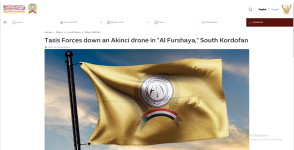
https://rapidsupportforce.com/en/news-details/Al-Furshaya


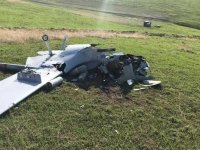
More scandals for the Turkish AKANCI drones, and further proof of their capabilities in continuous downing. Another AKANCI drone was shot down yesterday. They have a remarkable track record of rapid downing. Everyone knows who the fool is now, and who is promoting equipment used to deceive and defraud African countries. We are pleased with the continued scandals, misleading propaganda, and blatant proof of our credibility, while some can only resort to mockery and insults because we have consistently exposed them.


To view this content we will need your consent to set third party cookies.
For more detailed information, see our cookies page.


1769351871191.png


If you want to destroy an army's reputation, buy AKANCI.

If you want defeat and financial losses, buy AKANCI.

AKANCI UAV: The ideal choice for failing states.

AKANCI UAV: A model of investment in inferior but inefficient and low-quality equipment.
AKANCI UAV: A model of corrupt deals mixed with bribes, commissions, and inflated prices—your ideal choice.

To view this content we will need your consent to set third party cookies.
For more detailed information, see our cookies page.
 
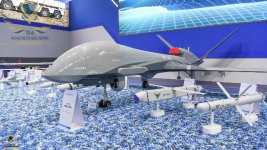
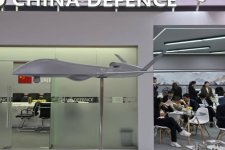
The WJ-700 drone, is one of the most advanced drones in the Chinese arsenal.
The WJ-700 aircraft is not just a traditional drone, but rather a high-altitude attack and intelligence platform (HALE), characterized by:

  • Its high speed,
  • Its ability to remain in the air for long periods,
  • It performs complex missions such as Suppression of Enemy Air Defenses (SEAD).
This aircraft gives the Egyptian army the ability to target opponents' air defense systems with deadly accuracy and from long distances, without endangering the lives of the pilots.

Integrating the WJ-700 into Egypt's military arsenal is a clear announcement: Egypt is no longer limited to defensive weapons, but has begun building a first-class offensive arsenal.

1769372965723.png
 
1633744379709247.jpg

Why Egypt Chose the WJ-700: A Strategic Leap in Unmanned Combat Aviation

Introduction: Hard Lessons from Modern Battlefields

Field operations over the past decade—from Syria and Libya to Ukraine, Sudan, and regional confrontations across the Middle East—have exposed a systemic vulnerability in conventional turboprop-powered UAVs, even high-cost platforms. Three critical failure points emerged:

Factor Operational Deficiency Battlefield Evidence

Speed 150–220 km/h prolonged exposure to air defense systems Significant attrition of Bayraktar TB2s against mid-tier Russian/Iranian air defenses (2020–2024). Source: Oryx (open-source visual confirmation) https://www.oryxspioenkop.com)

Thermal Signature Turboprop exhaust easily tracked by IR systems Like PW-6 / Ivchenko-Progress Motor Sich AI-450T turboprop Mass losses of Sudanese UAV fleets (2025) to MANPADS and Chinese FK-2000 systems

Electronic Warfare Vulnerability Weak datalinks susceptible to jamming/spoofing Severe disruption of UAV operations during India-Pakistan clashes (mid-2025) via electronic countermeasures

Why Turkish UAVs as the benchmark? They dominate African and regional inventories including states with adversarial postures toward Egypt making them the most operationally relevant case study. Israeli UAVs, while advanced, remain limited in regional proliferation.

Strategic Conclusion: Investing in costly turboprop UAVs is no longer rational for militaries facing even mid-tier integrated air defense systems (IADS).

I. Why the WJ-700? A Paradigm Shift in Survivability Design

The Chinese WJ-700 is not merely a faster drone it represents a fundamental re-engineering of combat survivability:

Parameter Specification and Tactical Impact

Propulsion Turbojet/Turbofan (1,000 kgf thrust) 700–800 km/h cruise speed → outruns engagement envelopes of short-range SAMs (e.g., Pantsir-S1) before mission completion

Payload Capacity 800–1,200 kg Modular mission flexibility: ISR suites + EW pods + up to 4 miniature cruise missiles

Max Takeoff Weight 3,500–4,000 kg Optimal balance: 20-hour endurance (3,000+ km range) + operations from short/semi-prepared airstrips

Radar Cross-Section Aerodynamically refined airframe + RAM coatings 40–60% reduction in detectability vs. turboprop equivalents
img_9068_1723961797.jpg

Egypt's Strategic Move:

Cairo did not purchase a "ready-made system." It acquired a re-engineerable platform—preserving core performance while enabling full indigenous redesign. This accelerates development timelines and de-risks first-of-type engineering. Notably, Egypt pioneered advanced UAV operations as early as 1988 with the Teledyne Ryan Scarab Model 324—decades before regional peers recognized the strategic value of unmanned systems.

II. Egypt's Strategy: From Consumer to Industrial Partner

The WJ-700 program transcends an arms deal—it anchors a sustainable national defense industrial base through four pillars:

1- Engine Supply Chain Sovereignty Avoiding dependency on politically volatile Ukrainian AL-222 engines

- Repurposing legacy WP-11 turbojets (from HY-2/HY-4 anti-ship missiles produced by Sakr factories in the 1980s)

- Integrating globally available alternatives (e.g., Teledyne CAE J69) with potential for local production under embargo scenarios

2 - Electronic Warfare Hardening

Hybrid integration of Western (German/Italian/French) datalink technologies with Chinese airframes:

- Multi-layer encryption (AES-256 + experimental quantum-resistant protocols)

- Anti-jamming via frequency-hopping spread spectrum (FHSS)

- Dual-redundant command links (LOS + SATCOM with failover channels)

3 - Modular Design Philosophy

Airframe redesigned to utilize 70% locally matured components (leveraging SW-EJUNE-30/Belarus co-development heritage)

- Enables rapid production of mission-specific variants:

- Long-range ISR variant

- Dedicated EW/stand-off jamming variant

- Strike variant armed with indigenous munitions (e.g., Egyptian MRT-ER cruise missile produced under license by Amston)

4 - Operational Economics

- Cost-per-kill at 1,000 km range (WJ-700 + miniature cruise missile) ≈ 20% of manned fighter

expenditure (including pilot risk, fuel, maintenance)

- Domestic demand (200+ units over 10 years) drives unit cost reduction by ≥40%, enabling

future export viability

III. Integration into a Layered Combat Ecosystem

Egypt's vision extends beyond a single platform—it embeds the WJ-700 within a tiered UAV architecture:

Tier Platforms Role


Tier 1 SW-EJUNE-30, AHMOS Short-range ISR + laser designation

Tier 2 WJ-700, CH-9D/CH-5C, Wing Loong 2/3 Deep strike + EW escort + miniature cruise

missile carrier

Tier 3 Future heavy UCAVs (technology transfer path) High-value target prosecution

This layered approach enables distributed operations across dozens of dispersed UAV pads—not just major airbases—ensuring mission continuity even after conventional infrastructure degradation (a critical lesson from Ukraine). Egypt has systematically expanded UAV-specific landing sites across the Western Desert, Sinai, and Upper Egypt to enable this distributed basing model.

IV. Technology Transfer Without Political Friction: A Unique Model

Egypt avoids the "reverse engineering trap" that alienates original equipment manufacturers (e.g., China's restrictions on Pakistan) through:
- Transparent licensing agreements with Chinese partners permitting local redesign under fair royalty terms

- Hybridization strategy: Integrating non-Chinese subsystems (engines, datalinks) transforms the platform into an "Egyptian-Chinese hybrid" exempt from Chinese export controls

- Legacy asset repurposing: Converting older Wing Loong 2s to civilian roles (cloud seeding, climate monitoring) maximizes return on prior investments

V. Why This Program Sets a Regional Benchmark

1- Operational Realism: Rejection of overpriced Western UAVs with proven battlefield

vulnerabilities (Sudan/Ukraine) and Iranian platforms relying on quantity over quality focusing instead on regionally relevant threat envelopes.

2 - Industrial Sustainability: Building genuine local manufacturing capability through intelligent

technology absorption—not mere import dependency.

3 - Tactical Agility: Converting tactical platforms (e.g., Czech UAVs) into strategic assets by

extending range from 250 km to 3,000 km through indigenous upgrades.

4 - Economic Warfare: Minimizing cost-per-effect—a decisive factor in protracted conflicts.


Final Assessment: Egypt's WJ-700 program is not about acquiring weapons—it's about constructing a survivable, sovereign, and scalable unmanned combat ecosystem. In an era where air defense systems evolve faster than platforms, survivability—not payload or range—determines battlefield relevance. Egypt is building the template others will follow.

Note: All operational data referenced aligns with open-source verification standards (Oryx, IISS, Janes). Specific attrition percentages reflect conservative estimates from visually confirmed losses to avoid overstatement.


https://www.twz.com/air/ukraines-tb...king-russian-forces-again-after-a-long-hiatus


aviation-safety.net

https://theaviationist.com/2023/05/05/ukraine-shot-down-own-tb2-drone/

https://aviation-safety.net/wikibase/312108
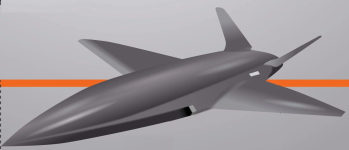
1769438346200.png
NEXT STAGE

We must not forget the historical cooperation with China through requesting upgrades to Chinese-supplied drones to surpass the capabilities of original versions such as the WING LONG-1E/G, the MQ-1C, and other models.
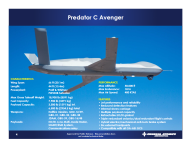
Predator_C_Avenger.png
American equivalent MQ-20
 
This aircraft gives the Egyptian army the ability to target opponents' air defense systems with deadly accuracy and from long distances, without endangering the lives of the pilots.

No any chance against Turkish AKINCI UCAV in a War

AKINCI UCAV to carry AESA Radar and air to air Missiles to hunt enemy UCAVs from 100 km away

also AKINCI UCAV has far better Missiles to hunt Warships and AD Systems
-- 500+ km 300-ER air launched Ballistic Missile with TV seeker
-- 280 km SOM-J Cruise Missile .. land attack and anti-ship ( IIR seeker )
-- 150+ km IHA-230 supersonic Missile
-- 150+ km CAKIR Cruise Missile .. land attack and anti-ship ( IIR+RF seeker )


In the hands of a true military Power ( as the Turkish Armed Forces ) , the AKINCI UCAV can turn all its rivals into burnt birds
 
No any chance against Turkish AKINCI UCAV in a War

AKINCI UCAV to carry AESA Radar and air to air Missiles to hunt enemy UCAVs from 100 km away

also AKINCI UCAV has far better Missiles to hunt Warships and AD Systems
-- 500+ km 300-ER air launched Ballistic Missile with TV seeker
-- 280 km SOM-J Cruise Missile .. land attack and anti-ship ( IIR seeker )
-- 150+ km IHA-230 supersonic Missile
-- 150+ km CAKIR Cruise Missile .. land attack and anti-ship ( IIR+RF seeker )


In the hands of a true military Power ( as the Turkish Armed Forces ) , the AKINCI UCAV can turn all its rivals into burnt bird

IMG-20260127-WA0005.jpg


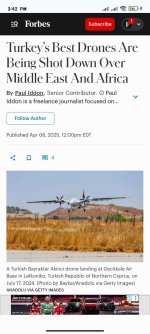
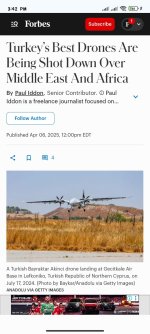
https://www.forbes.com/sites/pauliddon/2025/04/06/turkeys-best-drones-are-being-shot-down-over-middle-east-and-africi


From an aviation and armament perspective, the operational reality of modern drone warfare often contrasts sharply with official narratives. When evaluating platforms like the
Baykar Bayraktar Akıncı, technical specifications must be measured against recent performance in high-intensity conflicts such as those in Sudan and Mali.

Operational Failures & Combat Attrition
The Akıncı has faced significant challenges in active war zones, challenging the "invincibility" narrative often found in promotional material:
  • Sudanese Attrition: As of January 2026, the Rapid Support Forces (RSF) have claimed and documented the downing of multiple Akıncı units. Reports indicate a drone was recently destroyed in South Kordofan during combat operations.
  • Mali and North Africa: Crashes have been reported at Sévaré airport in Mali (January 2025) and in northwestern Libya. These incidents, combined with technical losses in Turkey and Iraq, suggest that while the platform is high-endurance, it remains vulnerable to both sophisticated air defenses and technical malfunctions in harsh environments.

The Radar & Armament "Propaganda" Gap
A critical point of professional evaluation is the actual equipment of these fleets compared to their marketing:
  • AESA Radar Integration: While the Akıncı is designed to house the Aselsan MURAD AESA radar, widespread operational integration across the Turkish Air Force (TuAF) fleet is still in progress rather than a proven standard. Most TuAF F-16s are currently undergoing indigenous upgrades (Özgür Project) to receive these radars, with mass delivery for older blocks slated between 2025 and 2027.
  • Missile Capabilities: Claims regarding long-range missile dominance are often based on test environments. In practice, these drones frequently operate with standard MAM-L precision munitions, which do not grant the standoff range needed to evade modern Short-Range Air Defense (SHORAD).

Chinese Superiority in Air Defense
Professional military assessments now highlight the success of Chinese systems in neutralizing "prestige" drones:
  • FK-2000 System: The Chinese FK-2000 SHORAD has gained a formidable reputation for its success in Sudan. Combining 12 missiles with dual 30mm Gatling cannons, it has been identified by OSINT analysts as the primary system used to establish localized "no-fly zones" against SAF drones.
  • FN-6 MANPADS: These systems continue to provide a low-cost, high-lethality counter to drones entering contested airspace like Darfur.

Market Shift: Saudi Arabia’s Pivot
Calculated military procurement often bypasses the Akıncı in favor of more cost-effective or specialized Chinese alternatives:
  • Wing Loong-3: Saudi Arabia is actively negotiating for the Chengdu Wing Loong-3, viewing it as a potential successor or superior alternative to the Akıncı due to its payload and lower cost-to-performance ratio.
  • CH-7 Stealth Drone: Reports indicate potential interest or negotiations for up to 50 CH-7 stealth drones in a deal valued near $3 billion. This shift highlights a preference for platforms that offer better survivability through stealth rather than just size.
The price of some drones now approaches that of light fighter jets, yet they lack the survivability of manned aircraft. In a professional field where results dictate value, the recent losses in Sudan and Mali prove that no amount of propaganda can shield a platform from the reality of a well-equipped air defense.
Would you like a detailed technical comparison between the AESA radar specifications of the Akıncı and the Wing Loong-3?

I can tell you that the "fog of war" no longer masks technical inadequacy. In this industry, airframes don't lie; crash sites do the talking.

The recurring losses of the Bayraktar Akıncı across disparate theaters—Sudan, Mali, Turkey, and Libya—are not isolated incidents of "pilot error." They represent a systemic failure of the platform to survive in contested electromagnetic and kinetic environments. When a high-altitude, long-endurance (HALE) asset is consistently neutralized by mobile SHORAD or suffers frequent mechanical attrition, it signals an over-engineered, under-performing product.

Professional Post-Mortem of the Akıncı Failures:
  1. Low Survivability vs. High Acquisition Cost: We are seeing drones priced like fourth-generation fighters being brought down by legacy MANPADS and systems like the Chinese FN-6. From a cost-benefit analysis, the Akıncı is becoming a strategic liability. If a platform cannot survive the very environment it was designed to dominate, its "intended purpose" is void.
  2. The "Paper Tiger" Electronics: Much has been touted about its AESA radar and long-range capabilities. However, in professional circles, we look for Initial Operational Capability (IOC) and combat-proven integration. The lack of documented success against peer-level air defenses suggests that the electronic warfare (EW) suite is insufficient.
  3. Market Realignment: Sophisticated buyers—like Saudi Arabia—are moving toward more pragmatic solutions. The shift toward the Chengdu Wing Loong-3 and the CH-7 stealth UAV is a direct result of evaluating operational experience over marketing brochures. These nations are opting for Chinese systems because they offer a better ratio of survivability to cost.
  4. Operational Truth: In Sudan, the effectiveness of the FK-2000 air defense system has effectively rendered the Akıncı obsolete in that sector. This isn't propaganda; it's the reality of the no-fly zones currently being enforced against these drones.
The Bottom Line: You can't hide a "single-flight" disaster behind press releases. The global market is currently witnessing a correction where actual combat results are exposing the gap between Turkish marketing and Chinese engineering.
Should we analyze the specific kill-chain used by the FK-2000 in the Sudanese theater to understand exactly how it exploited the Akıncı's radar cross-section?

From an aviation and armament perspective, the operational reality of modern drone warfare often contrasts sharply with official narratives. When evaluating platforms like the
Baykar Bayraktar Akıncı, technical specifications must be measured against recent performance in high-intensity conflicts such as those in Sudan and Mali.

Operational Failures & Combat Attrition
The Akıncı has faced significant challenges in active war zones, challenging the "invincibility" narrative often found in promotional material:
  • Sudanese Attrition: As of January 2026, the Rapid Support Forces (RSF) have claimed and documented the downing of multiple Akıncı units. Reports indicate a drone was recently destroyed in South Kordofan during combat operations.
  • Mali and North Africa: Crashes have been reported at Sévaré airport in Mali (January 2025) and in northwestern Libya. These incidents, combined with technical losses in Turkey and Iraq, suggest that while the platform is high-endurance, it remains vulnerable to both sophisticated air defenses and technical malfunctions in harsh environments.

The Radar & Armament "Propaganda" Gap
A critical point of professional evaluation is the actual equipment of these fleets compared to their marketing:
  • AESA Radar Integration: While the Akıncı is designed to house the Aselsan MURAD AESA radar, widespread operational integration across the Turkish Air Force (TuAF) fleet is still in progress rather than a proven standard. Most TuAF F-16s are currently undergoing indigenous upgrades (Özgür Project) to receive these radars, with mass delivery for older blocks slated between 2025 and 2027.
  • Missile Capabilities: Claims regarding long-range missile dominance are often based on test environments. In practice, these drones frequently operate with standard MAM-L precision munitions, which do not grant the standoff range needed to evade modern Short-Range Air Defense (SHORAD).

Chinese Superiority in Air Defense
Professional military assessments now highlight the success of Chinese systems in neutralizing "prestige" drones:
  • FK-2000 System: The Chinese FK-2000 SHORAD has gained a formidable reputation for its success in Sudan. Combining 12 missiles with dual 30mm Gatling cannons, it has been identified by OSINT analysts as the primary system used to establish localized "no-fly zones" against SAF drones.
  • FN-6 MANPADS: These systems continue to provide a low-cost, high-lethality counter to drones entering contested airspace like Darfur.

Market Shift: Saudi Arabia’s Pivot
Calculated military procurement often bypasses the Akıncı in favor of more cost-effective or specialized Chinese alternatives:
  • Wing Loong-3: Saudi Arabia is actively negotiating for the Chengdu Wing Loong-3, viewing it as a potential successor or superior alternative to the Akıncı due to its payload and lower cost-to-performance ratio.
  • CH-7 Stealth Drone: Reports indicate potential interest or negotiations for up to 50 CH-7 stealth drones in a deal valued near $3 billion. This shift highlights a preference for platforms that offer better survivability through stealth rather than just size.
The price of some drones now approaches that of light fighter jets, yet they lack the survivability of manned aircraft. In a professional field where results dictate value, the recent losses in Sudan and Mali prove that no amount of propaganda can shield a platform from the reality of a well-equipped air defense.
Would you like a detailed technical comparison between the AESA radar specifications of the Akıncı and the Wing Loong-3?
 

Attachments

  • IMG-20260127-WA0005.jpg
    IMG-20260127-WA0005.jpg
    117 KB · Views: 3
The Sudanese conflict has served as a stark, real-world audit for Turkish combat drones. Their persistently high loss rates—with units being shot down on a near-daily or weekly basis—directly contradict the exaggerated and often fabricated claims of invulnerability that surrounded their initial promotion. This glaring performance gap reveals a troubling disconnect: the drones are sold at premium prices based on a myth of battlefield dominance they consistently fail to achieve. Consequently, analysts are increasingly viewing these systems not as force multipliers, but as cautionary tales of overpriced, overstated technology that delivers poor tactical value for the investment, raising serious questions about their role in modern, contested warfare.

1769940960120.png
 
The Sudanese conflict has served as a stark, real-world audit for Turkish combat drones. Their persistently high loss rates—with units being shot down on a near-daily or weekly basis—directly contradict the exaggerated and often fabricated claims of invulnerability that surrounded their initial promotion. This glaring performance gap reveals a troubling disconnect: the drones are sold at premium prices based on a myth of battlefield dominance they consistently fail to achieve. Consequently, analysts are increasingly viewing these systems not as force multipliers, but as cautionary tales of overpriced, overstated technology that delivers poor tactical value for the investment, raising serious questions about their role in modern, contested warfare.

View attachment 176145
then why do Egypt goverment invest them?
 
Egypt strengthens its air shield with the Guardian electromagnetic system. German technology to "burn" the drones
1769959082130.png


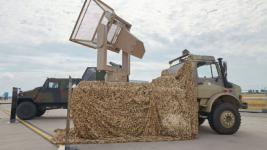
Specialized media and defense reports revealed that the Egyptian Air Defense Forces possessed the “Guardian” system, which is a high-energy electromagnetic weapon (HPEM) developed by the German company “Diehl Defence”. This appearance confirms that Egypt has become the first country in Africa and the Arab world to possess this advanced type of directed energy weapons.

In 2022, Diehl Defense had announced the signing of a contract to supply SkyWolf electromagnetic technology to an African country without naming it, but it was later confirmed that Cairo was the destination, after the system appeared publicly at the Egypt International Defense Exhibition “EDEX 2025” (EDEX), according to what was confirmed by the “Military Africa” website.

Operational integration with “IRIS-T”


The Guardian system appeared at the exhibition in desert camouflage identical to the IRIS-T SL missile launchers, reflecting the “combat integration” philosophy adopted by the German company. Guardian is specifically designed to act as a “bodyguard” for precious missile batteries, providing an umbrella of protection against the escalating threats of small drones that may attempt to target radars or launchers.

This merger comes within a comprehensive plan to modernize the Egyptian air defense network, as Berlin agreed in late 2021 to sell 16 “IRIS-T” batteries to Egypt with different ranges. The first of these batteries appeared in the “War Inspection” military parade in October 2024, followed by the appearance of the directed energy component (HPEM) as evidence that the Egyptian forces had entered the phase of integrating non-kinetic systems to protect their strategic assets.

How does “SkyWolf” technology work? Burning instead of jamming

The core of the system is based on SkyWolf technology, which uses a massive horn-shaped antenna to emit focused electromagnetic pulses. Unlike traditional electronic warfare (Jamming) systems that only jam frequencies, this system works with a destructive mechanism for target components:

In the long range: It works as a high-powered jamming device, cutting off communication and navigation links for the enemy aircraft.
At the close range (the lethal zone): It emits high-intensity energy pulses capable of generating sudden electrical currents within the electronic circuits of the drone, which leads to the burning of the processors or the complete disabling of the system and the plane falling “physically” without being destroyed by a missile.

Counter intelligent threats and swarms

This technology provides a radical solution to counter modern tactics, such as autonomous drones (INS) or those guided via fiber optic cables to avoid radio interference. While traditional jamming devices fail in the face of these “silent” threats, the “HPEM” system succeeds in penetrating their electronic shielding and disabling them “from the inside.”

The system also represents the ideal economic solution to confront “swarm attacks.” Instead of expending multi-million-dollar interceptors to shoot down cheap commercial drones, Guardian provides almost zero cost of engagement and the ability to hit multiple targets simultaneously within antenna beam range, conserving missile inventory for major threats such as ballistic missiles and fighters.
 
1769959955972.png

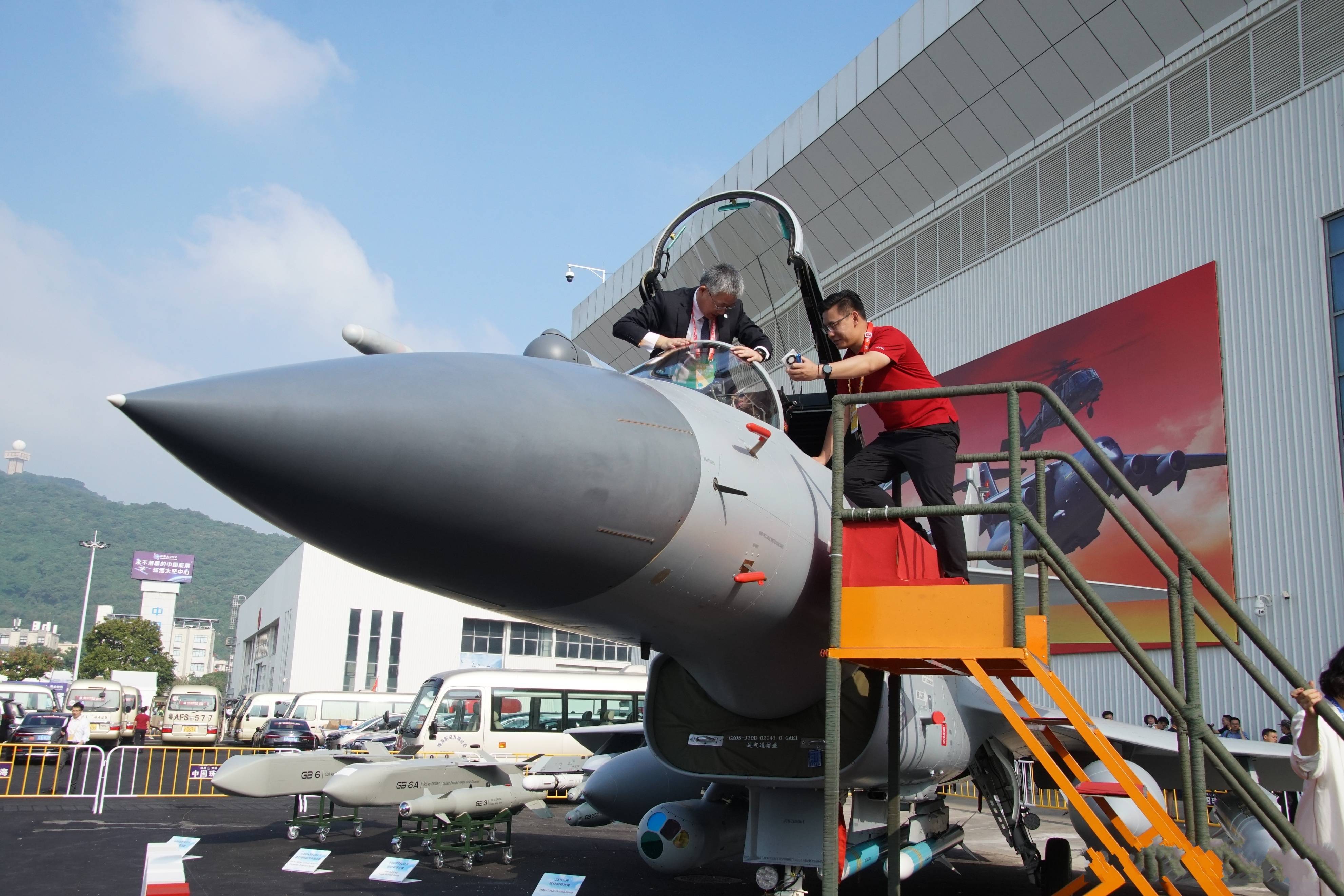
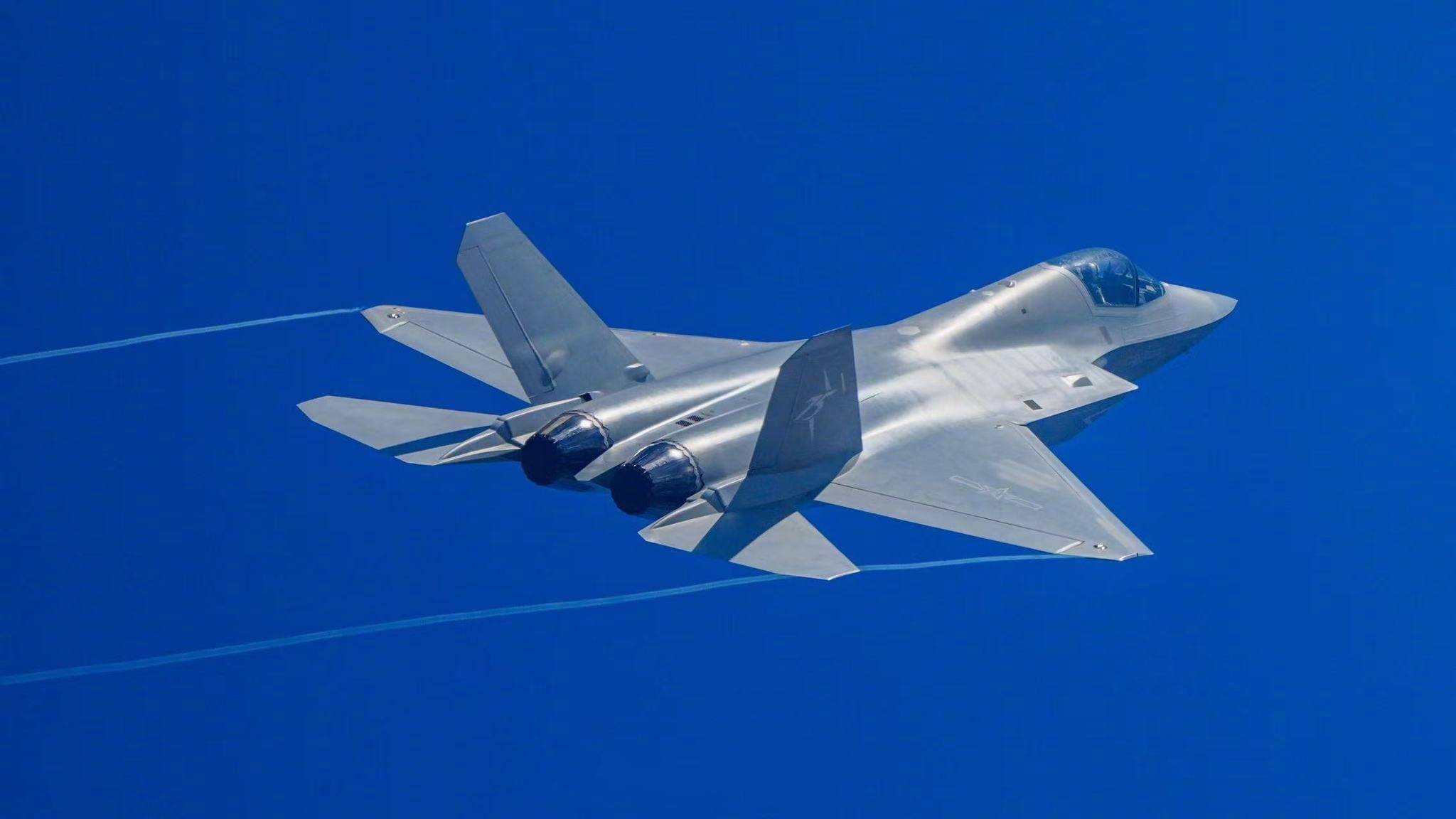
The Middle East is changing! Egypt's luxury purchase of 48 Chinese J-10 CE, fifth-generation J-35E is also on the way.​


2026-01-24 06:00
Posted in: Guangdong Province

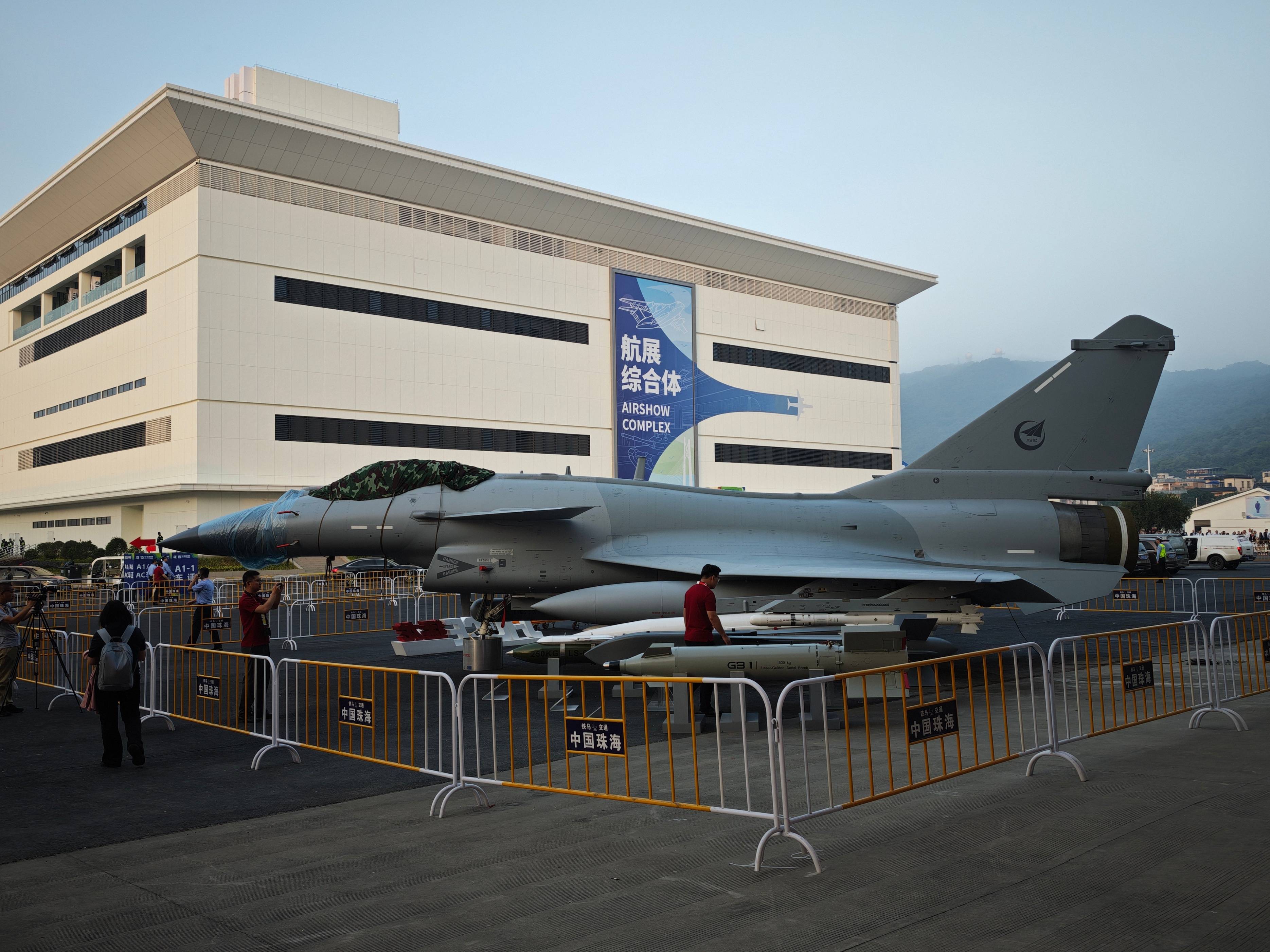
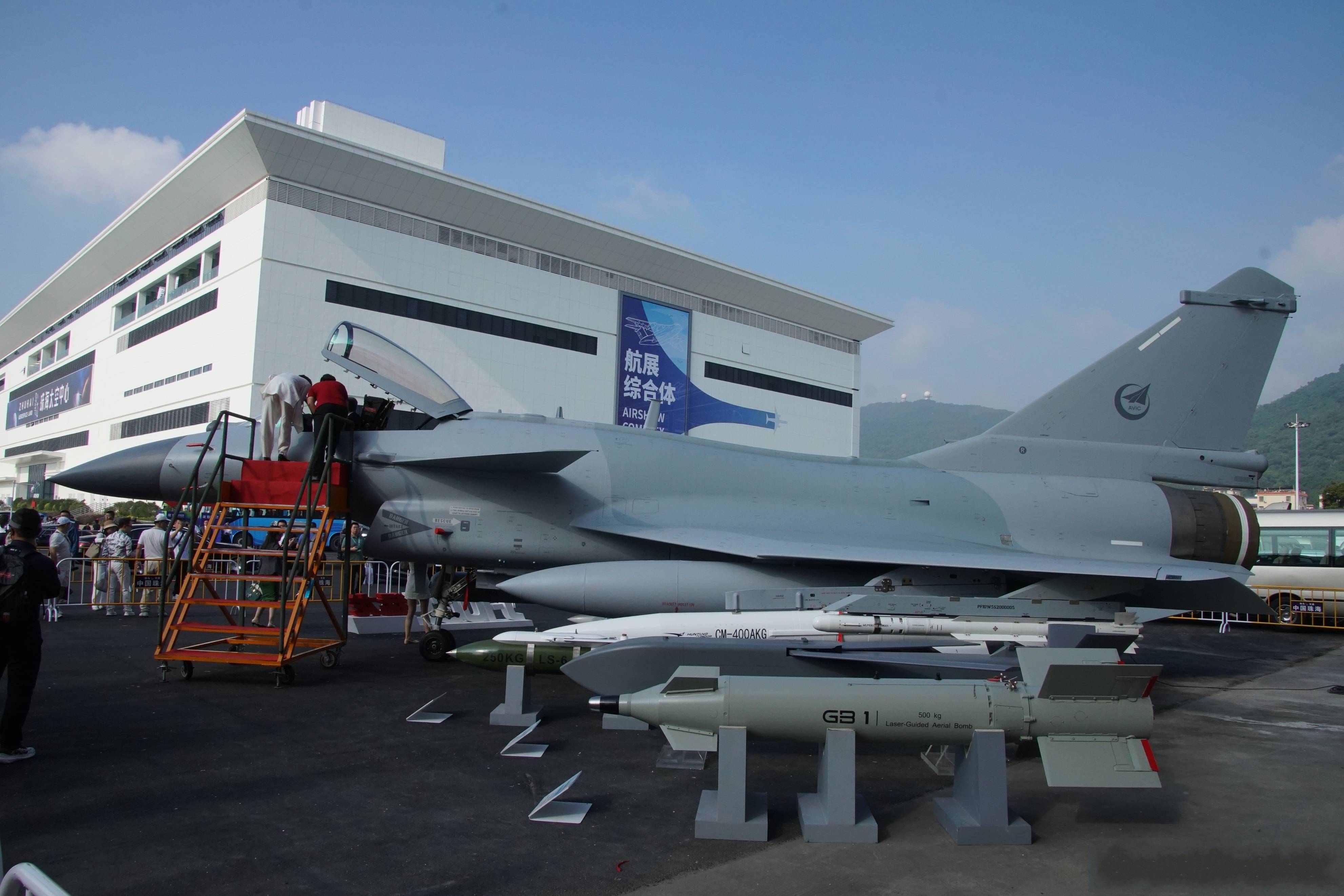
Recently, a news from the internal meeting of Egyptian Defense Minister Abdul Majid Sacker dropped a bombshell in the international defense community: Egypt has officially purchased 48 Chinese-made J-10CE fighters, and is also considering the introduction of more advanced J-35E stealth fighters in the future. This decision is not a simple military purchase transaction, it is like a key, it opened a new window to observe the geopolitical evolution of the Middle East, the adjustment of the global arms trade pattern, and the process of "going to sea" for China's high-end equipment. Egypt, a country with a long history and a key role in the Arab world, has long been dominated by models such as the U.S.-made F-16 and Russian-made MiG-29s. Today, the large-scale shift to China's three-generation and half-warplanes and the prospect of China's fifth-generation aircraft is behind this strategic shift, which is the inevitable result of the complex intertwining of multiple factors such as performance, politics, economy and autonomy.

f05b42b8e24c45fd88298014dbc4ce0f.jpeg


First of all, the excellent technical performance and high cost performance of the J-10 CE itself is the core hardware foundation that attracts Egypt to make a choice. As a three-generation and half-use fighter aircraft that China has fully developed independently and fully tested in combat, the J-10CE represents China's latest achievements in avionics, active phased array radar, advanced weapons integration and flight control systems. It has a strong over-the-horizon air combat capability and accurate ground-attack capability, and can be equipped with a variety of advanced ammunition, including the long-range air-to-air missile in the Thunder-15, and its comprehensive combat capability is comparable to even surpass the early batches of the F-16 and MiG-29M in Egypt in some aspects. For the Egyptian Air Force, with a limited defense budget, the J-10E provides a high level of operational performance that matches its modern needs, while avoiding the frequent political strings attached by Western or Russian aircraft to the high post-maintenance costs, achieving the optimal balance between performance and affordability.

5728577d88c849b2b8940656dbb671f4.jpeg


Second, the procurement is a key step in Egypt’s strategy to diversify the sources of military equipment, aiming to get rid of excessive dependence on a single supplier and enhance national defense autonomy. Historically, Egypt’s arsenal has been heavily skewed toward the United States and the former Soviet Union/Russia. However, the US Congress often uses human rights and other issues as a pretext to impose arms sales restrictions or censorship on Egypt, which has caused the continuous upgrading of equipment and stable supply, and the uncertainty of the equipment delivery and logistics support system has increased sharply due to the deep involvement of the Ukrainian conflict and its own industrial capacity constraints. This situation of man-made forces Egypt to look for a reliable, independent “third option.” As a rising defense industrial power, China can not only provide advanced technology and timely delivery of mature products, but also uphold the principle of non-interference in internal affairs in transactions, which is highly compatible with Egypt's demand for strategic autonomy. The introduction of the J-10E means that the Egyptian Air Force has a new pillar in its core equipment that is not directly affected by traditional geopolitical fluctuations.

4100d87abfb94b7c8afe40611bf31250.jpeg


Moreover, from a broader diplomatic and strategic perspective, the purchase of Chinese warplanes is a substantive measure for Egypt to deepen its “Look East” strategy, aiming to reconstruct its international cooperation network. In recent years, Egypt and China have become increasingly close economic cooperation under the framework of the Belt and Road Initiative, and projects such as the Suez Canal Economic and Trade Zone have achieved remarkable results. Expanding the field of cooperation to high-end defense is undoubtedly a strong proof that bilateral relations have been raised to the level of "comprehensive strategic partners". In doing so, Egypt has shown the world that while maintaining its traditional ties with the West, it is actively considering China as a core partner to rely on. This will not only bring potential defense industry technology transfer and joint production opportunities to Egypt, but also enhance its leadership and voice in the Arab world and Africa as a whole, and create a more balanced and flexible international image.

ff41856f40d24f7c827624f4d7520413.jpeg


Of particular concern is Egypt’s potential interest in the J-35E stealth fighter, heralding a more disruptive picture of the future. As the fifth-generation medium-sized stealth fighter developed by China, the J-35's stealth performance, battlefield situational awareness capabilities and network center combat level represent the top level of aviation technology in the non-Western world. If Egypt finally successfully introduces (possibly with the export model of the J-35E), it will make it the first country in the Middle East and even Africa to equip the fifth generation of Chinese aircraft, and gain a generational advantage over the vast majority of neighboring countries in the region. This will profoundly alter the balance of regional air power and pose a historic challenge to Israel’s air superiority. More importantly, if Egypt takes the lead in opening the "China window" of the five-generation machine market in the Middle East, it is likely to have a significant demonstration effect, prompting Saudi Arabia, the United Arab Emirates and other regional powers seeking to diversify their weapons sources and upgrade their technology to seriously consider China's options, thus shaking the traditional monopoly position of the United States and Europe in the global high-end military trade market.

7985f602df994190829403e1545408fe.jpeg


Of course, this strategic shift is bound to be accompanied by challenges and risks. The United States and its allies are bound to be wary of this and may put pressure on Egypt through political, economic or diplomatic channels, and even threaten to reduce existing military aid and cooperation. Egypt needs a delicate balance between the parties. However, Egypt’s decision-making has clearly sent a signal that, with global multipolarity accelerating, middle powers are using their purchasing power to proactively shape a more diverse and autonomous defense architecture. Overall, the order of 48 J-10CEs has far exceeded the value of a military trade contract itself. It is not only a resounding declaration of Egypt's national strategic autonomy, but also an important milestone for China's high-end aviation equipment to be recognized by the core of the world, and it is also a clear signal that the global defense order and the Middle East power pattern may change far-reaching changes. The sky of the future is brewing a new wind because of this choice.

https://www.sohu.com/a/966998173_484352
 

Users who are viewing this thread

Back
Top