Saudi space capabilities in security and defense

The SC

INT'L MOD
Joined
Feb 13, 2012
Messages
52,503
Reaction score
49,976
Reputation
3,867.0
Country of Origin
Country of Residence
Saudi space sovereignty: from reconnaissance to military communications
1769279721869.png

The protection of states in the modern era is no longer dependent on the accumulation of traditional military power or the mobilization of armies alone. Rather, the battle has become conducted in a higher and more complex layer, “space.” In this silent and invisible space, movements are monitored before they turn into a threat, information is collected moment by moment, and operations are managed based on a continuous and secure flow of data and communications.

For the Kingdom of Saudi Arabia, with its wide geographical reach and vital facilities with global influence, possessing advanced space capabilities in reconnaissance, remote sensing, and secure space communications was a strategic necessity, not a technical option. Satellites are no longer supportive tools, but rather have become the backbone of the command, control, and intelligence system, linking land, air, and naval units, supporting the operation of drones, and securing encrypted communications in complex operational environments.

The Saudi trend towards building national space capabilities, supported by international partnerships and advanced technologies, reflects a deep understanding of the nature of modern conflict, where battles are resolved with information before weapons, and with secure communication before field movement. From this standpoint, space today has become one of the first lines of defense for Saudi national security, and an essential pillar for protecting sovereignty and enhancing intelligence and military superiority in the face of changing threats.

Space as a military operations environment

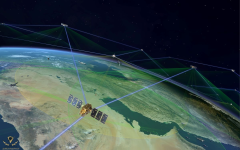
Space is no longer a technical field limited to scientific research or civilian communications. Rather, in recent decades, it has transformed into a full-fledged military operations environment, which today stands side by side with the fields of land, sea, air, and cyberspace. In modern wars, control of space has become a basic condition for achieving operational superiority and ensuring the security of military decisions.

Satellites are the backbone of this environment, as they play the role of the eye that sees before arrival, the nerve that transmits information, and the memory that documents every movement. Through space, it is possible to monitor military movements over long distances, secure encrypted communications, support command and control systems, and provide early warning against missile and air threats.

The danger of military space lies in its silent and invisible nature, where the battle is conducted without noise, and superiority is decided before the direct confrontation begins. A country that possesses advanced space awareness can predict threats, reduce reaction time, and deprive the opponent of the element of surprise.

With the development of sensing, communications, and artificial intelligence technologies, satellites are no longer secondary support tools, but rather have become active elements in operational planning and implementation, used to direct forces, manage drones, monitor land and sea theaters, and link various military branches within a unified operational picture.

Whoever realizes the importance of space as a military operations environment does not leave his security dependent on the data of others, which explains the early Saudi trend towards possessing national satellites that serve reconnaissance, communication, and intelligence.
1769279837218.png

History of Saudi satellites: Steps towards space sovereignty

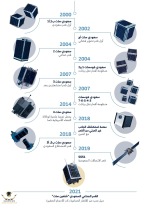
The Kingdom of Saudi Arabia's entry into the field of space dates back to 1976, with the establishment of the Arab Satellite Organization (Arabsat), in an early strategic step aimed at enhancing communications independence regionally. This trend culminated in 1985 with the launch of the first Arabsat satellites in cooperation with France, which gave the Kingdom practical experience in operating and managing space systems.

The fundamental shift in the Saudi space program came in 1998, with the establishment of the Satellite Center of the Space Research Institute at King Abdulaziz City for Science and Technology, which represented the transition point from external dependence to national industrialization and development. In 2000, the Kingdom launched the first Saudi-made satellite (SaudiSat-1), announcing its effective entry into the club of satellite manufacturing countries.

During the period from 2000 to 2021, Saudi Arabia succeeded in manufacturing, developing and launching 17 satellites, designated for civil and scientific uses, in addition to security and military missions, which contributed to building an accumulated national base of technical expertise and operational capabilities.
1769279904553.png

Saudi eyes in space: National security and defense satellites

Saudi satellites for military and security use are used within an integrated system that includes image intelligence (IMINT), geographic image analysis (GEOINT), in addition to supporting encrypted communications and command and control of unmanned systems, including drones. The data of these satellites is being integrated with ground command and analysis centers to enhance field awareness and support operational decision-making.

🛰️SaudiSat-2
(reconnaissance satellite).

Security and military tasks:
❖ Image Intelligence (IMINT)
❖ Monitoring
❖Support geographic image analysis (GEOINT)
❖Enhancing field awareness


🛰️SaudiSat‑3 satellite
(High-precision reconnaissance and remote sensing satellite).

Security and military tasks:
❖Imagery Intelligence (IMINT)
❖ Geospatial image analysis (GEOINT)
❖ Continuous monitoring
❖ Support operational planning


🛰️ Saudi Satellites SaudiSat‑5A / 5B
(High-resolution imaging and multi-spectral sensing satellites).

Security and military tasks:
❖Imagery Intelligence (IMINT)
❖ Geographical analysis (GEOINT)
❖ Support military planning
❖ Monitoring vital facilities and areas with high accuracy


🛰️ ShaheenSat satellite
(A maritime and land reconnaissance and surveillance satellite - a new generation of small satellites)
ShaheenSat represents a qualitative shift in the Kingdom’s trend towards small, multi-mission satellites, as it combines high-resolution imaging and maritime traffic monitoring, making it an effective tool in supporting maritime awareness and coastal surveillance within the national security system.

Security and military tasks:
❖Maritime and Land Intelligence (IMINT / Maritime ISR)
❖ Monitoring coastal and border activity
❖ Support maritime security
❖ Combating smuggling and piracy
❖ Protection of ports and shipping lines


🛰️ SaudiGeoSat-1 satellite
The first Saudi communications satellite wholly owned by the Kingdom
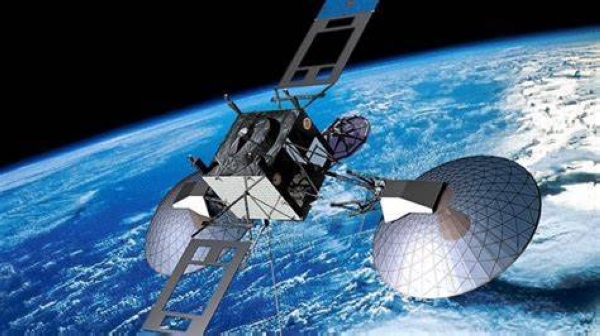
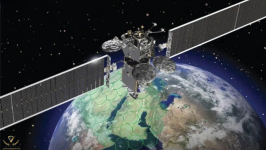
SaudiGeoSat-1 is a strategic shift in the field of secure space communications, as it is the first Saudi communications satellite wholly owned by the Kingdom of Saudi Arabia, and designed to provide high-speed and stable communications services across space. The satellite is a pivotal element in connecting manned aircraft, drones, ships, ground units, and command and control centers within an encrypted and independent communications network, which enhances the ability to command and control in diverse operational environments.

The satellite provides safe, secure, jam-resistant, and viable global communications for high-priority land, sea, and air military assets, making it an essential pillar of the national command and control system.

Security and military tasks:
❖Encrypted and secure communications
❖ Connecting drones, ships, and ground forces
❖ Command and control support (C2/C4ISR)
❖ Continuity of communications in emergency situations
1769280902041.png

Radar sensing
Dual-frequency radar (SAR) satellite...an eye unaffected by circumstances

Unlike electro-optical imaging satellites that rely on light, SAR (Synthetic Aperture Radar) satellites have a unique ability to see day and night, and in all weather conditions, including dense clouds and sandstorms, which are common conditions in the Kingdom’s regional environment. This feature makes radar sensing one of the most reliable reconnaissance tools in sensitive military and security missions.

The importance of the dual-frequency radar satellite is highlighted in its ability to operate in two different frequency bands, which allows improving monitoring accuracy, increasing penetration depth, and diversifying imaging patterns depending on the nature of the target, whether it is land movements, maritime activity, or subtle changes in the terrain and facilities. This versatility gives intelligence analysts greater flexibility in extracting information than single-frequency satellites.

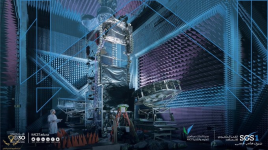
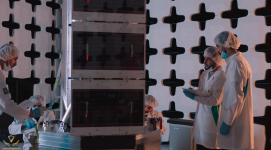
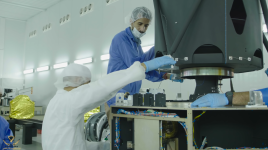
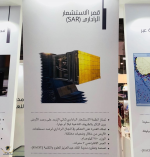
Based on these requirements, King Abdulaziz City for Science and Technology (KACST) is developing a dual-frequency SAR radar satellite as part of a national project aimed at filling a strategic gap in space sensing capabilities and enhancing independence in the field of continuous, highly reliable monitoring. This project complements the national electro-optical satellites, forming an integrated satellite reconnaissance system that is not affected by time or weather.

🛰️ Dual-frequency radar satellite (national project).
1769281087991.png

Security and military tasks:
❖Continuous radar reconnaissance
❖ Monitoring land and sea movements
❖Night surveillance and in difficult weather conditions
❖ Space intelligence support


Partnerships and participation in space capabilities

In addition to developing and launching its national satellites, the Kingdom of Saudi Arabia has taken a complementary path by utilizing advanced foreign satellites through strategic partnerships and agreements, ensuring access to high-precision and immediate space capabilities without waiting for long development cycles.

In this context, the Kingdom is the first country in the world, alongside the United States, to obtain the ability to directly control and receive high-resolution images from the WorldView satellites, under a special agreement that allows access to data immediately and with an accuracy of up to 30 cm, and not as a traditional commercial user who relies on archived images or deferred requests.

This capability provides the Kingdom with a strategic advantage in image intelligence (IMINT) and geographical analysis (GEOINT), allowing monitoring of vital facilities and areas with high accuracy and integrating data with national satellites to enhance military planning and operational decision support.

Strategic acquisition: Saudi Arabia accesses data from 77 global satellites

The Kingdom of Saudi Arabia has sought to enhance its national space capabilities beyond traditional satellites, through strategic partnerships and investments.

In this context, the Public Investment Fund, represented by NewSpace Global (NSG), acquired in 2025 the company UP42, which specializes in satellite data analysis, radar imaging (SAR) services, and geospatial intelligence.

This acquisition gives the Kingdom access to a network of more than 77 satellites around the world, including satellites with a resolution of up to 15 cm, enhancing the ability to:

❖ High-resolution image analysis using artificial intelligence.

❖ Integrate multi-source data, including SAR data, to provide an integrated and real-time intelligence picture.

❖Support command and control, operational planning, and national defense at the land, sea, and air levels.

These trends represent a crucial stage in the Kingdom’s military and security space strategy, as the ability to monitor, analyze, and communicate through space becomes a pivotal part of national defense and intelligence superiority.


The role of artificial intelligence in analyzing satellite images
Converting space data into immediate intelligence information

With the increasing number of satellites and imaging capabilities, the vast amount of space data has become too large for humans to analyze quickly and effectively. Here the role of artificial intelligence (AI) appears in analyzing satellite images and converting them into intelligence information usable for military and security use.

Main applications of artificial intelligence:

Automatic target detection
Identify vehicles, ships, facilities, or any changes on the ground quickly and accurately.
Change Detection
Compare multiple images at different time periods to detect any abnormal activity or potential threats
Pattern Recognition
Classification of types of ships, vehicles, facilities, or troop movements to support operational planning.
Data Fusion
Combining electro-optical images, radar, and AIS data from various satellites to produce a comprehensive and immediate intelligence picture.
Rapid Decision Support
Enabling KACST's ground intelligence and analysis centers to provide rapid recommendations to military command based on accurate and real-time analyses.

Ground infrastructure and control centers

The beating heart of Saudi space intelligence capabilities

No military space system is complete without a strong and integrated ground infrastructure, as it represents the heart of command and control over satellites, transforming raw data into field-applicable intelligence information. In the Kingdom, all national and foreign satellites are controlled and monitored through the Remote Sensing Center of the King Abdulaziz City for Science and Technology (KACST), ensuring advanced and reliable management of space operations.

The main components of the ground structure:

1️⃣Ground Control Stations

🔹Orbit management and satellite movement control

🔹Payload guidance (cameras and radars)

🔹Implementing daily operational programs and redirecting satellites when needed

🔹All operations are done centrally through the Remote Sensing Center at KACST


2️⃣Data Receiving Stations

🔹Receiving images, video and scientific data directly from satellites

🔹Supporting live broadcasts from national satellites and capabilities rented from abroad

🔹Processing data and converting it into information usable for military use


3️⃣Mission & Analysis Centers

🔹Analysis of satellite images and maps (IMINT / GEOINT)

🔹Integrating satellite data with drones and ground radars

🔹Supporting military planning and strategic decision-making
Strategic advantages:

🔹Direct link between satellites and land, air and sea units

🔹Control the times and areas of filming to achieve prior intelligence

🔹Integrating national and foreign data to provide a comprehensive and immediate intelligence picture


In short, the Remote Sensing Center at KACST represents the main nerve that transforms all Saudi satellite capabilities into operational superiority on land, sea and air.


The future of Saudi space capabilities
1769282290056.png


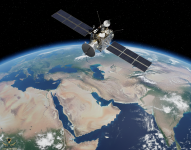
Strategic indicators indicate that the Kingdom of Saudi Arabia does not view space as a temporary support capability, but rather as one of the foundations of long-term national security. After the phase of building national capabilities and launching multi-mission satellites, the Kingdom is moving towards expanding and deepening the role of space in military and defense systems, keeping pace with the nature of modern threats and the requirements of high-tech warfare.

In 2017, reports revealed that part of the Saudi-American defense cooperation package, estimated at approximately $110 billion, was allocated to support the Kingdom’s military space capabilities. The most prominent details of this allocation are:

🔹About $800 million to purchase two satellites for reconnaissance, monitoring, and precise sensing of strategic targets and areas.

🔹About $4 billion to develop two satellites for secure military communications and missile early warning, including support for air and missile defense systems, early warning, and guidance of interceptor missiles.

This trend shows the importance of the Kingdom’s military space, not only as a reconnaissance tool, but as part of the integrated national defense system, ensuring intelligence and strategic superiority and rapid response to any potential threat.

It is also expected that the future of Saudi space capabilities will include:

🔹Developing satellites more specialized in radar sensing and early warning

🔹Enhancing the integration of artificial intelligence into space data analysis and decision-making

🔹Raising the level of technical independence in design, operation and control

🔹Expanding advanced space partnerships to reach highly sensitive capabilities in short periods of time

In light of the geopolitical transformations and the rapid development of space technologies, it seems that the Kingdom is moving towards consolidating its position as a regional power possessing advanced space awareness, and capable of using space not only for protection and defense, but as a tool of deterrence and a force multiplier in the comprehensive national security system.


Strategic conclusion: Space as a guardian of national security

National satellites and strategic partnerships represent a direct extension of the Kingdom's capabilities in intelligence, surveillance, communications, and defense.

Through this space system, the Saudi leadership possesses advanced field awareness, the ability to respond quickly, and a strategic influence in protecting sovereignty.

The continued investment in the development of satellites, radar sensing, and artificial intelligence reflects the Kingdom’s vision for the future of modern defense, where superiority is determined by information before weapons, and space becomes the first line of defense against changing threats.
 
Source:
Multiple sources
Hopefully now that Pakistan and Saudi have a defense agreement in place, this will also mean cooperation in satellite and launch vehicles.

I hope Pakistan and Saudi Arabia can work on building up the Suparco facilities on the coast for polar launches. An ideal location.

Furthermore, Kismayo in Somalia would be ideals for geosynchronous launches, as it sits on the equator, and with cooperation between Saudi, Pakistan, Somalia and Turks, this facility can be built up as well.

Pakistan can be a secure location to build the launch vehicles and bring them by ship to Somalia for the GEO launches. Similar to what Europe does for its launch facility in French Guinea in South America, which is also close to the equator.

The Saudis can then position themselves as operating two facilities to attract the business of satellite launches in the region. The revenue from these facilities can also help support the local economies of the governments in Somalia and Pakistan. The building of launch vehicles could be done by Pakistani companies and give new life to Suparco. The Maldives could get good work as operating a satellite launch tracking facility, along the path of both satellite launches would fly past but not directly over the Maldives.
 
Last edited:
To view this content we will need your consent to set third party cookies.
For more detailed information, see our cookies page.


Space field post titled: Dual-Frequency SAR Satellites and Radar Imaging and the Global Priority Conflict between King Abdulaziz City for Science and Technology KACST in front of a union that brings together NASA & ISRO.

To view this content we will need your consent to set third party cookies.
For more detailed information, see our cookies page.


A quick look at the beginning at the meaning of SAR or Synthetic Aperture Radar, which means synthetic aperture radar, or according to its common meaning, radar imaging. Radar imaging techniques are used in many atmospheric applications, as they send their waves to the surface of the earth and are reflected in accurate two-dimensional images.

To view this content we will need your consent to set third party cookies.
For more detailed information, see our cookies page.


Then reprocessing the images to obtain high-resolution 3D images. SAR imaging techniques are used in combat aircraft, reconnaissance aircraft, drones, and airships, as well as satellites to create accurate images. Some Saudi projects dedicated to aircraft, radar detectors and sighting radars.

To view this content we will need your consent to set third party cookies.
For more detailed information, see our cookies page.


Advantages of radio imaging SAR The main advantage of SAR imaging devices is that monitoring is carried out regardless of weather or day or night lighting conditions that are not affected. In other words, SAR satellites can be used at night or with thick cloud cover over the area of interest and very accurate images can be drawn.

To view this content we will need your consent to set third party cookies.
For more detailed information, see our cookies page.


SAR satellites are well suited for monitoring change such as landslides or rising water levels. - It can also estimate the number of cars that appeared in a parking lot during the night, or the number of containers that disappeared from the port.
 
To view this content we will need your consent to set third party cookies.
For more detailed information, see our cookies page.


It can also be used successfully to monitor the condition of infrastructure, such as gas or oil pipelines, etc. The SAR satellite is well suited for maritime traffic monitoring as well. This is because ships or warships can easily be captured on the water.

To view this content we will need your consent to set third party cookies.
For more detailed information, see our cookies page.


The SAR provides the ability to monitor large areas over short periods of time. For example, it takes about 30 seconds to collect images of an area of 100 x 50 km across a SAR, while it may take a few days to capture optical images of this small piece of land, with a suitable resolution.

To view this content we will need your consent to set third party cookies.
For more detailed information, see our cookies page.


Dual frequency SAR satellite: Currently, all the SAR satellites in space are single-frequency satellites, meaning that they operate with only one wavelength. The competition for the priority of launching the first dual-frequency SAR satellite is between KACST and a consortium that brings together the US and Indian space agencies, NASA & ISRO, on their NISAR satellite.

To view this content we will need your consent to set third party cookies.
For more detailed information, see our cookies page.


Introduction to the KACST project On 10/2015, the Space and Aviation Research Institute of King Abdulaziz City for Science and Technology began the last steps to reach their dream of international competition, which they set 25 years ago and worked hard to achieve. That date marks the beginning of the world's first dual-frequency SAR satellite project.

To view this content we will need your consent to set third party cookies.
For more detailed information, see our cookies page.


Beginning of the project On 2015-10, KACST announced the beginning of the development of the dual-frequency SAR satellite as a highly advanced and unique satellite. An overview of the Saudi moon and some of its features in the upcoming tweets:
 
To view this content we will need your consent to set third party cookies.
For more detailed information, see our cookies page.


The SAR payload is the first of its kind in the world for supporting a dual-frequency satellite radar (L & X Bands).
It supports StripMap mode and StripSAR mode to meet diverse needs and serve numerous applications, such as high-resolution imaging and imaging vast areas, coastal monitoring, and specific change monitoring at points on the ground.

To view this content we will need your consent to set third party cookies.
For more detailed information, see our cookies page.


- The project includes 5 main stages:

1- Identifying the main requirements from specifications, concepts, and analyses.

2- Design and development.

3- Initial testing and prototype development.

4- Development and testing of the conducted engineering prototypes.

5- Assembly and final testing.

To view this content we will need your consent to set third party cookies.
For more detailed information, see our cookies page.


- The project has reached 85% completion, according to the city's announcement in its 2018 annual report issued at the beginning of 2019, detailing what has been accomplished up to the date of the report:

- Manufacturing and testing the first version of the space computing system and starting the production of the engineering model.

To view this content we will need your consent to set third party cookies.
For more detailed information, see our cookies page.


- Manufacturing and testing of the first version of the ultra-high-speed transportation system and the start of manufacturing the engineering model.

- Manufacturing and start of testing of the various engineering models for the specific absorption rate.

- Completion of the development and testing of the ground processors.

- Construction and testing of the ground telescope.

To view this content we will need your consent to set third party cookies.
For more detailed information, see our cookies page.


Overview of the NASA & ISRO Joint NISAR Project

- NISAR will use two frequencies: L Band and S Band. NASA will develop the L Band, while ISRO will develop the S Band.

- The allocated budget for NISAR is estimated at 1.5 billion dollars, as one of the most expensive projects in the world of satellites, if not the most expensive.
 
To view this content we will need your consent to set third party cookies.
For more detailed information, see our cookies page.


- The idea of development in India began in 2012, and it was officially signed with NASA on 30/9/2014- It was scheduled to be launched into space in September 2022.

To view this content we will need your consent to set third party cookies.
For more detailed information, see our cookies page.


- The NISAR program and the KACST program are both in their final stages and close to launch, but KACST has not yet specified a launch date, whereas September 2022 has been set for NISAR.

- KACST's achievement and their dream, which began 25 years ago, to elevate our country to the ranks of advanced nations in a great field like space, is a source of gratitude and pride for everyone.

To view this content we will need your consent to set third party cookies.
For more detailed information, see our cookies page.


End of the post. My wish is that they can launch the moon as soon as possible, in honor of the efforts of the heroes who carried their country's name to space with the power and speed of light. And thanks for reading.

To view this content we will need your consent to set third party cookies.
For more detailed information, see our cookies page.


Simple articles for reading and learning about SAR satellites

:https://earthdata.nasa.gov/learn/backgrounders/what-is-sar

https://eijournal.com/print/articles/discover-the-benefits-of-radar-imaging

https://defence24.com/technology/optics-or-radars-what-is-better-for-the-earth-observation-purposes

YouTube video: https://youtu.be/BetKIPhlmmk
 
Their webpage where everything about them and their projects can be found.


To view this content we will need your consent to set third party cookies.
For more detailed information, see our cookies page.


Scientific paper from KAUST:

Exploring the use of synthetic aperture radar data for irrigation management in super high-density olive orchards


As a tool in seismology within KSA. Another paper from 2022.

Using InSAR Time Series to Monitor Surface Fractures and Fissures in the Al-Yutamah Valley, Western Arabia


To view this content we will need your consent to set third party cookies.
For more detailed information, see our cookies page.


1770466021186.png

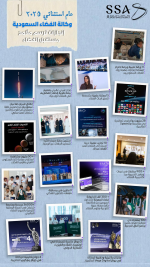
Achievements in the space sector in 2025:

To view this content we will need your consent to set third party cookies.
For more detailed information, see our cookies page.


1770466039935.png

More information about the booming (like almost every single sector within KSA) Saudi Arabian Space Agency:

 
Saudi Arabia to launch first space weather satellite under Artemis II mission

Saudi Arabia to launch first space weather satellite under Artemis II mission

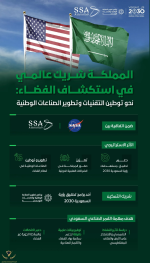
RIYADH — Saudi Arabia has signed a landmark agreement with the US National Aeronautics and Space Administration (NASA) to launch its first satellite dedicated to studying space weather, under the Artemis II mission.

The deal marks a new milestone in Saudi–US scientific cooperation and reinforces the Kingdom’s role in global space exploration initiatives.

Signed during the official visit of US President Donald Trump to Riyadh, the agreement builds upon the broader US–Saudi space cooperation framework formalized in July 2024 and reflects the growing strength of bilateral ties in science, technology, and innovation.

The mission, led by the Saudi Space Agency (SSA), underscores Saudi Arabia’s commitment to the Artemis Accords — an international framework promoting peaceful and collaborative exploration of the Moon, Mars, and beyond.

The new satellite will collect high-resolution data on solar activity and its effects on Earth’s magnetic field, contributing to global efforts to protect astronauts, improve satellite navigation and communications, and enhance space weather forecasting.

The initiative falls under the National Industrial Development and Logistics Program (NIDLP), a Vision 2030 realization program aimed at advancing domestic industrial content and building national expertise in strategic technologies. It also aligns with the Kingdom’s goal of becoming a knowledge-driven, innovation-led economy and bolstering local talent in the growing space sector.


1770467083235.png

1770467093553.png

1770467105604.png

1770467113428.png


Saudi Space Agency Wins Four Platinum MarCom Awards​


1770467124993.png

The Saudi Space Agency achieved a distinguished international milestone by winning four Platinum Awards at the 2025 MarCom Awards, one of the world’s leading creative competitions in marketing, communications, and creativity, reported the Saudi Press Agency on Tuesday. The Platinum tier is reserved for entries that meet the highest standards of quality and innovation.

The agency’s awards covered four main categories: Best Campaign for launching the Knowledge Space Portal, Best Integrated Marketing Campaign for the public awareness initiative during World Space Week, Best Social Media Engagement Campaign for the same initiative, and Best Creative Design for the campaign.

The MarCom Awards are administered by the Association of Marketing and Communication Professionals. In 2025, the competition announced its winners after receiving more than 6,000 entries from 43 countries worldwide.

These achievements reflect the agency’s effective collaboration with partners from both the public and private sectors in awareness and outreach campaigns aligned with the goals of Saudi Vision 2030, supporting the Kingdom’s drive to build a knowledge-based, innovation-led economy.


To view this content we will need your consent to set third party cookies.
For more detailed information, see our cookies page.


We are proud to announce the launch of #NewSpaceGroup, #one_of_PIF's_companies, to support the Kingdom's efforts in achieving a qualitative leap in the space sector. We look forward to the leading global role of the New Space Group by integrating the best innovations and technologies with the talented individuals in the Kingdom.

To view this content we will need your consent to set third party cookies.
For more detailed information, see our cookies page.


#NewSpace Group, one of the Public Investment Fund's companies, acquires Taqnia ETS, the company specialized in geospatial services in Saudi Arabia, where its name has been changed to NSG Geospatial Services

1770467374181.png

To view this content we will need your consent to set third party cookies.
For more detailed information, see our cookies page.


For the first time, and in a qualitative Saudi scientific achievement in space..#Saudi Arabia succeeds in manufacturing a nanomaterial customized for cartilage repair after conducting 19 scientific experiments aboard the International Space Station, in a step that supports the direction toward manufacturing advanced tissues and treatments that contribute to organ transplantation initiatives.
 
Last edited:
Brothers if you can, please build a table of all 17 Saudi satellites launched to date.
 
Brothers if you can, please build a table of all 17 Saudi satellites launched to date.
#Satellite NameLaunch YearMission / Purpose
1SaudiSat-1A2000Communications / data relay
2SaudiSat-1B2000Communications / data relay
3SaudiSat-1C (Saudi-OSCAR-50)2002Amateur radio / communications
4SaudiSat-22004Earth observation / imaging
5SaudiComSat-12004Data communications
6SaudiComSat-22004Data communications
7SaudiSat-32007Imaging / remote sensing
8SaudiComSat-32007Data communications
9SaudiComSat-42007Data communications
10SaudiComSat-52007Data communications
11SaudiComSat-62007Data communications
12SaudiComSat-72007Data communications
13SaudiSat-42014Tech experiment / research
14Chang’e-4 participation2018Collaboration on lunar mission (China)
15SaudiSat-5A2018Earth observation / imagery
16SaudiSat-5B2018Earth observation / imagery
17SaudiGeoSat-1 (SGS-1)2019Communications / GEO satellite
Shaheen Sat2021Earth imaging & ship tracking
 
#Satellite NameLaunch YearMission / Purpose
1SaudiSat-1A2000Communications / data relay
2SaudiSat-1B2000Communications / data relay
3SaudiSat-1C (Saudi-OSCAR-50)2002Amateur radio / communications
4SaudiSat-22004Earth observation / imaging
5SaudiComSat-12004Data communications
6SaudiComSat-22004Data communications
7SaudiSat-32007Imaging / remote sensing
8SaudiComSat-32007Data communications
9SaudiComSat-42007Data communications
10SaudiComSat-52007Data communications
11SaudiComSat-62007Data communications
12SaudiComSat-72007Data communications
13SaudiSat-42014Tech experiment / research
14Chang’e-4 participation2018Collaboration on lunar mission (China)
15SaudiSat-5A2018Earth observation / imagery
16SaudiSat-5B2018Earth observation / imagery
17SaudiGeoSat-1 (SGS-1)2019Communications / GEO satellite
Shaheen Sat2021Earth imaging & ship tracking
Superb brother. Masha'Allah.
 
To view this content we will need your consent to set third party cookies.
For more detailed information, see our cookies page.
 

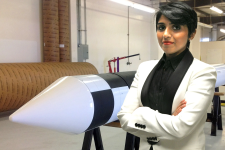
Mishaal al-Shemimry​


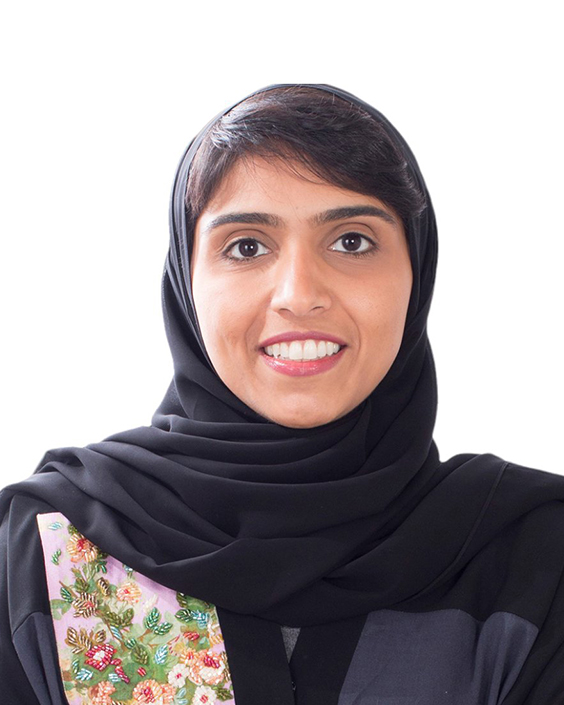
Mishaal al-Shemimry, the first Saudi female aerospace engineer, is the Managing Director of the Center for Space Futures, the Vice President of the International Astronautical Federation (IAF), and an advisor at the Saudi Space Agency. Additionally, she is a commercial pilot and an entrepreneur in the peaceful rockets field. Al-Shemimry has won several awards, including the Inspirational Woman Award.

Mishaal al-Shemimry's education​

Mishaal al-Shemimry earned a Bachelor of Science in Applied Mathematics degree from the Florida Institute of Technology in 2006, where she also earned a Bachelor of Science in Aerospace Engineering. In 2007, she earned a Master of Science in Aerospace Engineering with a thesis entitled "Analysis of a Grooved-Ring Reactor Concept for Nuclear Thermal Propulsion."

Additionally, she obtained several certifications, among which are the following: Certified Commercial Pilot, Certified Advanced Open Water SCUBA Diver, Certified Nitrox SCUBA Diver, and Certified Rescue SCUBA Diver.

Mishaal al-Shemimry's professional life​

Mishaal al-Shemimry's professional life began during her undergraduate studies when she founded and managed the Infinity Math Club in 2004. She worked as a Graduate Research Assistant in the Department of Mechanical and Aerospace Engineering at the Florida Institute of Technology from August 2006 to December 2007, where she achieved several accomplishments, including conducting research for the Space Flight Center affiliated with the National Aeronautics and Space Administration (NASA).

From August to December 2007, she was a graduate teaching assistant at the Mechanical and Aerospace Department of the Florida Institute of Technology. From June 2008 to April 2010, she worked as a systems engineer for Raytheon Missile Systems in Arizona.

In 2010, Mishaal al-Shemimry established her company, "Mishaal Aerospace," specializing in rocket designing and manufacturing. In the same year, she established and co-founded the Beauty Box Company. From November 2015 to May 2018, she provided consultancy in rockets and related matters fields in Paris. From August to December 2019, she worked as a professor in the Mechanical and Aerospace Department at the University of Miami in Florida. Since November 2020, Mishaal al-Shemimry has taken on the role of Space Nuclear Power and Propulsion Consultant at the Northrop Grumman Corporation, where she has achieved several accomplishments, among which is devising space nuclear power and propulsion technology applications for national security and commercial missions. She has also been an advisor at the Saudi Space Agency since 2021.

In 2022, Mishaal al-Shemimry, the Kingdom's representative, won the position of vice president at the International Astronautical Federation (IAF) in a voting process, ahead of fourteen candidates from around the world, making her the first Saudi woman to win a leadership position in the organization.

Her extensive practical and professional experience encompasses several fields, which are the following: aerodynamics, rocket and vehicle design, wind tunnel tests, predictive simulation, and rocket stage-separation analysis, with a strong focus on computational tool development.

Mishaal Al-Shemimry's awards and achievements​

Mishaal al-Shemimry obtained several awards, among which are the following: the Inspirational Woman Award in 2015, the Scientific Achievement Award in 2018, as well as the Outstanding Junior Award in Aerospace Engineering for two consecutive years during her undergraduate studies, and the Pioneer in Science and Technology Award for 2024. She was also granted the Florida Institute of Technology Scholarship from 2003 to 2005, four scholarships from the Florida Institute of Technology from 2002 to 2005, and four Florida Medallion Scholarships from 2002 to 2005.

Mishaal al-Shemimry built a robot during her high school studies and later designed twenty-two rockets for various purposes. She also developed a series of launch vehicles that aid in launching small satellites into the Low Earth Orbit.

Sources​


Saudi Press Agency (SPA).

Saudi Space Agency.


1771513860925.png

THE FIRST FEMALE AEROSPACE ENGINEER IN THE GCC

STARTED HER OWN ROCKET COMPANY AT AGE 26

INSPIRATIONAL WOMAN OF THE YEAR 2015

{ARAB WOMAN AWARDS}

AWARDED FOR SCIENTIFIC ACHIEVEMENT BY HRH KING SALMAN BIN ABDULAZIZ AL SAUD, NOVEMBER 2018

MISH_bio3.jpg


Mishaal Ashemimry – Aerospace Engineer and Founder of MISHAAL Aerospace

Mishaal Ashemimry is a Saudi-American Aerospace Engineer, Aerospace Entrepreneur, commercial pilot, speaker and influencer, who was born in the US and spent a few years of her early life in Saudi, where her fascination with space started. More specifically, she was inspired at the age of six while gazing at the stars in the Unayzah desert. To feed her curiosity, she decided to learn how to build rockets that will enable her to explore space and one day take her there.


As the First female aerospace engineer in the GCC, she realized that this title comes with an enormous responsibility to inspire others to join her field as well as other STEM programs. To reach the youth, she used social media platforms such as Instagram, Twitter, Snapchat and YouTube to educate her follower about her field, experiences, and to inspire them to have a dream and perseverance to pursue it. As a result, she became a public figure and speaker at many events in the GCC and globally. Her influence garnered the attention of Macy’s, Pepsico and Dubai TV in campaigns to educate and empower youth.


Ashemimry is a consultant in her field and was a professor at the University of Miami Mechanical and Aerospace Department. Currently, Ashemimry is an International Astronautical Federation Vice President for Diversity Initiatives and a special advisor to the CEO of the Saudi Space Agency with a strong focus on developing Saudi’s role in the global space market. Prior to joining the Saudi Space Agency, Ashemimry was a Space Nuclear Power and Propulsion Consultant for Northrop Grumman in the US. Moreover, she is living her passion everyday by educating and inspiring others through conferences, webinars, and her social media channels. While based in Miami, Florida, she founded MISHAAL Aerospace at age 26, to pursue her ultimate dream of building rockets. Her company’s objective was to design and build their own rockets to launch small satellites (500 kg) or less to Low Earth Orbit. Previously, she worked for Raytheon Missile Systems’ Aerodynamics Department and contributed to twenty-two different rocket programs. Her professional experience and areas of expertise include aerodynamics, wind tunnel testing, vehicle design, predictive simulation and analysis and rocket stage-separation analysis, with a strong focus on computational tool development.


She earned a Master of Science Degree in Aerospace Engineering from Florida Institute of Technology in Melbourne, Florida, and two Bachelor of Science Degrees in Aerospace Engineering and in Applied Mathematics, also from Florida Institute of Technology. Her academic focus included: experimental and analytical aerodynamics, rocket design and nuclear thermal propulsion.
MISH_EXPERIENCE.jpg


International Astronautical Federation | Paris, France, Remote from Riyadh, Saudi Arabia​

Vice President for Diversity Initiatives
September 2022 - Present

  • Cofounded the Inclusion, Diversity & Equity Administrative (IDEA) Committee
  • Created a plan to incentivize statistical transparency for IAF Member Organizations
  • Developed a plan to engage with IAF member organizations to ensure commitment to IDEA goals

Saudi Space Agency (Formerly the Saudi Space Commission) | Remote from Miami, FL (Sept 2021 – May 2022), Riyadh, Saudi Arabia (May 2022 – Present)​

Technical Advisor/Consultant
September 2021-Present

  • Consulted on developing Saudi’s National Space Strategy
  • Created and lead specific space programs and initiatives including Saudi’s Human Space Flight Program
  • Developed strategies, roadmaps and budget for these space programs and initiatives
  • Advised leadership on national space strategy direction and execution

Northrop Grumman Corporation | Space Systems | Redondo Beach, CA (remote Miami, FL)​

Space Nuclear Power and Propulsion Consultant
November 2020 - Present

  • Assessed feasibility of space nuclear power and propulsion (NEP and NTP) technologies
  • Developed a strategy and roadmap to achieve these space technologies
  • Determined development effort and cost required
  • Devised space nuclear power and propulsion technology applications for national security and commercial missions
  • Proposed a nuclear electric propulsion and power system as a demonstrator using NGC payload for AFRL/USSF
  • Analyzed NASA and DOD budgets to highlight key focus areas for capture
  • Provided an analysis of scientific missions enabled by different propulsion systems
  • Identified potential industry partners to setup teaming or venture agreements with
  • Evaluated Chinese and Russian capabilities in Space Nuclear Power and Propulsion as well as overall capabilities


University of Miami | Mechanical and Aerospace Department| Miami, FL​

Adjunct Professor
August 2019 - December 2019

  • Taught junior and senior level courses, namely MAE 471 Flight Dynamics and MAE 446 Aircraft Design

The Astronauts​

Finalist
March 2019 - June 2019

  • Participated as a contestant for “The Astronauts” a television production for Dubai TV under Col. Chris Hadfield (Canadian Astronaut)
  • Col. Chris Hadfield conducted the show as a real astronaut selection process with 30 challenges and eliminations
  • Selected from a large pool to participate and made it to the top three finalists

Military Industries Corporation| Paris, France​

Consultant
November 2015 - May 2018

  • Called upon for the transition of MIC into a private defense company
  • Consult on matters related to rockets/missiles
  • Created several initial projects to facilitate transfer of know-how and technology
  • Provided a missile systems upgrade roadmap for a specific program

Beauty Box Ltd| Jeddah, Saudi Arabia​

Co-founder and Partner
October 2010 – Present

  • Invested in a cosmetics distribution company with my sisters
  • Distribute several exclusive brands including hair products and treatments, enhancers, and beauty supplies
  • Offer our brands to end-consumers through more than 1,500 authorized distributors and retailers in Saudi Arabia

MISHAAL AEROSPACE | Miami, FL​

President & CEO | Aerospace Engineer
May 2010– November 2020

  • Started my own aerospace company
  • Developed launch vehicles (rockets) dedicated to the launch of small satellites (<=500kg) to orbit
  • Designed, developed and tested our own line of rockets: the M-Rocket Series
  • Created and managed multi-million dollar budget for the entire business
  • Directed all activities in the company including team selection, engineering, finance and business
  • Successfully completing our first static test of the M-SV hybrid rocket propulsion system
  • Worked together with potential clients and received several Letters of Intent to launch their satellites
  • Put rocket development on hold, until new investors are found
  • Provided aerospace consultancy globally

RAYTHEON MISSILE SYSTEMS |​

Systems Engineer II
June 2008–April 2010

  • Worked on 22 different rocket/missile programs
  • Planned, conducted, and analyzed data from wind tunnel tests
  • Wrote pre- and post-test reports and statements of work for model vendors and wind tunnels
  • Wrote computer programs to read and process wind tunnel data
  • Created math models of missile aerodynamic data for autopilot, control, and structural analysis
  • Developed aerodynamic models for 3- and 6-degree-of-freedom trajectory simulation
  • Created code wrappers and modules to run prediction codes and predict missile performance
  • Assessed effects of model-configuration changes on vehicle aerodynamics
  • Improved existing computational tools and made them more robust and generic

FLORIDA INSTITUTE OF TECHNOLOGY |​

Graduate Teaching Assistant to Dr. Chelakara Subramanian
August–December 2007

Fluid Mechanics Laboratory

  • Studied impinging jets and employed flow-visualization techniques
  • Determined major and minor losses in channel bends
Experimental Aerodynamics Laboratory

  • Ran boundary layer experiments in a wind tunnel
  • Experimented with a shock tube
  • Determined the pressure distribution over a cylinder and evaluated airfoil performance
  • Quantified drag by conducting a wake survey

FLORIDA INSTITUTE OF TECHNOLOGY |​

Graduate Research Assistant to Dr. Daniel Kirk
August 2006–December 2007

  • Research conducted for and funded by NASA Marshall Space Flight Center
  • Created analytical and idealized models of NERVA-type reactors
  • Analyzed a novel grooved-ring reactor concept for nuclear thermal propulsion
  • Developed analytical models for that reactor, based on a NASA power-density model
  • Optimized reactor design geometry to reduce thermal gradients and improve performance
  • Investigated properties of para- and ortho-hydrogen

MISH_awards.jpg


  • Recognized and awarded for Scientific Achievement By HRH King Salman Bin Abdulaziz AL Saud, November 2018
  • Inspirational woman of the year 2015 | ARAB WOMAN AWARDS
  • Awarded the Outstanding Senior Award in Aerospace Engineering, 2005–2006
  • Awarded the Outstanding Junior Award in Aerospace Engineering, 2004–2005
  • Awarded Florida Tech grants, 2003–2005
  • Awarded four Florida Tech Faculty Scholarships, 2002–2005
  • Awarded four Florida Medallion Scholarships, 2002–2005
29E0092C-097F-4800-A083-612AB8A35334.jpeg


  • Certified in Executive Leadership Development by Stanford University Graduate School of Business
  • Certified Commercial Pilot with Instrument and Multi-Engine Ratings
  • Certified in General Space Training Elements on the base of Yuri Gagarin Cosmonaut Training Center
  • Certified in Unique Test Flight on board the Laboratory plane IL-76 MDK and trained in conditions of zero-gravity corresponding to conditions of real space flight
  • Certified Open Water SCUBA Diver
  • Certified Advanced Open Water SCUBA Diver
  • Certified Rescue SCUBA Diver
  • Certified Nitrox SCUBA Diver
MISH_edu.jpg


Masters of Science, Aerospace Engineering​

Florida Institute of Technology
2006 - 2007

  • Research: Analyzed and re-designed a grooved-ring reactor concept for NASA Marshall Space Flight Center.
  • Thesis: "Analysis of a Grooved-Ring Reactor Concept for Nuclear Thermal Propulsion". View publication abstract

Bachelor of Science, Aerospace Engineering​

Florida Institute of Technology
2002 - 2006

  • Awarded the Outstanding Junior Award in Aerospace Engineering, 2004-2005.
  • Awarded the Outstanding Senior Award in Aerospace Engineering, 2005-2006.

Bachelor of Science, Applied Mathematics​

Florida Institute of Technology
2002 - 2006

  • Activities and Societies: President and Founder of Infinity Math Club in 2004.

Quite incredible CV.

To view this content we will need your consent to set third party cookies.
For more detailed information, see our cookies page.


We need more talented Saudi Arabian expats to return to work for our space agency etc. instead of working in the West. More and more are returning which is good not to mention the much larger number of local talents who never leave.
 

Users who are viewing this thread

Pakistan Defence Latest

Latest Posts

Back
Top