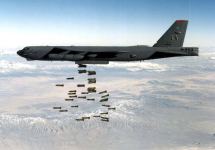
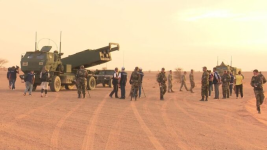
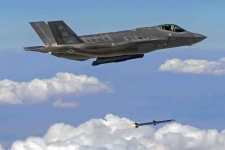
Developments in armament and military industry in the Kingdom of Morocco

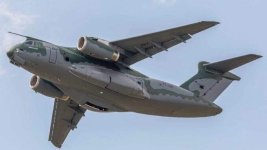
Morocco is close to a major deal with Brazil to acquire KC-390 transport planes
1755619529063.jpeg

Military Africa revealed on August 16, 2025 that the Brazilian Air Industries Company, Empire, is close to concluding a historical deal with the Royal Moroccan Air Force to provide it with 4 to 5 KC-390 Millennium military transport aircraft, at a value of more than $ 600 million.

This deal represents a qualitative shift for strategic and tactical transportation capabilities of Morocco, while relying on the old C-130 Hercules fleet, some of which exceeded four decades.

The KC-390 is the most modern plane in its class, as it operates with two V2500-E5 turbochargers groan with a top speed of 870 km/h and a service roof of 36 thousand feet. With a maximum load of 26 tons, you can transport 8 x 8 armored vehicles, helicopters, or even 80 soldiers equipped with their full equipment. It also features a wide charging moon and a modern handling system, as well as a rear RAMP for quick download.

KC-390 gives Morocco a technical superiority and higher efficiency with a decrease in maintenance costs. It also provides Fly-Dy-Wire, and fuel capabilities, and advanced electronic protection that includes rocket warning systems and warning radars. It can work from short runways with a length of 1,300 meters, which enhances its operational flexibility in remote areas such as the Sahara and the African coast.

On the regional level, Morocco, through this deal, is seeking to narrow the gap with Algeria, which has a large fleet of Russian transport aircraft IL-76 and An-124. The project also enhances Morocco's integration into NATO standards, and supports its capabilities in multinationals and humanitarian missions.

It is expected that the deal will include integrated logistical training and support programs, with opportunities for industrial cooperation with Moroccan airlines. If the negotiations are completed by the end of 2025, deliveries may begin in 2027.
 
The US State Department hinted to enhance military cooperation with Morocco and the acquisition of F-35 stealth fighters

August 25, 2025:

The US State Department, through its media office, yesterday published an important statement that highlights the depth of the historical relationship between Morocco and the United States of America. The statement stressed that the Kingdom of Morocco was the first country to recognize the independence of the United States, which established the basis for their historical friendship, which is still developing today through strong relations in various fields.

The statement stated that the relations between the two countries officially arose since 1777, and have been documented through the peace treaty and friendship signed in 1786, which is the longest official bilateral relationship in the history of the United States. The statement also indicated that the American Commission in Tangier was a gift from Morocco, a symbol of this strong relationship, in addition to trade and economic cooperation between the two countries, as the United States is among the five largest investors in Morocco, with a bilateral trade size of $ 7 billion in 2024, with a free exchange agreement between them.

The statement also dealt with military and security cooperation, including joint exercises, combating terrorism, and recognizing Morocco's role in promoting regional stability, as well as referring to the Abrahamic agreements signed in 2020.

To view this content we will need your consent to set third party cookies.
For more detailed information, see our cookies page.


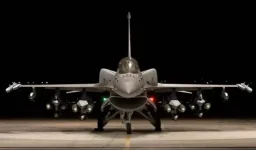
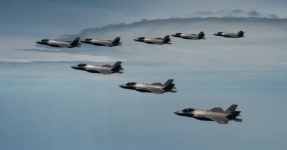
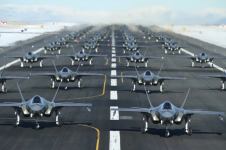
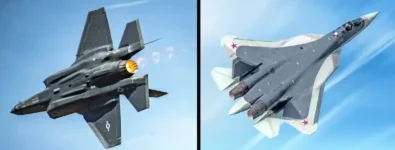
This statement comes at a time that raises speculation about strengthening bilateral relations between Morocco and the United States of America, and this may include US President Donald Trump's visit to Morocco. This step also comes in the context of continuous negotiations to acquire Morocco Fifth generation F-35 fighters, adding a large offensive and defensive force to Moroccan air capabilities, especially when they are combined with F-16 Block 72 VIPER fighters with Fifth Generation technologies.

Military analysts pointed out that Morocco's acquisition of these fighters will enhance its capabilities to carry out accurate strikes and overcome the air defenses of the opponents.

The coming days are expected to reveal more details about possible bilateral agreements, especially in the field of armaments and economics, which may constitute a new and important stage in the history of Moroccan -American relations.

1756189033364.webp
F-35 for Morocco vs SU-57 for Algeria​
 
To view this content we will need your consent to set third party cookies.
For more detailed information, see our cookies page.
 
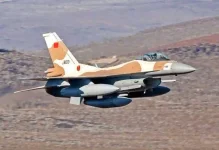
Morocco begins locally developing its F-16 fighters to the Viper standard with support from Lockheed Martin


1761116664804.webp

In a qualitative development that reflects the rise of the Kingdom's defense industrial capabilities, the newspaper Médias24 revealed in an exclusive news that the process of modernizing Moroccan F-16 fighters from the Block 52 version to the latest standard Viper will be implemented within Moroccan territory, as part of an integrated project for military manufacturing and maintenance.

Morocco has taken a new step towards strengthening its industrial sovereignty and defense capabilities by laying the foundation stone for the new heavy maintenance center for C-130 transport aircraft and F-16 fighters, which will be established in the city of Benslimane.

This ambitious project, which will be operated by Maintenance Aéro Maroc (MAM), is the result of a public-private partnership and embodies the Kingdom's drive to build a sophisticated and independent military-industrial base.

According to information obtained by Médias24 from MAM, the project is jointly supported by Belgian company Sabena Engineering, American defense giant Lockheed Martin, and Moroccan developer MEDZ, a subsidiary of CDG.

The infrastructure itself will be owned by Maroc Aeronautic Assets (MAA), and Amin Chafik has been appointed General Manager of Maintenance Aéro Maroc, leading these new industrial entities of a strategic nature.

Center with heavy maintenance capabilities for C-130 and F-16 aircraft

The center extends over an area of 8,000 square meters and has been designed to meet advanced and long-term maintenance needs. According to MAM, upon entering service, it will be able to accommodate three C-130 transport aircraft simultaneously, with a capacity to carry out two to four visits per year within the programmed maintenance program (Programmed Depot Maintenance - PDM), depending on the volume of work required for each aircraft.

The site has also been prepared to be able to receive a number of F-16 fighters when needed, making it a flexible and integrated infrastructure that meets the diverse maintenance needs of the Royal Air Force.

One of the most strategic aspects of the project is its potential to support the Royal Air Force's fleet modernization programme. When MAM was asked about the possibility of upgrading Moroccan F-16 Block 52 fighters to the latest Viper standard, the company confirmed that the facility was specifically designed to accommodate this type of modernization program.

the site explained that the implementation of these updates will be carried out in coordination with the competent Moroccan national authorities, ensuring the transfer of knowledge and the development of technical expertise locally.

Towards industrial and technical independence in the field of military maintenance.

Laying the foundation stone for this center does not simply represent the beginning of a new construction project, but rather the embodiment of a strategic vision aimed at granting Morocco industrial and technical independence in the field of military air maintenance, while developing high-level local expertise in this vital sector.

The project is expected to contribute to creating highly qualified job opportunities and be a lever for sustainable industrial development in the Kingdom.

The center is scheduled to be operational during the second half of 2026, marking a new milestone in Morocco's path toward developing an advanced and integrated defense infrastructure at the regional level.

1761117212628.webp

The F-16 Viper represents the newest and most advanced version of the famous F-16 family, which is one of the most successful multi-role fighters in modern history. Officially known as the F-16 Block 70/72, this version represents the sum of four decades of Lockheed Martin's operational and technical experience, and was developed to keep pace with the requirements of air combat in an environment full of modern threats.

Viper features an integrated electronic system based on open digital architecture that allows software and systems to be easily updated, giving it great flexibility in adapting to future technological developments. The cockpit has also undergone a radical update, equipped with a large-sized high-resolution central display (CPD) that allows the pilot a comprehensive view of all tactical data in a unified digital interface, while improving the helmet display system (Helmet Mounted Cueing System) that allows the pilot to aim and control Once the gaze is directed towards the target.

The fighter is based on the AESA AN/APG-83 SABR radar, which is one of the most prominent development elements in this version, as it gives the aircraft the ability to simultaneously detect and track air and ground targets over long distances, and is characterized by high resistance to electronic interference. This radar gives the F-16 Viper improved air-to-air combat capabilities and great effectiveness in hitting ground targets with high accuracy, even in adverse weather conditions or in intense electronic warfare environments.

Engine-wise, the Block 70 is based on the Pratt & Whitney F100-PW-229, while the Block 72 uses the General Electric F110-GE-129, both of which give the aircraft powerful thrust, enabling it to reach speeds exceeding Mach 2 and an operational altitude of over 50,000 feet. The aircraft's structure has also been strengthened to enable it to operate for more than 12,000 flight hours, which extends its operational life compared to previous versions.

The mission system of the F-16 Viper is based on an integrated electronic package that includes advanced navigation systems based on satellites and inertia, and an updated electronic warfare system that provides comprehensive field awareness with high capabilities in early detection of radar and missile threats and automatically launching decoys when necessary.

The aircraft can also communicate in real time with other fighters and command systems via a secure data link (Link 16), making it an effective component of modern network operations.

The F-16 Viper carries a wide range of weapons, from AIM-9X Sidewinder and AIM-120 AMRAAM air-to-air missiles, to precision-guided munitions such as JDAM, SDB and AGM-88 HARM anti-radar missiles. It can also be equipped with external fuel tanks and advanced Sniper or LANTIRN targeting units, giving it the ability to carry out precise long-range strikes day and night.

Although not a fifth-generation aircraft, the Viper has capabilities that make it able to coexist and integrate with more advanced platforms such as the F-35, as its digital architecture and software systems have been developed to integrate with modern combat concepts based on network awareness and integration between air, land and sea systems.

Today, the F-16 Viper is a strategic choice for countries that want to have a multirole fighter that combines relatively low cost with high combat capabilities. Therefore, a number of countries, such as Bahrain, Slovakia, Bulgaria, and Morocco, have chosen this standard to modernize their fleets or renew their air capabilities. With these specifications, the Viper confirms its position as one of the most advanced and flexible fighters in the fourth generation++ category, placing it in an advanced position in terms of operational efficiency and combat readiness in various contemporary conflict arenas.
 
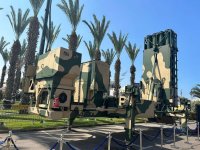
The first official appearance of the BARAK-MX/ER system in Morocco

1765314849078.jpeg

  • Point defense
  • Area defense
  • Enhanced Ballistic Missile defense
The launcher carries ER missiles with a range of 150 kilometers
High rate 8 missiles per launcher

To view this content we will need your consent to set third party cookies.
For more detailed information, see our cookies page.
 
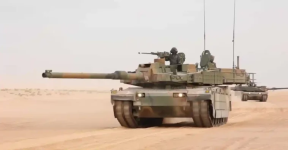
Morocco is considering establishing a local factory to produce tanks starting in 2026

1767319002402.png

This potential project comes within a broader context of initiatives launched by Morocco in recent years to establish a national defense industrial base, based on local manufacturing and long-term strategic partnerships. These efforts include launching industrial units to assemble and manufacture armored vehicles, signing cooperation agreements with major international defense companies, modernizing the legal framework regulating military industries, developing industrial infrastructure, and creating zones dedicated to high-value-added industries, with a focus on training and attracting national technical and engineering competencies, as part of the effort to build an integrated local defense industry.
 
Israel announces the signing of a joint military action plan with Morocco

Israel announced, on Monday evening, the conclusion of the third meeting of the Joint Military Committee with Morocco, as part of the two sides’ efforts to enhance security cooperation between them.

The Israeli army stated, in a statement published on the “X” platform, that the third meeting of the Joint Military Committee (JMC) was held in Tel Aviv under the supervision of the Planning and External Relations Commissions of the Israeli army.
The statement explained that the meeting concluded on Friday with the signing of the joint action plan for 2026, without revealing details regarding the participating Moroccan military delegation.

There was no immediate comment from the Moroccan authorities regarding what was stated in the Israeli army’s statement.

The statement indicated that the week witnessed the holding of professional business meetings, in addition to organizing visits to units in the Israeli army, defense industries, military units, and relevant departments.

He added that the visit culminated in holding a special strategic discussion panel that addressed capacity building from a strategic perspective, in addition to the common goals of cooperation between the two armies.

The Israeli army considered this visit to be an important new milestone in the process of deepening security cooperation between Israel and Morocco, noting that Morocco is considered one of the most prominent and important partners in maintaining stability and security in the region.

The statement pointed out that this development coincides with the five-year anniversary of the resumption of relations between the two countries within the framework of what is known as the “Abraham Accords.”

It is noteworthy that in late November 2021, Tel Aviv and Rabat signed a security cooperation agreement during the visit of then-Israeli Defense Minister Benny Gantz to Morocco, followed by mutual military visits between the two sides.

At the time, the official Hebrew Broadcasting Authority said that the agreement “regulates intelligence cooperation between the two countries, and allows the establishment of joint projects in the defense industries, in addition to carrying out joint purchases and training operations.”

In 2020, Morocco, the Emirates, Bahrain, and Sudan agreed to normalize relations with Israel, and these countries signed what became known as the “Abraham Accords.”

https://www.alwatanvoice.com/arabic/news/2026/01/06/1552241.html
 
Even if this relationship is sad.. Morocco has benefited in recent years by supporting scientific research in Moroccan universities in partnership with:

IAI a factory with BlueBird to manufacture the SpyX suicide drones and the ThunderB + WanderB tactical drones

A factory with Elbit Systems to manufacture all kinds of ammunition + Sky Striker suicide bombers

A factory with Elbit Systems to manufacture Puls launcher missiles

A factory with Elta Systems to update and maintain command and control systems + radars

This is what is known only and what is coming is much more..

As for weapons, Morocco got a whole package:

  • Puls rocket launchers
  • Lora tactical ballistic missiles
  • Barak MX long-range air defense
  • Spyder Medium range air defense
  • Red Sky tactical air defense
  • Alinet electronic warfare system
  • Atmos 2000 wheeled guns
  • Suicide drones of Harpy Harop + SpyX + Sky Striker + Hero
  • Hermes 900 armed drones
  • WanderB + Thunder B tactical drones
  • Ofek-13 satellites
  • Various aerial ammunition on F16
  • Spike anti-armor missiles
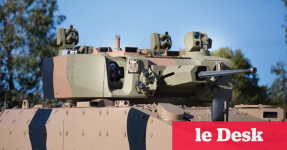
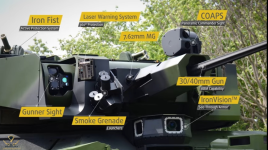
  • Various combat turrets from Elbit on Moroccan-made armored vehicles
There is still a long list of what Morocco got and what it will get in the coming period..
 
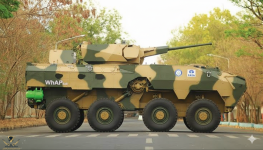
The Israeli company Elbit Systems is equipping Indian “Made In Morocco” armored vehicles with turrets for $277 million

1771524278047.png


1771524330954.png

To view this content we will need your consent to set third party cookies.
For more detailed information, see our cookies page.


From the price of the deal, the number may exceed 200 turrets
Spread over 3 years

1771524562223.png
 
To view this content we will need your consent to set third party cookies.
For more detailed information, see our cookies page.


The Royal Armed Forces sign a strategic partnership with the startup Harmattan AI, founded by the Moroccan Mouad Mghari and supported by Dassault.In the crosshairs: local manufacturing of autonomous systems, the creation of an R&D center focused on AI, and partnerships with Moroccan universities and research institutes.

To view this content we will need your consent to set third party cookies.
For more detailed information, see our cookies page.


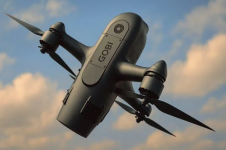
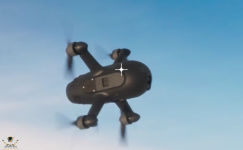
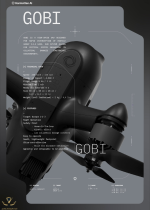
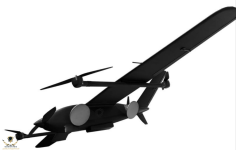
The GOBI drone will be manufactured in Morocco and is an anti-drone drone such as Shahid, FPV, etc

Harmattan AI is a Company focusing on:

-Military artificial intelligence
-Autonomous Systems
-Managing network battles
-Fighting drones
It is considered one of the emerging companies in the field of integrating artificial intelligence with modern air defense.

1781818693565.png1781818670996.png

1781818900126.png

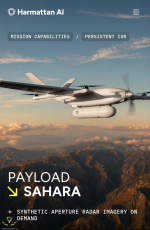
Sahara SAR The eye that gives the system the ability to see before making decisions

Beyond interception or carrying out strikes, Sahara is one of the most important elements of the smart system. It is a synthetic aperture radar (SAR) reconnaissance and surveillance system designed to give operators an accurate picture of the field even in conditions where traditional cameras are limited in effectiveness.

1781819957044.png

Declared specifications:
• SAR radar mounted on drones
• Operating range: L–S Band
• Imaging accuracy of up to 0.25 meters over 2 km
• Accuracy of 1.2 meters over 10 km
• Weight less than 3.5 kg
• Consumption less than 65 watts

1781820017593.png

Within the smart system:
Sahara sees → Kalahari decides → GOBI intercepts

This is the concept of modern warfare: first sensing... then decision... then engagement

⚠️⚠️⚠️The most important thing is that it is made in Morocco with national and international competencies.

1781820244012.png
ا
 

Users who are viewing this thread

Pakistan Defence Latest

Latest Posts

Back
Top