ISLAMABAD — In a sweeping move to secure its national database, the Federal Government has intensified its nationwide crackdown on illegally obtained Computerized National Identity Cards (CNICs). Spearheaded by the Ministry of Interior and the National Database and Registration Authority (NADRA), the operation targets tens of thousands of Afghan nationals who fraudulently acquired Pakistani citizenship, as well as the corrupt officials and local citizens who facilitated them.
At the heart of the government's strategy is a forensic look at the country's earliest identity records, combined with unprecedented on-the-ground enforcement by local police and intelligence agencies.
The 1974 Loophole: Tracing the "Fake Family Trees"
To understand the current crisis, investigators are looking back to
1974—the year Pakistan first began issuing manual, paper-based National Identity Cards (NICs) under the National Registration Act of 1973.
Because the 1974 system relied heavily on manual record-keeping, verbal testimonies, and physical ledgers, it became the Achilles' heel of Pakistan's modern digital registry. For decades, Afghan refugees fleeing conflict crossed the porous border and sought legal integration. Many managed to insert themselves into the manual family registries of local Pakistani citizens.
Today, to verify a modern digital CNIC, NADRA traces the applicant's lineage back to those original 1974 records. If a Pakistani citizen falsely "vouched" for an Afghan national in the 1970s, 80s, or 90s, claiming them as a son, daughter, or sibling, that Afghan effectively became a permanent, legal branch of a Pakistani family tree. NADRA has stated that
only the original, untampered proof from 1974 ledgers—verified through modern biometric lineage scrubbing—is now being accepted to clear flagged or blocked ID cards.
Sweeping Powers Granted to SHOs and Intelligence
To weed out these legacy errors and recent frauds, the Federal Government has authorized a massive, multi-agency physical verification drive.
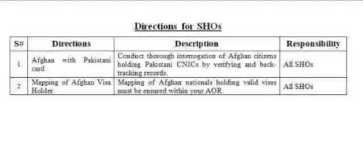
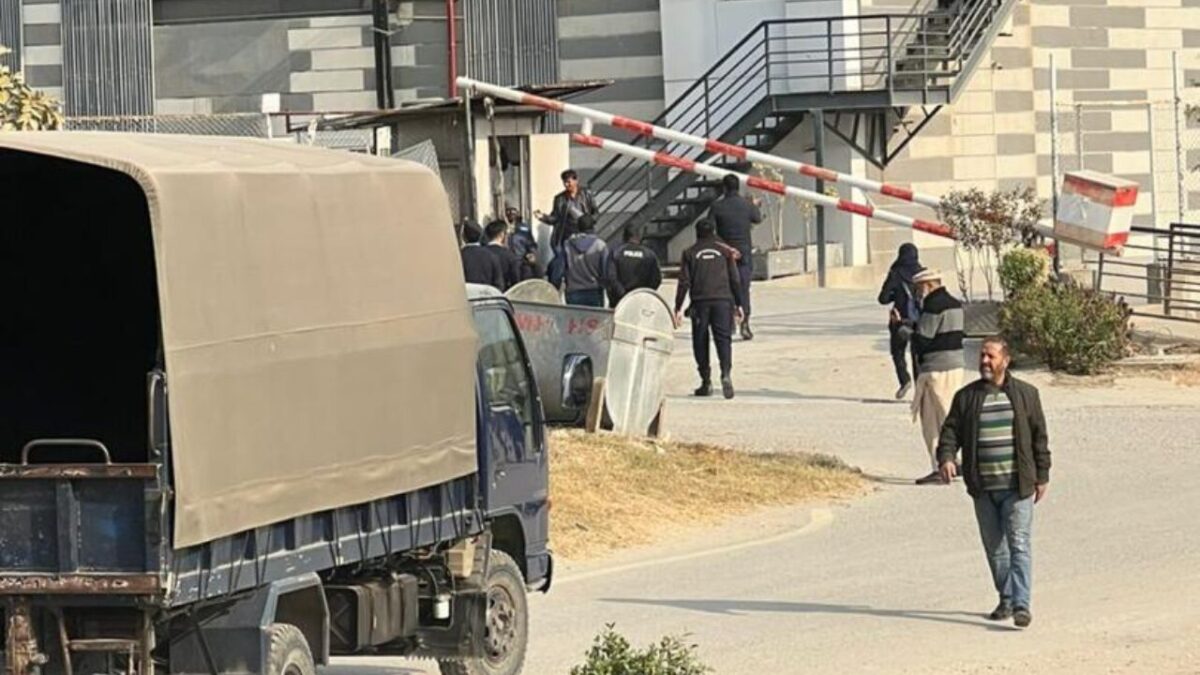
- The Mapping Mandate: Station House Officers (SHOs) across all police stations in the four provinces (Punjab, Sindh, Khyber Pakhtunkhwa, and Balochistan) have been granted special directives to map the residences and businesses of Afghan citizens. This includes tracking those holding valid visas and passports to ensure they are not overstaying or secretly utilizing forged Pakistani documents.
- Intelligence Agency Integration: State intelligence agencies, including the Intelligence Bureau (IB) and the newly empowered National Cybercrime Investigation Agency (NCCIA), are working alongside local SHOs to identify suspicious financial activities, property purchases, and travel patterns linked to flagged CNICs. Authorities allege that many of these fake IDs have been exploited for money laundering and terror financing.
The NADRA Intelligence Report: Cracking Down on the Inside
The recent directive issued by
NADRA Intelligence Islamabad makes it clear that the state is not just going after the undocumented migrants, but the network that enabled them. The mandate strictly places three groups under the legal microscope:
- Afghan Nationals: Those holding the forged documents.
- NADRA Staff: Corrupt insiders who accepted heavy bribes, utilizing colored printers and bypassing biometric safeguards to approve fake marriage certificates (nikahnamas) and birth records.
- Local Facilitators: Pakistani citizens who financially profited by selling "slots" in their family trees to non-citizens.
Over 250,000 CNICs have already been flagged and automatically blocked by NADRA's updated AI-driven scrutiny systems. The high-level meetings in Islamabad concluded that any Pakistani citizen found guilty of acting as a "facilitator" for foreign nationals will face severe legal consequences under the Pakistan Penal Code and the NADRA Ordinance, including lengthy prison sentences and the potential freezing of their own assets.