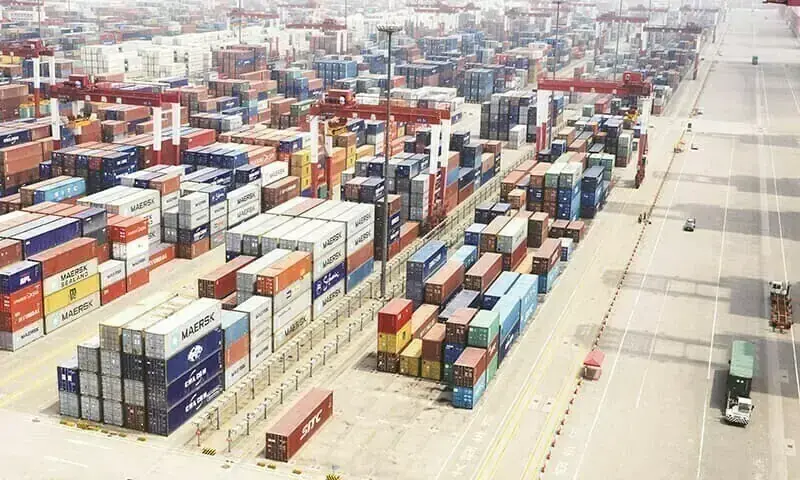
Pakistan Exports / Imports - Updates

To view this content we will need your consent to set third party cookies.
For more detailed information, see our cookies page.
 
What is driving this?
Poor agricultural practices and policies. Agriculture is not considered a industry. Inputs like fertiliser and pesticides are adulterated. Farmers especially small farmers stick to traditional ways of farming. Yields are lower than international averages.
 
Poor agricultural practices and policies. Agriculture is not considered a industry. Inputs like fertiliser and pesticides are adulterated. Farmers especially small farmers stick to traditional ways of farming. Yields are lower than international averages.
So Pakistan is slowly starving.
 
Situation sounds similar to what I observed in Kenya. Frankly, that's unfortunate given the climate conditions of both countries.
The other issue is smuggling of wheat into Afghanistan. It's receding as the violence comes down but it's a huge drain on the stocks
 
Main crops.
Wheat
Rice
Sugarcane
Potatoes
Fruits and vegetables

Cotton

Biggest import is palm oil but at times it has to import Wheat and sugar to replenish strategic stocks.

Yearly Floods determine which way things will go. Climate change is a issue that needs to be tackled fast.
 
I wonder if tea imports are classified under food imports. I remember reading a while back that we import more than half a billion $ worth of tea every year. One of the bigger colonial hangovers that we can do without.
 
I wonder if tea imports are classified under food imports. I remember reading a while back that we import more than half a billion $ worth of tea every year. One of the bigger colonial hangovers that we can do without.
Good point
 

Food import bill swells 14pc, exports dip 32pc

Mubarak Zeb Khan
May 21, 2026

Fresh local and imported vegetables and fruits are displayed at a superstore in Karachi. — Dawn/File

ISLAMABAD: Pakistan’s food import bill rose 13.81 per cent year-on-year to $7.848 billion in the first 10 months of 2025-26, mainly driven by higher purchases of sugar and edible oil.

The gap between food imports and exports has widened during the review period. This has increased the country’s dependence on imported food items in the current fiscal year. Meanwhile, exports of raw food products decreased 32.02pc to $4.190 billion in 10MFY26 from $6.164bn a year earlier.

The drop in exports was broad-based, with volumes declining across nearly all major food categories, except meat, which showed some resilience during the period.

Overall rice exports in April dropped 9.33pc year-on-year. However, exports of basmati rice surged 56.12pc in value and 62.36pc in quantity. By contrast, exports of non-basmati shrank by 27.97pc in value and 24.16pc in quantity in April.
 
The government has announced a cash subsidy to boost rice exports.

Similarly, meat exports grew 18.33pc in April. Exports of fish products rose 7pc. Most of the other food products record a negative growth.

Vegetables registered the steepest fall, plunging by 78.38pc. However, exports of tobacco surged 80.29pc, and exports of spices rose 2pc in April. According to data released by the Pakistan Bureau of Statistics, palm oil constituted the largest share among imported food items, followed by pulses, tea, soyabean oil and sugar.

Pakistan imported 309,157 tonnes of sugar during July-April 2025-26, marking an unprecedented increase of 10,181.25pc compared to just 3,007 tonnes in the same period last year.

In value terms, sugar imports jumped to $174.908m in 10MFY26 from $2.978m a year earlier, reflecting a sharp rise of 5,773.35pc. The surge follows the government’s decision to allow large-scale imports to address domestic shortages and contain rising prices in local markets. Retail sugar prices have remained volatile, hovering between Rs150 and Rs180 per kilogram in different cities, prompting authorities to step in and improve supply through imports.
 

Users who are viewing this thread

Country Watch Latest

Back
Top