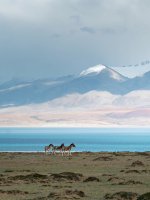
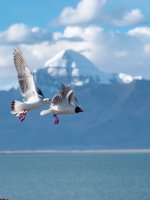
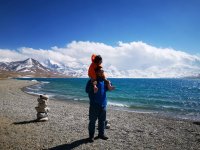
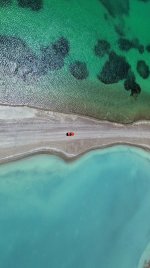
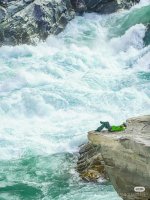
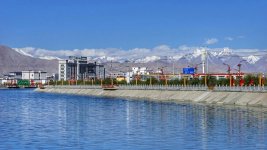
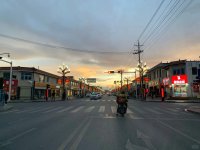
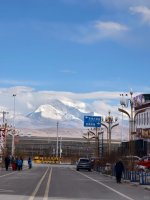
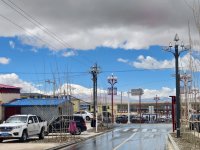
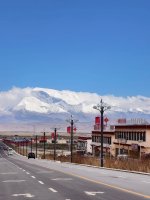
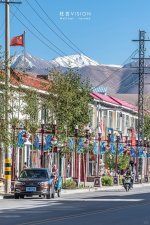
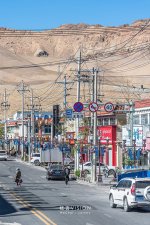
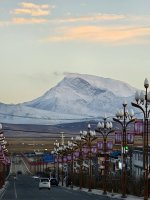
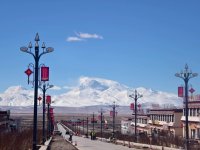
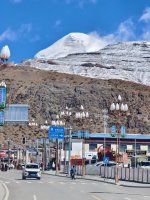
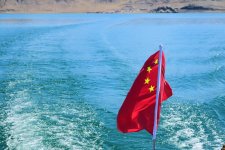
Shiquanhe river - upstream of the Indus River in Aksai Chin- a new town between Tibet and Xinjiang emerges in 20 years

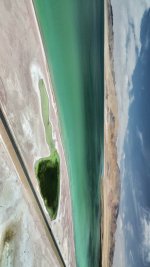
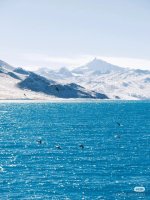
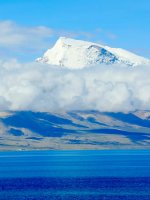
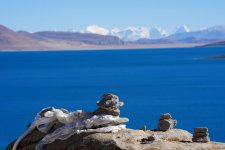
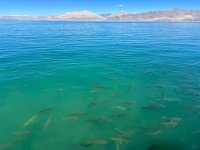
Origin of the Indus River - Kailash Mountain and Mansarovar Lake

强推!6月来西藏一定要走阿里环线!_3_二姐旅行_来自小红书网页版.jpg在西藏阿里做了一场不愿醒来的梦!!!_3_A战狼户外_来自小红书网页版.jpg阿里大环线行程安排和费用(淡季版)_4_陈杰_来自小红书网页版.jpg
 

Kailash Mansarovar yatra resumes for Indian pilgrims after five-year hiatus​

Phayul Newsdesk
June 21, 2025

Mount Kailash (Gang Rinpoche) Photo/HTN

DHARAMSHALA, June 21: A group of 39 Indian pilgrims crossed into Tibet on Friday, marking the long-awaited resumption of the Kailash Mansarovar Yatra after a five-year suspension that began during the COVID-19 pandemic and extended due to border tensions between India and China.

The pilgrims entered Tibet through the Nathu La Pass at approximately noon on Friday, forming the first officially organised pilgrimage group to visit the sacred sites since 2019. They will embark on a 12-day spiritual journey to Mount Gang Rinpoche (Mount Kailash) and Lake Mapam YumTso (Lake Mansarovar) in Tibet’s remote Ngari Prefecture.

Mount Kailash, towering at 6,638 metres in Tibet’s western region, holds extraordinary religious significance across multiple faiths. Hindu devotees revere the peak as the sacred abode of Lord Shiva, while Buddhists consider it the dwelling place of Buddha Demchok. The nearby Lake Mansarovar, situated at 4,590 metres above sea level, is regarded as the most sacred lake in both Hindu and Buddhist traditions.

The Kailash Mansarovar Yatra was initially suspended in 2020 due to COVID-19 border closures, but the suspension extended well beyond the pandemic period following escalating tensions along the India-China border. The June 2020 Galwan Valley clashes marked a particularly low point in bilateral relations, effectively freezing civilian exchanges, including the annual pilgrimage.

The geopolitical sensitivity of the region, which has been under Chinese administration since the 1950s, made the yatra particularly vulnerable to diplomatic tensions.

The breakthrough came through sustained diplomatic efforts by both nations to normalise relations. A crucial milestone was reached in October 2024 when India and China agreed to troop disengagement at the disputed Demchok and Depsang areas, paving the way for the restoration of civilian exchanges.

Before the Chinese invasion of Tibet in 1950, the pilgrimage route to Mount Kailash and Lake Manasarovar was relatively accessible for Indian pilgrims. The Sino-Indian war in 1962 caused the borders to close, disrupting the pilgrimage. The yatra resumed after 1981, with groups of Indian pilgrims entering Tibet through the Lipulekh Pass in Uttarakhand.

According to reports, a second group of Indian pilgrims is scheduled to enter China via the Nathu La Pass on June 25, indicating the systematic restoration of the pilgrimage programme.


China caps Indian pilgrims to Kailash via Nepal at 24,000. Tour operators expect more visitors​

Demand surges during the auspicious Chinese Year of the Horse as Nepali operators seek an additional 15,000 permits.

May 28, 2026

Nepali tourism entrepreneurs say Beijing has fixed a quota of 24,000 Indian pilgrims allowed to travel to Kailash Mansarovar in Tibet via Nepal this season, even as demand has already crossed 40,000.

Last year, the quota for Indian pilgrims was 20,000.

Tour operators also estimate that the number of foreign passport holders joining the pilgrimage could reach 5,000 this year. The Kailash Mansarovar yatra season typically runs from mid-May to September.

“Inquiries are growing rapidly. We have requested the Chinese authorities to allow an additional quota of 15,000, and they appear positive,” said Basu Adhikari, managing director of Touch Kailash Travel and Treks.

According to Adhikari, the surge in demand is largely driven by the Chinese Year of the Horse, which began on February 17, 2026. In Tibetan astrology and religious tradition, the Horse Year is considered highly auspicious for the pilgrimage. Devotees believe that completing one kora—the 52-kilometre circumambulation around Mount Kailash—during the Horse Year brings spiritual merit equivalent to completing 12 or 13 koras in an ordinary year.

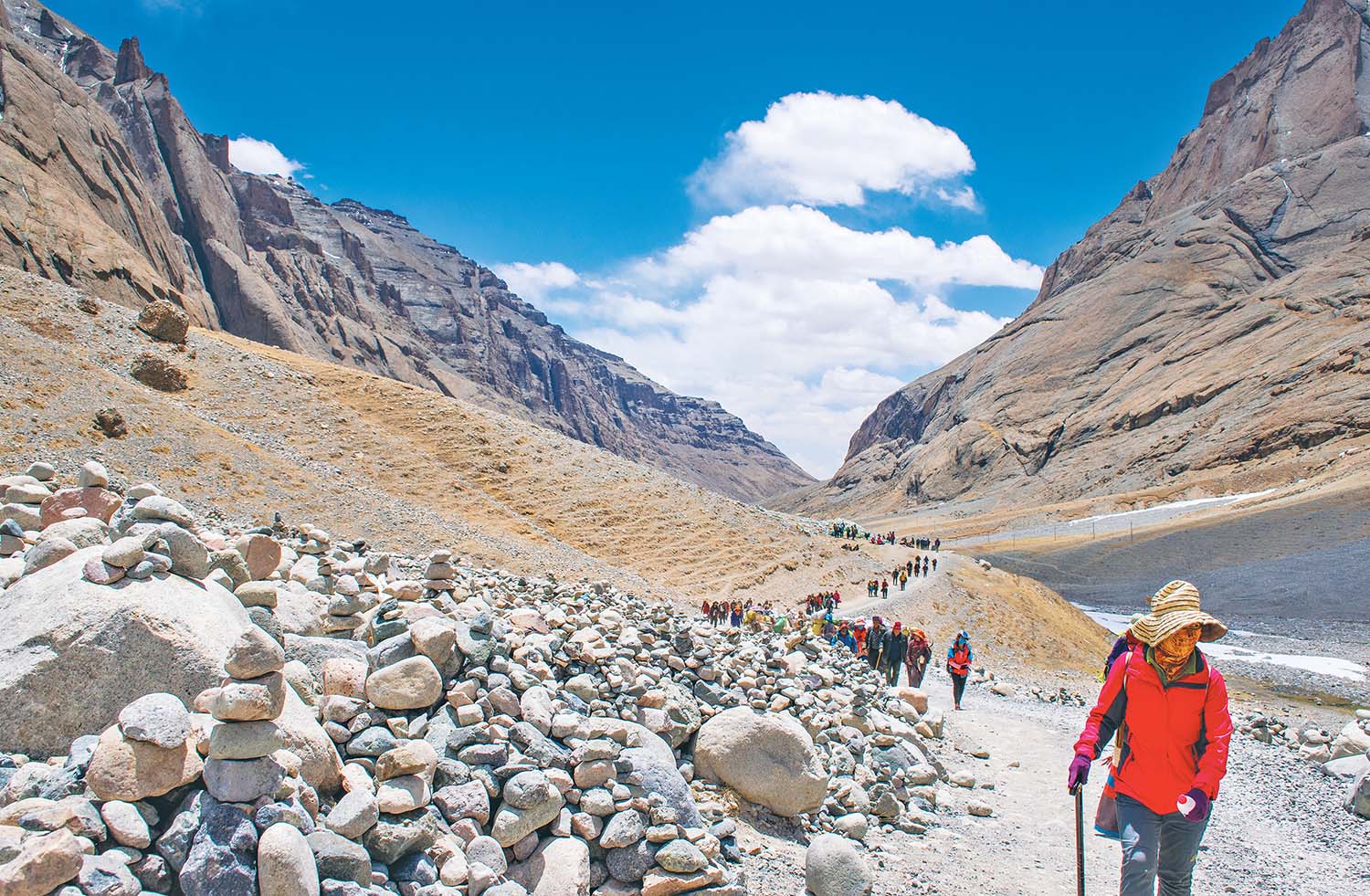
The three-day trek around Mount Kailash, known as the Kailash Kora or parikrama, is physically demanding and takes pilgrims through high-altitude terrain in Tibet.

The pilgrimage resumed for Indian citizens last year after Beijing and New Delhi agreed to restore the yatra following a five-year suspension linked to diplomatic tensions.

Although India facilitates the Kailash Mansarovar yatra through the disputed Lipulekh Pass and the Nathu La Pass in Sikkim, the Indian government caps the annual pilgrimage at 1,000 people—500 through each route.

As a result, most Indian pilgrims prefer travelling privately through Nepal.

There are currently four routes to Kailash through Nepal: Tatopani, Rasuwagadhi, Hilsa and the Kathmandu-Lhasa air route. Tatopani remains closed.

Before the 2015 earthquake, most Indian pilgrims used the Tatopani border crossing. After its closure, traffic shifted to the Hilsa route in Humla, significantly boosting economic activity in the remote Karnali region.

“This route has benefited the entire tourism sector here,” said Bijay Lama, a hotelier in Simkot. “We are preparing to welcome guests again with improved food and accommodation facilities.” There are currently around seven hotels in Hilsa and fifteen in Simkot, along with dozens of smaller lodges catering mainly to Indian pilgrims.

Business leaders say the influx has generated jobs and expanded markets for local produce.

“People are working as porters, guides and hotel staff. Local products such as apples, walnuts, beans and buckwheat now have a market, and farmers are increasingly shifting towards commercial vegetable farming,” said Ram Bahadur Bhandari, chair of the Humla Chamber of Commerce and Industry.

According to Adhikari, most Indian pilgrims currently travel through the Rasuwagadhi-Kerung route.

Chinese authorities briefly closed the crossing for three days recently, but departures have resumed.

More than 1,200 Indian pilgrims are scheduled to leave through the route between Thursday and Saturday under a 10-day itinerary.

Operators say rising fuel and food prices have made pilgrimage packages more expensive this year.


China caps Indian pilgrims to Kailash via Nepal at 24,000. Tour operators expect more visitors​

Demand surges during the auspicious Chinese Year of the Horse as Nepali operators seek an additional 15,000 permits.

May 28, 2026

Nepali tourism entrepreneurs say Beijing has fixed a quota of 24,000 Indian pilgrims allowed to travel to Kailash Mansarovar in Tibet via Nepal this season, even as demand has already crossed 40,000.

Last year, the quota for Indian pilgrims was 20,000.

Tour operators also estimate that the number of foreign passport holders joining the pilgrimage could reach 5,000 this year. The Kailash Mansarovar yatra season typically runs from mid-May to September.

“Inquiries are growing rapidly. We have requested the Chinese authorities to allow an additional quota of 15,000, and they appear positive,” said Basu Adhikari, managing director of Touch Kailash Travel and Treks.

According to Adhikari, the surge in demand is largely driven by the Chinese Year of the Horse, which began on February 17, 2026. In Tibetan astrology and religious tradition, the Horse Year is considered highly auspicious for the pilgrimage. Devotees believe that completing one kora—the 52-kilometre circumambulation around Mount Kailash—during the Horse Year brings spiritual merit equivalent to completing 12 or 13 koras in an ordinary year.

The three-day trek around Mount Kailash, known as the Kailash Kora or parikrama, is physically demanding and takes pilgrims through high-altitude terrain in Tibet.

The pilgrimage resumed for Indian citizens last year after Beijing and New Delhi agreed to restore the yatra following a five-year suspension linked to diplomatic tensions.

Although India facilitates the Kailash Mansarovar yatra through the disputed Lipulekh Pass and the Nathu La Pass in Sikkim, the Indian government caps the annual pilgrimage at 1,000 people—500 through each route.

As a result, most Indian pilgrims prefer travelling privately through Nepal.

There are currently four routes to Kailash through Nepal: Tatopani, Rasuwagadhi, Hilsa and the Kathmandu-Lhasa air route. Tatopani remains closed.

Before the 2015 earthquake, most Indian pilgrims used the Tatopani border crossing. After its closure, traffic shifted to the Hilsa route in Humla, significantly boosting economic activity in the remote Karnali region.

“This route has benefited the entire tourism sector here,” said Bijay Lama, a hotelier in Simkot. “We are preparing to welcome guests again with improved food and accommodation facilities.” There are currently around seven hotels in Hilsa and fifteen in Simkot, along with dozens of smaller lodges catering mainly to Indian pilgrims.

Business leaders say the influx has generated jobs and expanded markets for local produce.

“People are working as porters, guides and hotel staff. Local products such as apples, walnuts, beans and buckwheat now have a market, and farmers are increasingly shifting towards commercial vegetable farming,” said Ram Bahadur Bhandari, chair of the Humla Chamber of Commerce and Industry.

According to Adhikari, most Indian pilgrims currently travel through the Rasuwagadhi-Kerung route.

Chinese authorities briefly closed the crossing for three days recently, but departures have resumed.

More than 1,200 Indian pilgrims are scheduled to leave through the route between Thursday and Saturday under a 10-day itinerary.

Operators say rising fuel and food prices have made pilgrimage packages more expensive this year.

The Indians should be barred from pilgrimaging to the holy pristine mountains, rivers, lakes and sites in Xizang/Tibet. They are gong to pollute the environment there. Worse still, giving frequent free passes for the Indians to Tibet, it's going to reinforce their ludicrous claim that Tibet is their BS holy land. Chinese gov is making a foolish mistake here.
 
The Indians should be barred from pilgrimaging to the holy pristine mountains, rivers, lakes and sites in Xizang/Tibet. They are gong to pollute the environment there. Worse still, giving frequent free passes for the Indians to Tibet, it's going to reinforce their ludicrous claim that Tibet is their holy land. Chinese gov is making a foolish mistake here.
Why does a Chinese mountain and river have an Indian name 😂

 
Why does a Chinese mountain and river have an Indian name 😂
That's reported in English in Nepal if not mistaken, dumb. You Indians want to call whatever suit your BS names. They are meaningless to Chinese and don't validate Indian BS claim, lol.
 

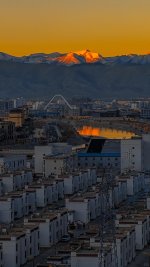
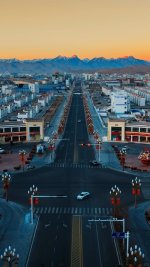
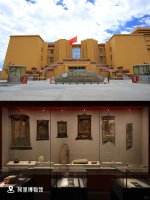
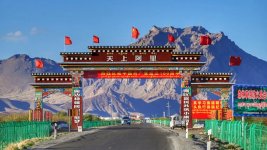
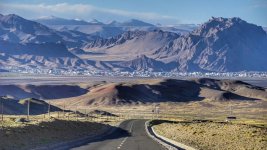
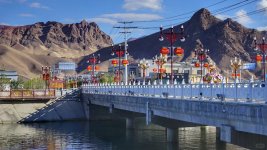
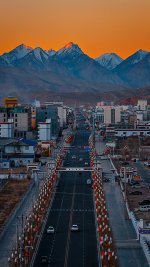
Shiquanhe river - upstream of the Indus River in Aksai Chin- a new town emerges in 20 years​

Shiquanhe river is the origin and upstream of the Indus River in Aksai Chin region between Xinjiang and Tibet. The surrouding area had no human settlements due to it's harsh environment and weather.

In order to better and effectively adiminter this region, China started to build a town in Shiquanhe river region from scratch 20 years ago.

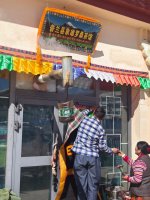
Now a new town, Shiquanhe river town emerged from out of nothing.

阿里地区|狮泉河镇_5_醉美阿里_来自小红书网页版.jpg阿里地区|狮泉河镇_4_醉美阿里_来自小红书网页版.jpg阿里地区|狮泉河镇_3_醉美阿里_来自小红书网页版.jpg阿里地区|狮泉河镇_1_醉美阿里_来自小红书网页版.jpg💤 在西藏阿里“最懒”小镇悟了!_2_西藏阿里文旅_来自小红书网页版.jpg💤 在西藏阿里“最懒”小镇悟了!_4_西藏阿里文旅_来自小红书网页版.jpg
 

Users who are viewing this thread

Country Watch Latest

Back
Top