Poor analogy because you say so?
"Poor analogy " because you say so. Re-read your own 2nd sentence.
"Those sculptures came from a particular monument in Athens belonging to a historically identifiable Greek culture."
Dancing Girl came from a particular dig site in Mohenjo Daro belonging to a historically identifiable Pakistani culture.
Haha "Pakistani culture" like what?
Anyway you are entitled to argue that an artefact excavated at Mohenjo-daro should today be physically held in Pakistan. That's an artefact repatriation argument and can be discussed on its own merits.
But it does not establish your much larger proposition that Pakistan is the exclusive progenitor state of the entire IVC. The Elgin analogy therefore proves much less than you want it to prove.
Even by YOUR OWN acknowledgement, the IVC in Pakistani lands is the VERY LEAST CLAIMABLE IVC territory by Pakistan.
Return it. Then there is plenty more to be discussed regarding artefact allocation and retrieval.
....“Pakistan exclusively owns the IVC legacy saar”... to that.
Read the trail of statements that brought you to this conclusion again. Your argument was refuted. Stick your fingers in your ears and sing to yourself all you like.
Your interpretation is irrelevant so is your poor comprehension.
Your first paragraph is moronic and demonstrates your inability to understand a simple genetic (and temporal) extrapolation. The author makes it clear REPEATEDLY (BTW, SHINDE ALSO AGREED WITH THIS IN THE MORE RECENT PAPER ON THE RAKHIGIRI SAMPLE - who are you to dispute?) that there is no reasonable cause to doubt that "pre IVC Gangetics were 50–70% AASI and minimal or no Iranian related ancestry".
You first claimed
"PRE-HARAPPAN GANGETICS: 50–70% AASI." as though this were an observed ancient-DNA population analogous to the Indus Periphery samples. Nope.
Narasimhan's admixture graph reconstructs an AASI-related ancestral lineage and models later populations through mixtures involving it. The graph does not magically turn that reconstructed source into a cemetery full of sequenced pre 2500 BCE Gangetic individuals.
To put it simply.
AASI related ancestry existed in South Asia before the IVC. Yes.
But you silently moved on from "We possess directly sampled pre-Mature Harappan Gangetic genomes establishing 50–70% AASI and minimal to no Iranianrelated ancestry. " (You didn't.)
To this
"Populations east southeast of the IVC were probably more AASI rich and less West Eurasian rlated than the Indus Periphery populations." Yeah very plausible, and consistent with the demographic model.
Here, from Narasimhan:
"We can jointly model all individuals in this [Indus Periphery] cline as a mixture of two source populations: One end of the cline is consistent with being entirely AHG-related, and the other is consistent with being ~90% Iranian farmer–related and ~10% WSHG-related (Fig. 4) (13). People fitting on the Indus Periphery Cline constitute the majority of the ancestors of present-day South Asians. Through formal modeling, we demonstrate that it is this contribution of Indus Periphery Cline people to later South Asians, rather than westward gene flow bringing an ancestry unique to South Asia onto the Iranian plateau, that explains the high degree of shared ancestry between present-day South Asians and early Holocene Iranians (9, 13)."
Correct. Read the wording you just quoted.
“consistent with being.”
This is an inferred endpoint of a population genetic model.
It isn't a sequenced Gangetic individual.
And AHG/AASI is being used like a deep ancestral source in the model. You cannot point at the reconstructed endpoint of an admixture graph, geographically relocate it into the pre ivc gangetic plain, assign a neat 50–70% range to the inhabitants, and then tell me you've shown their genomes.
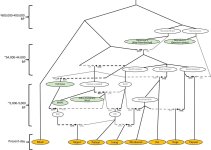
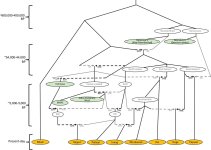
AHG is described as a proxy for AASI groups. Fair enough, a proxy, but Narisimhan has in his own figure 5 declared his model to be based on AASI, not AHG (which is where Narasimhan himself lets the cat out the bag! I could write a whole thread on Narasimhan's hindutva slant and disingenuous writings BTW but we can save that for now! Let me continue to castigate you with the works of your own)...
View attachment 213819
I have no issue with the figures
My issue is to what you're pretending this figure is.
An admixture graph contains modelled ancestral lineages and mixture events. AASI in that graph is not a labelled archaeological skeleton from Patna, Bihar dated 2800 BCE.
ASI is itself a later admixed ancestral population, not 'the pre ivc gangetics'.
Your own Narasimhan quotation explicitly says "ASI were not fully formed at the time of the IVC." So using later ASI proportions as though they directly describe a pre ivc gangetic population is exactly the chronological issue I've been talking aboyt.
Look at the lower end of the graph at annotations for AASI, ASI, IRANIAN RELATED, INDUS PERIPHERY WEST and follow the arrows and read out the percentages yourself, dil mein bayshakt parlo, if there is some shame in reading out loud.
There is also this from Narasimhan:
"The graph fits the component of South Asian ancestry with no West Eurasian relatedness (Ancestral Ancient South Asians, AASI) as an Asian lineage that split off around the time that East Asian, Andaman Islander, and Papuan ancestors separated from each other, consistent with the hypothesis that eastern and southern Asian lineages derive from an eastward spread that in a short span gave rise to lineages leading to AASI, East Asians, Andamanese hunter-gatherers, and Papuans (54) (Fig. 5).”
Annotation of the above graph:
"However, the admixture graph does highlight several key findings of the study, including the deep separation of the AASI from other Eurasian lineages".
If you're going to deny your own boy's paper, then kindly explain why your personal "extrapolations", which hitherto are NOTHING MORE THAN YOUR FANCIFUL OPINION, might be even remotely superior to those of multiple geneticists, including Narasimhan, Reich and Shinde.
See above.
Your cope is really starting to show now.
Nobody disputes the deep separation of AASI-related ancestry. That establishes a deep population lineage.
It does not establish your civilizational frontier at the Indus. Genetic gradients and civilizational borders are not interchangeable concepts.
The same Narasimhan model, our boy indeed, you keep quoting subsequently has IVC related ancestry contributing enormously to the populations ancestral to later South Asians.
So the genetics demonstrate differentiation and later extensive admixture.
That's much more interesting than your rather weak attempt to turn one phase of that demographic history into an eternal Pakistani Gangetic wall. Which was a nice try.
Lol. "May indeed" is the precise moment where you are starting to understand that the best way to cope is to acknowledge that researchers who have spent their lives on this stuff "may indeed" just know something more than you and me combined.
Again, if you have a counter claim, based EITHER on direct DNA evidence, OR on well modelled and articulated extrapolation from DNA evidence, do submit a paper to Nature (after I have proofread it of course).
I don't need a counterclaim. That's another burden of proof inversion.
You asserted a numerical population
50–70% AASI pre-IVC Gangetics.
I'm asking how you obtained that number. You went but saar Narasimhan saar, DNA saar, he's your boy saaar.
My answer can perfectly legitimately be the available model makes an AASI rich eastern population plausible, but we lack sufficient directly sampled pre-IVC Gangetic genomes to assign that population your precise observed percentages. That's not a competing genetic model rather distinguishing inference from measurement.
We know ENOUGH about the Harappan language to know it is DEFINITELY NOT CONTINGUOUS with whatever the elephant riders to the east used! They're completely different.
Sooo stoopid. No, we absolutely do not.
This is now simply assertion.
What language did the Harappans speak?
Proto dravidian?
Para munda?
An extinct language family?
Several languages?
Something Indo-Aryan-related?
You don't know. Nobody knows
Feel free to decipher the Indus script and prove it is somehow related to Brahmi.
I don't need the Indus script to descend from Brahmi to demonstrate linguistic relationship. Scripts and languages are not the same thing.
Closely related languages can be written in entirely different scripts.
Say languages like Gandhari northwestern middle Indo Aryan is written in Kharosthi while eastern middle Indo Aryan written in Brahmi.
And conversely unrelated language can be written in similar script. Say Indonesian and English both written in Latin.
Mate, I disagreed with you in my post that you extracted for this particular response. I pointed out to you that Europe is a continent, as India is,
India isn't a continent by any stretch. But I guess you finally figured out
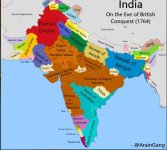
India can function as a geographical term independently of political unity.
hence both are not regarded as sovereign states in any sense of the term. The exceptions arose in periods of history where contiguity was ENFORCED BY ARMS of an imperial power - do you need reminding again of the fact that prior to the Battle of Plassey there was nothing even remotely like a "unified Hindustani qom", nothing whatsoever! The British forced these warring tribes together and gave you your country 200 years later through their hard work, industrious toil, and Enfield rifles.
None of this matters. A geographical identity does not require uninterrupted political sovereignty. Europe remains Europe whether it contains thirty kingdoms, one empire or sixty republics.
Likewise the existence of multiple polities in India does not erase the geographical category.
See above response re: script. We don't know what the Harappan script is but we know what it jolly well is NOT!
Great.
Tell me what language it is not.
Not what graphic signs look different.
Not what later script is visually unrelated.
What language can you exclude, and on what linguistic evidence?
Because an undeciphered sign system cannot normally tell you “Definitely unrelated to language X” unless you've first established enough phonetic or linguistic information to perform the comparison.
You have on more than one occasion transformed
“Indus script doesn't resemble later Brahmi” into “therefore the underlying languages were unrelated.” re read what I said about scripts and languages.
What you call your "logical conclusion" is highly illogical.
Well neither were Hindush and Magadha the same political entity! There was a hard border between them ffs. Language differences were but one part of that border. Sure, it may well have been peaceful and prosperous, but so are many neighbourhoods where the denizens can behave in a mature and constructive fashion.
Nobody disputes that Achaemenid Hindush and Magadha were separate political entities.
Persia and Egypt were separate political entities at various periods.
Athens and Sparta were separate political entities.
Florence and Venice were separate political entities.
France and Germany are separate political entities today.
Political borders don't automatically create separate civilizations. Your original proposition was much stronger than "Magadha wasn't governed by the satrap of Hindush.”
No shit.
See above. Distinct scripts is part of the story.
Chronology committed suicide after reading that. The Mature Harappan signs largely disappears around the second millennium BCE. Then there was no surviving scripts until those rocky ones thousand years later. Remember the quantum jumps you took from 2500 BCE to 500 BCE?
The point is if you want to use script geography as evidence, establish concurrent writing traditions first.
Both are true.
The denizens of the gangetic plains have certainly misappropriated Achaemenid Hindush/Harappa/ancient Pakistani territories by calling themselves "INDIA".
Aand like that “India” became a larger geographical term used for a region extending beyond Achaemenid Hindush and it is not a historical demonstration that the expanded geographical usage was erroneous.
"India" existed on maps and in historical accounts as it was a geographic region as understood by those who sought to simplify their exploratory efforts, just as they did with Africa.
Then stop asking me to produce a permanently unified precolonial Indian nation state as the condition for the term's historical legitimacy.