Egyptian Armed Forces

How fast could the next deal go through and be fully received by the eaf when they go through with the deal, especially since French production lines are backed up to meet the demands of other countries, maybe this is why Egypt has begun to produce parts of the raffle as advertised in Essex last year
 
How fast could the next deal go through and be fully received by the eaf when they go through with the deal, especially since French production lines are backed up to meet the demands of other countries, maybe this is why Egypt has begun to produce parts of the raffle as advertised in Essex last year
2029-30..
2027 is for the batch of 30 Rafales..
 
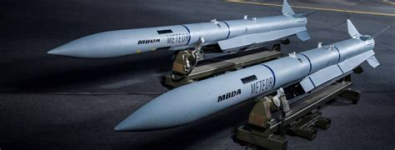
The final say on Meteor Egypt.. An official document resolves the controversy over the Egyptian Rafale's possession of the European missile.


1789575284817.png

​
One of the most prominent pieces of evidence cited by those supporting Egypt's possession of the missile is what was published on the official website of the Egyptian Presidency in its French version in June 2018, within a review of weapons that entered service in Egypt during President Abdel Fattah al-Sisi's term. The text published at that time indicated that Egypt had acquired the Meteor missile, explaining that it was part of the aircraft armament and that it is an air-to-air missile with a speed exceeding four times the speed of sound.

Thus, the official Egyptian reference to the missile constitutes significant evidence in the debate surrounding its presence within the Egyptian Air Force's arsenal, even though it is not clearly and frequently seen on Egyptian Rafale fighter jets in published photographs.

The matter was not limited to the official website of the Egyptian Presidency. Cairo News Channel also indicated, in a recent report from the El Alamein International Air and Space Exhibition 2026, that Egypt possesses the Meteor missile, providing further Egyptian media confirmation of the presence of this weapon within the Egyptian Air Force's arsenal. This reference adds further evidence to what was previously stated on the Egyptian Presidency's website regarding Egypt's acquisition of the missile.
 
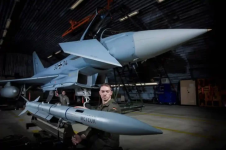
German magazine Europäische Sicherheit & Technik (ES&T) reported that France has agreed to supply long-range "Meteor" (Meteor) air-to-air missiles to arm Egyptian Air Force Rafale fighters, in a move that, according to the magazine, would enhance Egypt's capabilities in air combat outside range.
According to information provided by the magazine, this approval will allow Egypt to possess the ability to engage air targets at long distances using a modern missile equipped with active radar guidance.

1789851163504.png
 
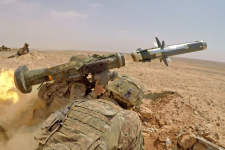
The U.S. Department of State has made a determination approving a possible Foreign Military Sale to the Government of Egypt to purchase Javelin missile systems. The estimated total cost is $832 million.

The Government of Egypt has requested to buy up to two thousand twenty (2,020) Javelin FGM-148F missiles (including twenty (20) fly-to-buy missiles); and up to two hundred (200) Javelin Lightweight Command Launch Units (LWCLUs). The following non-major defense equipment items will also be included: Javelin LWCLU basic skills trainer; missile simulation rounds; battery coolant units; life cycle support; physical security inspections; spare parts; system integration and check out; publications and technical documentation; U.S. Government technical assistance; tool kits; training; and other related elements of logistics and program support.

This proposed sale will support U.S. foreign policy and national security objectives by helping to improve the security of a friendly country that continues to be an important force for political stability and economic growth in the Middle East.

The proposed sale will improve Egypt’s ability to defend its sovereignty and territorial integrity to meet its national defense requirements. Egypt will have no difficulty absorbing these articles and services into its armed forces.

The proposed sale of this equipment and support will not alter the basic military balance in the region.

The principal contractors will be Lockheed Martin, located in Orlando, FL; and RTX Corporation, located in Arlington, VA. At this time, the U.S. Government is not aware of any offset agreement proposed in connection with this potential sale. Any offset agreement will be defined in negotiations between the purchaser and the contractor.

Implementation of this proposed sale will not require the assignment of any additional U.S. Government or contractor representatives to Egypt.

There will be no adverse impact on U.S. defense readiness as a result of this proposed sale.

https://www.state.gov/releases/bureau-of-political-military-affairs/2026/10/egypt-javelin-missiles/

1791225239746.png


Significant capability uplift for Egypt..
 
Unusual
The Arab Republic of Egypt conducts an inspection of the readiness of its armed forces in the northern region concerned with IsraelThe Egyptian Minister of Defense, General Zaker, carried out an inspection visit to a combat unit in the Northern Military Zone of the Army to monitor the level of readiness to confront any emergency or missions, according to the Ministry of Defense.

This came concurrently with the Israeli elections scheduled for October 27 and the ongoing Israeli military threats.It appears that Cairo has information about something that may happen, at a time when the region is witnessing ongoing tension.

Source:Egyptian Ministry of DefenseVideo from the Egyptian Defense

 
A majestic image captured at night from inside the Ras El-Tin Naval Base in the city of Alexandria, where the Northern Fleet of the Arab Republic of Egypt's Navy is stationed. The image shows a stealthy, heavy, fast-attack missile boat from the Ambassador MK III Suleiman Ezzat class, the strongest in the world in its category, followed by a heavy guided-missile frigate from the Fremm Bergamini class, and in the background rises the heavy stealth guided-missile frigate Sagem Taia Misr FFG-1001 from the Fremm Aquitania class.

 
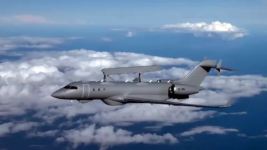
Sweden sells two Global Eye early warning aircraft to an unknown customer in the Middle East​

1793143736170.png

According to reports, the company has seven of these aircraft under contract, including three for the Swedish Air Force, two for France, and two for an unidentified Middle Eastern customer.

The CEO of Saab confirmed that the Middle Eastern order came from a new customer, ruling out previous speculation that the deal might be linked to additional orders from the United Arab Emirates, which already operates this model.

Given the lack of transparency regarding the Middle Eastern customer, Egypt stands out as a likely candidate, especially since the intelligence website Tactical Report previously mentioned Egyptian negotiations to acquire a Swedish early warning aircraft.

The GlobalEye aircraft provide airborne early warning and control capabilities through advanced surveillance radar and sensor systems that enable the detection of air, sea, and land targets, as well as intelligence gathering and coordination of military operations from the air.

If Egypt's acquisition of these aircraft is confirmed, it will add a new capability to the Egyptian Air Force's reconnaissance and early warning system, supporting air and sea surveillance and coordination of operations with fighter jets and air defense systems.

Specifications of the GlobalEye Airborne Early Warning and Control Aircraft

The GlobalEye aircraft, developed by the Swedish company Saab, is an integrated air, sea, and land early warning and surveillance system. It is based on a modified Bombardier Global 6000/6500 long-range business jet equipped with radars, sensors, and command and control systems. The system allows for the collection and integration of information from these three domains into a unified operational picture to support military decision-making.

The aircraft utilizes the Erieye ER active electronically scanned array (AESA) radar, which features an antenna approximately 10 meters long and incorporates gallium nitride (GaN) technology. Saab states that the system's declared range exceeds 350 nautical miles (approximately 650 kilometers), and it can detect low-flying threats at distances exceeding 400 kilometers when the aircraft is operating at an altitude of approximately 35,000 feet (10.7 kilometers). Actual detection ranges may vary depending on the target's altitude, radar signature, terrain, weather conditions, and electronic jamming.

The GlobalEye's capabilities extend beyond the airspace. It includes a dedicated maritime surveillance radar, an Automatic Identification System (AIS), electro-optical/thermal (EO/IR) sensors, and ISAR (Image of Target Aircraft) technology. This equipment enables the detection of ships and small boats, with a reported capability to detect objects the size of a submarine's periscope. The system also includes a dedicated ground-based movement radar capable of detecting moving targets across wide areas using GMTI (Ground Motion Interface) technology.

According to Saab's published specifications, the aircraft has an endurance of over 12 hours and an operating altitude exceeding 35,000 feet (approximately 10.7 kilometers). The sensors have a declared range of approximately 650 kilometers, while company data indicates they can utilize runways up to 6,500 feet (approximately 1,981 meters) long, enabling operation from a wider range of airports.

The GlobalEye system includes a command and control (C2) suite to integrate and distribute information from various sensors to command centers and friendly units via data links, voice communications, and satellite communications. It also incorporates electronic warfare and electronic reconnaissance (ESM/ELINT) equipment, a self-protection system, and IFF (Identification Friend or Foe) systems. These capabilities allow the aircraft to function as an airborne information management center, coordinating operations between fighter, air defense, naval, and ground forces.

Saab states that the system is designed to detect targets with a low radar signature, drones, and hypersonic ballistic missiles, while maintaining radar performance in electronic jamming or target-congested environments.
 

Users who are viewing this thread

Back
Top