Egyptian Military Industries & Products

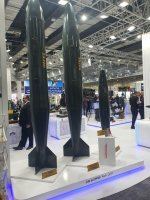
General purpose bombs from the Hafez family, which are unguided air-to-ground bombs weighing 273 - 897 - 908 kg. They were produced by the Arab Organization for Industrialization, and can be equipped with a guidance package to transform them into smart bombs, as Egypt has already been developing and producing television guidance packages and others that operate in palaces since 2014. Self-INS and LASER.

1715239738249.jpeg
 
To view this content we will need your consent to set third party cookies.
For more detailed information, see our cookies page.
 
The Egyptian Air Force confirms the delivery of the Rafale, the contract date for the Golden Eagle, and offers to manufacture the MIUS Ghost from Türkiye

Confirms the delivery of the first batch of the new Rafales before the end of this year. I was honestly hoping it would be sooner than that, if for any other reason than just so that we can put the damn Meteor & MICA-NG drama to rest and behind us once for all.

The confirmation of the specific weapons package as well as the upgrade of the original 24 jets to F3-R standard would be really nice to know. Being left in the dark about those two issues is a bit aggravating.

As far as the Golden Eagle is concerned, the more I see it the more I'm liking it, bro. I can really see why they were hot to trot on that particular aircraft despite my leaning more towards the Tejas. And this is no knock on the Indian jet by any stretch of the imagination, but the quality build in the FA-50 is phenomenal! I suspect it's even on par or better than the Aermacchi M-346. I'm sure its avionics/sensors are about as state of the art as can be which adds to the desirability of that aircraft.

But then again, we're back to the weapons package being the main issue I have with it. We're so in the dark about that subject which I consider ought to be a rather important factor in this particular selection process, despite it seemingly already being made.

And now with the interest in the Hurjet, that seems like an almost better option than the FA-50 because the Turks would be willing to supply their domestic versions of the aircraft's related advanced weapons. But then again there might also be a sticking point with that as well since we're not sure if those Turkish weapons are 100% indigenous or they contain American parts which then puts them under ITAR and we're back at full circle with the FA-50 and the Tejas. We know that weapons such as the ASTRA missile is 100% Indian, therefore there wouldn't be any ITAR issues, but the aircraft does use the GE-404 and again possibly bringing in at the least US friction. However, perhaps the RD-33MK would be an option (which I think it is) so there might be a way around any potential US blockage of the advanced weapons which I feel are a MUST in any of these 3 scenarios. What a bumbulamgum, ey?

What about you? Any preference one way or the other? I'd like to know what @Ramses Akhenaten Ahmose & @Ghostkiller think about this also. I know where @Sami_1 stands, I think. He seems to be good with the FA-50 but I wonder if this weapons dilemma might alter his opinion. With him it would be rounded down to two choices instead of three since he does have a good point about the Hurjet not having enough time in service. It's a valid point and certainly a consideration, but the weapons I think brings it right back into the discussion.
 
Confirms the delivery of the first batch of the new Rafales before the end of this year. I was honestly hoping it would be sooner than that, if for any other reason than just so that we can put the damn Meteor & MICA-NG drama to rest and behind us once for all.

The confirmation of the specific weapons package as well as the upgrade of the original 24 jets to F3-R standard would be really nice to know. Being left in the dark about those two issues is a bit aggravating.

As far as the Golden Eagle is concerned, the more I see it the more I'm liking it, bro. I can really see why they were hot to trot on that particular aircraft despite my leaning more towards the Tejas. And this is no knock on the Indian jet by any stretch of the imagination, but the quality build in the FA-50 is phenomenal! I suspect it's even on par or better than the Aermacchi M-346. I'm sure its avionics/sensors are about as state of the art as can be which adds to the desirability of that aircraft.

But then again, we're back to the weapons package being the main issue I have with it. We're so in the dark about that subject which I consider ought to be a rather important factor in this particular selection process, despite it seemingly already being made.

And now with the interest in the Hurjet, that seems like an almost better option than the FA-50 because the Turks would be willing to supply their domestic versions of the aircraft's related advanced weapons. But then again there might also be a sticking point with that as well since we're not sure if those Turkish weapons are 100% indigenous or they contain American parts which then puts them under ITAR and we're back at full circle with the FA-50 and the Tejas. We know that weapons such as the ASTRA missile is 100% Indian, therefore there wouldn't be any ITAR issues, but the aircraft does use the GE-404 and again possibly bringing in at the least US friction. However, perhaps the RD-33MK would be an option (which I think it is) so there might be a way around any potential US blockage of the advanced weapons which I feel are a MUST in any of these 3 scenarios. What a bumbulamgum, ey?

What about you? Any preference one way or the other? I'd like to know what @Ramses Akhenaten Ahmose & @Ghostkiller think about this also. I know where @Sami_1 stands, I think. He seems to be good with the FA-50 but I wonder if this weapons dilemma might alter his opinion. With him it would be rounded down to two choices instead of three since he does have a good point about the Hurjet not having enough time in service. It's a valid point and certainly a consideration, but the weapons I think brings it right back into the discussion.
We need to be patient about the weapons packages..I tend to like the F-50..but the Turkish trainer wasn't on the table,,the mere fact that bringing it to the front might entice SK to add more tech transfers.. positive all the way..
 
But then again there might also be a sticking point with that as well since we're not sure if those Turkish weapons are 100% indigenous or they contain American parts which then puts them under ITAR and we're back at full circle with the FA-50 and the Tejas.
We know that weapons such as the ASTRA missile is 100% Indian,

All Turkish Missiles BOZDOGAN , GOKDOGAN , SOM , CAKIR , KUZGUN-TJ etc are 100% indigenous
from IIR/RF seekers to Engine ...... No any American part

Also all Electronic Systems and Avionics are 100% indigenous
from AESA Radar to Targeting Pod ..... No any American part
 
We need to be patient about the weapons packages..I tend to like the F-50..but the Turkish trainer wasn't on the table,,the mere fact that bringing it to the front might entice SK to add more tech transfers.. positive all the way..

Yes, you're right. We will eventually find out about the weapons. There's also the question of the Su-35 replacement to consider in the big picture. Where the heck does that stand? Is it going to be the F-15 or the Eurofighter Typhoon since the two of those do have a say in the matter which has a major impact on the specific weapons implied in this discussion lol.

A surprise in Sinai! And the Egyptian army and technology!

Marker nails it again hahaha. You gotta love the guy he really is genuine if anything else. And he's right, everyone is talking about this Thutmose III site discovery and how it's really the first substantial proof of our ancestor's presence in the Sinai, adding even more prominence to that endearing land.

The talk of a possible indigenous tank is good and all, but honestly, that should've been done back in the late 1970s or 80s at the latest. Considering the success of the October War, we should've made that a simple priority and been way ahead of the curve by now. We blew that one in all honestly and the Ramses I/II while a good effort, really fell short of anything that should've been. Just a self-reflecting constructive criticism.

Some Bulgarian defense products

1715221015075.jpeg

Bulgaria added to the fray is an excellent proposition. If not for the technology transfer itself, then for the diversity factor alone makes it a worthy venture. Several of these Baltic nations have excellent post-Soviet bloc weapons manufacturing traditions that have evolved well into modern times.

eneral purpose bombs from the Hafez family, which are unguided air-to-ground bombs weighing 273 - 897 - 908 kg. They were produced by the Arab Organization for Industrialization, and can be equipped with a guidance package to transform them into smart bombs, as Egypt has already been developing and producing television guidance packages and others that operate in palaces since 2014. Self-INS and LASER.

Could this be a viable option to arm the F-16s with a what looks to be a very possible JDAM alternative, US' objections withstanding?

All Turkish Missiles BOZDOGAN , GOKDOGAN , SOM , CAKIR , KUZGUN-TJ etc are 100% indigenous
from IIR/RF seekers to Engine ...... No any American part

Also all Electronic Systems and Avionics are 100% indigenous
from AESA Radar to Targeting Pod ..... No any American part

Are you 100% sure?! Has there been any US objection to any Turkish foreign sales in the past?
 
Confirms the delivery of the first batch of the new Rafales before the end of this year. I was honestly hoping it would be sooner than that, if for any other reason than just so that we can put the damn Meteor & MICA-NG drama to rest and behind us once for all.

The confirmation of the specific weapons package as well as the upgrade of the original 24 jets to F3-R standard would be really nice to know. Being left in the dark about those two issues is a bit aggravating.

As far as the Golden Eagle is concerned, the more I see it the more I'm liking it, bro. I can really see why they were hot to trot on that particular aircraft despite my leaning more towards the Tejas. And this is no knock on the Indian jet by any stretch of the imagination, but the quality build in the FA-50 is phenomenal! I suspect it's even on par or better than the Aermacchi M-346. I'm sure its avionics/sensors are about as state of the art as can be which adds to the desirability of that aircraft.

But then again, we're back to the weapons package being the main issue I have with it. We're so in the dark about that subject which I consider ought to be a rather important factor in this particular selection process, despite it seemingly already being made.

And now with the interest in the Hurjet, that seems like an almost better option than the FA-50 because the Turks would be willing to supply their domestic versions of the aircraft's related advanced weapons. But then again there might also be a sticking point with that as well since we're not sure if those Turkish weapons are 100% indigenous or they contain American parts which then puts them under ITAR and we're back at full circle with the FA-50 and the Tejas. We know that weapons such as the ASTRA missile is 100% Indian, therefore there wouldn't be any ITAR issues, but the aircraft does use the GE-404 and again possibly bringing in at the least US friction. However, perhaps the RD-33MK would be an option (which I think it is) so there might be a way around any potential US blockage of the advanced weapons which I feel are a MUST in any of these 3 scenarios. What a bumbulamgum, ey?

What about you? Any preference one way or the other? I'd like to know what @Ramses Akhenaten Ahmose & @Ghostkiller think about this also. I know where @Sami_1 stands, I think. He seems to be good with the FA-50 but I wonder if this weapons dilemma might alter his opinion. With him it would be rounded down to two choices instead of three since he does have a good point about the Hurjet not having enough time in service. It's a valid point and certainly a consideration, but the weapons I think brings it right back into the discussion.
For me, we have to forget about HAL Tejas MK1A. India has a lot of problems etc... and even it isn't inducted in large number and mass produce. It leave us to either FA-50 or inshallah Hurjet (if it enters the race). And even if it was MK1A or Hurjet, I will lean to Hurjet ofc. Turkey built a lot of quality stuff and proven its worthy and its quality. Plus Turkey has a lot of customers unlike India.
I would be happy if we got the FA-50 with source code so we can integrate whatever we want and then we can buy or enter JV with Turkey for multiples stuff. FA-50 and Hurjet look exactly the same.
 
Yes, you're right. We will eventually find out about the weapons. There's also the question of the Su-35 replacement to consider in the big picture. Where the heck does that stand? Is it going to be the F-15 or the Eurofighter Typhoon since the two of those do have a say in the matter which has a major impact on the specific weapons implied in this discussion lol.


Marker nails it again hahaha. You gotta love the guy he really is genuine if anything else. And he's right, everyone is talking about this Thutmose III site discovery and how it's really the first substantial proof of our ancestor's presence in the Sinai, adding even more prominence to that endearing land.

The talk of a possible indigenous tank is good and all, but honestly, that should've been done back in the late 1970s or 80s at the latest. Considering the success of the October War, we should've made that a simple priority and been way ahead of the curve by now. We blew that one in all honestly and the Ramses I/II while a good effort, really fell short of anything that should've been. Just a self-reflecting constructive criticism.


Bulgaria added to the fray is an excellent proposition. If not for the technology transfer itself, then for the diversity factor alone makes it a worthy venture. Several of these Baltic nations have excellent post-Soviet bloc weapons manufacturing traditions that have evolved well into modern times.


Could this be a viable option to arm the F-16s with a what looks to be a very possible JDAM alternative, US' objections withstanding?


Are you 100% sure?! Has there been any US objection to any Turkish foreign sales in the past?
The F-16s can drop the Egyptian made laser guided bombs.. it can carry these too.. easily..

Making a local version of the M1A1 Abrams was a huge endeavor..Now it is just a question of local design..maybe a combination with the T-90 MS..the principles of design and specs are mastered, the metallurgy science also.. left is the decision ..

On top of that..Bulgaria is a NATO country..and it will promote the Egyptian made weapon systems .. this will help the reputation of the standard and will translate to more sales..
 
The F-16s can drop the Egyptian made laser guided bombs.. it can carry these too.. easily..

Assuming you're referring to the GBU Paveways? I know we spoke briefly about those in the EAF thread, but I wasn't sure if you were implying that AOI is license-building GBU Paveways from the US? Please clarify, bro because I honestly didn't know that and want to be accurate here. Plus that wood be good to know.

What I'm getting at is that if they're able to produce those Bulgarian or even any dead munition but were able to make GPS guidance kits similar to JDAMs now that Egypt has its own military satellites and is adding another hopefully with the Italian deal, they could add this option to what appears they already have in the Al-Tariqs.
And the GBUs being laser-guided and mainly for moving ground targets (although the newer ones are now for both, moving & stationary targets but I don't think Egypt has those), they can have an additional GPS option for munitions to the AT that they can build as many as they want and it would be cost-effective. It's just a versatility/additional option thing I was getting at.
 
How about this!

To view this content we will need your consent to set third party cookies.
For more detailed information, see our cookies page.
 
How about this!

To view this content we will need your consent to set third party cookies.
For more detailed information, see our cookies page.

It is impossible. All that matters is that the companies will be given other ownership of civilian companies affiliated with them, to give the impression that the army has left the economy, while the companies will be affiliated with the intelligence. The stability of the army has become its economic arm, controlling half of the state’s economy, and many strategic goods that they want to control, such as iron, cement, quarries, mines, and sugar. They see that civilian products and food commodities are easy to deal with, while complex technology and weapons require advanced administrative thought and a private sector that does not exist, so they focused on roads, bridges, farms and food factories. Whoever wants to transfer the economy to the private sector should not fight it, so we see them selling companies to the Emirates and Saudi Arabia because the private sector is impossible to trust. Among them are all businessmen who spread out of their grasp. Naguib Saurith fled from Egypt and acquired projects in Iraq worth 75 billion dollars, and in the Emirates his salary is 20 billion dollars. As for an investment of 100 million dollars, it is a trivial number. The same thing applies to Sweden. If it had relied on the local market, the owners of food factories would have gone bankrupt. They would have fled to Morocco and the companies. Egyptian startups fled to the Gulf. The foreign investor enters Egypt because his state protects him from nationalization, and the army does not dare to deal with them badly, and if they steal the foreign investor, international cases are filed against them, and Egypt loses many international cases because no one places any value on the army or security services outside Egypt. They are manipulating their agreement with the World Bank. But no one is naive. The economy will not develop. They are simple on the economy, and no matter how exposed they change their skin, the economy will not grow and will not find development because of their presence in it since 2014.
 
It is impossible. All that matters is that the companies will be given other ownership of civilian companies affiliated with them, to give the impression that the army has left the economy, while the companies will be affiliated with the intelligence. The stability of the army has become its economic arm, controlling half of the state’s economy, and many strategic goods that they want to control, such as iron, cement, quarries, mines, and sugar. They see that civilian products and food commodities are easy to deal with, while complex technology and weapons require advanced administrative thought and a private sector that does not exist, so they focused on roads, bridges, farms and food factories. Whoever wants to transfer the economy to the private sector should not fight it, so we see them selling companies to the Emirates and Saudi Arabia because the private sector is impossible to trust. Among them are all businessmen who spread out of their grasp. Naguib Saurith fled from Egypt and acquired projects in Iraq worth 75 billion dollars, and in the Emirates his salary is 20 billion dollars. As for an investment of 100 million dollars, it is a trivial number. The same thing applies to Sweden. If it had relied on the local market, the owners of food factories would have gone bankrupt. They would have fled to Morocco and the companies. Egyptian startups fled to the Gulf. The foreign investor enters Egypt because his state protects him from nationalization, and the army does not dare to deal with them badly, and if they steal the foreign investor, international cases are filed against them, and Egypt loses many international cases because no one places any value on the army or security services outside Egypt. They are manipulating their agreement with the World Bank. But no one is naive. The economy will not develop. They are simple on the economy, and no matter how exposed they change their skin, the economy will not grow and will not find development because of their presence in it since 2014.

I can't say I disagree with you, Sami. Everything you said is spot on and if there is any legitimate criticism of the army, this is it and has been it for decades. It's too bad.

The optimist in me says give it a chance since it's better than no degree of privatization, and I'm willing to give them the benefit of the doubt that there are some major and legitimate security concerns (aside from the common perception of corruption & retaining control including financial transactions). And security is important considering that there are several entities out there that would love nothing but to masquerade as an authentic Egyptian business to develop secure weapons or even civilian products and have a mischievous intent in the end.

So perhaps it might be necessary to start out this way and slowly introduce stronger levels of privatizations as certain companies become more trustworthy and they become a selective group. I know that step will be difficult to achieve but they'll have to try.

Similar thing happened in the US as the startups of private military contractors were in fact ex-military personnel or were heavily involved with government military projects in the beginning. Case in point Skunk Works and look at what it has evolved into today, basically Lockheed Martin, the world leading giant of industrial military complexes. So maybe baby steps are a good thing.

I also think that the World Bank & IMF are smart enough to know if they're being duped and will at least attempt to reel things in a bit.
 
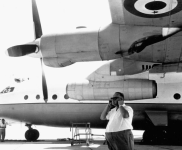
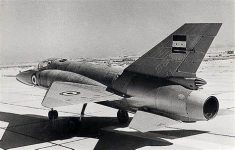
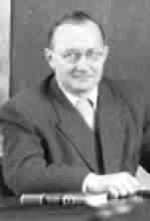
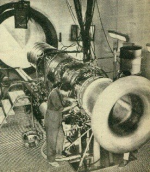
Speaking of privatization; this is a fascinating photo from 1963 showing the engine of the Helwan HA-300 (or Al Qahira-300) aptly named the E-300 that was to power the 3rd fighter jet prototype to speeds greater than Mach-2 and the man who built it. His name was Ferdinand Brandner, an Austrian engineer and in this photo, he's standing right under the engine prototype attached to the #4 pylon of an Egyptian Air Force Antonov 12 after its first test flight that year.

1715772182441.png

1715772622194.png
Source.

The preceding test flight lasted 5 hours where the engine was the only source of power for the large transport aircraft as the other 3 prop engines were shut down to test & determine the strength, durability and reliability of the new jet engine. The entire 5-hour test flight was powered solely by the E-300 to determine its ability to sustain such power for that long period of time and was completed without a single problem or setback and the test was deemed a 100% success.

This was one of several signs of the huge potential that aircraft had and what it could've been had it not faced the political challenges & setbacks that were thrust onto Egypt shortly thereafter, putting the superbly successful project on the shelf.

The engine is still carefully stored as of today right at the Helwan factory itself. The blueprints also are still available and are carefully stored which is a huge asset to the potential of picking up a new engine-building program in Egypt by Egyptian engineers (who are a dime a dozen BTW) and create the modern equivalent of the E-300 with this new privatization plan. This is an absolute no-brainer.

Ferdinand Brandner
1715772424837.png

From Wikipedia:

1715771690330.png

Austrian engineer Ferdinand Brandner, who had worked in the Soviet Union, leading the development of the Kuznetsov NK-12 turboprop, the powerplant of the Tupolev Tu-95 bomber, moved to Egypt to lead a team to design an engine to power the Helwan HA-300 jet fighter that was simultaneously being designed by a team of Germans led by Willy Messerschmitt.

The new engine underwent bench testing in 1963, and was flight tested under the wing of an Antonov An-12, before being installed in a HAL HF-24 Marut for high speed testing, in which form it flew on 29 March 1967.[1] The E-300 was installed in the third HA-300 prototype (the first two were powered by Bristol Sidley Orpheus engines) but attempts to fly it were unsuccessful. The program of HA-300 was abandoned in May 1969.
 
@The SC please provide information about the manufacturing companies of those military products in Egypt. For example in Iran, HESA produces jet engines and fighter jets. Or in Turkey they have Aselsan, Roketsan etc.

And if possible, please let us know which Egyptian scientists have been working on military and industrial projects. Who guides Egyptian missile program? Which ones of Egyptian military commanders or generals leads self sufficiency in Egyptian military? Are they even interested in self sufficiency and how?

Details about those manufacturers are most appreciated.

Thanks in advance
 
@The SC please provide information about the manufacturing companies of those military products in Egypt. For example in Iran, HESA produces jet engines and fighter jets. Or in Turkey they have Aselsan, Roketsan etc.

The main co. in Egypt is the Arab Organization for Industrialization (AOI) which is the same company that I mentioned in my previous post about the HA-300 fighter jet. It became official in 1975 but its core has been there since the early 1950s. I'll let SC answer the rest of your questions since you asked him. But that's the main co. that also assembled all the M1A1 Abrams and the Maadi Misr AK variants and all sorts of munitions etc. It also has an engine factory and maintenance depot etc. Source.

There's also the Alexandria Ship Factory which deals with shipbuilding and all the naval products.
 

Users who are viewing this thread

Pakistan Defence Latest

Back
Top