You don't understand things
First, the ammunition production numbers are large, which is important
This applies to many equipment, for example
What applies to them applies to all matters such as anti-tank missiles
There is a lot of equipment that is produced and is never announced. For example, the 9M119 Svir/Refleks missile, which fires 125 mm cannons.
The same applies to Egypt. The capacity of the Military Factory 100 was to produce 300 cannons annually, including calibers 122/130/155.
The same applies to the 23 mm cannon
Many products are shown in their initial images, such as the 23 mm cannon, while in the same matter, no mention is made of the 30 mm cannon, then moving on to the 35 mm cannon.
You think they are simple matters, but the matter is completely different because the picture Egypt deliberately does not make it clear
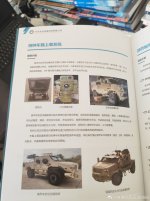
Egypt produces a family of armored vehicles simultaneously in several different companies, including two private sector companies and three government companies
The same thing
It is announced that Egypt produces the S-75 in the DF-7 version
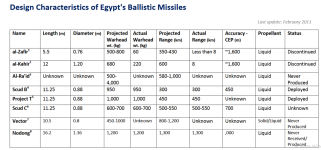
Then the SAKR-80 missile, the SAKR-120 missile, the SKAR-365 missile, then the DF-15A/B/C/D/E missile.
The latest version of the Condor 2 missile has a range of 1,200 kilometers and a warhead of 1,500 kilograms.
Overview of Egypt's nuclear, chemical, biological, and missile capabilities and nonproliferation activities

www.nti.org
View attachment 44119
Data from 15 years ago: Egypt spent several billion dollars to
modernize its production and stocks in 2012.
ANOTHER REPORT
https://www.cia.gov/readingroom/docs/CIA-
RDP89S01450R000200210001-2.pdf
View attachment 44120
View attachment 44122
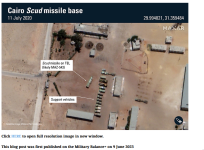
While only the Scud missile was announced in the C and D versions
It will be discovered that Egypt is quietly producing huge families of missiles
Another simple example is Egypt
The SAKR-80 missile, in its latest version, has a range of 180 + and may have exceeded 180 km, and it was parallel to the Chinese WS-1 system.
Even Egypt's acquisition of WS-2 systems is accompanied by production licenses
Why is Egypt moving to produce a new 300 mm rocket artillery system and was testing the Belarusian systems POLONEZ, Astros II, A200/300? The reason is very simple. Egypt is looking to reduce the production cost of these missiles to the lowest possible extent and to the highest specifications as well.
So why do these systems not appear in military parades for many reasons? Egypt simply does not provide information about its armament. Also, many systems and weapons are attached to the main divisions during the war, and the simplest example of this missile is the AT-3 SAGGER, although Egypt had 700 launch pads before the October 1973 war, it only appeared. In war only
Rather, the AT-5 missile, which is an old missile, was shown in service on many platforms in large numbers on BTR-50 BMP-1 FAHD vehicles.
TOYOTA LC79 is a terrifying thing. Egypt has 100,000 anti-tank guided missiles. When your enemy discovers that you have a large number of weapons, you think it is a subsidiary, so don’t worry about the newer systems.
The same thing applies to a rifle for fighting. Home Egypt tried the Russian rifles AK12/19, and the producing factory confirmed that the Egyptian development and the Egyptian rifle were better than the AK100/200/12/19 family, so I preferred the Egyptian rifle even over the Czech rifles CZ-805/807.
The same thing applies. Egypt used to produce SA-7 missiles. They are not currently being produced simply because newer missiles are being produced with production licenses from two countries. Why, simply because you see the lack of investment in Egypt, this equipment is not of great benefit.
View attachment 44123
Whereas when you want to invest in producing a new air defense system for the simple reason that Egypt wants to produce a huge number of missile batteries from 60-120 batteries
While the process of transitioning from producing the S-75 Dvina missiles and the S-125 Neva missiles
To the 9K330 Tor and 9K37 Buk systems, because they are used to supply the systems’ batteries with service. It is simply a development in traditional production. Egypt produces the Magic R.550 short-range air-to-air missiles and completed production with the PL-7 missile, the AA-2 Atoll missile, and then the AIM-9.
That is, the process is simply passed on for weapons to newer generations
View attachment 44124
Egypt is focusing on other things
Such as command and control systems
When Egypt develops a family of anti-drone systems from the Haris 1-4 family and electromagnetic pulse transmitters alongside the production of Russian and French systems, what does this simply mean that the map for Egyptian weapons production is not clear? Not because Egypt does not produce weapons.
A country that was producing HY-2/4 anti-ship missiles. Has it stopped or is it producing other undeclared missiles?
Egypt was producing Sakr-45 missiles in 2003 with a range of 45-46 kilometers. Now, what has its real range reached? Is it the failure to announce its development and even the production line that was producing 100 missiles per day? What comes after developing the factory and increasing production capacity?
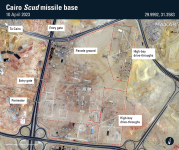
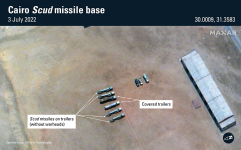
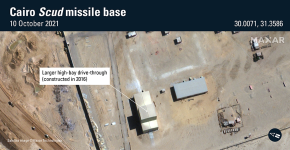
Things are not as simple as some make it out to be when the Israeli newspapers were talking about Egypt possessing 900 Scud missiles, which are old missiles. So what is the production volume of the family of missiles that use solid fuel? Is Egypt’s focus on ballistic missiles less important than some armored vehicles for which there is a heavy production spread in many areas? Countries
View attachment 44125
Things are not as simple as some imagine
Egypt is always characterized by the massive production of equipment. For example, the K-8E plane is officially announced that Egypt has produced 120 planes, while in reality there are 200 planes, including 40 planes for export.
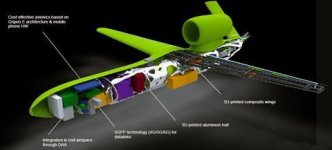
The new training aircraft that Egypt will produce. Orders are 70 for the training version, 10 for aerobatics, and 36-100 as a light fighter. This means that you are talking about something approaching 160-200 aircraft. It is believed that 35 training aircraft will be produced, but with specifications for training on fifth and sixth generation fighters.
This is only for the local market
View attachment 44126
When Egypt produced 1,130 M1A1 tanks, along with the M88A2 rescue tank, this was considered a good number as a country, even though it was produced over a long period of time because America did not allow exports, and Egypt obtained an additional 2,300 M60 tanks at the same time, meaning that Egypt is not what some expect. The issue is related to the weapons that were produced. The year 1985 and what comes after that is not the case. It is not only the ammunition, but the matters in Egypt that I cannot announce simply because the West is closely monitoring the level of Egyptian armament and wants to give the squadrons the illusion of non-existent superiority.