Navigation
Install the app
How to install the app on iOS
Follow along with the video below to see how to install our site as a web app on your home screen.
Note: This feature may not be available in some browsers.
More options
Style variation
You are using an out of date browser. It may not display this or other websites correctly.
You should upgrade or use an alternative browser.
You should upgrade or use an alternative browser.
Pakistan Air Force | News & Discussions
- Thread starter ghazi52
- Start date
More options
Who Replied?


Echoobserver
THINK TANK: CONSULTANT

(A0401/24 NOTAMN
Q) OPKR/QRRCA/IV/BO/W/000/340/2511N06645E006
A) OPKR
B) 2407040200 C) 2407071400
D) 04-07 JUL 0200-1400
E) OP/R-122 (ARMY AIR DEFENCE RANGES SONMIANI) ACT.
F) GND G) FL340)
35000mtrs surface ceiling and 12km into the sea

Q) OPKR/QRRCA/IV/BO/W/000/340/2511N06645E006
A) OPKR
B) 2407040200 C) 2407071400
D) 04-07 JUL 0200-1400
E) OP/R-122 (ARMY AIR DEFENCE RANGES SONMIANI) ACT.
F) GND G) FL340)
35000mtrs surface ceiling and 12km into the sea


Fatman17
Moderator
Asia-Pacific
A recently emerged photo has reignited discussions about Pakistan’s nuclear weapons program and its modernization efforts. The image depicts a JF-17 Thunder Block II aircraft carrying what appears to be a Ra’ad air-launched cruise missile (ALCM), potentially signifying a new chapter for Pakistan’s nuclear delivery capabilities. For decades, Pakistan’s aging Mirage III and Mirage V fighter jets have been believed to be the primary delivery system for the country’s nuclear arsenal. These jets are used to carry gravity bombs and have also been used for test launches of the Ra’ad air-launched cruise missile (ALCM).Source: DID
We need to see a video of a JF-17 releasing a ALCM. Until then this topic is mere speculation. HST JF-17 is the right platform to succeed the legacy Mirage aircraft in this particular role.
Last edited:

MirageBlue
Registered Member

2 pilots/ aircraft. You do the math.
Quite hard to believe this. It brings up some questions that maybe you could answer.
1)- How many hours per year do PAF fighter pilots usually get? NATO requirement is 180 hours per year.
2)- If 2 pilots are there per JF-17, and assuming each gets 120 hours per year, that's 240 hours per year per JF-17. That means with ~4000 hours of airframe life, each JF-17's total airframe life will be used up in just 16.6 years, without a SLEP.
3)- Even with airframe rotations, reserve airframes and all that, the oldest JF-17 Block 1s by this maths would be pretty much at the end of their airframe life, having entered service in 2007, being 17 years old. And without a SLEP, almost all of the PAF's JF-17 Blk1's would be nearing the end of their lives. And even the Blk 2's would be past their mid life.
So either the number of pilots per fighter is not correct and too high, or the number of flight hours per year is less than 120.
4)- Any idea what is the highest number of flight hours any pilot has got on the JF-17? Any patches that show like 2000 hours or so?
This would equally apply to the F-16 fleet, which by this standard should've run out of airframe life, given that the older F-16s even with SLEP after MLU only got about 8000 hours of airframe life. I won't even go to the Mirage and F-7 fleets which started with lower airframe life, especially the F-7, which won't be more than 3000 hours in all.
Fatman17
Moderator
Sure Boss.Quite hard to believe this. It brings up some questions that maybe you could answer.
1)- How many hours per year do PAF fighter pilots usually get? NATO requirement is 180 hours per year.
2)- If 2 pilots are there per JF-17, and assuming each gets 120 hours per year, that's 240 hours per year per JF-17. That means with ~4000 hours of airframe life, each JF-17's total airframe life will be used up in just 16.6 years, without a SLEP.
3)- Even with airframe rotations, reserve airframes and all that, the oldest JF-17 Block 1s by this maths would be pretty much at the end of their airframe life, having entered service in 2007, being 17 years old. And without a SLEP, almost all of the PAF's JF-17 Blk1's would be nearing the end of their lives. And even the Blk 2's would be past their mid life.
So either the number of pilots per fighter is not correct and too high, or the number of flight hours per year is less than 120.
4)- Any idea what is the highest number of flight hours any pilot has got on the JF-17? Any patches that show like 2000 hours or so?
This would equally apply to the F-16 fleet, which by this standard should've run out of airframe life, given that the older F-16s even with SLEP after MLU only got about 8000 hours of airframe life. I won't even go to the Mirage and F-7 fleets which started with lower airframe life, especially the F-7, which won't be more than 3000 hours in all.
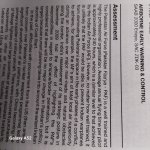
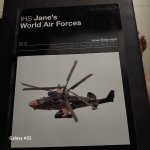
From a reputable source.
MirageBlue
Registered Member
Thanks.
So one thing it makes clear is that in it's assessment, both the PAF and IAF pilots get approx. 240 hours per year of flying. At least no trolls can claim that the PAF pilots get more flying time than IAF pilots do.
But, this makes it even harder to believe that the PAF maintains a ratio of 2 pilots to each fighter.
Because if that were to be true, each JF-17 squadron (or F-16 for that matter) would be having each of it's fighters flying close to 480 hours per year.
480 hours per year would mean that the JF-17's airframe life of 4000 hours would be used up in less a decade! Which hasn't happened yet as we have 12 to 16 year old JF-17 Block 1s still flying with no talk of a SLEP as yet.
With the F-7PGs that would be even harder given they're basically based on the MiG-21F and their airframe life is no greater than 3000 hours total.
So how would you explain that contradiction?

Ali_Baba
VIP Member
Thanks.
So one thing it makes clear is that in it's assessment, both the PAF and IAF pilots get approx. 240 hours per year of flying. At least no trolls can claim that the PAF pilots get more flying time than IAF pilots do.
But, this makes it even harder to believe that the PAF maintains a ratio of 2 pilots to each fighter.
Because if that were to be true, each JF-17 squadron (or F-16 for that matter) would be having each of it's fighters flying close to 480 hours per year.
480 hours per year would mean that the JF-17's airframe life of 4000 hours would be used up in less a decade! Which hasn't happened yet as we have 12 to 16 year old JF-17 Block 1s still flying with no talk of a SLEP as yet.
With the F-7PGs that would be even harder given they're basically based on the MiG-21F and their airframe life is no greater than 3000 hours total.
So how would you explain that contradiction?
You dont need to get your flying hours on 1 type - K8s etc also count as jet hours.

CombatCorner
Registered Member
The loser can't comprehend the fact of pilots to plane ratio.You dont need to get your flying hours on 1 type - K8s etc also count as jet hours.
Fatman17
Moderator
Depending on the pilots seniority the pilot training would take him to aThanks.
So one thing it makes clear is that in it's assessment, both the PAF and IAF pilots get approx. 240 hours per year of flying. At least no trolls can claim that the PAF pilots get more flying time than IAF pilots do.
But, this makes it even harder to believe that the PAF maintains a ratio of 2 pilots to each fighter.
Because if that were to be true, each JF-17 squadron (or F-16 for that matter) would be having each of it's fighters flying close to 480 hours per year.
480 hours per year would mean that the JF-17's airframe life of 4000 hours would be used up in less a decade! Which hasn't happened yet as we have 12 to 16 year old JF-17 Block 1s still flying with no talk of a SLEP as yet.
With the F-7PGs that would be even harder given they're basically based on the MiG-21F and their airframe life is no greater than 3000 hours total.
So how would you explain that contradiction?
OCU Squadron
A Squadron whether its JF-17 or Mirage to F-16 or a J-10C and Depending on the pilots proficiency even the elite CCS from where Top Guns emerge as well as Squadron Leaders (OC) or Wing Commanders (OC).
As someone rightly said the pilots rotate through various aircraft and Squadrons.
Aircraft airframe overhauls have their own timetable and the PAF is well placed to perform the same in-house at PAC Kamra.
At F-16 net one can find PAF pilots and others who have achieved 1,000 hours or more on one type regardless of the aircraft airframe situation.
There are no records available to the public for other types of aircraft.
I'm not a expert but this is what I know from available information.

Oscar
Moderator
Pilot and airframe rotation.Thanks.
So one thing it makes clear is that in it's assessment, both the PAF and IAF pilots get approx. 240 hours per year of flying. At least no trolls can claim that the PAF pilots get more flying time than IAF pilots do.
But, this makes it even harder to believe that the PAF maintains a ratio of 2 pilots to each fighter.
Because if that were to be true, each JF-17 squadron (or F-16 for that matter) would be having each of it's fighters flying close to 480 hours per year.
480 hours per year would mean that the JF-17's airframe life of 4000 hours would be used up in less a decade! Which hasn't happened yet as we have 12 to 16 year old JF-17 Block 1s still flying with no talk of a SLEP as yet.
With the F-7PGs that would be even harder given they're basically based on the MiG-21F and their airframe life is no greater than 3000 hours total.
So how would you explain that contradiction?
It is an average of 240 hours - going from novice to most experienced it varies. Same for the IAF.
JF-17 block 1s have hit nearly 4k hours but mix of rebuilds has extended it but no SLEP announcement was made. Because kamra can support pretty much everything needed for a SLEP or total rebuild they are pretty “abused” airframes.
Left in the sun, put through flight hours with relative abandon. There is NDT, rebuild analysis done at Kamra - wing spars replaced etc.
The PAF would not make that judgement if it did not have a way to either exceed or manage those 4000 hours beyond(which are actually conservative guidelines provided for export purposes). But, since we don’t have a CAG no true way to verify beyond living room talk or whatever they release publicly. @Talon
The F-16 on the other hand is rationed very well - kept climate controlled in many cases / spares run through a purpose built logging system in coordination with GD/USAF(publication is available) - yet does have certain airframes slated for retirement earlier than others.
F-7PG pilots averaged 220 during some peak exercises but they dont go as high as 240.
Mirages also average flight hours pretty differently, the ROSE get less hours than the other airframes which are used to maintain hours and currency.
During certain exercises certain rookie CCS pilots were hitting higher numbers and were drained out to dangerous levels. Then more physiological and psychological training/conditioning was introduced.

Raider 21
Moderator
That is well defined by the nature of the professional architecture regarding flying ops and logging of hours within PAF.Pilot and airframe rotation.
It is an average of 240 hours - going from novice to most experienced it varies. Same for the IAF.
JF-17 block 1s have hit nearly 4k hours but mix of rebuilds has extended it but no SLEP announcement was made. Because kamra can support pretty much everything needed for a SLEP or total rebuild they are pretty “abused” airframes.
Left in the sun, put through flight hours with relative abandon. There is NDT, rebuild analysis done at Kamra - wing spars replaced etc.
The PAF would not make that judgement if it did not have a way to either exceed or manage those 4000 hours beyond(which are actually conservative guidelines provided for export purposes). But, since we don’t have a CAG no true way to verify beyond living room talk or whatever they release publicly. @Talon
The F-16 on the other hand is rationed very well - kept climate controlled in many cases / spares run through a purpose built logging system in coordination with GD/USAF(publication is available) - yet does have certain airframes slated for retirement earlier than others.
F-7PG pilots averaged 220 during some peak exercises but they dont go as high as 240.
Mirages also average flight hours pretty differently, the ROSE get less hours than the other airframes which are used to maintain hours and currency.
During certain exercises certain rookie CCS pilots were hitting higher numbers and were drained out to dangerous levels. Then more physiological and psychological training/conditioning was introduced.
Unfortunately lately, the hours haven't been as high as they used to be on average. Higher than Indians but not as high as where Paks were at.
Last edited:
Oscar
Moderator
They pretty high during ACM Tanvir’s time for an ex(forgot which one) when I met a few rookies who complained of severe exhaustion - but this was before physical fitness was fully ingrained.Well defined by the nature of what the professional architecture of flying ops and logging of hours within PAF.
Unfortunately lately, the hours haven't been as high as they used to be on average. Higher than Indians but not as high as where Paks were at.
Come 2013-14 and I met a few talking to their favorite gold standard whey protein flavors and soon the neck muscles could be seen bulging.
Oscar
Moderator
Just FYI for some who may not be aware - talking to flight hours at 240 per year doesn’t mean isolated hours. Each hour is accompanied by several hours of brief and debrief as well. So if we average out to 6 hours for each flight hour its 1450 hours per year on flying related activities. Then add additional learning, ground activities, staff tasks and so on.
CombatCorner
Registered Member
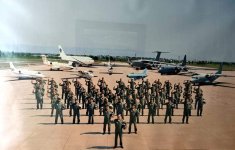
Could we call this, PAF second line service.
Users who are viewing this thread
Total: 2 (members: 0, guests: 2)
Pakistan Defence Latest


Country Watch Latest
-
 Iran - Israel/US War: Israel-US declare war on Iran, Iran responds (143 Viewers)
- Latest: Mighty_Dragon_Strike
-

-

-
-

Latest Posts
-
-
Iran - Israel/US War: Israel-US declare war on Iran, Iran responds (143 Viewers)
- Latest: Mighty_Dragon_Strike
-

-
